10 Famous Creative Minds That Didn’t Quit Their Day Jobs

10 FAMOUS CREATIVE MINDS THAT DIDN’T QUIT THEIR DAY JOBS

KURT VONNEGUT WORKED AT A CAR DEALER AFTER PUBLISHING HIS FIRST NOVEL, AND PHILIP GLASS WORKED AS A PLUMBER WHILE CRAFTING HIS MUSIC. SO WHILE YOU MAY BE ITCHING TO DITCH YOUR 9 TO 5, TAKE A LESSON FROM THESE LEGENDARY CREATIVES AND PURSUE YOUR PASSIONS WHILE STILL COLLECTING A PAY CHECK.

BY LYDIA DISHMAN

No matter what line of work you’re in, chances are the daily grind of schlepping to work (even if it’s just down the hall) and toiling away in an open office to do a job that doesn’t exactly tickle your fancy every day is enough to stifle your more creative urges. Read more of this post

Leaders Who Can’t Forgive

Leaders Who Can’t Forgive

by Manfred F. R. Kets de Vries  |   8:00 AM December 4, 2013

I had a CEO in one of my leadership coaching seminars recently who seemed to be quite bitter about life. Whatever suggestion I would make, he would put a negative spin on it. Curious about his remarkable negativity, I asked him to tell more about himself. After a little bit of prompting, he was ready to talk about his life, a narrative that wasn’t very pleasant to listen to. Read more of this post

The ‘Circle Of Competence’ Theory Will Help You Make Vastly Smarter Decisions

The ‘Circle Of Competence’ Theory Will Help You Make Vastly Smarter Decisions

FARNAM STREET
DEC. 5, 2013, 1:11 PM 7,773 3

coc

Farnam Street

“I’m no genius. I’m smart in spots—but I stay around those spots.”
— Tom Watson Sr., Founder of IBM

The concept of the “Circle of Competence” has been used over the years by Warren Buffett as a way to focus investors on only operating in areas they knew best. The bones of the concept appear in his 1996 Shareholder Letter: Read more of this post

The four wives in our lives

The four wives in our lives

BUSINESS MATTERS (Beyond the bottom line) By Francis J. Kong (The Philippine Star) | Updated December 7, 2013 – 12:00am

Some stories stand the test of time. I came across this material so many years ago. A lot of religions claim to be the source of this, but Google it and you’ll find that no one could pinpoint the original authorship of this material. The following is called “The Four Wives In Our Lives.” There was a rich merchant who had four wives. He loved the fourth wife the most, and adorned her with rich robes and treated her to delicacies. He took great care of her and gave her nothing but the best. He also loved the third wife very much. He’s very proud of her, and he always wanted to show her off to his friends. However, the merchant is always in great fear that she might run away with some other men. He also loved his second wife. She’s a very considerate person, always patient and, in fact, the merchant’s confidante. Whenever the merchant faced some problems, he always turned to his second wife, and she would always help him out and tide him through difficult times. Read more of this post

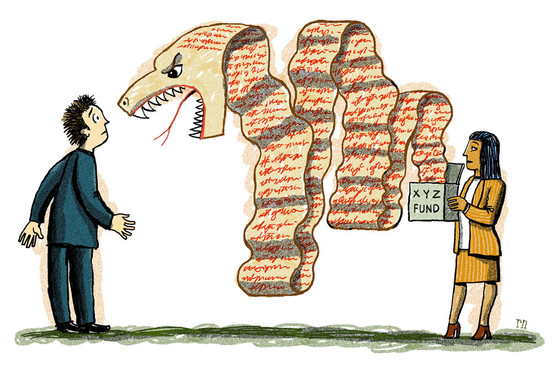
How Could I Lose in This Fund? Let Me Count the Ways. Pros suggest how to make sense of lengthy risk disclosures

How Could I Lose in This Fund? Let Me Count the Ways.

Pros suggest how to make sense of lengthy risk disclosures

VERONICA DAGHER

Updated Dec. 4, 2013 4:01 p.m. ET

IF-AB362_RISK_G_20131203162304

What could go wrong when you invest in a mutual fund? Apparently a lot, if you read fund-company disclosures. Fund firms have a legal duty to disclose the risks associated with their products. So just like drug companies’ disclaimers that tell in horrifying detail all of the possible side effects of a medication, fund companies offer an extensive litany of the many ways an investment could go awry. Read more of this post

Robert Shiller Is Smarter Than You Are; If Shiller had his way, consumers would short the value of their homes against a decline in housing prices

Robert Shiller Is Smarter Than You Are

By Peter Coy December 05, 2013

When Robert Shiller collects his Nobel prize for economics in Stockholm on Dec. 8, he will undoubtedly be described as the guy who doesn’t believe in efficient markets. But the man who warned presciently of bubbles in stocks and housing is a huge believer in financial engineering. “Derivative” is not a dirty word to Shiller. Neither is “hybrid security” nor “negative amortization” (paying less than the interest you owe). Read more of this post

Nelson Mandela: the meaning of the Madiba magic

December 5, 2013 10:09 pm

Nelson Mandela: the meaning of the Madiba magic

By Alec Russell

Post-apartheid reconciliation was not a miracle but a carefully planned strategy

The “old man” was angry. His lips were pursed, his head held high, his Olympian gaze stony. When Nelson Mandela finally started speaking, his words were even more clipped than usual. This was not an irrational fury. Rather, it was the admonitory wrath of a headmaster. It was infused with the empathy of one who appreciated all too well the rage of his audience, yet knew that if South Africa was somehow to emerge intact from the ravages of apartheid it had to be tamed.

Read more of this post

In some business circles, the more successful you are the older the model of your mobile

December 5, 2013 4:40 pm

Need a status upgrade? Get an antiquated Nokia handset

By Duncan Robinson

Irish taoiseach Enda Kenny had a Nokia 6310 until he dropped it in a sink earlier this year

Sir Philip Green has all the trappings of a billionaire: the house in Monaco, the yacht, the supermodel-strewn parties – and a decade-old Nokia 6310. Despite being one of Britain’s richest people and running Arcadia Group, one of the country’s biggest retailers, Sir Philip relies on a Finnish phone designed in 2002, which cannot receive email or browse the web.

Read more of this post

A Learning CEO Can Power Through Tough Times: Indra Nooyi

A Learning CEO Can Power Through Tough Times: Indra Nooyi

by Prince Mathews Thomas | Dec 5, 2013

PepsiCo’s Indra Nooyi talks to CNBC-TV18 about her personalised leadership style, why CEOs need to constantly renew skills and what India needs to do to attract foreign investors

In volatile times, one needs a learning CEO who surrounds herself with people who can help the company power through the tough times, said PepsiCo Chairperson and CEO Indra Nooyi in her Lessons in Leadership talk with CNBC-TV18, on November 12 in Delhi. Read more of this post

Can you make work joyful?

Can you make work joyful?

December 5, 2013: 11:01 AM ET

By Polly LaBarre

(TheMIX) — For too long, the ruling ideology of too many organizations has been control — controlling people, controlling information, controlling deviations from the norm. Of course, that kind of high fear, low trust culture is exactly the wrong design for unleashing and mobilizing the full potential — the full imagination, initiative, passion—of every single person, every single day. Read more of this post

Inside Jack Welch’s MBA school of tough love; At a time when many business schools are reporting declining enrollment in their full-time MBA programs, Welch’s Management Institute is doing a brisk business. A look at Welch’s approach to B-school

Inside Jack Welch’s MBA school of tough love

December 5, 2013: 10:52 AM ET

At a time when many business schools are reporting declining enrollment in their full-time MBA programs, Welch’s Management Institute is doing a brisk business. A look at Welch’s approach to B-school.

By John A. Byrne

(Poets&Quants) — He’s there in the flesh. Jack Welch, the legendary chairman and CEO of General Electric Co. Well, maybe not exactly in the flesh. But certainly live, unplugged, and on a computer screen, with his trademark tell-it-like-it-is persona, a trace of the Salem, Mass. accent still in his scratchy voice at the age of 78. Read more of this post

Why universities are money pits: Tuition rates are rising, but colleges and universities are still not bringing in enough revenue to make ends meet. What gives?

Why universities are money pits

By Nin-Hai Tseng, Writer December 5, 2013: 11:55 AM ET

Tuition rates are rising, but colleges and universities are still not bringing in enough revenue to make ends meet. What gives?

FORTUNE — If you listen closely enough, you can almost hear the collective sigh of resignation among the throngs of parents and college-bound students who face higher tuition bills and, with it, more debt. Read more of this post

The Irony of Despair: The rise in suicide rates prompts a sober confrontation of old and new questions around the will to overcome. As our friend Nietzsche observed, he who has a why to live for can withstand any how

December 5, 2013

The Irony of Despair

By DAVID BROOKS

We’ve made some progress in understanding mental illnesses over the past few decades, and even come up with drugs to help ameliorate their effects. But we have not made any headway against suicide. Read more of this post

Our Compass: Who are the moral leaders for these times?

November 27, 2013

Our Compass

In each issue, the editors of Turning Points invite contributors to explore one of the big questions of the year. For 2013 we asked Elif Shafak, Salam Fayyad, Liao Yiwu, Rowan Williams, Mikhail Khodorkovsky and Mata Amritanandamayi Devi: Who are the moral leaders for these times?

Elif Shafak — A Turkish author whose most recent novel is “The Forty Rules of Love.”

Few people can connect with fellow human beings as beautifully and powerfully as Rumi did. Born in the 13th century in Afghanistan, he spent most of his life in Turkey and wrote in Persian. A man of myriad cultures, his writings cut across national, religious and gender boundaries. Read more of this post

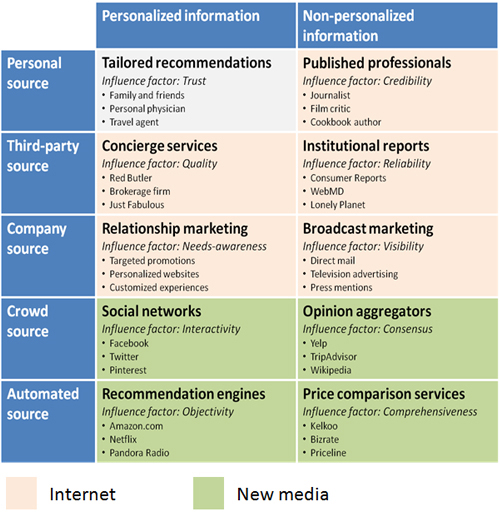
Thriving with the crowd: Marketing with (and against) the New Influence Peddlers

Thriving with the crowd: Marketing with (and against) the New Influence Peddlers

by Joshua Bellin and Paul F. Nunes | Dec 6, 2013

img_72819_internet

Moving at the speed of the crowd has become mandatory for any company that is on the web (which is just about every company). These companies must understand how influence gets peddled in the marketplace today (and constantly refresh their understanding) – and they must constantly reevaluate how customers are influenced and what the appropriate response should be. Readers will learn what the responses should be in this article Read more of this post

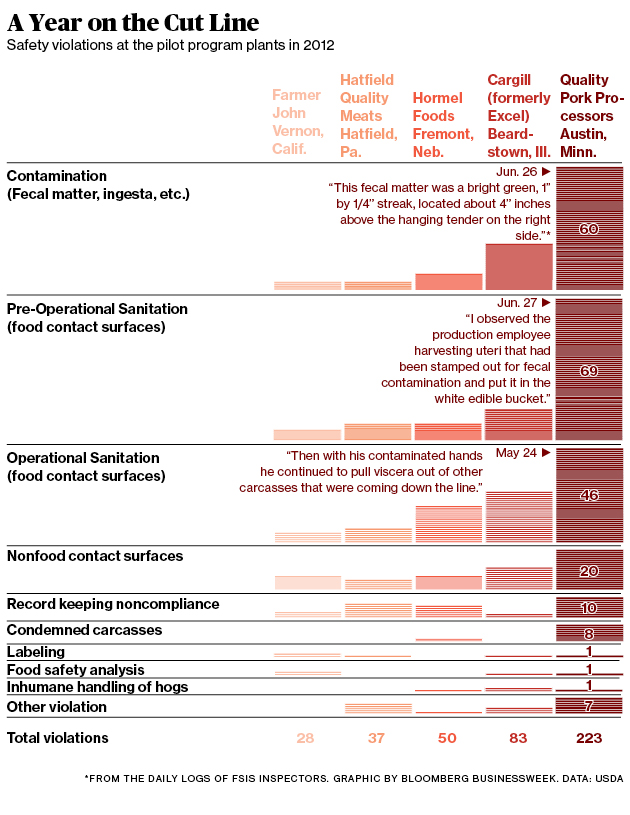
The Truth About Pork and How America Feeds Itself

The Truth About Pork and How America Feeds Itself

By Ted Genoways December 05, 2013

porkchartbig

The Hormel Foods (HRL) plant in Fremont, Neb., is a sprawling complex, just across the Union Pacific tracks on the southern edge of town. Every day of the week, some 1,400 workers arrive before dawn and emerge in the midafternoon, chatting briefly in the parking lot before fanning out onto the highway. It’s a routine with few surprises, but inside the plant, a grand, if largely ignored, experiment is under way, one that is testing the limits of industrial production—and worker and food safety. Read more of this post

New York: A concrete legacy; After 12 years at City Hall, Michael Bloomberg is heading for the exit. But the Bloomberg era continues

December 4, 2013 6:52 pm

New York: A concrete legacy

By Gary Silverman

After 12 years at City Hall, Michael Bloomberg is heading for the exit. But the Bloomberg era continues

New York is a city of five boroughs – the Bronx, Brooklyn, Manhattan, Queens and Staten Island. It is a measure of Michael Bloomberg that during his years as mayor he surveyed this territory and imagined a sixth. The “sixth borough” is the term Mr Bloomberg uses to describe the city’s waterfront. This shoreline runs along 520 miles of ocean, inlets, rivers and bays – an expanse five times the length of the Anglo-Scottish border – and by the time Mr Bloomberg took office at the start of 2002, it had seen better days. Read more of this post

Scopely CEO: To excel at business, create a narrative; There’s no need to knock a creative writing degree when it comes to honing business acumen

Scopely CEO: To excel at business, create a narrative

By Fortune Editors December 3, 2013: 2:48 PM ET

There’s no need to knock a creative writing degree when it comes to honing business acumen, Scopely founder and chief executive Walter Driver says.

By Chanelle Bessette, reporter

FORTUNE — Walter Driver is a longtime social gaming entrepreneur whose company, Scopely, works with independent gaming studios to co-develop, distribute, market, and monetize multiplayer games. Prior to Scopely, Walter founded and served as CEO of O Negative Media, where he developed social network gaming applications. Before that, he co-founded Ignition Interactive, one of the first developers of third party applications on the Facebook platform. Read more of this post

Questions for Starbucks’ chief bean counter; Troy Alstead: Bringing the Starbucks “experience” to groceries and more

Questions for Starbucks’ chief bean counter

By Interview by Geoff Colvin, senior editor-at-large   @FortuneMagazine November 21, 2013: 7:42 AM ET

Troy Alstead: Bringing the Starbucks “experience” to groceries and more

Starbucks stock has been highly caffeinated since the recession, up almost 10-fold from its 2008 low. The explanation includes many factors — products, operations, strategy, the return of Howard Schultz as CEO — and CFO Troy Alstead, 50, has been involved in almost all of them. The company had slightly more than 100 stores when he joined in 1992; today it has almost 20,000. Along the way the Seattle native has held operating jobs around the world; the company named him chief financial officer in 2008. He talked recently with Geoff Colvin about getting value from customer data, using social media skillfully, the magic of the customer experience, and much else. Edited excerpts:

About 70 million people go to Starbucks every week. What are they telling you now about the state of the U.S. consumer? Read more of this post

Inside the mind of Jonah Peretti: The visionary media entrepreneur explains the mechanics of how information spreads, his personal reading habits, and why it’s dangerous to be a slave to the numbers

Inside the mind of Jonah Peretti

December 5, 2013: 4:49 PM ET

The visionary media entrepreneur, diviner of virality and one-time enfant terrible (he turns 40 on New Year’s Day) explains the mechanics of how information spreads, his personal reading habits, and why it’s dangerous to be a slave to the numbers.

By Andy Serwer, managing editor

FORTUNE—People in the media industry are buzzing about entrepreneur Jonah Peretti, and it’s not just his latest venture, BuzzFeed, that has them talking. The Huffington Post co-founder has made a name for himself exploring the ways information spreads online, turning an academic interest into a highly lucrative series of businesses that are prompting people in the media industry to rethink the way they distribute content—especially online. Read more of this post

How to Burst the “Filter Bubble” that Protects Us from Opposing Views

November 29, 2013

How to Burst the “Filter Bubble” that Protects Us from Opposing Views

Computer scientists have discovered a way to number-crunch an individual’s own preferences to recommend content from others with opposing views. The goal? To burst the “filter bubble” that surrounds us with people we like and content that we agree with. The term “filter bubble” entered the public domain back in 2011when the internet activist Eli Pariser coined it to refer to the way recommendation engines shield people from certain aspects of the real world. Read more of this post

Charlie Rose Talks to Stanley Druckenmiller

Charlie Rose Talks to Stanley Druckenmiller

By Charlie Rose December 05, 2013

Describe how it happened that you made a billion dollars in one day shorting the pound with George Soros. 
Germany was unifying with East Germany. Their economies were simultaneously under a boom. At the same time their currency was linked to that of Great Britain. My European analyst called me in August of ’92 and said the U.K. couldn’t handle the interest rates to keep the pound aligned with the deutsche mark and that they were going into a housing recession. I put a billion-and-a-half-dollar short in on the pound … to see how this played out. Read more of this post

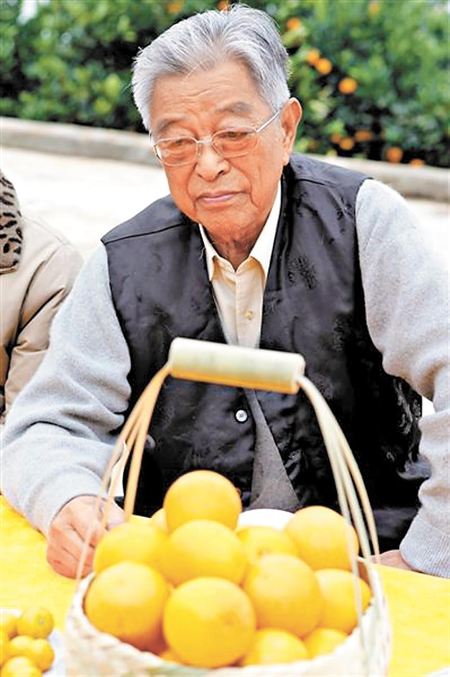
Chu Shijian: from Tobacco King to Orange King, at 85

Chu Shijian: from Tobacco King to Orange King, at 85

Staff Reporter

2013-12-04

褚時健-201143F_2013資料照片_copy1

Chu Shijian. (Internet photo)

Chu Shijian, China’s 85-year-old “Tobacco King” and former owner of the Yunnan Hongta Group, decided in 2011 to ease his way into retirement by starting a fruit company. Chu Oranges has since become an in-demand option for Chinese buyers worried about food security and taste, according to the Guangzhou-based 21st Century Business Herald. Read more of this post

Family Businesses Shouldn’t Hunt for Superstar CEOs

Family Businesses Shouldn’t Hunt for Superstar CEOs

by Josh Baron and Rob Lachenauer  |   9:00 AM December 6, 2013

It’s a dilemma that faces family businesses all too frequently.

We saw it recently when we worked with a $4 billion global manufacturing business in Hong Kong. The company was managed by the founder, who turned it over to his son when he retired. The two men had created distribution channels, built a supply chain, entered profitable new markets–and, just as importantly, held the family together, ensuring that family members were well taken care of and that family disagreements didn’t harm the business. Read more of this post

Who’s Managing Your Company’s Network Effects?

Who’s Managing Your Company’s Network Effects?

by Michael Schrage  |   9:00 AM December 4, 2013

Much as war is too important to be left to the generals, the business of network effects is too valuable to be entrusted to the CMOs and CIOs. Network effects make Google Google, Facebook Facebook, Twitter Twitter, Netflix Netflix and  Pinterest Pinterest. Network effects are the not-so-secret sauce profitably flavoring Amazon’s recommendation engines and Apple’s App Store. They’re destined to transform the “Internet of Things” from a post-industrial aspiration to a trillion-dollar sector. Read more of this post

Simplify your investing to avoid ‘opportunities for failure’

Simplify your investing to avoid ‘opportunities for failure’

abnormalreturns

December 5th, 2013

Retail investors are back. Josh Brown at The Reformed Broker in a recent post highlights the rush of investors back into the stock market, five years and nearly a 100% return up from the bottom. Unfortunately this is not altogether surprising. Investors are prone to sell amidst panic conditions and buy amidst euphoria. The point isn’t that the stock market will sell-off tomorrow just that our natural tendencies work against us investors. Read more of this post

The power of cockroach excreta may explain an entomological mystery

The power of cockroach excreta may explain an entomological mystery

Dec 7th 2013 | From the print edition

SMEARING the place you inhabit with faeces is, among people, an act of desperation rarely seen outside the confines of a prison. Some cockroaches, though, do it all the time. Rebeca Rosengaus of Northeastern University, in Boston, thinks she knows why. As she and her colleagues discovered in a study just published in Naturwissenschaften, wood-cockroach faeces protect the insects from a parasitic fungus. This finding, she thinks, may also explain the existence of one of the world’s most successful groups of animals: termites. Read more of this post

‘Everyone’s fighting over the skeletons of the Industrial Revolution’

‘Everyone’s fighting over the skeletons of the Industrial Revolution’

By Brian Fung, Updated: December 6 at 11:08 am

The factory in Lawrence, Mass., was supposed to be an ordinary harvest. They’d heard of the shuttered plant through a woman at a cocktail party whose late father had worked there. Once upon a time, it had been inhabited by the Dillon Machine Co., a firm founded in 1890 to produce paper-milling equipment. Now its owners were liquidating everything inside, and for $5,000, Carter Anderson and Glen Stone could take whatever they wanted. Read more of this post

Trio That Keeps Cool of Calvin Klein Alive: Meet the team of fashion designers—Kevin Carrigan, Francisco Costa and Italo Zucchelli—who together have kept the cool of Calvin Klein alive and built the brand into a global juggernaut

The Threesome Behind Calvin Klein

Meet the team of fashion designers—Kevin Carrigan, Francisco Costa and Italo Zucchelli—who together have kept the cool of Calvin Klein alive and built the brand into a global juggernaut

ELISA LIPSKY-KARASZ

Dec. 5, 2013 11:39 a.m. ET

BN-AQ114_calvin_GS_20131203130801

HOUSE PROUD | From left: Francisco Costa, Italo Zucchelli and Kevin Carrigan, the creative directors of Calvin Klein’s fashion lines, with longtime house muse Christy Turlington in a Calvin Klein Collection top and skirt. Calvin Klein Collection top, $2,995, and skirt, $1,495, 212-292-9000 Photography by Dan Jackson, Styling by Tina Laakkonen for WSJ. Magazine

ELEVEN YEARS AGO, when Calvin Klein, along with his longtime business partner, Barry Schwartz, sold his company to Phillips-Van Heusen PVH -1.02% (PVH), the designer had just turned 60. In 36 years at the helm of his fashion line, he had gone from selling coats in the now-defunct New York store Bonwit Teller to having his name recognized around the world. In a way, it was time. Klein had endured a bitter lawsuit with his largest licensee, the Warnaco Group, and unbeknownst to the public, his company’s earnings had begun to slip. In the next year, he would give an interview describing his battles with addiction. PVH’s $700 million offer must have seemed like a lucrative reason to lay down his sword. “He’s at the top of his game. He’s a living logotype, and now he wants to rest a bit,” said his spokesman, Paul Wilmot, at the time. But the question everyone outside the company asked was could Calvin Klein Inc., survive without its charismatic founder?   Read more of this post

Frank Lowy’s succession plan evolves as Australian and overseas assets are split

Andrew Heathcote Rich Lists editor

Frank Lowy’s succession plan evolves as Australian and overseas assets are split

Published 04 December 2013 11:55, Updated 04 December 2013 12:13

Frank Lowy will chair both of the new Westfield companies. Jim Rice

Business owners wanting a practical example about the right way to handle succession could do worse than look at Frank Lowy. This morning, Lowy announced plans to take the Australian and New Zealand shopping centres from Westfield Group and put them into the separately listed Westfield Retail Trust, which will be re-named Scentre. Read more of this post