The real kings of shareholder value; “When we long for life without difficulties, remind ourselves that oaks grow strong in contrary winds and diamonds are made under pressure.”

November 8, 2013 7:08 pm

The real kings of shareholder value

By Nigel Thomas

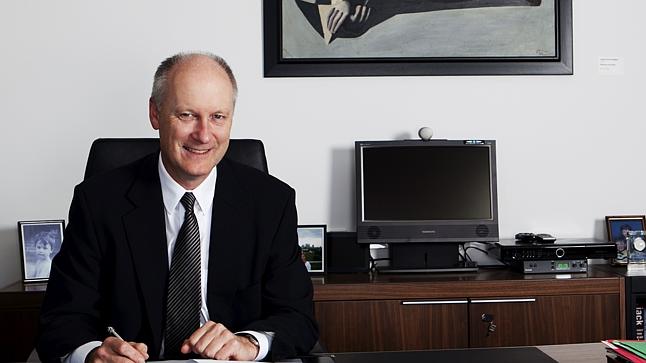
Some managers are delivering excellent returns

Investors often see the term “shareholder value” bandied about. Company managers are very fond of using it. But what exactly does it mean – and in an era of low growth and rock-bottom interest rates, how can we be sure that managers are committed to generating it? Shareholder value originally rose to prominence to solve what Adam Smith called the “agency problem”. This relates to the age-old temptation for managers or executives of a company potentially to follow a course of action that was favourable to them as a group but detrimental, in the long-run, to the company’s beneficial owners – the shareholders. Read more of this post

All Of Britain Has Waited An Entire Year So It Can Burst Into Tears In Front Of This One TV Commercial

All Of Britain Has Waited An Entire Year So It Can Burst Into Tears In Front Of This One TV Commercial

JIM EDWARDS NOV. 8, 2013, 11:05 AM 10,575 16

If you’re not British, the words “John Lewis Christmas ad” won’t mean much to you. But in the U.K., the arrival of the department store chain’s annual Christmas commercial (or “advert” as they say) marks the unofficial beginning of the holiday season — and John Lewis usually delivers an epic, and epically expensive, emotional rollercoaster of a spot that frequently leaves the nation choking back tears. The new one was given a premier in London’s West End, as if it were a movie. Just try watching Lewis’s 2011 ad, and not crying. It’s a counter-intuitive tale of an apparently selfish young boy counting down the days to Xmas, set to a mournful song by The Smiths. Or the 2012 ad, which showed a snowman’s grueling, lonely journey to give his snow-girlfriend a gift of a pair of red gloves. I know, it sounds stupid. But the Brits — some of them at least — will again be quietly weeping at their desks in front of YouTube and in their living rooms for the next few days over this year’s story. Lewis hired Disney animators who took six months to make the ad, an animated feature that shows a bear and a hare wordlessly weathering a winter in the woods before … well, I won’t spoil it for you. The ad features a terrifically sad song by Keane as sung by Lily Allen.

The 5% Club of apprentices can build a better British economy; Defence company chief executive Leo Quinn explains why ensuring 5pc of employees are apprentices, sponsored students or graduates is key to creating employability and employment

The 5% Club of apprentices can build a better British economy

Defence company chief executive Leo Quinn explains why ensuring 5pc of employees are apprentices, sponsored students or graduates is key to creating employability and employment

Leo-Quinn-1_2725932b

Qinetiq chief executive Leo Quinn

By Leo Quinn, Chief executive, QinetiQ

6:01AM GMT 08 Nov 2013

Britain’s pedigree for engineering and innovation is part of its DNA. It is something of which we are rightly proud, yet tragically seem happy to watch fade gradually into history as an inevitable kind of decline. For over a century, our engineers were world-famous. Trained by British apprenticeships and universities, they made this country a byword for invention. On their shoulders a small island stood tall, ranged far and built many wonders of the modern world. Read more of this post

Young blood needed to put the ‘great’ back into British Engineering; Britain, birthplace of the industrial revolution and many of the inventions that formed the modern world, isn’t attracting enough young people into engineering

Young blood needed to put the ‘great’ back into British Engineering

Britain, birthplace of the industrial revolution and many of the inventions that formed the modern world, isn’t attracting enough young people into engineering

By Alan Tovey, Jobs Editor

6:01AM GMT 08 Nov 2013

For a profession that prides itself on finding innovative and elegant solutions, British engineering seems to be facing an intractable problem of its own. Quite simply, we’re not producing enough engineers. The industry needs 1.48m people with engineering skills over the next eight years according to industry body EngineeringUK. Worryingly, universities, colleges and apprenticeship schemes are producing less than half the required number each year. Read more of this post

Great British Engineers: Ultra Electronics

Great British Engineers: Ultra Electronics

To celebrate Great British Engineering, we asked companies in the field to identify examples of this country’s engineering excellence past and present, and how people can be attracted into the sector.

Ultra-Electronics-_2726024b

Ultra Electronics supplies cooling systems for the missiles used on the F/A-18 Hornet

By Rakesh Sharma, chief executive of defence group and aerospace group Ultra Electronics

6:01AM GMT 08 Nov 2013

What do you see as past examples of best of British engineering and invention?

Britain has always been a country of innovators so it is difficult to pick out one example of British engineering. Instead I would like to pick three; one that changed society, one that enabled the 20th century to exploit electronics and a third that promises a great things. First was the control of water and steam. James Watt’s breakthrough created the industrial revolution and changed the world from an agrarian society to an urbanised one, a change that we are still benefitting from today. Read more of this post

Great British Engineers: BAE Systems, McLaren, Bowers & Wilkins, Atkins, QinetiQ, Victrex

Great British Engineers: Bowers & Wilkins

To celebrate Great British Engineering, we asked companies in the field to identify examples of this country’s engineering excellence past and present, and how people can be attracted into the sector.

Bowers_Wilkins-spe_2726018b

Manufacturing of Bowers & Wilkins high-performance loudspeakers

By Geoff Edwards, executive vice-president of UK operations at loudspeaker manufacturer Bowers & Wilkins

6:01AM GMT 08 Nov 2013

What do you see as past examples of best of British engineering and invention?

It is difficult to single out any particular British inventor/ invention from the hundreds of engineering feats achieved over the years as so many are just taken for granted. However, I believe Michael Faraday’s work on the electric motor stands out as as life changing today as it was when developed over 190 years ago. hen you think about the roots of the technology underpinning most labour saving devices you will come back to this basic invention. Indeed, the technology driving the sound reproduction in B&W’s loudspeakers starts with his work. Read more of this post

Hot wheels: the passion behind bike company Madison

Hot wheels: the passion behind bike company Madison

In the second of a year-long series identifying the most innovative businesses in Britain today, Abigail Townsend meets Madison chief executive Dominic Langan.

Dominic-Langan-Mad_2582229b

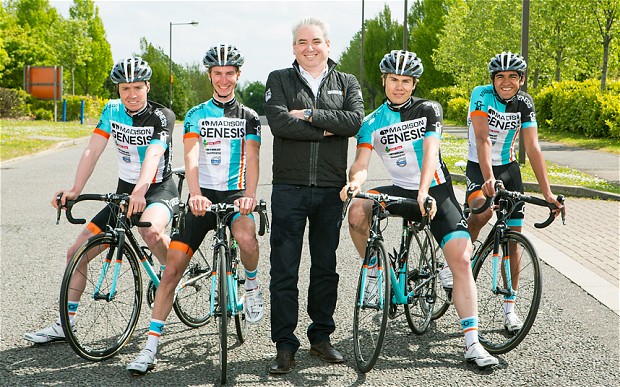
Team spirit: Dominic Langan with Madison Genesis riders Photo: Gemma Day

10:56AM BST 07 Jun 2013

Dominic Langan likes to do things a bit differently. In 2009, the 45-year-old chief executive of specialist sports distributor Madison agreed to buy mountain bike brand Saracen. Once hugely successful, Saracen’s reputation had suffered as it became more mainstream and less reliable. Langan decided there was only one option: start a bike team, compete at the highest level and prove how, under Madison, Saracen was again desirable. It was a bold move. “Four years ago, everyone would have laughed,” says Langan. “We knew we had a job to do.” Read more of this post

Bad luck good for business: camera specialist RoadHawk’s soaring success

Bad luck good for business: RoadHawk’s soaring success

In the latest of a series identifying the most innovative businesses in Britain today, Abigail Townsend meets Mark Nelson, the founder of camera specialist RoadHawk.

Mark_Nelson_RoadHa_2608683b

Caught on camera: Mark Nelson’s RoadHawk became a hit after video footage was put online Photo: Paul Ryan-Goff

10:48AM BST 05 Jul 2013

Mark Nelson owes his success to two extraordinary pieces of bad luck. The first happened when he was driving, aged 18. “We drove round the bend and there, out of nowhere, was a car driven by a German holidaymaker on the wrong side of the road.” A head-on crash was unavoidable; the car, which Nelson had recently borrowed £8,000 to buy, was a write off. Incredibly, the other driver denied liability. The case dragged on for three years before it went to court and Nelson was awarded damages of £25,000. The crash showed Nelson, now 36, that life was short. His first reaction was to find something he loved doing, so he could quit his job as a meat hygiene inspector. As a self-proclaimed ‘technical guy’, Nelson started importing and selling miniature cameras; then began fitting them in cars as black box-style recorders. Read more of this post

Thea Green of Nails Inc: ‘I don’t ever want to switch off’

Thea Green of Nails Inc: ‘I don’t ever want to switch off’

In the first of a year-long series focusing on the most innovative and inspiring businesses in Britain today, Abigail Townsend meets Nails Inc founder Thea Green.

Thea-Green-new_2572708b

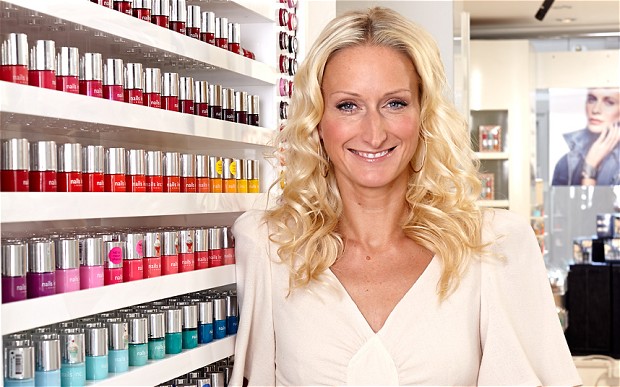
Raising the bar: Thea Green of Nails Inc Photo: Dylan Thomas

11:51AM BST 24 May 2013

“Neon pink, then green, peach, pale blue and orange.” Thea Green is describing nail polish shades she’s wearing. “Rainbow nails,” she calls them with a laugh. Most women would balk at wearing five colours, but then the founder and owner of Nails Inc is not most women. After leaving journalism to set up her chain of nail bars, her commitment has never wavered. Any downtime is spent with husband Nick, who runs a digital printing business, and their three children – aged between three and nine – in their Fulham home, a few miles from Nails Inc’s Regent Street head office. Read more of this post

Good taste, authentic style: the team behind children’s clothes company Belle & Boo

Good taste, authentic style: the team behind Belle & Boo

In the third of a series identifying the most innovative businesses in Britain today, Abigail Townsend meets the founders of children’s clothes company Belle & Boo.

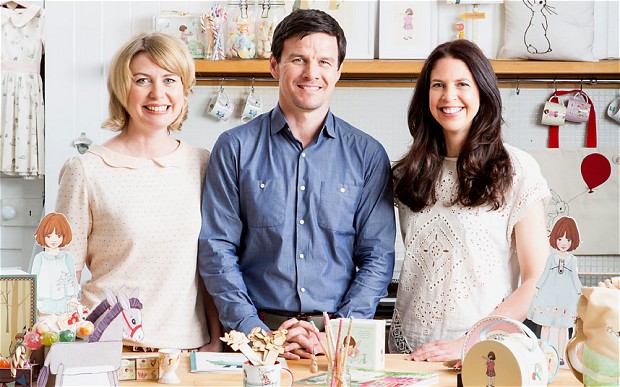
Team effort: Kate Shafe, Patrick Shafe and Mandy Sutcliffe Photo: Gemma Day

Belle-Boo-2_2596047b

2:18PM BST 21 Jun 2013

Setting up any business involves challenges. But at Belle & Boo, the biggest hurdles Kate Shafe and Mandy Sutcliffe faced were biological. Sutcliffe was selling her exquisite illustrations of children online when Shafe, a friend from university, suggested that together they turn her talent into a business. Six months later, however, Shafe was pregnant with her first child – soon followed by her second. Sutcliffe then upped the odds by having twins. So family life has always been part of their business. Read more of this post

All hail the communicators: Want to inspire staff, colleagues and customers? Adopt the rhetoric of Churchill, Nelson and Russell Crowe’s Gladiator

All hail the communicators

Want to inspire staff, colleagues and customers? Adopt the rhetoric of Churchill, Nelson and Russell Crowe’s Gladiator.

By Michael Hayman

1:16PM GMT 04 Nov 2013

“On my command unleash hell.” And with that cry Russell Crowe launches the might of Rome onto the ill-fated barbarians. The glory of Gladiator. The epitome of the leader. Not just brave but a communicator with the ability to rally the troops, to push the mere mortal to superhuman feats of endeavor. Throughout history we have celebrated leaders with that unique command of language, those with the ability to inspire. Shakespeare’s Henry V at Agincourt: “Once more unto the breach dear friends.” Nelson at Trafalgar: “England expects every man to do his duty.” Churchill on El Alamein: “It is not even the beginning of the end. But it is, perhaps, the end of the beginning.” Wonderful words, dexterously delivered. Surely in this age of instant communication we would continue to champion the role of the orator? Not by any means as it happens. Read more of this post

Stop Worrying About Making the Right Decision

Stop Worrying About Making the Right Decision

by Ed Batista  |   2:00 PM November 8, 2013

Much of my work as a coach involves helping people wrestle with an important decision. Some of these decisions feel particularly big because they involve selecting one option to the exclusion of all others when the cost of being “wrong” can be substantial: If I’m at a crossroads in my career, which path should I follow? If I’m considering job offers, which one should I accept? If I’m being asked to relocate, should I move to a new city or stay put?

Difficult decisions like this remind me of a comment made by Scott McNealy — a co-founder of Sun Microsystems and its CEO for 22 years — during a lecture I attended while I was in business school at Stanford: He was asked how he made decisions and responded by saying, in effect, It’s important to make good decisions. But I spend much less time and energy worrying about “making the right decision” and much more time and energy ensuring that any decision I make turns out right. Read more of this post

Speed is of the essence for new chief executives

November 8, 2013 12:20 pm

Speed is of the essence for new chief executives

By Brooke Masters

Acer, the struggling computer maker, ditched its chief executive for the second time in two and a half years this week. The world’s fourth-largest computer maker by shipments bid farewell to JT Wang and promised another restructuring after a series of poor financial results. Jim Wong, who is corporate president, now has the unenviable task of helping the Taiwanese manufacturer catch up with the consumer shift from laptops and notebook computers to smartphones and tablets. Read more of this post

The best-performing college endowments have less than $1 billion — places like Abilene Christian and Spalding University, not giants like Yale. People have become disenchanted with all these exotic investment vehicles. The consultants have really pushed these things.”

November 8, 2013

Fast-Growing Endowments, Without the Ivy

By JAMES B. STEWART

Stewart1-articleLarge

Jack Rich said Abilene Christian’s investments benefited from its board members’ knowledge of the oil industry.

Move over, Yale.

This week, the National Association of College and University Business Officers unveiled its preliminary results for endowment performance for the year that ended on June 30. And Yale, the longtime titleholder, was knocked from its perch for the most recent three- and five-year periods. The long success of the Yale model underlies the conventional wisdom that a top-performing endowment has to be big (over $1 billion), heavily invested in costly alternative strategies like hedge funds and private equity, and managed by a large and sophisticated staff of internal investment professionals. Read more of this post

Peter Lynch Once Managed Money. Now He Gives It Away.

November 8, 2013

Peter Lynch Once Managed Money. Now He Gives It Away.

By PAUL SULLIVAN

Wealth-articleLarge

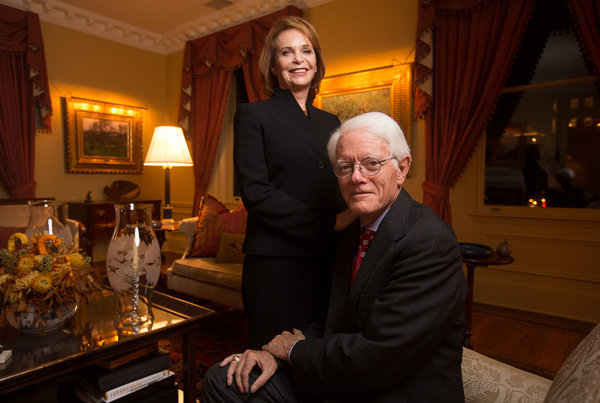
The philanthropists Peter and Carolyn Lynch at their home in Boston. They make grants, ranging from $25,000 to $1 million, alongside other foundations to amplify their impact and are personally involved in some of the charities.

PETER LYNCH has gone from being the avuncular face of mutual fund investing for average Americans in the 1980s to a quiet philanthropist working with his wife to give away a good part of the fortune he amassed as a top mutual fund manager. Mr. Lynch ran Fidelity’s Magellan Fund from 1977 to 1990, as it grew to $14 billion in assets, from $18 million. His average annual return over that time was 29.2 percent. But it was as the company’s television pitchman, with his shock of white hair and schoolteacher demeanor, that Mr. Lynch became widely known. Read more of this post

For Creator of Twitter’s Whale, a ‘Fail’ in Name Only

NOVEMBER 8, 2013, 10:44 AM

For Creator of Twitter’s Whale, a ‘Fail’ in Name Only

By ALEXANDRA STEVENSON

dbpix-twitter-whale-tmagArticle

One of Twitter’s co-founders was struck by this image and chose to use it as a symbol when the Twitter site was temporarily down but would return soon. With its initial public offering on Thursday, Twitter minted a brand new group of billionaires, many of whom were rewarded for their early work with the company. But one person who brought a sense of levity to the start-up during its darkest hours will not be making anything. That person is Yiying Lu, the artist behind Twitter’s “Fail Whale” – the image of a whale being carried by birds — that used to pop up every time Twitter’s website was down, which was often in 2008. Read more of this post

Prodigy Makes Ascent to Chess’s Most Rarefied Air

Prodigy Makes Ascent to Chess’s Most Rarefied Air

Nov. 8, 2013 5:44 p.m. ET

The matches of the 2013 FIDE World Chess Championship start Saturday in Chennai, India, where national icon Viswanathan Anand, known as the Tiger from Madras, will defend his title against Norwegian Magnus Carlsen, the world’s top-ranked chess player since July 2011. The contest is perhaps the most anticipated chess event since American Bobby Fischer outdueled Boris Spassky during a Cold War détente in 1972. India’s first grandmaster, Anand, 43, has been the undisputed champion since 2007. The 22-year-old wunderkind Carlsen, however, is the odds-on favorite. A victory would make Carlsen, already the international face of chess, the second youngest champion in history, behind only Garry Kasparov, considered one of the greatest of all time. Carlsen’s creative, prodigious play has earned him the right to challenge not only for the world title, but to cement a place in history alongside two of the games greatest champions. Read more of this post

You Can’t Predict Destiny by Designing Your Baby’s Genome; New innovations promise parents more control over a child’s traits, but human life is too multifaceted to be reduced to a formula

You Can’t Predict Destiny by Designing Your Baby’s Genome

New innovations promise parents more control over a child’s traits, but human life is too multifaceted to be reduced to a formula.

MEGAN ALLYSE and MARSHA MICHIE

Updated Nov. 8, 2013 7:12 p.m. ET

In the 1997 film “Gattaca,” wealthy parents regularly use what’s called preimplantation genetic diagnosis to pick children with the most desirable characteristics. Using in vitro fertilization, PGD creates several embryos and then uses the most genetically promising one to attempt a pregnancy. Although genetic discrimination is illegal in the Gattaca world, individuals are nevertheless separated into “valid” and “invalid” categories based on genetically assessed intelligence, susceptibility to disease and life span. Individuals are stratified at birth: “Valids” become astronauts and politicians; “invalids” become janitors. Read more of this post

Dr. Francis Collins: Politics on the Frontier of Science; Major breakthroughs are possible in neuroscience, cancer, AIDS and Parkinson’s—if Congress learns to set priorities

Dr. Francis Collins: Politics on the Frontier of Science

Major breakthroughs are possible in neuroscience, cancer, AIDS and Parkinson’s—if Congress learns to set priorities.

JOSEPH RAGO

Nov. 8, 2013 6:44 p.m. ET

If the early years of the 21st century often feel like a retread of the 1970s—economic anxiety, turmoil overseas, American leaders who don’t seem to understand what the problems are much less how to fix them—the geneticist Francis Collins suggests less dispiriting resemblances. The “arrow of progress that we’re riding in biomedicine” took flight 40 or so years ago but is traveling faster and further now. Read more of this post

Is It OK to Yell at Your Employees?

Is It OK to Yell at Your Employees?

by Michael Schrage  |   12:00 PM November 8, 2013

Steve JobsJeff Bezos. Martha Stewart. Bill Gates. Larry Ellison. Jack Welch. Successful. Visionary. Competitive. Demanding. And each with a well-deserved reputation for raising their voices. They yelled. Yelling was an integral part of their leadership and management styles.

Is that bad? Is that a flaw?

Harvard Business School recently published and popularized a case study of Sir Alex Ferguson, Manchester United’s recently retired manager and the most successful coach in English Premier League history. Ferguson was a fantastic leader and motivator. But Sir Alex was particularly famous for his “hair dryer treatment”: When he was angry with his players, he shouted at them with such force and intensity it was like having a hair dryer switched on in their faces. Read more of this post

Robert Shiller: Is economics a science? Critics of ‘economic sciences’ sometimes refer to the development of a ‘pseudoscience’ of economics, arguing that it uses the trappings of science, like dense mathematics, but only for show

Is economics a science?

Critics of ‘economic sciences’ sometimes refer to the development of a ‘pseudoscience’ of economics, arguing that it uses the trappings of science, like dense mathematics, but only for show

Robert Shiller

theguardian.com, Wednesday 6 November 2013 16.22 GMT

I am one of the winners of this year’s Nobel Memorial Prize in Economic Sciences, which makes me acutely aware of criticism of the prize by those who claim that economics – unlike chemistry, physics, or medicine, for which Nobel prizes are also awarded – is not a science. Are they right? One problem with economics is that it is necessarily focused on policy, rather than discovery of fundamentals. Nobody really cares much about economic data except as a guide to policy: economic phenomena do not have the same intrinsic fascination for us as the internal resonances of the atom or the functioning of the vesicles and other organelles of a living cell. We judge economics by what it can produce. As such, economics is rather more like engineering than physics, more practical than spiritual. Read more of this post

Australis’s blue-chip CEOs win kudos from their peers for their entrepreneurial flair

Leo D’Angelo Fisher Columnist

Blue-chip CEOs win kudos from their peers for their entrepreneurial flair

Published 08 November 2013 12:19, Updated 08 November 2013 14:01

d45dfb14-4813-11e3-bca4-8651e21e9e85_565816877a_6_0_2862300789--646x363

Richard Goyder’s resilience, resolve and purpose are central to the Wesfarmers’ ‘culture of trying to do things the right way’. Photo: Claire Martin

It is often remarked upon that when it comes to running a nimble company that understands its markets, is quick to exploit (or better, still lead) business and commercial trends, embraces change and inspires its employees, entrepreneurs provide the template for big business to follow. Large corporations can be fixed in their ways and changing strategy or approach can be as challenging as growing a third leg. Add to this the fact that large companies have slashed their internal management resources to the bone in a seemingly panicked response to the unpredictable economy, and many big companies simply don’t have the capacity, much less the interest, to create and realise a vision for the future. The prevailing attitude in corporate Australia seems to be: when in doubt, just keep cutting. Which is why AFR BOSS magazine provides some welcome and reassuring news in its annual Most Respected Companies rankings for 2013. The List demonstrates that blue-chip chief executives can be as entrepreneurial as the most audacious and dextrous entrepreneur. More to the point, they understand that the future belongs to those companies that can think and behave entrepreneurially. Read more of this post

The mouthy airline chief who annoyed too many passengers; Ryanair’s polarising public face may now move off the radar

November 8, 2013 7:02 pm

The mouthy airline chief who annoyed too many passengers

By Andrew Parker and Jamie Smyth

Ryanair’s polarising public face may now move off the radar, say Andrew Parker and Jamie Smyth

“Michael. Big bollocks. Loudmouth. You’ll find me not very sensitive.” That is howMichael O’Leary replied to a question from the Financial Times two years ago about how he preferred to be addressed. And this is what the chief executive of Ryanair – arguably Europe’s most reviled airline – said back then about the case for being nicer to its customers: “Couldn’t possibly be nicer … Our service consists of the lowest fare, an on-time flight on a brand-new aircraft. Anything over that: go away,” he declared, amid some trademark expletives. Read more of this post

Ms Lei Jufang, billionaire founder of Shenzhen-listed Cheezheng has ridden the stunning success of her traditional Chinese medicine (TCM) firm

LEI JUFANG: Tycoon’s Traditional Recipe For Riches

Written by Andrew Vanburen (China Correspondent)

lei_montage

Saturday, 09 November 2013 09:01Cheezheng Tibetan Medicine Chairperson Ms. Lei Jufang has a net worth of over one billion usd.Photos: imageschina, richonline
MS. LEI JUFANG, chairperson of Shenzhen-listed Cheezheng, has ridden the stunning success of her traditional Chinese medicine (TCM) firm to the tune of a net worth of over one billion usd.
Born in 1955 in the northwestern Chinese province of Gansu, one of the PRC’s poorest, Ms. Lei nevertheless has gradually risen to become one of the country’s wealthiest women. Gansu Province is renowned as a source for wild medicinal herbs used in traditional Chinese medicine – a geographic factor which influenced the billionaire’s business direction later in life. In 1995, she founded Cheezheng Tibetan Medicine (SZA: 002287) in Linzhi, Tibet and currently serves as the TCM firm’s chairperson, owning 81% of its issued shares. Read more of this post

Lululemon’s failure to communicate; Without Christine Day as the face of the company, Lululemon will struggle to control Wilson and his unpredictable mouth from smearing its image. Better education will decrease product complaints, but a brand associated with a polarizing, unfiltered leader can quickly lose its appeal

Lululemon’s failure to communicate

By Colleen Leahey, Reporter November 8, 2013: 4:46 PM ET

With a wildcard founder and complex offerings, the company struggles to win over the crop of haters that arose after last spring’s product recall. FORTUNE — Thursday, Lululemon (LULU) founder and chairman Chip Wilson blamed his company’s customers for the retailer’s product issues. “Quite frankly some women’s bodies just actually don’t work for it,” he said on Bloomberg TV, referring to sheerness and pilling in Lululemon’s famed yoga pants. Read more of this post

Linde chief retires in glory; Wolfgang Reitzle has transformed German industrial gases group

November 7, 2013 10:53 am

Linde chief retires in glory

By Tony Barber

Wolfgang Reitzle has transformed German industrial gases group

Construct a personality profile of the chief executive of an industrial gases group. Apart from essential leadership qualities, its features would include a passion for science and engineering, an insistence on organisational precision, a faith in long-term planning and a career devoted to one company. In short, it would call to mind a businessman such as Benoît Potier of France’s Air Liquide or John McGlade of Pennsylvania-based Air Products. Read more of this post

Bernie Ecclestone says F1 ‘worth nothing’ without him in charge

Last updated: November 7, 2013 10:44 pm

Bernie Ecclestone says F1 ‘worth nothing’ without him in charge

By Roger Blitz, Leisure Industries Correspondent

Personal cheques of $10m were made to three Formula One team principals to secure long-term commercial relationships with the sport, the High Court hearing over damages claims against the F1 chief executive Bernie Ecclestone has heard. The payments, made in 2001 to Alain Prost, Eddie Jordan and the late Tom Walkinshaw, rather than to the teams they managed, were described as “an odd thing to be doing” by Philip Marshall, QC for plaintiffConstantin Medien, the German media group which is suing Mr Ecclestone and other parties for $140m. Read more of this post

5 big happines myths debunked – and the power of negative thinking

5 BIG HAPPINESS MYTHS DEBUNKED–AND THE POWER OF NEGATIVE THINKING

OLIVER BURKEMAN, AUTHOR OF THE BOOK THE ANTIDOTE: HAPPINESS FOR PEOPLE WHO CAN’T STAND POSITIVE THINKING, HAS SPENT YEARS STUDYING WHAT MAKES PEOPLE HAPPY. IT’S NOT WHAT YOU THINK.

BY OLIVER BURKEMAN

November 7, 2013 | 5:33 AM

It sometimes feels as if the “happiness industry”–the self-help books, motivational speakers, corporate consultants and the rest–makes its money by being useless. It’s an ingenious business model, when you think about it: promise to help people think positive, then when your techniques fail, conclude that they weren’t thinking positivelyenough–sending them back for more. Among the many myths and misconceptions dogging the subject of happiness, here are five of the worst, along with some suggestions for what to do instead. Read more of this post

Kidzania’s Xavier Lopez believes in the power of doing things together

This boss likes to get everybody involved

Nov 09,2013, LEE JUSSARANG AND MOON GWANG-LIP [joe@joongang.co.kr]

070918_p10_adult(1)

Xavier Lopez, CEO of KidZania, a Mexican chain of family entertainment centers, believes in the power of doing things together.
In recent years, he took on challenges such as quitting smoking or losing weight through annual corporate campaigns. This year, he entered the New York City Marathon, together with his employees. He finished the marathon. Twenty-seven Mexican employees and Jin Hyun-sook, the head of the Korean branch, ran with him. Doing things together makes it easier to realize a goal, he said. It’s also fun – a theme KidZania has thrived on for the past 15 years.  Read more of this post

The honne (one’s genuine feelings) and the tatemae (what one must say publicly): Big business in Japan publicly supports Abenomics while being privately wary

The honne and the tatemae: Big business in Japan publicly supports Abenomics while being privately wary

Nov 9th 2013 |From the print edition

20131109_WBD000_0

JAPANESE culture places great stress on distinguishing the honne, one’s genuine feelings, from the tatemae, what one must say publicly. Just before Shinzo Abe, Japan’s prime minister, returned to power last year, Hiromasa Yonekura, the head of the Keidanren, the country’s big-business lobby, made a grave error by revealing hishonne about Abenomics, Mr Abe’s bold strategy to revive the economy. He said its call for a radical loosening of monetary policy was “reckless”. Mr Yonekura backtracked, but has been cold-shouldered by the government. Since then, bosses have been sticking to the tatemae, bland statements of support for Abenomics. Privately, many are less keen. Read more of this post