Four Stand-Out College Essays About Money

Four Stand-Out College Essays About Money

MAY 9, 2014

Clare Connaughton with her mother Maritza Vargas at a Housing Works thrift store in Sunset Park, Brooklyn. Clare Connaughton, a high school student from Mineola, N.Y., reads from her college application essay about how shopping at thrift stores with her mother has gone from necessity to cherished pastime.

 image001-4

Thrift Store Shame, Then Pride

Talking about money is hard. Writing well about yourself may be harder still. So trying to do both at once, as a teenager, while addressing complete strangers who control your future, would seem to be foolhardy.

But each year, plenty of high school seniors who are applying to college give it a go. Many skip the story of the sports team triumph or the grandparent’s death and write essays about weighty social issues like work, class and wealth, or lack thereof. Perhaps that’s what affects them most. Or maybe those are the subjects that they think will attract an admissions officer’s eye.

In any case, for the second year, we put out a nationwide call for the best college application essays about these topics. With the help ofJennifer Delahunty, the dean of admissions and financial aid at Kenyon College in Gambier, Ohio, and an accomplished essayist and editor herself, we picked four to share here. They are a diverse lot, touching on topics ranging from work at McDonald’s and thrift store shopping to homelessness and reckoning with a parent’s job loss. What they share, however, is a quality that admissions officers crave but don’t see as often as they’d like: The applicant’s brain, laid bare on the page, wrapping itself around a topic that most people don’t write enough about or don’t write about in a deep or moving way. Read more of this post

The Teen Whisperer: How the author of “The Fault in Our Stars” built an ardent army of fans

THE TEEN WHISPERER

How the author of “The Fault in Our Stars” built an ardent army of fans.

by Margaret TalbotJUNE 9, 2014

Green wanted to write “an unsentimental cancer novel” that offered “some basis for hope.” Illustration by Bartosz Kosowski.

In late 2006, the writer John Green came up with the idea of communicating with his brother, Hank, for a year solely through videos posted to YouTube. The project wasn’t quite as extreme as it sounds. John, who was then twenty-nine, and Hank, who was three years younger, saw each other about once a year, at their parents’ house, and they typically went several years between phone calls. They communicated mainly through instant messaging.

Hank was living in Missoula, where he’d started a Web site about green technology. John was living on the Upper West Side while his wife, Sarah Urist Green, completed a graduate degree in art history at Columbia. He had published two young-adult novels, “Looking for Alaska,” in 2005, and “An Abundance of Katherines,” in 2006, and was working on a third. Like the best realistic Y.A. books, and like “The Catcher in the Rye”—a novel that today would almost certainly be marketed as Y.A.—Green’s books were narrated in a clever, confiding voice. His protagonists were sweetly intellectual teen-age boys smitten with complicated, charismatic girls. Although the books were funny, their story lines propelled by spontaneous road trips and outrageous pranks, they displayed a youthfully insatiable appetite for big questions: What is an honorable life? How do we wrest meaning from the unexpected death of someone close to us? What do we do when we realize that we’re not as special as we thought we were? Read more of this post

Kepler space telescope spies a ‘Mega-Earth’

Kepler space telescope spies a ‘Mega-Earth’

By Joel Achenbach, Published: June 2

Astronomers have discovered a surprising planet, a rocky world with 17 times the mass of Earth. There have been “Super-Earths” discovered before, but this one is in a league of its own. The scientists call it a “Mega-Earth.”

Discovered by NASA’s Kepler space telescope and announced Monday at an astronomy meeting in Boston, this planet, officially named Kepler-10c, scrambles the equations that dictate how massive a rocky planet can be without ballooning into a Jupiter-like gas giant.

The theorists didn’t see this coming. The orthodoxy was that, beyond about 10 Earth masses, a planet would hold on to so much hydrogen gas that it would become like Jupiter or Saturn. Kepler-10c suggests that plus-size planets can stay rocky, with clearly defined surfaces, rather than becoming gaseous and bloated.

That means there’s more real estate out there for life as we know it on Earth.

Kepler-10c is also very old, having formed about 11 billion years ago, less than 3 billion years after the birth of the universe. Rocky worlds weren’t believed to have existed that long ago.

“Nature will do what she wants, regardless of earthling theorists,” said Sara Seager, a Massachusetts Institute of Technology planetary scientist who was not involved in the new discovery but said by e-mail that she finds it “incredibly exciting.” Read more of this post

Devil’s Advocate: The Most Incorrect Beliefs of Accounting Experts

Devil’s Advocate: The Most Incorrect Beliefs of Accounting Experts

Sudipta Basu 

Temple University – Department of Accounting
December 1, 2013
Accounting Horizons, Vol. 27, No. 4, 2013
Fox School of Business Research Paper No. 14-005

Abstract: 
This commentary reflects the views of a panel of six experts tasked with writing an essay on the most incorrect beliefs of accounting experts. The title provides ample motivation for this discussion – to document the views of some thought leaders in accounting research on a seldom-debated and mostly ignored issue – incorrect beliefs. While each essay offers a thoughtful message on its own, in combination they reflect an even stronger view, and offer sound advice for accountants of all stripes and persuasions.


One-on-one with Abby Johnson, Fidelity’s ultra-private president; In a rare interview, the Fidelity president talks innovation and family business

One-on-one with Abby Johnson, Fidelity’s ultra-private president

Stephanie N. Mehta

@FortuneMagazine

JUNE 2, 2014, 6:00 AM EDT

In a rare interview, the Fidelity president talks innovation and family business

Abby Johnson, president of FMR LLC, the parent company of Fidelity Investments, told a room full of entrepreneurs that being a privately held business (FMR is owned by employees and the Johnson family) has pushed the company to innovate in-house.

“We don’t do acquisitions,” except for very small transactions, Johnson said in an interview Friday at TiECON East, a Boston summit for entrepreneurs in the fields of information technology, cleantech, education and life sciences. “We don’t have a public currency that would make any [major] acquisition viable. Everyone in the company understands this. We build stuff ourselves and over the long term that’s been very good” for Fidelity.

Fidelity’s build-not-buy attitude may not have encouraging to so-called FinTech (short for financial tech) entrepreneurs in the audience who were perhaps looking to score big by selling out to the mutual fund giant. But Johnson added that Fidelity is eager to invest, partner and buy from startups. Indeed, through its Fidelity Ventures arm and other activities, Johnson said, Fidelity is looking for partners that can help the company differentiate itself from competitors. Read more of this post

The Case for Corporate Disobedience

The Case for Corporate Disobedience

by Thomas Wedell-Wedellsborg  |   11:00 AM June 2, 2014

If your company puts you in charge of developing a foreign market or a new line of business, your challenges are in many ways similar to those facing a startup. Before you can scale the business, you have to understand what your customers really want and value, and how to deliver it to them — and that process requires a lot of flexibility.

In theory, you have decent odds of getting it right. Unlike entrepreneurs working out of the proverbial garage, you can draw on your company’s resources to get things done. But as Steve Blank, Henry Chesbrough, and others have pointed out, that advantage is offset by the daunting fact that corporate innovators have to fight a war on two fronts. Like a startup, you have to get the market fit right, but you also have to fight the corporate systems at the same time, dealing with the rules, procedures, and approval processes that every big company has in place to support its strategy. It is a fight that every manager is familiar with, but nowhere is the challenge bigger than when the existing strategy is not aligned with the demands of the situation you are in. Read more of this post

What Bruce Lee Can Teach You About Design; Bruce Lee’s fighting style was to let his opponent determine the approach–a mindset that helped shape the design philosophy of one of Nike’s former top shoe designers

WHAT BRUCE LEE CAN TEACH YOU ABOUT DESIGN

BRUCE LEE’S FIGHTING STYLE WAS TO LET HIS OPPONENT DETERMINE THE APPROACH–A MINDSET THAT HELPED SHAPE THE DESIGN PHILOSOPHY OF ONE OF NIKE’S FORMER TOP SHOE DESIGNERS.

BY REBECCA GREENFIELD

Bruce Lee didn’t know much about design, but he was not short on useful life philosophies. Which is why D’Wayne Edwards, who was design director for Nike’s Jordan line before starting Pensole Footwear Design Academy, counts the martial arts icon among his top inspirations. “Everyone knows him as a fighter,” Edwards, one ofFast Company‘s Most Creative People in Business this year, said. What Edwards finds inspiring, however, is Lee’s way of thinking. Read more of this post

New Spore: What good is Medisave if you can’t use it when needed?

What good is Medisave if you can’t use it when needed?

June 1st, 2014 |  Author: Contributions

My mother recently suffered a heart attack. She was hospitalised and a stent was inserted into her heart. The resultant hospital bill came up to about $18,400.

My brother and I have more than $90,000 in our Medisave accounts, but only $3,950 could be deducted from my brother’s account as this was the maximum amount allowed. We had to pay the remaining amount of more than $14,000 in cash.

Manpower Minister Tan Chuan-Jin said the money in our Central Provident Fund accounts is ours (“CPF money is your money, says Chuan-Jin”; Monday), so why could we not use our money to pay our mother’s hospital bill?

Even if the full amount were deducted from my Medisave, I would still have more than $27,000 remaining. Moreover, I am still working and can continue to contribute to build up the funds again.

Instead, we had to find a way to come up with the cash portion for the bill.

I understand that CPF and Medisave funds are to be used for retirement and medical emergencies. But what good is this money if we cannot use it when we need it? CPF usage policies should be reviewed and fine-tuned. The Government should always strive for continual improvements to better the lives of the people. Read more of this post

Here’s The Weather Prediction That Won World War II

Here’s The Weather Prediction That Won World War II

GUS LUBIN MILITARY & DEFENSE  JUN. 2, 2014, 8:21 AM

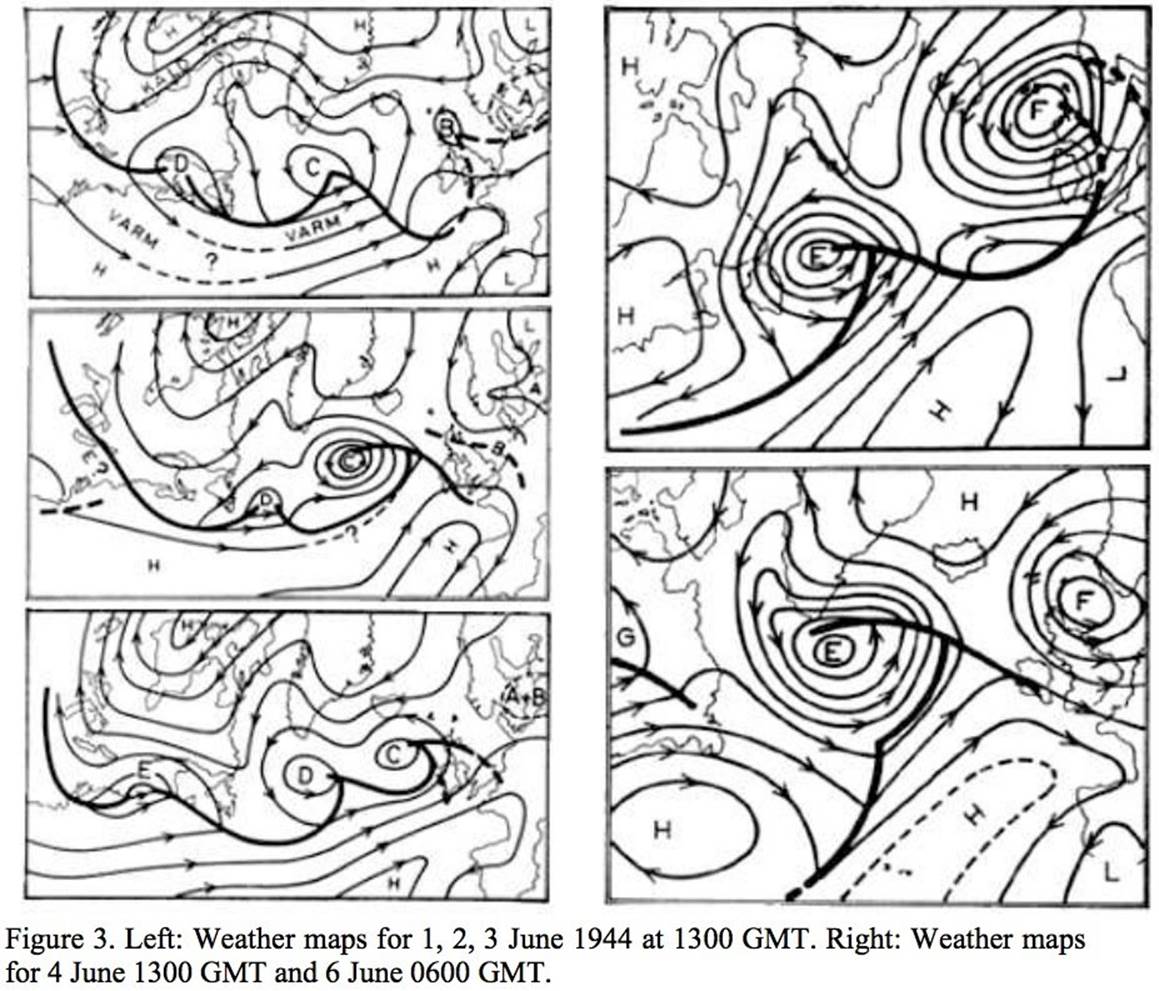
German military leaders expected an Allied invasion on the Channel coast in late May, 1944, when there was high tide, a full moon, good visibility, and little wind. When it did not come, and when the weather turned dramatically in June with a depression bringing storms, they felt they could relax.

image001-20

“There were all the less doubts that an invasion might happen in the meantime as the tides are very unfavorable in the following days and no air reconnaissance of any kind had given any hints of an imminent landing,” Field Marshall Erwin Rommel wrote on June 4, 1944, before leaving France for Germany to celebrate his wife’s birthday.

But while German weather forecasters saw no possibility for invasion, Allied forecasters were frantically looking for an opening. They found one on June 6 — and on the 7oth anniversary of the pivotal invasion, we’re looking at how they did it. Read more of this post

24 Rules Of Seduction

24 Rules Of Seduction

DINA SPECTOR HOME  JUN. 2, 2014, 12:20 PM

We’ve already shown you bestselling author Robert Greene’s 48 tips on becoming more powerful.

The master of persuasion has another book titled, “The Art of Seduction” which offers 24 techniques to get what you want by manipulating everyone’s greatest weakness — the desire for pleasure.

Greene also identifies 10 different types of seductive characters, including “The Siren,” “The Charmer,” and “The Natural.”

Greene gave us permission to republish these rules from his book.

Choose the right victim

“Everything depends on the target of your seduction. Study your prey thoroughly, and choose only those who will prove susceptible to your charms. The right victims are those for whom you can fill a void, who see in you something exotic. They are often isolated or unhappy, or can easily be made so—for the completely contented person is almost impossible to seduce. The perfect victim has some quality that inspires strong emotions in you, making your seductive maneuvers seem more natural and dynamic. The perfect victim allows for the perfect chase.”

Create a false sense of security — approach indirectly

“If you are too direct early on, you risk stirring up a resistance that will never be lowered. At first there must be nothing of the seducer in your manner. The seduction should begin at an angle, indirectly, so that the target only gradually becomes aware of you. Haunt the periphery of your target’s life—approach through a third party, or seem to cultivate a relatively neutral relationship, moving gradually from friend to lover. Lull the target into feeling secure, then strike.” Read more of this post

Lessons from the world’s most successful people

Lessons from the world’s most successful people

MAY 29, 2014, 10:24 AM EDT

In 30 years at Fortune, I’ve interviewed CEOs and billionaires and other titans about what makes them succeed. Here are 10 things I’ve learned, plus wisdom from Warren Buffett.

The best career advice is universal. It applies to a CEO of aFortune 500 company and to a kid aspiring to make it through college.

I tried to keep this in mind last week when I spoke at Allentown Central Catholic High School, which in 1978 sent me on my way from Pennsylvania to what has turned out to be a thrilling and very satisfying life and career. I told the CCHS students, who packed Rockne Hall for inductions of their new Student Council and class officers, that I’ve spent the past 30 years at Fortune “going to school on success.” That is, my job profiling some of the world’s most successful people–from Oprah Winfrey to Yahoo  YHOO  CEOMarissa Mayer to Rupert Murdoch  NWS  to Melinda Gates–is to learn and explain what makes these extraordinary people win and adapt to all sorts of challenges. I pared my message to 10 pieces of advice, which include a few obvious truths and, I hope, some enlightening points that are universal. Read more of this post

Moulding investigative analysts; It’s vital to have that sense of the ground: Credit Suisse boss

PUBLISHED JUNE 02, 2014

Moulding investigative analysts

It’s vital to have that sense of the ground: Credit Suisse boss

KELLY TAY

KELLYTAY@SPH.COM.SG   @KellyTayBT

‘Instead of looking at quarterly numbers, (we should think about) what’s going to happen in the next three, five years . . . (to) tell clients something they don’t know.’
[SINGAPORE] It’s not every day that an analyst concedes that the bulk of financial research in existence is merely “noise”, with not much intrinsic value. But Stefano Natella, Credit Suisse’s head of equity research, is not your typical analyst.

With a penchant for existential questions – “I like that philosophical question (about) why research exists” – Mr Natella is keen to change the way clients view, seek out, and pay for financial analysis.

“I’m very candid (about this) – I don’t think there’s a lot of value in making comments on earnings. Or the value (expires) two minutes after it has been reported,” he tells The Business Times in an exclusive interview. Read more of this post

Just Babies: The Origins of Good and Evil

Just Babies: The Origins of Good and Evil

May 28, 2014 by Shane Parrish

“Children are sensitive to inequality, then, but it seems to upset them only when they themselves are the ones getting less.”

Morality fascinates us. The stories we enjoy the most, whether fictional (as in novels, television shows, and movies) or real (as in journalism and historical accounts), are tales of good and evil. We want the good guys to be rewarded— and we really want to see the bad guys suffer.

So writes Paul Bloom in the first pages of Just Babies: The Origins of Good and Evil. His work, proposes that “certain moral foundations are not acquired through learning. They do not come from the mother’s knee … ”

***
What is morality?

Even philosophers don’t agree on morality. In fact, a lot of people don’t believe in morality at all. Read more of this post

Beauty ≠ truth: Scientists prize elegant theories, but a taste for simplicity is a treacherous guide. And it doesn’t even look good

Beauty ≠ truth

Scientists prize elegant theories, but a taste for simplicity is a treacherous guide. And it doesn’t even look good

by Philip Ball 3,000 words

Theoretically beautiful; geometrically pruned trees, Leer, Germany. Photo by Karl Johaentges/Getty

Philip Ball is a British science writer, whose work appears in Nature,New Scientist andProspect, among others. His latest book is Serving the Reich: The Struggle for the Soul of Physics Under Hitler (2013).

Albert Einstein’s theory of general relativity is a century old next year and, as far as the test of time is concerned, it seems to have done rather well. For many, indeed, it doesn’t merely hold up: it is the archetype for what a scientific theory should look like. Einstein’s achievement was to explain gravity as a geometric phenomenon: a force that results from the distortion of space-time by matter and energy, compelling objects – and light itself – to move along particular paths, very much as rivers are constrained by the topography of their landscape. General relativity departs from classical Newtonian mechanics and from ordinary intuition alike, but its predictions have been verified countless times. In short, it is the business.

Einstein himself seemed rather indifferent to the experimental tests, however. The first came in 1919, when the British physicist Arthur Eddington observed the Sun’s gravity bending starlight during a solar eclipse. What if those results hadn’t agreed with the theory? (Some accuse Eddington of cherry-picking the figures anyway, but that’s another story.) ‘Then,’ said Einstein, ‘I would have been sorry for the dear Lord, for the theory is correct.’ Read more of this post

The Skills of Leonardo Da Vinci

The Skills of Leonardo Da Vinci

May 26, 2014 by Shane Parrish

Italian polymath Leonardo da Vinci sought a job at the court of Ludovico Sforza, then the ruler of Milan. Leonardo’s application letter, found in the amazing Letters of Note, included a ten-point list of his abilities. Keep in mind that Sforza was looking for military engineers.

My Most Illustrious Lord, Read more of this post

In moving into online education, Harvard Business School discovered that it isn’t so easy to practice what it teaches

Business School, Disrupted

By JERRY USEEMMAY 31, 2014

If any institution is equipped to handle questions of strategy, it is Harvard Business School, whose professors have coined so much of the strategic lexicon used in classrooms and boardrooms that it’s hard to discuss the topic without recourse to their concepts: Competitive advantage. Disruptive innovation. The value chain.

But when its dean, Nitin Nohria, faced the school’s biggest strategic decision since 1924 — the year it planned its campus and adopted the case-study method as its pedagogical cornerstone — he ran into an issue. Those professors, and those concepts, disagreed. Read more of this post

Risk Savvy: How to Make Good Decisions

Risk Savvy: How to Make Good Decisions Hardcover

by Gerd Gigerenzer  (Author)

An eye-opening look at the ways we misjudge risk every day and a guide to making better decisions with our money, health, and personal lives
In the age of Big Data we often believe that our predictions about the future are better than ever before. But as risk expert Gerd Gigerenzer shows, the surprising truth is that in the real world, we often get better results by using simple rules and considering less information. Read more of this post

A Dozen Things I’ve Learned about Great CEOs from “The Outsiders”

A Dozen Things I’ve Learned about Great CEOs from “The Outsiders” (Written by William Thorndike)

25iq

Many very smart people (e.g., Warren Buffett, Michael Mauboussin) are recommending William Thorndike’s book The Outsiders. Thorndike’s book describes certain attributes/methods of “top performing” CEOs. (page IX)  What does the author mean by a “great” CEO?  In short: “return relative to peers and the market” measured by “compound annual return to shareholders during their tenure.” (page IX) Read more of this post

Certainty Is an Illusion

Certainty Is an Illusion

May 29, 2014 by Shane Parrish

We all try to avoid uncertainty, even if it means being wrong. We take comfort in certainty and we demand it of others, even when we know it’s impossible.

Gerd Gigerenzer argues in Risk Savvy: How to Make Good Decisions that life would be pretty dull without uncertainty.

If we knew everything about the future with certainty, our lives would be drained of emotion. No surprise and pleasure, no joy or thrill— we knew it all along. The first kiss, the first proposal, the birth of a healthy child would be about as exciting as last year’s weather report. If our world ever turned certain, life would be mind-numbingly dull. Read more of this post

The Untold History of Ramen: How Political Crisis in Japan Spawned a Global Food Craze

The Untold History of Ramen: How Political Crisis in Japan Spawned a Global Food Craze (California Studies in Food and Culture) Paperback

by George Solt  (Author)

A rich, salty, and steaming bowl of noodle soup, ramen has become an international symbol of the cultural prowess of Japanese cuisine. In this highly original account of geopolitics and industrialization in Japan, George Solt traces the meteoric rise of ramen from humble fuel for the working poor to international icon of Japanese culture. Read more of this post

Is Management Due for a Renaissance?

Is Management Due for a Renaissance?

by David K. Hurst  |   2:00 PM May 30, 2014

Every now and then, a thinker calls for a renaissance in some field of work – a rebirth, or return to classic roots after a period of straying from them. Is management – not yet a very old discipline – due for one? When Richard Straub, President of the Peter Drucker Society of Europe, recentlydeclared so, it got me thinking by analogy about how one might come to pass. Read more of this post

27 Tips For Mastering Anything

27 Tips For Mastering Anything

JENNA GOUDREAU STRATEGY  JUN. 1, 2014, 1:30 AM

Tony Hisgett/Flickr

What does it take to become a master at your craft? Is genius innate, or can it be learned?

In his book, “Mastery,” Robert Greene draws from the latest research, interviews modern masters, and examines the lives of former greats like Albert Einstein, Leonardo da Vinci, and Mozart to discover what it takes to achieve excellence.

He argues that success is within anyone’s reach, if they have discipline, patience, and follow a number of important steps. Read more of this post

Super Mario Gets A Mercedes In This Awesome Ad

http://www.youtube.com/watch?v=Sc59X7xS2ts

Super Mario Gets A Mercedes In This Awesome Ad

RICHARD FELONI ADVERTISING  MAY. 31, 2014, 12:34 AM

If you’ve ever played a Super Mario game, you’re going to love the new Japanese commercial for the Mercedes-Benz GLA SUV.

In it, an 8-bit Mario smashes blocks, collects coins, and runs over Goombas in a pixelated Benz. When he wraps up the level, the NES game turns live-action, and a tough looking Mario in Batman-esque armor emerges from the SUV. Read more of this post

Thoreau on the Greatest Gift of Growing Old

Thoreau on the Greatest Gift of Growing Old

“Living has yet to be generally recognized as one of the arts,” Karl De Schweinitz wrote in his 1924 guide to the art of living, and as with any art, genius-level mastery at it is only accomplished through hours upon hours of deliberate practice. It’s a truth that Henry David Thoreau, one of the great masters of the art of living, illustrates in a particularly beautiful passage from The Journal of Henry David Thoreau, 1837–1861 (public library) – the same treasure trove of wisdom that gave us Thoreau on what success really meansfriendship and sympathy, and why not to quote Thoreau.

Writing in the afternoon of October 20 of 1857, shortly after his fortieth birthday, Thoreau does what he does best, drawing from an everyday encounter a profound existential parable: Read more of this post

Tweedy Browne: Graham’s Teachings A firewall Between Investor And Bad Biases

Tweedy Browne: Graham’s Teachings A firewall Between Investor And Bad Biases

by VW StaffMay 30, 2014, 2:21 pm

We are aware that many investors have an expectation that their financial advisor in his or her client letter will provide not only fresh insights into a complicated investment landscape, but a well conceived plan to successfully navigate any difficulty the world might throw in their path. Ideally, this missive would also provide a unique perspective on current events. However, these communications are frequently packaged within a time frame (quarterly/semiannually) that we believe is not terribly helpful when it comes to defining investment goals, i.e., what am I investing for and how do I achieve those goals? If the expectation is that we can, on a regular basis, lay out a new roadmap on how to get to a “better financial place” over the next three to six months, you likely will be disappointed. Frankly, we are often stumped when it comes to offering a new plan to address the “current” environment. We have written frequently over the years about the how and why of what we at Tweedy Browne do and the strengths that we believe are inherent in an investment process focused on the longer term. One client went so far as to say he admired our “belligerent consistency” when it comes to our investment approach. We guess, but are not completely sure, that he was paying us a compliment. Read more of this post

Maya Angelou on Identity and the Meaning of Life; The kindnesses . I never forget them. And so they keep one from becoming bitter. They encourage you to be as strong, as volatile as necessary to make a well world

Maya Angelou on Identity and the Meaning of Life The light of the world has grown a little dimmer with the loss of the phenomenal Maya Angelou, but her legacy endures as a luminous beacon of strength, courage, and spiritual beauty. Angelou’s timeless wisdom shines with unparalleled light in a 1977 interview by journalist Judith Rich, found in Conversations with Maya Angelou (public library) – the same magnificent tome that gave us the beloved author’s conversation with Bill Moyers on freedom – in which Angelou explores issues of identity and the meaning of life. Read more of this post

The economics of book festivals; Book festivals, from Hay to Edinburgh, are booming but just who’s making the money?

May 30, 2014 6:24 pm

The economics of book festivals

By Carl Wilkinson

There is a particular sound that for many, along with the cry of the cuckoo, the thwack of willow on leather and the hum of a distant lawnmower, now signifies the approach of summer. It is, of course, the amplified tones of an author trying to be heard as rain drums on the roof of a marquee.

With its mushrooming tents, ranks of deckchairs and orderly queues of readers waiting to have their books signed, the literary festival is now an established feature of British cultural life. Yet just over 30 years ago, in 1983, when the Edinburgh International Book Festival was launched, it was one of only three. Today, according to literaryfestivals.co.uk, a website that tries to keep up with them all, there are more than 350 in Britain alone and a further 100 in Australia and New Zealand. Not to mention others in Gibraltar, Colombia, India, Spain, Kenya . . . Read more of this post

The futurist Ray Kurzweil on his work improving Google’s search engine, the merging of man and machine and his quest to live forever

May 30, 2014, 7:17 p.m. ET

Weekend Confidential: Ray Kurzweil

By Alexandra Wolfe

Ray Kurzweil is teaching computers how to read better–one more step in the march of technological progress. The 66-year-old inventor and futurist thinks that by 2030, computers won’t only be able to understand ordinary spoken language but will show emotions too. Next to arrive will be the “singularity”–a term he popularized nearly a decade ago for the point at which humans and computers will merge as one. That will happen in 2045, he predicts, when human intelligence will be enhanced a billion-fold thanks to high-tech brain extensions. Read more of this post

Teaching Your Children About Wealth; Families are using limited liability companies to transfer assets between generations

Teaching Your Children About Wealth

Families are using limited liability companies to transfer assets between generations.

LIZ MOYER

May 30, 2014 5:45 p.m. ET

Wealthy families are increasingly turning to family limited liability companies to minimize taxes and transfer assets between generations.

The strategy helps provide hands-on investment education for the younger generation without forcing older family members to cede control and offers other benefits. Read more of this post

History and Harleys: Buffalo Thunder teaches black kids that, with hard work, they can live high on a Hog

History and Harleys: Buffalo Thunder teaches black kids that, with hard work, they can live high on a Hog

image001-1

May 31st 2014 | From the print edition

AS WELL he might, the young skateboarder looked startled as he rounded the African-American civil war memorial in Washington, DC and met a crowd of black motorcycle riders being addressed by a brigadier general. Sentry-straight in his blue and gold uniform, the general was leading a remembrance ceremony on May 25th, the Sunday of the Memorial Day weekend. He spoke of the more than 200,000 black soldiers and sailors who fought for the Union in the civil war, and of the debt that he owed them as an officer and African-American. To one side sat a group of grandmotherly ladies in 19th-century dress, lace parasols aloft. In front stood nearly 1,000 members of the Buffalo Soldiers Motorcycle Club, from a dozen states. Several sported striped riding-breeches, spurred boots and Stetson hats, in honour of black cavalry regiments raised after the civil war to help settle the West, overcoming hostile white settlers, harsh conditions and short rations as they escorted wagon trains, carved roads from desert plains and fought American Indians. The Cheyenne first nicknamed the black troops “Buffalo” warriors, it is said, in double homage to their toughness and their curly hair. Read more of this post