Why a strategy is not a plan: Strategies too often fail because more is expected of them than they can deliver

Why a strategy is not a plan: Strategies too often fail because more is expected of them than they can deliver

Nov 2nd 2013 |From the print edition

Strategy: A History. By Lawrence Freedman. Oxford University Press USA; 751 pages; $34.95. Buy from Amazon.com

EVERYONE, it seems, is in need of a strategy. Governments have lots of them: strategies for health care, energy, housing, and so on. Each area of policy is made to seem more purposeful if there is a strategy behind it. Similarly, no company these days would dare to admit it lacks one. If things are going badly it will often be put down to the lack of good strategy. People even talk about using it to improve their lives—from coping with stress to losing weight or just making other people like them more. Read more of this post

Rocky royalty: An expert says that the Gulf monarchs have had it. A premature judgment? After the Sheikhs: The Coming Collapse of the Gulf Monarchies

Rocky royalty: An expert says that the Gulf monarchs have had it. A premature judgment?

Nov 2nd 2013 |From the print edition

After the Sheikhs: The Coming Collapse of the Gulf Monarchies. By Christopher Davidson. Oxford University Press; 304 pages; $34.95. Hurst; £29.99.Buy from Amazon.comAmazon.co.uk

IT IS bad luck that “After the Sheikhs”, which came out in Britain last year and is only now being published in America, went to press before the forces of revolution in the Arab world suffered their recent string of reverses. In 2012 the Muslim Brothers in Egypt, the most populous and pivotal of the countries in the region, were riding high. The Syrian opposition seemed to be winning. And the wind of change had begun to buffet the rulers of the Gulf, the butt of this book. Christopher Davidson’s message, implicit in the title, is that their number is up. It is just a matter of when rather than if they fall. “Most of these regimes—at least in their present form—will be gone within the next two to five years.” This is a bold proposition, to put it mildly. In the past few months the forces of reaction have been fighting back.

Read more of this post

Fixing Sweden’s schools: Swedish pupils have fallen behind their international peers

Fixing Sweden’s schools: Swedish pupils have fallen behind their international peers

Nov 2nd 2013 | STOCKHOLM |From the print edition

20131102_WBC690

A NEW study from the Programme for International Student Assessment (PISA) will land on the desks of policymakers around the world next month. It will make sobering reading for political leaders in many countries. In Sweden Jan Bjorklund, the education minister, is prepared for poor marks too. The triennial study by the OECD, a think-tank, measures the reading, maths and science proficiency of 15-year-olds. In the first study, in 2000, Swedish pupils performed a lot better than those in most other countries. But even as the country’s schools inspired imitators elsewhere, their results have deteriorated. In 2009 Sweden’s overall score fell below the OECD average. Other rankings show a similar trend. Read more of this post

Butterfly ball: How species separate is still mysterious. Lepidoptera make things clearer

Butterfly ball: How species separate is still mysterious. Lepidoptera make things clearer

Nov 2nd 2013 |From the print edition

Pinning down the truth

20131102_STP001_0

BIOLOGISTS love Heliconius. In the 19th century, the mimicry by edible butterflies and moths of the brash warning colours sported by members of this genus (Heliconius butterflies themselves are usually toxic) was one of the first-noted and best examples of natural selection at work. And the genus is still doing duty in evolutionary biologists’ laboratories. Marcus Kronforst of the University of Chicago, for example, is using it to understand how speciation happens. Read more of this post

Dark matter: Absence of evidence, or evidence of absence? Physicists are learning more about what dark matter isn’t. That will help them find out what it is

Dark matter: Absence of evidence, or evidence of absence? Physicists are learning more about what dark matter isn’t. That will help them find out what it is

Nov 2nd 2013 |From the print edition

20131102_STD001_0

COSMOLOGY and particle physics—or at least, the popular versions of them—tend to the grandiose. The Higgs boson, recently discovered at CERN, Europe’s particle-physics laboratory, is not just any old particle. To the despair of many physicists, it has been dubbed the “God particle”. Books on cosmology promise to reveal the “fabric of the cosmos”, while their academic authors discuss different flavours of a “theory of everything”. Read more of this post

Spain’s Richest Woman Emerges With $5 Billion Zara Stake

Spain’s Richest Woman Emerges With $5 Billion Zara Stake

By Tom Metcalf and Manuel Baigorri  Oct 31, 2013

The daughter of Inditex SA co-founder Amancio Ortega became Spain’s richest woman after inheriting her mother’s stake in the world largest clothing retailer. Sandra Ortega Mera received more than 90 percent of Rosalia Mera’s fortune, including all of holding company Rosp Corunna Participaciones Empresariales SL, after Mera died in August, according to a person with knowledge of the inheritance who asked not to be identified because the matter is private. The two had controlled the entity together prior to Mera’s death in August. Read more of this post

Where Contemporary Art Meets Buddhism

November 1, 2013, 12:11 PM

Where Contemporary Art Meets Buddhism

By Jeyup S. Kwaak

BN-AF790_haein_G_20131031222108

Haein Art Project

The Temple of Haeinsa, an ancient shrine on a mountainside southeast of Seoul, is playing host to a contemporary art show. See slideshow

A South Korean Buddhist temple is playing host to a contemporary art show, in an effort to throw a new perspective to the ancient religion and the age-old surroundings. The Temple of Haeinsa, a 1,211-year-old shrine located on a mountainside 280 kilometers (174 miles) southeast of Seoul, is home to the Tripitaka Koreana, the most complete collection of Buddhist texts, laws and treaties, engraved on more than 80,000 woodblocks carved in the 13th century. The woodblocks, their storage and the surrounding temple grounds are recognized as a UNESCO World Heritage site. Read more of this post

In the Bomb-Detecting Dogs Business, iK9 Sniffs Out an Empire

In the Bomb-Detecting Dogs Business, iK9 Sniffs Out an Empire

By Josh Dean October 31, 2013

feat_bombdogs45__02_3151

Vapor Wake training: (clockwise from top left) Zebow, Chachi, Boomer, Unser (twice), and Potsie

At the sight of his leash, Baxter explodes out of his crate. The leash means work, work means reward, and that’s Baxter’s entire reason for being. The adolescent yellow Labrador retriever has only eight months of training, so he yanks and skitters more than a fully trained dog. But once his handler clicks the lead onto his collar, he raises his nose and swivels his head side to side, sampling air currents, until he smells something he recognizes. Then his behavior visibly changes. Baxter is “on scent” and quickens his pace, his head and tail up, narrowing in on a cluster of vehicles. Read more of this post

Warren Buffett and Charlie Munger’s best advice: “The big secret is that we’re good at lifelong learning. If you keep learning all the time, you have a wonderful advantage.”

Warren Buffett and Charlie Munger’s best advice

By Patricia Sellers October 31, 2013: 11:50 AM ET

The world’s greatest investing duo talk about how they’ve helped each other exceed at investing–and life.

Warren Buffett and his lifelong investing partner Charlie Munger are rarely interviewed together except in front of 30,000-plus shareholders at the Berkshire Hathaway (BRKA) annual meeting in Omaha each spring. So, my recent sit-down with the two investing legends was a special event. The new issue of Fortune features Buffett, 83, and Munger, 89 and other super-successful duos who have thrived by sharing advice with one another over the years. Here’s an expanded piece of my interview that didn’t make it into the magazine. You don’t have to be a billionaire to understand that following  this advice can lead to a truly successful life. Read more of this post

GoPro Puts You Inside The Marines’ Most Terrifying Water Training Scenario

GoPro Puts You Inside The Marines’ Most Terrifying Water Training Scenario

GEOFFREY INGERSOLL OCT. 30, 2013, 8:30 PM 6,364 3

The helicopter dunk tank scenario is not a favorite of the Marines, but still, it saves lives. In it, Marines mount up into a modified helicopter hull and strap in. Then the hull dunks into the water and rolls over. The Marines have 30 seconds to clear the vehicle. The simulation is intended to simulate a belly landing in the water, which would result in a roll-over due to the top heavy nature of most helicopters. The troops undergo extensive training prior to this exercise, and qualified instructors remain onhand. Still, some Marines can’t help but freak out:

The Tacit-Knowledge Economy

The Tacit-Knowledge Economy

30 October 2013

Ricardo Hausmann, a former minister of planning of Venezuela and former Chief Economist of the Inter-American Development Bank, is a professor of economics at Harvard University, where he is also Director of the Center for International Development.

CAMBRIDGE – Almost all rich countries are rich because they exploit technological progress. They have moved the bulk of their labor force out of agriculture and into cities, where knowhow can be shared more easily. Their families have fewer children and educate them more intensively, thereby facilitating further technological progress. Poor countries need to go through a similar change in order to become rich: reduce farm employment, become more urban, have fewer children, and keep those children that they have in school longer. If they do, the doors to prosperity will open. And isn’t that already happening? Read more of this post

Lessons Learned at Australia’s Vast Outback Classroom

Lessons Learned at Australia’s Vast Outback Classroom

By Agence France-Presse on 11:54 am October 30, 2013.
Alice Springs. Like any Australian child, Cameron Smith attends school every weekday, but with his teacher and fellow pupils spread hundreds of kilometers across the vast Outback his “classroom” is considered the largest on earth. Children from Australia’s remote central desert regions have for decades been tutored by the ground-breaking Alice Springs School of the Air, which once provided instruction over radio and is considered a pioneer of distance education. Read more of this post

The trouble with investors’ “Jack & the Beanstalk” approach to Apple’s growth

The trouble with investors’ “Jack & the Beanstalk” approach to Apple’s growth

BY NATHANIEL MOTT 
ON OCTOBER 31, 2013

Apple decided long ago that its success would depend on increasing profits instead of market share. The company still considers its computers and tablets and smartphones as luxury goods instead of commodity products, and it prices them accordingly. This has allowed Apple’s competitors to reach more customers by offering cheaper devices. It has also made its retail stores the most popular — as measured by sales per square foot — in the US. Read more of this post

How To Find Great Business Ideas From All Over The World

How To Find Great Business Ideas From All Over The World

JULIE BORT OCT. 31, 2013, 10:55 AM 1,134

Do you want to start a company or come up with that genius idea for your current company?

Of course you do.

But if it was easy to come up with the Next Big Thing, we would all do it. So here’s a secret. There are two websites created by the same guy, Reinier Evers, that have some 17,000 thousand people worldwide scouring the world for the coolest, most creative business ideas and reporting on them for all to see and be inspired: Springwise and trendwatching.com. For instance: Former Grateful Dead drummer Mickey Hart is using a mind-reading EEG headset to create thought-controlled visuals and music for his Superorganism tour. A smart scale and Kickstarter project called the Prep Pad is a chopping board and weighing scale that can determine the exact nutritional content of the meal being prepared, and tracking users’ eating habits. Yahoo! Japan has created Hands On Search, a machine that allows users to search by voice and receive a result in 3D-printed form. A new 3D printer called LumiFold is designed to be folded, so it can fit in a backpack.

A clothing designer Elizabeth Fraguada, founder of the Jorge & Esther studio, has created a collection of clothing that embeds LED lights into the fabric (like color or cuff) and these lights can change color via a smartphone app. We recently caught up with Chris Kreinczes, managing director for the Springwise blog, to ask about the business of trend spotting. Read more of this post

Teenager Kieran Bailey takes on top UK economist in ‘Brexit’ battle

Teenager Kieran Bailey takes on top UK economist in ‘Brexit’ battle

A 15-year-old boy is taking on Nomura’s chief UK economist and politicians with his plan for a British exit from the European Union

By Szu Ping Chan

3:44PM GMT 31 Oct 2013

Fifteen-year-old Kieran Bailey’s plan for a British exit from the European Union has been shortlisted for a prestigious €100,000 prize, but his entry was only made possible because illness forced him to take a day off school. Kieran was among 149 candidates who submitted entries to win the six-figure “Brexit” prize, which asked entrants to devise a blueprint for Britain outside the EU. The competition was launched this summer by the Insititute of Economic Affairs, and a shortlist of 17 names was unveiled on Thursday. The teenager, who describes himself as a “eurosceptic”, only learned about the competition while watching a popular morning politics show one weekday while off from school in Bristol. Read more of this post

Protecting Children From Toxic Stress

OCTOBER 30, 2013, 11:55 AM

Protecting Children From Toxic Stress

By DAVID BORNSTEIN

Imagine if scientists discovered a toxic substance that increased the risks of cancer, diabetes and heart, lung and liver disease for millions of people. Something that also increased one’s risks for smoking, drug abuse, suicide, teen pregnancy, sexually transmitted disease, domestic violence and depression — and simultaneously reduced the chances of succeeding in school, performing well on a job and maintaining stable relationships? It would be comparable to hazards like lead paint, tobacco smoke and mercury. We would do everything in our power to contain it and keep it far away from children. Right? Read more of this post

Under Fire, Hedge-Fund Billionaire Steve Cohen to Sell Choice Art

October 30, 2013

Under Fire, Hedge-Fund Billionaire to Sell Choice Art

By CAROL VOGEL and PETER LATTMAN

In the two decades that the hedge fund billionaire Steven A. Cohen has collected art, he has been not only a high-profile buyer but also a high-profile seller, disposing of a painting one season, a sculpture the next. But Mr. Cohen is now parting with about $80 million worth of blue-chip art at the important auctions that begin next week at Sotheby’s and Christie’s. It is the largest single group of artworks he has sold at one time and includes top examples of paintings and sculptures by Brice Marden, Rudolf Stingel and Cy Twombly, along with previously reported Warhols and a Gerhard Richter. Read more of this post

Harvard: Great school, lousy investor

Harvard: Great school, lousy investor

By Dan Primack October 31, 2013: 12:13 PM ET

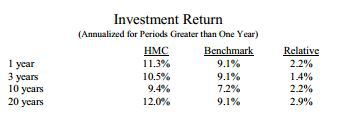
Harvard has America’s largest college or university endowment, but not nearly its best. FORTUNE — Harvard University has the nation’s largest college or university endowment, valued at $32.7 billion through the end of June. It also has worse investment returns than any of its peers over the past five years, according to a Fortune analysis. This may come as a surprise to Harvard employees and alums, who have been told that the endowment’s investment arm — Harvard Management Company — regularly beats its benchmarks. For example, HMC CEO Jane Mendillo wrote the following last month in a public letter:

capture14 Read more of this post

It Turns Out Google Co-founders Larry Page And Sergy Brin Are Actually Pretty Lousy Coders

It Turns Out Google Co-founders Larry Page And Sergy Brin Are Actually Pretty Lousy Coders

NICHOLAS CARLSON OCT. 30, 2013, 12:36 PM 6,981 11

If you’re like me, you’ve probably always assumed that Google co-founders Larry Page and Sergey Brin are pretty great at writing code. You may have even assumed that Page and Brin wrote the code that made Google.com so fast and powerful as long ago as the late 1990s. Wrong! I’ve been reading early Googler Douglas Edwards’ excellent book about the company’s startup days. It’s called “I’m Feeling Lucky: The Confessions of Google Employee Number 59. You should buy it if startups fascinate you. The book reveals that Page and Brin actually had little to do with making the code that powered Google back then. In the book, early Google engineering boss Craig Silverstein says “I didn’t trust Larry and Sergey as coders.” Read more of this post

A Lonely Passion: China’s Followers of Friedrich A. Hayek

OCTOBER 30, 2013, 5:55 PM

A Lonely Passion: China’s Followers of Friedrich A. Hayek

By DIDI KIRSTEN TATLOW

As quixotic causes go, working in China to spread the ideas of Friedrich A. Hayek, the Austrian-born liberal economist and philosopher of freedom, is up there. Hayek believed that economic planning by the state leads to a loss of individual liberty, and that a private economy run by people whose rights are protected and enlarged by good laws delivers the best life. ‘‘There is some distance between Hayek and the current realities’’ in China, Gao Quanxi, a prominent Chinese Hayekian and law professor at Beihang University in Beijing, said in an interview this week. Read more of this post

80% of companies don’t care about company culture; DEO (Design Executive Officers) certainly do; Rise of the DEO: Leadership By Design

80% OF COMPANIES DON’T CARE ABOUT COMPANY CULTURE–DO YOU?

DESIGN EXECUTIVE OFFICERS CERTAINLY DO. AND THE AUTHORS OF THE NEW BOOK,RISE OF THE DEO: LEADERSHIP BY DESIGN, BELIEVE THEY’RE THE FUTURE OF BUSINESS.

BY MARIA GIUDICE AND CHRISTOPHER IRELAND

Some believe company culture can be mandated from the top down. Some believe it emerges on its own from the bottom up. A Design Executive Officer, or DEO, sidesteps this debate. He knows it must be built–iteratively, collaboratively, and over time–from the inside out. Read more of this post

Closer Look: Why Patients in China Kill Their Doctors

0.30.2013 19:35

Closer Look: Why Patients in China Kill Their Doctors

Misunderstandings about modern medicine and a lack of health care resources combine to form the biggest malady plaguing the medical field

By staff reporter Zhang Jin

(Beijing) – Tensions are still high after a patient stabbed three doctors at Wenling No. 1 People’s Hospital in the eastern province of Zhejiang. The attack happened on the morning of October 25. One of the wounded, Dr. Wang Yunjie, later died. Medical workers at the hospital protested on October 27, calling for their safety to be guaranteed. Attacks on doctors have become increasingly common in China. Two years ago a doctor at Beijing Tongren Hospital was fatally stabbed. At the time Caixin published a story headlined: “The Doctor-Patient War.” Some readers said this headline was an exaggeration, but that view cannot be argued now. Read more of this post

Man buys $27 of bitcoin, forgets about them, finds they’re now worth $886k; Bought in 2009, currency’s rise in value saw small investment turn into enough to buy an apartment in a wealthy area of Oslo

Man buys $27 of bitcoin, forgets about them, finds they’re now worth $886k

Bought in 2009, currency’s rise in value saw small investment turn into enough to buy an apartment in a wealthy area of Oslo
Samuel Gibbs

theguardian.com, Tuesday 29 October 2013 14.07 GMT

The meteoric rise in bitcoin has meant that within the space of four years, one Norwegian man’s $27 investment turned into a forgotten $886,000 windfall. Kristoffer Koch invested 150 kroner ($26.60) in 5,000 bitcoins in 2009, after discovering them during the course of writing a thesis on encryption. He promptly forgot about them until widespread media coverage of the anonymous, decentralised, peer-to-peer digital currencyin April 2013 jogged his memory. Bitcoins are stored in encrypted wallets secured with a private key, something Koch had forgotten. After eventually working out what the password could be, Koch got a pleasant surprise: “It said I had 5,000 bitcoins in there. Measuring that in today’s rates it’s about NOK5m ($886,000),” Koch told NRK. Read more of this post

‘The Human Brand’: Our Relationships with Companies

‘The Human Brand’: Our Relationships with Companies

Oct 24, 2013 Books North America

Customers describe how they feel about companies and brands in profoundly personal ways. We hate our banks; we love our yoga pants. We can’t stand the cable company, but we consider our smartphone one of our very best friends. How are we making these judgments? According to a new book titled, The Human Brand: How We Relate to People, Products, and Companies, by Chris Malone, an expert in customer loyalty, and Susan T. Fiske, a professor of psychology at Princeton University, our perceptions are the result of spontaneous judgments on warmth and competence – precisely the same elements that drive our impressions of other people. As a result, customers evaluate, judge and form relationships with companies in ways that are remarkably similar to how they evaluate and behave toward people. Malone recently talked to Knowledge@Wharton about his book. To achieve success in the future, companies must build more genuine relationships with customers that display warmth, competence and worthy intentions, says Malone, who got his MBA at Wharton and has held senior marketing positions at companies such as Coca-Cola, ARAMARK and Choice Hotels. An edited transcript of the conversation follows.

Knowledge@Wharton: Your book’s hypothesis is that we relate with companies in much the same way that we do with people. Explain.

Chris Malone: In their struggle for survival, primitive humans were forced to develop a genius for making two specific kinds of judgments quickly and accurately. One: What are the intentions of other people toward me? And two: How capable are they of carrying out those intentions? In the academic world, these dimensions of perception are called warmth and competence. Warmth involves whether we view others to be honest, trustworthy, kind or friendly, while competence relates to whether they seem capable, intelligent or skilled. These spontaneous perceptions drive most of our emotions and behavior toward other people. Read more of this post


A World Without Maps

A World Without Maps

MELIK KAYLAN

Oct. 29, 2013 4:42 p.m. ET

Measuring and Mapping Space: Geographic Knowledge in Greco-Roman Antiquity

Institute for the Study Of the Ancient World

PJ-BR345_Maps_G_20131029183519

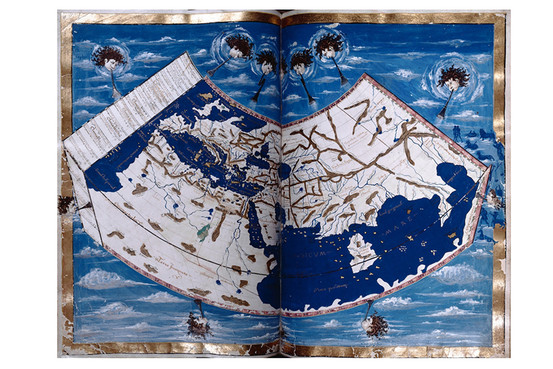
Ptolemy’s Earth, from a Florentine manuscript (c. 1460). New York Public Library

The contradiction may seem insuperable—that the main point of an exhibition about ancient maps is that there weren’t any, or any that have survived. But don’t let that put you off. The show at the Institute for the Study of the Ancient World (ISAW) is titled “Measuring and Mapping Space: Geographic Knowledge in Greco-Roman Antiquity.” Its explanatory circular tells of focusing on “ancient cartography and the ways in which Greek and Roman societies perceived and represented both the known and unknown worlds.” All of which certainly suggests that you will see maps. And you will, but not what you expect. Read more of this post

‘Mission in a Bottle’: Making Honest Tea

‘Mission in a Bottle’: Making Honest Tea

Oct 28, 2013 Books Podcasts North America

When Seth Goldman and Barry Nalebuff, co-founders of Honest Tea, set out to make a tea that they would want to drink, they knew they wanted to create a product that wasn’t too sweet and build a brand that was socially responsible and environmentally friendly. But they had no idea what it would take to get the tea to market. Their new book, Mission in a Bottle: The Honest Guide to Doing Business Differently and Succeeding, tells the story of their start-up in a graphic novel format. Nalebuff is a professor at the Yale School of Management; Goldman, a graduate of the school, is one of his former students. Recently, Knowledge@Wharton had an opportunity to talk with Goldman and Nalebuff about how they created a financially sustainable company that serves a mission, how they navigated the beverage distribution challenges, why they decided to sell the company to Coca-Cola — and how they did it on their own terms. An edited transcript of that conversation follows.

Knowledge@Wharton: The simple answer to why you started Honest Tea — and it’s on all of the bottles — is that you were thirsty. You talk in the book about how you wanted to create a beverage for people like you, who thought most of what was already on the market was too sweet. But what was it about tea that really captured your imaginations, that told you this was the venture you wanted to pursue as entrepreneurs? Read more of this post

High Tech’s Secret Weapon: The Whiteboard; Fast, Big and Easy to Use, These Dry-Erase Boards Are a True Innovation Tool

High Tech’s Secret Weapon: The Whiteboard

Fast, Big and Easy to Use, These Dry-Erase Boards Are a True Innovation Tool

FARHAD MANJOO

Oct. 30, 2013 5:52 p.m. ET

MK-CH445A_HIGHT_G_20131030171803

The headquarters of the popular note-taking app Evernote are typical of many Silicon Valley firms. There’s a cafeteria brimming with free food, vending machines offering up free tech supplies, and conference rooms bearing morale-boosting wacky names. (Evernote’s theme is videogames: You might have a meeting in Ace Combat, Elder Scrolls, or Dig Dug.) And then there are the whiteboards—or, more accurately, the whitewalls. When the company moved last year into the Redwood City, Calif., building, it painted almost every surface with IdeaPaint, a substance that makes walls amenable to dry-erase markers. Read more of this post

BUSTED: Chinese Official Caught In Hysterically Lazy Photoshop Of Him Visiting An Old Woman

BUSTED: Chinese Official Caught In Hysterically Lazy Photoshop Of Him Visiting An Old Woman

JOE WEISENTHAL OCT. 30, 2013, 4:38 AM 33,803 8

chineseofficialswomen-1

Going to pay a visit to the elderly is a nice thing for politicians to do all around the world. It’s pretty cynical, then, when you’re publishing Photoshopped images of you visiting an old lady. That’s what happened with the vice-mayor of a city in Eastern China, who posted some photos of such a “visit” on his city’s website. According to China View, people on the Internet noticed something strange in the images, notably that the woman was ridiculously small in proportions and that in one photo, half a man is simply missing. So that totally backfired.

New ‘Wolf Of Wall Street’ Trailer: Leonardo DiCaprio Is The Wealthiest Stockbroker In The World

New ‘Wolf Of Wall Street’ Trailer: Leonardo DiCaprio Is The Wealthiest Stockbroker In The World

KIRSTEN ACUNA OCT. 30, 2013, 7:26 AM 7,749 4

Now that we know “The Wolf of Wall Street” will definitely be released this year, Paramount has released another trailer for the Martin Scorsese flick. Starring Leonardo DiCaprio, the film follows the rise and fall of wealthy stockbroker Jordan Belfort. The film also features Jonah Hill, Matthew McConaughey, and Jon Bernthal (“The Walking Dead”). Unlike the first trailer, which played to the tune of Kanye West’s “Black Skinhead,” this time we get Belfort’s backstory.  Sorry, no crazy GIFs of DiCaprio this time. “The Wolf of Wall Street” is in theaters Christmas Day, December 25, 2013.

China to mark 115th birthday anniversary of Zhou Enlai

China to mark 115th birthday anniversary of Zhou Enlai

(Xinhua)    20:41, October 29, 2013

F201310292045251736414126