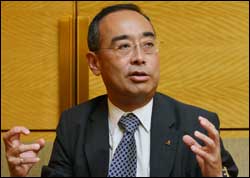
Q&A: Nate Silver on China and the New FiveThirtyEight; how he uses data to eliminate bias, and how data from China can come from unexpected sources; I flew through Beijing [on the way to Hong Kong] – there was less physical brightness coming from Beijing than you would have seen from a comparable American city or European city

October 21, 2013, 3:40 PM

Q&A: Nate Silver on China and the New FiveThirtyEight

Nate Silver, founder of the FiveThirtyEight blog, is tired of politics.

Mr. Silver is renowned for his work on big data that led him to accurately predict the winner of the U.S. presidential election – twice. In the last U.S. election, he correctly declared the outcome in all 50 states, well before voters had headed to the polls. The writer and statistician has taken on a varied list of projects—he started in 2003 with a baseball analysis system and also achieved moderate success applying statistics modeling to World Series poker.  In April, Mr. Silver announced the end of his blog’s relationship with the New York Times, and a move over to ESPN—an opportunity to widen his appeal. In an interview, the FiveThirtyEight Editor-in-Chief talked about how he uses data to eliminate bias, and how data from China can come from unexpected sources. Edited excerpts:

How much of your predictions are your intuition, versus pure data analysis?

Once the model is designed there are no subjective tweaks made to it. In any type of complex system, there is judgment involved in the way you design a model. I don’t say, “I don’t like this result, so let me change the model” – it’s a matter of being completely disciplined in how you apply it. There is science, judgment, and experience – however you want to put it – in the principles of model design.

Can you apply good data analysis to poor data, for example, in China?

People in the United States and the United Kingdom overestimate the quality of economic data. Even if people are above board, it is simply hard to estimate something like the American economy. With China, you would have even more difficulty. I think the general lesson is that by looking at a broader consensus of indicators, you do well than just looking at one indicator or one sector. It is problematic to think about “how do you measure Chinese growth”. One way [is to look at] more public facing measures – by looking, for example, at the amount of light output emanating from China. I flew through Beijing [on the way to Hong Kong] – there was less physical brightness coming from Beijing than you would have seen from a comparable American city or European city. Read more of this post

The Technology in Domino’s Pizza: How Asian Firms Can Have Enduring Pizzazz (Bamboo Innovator Insight)

The following article is extracted from the Bamboo Innovator Insight weekly column blog related to the context and thought leadership behind the stock idea generation process of Asian wide-moat businesses that are featured in the monthly entitled The Moat Report Asia. Fellow value investors get to go behind the scene to learn thought-provoking timely insights on key macro and industry trends in Asia, as well as benefit from the occasional discussion of potential red flags, misgovernance or fraud-detection trails ahead of time to enhance the critical-thinking skill about the myriad pitfalls of investing in Asia at the microstructure- and firm-level.

  • The Technology in Domino’s Pizza: How Asian Firms Can Have Enduring Pizzazz, Oct 21, 2013 (Moat Report Asia, BeyondProxy)
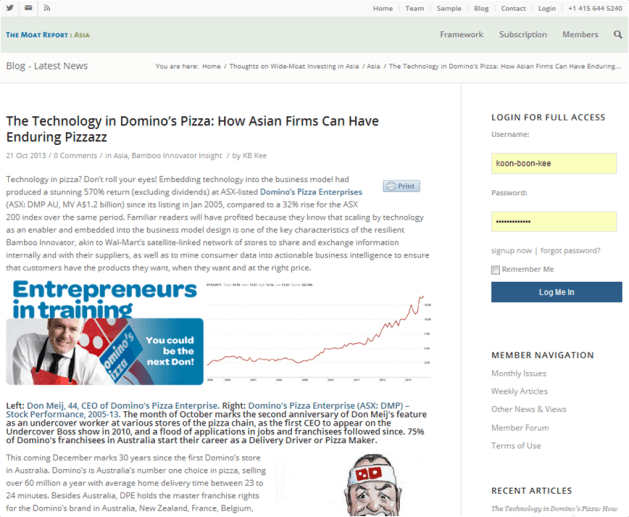
Pizzazz

Dear Friends and All,

The Technology in Domino’s Pizza: How Asian Firms Can Have Enduring Pizzazz

Technology in pizza? Don’t roll your eyes! Embedding technology into the business model had produced a stunning 570% return (excluding dividends) at ASX-listed Domino’s Pizza Enterprises (ASX: DMP AU, MV A$1.2 billion) since its listing in Jan 2005, compared to a 32% rise for the ASX 200 index over the same period. Familiar readers will have profited because they know that scaling by technology as an enabler and embedded into the business model design is one of the key characteristics of the resilient Bamboo Innovator, akin to Wal-Mart’s satellite-linked network of stores to share and exchange information internally and with their suppliers, as well as to mine consumer data into actionable business intelligence to ensure that customers have the products they want, when they want and at the right price.

This coming December marks 30 years since the first Domino’s store in Australia. Domino’s is Australia’s number one choice in pizza, selling over 60 million a year with average home delivery time between 23 to 24 minutes. Besides Australia, DPE holds the master franchise rights for the Domino’s brand in Australia, New Zealand, France, Belgium, Monaco and The Netherlands, and is the largest franchisee for the brand in the world. DPE also recently acquired 75% of Domino’s Japan from Bain Capital in Aug/Sep 2013 for A$128 million, plus agreeing to supply new debt funding of another A$96.4 million for a total of about A$225 million, adding 259 Japanese stores (216 corporate and 43 franchise) to increase DPE’s total store network to over 1,200 stores. Thus, for value investors seeking exposure to Japan but are wary of the governance risks of the domestic stocks, DPE provides an interesting alternative with significantly lower governance risk. Stocks listed outside of Japan with exposure to Japan could be an interesting topic of discussion in the highly insightful Japan Investing Summit on Nov 5-6. Long-time value investors in Japan are cognizant that stocks with high net cash or net current asset as a percentage of their market cap are potential value traps since the cash and liquid assets are “borrowed” by their powerful bank shareholders as part of the keiretsu network, a phenomenon documented empirically as the “keiretsu” valuation discount and investor activism pushing for change usually becomes an act of kicking the hornet’s nest. Empirical fans would find the research of Takeo Hoshi (Stanford University), Anil Kashyap and Douglas Skinner (Chicago Booth School of Business), and Suraj Srinivasan (Harvard Business School) to be particularly useful in understanding governance risks in Japan.

Back to pizza. What did Domino’s Pizza do to embed technology into its business model? What are the 5 Key Bamboo Innovator Takeaways?

The Moat Report Asia Members’ Forum has been getting penetrating quality dialogues from our existing institutional subscribers from North America, the Nordic, Europe, the Oceania and Asia, including professional value investors with over $20 billion in asset under management in equities. Questions range from:

  • The nuances of internal dealings in Asia, including the case discussion of the recent deal in which HK billionaire’s Lee Shau-kee Henderson Land acquiring Towngas or Hong Kong & China Gas (3 HK) from his family holdings, seemingly déjà vu from the early Oct 2007 transaction when the market peak.
  • The case of F&N Singapore spinning out its property unit FCL Trust and getting “free” special dividend-in-specie and the potential risk in asset swap restructuring to deleverage the hidden debt in the entire Group balance sheet.
  • The dilemma of whether to invest in a Southeast Asian-listed company and hidden champion with a domestic market share of 60% due to family squabbles.
  • Discussion of the wise and thoughtful 107-year-old Irving Kahn’s investment into a US-listed but Hong Kong-based electronics company with development property project in Shenzhen’s Qianhai zone and the possible corporate governance risks that could be underestimated or overlooked, as well as their history of listing some assets in HK in 2004.. This is also a case study of “buy one get one free” in John’s highly-acclaimed book The Manual of Ideas in which the “free” property is lumped together with the (eroding) core business to make the combined entity look cheap and undervalued. What are the potential areas that value investors need to watch out for when adapting the SOTP (sum-of-the-parts) method in Asia?
  • And many more intriguing questions.

Do find out more in how you can benefit from authentic and candid on-the-ground insights that sell-side analysts and brokers, with their inherent conflict-of-interests, inevitable focus on conventional stock coverage and different clientele priorities, are unwilling or unable to share. Think of this as pressing the Bloomberg “Help Help” button to navigate the Asian capital jungle. Institutional subscribers also get access to the Bamboo Innovator Index of 200+ companies and Watchlist of 500+ companies in Asia and the Database has eliminated companies with a higher probability of accounting frauds and  misgovernance as well as the alluring value traps.
Sydney Opera House celebrates 40 years

Sydney Opera House celebrates 40 years

AFP-JIJI

OCT 20, 2013

an20131021e1a-870x533

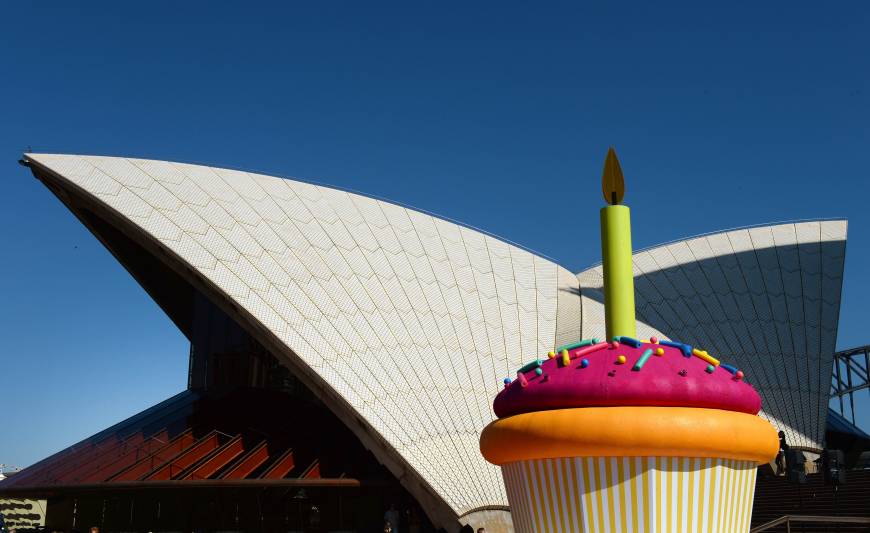
A giant birthday cupcake is displayed on the steps of the Sydney Opera House as the World Heritage-listed building celebrates its 40th birthday on Sunday. The distinctive performance hall, inspired by Danish architect Jorn Utzon’s childhood in the Aalborg shipyards, is one of Australia’s best-known landmarks and is a centerpiece of Sydney’s cultural scene. | AFP-JIJI

SYDNEY – The Sydney Opera House, World Heritage-listed as “one of the indisputable masterpieces of human creativity,” celebrated its 40th birthday Sunday with a flotilla of lifesavers, Aboriginal dancers and a gigantic cupcake. Huge crowds packed the steps for a distinctively Australian performance on the glittering harbor front, where three generations of Danish architect Jorn Utzon’s family were the guests of honor. It was a postcard-perfect day beneath the same cloudless blue skies that inspired Utzon’s winning design to build Sydney an opera house back in 1956 — the white sails drawn from his childhood in the Aalborg shipyards. “A building like this happens once in a lifetime,” Utzon’s son Jan told revelers on Sunday. “It is a unique Australian expression of will and enthusiasm and ‘let’s-go-do-it’ kind of spirit.”  Read more of this post

David Mong still uses the title of “vice chairman” of the Shun Hing Group, although in reality he is chairman. “The title doesn’t matter, as long as I am doing my job,” said the eldest son of the late William Mong, the famed rice-cooker tycoon

Son still shines
Imogene Wong
Monday, October 21, 2013

6_2013102101235898666Leader

David mong Tak-yeung still uses the title of “vice chairman” of the Shun Hing Group, although in reality he is chairman. “The title doesn’t matter, as long as I am doing my job,” said the eldest son of the late William Mong Man-wai, the famed rice-cooker tycoon. Perhaps, the younger Mong is quietly paying obeisance to his father, who was chairman of the group and passed away three years back. Read more of this post

A Lost Generation; the passing of years in our generation is marked not by increasing wisdom and charitable behavior, but by the diminishing, or even negative, contribution one makes to society

Desi Anwar: A Lost Generation

By Desi Anwar on 2:01 pm October 19, 2013.
A friend of mine tweets his disgust at how the country is increasingly full of corruption. It is as if with the passing of time, the number of corrupt individuals around is actually going up, instead of going down. Surely it was not like this in the past? This actually makes perfect sense. Given the increase in the country’s population and thus in the number of people entering the age when they’re mature enough in their life and career to hold a position of power, then the number of those chancing to enter the corruption market can only increase. Read more of this post

What’s That Smell? Exotic Scents Made From Re-engineered Yeast

October 20, 2013

What’s That Smell? Exotic Scents Made From Re-engineered Yeast

By ANDREW POLLACK

EMERYVILLE, Calif. — Vanilla, saffron, patchouli. For centuries, spices and flavorings like these have come from exotic plants growing in remote places like the jungles of Mexico or the terraced hillsides of Madagascar. Some were highly prized along ancient trading routes like the Silk Road. Now a powerful form of genetic engineering could revolutionize the production of some of the most sought-after flavors and fragrances. Rather than being extracted from plants, they are being made by genetically modified yeast or other micro-organisms cultured in huge industrial vats. Read more of this post

‘An Industry of Mediocrity’; When will America learn how to teach its teachers?

October 20, 2013

‘An Industry of Mediocrity’

By BILL KELLER

“Those who can, do. Those who can’t, teach. And those who can’t teach, teach teaching.”

WHOEVER coined that caustic aphorism should have been in a Harlem classroom last week where Bill Jackson was demonstrating an exception to the rule. Jackson, a 31-year classroom veteran, was teaching the mathematics of ratios to a group of inner-city seventh graders while 15 young teachers watched attentively. Starting with a recipe for steak sauce — three parts ketchup to two parts Worcestershire sauce — Jackson patiently coaxed his kids toward little math epiphanies, never dictating answers, leaving long silences for the children to fill. “Denzel, do you agree with Katelyn’s solution?” the teacher asked. And: “Can you explain to your friend why you think Kevin is right?” He rarely called on the first hand up, because that would let the other students off the hook. Sometimes the student summoned to the whiteboard was the kid who had gotten the wrong answer: the class pitched in to help her correct it, then gave her a round of applause. Read more of this post

The CEO Of Cisco Bills The Company When He Flies In His Own Private Jet; In 2013, John Chambers billed Cisco $2.8 million in jet expenses; since 2009, Chambers has billed Cisco $11.1 million in private jet expenses

The CEO Of Cisco Bills The Company When He Flies In His Own Private Jet

JULIE BORT OCT. 18, 2013, 5:12 PM 4,803 10

Many big tech companies, like HP and IBM, keep fleets of private jets to fly their executives around in convenience, safety and style. But at Cisco, CEO John Chambers works it in reverse. He owns his own jet and then he sends Cisco a bill when he uses it for work, which he presumably does a lot. In 2013, he billed Cisco $2.8 million in jet expenses, according to forms filed with the SEC. Unlike car mileage, there doesn’t seem to be an IRS standard when reimbursing for your private jet. Chambers just has to make sure that his expense rate isn’t higher than what it would cost to hire a private chartered jet. That’s not hard to do. It will cost you $21,000 to charter a 4-passenger plane for an hour to fly from San Jose to L.A. on a JetSuite private charter (non-member rate). Blogger Brad Reese calculates that since 2009, Chambers has billed Cisco $11.1 million in private jet expenses. $2.8 million certainly isn’t a lot of money by Cisco’s standards. But just for kicks, we looked at what it would cost to fly first-class on a commercial airline (United), from San Jose, California (where Cisco is based) to Bangalore, India (where Cisco has an R&D facility). About $16,000. For $2.8 million, one person could fly 175 times, first-class to Bangalore at that rate. Or four people (a small entourage) could fly 43 times. It’s hard to tell if Cisco is getting a sweet deal by paying for Chamber’s business travel on his private jet. Most companies only disclose the reverse situation. They tell shareholders how much the company spent when executives use the corporate jets for personal travel. This is included their total compensation numbers, so presumably they pay taxes on the benefit (though many companies also pay for their executives to get help preparing their taxes.) For instance, IBM says that its CEO, Ginni Rometty, must use IBM’s jets at all times, even for personal travel, for safety reasons, according to forms filed with the SEC. In 2012, she spent $304,376 for personal travel on the corporate jets.

‘People are basically good,’ says billionaire philanthropist and eBay founder Pierre Omidyar

‘People are basically good,’ says philanthropist

THE OBSERVER

OCT 20, 2013

LONDON – Born: Pierre Omidyar was born in 1967 in Paris to Iranian immigrants. He moved to Washington at the age of 6 and graduated from Tufts University with a bachelor’s degree in computer science in 1988. Omidyar worked for Claris, an Apple subsidiary, before setting up an e-commerce company that would become eBay. Best of times: In September 1998, eBay went public, making Omidyar a billionaire overnight. He is now worth close to $9 billion and spends most of his time in Hawaii with his wife and fellow philanthropist, Pamela. Read more of this post

The Key To Entrepreneurial Success In South Asia

The Key To Entrepreneurial Success In South Asia

Posted yesterday by Shruti Challa (@shrutichalla)

Entrepreneurs from South Asia are obsessed with Silicon Valley, as is much of the world these days. Social media and mass media have combined to create the perception that geeks from the Bay Area are a breed apart. The combination of skinny jeans, hipster glasses and confident personalities like Dave McClure or Steve Blank, it seems, is irresistible. But this style has nothing to do with building a great company. Solving important problems does, and for anyone not in Silicon Valley, that means focusing on their own markets and not what seems to be cool. Read more of this post

The father of modern China begged Henry Ford for help, and Ford turned him down

The father of modern China begged Henry Ford for help, and Ford turned him down

By Heather Timmons 3 hours ago

Have you created a new industrial system, lately?

The father of modern China once invited Henry Ford to China to create a “new industrial system,” to help the then-struggling country. Sun Yat-sen, who founded the Nationalist Party and helped to overthrow the ruling Qing dynasty, wrote a letter in 1924 asking Ford to visit South China, where “much of the intelligence, energy and wealth of this country can be found.” Read more of this post

Under suspicion: How trust drives business performance

Fiona Smith Columnist

Under suspicion: How trust drives business performance

Published 21 October 2013 10:22, Updated 21 October 2013 11:08

Plain-speaking former minister in the Howard government, Amanda Vanstone, gives a graphic description of what it feels like to discover you are under suspicion of dishonesty. She recalls, in a column for the Sydney Morning Herald , being phoned by an anxious staff member about a mistake in one of Vanstone’s claims – at a time when Senator Mal Colston had (in her words) been caught taking “rorting to new levels”. Read more of this post

You may find mei mystifying: the topic of 迷信 (meishin, superstition)

You may find mei mystifying

BY MARK SCHREIBER

SPECIAL TO THE JAPAN TIMES

OCT 20, 2013

It’s almost Halloween again, so before I set out my カボチャ提灯 (kabocha chōchin, jack-o’-lantern), I thought the time is right to take up the topic of 迷信 (meishin, superstition). The first character is 迷, meaning lost or puzzled, made by combining the phonetic 米 (alternatively read maimeibeikome andyone, and meaning “rice”) with 辶 (shinnyō, the classifier for motion). Its verb form is 迷う (mayō). Read more of this post

When C.E.O.’s Embrace the Occult; It still shocks to see the leaders of huge companies rely on shamans to make major business decisions

October 20, 2013

When C.E.O.’s Embrace the Occult

By YOUNG-ha KIM

It’s an open secret: Even now, in the 21st century, Korean executives often consult spiritual advisers before making major business decisions — decisions that can affect their employees around the world. Last month, an appeals court upheld the four-year prison sentence of Chey Tae-won, the disgraced head of SK Group, one of the largest South Korean conglomerates, who was convicted in January of embezzling nearly 50 billion won (around $45 million) to cover losses on personal investments. Read more of this post

Spinning Horror Into Gold: Hollywood producer Jason Blum has turned a decade of horror into more than a billion dollars at the box office

October 20, 2013

Spinning Horror Into Gold

By BROOKS BARNES

LOS ANGELES — At first glance, there is nothing particularly special about Jason Blum. He makes low-cost horror films that sell a lot of tickets. Producers have been getting rich from that formula for decades: rinse (the fake blood) and repeat. But start adding the numbers, and Mr. Blum, 44, becomes interesting in a hurry. Over the last five years, for production costs totaling a mere $27 million, his company, Blumhouse Productions, has churned out eight hit horror films — including “Paranormal Activity,” “Sinister” and “The Purge” — that have taken in $1.1 billion at the worldwide box office. “Insidious: Chapter 2,” for instance, cost $5 million to make and last month sold $116.5 million in tickets. Read more of this post

Combining opposites produces a clear plan for investing

October 20, 2013 6:46 pm

Combining opposites produces a clear plan for investing

By John Authers

Nudging investment industry in right direction deserves a prize

It is now a week since the Royal Swedish Academy of Sciences announced that it would ask Eugene Fama and Robert Shiller to share this year’s prize for economics in memory of Alfred Nobel. At first, many wondered if the Swedish dignitaries had a sick sense of humour. The two are famous for taking opposite sides on whether markets are efficient. A more practical question might be: “What does it mean to say that markets are efficient or inefficient, and in any case what can we do about it?” Read more of this post

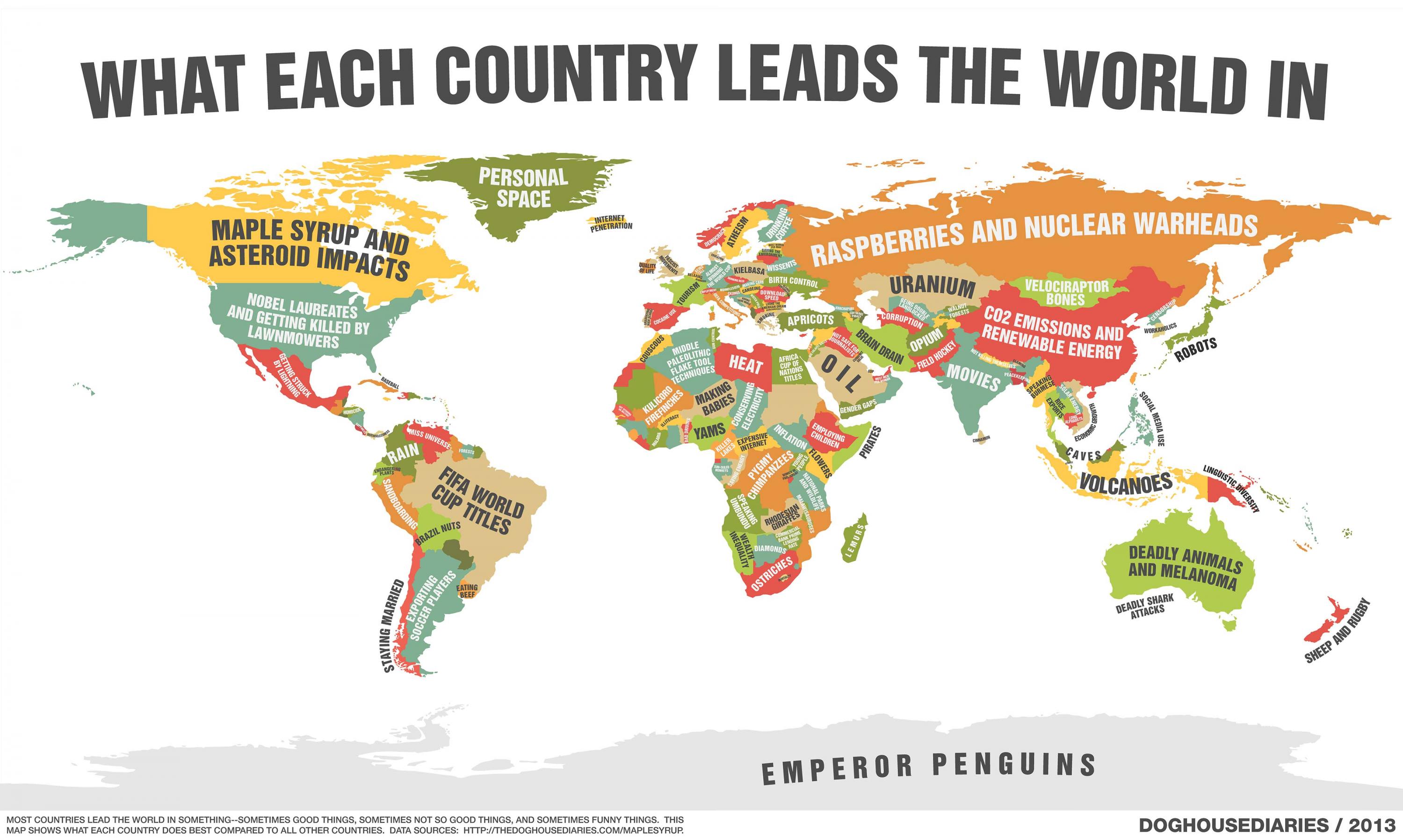
What each country leads the world in

Doghouse Maps J_0

Nordic Hotel Billionaire Petter Stordalen Returns to Scene of Biggest Failure in Denmark; For the former triathlete, the trick is to make every hotel opening a lavish event that dazzles guests and steals newspaper headlines

Nordic Hotel Billionaire Returns to Scene of Biggest Failure

download (27)

Billionaire Petter A. Stordalen, Scandinavia’s biggest hotel owner, says the one time in his career that he did everything wrong ended up being a lesson in how to protect his fortune. The Norwegian national, who won a reputation for building his hotel empire at breakneck speed last decade, learned his lesson after rushing into the Danish market. He lost 800 million kroner ($133 million) from 2000 to 2011 following a property bust that forced him to sell all 12 hotels there. He has now returned to the scene, cherry picking two hotels in Copenhagen. “Last time we did business in Denmark we did everything wrong,” Stordalen, 50, said in interview over breakfast at The Thief, his newest six-star hotel in Oslo. “I expanded too fast. This time we do it differently with brands that are better defined, stronger management and a plan to stay only in Copenhagen.” The lessons are helping Stordalen build his empire, and his personal fortune, even as much bigger competitors including Starwood Hotels & Resorts Worldwide Inc. and InterContinental Hotels Group Plc (IHG) sell properties. For the former triathlete, the trick is to make every hotel opening a lavish event that dazzles guests and steals newspaper headlines. In the past, that’s included arriving on a hotel roof by a bright blue helicopter. He’s even descended from a ceiling with a disco ball while playing drums for an opening in Gothenburg, Sweden. At a hotel opening outside Oslo, he set fire to a guitar for dramatic effect. Read more of this post

Aussie Wine Wizard Breaks Rules With $110 Pinot Noir

Aussie Wine Wizard Breaks Rules With $110 Pinot Noir

Start with a mysterious, mega-rich, wine-loving Indonesian entrepreneur living in Singapore. Then tap a talented young Australian winemaker known for his silky, savory pinot noirs. Add in a property in the Yarra Valley north of Melbourne that once belonged to the father of flamboyant 19th-century opera diva Nellie Melba. The result is one of Australia’s most ambitious if polarizing new wine projects, Thousand Candles, whose first two vintages debut in the U.K. this month and in the U.S. in January. They’re already on shelves in Hong Kong, Japan, New Zealand and Norway. The price for each, A$100 ($110), has been widely criticized in the U.K. and Australian press. “We have been accused of hubris,” admits winemaker William Downie. Read more of this post

Resilient cities are the next big thing

Resilient cities are the next big thing

Monday, October 21, 2013 – 06:30

Cheong Suk-wai

The Straits Times

SINGAPORE – The true test of how ready a city is to tackle all threats is how well it operates in storms as well as in sunny conditions. Urban resilience has long been the desired goal for urban planners and city dwellers alike. Now, such resilience is a must-have because deep-pocket corporations and investors are saying they want to move their assets only to cities that will not be shaken easily by sudden or prolonged shocks, whether they are flash floods, smog or a dearth of younger skilled workers. That’s according to global government and education chief Jeffrey Rhoda of technology giant IBM, the company that has long been a champion of the idea of smart cities. Read more of this post

Storm in a doughnut over pricing; many consumers want to know why they are paying twice as much for a bite as their American counterparts. Doughnuts sold here cost more than the ones “in expensive places like London”

Storm in a doughnut over pricing

Customers of Krispy Kreme here are paying more than some of their foreign counterparts. For example, an original glazed doughnut here is priced at S$2.60, while it costs US$0.99 (S$1.20) in the United States and RM2.50 (98 cents) in Malaysia.

Adrian Lim and Samantha Boh

My Paper

Monday, Oct 21, 2013

A top doughnut brand’s entry into the Singapore market has created a buzz. But, for now, the discussion is not focused on the taste and texture of the famous doughnuts. Instead, many consumers want to know why they are paying twice as much for a bite as their American counterparts. Krispy Kreme made its local debut here on Oct 12, with an original glazed doughnut priced at S$2.60. The same doughnut retails at US$0.99 (S$1.20) in the United States and RM2.50 (98 cents) in Malaysia. A dozen of the glazed doughnuts here cost S$23.40, but they go for A$15.95 (S$19.10) in Australia. Krispy Kreme is in good company. Hong Kong dimsum eatery Tim Ho Wan and Sichuan hotpot chain Hai Di Lao Hotpot also charge more in Singapore than in other places. Read more of this post

As body ages, Jackie Chan longs for Hollywood’s full embrace

As body ages, Jackie Chan longs for Hollywood’s full embrace

3:35pm EDT

By Eric Kelsey

BEVERLY HILLS, California (Reuters) – Jackie Chan wasn’t in the mood for proclamations. The Hong Kong martial arts film star, who declared last year at France’s Cannes film festival that he was retiring from action films, now says that after more than a decade of contemplating quitting, he is going to let his body decide. “When I was 40-something the media would ask me and then I said another five years, and then five years and five years until now,” the Kung Fu actor said in an interview promoting his 2012 Chinese action film “Chinese Zodiac,” which will be released in U.S. cinemas on Friday. “Six more months and I’m going to be 60,” Chan said. “And I (will) see how far I can go until my body tells me, ‘Stop.'” Read more of this post

Buy it or hate it, New Yorkers flock to Banksy’s art

Buy it or hate it, New Yorkers flock to Banksy’s art

Sat, Oct 19 2013

By Elizabeth Dilts

(Reuters) – Famously jaded New Yorkers are getting swept up in the hype over Banksy, the renegade graffiti artist who is leaving his mark across the city this month. Known for his anti-authoritarian black-and-white stenciled images, which have sold at auction for upwards of $2 million, the British street artist is treating New Yorkers to a daily dose of spray-painted art – while eluding the police and incurring the wrath of New York Mayor Michael Bloomberg. “Graffiti does ruin people’s property,” Bloomberg said in a press conference Wednesday. Read more of this post

How the Billionaires’ Shadow Government Works

How the Billionaires’ Shadow Government Works

There is no shortage of billionaires — the Koch brothers, Carl Icahn, Dan Loeb and, yes, Mike Bloomberg, to name a handful — who are willing to use their vast wealth to push a particular political agenda or to advocate for a specific social reform. That’s hardly a revelation. Then there’s Tom Steyer, a former Goldman Sachs Group Inc. arbitrager who was mentored by Robert Rubin and eventually formed the San Francisco hedge fund Farallon Capital Management. Since then, Steyer has made a bloody fortune. He has never spoken publicly about how he raked it in at Farallon. Nor has he talked on the record about his years at Goldman. (He didn’t respond to my interview requests when I was writing a book about Goldman in 2011.) Read more of this post

Mexico Tries Taxes to Combat Obesity; The House passed the proposed measure to charge a 5% tax on packaged food that contains 275 calories or more per 100 grams

Mexico Tries Taxes to Combat Obesity

AMY GUTHRIE

Updated Oct. 18, 2013 1:24 a.m. ET

WO-AP870C_MEXTA_G_20131017185103

MEXICO CITY—Congress’s lower house of Congress passed late Thursday a special tax on junk food that is seen as potentially the broadest of its kind, part of an ambitious Mexican government effort to contain runaway rates of obesity and diabetes. The House passed the proposed measure to charge a 5% tax on packaged food that contains 275 calories or more per 100 grams, on grounds that such high-calorie items typically contain large amounts of salt and sugar and few essential nutrients. The tax, which was proposed just this week, is sure to stir controversy among big Mexican and foreign food companies that operate here. It comes on top of another planned levy on sugary soft drinks of 1 peso (8 U.S. cents) per liter that was passed by the same committee, an effort that New York Mayor Michael Bloomberg supported. Read more of this post

Lane Crawford president Andrew Keith talks about why selecting the right mix of goods for Chinese consumers is like conducting an orchestra. Unlike most department stores in the region, which lease store space to individual brands, Lane Crawford buys its own inventory and attracts customers who trust its fashion choices

Lane Crawford Taps Into Chinese Lifestyle

Company president Andrew Keith talks about why selecting the right mix of goods for Chinese consumers is like conducting an orchestra.

JASON CHOW and

WEI GU

Oct. 20, 2013 11:43 a.m. ET

Few luxury brands have been in Asia as long as Lane Crawford, the department store founded in 1850 by Scottish merchants in Hong Kong. But until now, its expansion into mainland China, an important luxury market, has been slow, and has yielded mixed results. Last month, Lane Crawford returned to Shanghai with a new 150,000-square-foot store, after closing one in 2006. In the first half of 2014, the company is planning to open a new store in the western city of Chengdu, its fourth store in mainland China. The company is picking up speed at a time when affluent Chinese consumers start to look for good quality products beyond big brand names. Lane Crawford specializes in bringing lesser-known brands to Asia. Unlike most department stores in the region, which lease store space to individual brands, Lane Crawford buys its own inventory and attracts customers who trust its fashion choices. That means the company’s merchandising is key to the company’s success. Andrew Keith, the president of Lane Crawford and former head of its men’s department, spoke to The Wall Street Journal about why Chinese men are fashion trendsetters and why selecting the right mix of goods for Chinese consumers is like conducting an orchestra. Edited excerpts: Read more of this post

Eyes Wide Open: How to Make Smart Decisions in a Confusing World

Eyes Wide Open: How to Make Smart Decisions in a Confusing World Hardcover

by Noreena Hertz  (Author)

Eyes Wide Open

Eyes Wide Open: How to Make Smart Decisions in a Confusing World is Noreen Hertz’s practical, cutting-edge guide to help you cut through the data deluge and make smarter and better choices, based on her highly popular TED talk. In this eye-opening handbook, the internationally noted speaker, economics expert, and bestselling author of IOU: The Debt Threat and Silent Takeover reveals the extent to which the biggest decisions in our lives are often made on the basis of flawed information, weak assumptions, corrupted data, insufficient scrutiny of others, and a lack of self-knowledge. To avert such disasters, Hertz persuasively argues, we need to become empowered decision-makers, capable of making high-stakes choices and holding accountable those who advise us. In Eyes Wide Open, she weaves together scientific research with real-world examples from Hollywood to Harry Potter, NASA to World War Two spies, to construct a path to more astute and empowered decision-making in ten clear steps. With a razor-sharp intellect and an instinct for popular storytelling, she offers counter-intuitive, actionable guidance for making better choices—whether you are a business-person, a professional, a patient, or a parent.

Read more of this post

Why We Make Bad Decisions: We listen to the information we want to hear and ignore the rest

Why We Make Bad Decisions

By NOREENA HERTZ

OCT. 19, 2013

20HERTZ-articleLarge

LONDON — SIX years ago I was struck down with a mystery illness. My weight dropped by 30 pounds in three months. I experienced searing stomach pain, felt utterly exhausted and no matter how much I ate, I couldn’t gain an ounce. I went from slim to thin to emaciated. The pain got worse, a white heat in my belly that made me double up unexpectedly in public and in private. Delivering on my academic and professional commitments became increasingly challenging. It was terrifying. I did not know whether I had an illness that would kill me or stay with me for the rest of my life or whether what was wrong with me was something that could be cured if I could just find out what on earth it was. Trying to find the answer, I saw doctors in London, New York, Minnesota and Chicago. I was offered a vast range of potential diagnoses. Cancer was quickly and thankfully ruled out. But many other possibilities remained on the table, from autoimmune diseases to rare viruses to spinal conditions to debilitating neural illnesses. Treatments suggested ranged from a five-hour, high-risk surgery to remove a portion of my stomach, to lumbar spine injections to numb nerve paths, to a prescription of antidepressants. Faced with all these confusing and conflicting opinions, I had to work out which expert to trust, whom to believe and whose advice to follow. As an economist specializing in the global economy, international trade and debt, I have spent most of my career helping others make big decisions — prime ministers, presidents and chief executives — and so I’m all too aware of the risks and dangers of poor choices in the public as well as the private sphere. But up until then I hadn’t thought much about the process of decision making. So in between M.R.I.’s, CT scans and spinal taps, I dove into the academic literature on decision making. Not just in my field but also in neuroscience, psychology, sociology, information science, political science and history. Read more of this post

How Jeff Bezos Makes Decisions

How Jeff Bezos Makes Decisions

by Dan McGinn  |   1:00 PM October 18, 2013

Over the last 19 years, Amazon.com has revolutionized the way we shop—and for much of that time, journalist Brad Stone has been watching closely. This week Stone, a senior writer at Bloomberg Businessweek, published The Everything Store: Jeff Bezos and the Age of Amazon. I talked with Stone about the evolution of Bezos as a decision-maker. Some excerpts from our conversation:

In the course of your reporting, what did you observe about Bezos’s decision-making style?

Two factors come to mind. The first is an observation made by Rick Dalzell, his right hand guy. He says that Jeff does two things better than anyone else. One is that he tries to find the best truth at the time. That may sound obvious, but Rick says that while a lot of people know what the truth is, they don’t engage their thinking about how the truth may change. Second, Rick says that Jeff refuses to accept the conventional wisdom about the way things are typically done. He thinks about reinventing everything—even small things. Two weeks ago, for instance, Amazon introduced the new Kindle Fire tablets. Ordinarily when tech companies do this, they hold a big press conference. Instead, Jeff brought about two dozen reporters in to see him in small groups. He did all the product demos himself. Everyone left feeling like they had a special session with this dynamic CEO, and Amazon received great press coverage. It’s a small example of how he tries to reinvent how things are done. Read more of this post

Nobel winner Robert Shiller talks about the forces that made him a questioning, data-driven economist

Robert Shiller: A Skeptic and a Nobel Winner

By JEFF SOMMER

OCT. 19, 2013

Robert J. Shiller, a professor at Yale, learned on Monday that he had wonthe Nobel Memorial Prize in Economic Science, along with Lars Peter Hansen and Eugene F. Fama of the University of Chicago. The Nobel committee described Professor Shiller as a founder of the field of behavioral finance, an innovator in incorporating psychology into economics and a pioneering analyst of speculative bubbles in the stock and real estate markets. He is also one of a group of eminent economists who write the Economic View column for Sunday Business, and has contributed 60 of those columns since August 2007. As the editor of that column, I have talked to him often about his work, and on Wednesday, he called me from the airport en route to a lecture at the Dutch central bank in Amsterdam. Here is an edited, condensed version of that conversation.  Read more of this post