It’s often said in Korea that the manufacturing industry is first-class, whereas the financial industry is a third-class sector

2013-11-28 17:23

Strengthening financial sector

As always, actions speak louder than words 
It’s often said in Korea that the manufacturing industry is first-class, whereas the financial industry is a third-class sector. For this reason, people express doubt if Korea could ever see the birth of a gigantic and well-performing company such as Samsung Electronics emerge in the financial sector.
Given this, the Financial Services Commission’s announcement on Wednesday of a package to boost competitiveness in Korea’s financial industry is a belated but welcome move. It’s right for Shin Je-yoon, the FSC chairman, to say that the prospects for our financial companies will remain dim for as long as they settle for what they have been doing so far, but the most important thing is how to carry out the policies featured in the package. Read more of this post

Financial Services Commission FSC scales back its financial vision of Korea’s financial industry.

FSC scales back its financial vision

As grand plans fade, determined chairman focuses on pragmatism

Nov 28,2013

BY LEE EUN-JOO [angie@joongang.co.kr]

Financial Services Commission Chairman Shin Je-yoon had a determined look as he stepped into the press room yesterday to give a briefing on government measures to boost the competitiveness of Korea’s financial industry. Eight months have passed since the former vice finance minister joined the FSC in the top seat with visions of making Korea’s financial industry stronger and more influential on the global stage.  Read more of this post

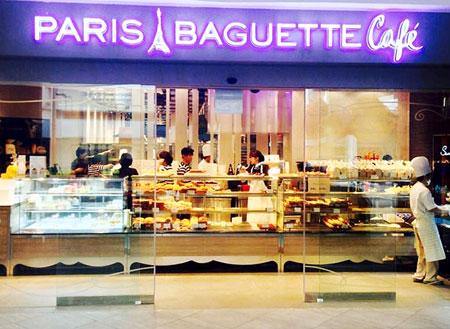
Korea’s Paris Baguette grows into global brand; opened its 100th store in China last year

2013-11-26 13:03

Paris Baguette grows into global brand

K2013112600095-450

Paris Baguette opened its third outlet in Tampines, Singapore, Monday

By Chung Hyun-chae
The nation’s bakery giant, Paris Baguette, has been faring well in the global market, especially in China, the U.S., Vietnam and Singapore, thanks to its localization strategy. Read more of this post

Prosecutors have launched an investigation into corruption scandals at Korea’s Kookmin Bank at the request of the Financial Supervisory Service (FSS)

2013-11-27 16:10

Prosecutors start probe of Kookmin

CEO apologizes for corruption scandals
By Kim Rahn

131127_2p14_prosecutors

KB Kookmin Bank CEO Lee Kun-ho bows during a media briefing at the bank’s building in central Seoul, Wednesday, while apologizing for allegations of corruption made against the lender

Prosecutors have launched an investigation into corruption scandals at KB Kookmin Bank at the request of the Financial Supervisory Service (FSS).
Former and incumbent CEOs of the lender and its parent company, KB Financial Group, will be subject to questioning. Read more of this post

Vietnam announces big fines for social media ‘propaganda’

Vietnam announces big fines for social media ‘propaganda’

9:20am EST

HANOI (Reuters) – Vietnam will hand out fines of 100 million dong ($4,740) to anyone criticizing the government on social media, under a new law announced this week, the latest measure in a widening crackdown on dissent by the country’s communist rulers. Comments that did not constitute criminal offences would trigger fines if held to be “propaganda against the state”, or spreading “reactionary ideology”, according to the law signed by Prime Minister Nguyen Tan Dung. Read more of this post

Carlos Slim: We want to invest more in Israel; The Mexican billionaire told President Shimon Peres and a delegation of 80 Israelis about his admiration for Israeli technology

Carlos Slim: We want to invest more in Israel

The Mexican billionaire told President Shimon Peres and a delegation of 80 Israelis about his admiration for Israeli technology.

28 November 13 08:57, Globes’ correspondent

President Shimon Peres met Mexico’s wealthiest businessman Carlos Slim yesterday. Peres is on a state visit to Mexico, heading a delegation of 80 top Israeli executives that is seeking to deepen economic, diplomatic and security cooperation between the two countries. Peres said, “The fact that Israel did not have natural resources led us to rely on and nurture our human resources and encourage young people in Israel to dare, to break through barriers, and to think big.” Read more of this post

Singapore’s Home-Price Decline Accelerates After Curbs

Singapore’s Home-Price Decline Accelerates After Curbs

Singapore’s home prices fell at a faster pace in October, dropping 1.2 percent from the previous month as evidence builds that the government’s efforts to cool the property market are working. The city-state’s residential property index fell to 159.1 points last month after declining a revised 0.9 percent in September, according to the National University of Singapore’s Singapore Residential Price Index. The measure tracking prices in the central region decreased 1.4 percent in October. Read more of this post

Rice Bowl Plan Brings Myanmar Back to the Future: Southeast Asia

Rice Bowl Plan Brings Myanmar Back to the Future: Southeast Asia

Myanmar plans to more than double rice shipments as the country that used to be the largest exporter embraces trade and opens its economy, challenging Thailand, Vietnam and Cambodia for sales amid a global glut. Shipments may increase to 2.5 million metric tons in 2014-2015 from an estimated 1.8 million tons in the year that started April 1, according to Toe Aung Myint, director general of the department of trade promotion at the Ministry of Commerce. Exports are targeted to increase to 4.8 million tons in 2019-2020, Toe said in an interview in Hong Kong. Read more of this post

Brazil’s Central Bank Raises Interest Rate to 10%

Brazil’s Central Bank Raises Interest Rate to 10%

Latin American Central Bank May Slow or Stop Rate Hikes

PAULO WINTERSTEIN

Nov. 27, 2013 7:03 p.m. ET

SÃO PAULO—Brazil’s central bank raised its benchmark interest rate on Wednesday by half a point to 10% as expected and hinted it may be about to switch gears. The monetary policy committee unanimously voted to raise its Selic rate for a sixth consecutive time. In a post-meeting statement, the monetary authority reiterated it was “giving continuity” to the rate adjustment process as it tries to bring inflation down to the bank’s target of 4.5%. Read more of this post

Time to force banks to kick their easy money habit

November 27, 2013 4:38 pm

Time to force banks to kick their easy money habit

By Patrick Jenkins

Without fixes from the ECB, near normal funding might have resumed, writes Patrick Jenkins

The usually staid world of British banking has been titillated in recent days by revelations about the drug-taking of the Co-operative Bank’s former chairman,Paul Flowers. Crystal meth, it seems, was the reverend’s drug of choice. There are lessons for the co-operative movement to learn, mostly around governance. But there may be a more instructive parallel to draw with eurozone bank funding. Read more of this post

Swiss Come to Their Senses on Soak-the-Rich Vote

Swiss Come to Their Senses on Soak-the-Rich Vote

Some of my best friends are very rich — people with condos on Central Park West and tastefully refurbished palazzi in Italy. The puzzle: Why do so many of them vote Democratic or praise the high-taxing European welfare state? How rich? When one of them had an art lover on the phone, who was offering to pay $30 million for a famous painting, he refused. Frustrated, the would-be buyer groaned: “Look, man, I just more than doubled the going price for this piece, and you still won’t take it. Why not?” Read more of this post

Negative Rate Experiment in Denmark Is Seen Stretching Into 2015

Negative Rate Experiment in Denmark Is Seen Stretching Into 2015

Economists at Denmark’s biggest banks predict the nation’s benchmark interest rate, which has been negative since July 2012, won’t climb over zero until 2015 marking an historic experiment with extreme monetary policy. Copenhagen-based Nationalbanken, which uses rates together with currency reserves to defend the krone’s peg to the euro, will be anchored in sub-zero territory by crisis measures taken by the European Central Bank, according to economists at Danske Bank A/S, Sydbank A/S and the Danish unit of Svenska Handelsbanken AB. Jyske Bank A/S and Nordea Bank AB see negative rates until the end of next year. Read more of this post

India: The World’s Most Over-Optimistic Country

The World’s Most Over-Optimistic Country

What a difference a couple of months can make. In September, India’s growth rate had slowed to its lowest in a decade, inflation was high, and the rupee ranked as one of the worst-performing currencies in Asia. Suddenly, the mood has turned more upbeat. The news media brim with confidence that India has “turned the corner.” The stock market rose more than 9 percent last month, to an all-time high. A few weeks ago, Finance Minister Palaniappan Chidambaram said he saw many signs of “green shoots” in India’s economy. Read more of this post

Bimbo to Lala Rush Dividends Before Mexico Capital Gains Tax

Bimbo to Lala Rush Dividends Before Mexico Capital Gains Tax

Mexican stock dividends are poised to rise to a four-year high as companies rush to return cash to investors before a new tax goes into effect next year. Payouts from companies on the benchmark IPC index are set to climb 55 percent from a year ago to at least 19.4 billion pesos ($1.5 billion) in the fourth quarter, the highest since the last three months of 2009, according to data compiled by Bloomberg. The figure includes planned dividends not yet paid. Read more of this post

Israel’s ‘capitalist’ government is strangling businesses

 Israel’s ‘capitalist’ government is strangling businesses

The coalition is supposed to be wall-to-wall free-market ministers, but a closer examination of policies reveals it’s big government as usual.

By Sami Peretz | Nov. 25, 2013 | 5:17 AM

It is commonly assumed that the coalition comprises four purely free-market parties determined to make Israel’s economy competitive, private and based on capitalist principles. If you take at face value everything said in public by Prime Minister Benjamin Netanyahu, Finance Minister Yair Lapid, Economy Minister Naftali Bennett and Justice Minister Tzipi Livni, it is hard to find a word in favor of the government managing the economy. Sometimes, they go so far as to attack the “populism” aimed at the private sector. Such attacks are leveled primarily when they appear at a gathering of business leaders and are trying to make a good impression. Read more of this post

Germany’s Planned Rent Rules Rattle Investors Amid Home Boom

Germany’s Planned Rent Rules Rattle Investors Amid Home Boom

Fixing up derelict Communist-era apartments is losing its allure for Berlin developer Stefan Klingsoehr after two decades of rising profits as Chancellor Angela Merkel clamps down on rents. Merkel’s Christian Democratic bloc and the Social Democratic Party agreed to cap rents on new leases and limit increases after renovations in their four-year government agenda presented today. U.S. and Canadian investors seeking a slice of Klingsoehr’s returns are already withdrawing. Read more of this post

China’s World: Why the Electric-Car Market Is Low Wattage; Shanghai’s Failure to Popularize Electric Vehicles Highlights Challenges for Economic Reform

China’s World: Why the Electric-Car Market Is Low Wattage

Shanghai’s Failure to Popularize Electric Vehicles Highlights Challenges for Economic Reform

ANDREW BROWNE

Updated Nov. 26, 2013 9:26 p.m. ET

SHANGHAI—Even for a foreign visitor to Shanghai, renting an electric car is easy. All that’s required is a valid driver’s license and a passport. And it’s surprisingly cheap: eHi Car Service Ltd. charges the equivalent of just $25 a day for a Chinese-built Roewe with a range of about 90 kilometers. But having completed the paperwork, picked up the keys and eased silently into Shanghai’s chaotic traffic, the first-time electric car driver in the city quickly notices that nobody else appears to be driving one. In fact, there are at most 500 electric cars in Shanghai out of a total of about one million passenger vehicles, according to Zhang Dawei, the founder of EV Buy, a Shanghai company that sources and services electric cars for individuals and corporate users. Read more of this post

Special Report: How China took control of an OPEC country’s oil

Special Report: How China took control of an OPEC country’s oil

Tue, Nov 26 2013

By Joshua Schneyer and Nicolas Medina Mora Perez

NEW YORK (Reuters) – China’s aggressive quest for foreign oil has reached a new milestone, according to records reviewed by Reuters: near monopoly control of crude exports from an OPEC nation, Ecuador. Last November, Marco Calvopiña, the general manager of Ecuador’s state oil company PetroEcuador, was dispatched to China to help secure $2 billion in financing for his government. Negotiations, which included committing to sell millions of barrels of Ecuador’s oil to Chinese state-run firms through 2020, dragged on for days. Calvopiña grew anxious and threatened to leave. Read more of this post

Rémy Cointreau’s Profit Is Hit by China Slowdown; Beijing’s Measures to Scale Back Gift Giving Hurt Drinks Makers

Rémy Cointreau’s Profit Is Hit by China Slowdown

Beijing’s Measures to Scale Back Gift Giving Hurt Drinks Makers

RUTH BENDER

Updated Nov. 26, 2013 2:18 p.m. ET

PARIS—After years of steady growth, Rémy Cointreau

SA RCO.FR -8.31% warned that China’s crackdown on extravagant gifts is set to hit the company’s profit sharply this year and dent sales for some time, the latest sign of how major liquor makers face broad fallout from the shift in policy. The French company has suffered along with rivals in recent quarters as the Chinese government has scaled back on sponsored banquets and gift giving, which for years had propelled sales of high-end spirits and other luxury goods. Read more of this post

Record Spread Blowout Sparks Mini-Crisis Warning: China Credit

Record Spread Blowout Sparks Mini-Crisis Warning: China Credit

Chinese companies’ borrowing costs are climbing at a record pace relative to the government’s, increasing the risk of defaults and prompting state newspapers to warn of a limited debt crisis. The extra yield investors demand to hold three-year AAA corporate bonds instead of government notes surged 35 basis points last week to 182 basis points, the biggest increase since data became available in September 2007, Chinabond indexes show. That exceeds the similar spread in India of 120 basis points. The benchmark seven-day repurchase rate has averaged 4.45 percent in November, the highest since a record cash crunch in June and up from 3.21 percent a year earlier. Read more of this post

China’s Nanjing, Hangzhou Raise 2nd Home Down Payment to 70%

China’s Nanjing, Hangzhou Raise 2nd Home Down Payment to 70%

China’s eastern cities of Nanjing and Hangzhou raised the minimum down payment required for second homes to 70 percent from 60 percent as more cities tighten property policies because of surging prices. The cities will continue to ban mortgage lending for third homes and will maintain a 30 percent down payment for buyers of first homes, the central bank’s Nanjing and Hangzhou branches said in separate statements on their websites yesterday. Nanjing will increase housing land supply by 10 percent from the average in the past five years, the city’s housing authority said in a statement yesterday. Read more of this post

Poor policy lies behind China’s rising cost of capital; Wealth management products are a slippery stepping stone

November 26, 2013 12:34 pm

Poor policy lies behind China’s rising cost of capital

By Paul J Davies in Hong Kong

Wealth management products are a slippery stepping stone

China Development Bank is the core policy bank in China. It has more than Rmb6tn ($984bn) in assets, is wholly owned by the state and is as good for its money as the government itself. So when CDB is forced to slash the size of a proposed bond issue by 60 per cent, as happened this month, you can be sure something is not right in China’s credit markets. Other respected and credible companies have also been forced to delay or reduce bond issues, or pay more for their money. Take US-listed internet group Baidu. Last year, it sold a bond to US investors that was priced without the extra that emerging market borrowers usually pay. But in recent months, it struggled to get a Chinese bond away. Read more of this post

Nicholas Eberstadt: China’s Coming One-Child Crisis; A minor tweak in Beijing’s population controls will not prevent a demographic crash

Nicholas Eberstadt: China’s Coming One-Child Crisis

A minor tweak in Beijing’s population controls will not prevent a demographic crash.

NICHOLAS EBERSTADT

Nov. 26, 2013 7:19 p.m. ET

Vladimir Lenin, the founder of the Soviet state and godfather of modern totalitarian politics, once explained the totalitarian worldview this way: “We recognize nothing private.” By that criterion, no totalitarian project in our era has been more ambitious than the Chinese government’s policy of forcible population control. Since the institution of the so-called One Child Policy in 1980, China’s Communist Party has demanded mastery over that final and most intimate of all private spheres, the family. Read more of this post

China probe may be aimed at Qualcomm’s 4G royalties

China probe may be aimed at Qualcomm’s 4G royalties

6:28am EST

By Supantha Mukherjee and Neha Alawadhi

(Reuters) – China’s anti-trust investigation into Qualcomm, the world’s biggest smartphone chip maker, is likely tied to the impending $16 billion rollout of commercial fourth-generation services by China’s big telecoms carriers. The probe by the National Development and Reform Commission (NDRC), China’s top economic planning body and price regulator, is a likely pre-emptive measure that will allow China’s telecom providers to gain leverage in royalty negotiations ahead of the rollout of new high-speed mobile networks, analysts said. Read more of this post

China Plans Sale From Cotton Stockpile; News Comes as Storm Hits Texas, a Major Grower

China Plans Sale From Cotton Stockpile

News Comes as Storm Hits Texas, a Major Grower

LESLIE JOSEPHS

Updated Nov. 26, 2013 3:59 p.m. ET

NEW YORK—The Chinese government is planning to sell part of its roughly 10 million-ton stockpile of cotton this week, an event long anticipated by traders of the fiber. But while the prospect of a sale from such a large holding would usually push down international cotton prices, concern over the quality and price of the fiber China is offering is expected to mute the effect somewhat. News of the sale came as some traders worried over a late-autumn storm that hit growing regions in the southern part of the U.S., the world’s biggest cotton exporter. Read more of this post

Chart Of The Day: How In Five Short Years, China Humiliated The World’s Central Banks

Chart Of The Day: How In Five Short Years, China Humiliated The World’s Central Banks

Tyler Durden on 11/26/2013 15:35 -0500

China banks teaser_1_0

The concept of the “liquidity trap” is well-known to most: it is that freak outlier in an otherwise spotless Keynesian plane, when due to the need for negative interest rates to boost the economy (usually resulting from that other inevitable Keynesian state: the bursting of an asset bubble) – a structural impossibility according to most economists although an increasingly more probable in Europe – central banks have no choice but to offset a deleveraging private banking sector and directly inject liquidity into the banking sector with the outcome being soaring asset prices, and even more bubbles which will eventually burst only to be replaced with even more failed attempts at reflation. Sadly, very little of this liquidity makes its way to the broad economy as the ongoing recession in the developed world has shown for the 5th year in a row, which in turn makes the liqudity trap even worse, and so on in a closed loop. Read more of this post

After the Plenum, sell pianos and dairy; The easing of the one-child policy has put the pocketbook in focus

November 26, 2013 4:48 pm

After the Plenum, sell pianos and dairy

By Patti Waldmeir in Shanghai

The easing of the one-child policy has put the pocketbook in focus, writes Patti Waldmeir

China relaxed its so-called one-child policy this month, and everything from online opinion polls to piano stocks jumped for joy. The theory seemed to be that the only thing keeping Chinese couples from breeding more piano players was Communist party policy. Of course, even in planned economies things are rarely so simple – especially when sex, money and tiger mums are involved. The policy change will allow couples to bear a second child if one of them is an only child; previously they both had to be singletons. It’s probably safe to assume that many of the babies born as a result will learn to play the piano. What’s riskier is assuming that there will be a baby boom in the first place. Read more of this post

Australian Mine, Energy Project Spending Falls 10% as Boom Peaks

Australian Mine, Energy Project Spending Falls 10% as Boom Peaks

The value of mineral and energy projects being developed in Australia, the world’s biggest iron ore exporter, dropped 10 percent to about A$240 billion ($219 billion), reflecting the peaking of the nation’s mining boom. “This large drop in investment is the result of two records being set in the period – a record high for the value of projects being completed (A$30 billion) and the lowest value of new projects being sanctioned in the past decade (A$1.7 billion),” the Bureau of Resources and Energy Economics said today in its twice-yearly report on project investment. At April 30, the value of projects was A$268 billion. Read more of this post

Archer Daniels Midland has tried to win the support of wary Australian farmers as its offer to buy GrainCorp faces intensifying political scrutiny in Canberra

November 27, 2013 4:51 am

ADM seeks to win over Australian farmers

By Gregory Meyer in New York

Archer Daniels Midland has tried to win the support of wary Australian farmers as its offer to buy GrainCorp faces intensifying political scrutiny in Canberra. The measures – new infrastructure spending and a temporary cap on handling fees – promised to wary Australian farmers illustrate the importance of the A$3.4bn ($3.1bn) takeover for the agricultural trader’s plans to broaden crop supplies away from the US. GrainCorp is the largest grain handler in eastern Australia. Read more of this post

Macau’s junket operators prowl Asia to expand VIP business

Macau’s junket operators prowl Asia to expand VIP business

4:16pm EST

By Farah Master

MACAU (Reuters) – On the second floor of Solaire’s plush ocean-front casino in Manila, the dealers speak Mandarin, the players are Chinese and revenue from high-roller gamblers is rising rapidly. “It’s almost not in the Philippines. It’s more like you’re in Macau,” says Francis Hernando, the Philippine gaming body’s vice president for licensed casino development. Read more of this post