Singapore Property Boom Fuels Malaysia Spillover Bubble

Singapore Property Boom Fuels Malaysia Spillover Bubble

Chris Metcalf commutes for 45 minutes to Singapore each day from Iskandar, a region just over the border in Malaysia, to work as a lawyer at Clyde & Co LLP. “It’s too expensive to live in Singapore,” said Metcalf, who moved across the Johor Strait in June after finding he could no longer afford the island-state on a local salary and with four children. “We’re selling a house in the U.K. and when we do we’ll consider buying in Malaysia because it’s definitely better value.” Read more of this post
As Myanmar Modernizes, Old Trades Are Outpaced By New Competitors

November 19, 2013

As Myanmar Modernizes, Old Trades Are Outpaced By New Competitors

By THOMAS FULLER

YANGON, Myanmar — For years they poured out their hearts on the broken pavements of Myanmar’s cities and towns, young lovers desperate for privacy yet with no choice but to use what the Burmese call roadside phone shops. Daw Myint Myint Than, who rents out her two phone lines in central Yangon, has heard it all: the sobbing, heartbroken women; the angry spouses; the duplicitous boyfriends who gush sweet nothings to one girlfriend, hang up and repeat the same sweet nothings to another. Read more of this post

Why the future looks sluggish; The glut of savings in leading economies has become a constraint on demand

November 19, 2013 7:09 pm

Why the future looks sluggish

By Martin Wolf

The glut of savings in leading economies has become a constraint on demand

Lawrence Summers has poured gallons of icy water on any remaining optimists. Speaking on a panel at the International Monetary Fund’s annual research conference, the former US Treasury secretary suggested that there could be no easy return to pre-crisis normality in high-income economies. Instead, he sketched out a disturbing future of chronically weak demand and slow economic growth. Mr Summers is not the first to identify the possibility of so-called “secular stagnation”: the fear of emulating Japan’s lost decade has been in the minds of thoughtful analysts since the crisis. But his was a bravura performance. Read more of this post

Wall Street banks must abandon ‘cottage industry’ model: McKinsey

Wall Street banks must abandon ‘cottage industry’ model: McKinsey

8:06am EST

By Lauren Tara LaCapra

NEW YORK (Reuters) – The biggest Wall Street banks have not done nearly enough to boost shareholder returns, despite years of cost-cutting and tailoring balance sheets to a more profitable mix, consulting firm McKinsey & Co said in a report released on Wednesday. If those banks do not take more dramatic steps to reshape their business models, the industry’s return on equity could fall further – to a mere 4 percent by 2019 from 8 percent last year, the report said. Read more of this post

Trader gets 30 months in prison for $1 billion Apple stock scheme

Trader gets 30 months in prison for $1 billion Apple stock scheme

6:01pm EST

(Reuters) – A former trader was sentenced to 2 1/2 years in prison on Tuesday for an unauthorized purchase of about $1 billion in Apple Inc stock that eventually led to the demise of financial services firm Rochdale Securities. David Miller, 41, was sentenced by U.S. District Judge Robert Chatigny in Hartford, Connecticut, seven months after pleading guilty to wire fraud and conspiracy. Read more of this post

Smart-Beta Risks Not Clear Enough

Smart-Beta Risks Not Clear Enough

By Rebecca Hampson

November 19, 2013

In March this year, Edhec-Risk Institute made headlines when it announced it had launched a new smart beta platform offering investors free data. The move saw several commercial indexproviders speak out against the move arguing that data provision is part of a commercial business model and necessarily paid for. Since then Edhec has been highly vocal over its position on transparency and data availability. It has spoken out against the International Organisation of Securities Commissions (IOSCO’s) guidelines for ETFs arguing that it side-stepped the matter of index transparency. Most recently it took issue with the European Fund and Asset Management Association’s (EFAMA’s) criticism of the rules that European regulator, European Securities and Markets Authority (ESMA), laid out. It even made several calls for users to insist on full transparency earlier this year. IU.eu’s European editor, Rebecca Hampson, talks to Frederic Ducoulombier, director at Edhec-Risk in Asia, about why investors should have access to index data and why it is being pushed so fiercely.  Read more of this post

Rising numbers of secret landlords drive mortgage fraud

November 20, 2013 12:02 am

Rising numbers of secret landlords drive mortgage fraud

By Kate Allen

More homeowners are fraudulently subletting properties without their mortgage lender’s approval, according to new figures from Experian, the credit checking agency. Renting homes out without permission from lenders was the biggest driver of mortgage fraud in the first six months of 2013, Nick Mothershaw, director of identity and fraud at Experian, said. Read more of this post

Man Group employees feel the squeeze at Riverbank House in London; In mid-2008, Man Group had a market cap of $20bn. Today it is $2.5bn. The world’s second-largest hedge fund company has seen its assets under management fall from a peak of almost $80bn in 2008 to $52.5bn

November 20, 2013 7:25 am

Man Group employees feel the squeeze at Riverbank House in London

By Chris Newlands

Man Group employees are feeling the squeeze at the struggling hedge fund, with staff at its London headquarters being shunted into just one-and-a-half floors of the nine-story building it opened to great fanfare in 2011. One senior executive based at the HQ on the banks of the Thames said: “We are being shoved into a much smaller area, which people aren’t really happy about it. Our fund assets are shrinking and so it seems is our floor space.” Read more of this post

Junk Glistens Under ‘Bernankecare’ as Worst Stocks Win

Junk Glistens Under ‘Bernankecare’ as Worst Stocks Win

By Nick Taborek and Mary Childs  Nov 19, 2013

Carl Giannone says he’s given up hunting for quality stocks. Now he’s simply riding the wave of upward momentum in the U.S. market. “It’s a game of musical chairs,” said Giannone, who manages an equities team at T3 Trading Group LLC in New York. “You just want to make sure you can sit down.” Read more of this post

Jim Rogers: “One Day, Markets Will Stop Playing This Game”

Jim Rogers: “Own Gold” Because “One Day, Markets Will Stop Playing This Game”

Tyler Durden on 11/19/2013 20:33 -0500

Jim Rogers hope-driven wish is that the politicians were smart enough at some point to say (to the central bankers), “we’ve got to stop this, this is going to be bad.” He adds, on the incoming QEeen, “she’s not going to stop it, first of all she doesn’t believe in stopping it, she thinks printing money is good.” However, Rogers warns in this excellent interview with Birch Gold“eventually the markets will just say, “We’re not going to play this game anymore”, and we’ll have a serious collapse.” The world is blinded by central bank liquidity, and as Rogers somewhat mockingly notes “if everybody says the sky is blue, I urge you to look out the window and see if it’s blue because I have found that most people won’t even bother to look out the window…” Rogers concludes, “everybody should own some precious metals as an insurance policy,” because as he ominously warns, when ‘it’ collapses, “there will be big change. Read more of this post

Jeremy Grantham On Timing Bear Markets: 25% Upside Left And Then The Bust “We All Deserve”

Jeremy Grantham On Timing Bear Markets: 25% Upside Left And Then The Bust “We All Deserve”

Tyler Durden on 11/19/2013 21:29 -0500

From Jeremy Grantham of GMO

Timing Bear Markets

My personal view is that the Greenspan-Bernanke regime of excessive stimulus, now administered by Yellen, will proceed as usual, and that the path of least resistance, for the market will be up. I believe that it would take a severe economic shock to outweigh the effect of the Fed’s relentless pushing of the market. Look at the market’s continued advance despite almost universal disappointment in economic growth. Exhibit 3 shows the economic forecasts for major economic countries made a year ago by the IMF compared to what actually happened. Only Japan was a modest pleasant surprise at 0.7% ahead of forecast and the U.K. and Switzerland scraped home by the skin of their teeth. Everyone else fell short. There have been few such occasions when such broad disappointment with economic growth still allowed the U.S. and most other major economies to make material upward moves in their stock markets. It is yet another testimonial to the global reach of the Fed’s stimulus of equities (as was the very substantial decline in emerging market equities on just talk of tapering!) Read more of this post

Investment, not the surplus, is Germany’s big problem

November 18, 2013 7:44 pm

Investment, not the surplus, is Germany’s big problem

By Marcel Fratzscher

The challenge for the new government is to cut the private investment gap, says Marcel Fratzscher

Germany is under attack from the US government, the International Monetary Fund and the European Commission for its huge current account surplus. The criticism is right, but for the wrong reasons. The surplus is excessive, but the accusation that it hurts Europe is nonsense. Worse, it distracts German policy makers from tackling the true cause of the national surplus and the country’s economic Achilles heel: its huge private investment gap. Read more of this post

Integrating ESG at Norway’s giant SWF

Integrating ESG at Norway’s giant SWF

Posted By AMANDA WHITE On 20/11/2013 @ 3:36 pm In ANALYSIS | No Comments

How could you integrate ESG into a portfolio of 7,000 stocks? Behind the Strategy Council’s report to the Norwegian Ministry of Finance on responsible investment for the Norwegian Government Pension Fund Global.

The Strategy Council, led by Professor Elroy Dimson from the London Business School and Cambridge Business School, has advised the Norwegian Ministry of Finance on the responsible investment strategy for the giant Norwegian Government Pension Fund Global, focusing on its strategy, issues of transparency and a more integrated approach to responsible investing. Read more of this post

GMO’s Inker Sees Losses for Stocks in Coming Seven Years

GMO’s Inker Sees Losses for Stocks in Coming Seven Years

U.S. stocks will decline over the next seven years after almost tripling from their 2009 lows because they are overvalued, said Ben Inker, head of global asset allocation at investment firm Grantham Mayo Van Otterloo & Co. The decline will happen either through a “quick bear market or a longer period of more of less flat returns,” Inker said in a letter released yesterday. Stock prices may still rise 20 percent to 30 percent over the next year or two before collapsing, Jeremy Grantham, the Boston-based money manager’s chief investment strategist, wrote in the same letter. Read more of this post

FX Dealers Said to Use Day Traders to Make Personal Bets

FX Dealers Said to Use Day Traders to Make Personal Bets

Currency dealers in London passed information about client orders to day traders who then placed bets on their behalf, sidestepping restrictions on personal trading, three people with knowledge of the practice said. Bank employees used their mobile phones and instant-messages to transmit details of impending orders to individuals working from rented trading desks in offices on the outskirts of the U.K. capital, according to three traders who said they had witnessed the practice over a period of years. The day traders then made bets on the direction of currencies and any profit was later divvied up in cash, said two of the people, who asked not to be identified because the agreements are private. Read more of this post

CEO Salaries Spark Passions as Swiss Split Ahead of Vote

CEO Salaries Spark Passions as Swiss Split Ahead of Vote

Thomas Aebischer, who grew up on a farm, studied at Harvard Business School and traversed four continents to secure the top finance post at the world’s largest cement maker, Holcim Ltd. (HOLN) On Sunday, Swiss voters will decide if he deserves his salary. Read more of this post

Actively managed funds require a steel stomach; To beat the indexes, investors have to endure a wrenching ride

Actively managed funds require a steel stomach

To beat the indexes, investors have to endure a wrenching ride

By Jason Kephart

Nov 19, 2013 @ 12:57 pm (Updated 3:23 pm) EST

Long-term investors had about a 1-in-5 chance of outperforming major market indexes over the last 15 years. To do so, they would’ve had to hold on through some tough times. The Vanguard Group Inc., which manages more than $650 billion in actively managed equity mutual funds or more than Pacific Investment Management Co. manages in all its mutual funds combined, recently looked at the 1,540 U.S. stock funds that existed in 1998 and found that it takes a strong stomach to reap the benefits of active management’s outperformance. Read more of this post

Italy Banks’ Bad-Loan Ratio Rises to Highest Since 1999

Italy Banks’ Bad-Loan Ratio Rises to Highest Since 1999

Bad loans at Italian banks climbed to the highest in almost 14 years as the nation’s economy endured its longest recession since World War II and sovereign-debt risks drove up funding costs for companies. Non-performing loans at face value as a proportion of lending increased to 7.5 percent in September from 5.9 percent a year earlier, according to data published by the Italian Banking Association today. That’s the highest since November 1999 and up from 3 percent in June 2008, prior to the financial crisis, said the Rome-based association, known as ABI. Read more of this post

Credit-Driven China Glut Threatens Surge Into Bank Crisis

Credit-Driven China Glut Threatens Surge Into Bank Crisis

In China’s “Shipping Valley,” where the Yangtze River empties into the sea north of Shanghai, the once-bustling home of the nation’s biggest private shipbuilder is deadly quiet on a recent morning. Rows of dilapidated five-story dormitories in the city of Nantong, previously housing China Rongsheng Heavy Industries Group Holdings Ltd.’s 38,000 employees, were abandoned after the shipbuilder teetering on collapse cut almost 80 percent of its workers over the past two years. Most video arcades, restaurants and shops serving them have closed. Read more of this post

Jeremy Grantham’s GMO: “The S&P Is Approximately 75% Overvalued; Its Fair Value Is 1100”

Jeremy Grantham’s GMO: “The S&P Is Approximately 75% Overvalued; Its Fair Value Is 1100”

Tyler Durden on 11/18/2013 19:20 -0500

It has been a while since we heard from the rational folks over at GMO. Which is why we are happy that as every possible form of bubble in the capital markets rages, Jeremy Grantham lieutenant Ben Inkster was kind enough to put the raging Fed-induced euphoria in its proper context. To wit “the U.S. stock market is trading at levels that do not seem capable of supporting the type of returns that investors have gotten used to receiving from equities. Our additional work does nothing but confi rm our prior beliefs about the current attractiveness – or rather lack of attractiveness – of the U.S. stock market…. On the old model, fair value for the S&P 500 was about 1020 and the expected return for the next seven years was -2.0% after inflation. On the new model, fair value for the S&P 500 is about 1100 and the expected return is -1.3% per year for the next seven years after inflation. Combining the current P/E of over 19 for the S&P 500 and a return on sales about 42% over the historical average, we would get an estimate that the S&P 500 is approximately 75% overvalued.”

Key highlights:

  • Our recent client conference saw the unveiling of our new forecast methodology for the U.S. stock market, a methodology that we are extending to all of the other equity asset classes that we forecast. It is the result of a three-year research collaboration by our asset allocation and global equity teams, and involved work by a large number of people, although Martin Tarlie of our global equity team did a disproportionate amount of the heavy lifting. In a number of ways it is a “clean sheet of paper” look at forecasting equities, and we have broadened our valuation approach from looking at valuations through the lens of sales to incorporating several other methods. It results in about a 0.7%/year increase in our forecast for the S&P 500 relative to the old model. On the old model, fair value for the S&P 500 was about 1020 and the expected return for the next seven years was -2.0% after inflation. On the new model, fair value for the S&P 500 is about 1100 and the expected return is -1.3% per year for the next seven years after inflation. For those interested in the broader U.S. stock market, our forecast for the Wilshire 5000 is a bit worse, at -2.0%, due to the fact that small cap valuations are even more elevated than those for large caps.
  • With that assumption, “true” ROE has been 6.5%, against a real return of 5.7% for the S&P 500 since 1970, which is certainly in the ballpark, if not quite spot on. You could simply stop there and declare that the S&P 500, which is currently trading at about 2.5 times book value, must therefore be overvalued by 25%. The problem is, even if book value has been half of economic capital on average over the last 40 years, how do we know it is still half of economic capital today?
  • One way to get around the problem of accounting changes on book value is to look instead at return on sales. Sales have the nice feature that accounting changes have relatively little impact on them. Sales figures from 1970 were calculated on basically the same basis as sales figures today, and probably the same as they will be in 2050. Return on sales has looked fairly stable historically, and as you can see in Exhibit 3, we are significantly further above normal profit margin on sales than we are above normal ROEs.
  • Combining the current P/E of over 19 for the S&P 500 and a return on sales about 42% over the historical average, we would get an estimate that the S&P 500 is approximately 75% overvalued. But the assumption of stable return on sales is problematic for a different reason than ROE. Book value is at least an accounting estimate of equity capital, and as imperfect as it is, return on equity capital is what is supposed to mean revert in a capitalistic system. There is not such a strong argument for reversion when it comes to return on sales. Historically it has been mean reverting, but a high return on sales for a given company does not necessarily mean that competition will follow. Intel has a high return on sales on its microprocessors, but being in a position to sell those microprocessors requires huge amounts of investment and intellectual capital. An economy driven by Intels could easily support higher profit margins than one of supermarkets. So there is a chance that this return on sales framework overstates the degree of overvaluation in the U.S.
  • But enough about the details. The basic point for us remains the same – the U.S. stock market is trading at levels that do not seem capable of supporting the type of returns that investors have gotten used to receiving from equities. Our additional work does nothing but confirm our prior beliefs about the current attractiveness – or rather lack of attractiveness – of the U.S. stock market. To answer the question we get most often about our forecast – “How could you be wrong?” – there are a couple of ways we could be wrong. One of them is pleasant and implausible, the other is more plausible, but far less pleasant.
  • The less pleasant way we could be wrong is if 5.7% real is no longer a reasonable guess at an equilibrium return for U.S. equities. If equity returns for the next hundred years were only going to be 3.5% real or so, today’s prices are about right. We would be wrong about how overvalued the U.S. stock market is, but every pension fund, foundation, and endowment – not to mention every individual saving for retirement – would be in dire straits, as every investors’ portfolio return assumptions build in far more return. Over the standard course of a 40-year working life, a savings rate that is currently assumed to lead to an accumulation of 10 times final salary would wind up 40% short of that goal if today’s valuations are the new equilibrium. Every endowment and foundation will find itself wasting away instead of maintaining itself for future generations. And the plight of public pension funds is probably not even worth calculating, as we would simply fi nd ourselves in a world where retirement as we now know it is fundamentally unaffordable, however we pretend we may have funded it so far. William Bernstein wrote a piece in the September issue of the Financial Analysts Journal, entitled “The Paradox of Wealth,” which explains far too plausibly why generally increasing levels of wealth might drive down the return on capital across the global economy. It’s well worth a read, although perhaps not on a full stomach, as it is one of the most quietly depressing pieces I have ever come across (and this is coming from someone who has spent the last 21 years reading Jeremy Grantham’s letters!).

Accounting Fraud Gets Sexy at the SEC; The Securities and Exchange Commission is ferreting out fraud and fake financial reporting with renewed zeal

November 18, 2013

Accounting Fraud Gets Sexy at the SEC

The Securities and Exchange Commission is ferreting out fraud and fake financial reporting with renewed zeal, attorneys and investigators find.

David M. Katz

After a period in which the Securities and Exchange Commission turned most of its attention to misdeeds involving collateralized debt obligations, subprime mortgages and similar products of the financial crisis, the SEC appears to be focusing on accounting fraud and faulty financial reporting again — with a vengeance, insiders say. Read more of this post

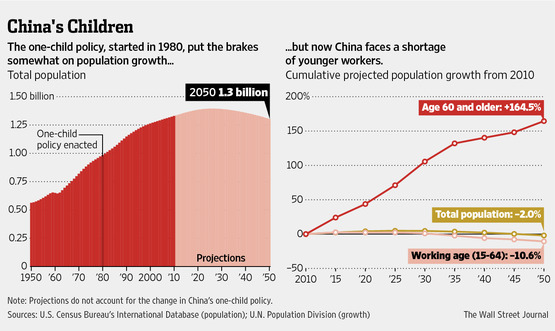
“Second-child concept stocks.”; What to Expect When You’re Expecting a Baby Boom; China’s Easing of One-Child Limit Sparks a Rally in Kid-Related Shares

What to Expect When You’re Expecting a Baby Boom

China’s Easing of One-Child Limit Sparks a Rally in Kid-Related Shares

ISABELLA STEGER And LAURIE BURKITT

Nov. 18, 2013 1:55 p.m. ET

P1-BO038A_ONECH_G_20131115135704

It will take at least nine months for the cooing, crying, bouncing results to appear, but the easing of China’s one-child policy has already created a frenzy of anticipation among households, businesses and the stock market for the expected baby boomlet. Shares of baby-formula producers and even piano makers jumped Monday when markets opened for the first time after news of the policy change came out late Friday. Tutoring companies’ shares rose on the assumption that urban families would expect their second children to produce the same academic excellence they demand from their first. Read more of this post

Taking Care of China Inc.

Taking Care of China Inc.

ALEX FRANGOS

Nov. 18, 2013 9:07 a.m. ET

China’s corporate behemoths are here to stay, but some of their advantages are set to erode a bit. There may even be something in it for investors. President Xi Jinping‘s grand plan for reform—announced late last week in a document following an important Communist Party meeting—treads softly on China’s biggest state-owned companies, who many say are rife with overcapacity, corruption and distortions that disadvantage private-sector players. The aim seems to be not to loosen the grip of the state-owned enterprises to create a level playing field, but to make them work better to maintain the Communist Party’s hold on power. Read more of this post

Paranoia from Soviet Union collapse haunts China’s Communist Party, 22 years on

Paranoia from Soviet Union collapse haunts China’s Communist Party, 22 years on

Monday, 18 November, 2013, 3:44pm

Cary Huang cary.huang@scmp.com

Party cadres made to watch documentaries on failure of Russian communism, by new leader determined not to see history repeat

In the heyday of Sino-Soviet socialist brotherhood in the 1950s, Chinese liked to say that “today’s Soviet Union is tomorrow’s China”, as Beijing faithfully followed Moscow’s every footstep in development. But since the collapse of communist rule and the Soviet Union in early 1990s, the old saying has become an evil omen haunting China’s communist leaders.  Read more of this post

Jim Rogers: Biggest Event of Next 10-20 Years Just Happened in China

Nov 18, 2013

Jim Rogers: Biggest Event of Next 10-20 Years Just Happened in China

By Kevin Kingsbury

The initial reaction from many following this month’s key gathering of communist-party leaders in China was of disappointment as Tuesday’s blueprint left much to be desired. But on Friday came a significantly more in-depth document regarding issues like land reform, easing of the one-child policy and cleaning up pollution. Read more of this post

He Xinming has just one job and one life mission – Dongpeng, China’s largest ceramic tile manufacturer.

The good earth
Grace Cao 
Monday, November 18, 2013

6_2013111719475241009Leader-1

He Xinming has just one job and one life mission – Dongpeng Holdings Company. “Chinese love ceramic products. That’s why our country is named China,” chuckles the 57-year-old chairman of the largest mainland ceramic tile manufacturer. At first glance, there appears nothing special about the entrepreneur, who is of average height and build. He seems a bit defensive at the start of the conversation but quickly loosens up when asked about his career. Read more of this post

Guangzhou announces new property curbs

Guangzhou announces new property curbs

Xinhua

2013-11-19

The municipal government of Guangzhou, the capital of south China’s Guangdong province, spelled out new rules to cool down the property market on Monday, following moves by three other mega-cities. The government will increase down payments for second-home purchasers from the current level of no less than 60% of the property value, according to a government statement. Read more of this post

Chinese Steer Billions Abroad in Quest for Safety: Real Estate

Chinese Steer Billions Abroad in Quest for Safety: Real Estate

More than a dozen Chinese developers gathered for breakfast at a Los Angeles hotel one Sunday earlier this month before taking off for meetings with property brokers, attorneys and potential business partners. The visitors, none of whom have invested in U.S. real estate development before, would then catch an evening flight to San Jose, California, and meet with more property executives there and in nearby San Francisco. In all, they would stop in six cities over 14 days, including New York and Washington. Read more of this post

China’s Pharma Potential Diminished

China’s Pharma Potential Diminished

By Drew Armstrong November 14, 2013

Big Pharma thought China had the cure for two conditions the industry had long endured: anemic sales growth in developed markets and revenue erosion because of competition from generics. Unfortunately for Western giants, the China effect wore off fast. While sales in the country for eight foreign drugmakers, including GlaxoSmithKline (GSK), Pfizer (PFE), and Merck (MRK), climbed 40 percent in 2011, growth has dwindled to 20 percent this year, data compiled by Bloomberg show. The main cause of the decline is a slowdown in the Chinese economy. A corruption crackdown threatens to pull down sales further. Read more of this post

China’s Bold Reform Plans Don’t Mean Much Yet

China’s Bold Reform Plans Don’t Mean Much Yet

The world appeared to change on Nov. 15, the day bold and epochal reforms were unveiled that promised to overhaul one of the world’s biggest economies. Analysts, investors and historians alike rejoiced at the audacity of the plan. That was Japan. On Nov. 15, 2012, Shinzo Abe, then one month away from becoming prime minister, pledged “unlimited” stimulus and the kind of supply-side policies for which investors had long been clamoring. A year later, the buzz is gone, and not a single structural reform has been implemented. Abe’s record should give pause to those now rushing to praise Xi Jinping for a Chinese reform document that is as vague as it appears bold. Read more of this post