Caesars Woos Gamblers With Wheel Taller Than London Eye

Caesars Woos Gamblers With Wheel Taller Than London Eye

With $23 billion in debt, the most of any U.S. hotel or casino company, Caesars Entertainment Corp. (CZR) wanted to spruce up its stretch of the Las Vegas Strip without dropping a bundle or adding to a glut of rooms in the city. So the owner of Caesars Palace and Planet Hollywood bet its tight expansion budget on a 550-foot Ferris wheel and “party district” right in the middle of the Strip, where 20 million people amble past its eight properties each year. Read more of this post

China’s Latest Move To Unwind A $2 Trillion Investment Product Is Bad News For Chinese Banks; “The key change is to remove an implicit guarantee of principle and yield, in the form of ‘expected return,’ by WMPs”

China’s Latest Move To Unwind A $2 Trillion Investment Product Is Bad News For Chinese Banks

MAMTA BADKAR 32 MINUTES AGO 0

The Shanghai Composite fell 1% on Thursday, with Chinese brokerages taking the biggest hit. Citic Securities, China’s largest brokerage, was down 3.7%. This comes on news that the government wants banks to unwind the controversial wealth management products (WMPs) and switch to asset management plans (AMPs). WMPs make up the $2 trillion powder keg at the heart of China’s banking system. In a quest for higher returns, tons of people have been pouring their wealth into WMPs, which are sold as high yielding,  low-risk investments offering “expected” instead of “guaranteed or promised returns.” This flood of deposits is key reason behind the surge in social financing and banks’ fee income in recent years. WMP holders largely view these as “investments as deposits” according to Bank of America’s David Cui, while in reality they take the hit if the investments go bad. And it is “this perception mismatch” that “prompts banks to seek undue risks when investing ‘other people’s money he writes. This has obviously been unsustainable. In late 2012, we saw investors take to the streets when WMPs they bought from Huaxia Bank soured. AMPs on the other hand will only provide investors with a “possible range of returns,” and they are open-ended. Initially they will only be allowed to invest in direct debt financing instruments (DDFIs) like securitized bank loans and other such assets, that can be traded on China’s interbank market. So what’s the rationale for switching to AMPs? “The key change is to remove an implicit guarantee of principle and yield, in the form of ‘expected return,’ by WMPs,” writes Cui. Read more of this post

Grave digger to gold digger: Singapore business shifts feed governance worries

Grave digger to gold digger: Singapore business shifts feed governance worries

3:36am EDT

By Anshuman Daga

SINGAPORE, Oct 10 (Reuters) – A funeral parlour switches into gold mining; a steel trader turns into a property developer; and a food packaging firm ventures into resources. Reverse takeovers and shifting corporate business strategies on Singapore’s stock market have come under the spotlight in the wake of a recent collapse in the share prices of three companies listed on Southeast Asia’s biggest bourse. One of the companies, Blumont Group Ltd, lost as much as S$6.2 billion ($4.96 billion) in market value in the past week. Prior to that, Blumont had surged as much as 12-fold this year, making it Singapore’s top performer. The company, which listed in mid-2000, has shifted its focus between investment – most recently in mining companies – property development and sterilised food and medicine packaging. The changes in business operations and the use of reverse takeovers – where a private firm buys a public company usually to bypass an often lengthy listing process – and its impact on the broader market risk undermining the credibility of one of Asia’s biggest financial and regulation centres. Read more of this post

Mistresses help keep the property bubble aloft in Beijing; state-run Beijing Evening Daily estimated back in 2010 that there were 200,000 mistresses living in apartments in Beijing alone

Mistresses help keep the property bubble aloft in Beijing

By Heather Timmons 4 hours ago

Keeping a mistress is a normal part of life for successful Chinese businessmen and government officials, and in some ways they have become more visible in recent years, playing roles in corruption scandals and even, sometimes, turning in their lovers. They and their big-spending partners may also be contributing to ever-increasing real estate prices in some of China’s biggest cities. That’s because these women, often from rural areas, are regularly kept in apartments that their lovers buy for them in urban centers, near his work or home. The practice has created entire neighborhoods of apartments in big Chinese cities filled with women who would otherwise be living at home with their families, or perhaps sharing a rental. Read more of this post

Liu Yonghao is China’s wealthiest investor: Hurun

Liu Yonghao is China’s wealthiest investor: Hurun

Staff Reporter

2013-10-10

C608N0112H_2013資料照片_N71_copy1

Chinese millionaire Liu Yonghao — chairman of the agricultural industry giant New Hope Group — is the richest investor in China, after Liu’s assests were made public in a sub-list of the Hurun China Rich List 2013 on Oct. 9, reports the new portal Sichuan Online. Liu and his family have increased their wealth since 1996, when Liu and several company owners launched the China Minsheng Bank, the largest private bank in China. Liu is now the major share holder of the bank with 6.7% of its shares, while he also possesses shares in other businesses across the country. Meanwhile, Gong Hongjia and wife Chen Chunmei, leading angel investors in the Chinese technology sector, came in second on the Hurun sub-list. The couple, who own Hikvision Digital Technology, a leading supplier of video surveillance products and solutions, saw their company grow 300% over the past three years. Lu Jiqiang checked in as the third richest investor on the list. Lu is also one of the major share holders of the China Minsheng Bank, possessing 2.46% of the shares. The 22 investors on the list possess assests totaling 212 billion yuan (US$34.6 billion). Among the top 20, 36.8% of them are in the IT business and 26.3% are in banking, the report said.


Marlboro in the Middle Kingdom: Chinese Kids Know Their Smokes; nearly nine out of 10 Chinese children aged 5 and 6 can identify at least one cigarette brand, and roughly one out of five say they expect to smoke when they grow up

October 10, 2013, 1:43 PM

Marlboro in the Middle Kingdom: Chinese Kids Know Their Smokes

OB-ZF405_csmoke_E_20131009075653

Students posed with cigarette models made from waste paper during a campaign ahead of the World No Tobacco Day in Handan, Hebei province, in May.

Nearly nine out of 10 Chinese children aged 5 and 6 can identify at least one cigarette brand, and roughly one out of five say they expect to smoke when they grow up. Those are some of the breathtaking results of arecent study by Johns Hopkins University on the effects of tobacco marketing on children in low- and middle-income countries. Read more of this post

Don’t laugh at the “man purse”—it’s now a $9 billion luxury business

Don’t laugh at the “man purse”—it’s now a $9 billion luxury business

By Jason Karaian @jkaraian 6 hours ago

handbag-growth-forecast-2012-to-2018-growth-2008-13-sales-2013-bn-_chartbuilder handbag-growth-forecast-2012-to-2018-men-s-women-s_chartbuilder_1

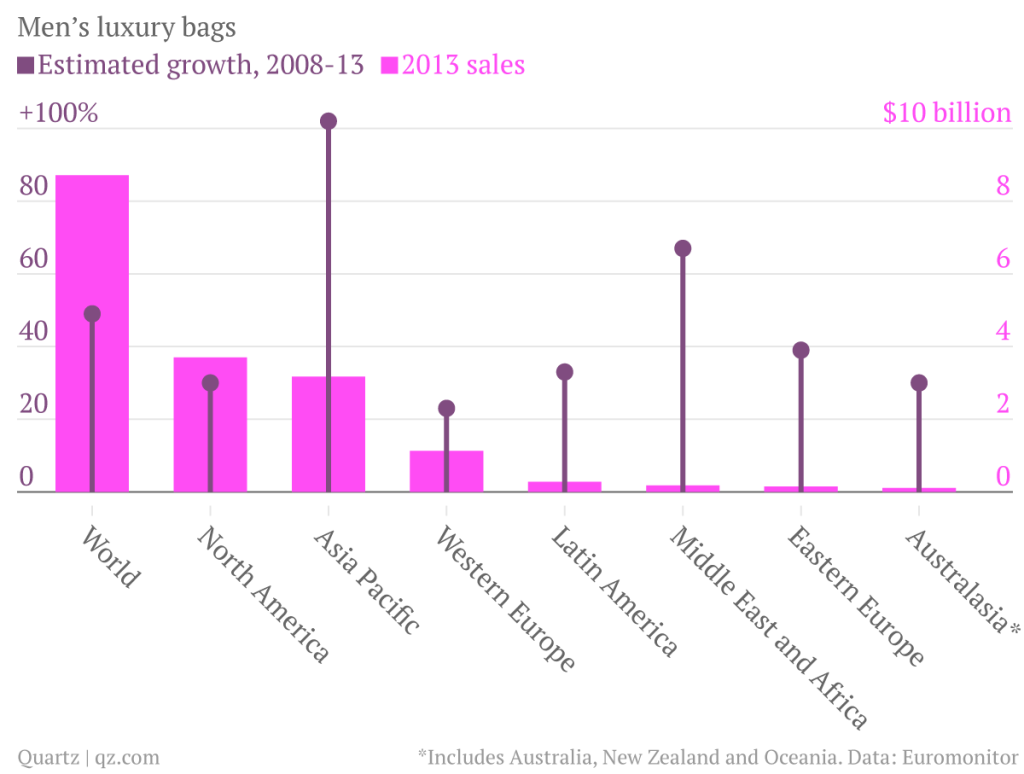
All is not well in the luxury world. Stalwart luxury buyers in China are cutting back, according to recent statements from Burberry and Richemont, among others. New data from research firm Euromonitor International confirms that the industry is in a bit of a slump. Global luxury sales are on track to grow by 3% this year, the slowest rate in four years. Euromonitor reckons that growth will pick up next year, though, driven by its strongest segment in recent years: accessories, specifically men’s accessories. The luxury goods industry has been “manning up” of late, says Fflur Roberts of Euromonitor. A host of luxury brands are opening men’s only stores, tapping a less saturated market undergoing significant shifts in tastes.

Read more of this post

Whole Foods Selling K-Cups in Challenge to Green Mountain

Whole Foods Selling K-Cups in Challenge to Green Mountain

Whole Foods Market Inc. (WFM) started selling organic private-label coffee pods that fit into Green Mountain Coffee Roasters Inc.’s Keurig machines, providing more competition for the single-serve coffee company’s K-Cups. A 12-pack of 365 Everyday Value brand K-Cups is $8.99 at U.S. Whole Foods stores, and there are five varieties, Emily Wright, a spokeswoman for the Austin, Texas-based company, said in an e-mail. Whole Foods, the largest natural-goods grocer in the U.S., has no relationship with Green Mountain, she said. A 24-pack of Green Mountain brand French Roast K-Cups sells for $16.49 on its website. Read more of this post

Rail to Royal Mail: the dangers of flawed privatisations

October 10, 2013 11:21 am

Rail to Royal Mail: the dangers of flawed privatisations

By Philip Augar

Intervention addresses the symptoms but not the causes of malfunctioning, writes Philip Augar

Is the UK’s privatised utilities market broken? It is a fair question on the day when Royal Mail – once seen as an untouchable public asset – makes its stock market debut, when Ed Miliband, Labour party leader, finds public resonance with the idea of a price freeze in the energy sector and when the government has to step in to cap rail commuter fares. The need for price intervention illustrates the risks of privatising a state-owned utility. If the regulatory balance is wrong or the competitive structure ineffective, the public ends up paying too much, corporate profits become too high and private sector shareholders get a free ride from taxpayers. Read more of this post

The fast-approaching end of the jumbo jet era; Airlines now want midsized aircraft that are cheap to fly and easy to deploy

October 9, 2013 7:32 pm

The fast-approaching end of the jumbo jet era

By John Gapper

Airlines now want midsized aircraft that are cheap to fly and easy to deploy

With its sale of composite, fuel-efficient A350 jets to Japan Airlines this week, Airbus entered a market that Boeing has, until now, controlled. It also provedBoeing’s point. The era of the grand aviation project, symbolised by Airbus’s decision more than a decade ago to build the A380 as a superjumbo rival to the Boeing 747, is over. Airlines do not want jumbos. They want midsized aircraft that are cheap to fly and easy to deploy – as the Boeing 787 will be if the company can stop its lithium-ion batteries catching fire. Read more of this post

Big fund managers go into battle over tougher US capital rules

October 10, 2013 2:19 pm

Big fund managers go into battle over tougher US capital rules

By Stephen Foley in New York and Gina Chon in Washington

The world’s largest fund managers are preparing a lobbying push to forestall tougher capital rules in the US and greater oversight of their activities, which have been mooted in the name of financial market stability. The industry has reacted angrily to a report last week that suggested companies with trillions of dollars under management might be considered “systemically important”. Read more of this post

SMEs in peripheral eurozone face far steeper borrowing rates

October 10, 2013 2:15 pm

SMEs in peripheral eurozone face far steeper borrowing rates

By Patrick Jenkins, Banking Editor

Small and medium-sized businesses in theperipheral eurozone are having to pay as much as triple the interest rate levied on German SMEs’ bank borrowing, according to a new report on eurozone credit conditions. The higher cost of credit and the contraction of its availability – legacies of the financial crisis and the regulatory crackdown on bank capital – are “starving” SMEs, according to the report, jointly authored by the Institute of International Finance, the global banking industry body, and Bain & Co, the consultancy. Read more of this post

European Billionaires Surface Holding Stakes in Family Companies

European Billionaires Surface Holding Stakes in Family Companies

A bull market for luxury goods and rising demand for construction equipment and laboratory services has minted three new European billionaires who hold stakes in family-controlled businesses. The fortunes of Marina Giori-Swarovski, an heiress to the Swarovski crystal fortune; Mark Bamford, the youngest son of the founder of U.K. backhoe maker JCB Service; and Gilles Martin, who controls French food and drug tester Eurofins Scientific, have each surpassed $1 billion this year, according to data compiled by Bloomberg. None have been cited individually as billionaires on an international wealth ranking. Read more of this post

Hong Kong Raises Haircut On Treasury Bill Collateral Over Debt Default Fears

Hong Kong Raises Haircut On Treasury Bill Collateral Over Debt Default Fears

Tyler Durden on 10/10/2013 07:44 -0400

While there is hope that DC will engage in its favorite, can-kicking activity any minute and if not resolve then at least push back the funding and debt ceiling stalemate by a few weeks, the reality is that without a deal in seven days, there may be no cash to pay down maturing Bills starting with the October 17 issue whose yield soared to nearly 50 bps yesterday. The reason for the capitulation as was revealed yesterday, is that various money market funds such as Fidelity’s have been selling all paper around the X-Date. This morning the contagion surrounding the use of Bills as collateral has crossed the Pacific, following news that the “Hong Kong’s futures and options market operator will require traders to put up more collateral when using some Treasury bills to back their positions, citing concern that the U.S. is at risk of a default.” In other words, as we forecast on Monday, the debt-ceiling confusion in cash-land has now openly engulfed the repo market, which only makes the states of a debt deal that much higher. Because if the repo, $2.5 trillion money market, and subsequently, the entire $80 or so trillion custodian market freeze up, what happens next will make Lehman seem like a quiet walk in the park. Read more of this post

Tongyang chief, wife on travel ban for alleged fraud and breach of trust

Tongyang chief, wife on travel ban

Oct 10,2013

TY

A woman cries at a rally protesting the financial regulator’s lax oversight of the Tongyang Group’s sales of commercial paper and bonds yesterday at the Financial Supervisory Service in Yeouido, western Seoul.

Prosecutors Tuesday prohibited Tongyang Group Chairman Hyun Jae-hyun and Tongyang Securities CEO Chung Jin-seok from leaving the country, a day after the Citizens’ Coalition of Economic Justice, a civic group, filed a complaint against them for alleged fraud and breach of trust. Hyun’s wife, group vice chairwoman Lee Hae-kyung, and Tongyang Networks CEO Kim Chul are also forbidden from going overseas. Hyun and Lee, daughter of group founder Lee Yang-koo, as well as senior executives at the group, are suspected of selling high-risk bonds to individual investors until just before the financial collapse of five affiliates that filed for court receivership last week.  Read more of this post

The opening of US air space to drones has the potential to create a $12bn industry

October 8, 2013 6:54 pm

Technology: Eyes in the sky

By Geoff Dyer

The opening of US air space to drones has the potential to create a $12bn industry

Rodney Brossart, who owns a 3,000-acre cattle farm in North Dakota, is an unlikely trendsetter. In 2011, six cows from a neighbouring property wandered on to his farm. When he allegedly refused to return the cattle and barred law enforcement from entering his property, police asked that a Predator drone from a local air force base fly over his farm to see if Mr Brossart was armed. Read more of this post

South Korea pays heavy price for education

October 9, 2013 7:15 am

South Korea pays heavy price for education

By Jung-a Song in Seoul

Park Sang-hee, is a new breed of university drop out. The 21-year-old South Korean ditched his music degree not to hit the hippy trail or to develop the next Google; but to train as an electrician. The pragmatic Mr Park may be a sign of things to come. In his home market, the deluge of graduates – 7 out of every 10 high school students go to university – and the subsequent skills surplus and labour underutilisation is taking a toll on theeconomy. Read more of this post

S. Korea groans with prevalent financial scams

S. Korea groans with prevalent financial scams

English.news.cn   2013-10-10 07:49:07

Yoo Seungki

SEOUL, Oct. 10 (Xinhua) — A company worker in South Korea received a text message on his smartphone. The message read that anyone who wants emergency funds can easily access a credit line in banks by making just a call to the phone number stated in the message. The 36-year-old man, who was ardently looking for the banks’ credit line to pay back another debt, immediately called the number, but the swindler posing as a consultant at a major local bank refused to give him the credit line due to his low credit rating. Read more of this post

‘Outsider’ to lead troubled CJ Group

2013-10-09 16:45

‘Outsider’ to lead troubled CJ Group

Yi Whan-woo
CJ Group’s sudden management reshuffle on Tuesday is drawing keen attention as the group has decided to appoint Lee Chae-wook as CEO of CJ Corp., the holding company of Korea’s food and entertainment giant CJ Group. The group officially said that the appointment was aimed at ensuring stability in management and speeding up the slowing down of overseas projects but the sudden move has spawned speculation that it was part of punishment against management. Read more of this post

Korean food companies are catering to a new demographic: single people

2013-10-09 17:17

Food firms shift focus to singles

By Park Ji-won
Food companies are catering to a new demographic: single people. An increasing number of companies are changing their interiors and menus to target such customers.
Outback Steakhouse Korea, an American restaurant franchise, increased the number of bar seats for single customers at its Cheonan, South Chungcheong Province and Ilsan, Gyeonggi Province locations in July. Read more of this post

How to revive the Korean ginseng industry

How to revive the Korean ginseng industry

By Shin Wang-su, President of Korea Ginseng Research and a director of the Korea Ginseng Federation

Oct 07,2013

Korea’s ginseng industry is in a crisis. The farmland is diminishing, farmers are getting old and the costs of material and labor are going up, jeopardizing the production of ginseng. Repeated cultivation of ginseng drastically reduced its yield, and ginseng farmers need to find fresh land where ginseng was never planted before. Therefore, securing arable lands is the most pressing task. However, the average leasing price for 3.3 square meters (35.5 square feet) of land is about 3,000 won ($2.80), so producing six-year-old ginseng from a 330,000-square-meter field cost about 10.8 billion won. The leasing price is translated into the production cost, lowering price competitiveness of Korean ginseng. Read more of this post

Martin Hartono, one of the three sons of Indonesia’s richest man Robert Budi Hartono, said “technopreneurs” have a great opportunity to capture consumer-related sectors given the country’s young population

Focusing on Consumers With ‘Technopreneurs’

By Muhamad Al Azhari on 11:11 am October 10, 2013.

IMG_0643.jpg_0001

Martin Hartono speaking at a public lecture in Jakarta organized by the Tanoto Foundation in partnership with the economic faculty at the University of Indonesia. (GA Photo/Suhadi)

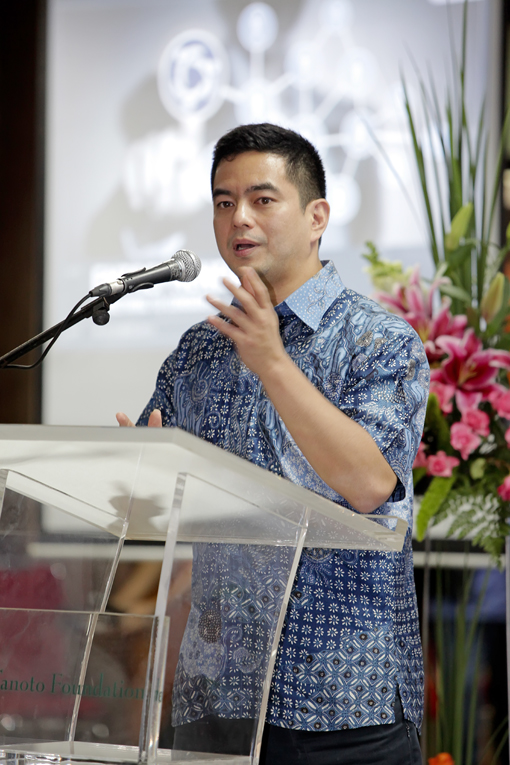
Martin Hartono, one of the three sons of Indonesia’s richest man Robert Budi Hartono, said “technopreneurs,” or entrepreneurs in technology in Indonesia, have a great opportunity to capture consumer-related sectors given the country’s young population. “Currently, young people who are in school will later get a job and spend… are the generation that is used to living with the Internet,” said Martin, whose father Budi and uncle Michael Hartono have a combined $15.5 billion net worth, according to Globe Asia calculations. Read more of this post

McDonald’s which entered India in 1996 and now runs 319 outlets, sacked Vikram Bakshi in July on the grounds that his diverse business interests were diluting his focus on McDonald’s

Vikram Bakshi’s attention divided, not to extend term as MD: McDonald’s tells CLB

ET Bureau Oct 4, 2013, 04.30AM IST

By Shubham Batra

NEW DELHI: US burger chain McDonald’s has told theCompany Law Board that it decided not to extend Vikram Bakshi’s term as the managing director of one of its joint ventures in India because he has not been devoting enough time for the business. Bakshi has not been able to devote substantial time in the development and performance of the business due to his association with 25 other companies promoted by him and his family, McDonald’s India said before the Company Law Board (CLB) on Thursday. Bakshi had approached the board after McDonald’s removed him as the managing director of Connaught Plaza Restaurants, the joint venture that runs McDonald’s outlets in north and east India, on August 6. Read more of this post

India-Made Fountain Pens Thrive On Global Demand

India-Made Fountain Pens Thrive On Global Demand

by Tushar A Amin | Oct 10, 2013

Steeped in history and tradition, Indian-made fountain pens—despite their relative anonymity—are thriving on global demand

topimg_22623_balaji_d_ache_600x400

A felt-lined tray is placed on the counter separating me from the gleaming shrines at the William Penn boutique store at High Street Phoenix Mall in Lower Parel, Mumbai. Slipping on a dark glove, the high priestess approaches a glass-enclosed shrine and turns the key. From a distance, you are already in awe of the fine craftsmanship of Japanese Maki-e artiste Kousen Oshita in creating this exquisite tribute to Lord Venkateswara. As the glass veil parts, the priestess delicately lifts the object of worship from its pedestal and rests it on a velvet bed. Read more of this post

India takes big step to internationalise the rupee

October 9, 2013 5:01 pm

India takes big step to internationalise the rupee

By Robin Harding in Washington and James Crabtree in Mumbai

India is making a big move to internationalise its currency through a deal with the World Bank to launch the first offshore rupee bond programme. The International Finance Corporation, an arm of the development lender, will vastly boost the size of the offshore rupee market by selling $1bn of bonds to international investors. The launch of the programme shows that India is trying to find ways to attract foreign capital after therupee plunged this summer, when the US Federal Reserve seemed ready to slow its asset purchases from $85bn-a-month. Read more of this post

Carl Icahn’s purchase of a 5 per cent stake in the Canadian company Talisman Energy marks the entry of activist shareholders into the energy business. Could it indicate the beginning of a revolution?

Shareholder activism arrives in the energy sector

October 8, 2013 7:10 pmby Nick Butler

Carl Icahn’s purchase of a 5 per cent stake in the Canadian company Talisman Energy marks the entry of activist shareholders into the energy business. Could it indicate the beginning of a revolution? Activist shareholders have a bad reputation, particularly in Europe where they are seen as asset strippers who pull apart good businesses for a short-term gain. That can happen but they can also be very productive in forcing companies to examine very hard what they are doing with their shareholders’ money. Read more of this post

Why a graveyard owner in China is turning its cemeteries into a public company

Why a graveyard owner in China is turning its cemeteries into a public company

By Gwynn Guilford @sinoceros October 9, 2013

As plum real estate in China grows scarce and prices soar, it isn’t just luxury condo buyers who are paying out the nose to secure a plot of soil. Shrinking land supply and booming demand are driving a boom in China’s burial business. In Shanghai, for instance, a plot of land near its downtown sold for $3.5 billion in early September—about 37,300 yuan per square meter. Meanwhile, China’s population is aging fast; its 119 million citizens aged 65 and over as of 2010 will more than double by 2050.  Read more of this post

The new gas guzzler; China’s status as the top oil importer will push it to become more engaged in global security

October 9, 2013 7:07 pm

The new gas guzzler

By Ed Crooks and Lucy Hornby

China’s status as the top oil importer will push it to become more engaged in global security

The world has just passed a historic milestone: China has overtaken the US as theworld’s largest oil importer. After decades as the world’s biggest market for the international oil trade, America is ceding that position, the US Energy Information Administration said this week. The implications for international relations and global security are profound. The predictable element in the equation is the inexorable growth in Chinese oil demand, as the world’s most populous nation slowly approaches the standard of living of Europe, the US and its more prosperous Asian neighbours. Read more of this post

The collection and use of social maintenance fees have become a hotbed of rent-seeking and corruption in China

Audit Finds Rampant SMF Irregularities

10-08 14:47 Caijing

The collection and use of SMFs have become a hotbed of rent-seeking and corruption, and a convenient source of income for corrupt officials.

By staff reporters Shu Taifeng and Li Qiyan

The findings of a recent audit by the National Audit Office (NAO) of the management and usage of social maintenance fees (SMFs) were published Sept. 18, which is a first since SMF came into being 11 years ago. The partial audit of one municipality, eight provinces and 45 counties took stock of SMFs local governments collected from 2009 through May 2012, which totaled US$ 2.81 billion. Read more of this post

Sip of Death Plagues Cancerous River Villages; Polluted rivers in three provinces have been linked to high death rates in China’s ‘cancer villages’

10.09.2013 17:33

Sip of Death Plagues Cancerous River Villages

Polluted rivers in three provinces have been linked to high death rates in China’s ‘cancer villages’

By staff reporters Xie Haitao and Liu Hongqiao, and intern reporters Huang Jin and Zhang Xia

(Beijing) — Cancer is claiming fewer lives these days, and Dr. Wang Shiren says he’s been caring for a steadily declining number of patients suffering from gastrointestinal disorders. Yet a decades-long health calamity continues to grip Huangmengying, a Henan Province community of about 2,500 straddling the Huai River, where Dr. Wang practices and researchers have been monitoring conditions for at least eight years. Read more of this post