Tens of thousands of Japanese homeowners are generating their own power with hydrogen fuel cells and solar panels, part of a post-tsunami revolt against electric utilities

Updated September 17, 2013, 11:34 p.m. ET

In Post-Tsunami Japan, Homeowners Pull Away From Grid

PETER LANDERS and MAYUMI NEGISHI
P1-BN176_JENERG_NS_20130917174815P1-BN173_JENERG_G_20130917184808

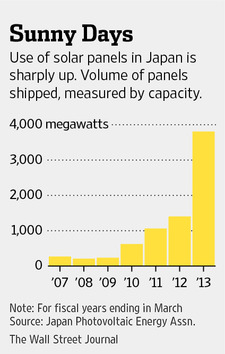
OSAKA, Japan—In a post-tsunami revolt against conventional electric utilities, tens of thousands of Japanese homeowners have started generating their own power from hydrogen fuel cells and solar panels, turning the country into the world’s leading laboratory for overturning the traditional grid and the century-old business model behind it. Two and a half years after a nuclear-plant disaster crippled a primary source of electricity, major home builders are incorporating the alternative technologies as a standard feature of new homes. Japan’s biggest builder of single-family homes,Sekisui House Ltd., 1928.TO +0.91% says more than 80% of those it produces have solar power and half have fuel cells, an emerging technology little-known in homes elsewhere. “If you’re going to use electricity, you might as well make it yourself,” said Sekisui executive Kenichi Ishida, describing the nation’s mood. Read more of this post

Kanebo must focus on fixing the flaws in its corporate culture that caused this scandal

Kanebo’s costly scandal

SEP 16, 2013

The scandal involving Kanebo Cosmetics’ skin-whitening products shows that the company’s business-as-usual attitude has caused suffering for a large number of consumers. Both people in the pharmaceutical, cosmetics and food industries, and experts and officials engaged in examination of the safety of related products should draw lessons from the Kanebo scandal and ask themselves whether they are doing their best to ensure that its products are safe for consumers and taking timely action to issue product recalls when necessary. Read more of this post

Japanese Ask, What’s Wrong With a Little Deflation?

Japanese Ask, What’s Wrong With a Little Deflation?

By William Pesek  Sep 16, 2013

As Haruhiko Kuroda tries to spur Japan (JGDPAGDP)’s inflation rate, he faces a worrying question: What if his Bank of Japanpredecessor was right about why he will fail? In June 2011, then-BOJ Governor Masaaki Shirakawa faced extreme pressure to double the monetary base, a step Kuroda took just days after replacing him in March. When Shirakawa, a University of Chicago-trained economist, was asked why he’d refused to budge, he offered a surprising excuse: Japan’s aging population, whose fixed incomes would be eaten away by rising prices. Politicians thought the rationale was a copout. Shinzo Abe’s first act as prime minister was to dump Shirakawa. Read more of this post

Indonesian President Susilo Bambang Yudhoyono’s party is putting its presidential hopefuls through an American Idol-style contest that will see them criss-crossing the country for eight months

Yudhoyono Uses Idol-Style Test to Find Successor: Southeast Asia

Indonesian President Susilo Bambang Yudhoyono’s party is putting its presidential hopefuls through an American Idol-style contest that will see them criss-crossing the country for eight months while footing some of the cost. The contestant who tops a nationwide public survey held by May will win the Democrat Party nomination for the July election, according to Suaidi Marasabessy, secretary of its convention committee. Among the 11 standing in the party primary are Pramono Edhie Wibowo, Yudhoyono’s brother-in-law and a former army chief of staff, and Trade Minister Gita Wirjawan, a former JPMorgan Chase & Co. banker. Read more of this post

Corporate Indonesia worries as rupiah wobbles

September 17, 2013 2:14 pm

Corporate Indonesia worries as rupiah wobbles

By Ben Bland

The slump in the value of Indonesia’s rupiah has revived bitter memories of the 1997-98 Asian financial crisis, when a currency collapse pushed companies with large US dollar borrowings into bankruptcy, tripping up the banking sector and sending the country spiralling into political and social turmoil. With dollar interest rates kept low by the US Federal Reserve’s quantitative easing programme, companies in Indonesia and other emerging markets have loaded up on dollar debt over the past few years. Read more of this post

Bakrie Development May Go Bankrupt if No Debt Agreement is Reached

Bakrie Development May Go Bankrupt if No Debt Agreement is Reached

By Investor Daily & Reuters on 10:09 am September 17, 2013.
Property firm Bakrieland Development will face its creditors in Central Jakarta commercial court today in an attempt to defeat a bankruptcy petition. The latest saga underscores the financial problems faced by Bakrie Group conglomerate, owned by presidential hopeful Aburizal Bakrie. A group of bondholders, including hedge fund Cube Capital, filed on Sept. 2 a delayed debt payment petition (PKPU) with the commercial court against Bakrieland over $155 million in bonds. The five-year unsecured equity-linked bonds were issued in 2010 with an annual yield of 8.625 percent. Read more of this post

Philippine Economy Withstands Latest Corruption Scandal

September 17, 2013, 12:20 p.m. ET

Philippine Economy Withstands Latest Corruption Scandal

President Aquino Renews Battle Against Graft, Bolstering Investor Confidence

JAMES HOOKWAY

The latest Philippine corruption scandal could bolster President Benigno Aquino III‘s own war against graft—and lead to further investor confidence in the country’s economy. Prosecutors this week filed graft charges against three prominent senators, two former lawmakers and a businesswoman for their alleged roles in misusing more than $200 million in state funds, a scandal that has rocked the Philippines’ political system. All six persons charged so far, including a former Senate president, have denied wrongdoing. Read more of this post

Don’t Catch The Liquidity-Impacted EM Falling Knife (Yet)

Don’t Catch The Liquidity-Impacted EM Falling Knife (Yet)

Tyler Durden on 09/17/2013 20:11 -0400

The Euro area is no longer the centre of all the stress… EM countries are! Despite their significant correction in recent months, SocGen notes that valuations remain far more extreme (or cheap) and outflows are dominating (despite a 24% discount on a price-to-book basis across EM stocks, they reain rich historically). Significant structural issues like balance of payments, deficit or inflation may lead to further turmoil in emerging markets, potentially destabilising the underlying economies.

Via Societe Generale,

Epicentre of the crisis is moving towards EM Countries

We read history in a simple way.

20130917_socgen1 Read more of this post

CEO-to-Worker Pay Ratio Disclosure Proposal to Be Issued by SEC

CEO-to-Worker Pay Ratio Disclosure Proposal to Be Issued by SEC

A divided U.S. Securities and Exchange Commission will propose that public companies disclose how much more their chief executives earn than rank-and-file workers. SEC commissioners meeting in Washington tomorrow will vote to propose and seek comment on a requirement that has been opposed by the agency’s two Republican members and more than 20 large business lobbying groups, which say the data will be costly to compile and won’t help investors. The disclosure rule, championed by unions and some congressional Democrats, must be issued under the 2010 Dodd-Frank law. Read more of this post

CBO Says Short-Term Deficit Cut Won’t Avert Fiscal Crisis

CBO Says Short-Term Deficit Cut Won’t Avert Fiscal Crisis

A short-term shrinkage of annual budget deficits since 2009 won’t reverse the 25-year growth of U.S. debt that requires Congress to avert a long-term fiscal crisis by choosing among spending cuts, tax increases or a combination of both, the Congressional Budget Office said today. The nonpartisan agency said that the sooner Congress strikes a closer balance between tax revenues and expenditures, the easier it will be to implement policy changes with minimal economic disruption. The options confronting lawmakers are raising taxes, cutting spending for entitlements such as Medicare and Social Security, or a combination of the two, the CBO said in its annual report on long-term budget projections. Read more of this post

From Brazil to India, Pain From Currencies; Rupee and Real, Weakened After Fed’s Signal on Bonds, Translate Into Higher Costs to Repay Debt, Buy Jet Fuel

September 17, 2013, 7:43 p.m. ET

From Brazil to India, Pain From Currencies

Rupee and Real, Weakened After Fed’s Signal on Bonds, Translate Into Higher Costs to Repay Debt, Buy Jet Fuel.

PAULO WINTERSTEIN And GRACIELA IBÁÑEZ

SÃO PAULO—The expected end of the Federal Reserve’s era of easy money has hit currencies in emerging markets from the rupee to the real. And that is hurting corporate profits from Bangalore to Brazil. Consider the case of Brazil’s Gol Linhas Aereas InteligentesGOLL4.BR -1.01% the country’s second-biggest airline. About 60% of its costs, such as jet fuel, are in dollars, while revenue is in reais. The real fell as much as 15% after the Fed in June signaled that it would be ending its bond-buying program; as of Tuesday, it was down 9.5% year to date. Read more of this post

Subprime Auto Loans Get Larger as Competition Grows, S&P Says

Subprime Auto Loans Get Larger as Competition Grows, S&P Says

Subprime auto lenders are enabling buyers to borrow more relative to the cost of a car in a sign that underwriting standards are deteriorating amid increased competition, according to Standard & Poor’s. The average loan-to-value ratio, or LTV, on vehicle sales to consumers with spotty credit has risen to 114.5 percent this year from about 112 percent in 2010, S&P said in a report yesterday. That compares with a peak of 121 percent in 2008, according to the New York-based rating company. Read more of this post

We still live in Lehman’s shadow; The bank’s collapse was but a symptom of the looming crisis

September 17, 2013 6:38 pm

We still live in Lehman’s shadow

By Martin Wolf

The bank’s collapse was but a symptom of the looming crisis

Both the past and future of our financial system remain as poisonous a topic as they were five years ago, when Lehman Brothers failed. That is a lesson to draw from the forced withdrawal of Lawrence Summers, former US Treasury secretary, from the list of candidates for chair of the US Federal Reserve. For many Democrats, Mr Summers is responsible for the financial liberalisation that led, in their view, to the crisis of 2007-09. Indeed, the debate about the origins and aftermath of the crisis is not over. How can it be when the exceptional policies it caused are still with us? Read more of this post

SEC Approves Publicly Reporting Trades of Privately Placed Bonds

SEC Approves Publicly Reporting Trades of Privately Placed Bonds

The U.S. Securities and Exchange Commission approved a plan to publicly report trades of privately placed corporate bonds. The Financial Industry Regulatory Authority, the private-sector overseer of U.S. brokerages, asked the SEC for permission to use the Trace price-reporting system for the securities, and the U.S. government agency authorized the proposal on Sept. 6. Finra will announce the start of the system within 60 days of the SEC’s decision. Read more of this post

More than a third of the £150m in public funds being lent to individuals to start their own business – ranging from gluten-free pet food to a magazine about Croydon – could be lost,

September 17, 2013 4:21 pm

Up to 40% of start-up loans unlikely to be repaid

By Andrew Bounds, Enterprise Editor

More than a third of the £150m in public funds being lent to individuals to start their own business – ranging from gluten-free pet food to a magazine about Croydon – could be lost, according to official projections. David Cameron last week increased funding for the Start-Up loan scheme – intended to spur entrepreneurship and promote economic growth – and extended eligibility from under-30s to all adults. Read more of this post

Largest LBO Ever Prepares For Largest Non-Financial Bankruptcy In 30 Years

Largest LBO Ever Prepares For Largest Non-Financial Bankruptcy In 30 Years

Tyler Durden on 09/17/2013 16:25 -0400

Median Leverage_0

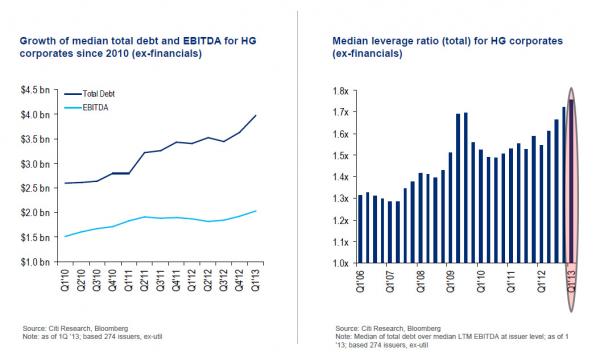
If there was one deal that epitomized the last credit bubble, aside from the Blackstone IPO of course, it was the ginormous, $45 billion 2007 LBO of TXU, now Energy Future Holdings. And while the tide for the New Abnormal credit bubble has yet to expose its megalevered monoliths swimming fully naked, as for now corporations have opted for graduated semi-MBOs in the form of ever larger stock buybacks (although as rates rise this too day of reckoning is coming), the time to pay the piper for the last credit-fuelled binge has arrived and inevitable bankruptcy of this landmark deal is now just days away. From the WSJ: “Energy Future Holdings Corp. has begun sounding out banks for financing to help it operate during expected bankruptcy proceedings, which could come as soon as November for the Texas power producer.” Read more of this post

Less Tapering Becomes Tightening Credit No Matter What Fed Says

Less Tapering Becomes Tightening Credit No Matter What Fed Says

By just talking about adding stimulus at a slower pace, Federal Reserve Chairman Ben S. Bernanke sent bond yields a percentage point higher. The rout serves as a warning to monetary policy makers that their exit from record accommodation won’t be easy to control. The jump in yields has pushed up the cost of mortgages for millions of Americans, curbed demand for homes and prompted thousands of job cuts at Bank of America Corp. and Wells Fargo & Co., all at a time when the Fed’s policies are aimed at creating jobs and supporting housing. Read more of this post

Aging Boomers Befuddle Marketers Eying $15 Trillion Prize

Aging Boomers Befuddle Marketers Eying $15 Trillion Prize

Six years ago, the University of Cincinnati unveiled what it called an “unusual consortium” between its students, faculty and corporations, including Procter & Gamble Co., the consumer-product giant headquartered nearby. The group’s goal: to research and develop product ideas for consumers age 50 and over. “The world has never before seen such a powerful market,” with about $3 trillion to spend in the U.S. alone, the school said then. The segment’s needs were “underserved,” requiring a shake-up of models to find the “sweet spot” between those needs and what was feasible to produce. They’re still searching. Read more of this post

Celltrion CEO is facing sanctions from regulators for allegedly manipulating the stock price. Affiliates received loans back by equity stake in Celltrion and have to pay back loans or provide more collateral should Celltrion’s stock price fall. “That’s why Seo attempted to keep its stock price high.”

2013-09-16 19:08

Celltrion CEO under scrutiny

By Na Jeong-ju

Seo Jung-jin, CEO of the country’s largest bio firm Celltrion, is facing sanctions from regulators for allegedly manipulating the stock price of his company. The fraud case represents a dramatic fall from grace for Seo, once called the living legend of the bio industry. He founded Celltrion in 2002 in the midst of a venture boom, and nurtured it into the biggest firm on the tech-laden KOSDAQ bourse in terms of market capitalization. But he is now on the verge of becoming another venture company CEO who may end up in prison.
According to financial regulators Monday, Seo allegedly engaged in illegal stock trading, along with some friendly investors, early this year, using insider information. “We’ve found evidence showing Seo and some others bought shares just before the firm unveiled favorable measures for stock investors,” an official from the Financial Supervisory Service (FSS) said. “Seo is also suspected of having misused his status to inflate Celltrion’s stock price. He claims it was to defend his firm from short-selling investors, but that shouldn’t be an excuse.” Read more of this post

Baupost’s Klarman Returns Money To Clients Amid “Too Few Opportunities”

Baupost’s Klarman Returns Money To Clients Amid “Too Few Opportunities”

Tyler Durden on 09/16/2013 19:26 -0400

Seth Klarman’s Baupost Group will be returning money to investors at year-end. As II Alpha reports, though the amount has yet to be determined, this would be only the second time the hedge fund has returned money in the firm’s 31-year history. With the world of asset managers, as we recently noted, increasingly become herd-like beta-chasers, it seems Klarman – just as he noted earlier in the year – will return capital unless investment opportunities dramatically increased – and that hasn’t happened. Read more of this post

How China Lost Its Mojo: One Town’s Story; Once Booming Yantian Looks for New Sources of Growth

September 16, 2013, 11:00 p.m. ET

How China Lost Its Mojo: One Town’s Story

Once Booming Yantian Looks for New Sources of Growth

TOM ORLIK

YANTIAN, China—Not long ago, this factory town in southeastern China was an emblem of the country’s massive export boom. Today, it is a symbol of China’s struggle to sustain a growth streak. Low wages, easy access to overseas markets, and a business-savvy leadership helped transform Yantian in the 1990s from a sleepy agricultural hamlet to a manufacturing hub with close to 150,000 people. By 1998, more than 400 foreign firms set up shop, churning out electronics, toys and watches for export. A golf course and high-end hotel sprang up to keep Japanese and Hong Kong factory bosses amused. Read more of this post

JPMorgan Reduces Stake in China Merchant Banks amid Chinese Banks Sell-off; Foreign institutions expressed concerns over surging credit and non-performing loans in Chinese banking industry as well as an economic slowdown

JPMorgan Reduces Stake in China Merchant Banks amid Chinese Banks Sell-off

09-17 12:10 Caijing

Foreign institutions have frequently expressed concerns over surging credit and non-performing loans in Chinese banking industry as well as an economic slowdown.

JPMorgan Chase & Co. has lowered its stake in China Merchants Bank in the latest sell-off of Chinese banks amid worries over deteriorating bank assets in a slowing economy. JPMorgan reduced its long position in the H shares of the bank from 8.29 percent to 7.79 percent last week by unloading 23million shares at HK$ 15.06 per share on average, the Hong Kong Stock Exchange’s disclosure of interests information showed Monday. Read more of this post

Wal-Mart Sells Coors Almost at Cost to Be Largest Beer Seller

Wal-Mart Sells Coors Almost at Cost to Be Largest Beer Seller

Wal-Mart Stores Inc. (WMT) is so committed to becoming America’s biggest beer retailer that it has been selling Budweiser, Coors and other brews almost at cost in at least some stores. The markup on a 36-pack of Coors Light cans at a Los-Angeles-area store was 0.6 percent, compared with 16.2 percent for a package of Flaming Hot Cheetos, according to internal documents reviewed by Bloomberg. Companies typically don’t release information about markups so the March data provide a rare glimpse of Wal-Mart’s alcohol pricing strategy. Read more of this post

London designers seek to defy tough markets with luxury pieces

London designers seek to defy tough markets with luxury pieces

6:15pm EDT

By Marie-Louise Gumuchian

LONDON (Reuters) – London designers are seeking to entice more demanding fashion followers with luxurious materials, rich embellishment and vivid colors, hopeful that the country’s luxury industry will grow despite continuing global economic woes. London Fashion Week, effectively a trade show that sees hundreds of buyers, journalists and celebrities descend on the British capital, is expected to result in orders worth more than 100 million pounds ($159.35 million) during its September 13-17 run. Read more of this post

Crocs Wants You To Forget About Its Signature Product

Crocs Wants You To Forget About Its Signature Product

ASHLEY LUTZ SEP. 16, 2013, 1:46 PM 2,617 2

Crocs, maker of the notoriously unstylish rubber clog, is trying to break into high fashion. The shoe line will release “high-heeled pumps, sleek flats, and ankle-strap thongs,” early next year, reports Kyle Stock at Bloomberg Businessweek. The fancy new shoes will be manufactured in Italy — not the brand’s Colorado headquarters. Prices will range from $80 to $120. The line is part of Crocs’ push to distance itself from the clogs that made it famous. Businessweek, reported earlier this years that the company is trying to double sales in the next five years and doesn’t feel it can do it with the polarizing clogs. A visit to Crocs’ homepage shows that the brand is promoting ballet flats and wedges alongside its signature product:

screen shot 2013-09-16 at 11.56.54 am Read more of this post

Wooing, and Also Resenting, Chinese Tourists

September 16, 2013

Wooing, and Also Resenting, Chinese Tourists

By DAN LEVIN

TOKYO — The Ugly Americans terrorized Europeans and Asians with their booming voices and tennis shoes in the years after World War II. Decades later, Japanese tour groups descended from their air-conditioned buses to flash peace signs as they shot photos of every known landmark as well as laundry on backyard clotheslines. Now it is China’s turn to face the brunt of complaints. The grievances are familiar — they gawk, they shove, they eschew local cuisine, and last year, 83 million mainland Chinese spent $102 billion abroad — overtaking Americans and Germans — making them the world’s biggest tourism spenders, according to the United Nations World Tourism Organization. Read more of this post

The property bubble in 14 Chinese cities is in danger of bursting, an NDRC adviser to the nation’s highest planning body has warned

Property bubble fragile in 14 cities, expert warns
Tuesday, September 17, 2013
The property bubble in 14 mainland cities is in danger of bursting, an adviser to the the nation’s highest planning body has warned. Guo Shiping, consultant to the National Development and Reform Commission, claims to have predicted the property market crash in 1997, news portal 163.com reported. He said cities such as Ordos in Inner Mongolia, Wenzhou and those in Hainan have already slumped. Home prices in Ordos, which is also known as “ghost city,” have slumped more than 92 percent in nearly 1 years to 1,700 yuan (HK$2,153) per square meter in August from 22,000 yuan per sq m in March last year, Guo said. In Wenzhou, defaulting borrowers have surrendered their homes to banks for public auction, Southern Weekly reported. It added more than 10,000 units were involved. Home prices in Zhejiang fell for the 23rd consecutive month, official data showed. But property markets remained red hot in Guangzhou and Nanjing, which saw new projects sold out on the launch date. China’s new home prices rose for the 15th consecutive month in August, according to Soufun, the nation’s largest real estate information platform. The central government has noticed the trend and will continue to send inspection teams to discuss the situation with local governments, China Times reported.

GRACE CAO

In China, the Devil doesn’t wear Prada

In China, the Devil doesn’t wear Prada

5:03pm EDT

By Donny Kwok

HONG KONG (Reuters) – The Devil, it seems, wears anything but Prada in the eyes of Chinese bloggers determined to expose corrupt government officials flashing luxury labels way past their pay grades. Prada is among a few premium brands reporting solid growth in the world’s second largest luxury market even as a government campaign against conspicuous spending and gift-giving hurts firms with instantly recognizable brands like LVMH, Compagnie Financiere Richemont and Kering SA. Read more of this post

Danone’s Baby-Food Brand Probes Report of China Doctor Payments

Danone’s Baby-Food Brand Probes Report of China Doctor Payments

Danone’s (BN) Dumex said it will immediately start an investigation into a Chinese media report that alleged the brand made payments to hospital doctors and nurses to sell its baby formula products. Dumex paid hundreds of thousands of yuan annually to doctors and nurses at hospitals in the northern Chinese city of Tianjin amid “fierce competition” among baby-formula makers, the state-owned China Central Television reported yesterday, citing an unidentified former sales manager from the brand. Read more of this post

Chinese Woman’s Rom-Coms Boost $2.8 Billion Film Industry; investors are coming to Chinese filmakers to say, ’Here’s the money, make anything you want.’ That’s because China’s low cost of production and modest marketing budgets mean that movies can be extremely profitable

Chinese Woman’s Rom-Coms Boost $2.8 Billion Film Industry

When it comes to romantic comedy in China, it’s a woman’s world. That’s the view of Jin Yimeng, who wrote and directed the rom-com “One Night Surprise,” which opened in Hong Kong on Sept. 12 and stars Fan Bingbing. “There are more female directors making movies in China than any other country,” said Jin. “Most movies are drama or romance, so investors say, because it’s a female, they know better.” Jin, who was the first woman to achieve more than 100 million yuan ($16.3 million) at the box office with her romantic comedy “Sophie’s Revenge,” starring Zhang Ziyi in 2009, says it’s the golden age of filmmaking in China. “For any Chinese filmmaker with a track record, this is heaven. Here investors are coming to you to say, ’Here’s the money, make anything you want.’” That’s because China’s low cost of production and modest marketing budgets mean that movies can be extremely profitable. Box-office receipts in China grew 30 percent last year to 17 billion yuan ($2.8 billion), according to the State Administration of Radio, Film and Television, making it the second-largest film market after the U.S. Read more of this post