Public Funds Take Control of Assets, Dodging Wall Street

AUGUST 18, 2013, 2:11 PM

Public Funds Take Control of Assets, Dodging Wall Street

By NATHANIEL POPPER

Investors responsible for more than $2 trillion recently gathered at a resort in the Canadian Rockies, far from the news media and, more important, far from Wall Street.

Those in attendance, including leaders of Abu Dhabi’s sovereign wealth fund and France’s pension system, were there to consider ways to put their money to work together without paying fees to private equity firms and hedge funds. Over that weekend, three of the attendees completed the details of a $300 million investment in a clean-energy company. Read more of this post

Obama Focuses on Risk of New Bubble Undermining Broad Recovery

Obama Focuses on Risk of New Bubble Undermining Broad Recovery

By David J. Lynch – Aug 19, 2013

President Barack Obama, who took office amid the collapse of the last financial bubble, wants to make sure his economic recovery doesn’t generate the next one.

Obama this month spoke four times in five days of the need to avoid what he called “artificial bubbles,” even in an economy that’s growing at just a 1.7 percent rate and where employment and factory usage remain below pre-recession highs. Read more of this post

Keeping Corporate Managements Honest; The key is to switch the allegiance of the auditor to independent directors on company boards

August 19, 2013, 7:15 p.m. ET

Keeping Corporate Managements Honest

The key is to switch the allegiance of the auditor to independent directors on company boards.

ROBERT C. POZEN

In a rare burst of bipartisanship, the House of Representatives last month voted 321 to 62 to stop a government board from forcing public companies to change auditors every six or seven years. This requirement was floated by the Public Company Accounting Oversight Board, which suggested that term limits would bolster the independence of auditors.

An overwhelming number of congressmen rejected this requirement as too costly, and they passed an amendment to the 2002 Sarbanes-Oxley corporate-accounting law that would prohibit the board from adopting such mandatory rotation. Read more of this post

German Stocks Shift Toward Home; Market may be moving toward German stocks with strong domestic exposure

August 18, 2013, 5:03 p.m. ET

German Stocks Shift Toward Home

Market may be moving toward German stocks with strong domestic exposure

ANDREW PEAPLE

MI-BX928_GERMAN_NS_20130818174806

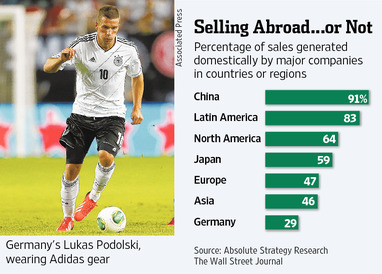
Germany may remain the powerhouse of the European economy, but you wouldn’t necessarily know it from looking at the share prices of its leading companies. Sure, the DAX 30, Germany’s benchmark stock index, is up 9.6% this year. But its rise lags other major indexes like the U.K.’s FTSE 100, France’s CAC 40 and the S&P 500 in the U.S. That is despite Germany’s relatively consistent economic performance. It grew by 0.7% quarter on quarter in the three months to June, faster than the European Union’s other major economies. The truth is that German companies aren’t all that German in one key respect. Like many leading European companies, Germany’s top firms, ranging from sportswear giant Adidas ADS.XE +0.40% to auto makers like Daimler, DAI.XE -0.36% are becoming ever more international. The country’s top 50 companies generate only around 29% of their sales domestically, according to analysts at Absolute Strategy Research. Companies in the FTSE 100 earn a similarly low level of revenue in the U.K. Top North American companies, by contrast, make 64% of their sales in their domestic market. Read more of this post

Activist Investors: A Roar or a Bark?

Aug 19, 2013

Activist Investors: A Roar or a Bark?

By Francesco Guerrera

Can a lion be confused with a dog? In Luohe, China, the answer is a resolute “no.” Visitors at the local zoo weren’t impressed last week when they found a Tibetan mastiff in the cage earmarked for the king of the jungle.

When it comes to activist investors, though, the situation is less clear-cut. On Wall Street, this breed of hedge-fund manager engenders extreme reactions. Some lionize them as intrepid champions of shareholders’ rights in the face of corporate ineptitude. Others accuse them of terrier-like aggression, snapping at executives’ heels with short-term demands that end up harming companies. Read more of this post

French vineyard sales leave bitter taste amid laundering fears by Russian and Chinese investors

August 18, 2013 9:17 pm

French vineyard sales leave bitter taste amid laundering fears

By Anne-Sylvaine Chassany in Paris

French anti-money laundering authorities have raised the alarm over recent acquisitions of vineyards by Russian and Chinese investors.

The use of multiple holding companies based in tax havens to buy French wine estates has pushed Tracfin – whose mandate is to uncover money laundering and terrorism funding schemes – to issue a warning in its 2012 report published this month. Read more of this post

End of the Options Backdating Era

AUGUST 19, 2013, 1:03 PM

End of the Options Backdating Era

By PETER J. HENNING

Before the clamor about the lack of prosecutions from the financial crisis and the current crackdown on insider trading, the practice of backdating stock options came to light seven years ago and prompted a flurry of prosecutions. The practice is now long forgotten, but it looks as if the last of those cases has finally concluded, and as the Grateful Dead put it so well, “What a long, strange trip it’s been.” Read more of this post

Dubai Sees Need for Tallest Office Tower Amid 45% Vacancy

Dubai Sees Need for Tallest Office Tower Amid 45% Vacancy

In Dubai, where almost half of the offices sit empty, the head of a state-owned business zone says there’s room to build the world’s tallest office tower.

Ahmed Bin Sulayem, chairman of the Dubai Multi Commodities Centre, said the Persian Gulf business hub can still attract tenants and investors with such a project because many of its buildings are unsuitable for large businesses. Bin Sulayem helped lead the development of the DMCC’s 68-story Almas Tower, Dubai’s tallest building when it was completed in 2007. The tower’s full and has a waiting list for tenants, he said. Read more of this post

Central Banks Risk Clash of Titans; In the U.K., Government Bonds Could Be a Bad Bet for Investors

August 19, 2013, 1:34 p.m. ET

Central Banks Risk Clash of Titans

In the U.K., Government Bonds Could Be a Bad Bet for Investors

RICHARD BARLEY

MI-BX950_BONDHE_G_20130819170310

Are central banks losing control of global bond markets?

For much of the time since 2008, bonds have danced to the tune played by the Federal Reserve, European Central Bank and Bank of England. With rates at historic lows and central banks buying bonds directly and indirectly, investors played along and have been richly rewarded as global yields plummeted. But now markets aren’t so compliant. The Bank of England looks most vulnerable in risking a head-on clash with investors. Read more of this post

Repo Market Decline Raises Alarm as Regulation Strains Debt

Repo Market Decline Raises Alarm as Regulation Strains Debt

Regulations aimed at reducing the risk of another financial crisis are starting to upend a key part of the bond market that expedites trading in everything from U.S. Treasuries to junk bonds.

The repurchase, or repo, market where banks and investors borrow and lend Treasuries and other fixed-income securities shrunk to $4.6 trillion daily outstanding last month, down 35 percent from a peak of $7.02 trillion in the first quarter of 2008, based on Federal Reserve data compiled from its 21 primary dealers. Read more of this post

Nestle’s Sales Slowdown Seen Leading to Slimmer Brand Portfolio

Nestle’s Sales Slowdown Seen Leading to Slimmer Brand Portfolio

Nestle SA, (NESN) the world’s biggest food company, needs to reignite sales that have disappointed investors for four straight quarters. One solution: Get smaller.

The maker of Nescafe coffee and DiGiorno pizza said Aug. 8 that it’s “actively looking” at its 8,000 brands and is seeking to identify the laggards after posting its weakest quarterly revenue growth in four years. Nestle has said it will struggle this year to meet its long-term forecast for annual sales growth of 5 percent to 6 percent, hurt by a deceleration in emerging markets, European weakness and sluggish performances from its diet products, frozen entrees and water. Read more of this post

China Trading Error Reduces Investor Confidence in Stocks

China Trading Error Reduces Investor Confidence in Stocks

The biggest swing in China’s benchmark equity index since 2009 threatens to further erode confidence in the nation’s stock market after it lost more money for investors than any in the world during the past four years.

China’s shares were roiled Aug. 16 by a trading error at Everbright Securities Co. (601788) that spurred a 53 percent surge in volumes and a swing of more than 6 percent in the Shanghai Composite Index. The gauge jumped from a loss of as much as 1 percent to a gain of 5.6 percent in two minutes during the morning session, then ended the day with a 0.6 percent drop. Erroneous buy orders from Everbright’s proprietary trading group sparked the early rally, the securities regulator said. Read more of this post

Indonesia Rupiah, Stocks Plummet on Current-Account Gap

Indonesia Rupiah, Stocks Plummet on Current-Account Gap

Indonesia’s rupiah fell to 10,500 per dollar for the first time since 2009, stocks dropped by the most in 22 months and government bonds plunged after the current-account deficit widened to a record last quarter.

The Jakarta Composite Index of shares has fallen 8 percent in two days, and is now the world’s worst performer this quarter. The yield on 10-year notes surged to the highest since March 2011 after Bank Indonesia said late Aug. 16 the current-account shortfall was $9.8 billion, the largest in data compiled by Bloomberg going back to 1989. Inflation quickened to a four-year high and economic growth slowed to the least since 2010, figures showed last week. Read more of this post

India Markets Plunge Pressures Singh as Economy Teeters

India Markets Plunge Pressures Singh as Economy Teeters

India’s biggest stock market slide in almost two years, surging bond yields and an unprecedented plunge in the rupee are pressuring officials for fresh steps to stem capital outflows and revive a struggling economy.

The S&P BSE Sensex (SENSEX) Index sank 4 percent on Aug. 16 as the rupee touched an all-time low of 62.005 per dollar and the yield on the government bond due May 2023 rose 39 basis points to 8.88 percent, the highest on a 10-year note since 2011. Read more of this post

Investors Ditch Ratings for Returns in Bond Boom: Nordic Credit

Investors Ditch Ratings for Returns in Bond Boom: Nordic Credit

Norway is about to share its European dominance in unrated bonds with the rest of the Nordic region.

Issuance of bonds ignored by Moody’s Investors Service, Standard & Poor’s and Fitch Ratings has surged in Sweden and Finland. Many of the companies selling, such as Skanska AB and Finnair Oyj (FIA1S), are finding the lack of a credit rating is no impediment to attracting more local buyers. Read more of this post

HSBC and StanChart hit by Asia focus as economies lose momentum

August 18, 2013 2:49 pm

HSBC and StanChart hit by Asia focus as economies lose momentum

By Sharlene Goff, Retail Banking Correspondent

Ever since the financial crisis, HSBC and Standard Chartered have trumpeted their exposure to faster-growing economies as a welcome differential among the UK banks.

But the recent slowdown in parts of their Asian heartlands – both reported weaker growth in markets including China, Indonesia, Malaysia and Taiwan in the first half of this year – means their reliance on the region is fast becoming a concern rather than a comfort for investors. Read more of this post

Climbing trees to catch fish: A curious to-and-fro about China’s constitution bodes ill for political reform

Climbing trees to catch fish: A curious to-and-fro about China’s constitution bodes ill for political reform

Aug 17th 2013 |From the print edition

20130817_CND000_0

FOR well over a century, Chinese scholars have been arguing about national constitutions. In the final years of the Qing emperors, some thought that turning the last imperial dynasty into a constitutional monarchy might forestall its collapse. Conservatives long resisted. But in 1906 a “constitutional reform commission” did report to the Empress Dowager, Cixi. “The real reason”, it concluded, “why other countries have become wealthy and powerful lies in the fact that they have a constitution and decide [important issues] through public discussion.” The dynasty collapsed in 1911. But these days the Communist Party seems to think those Qing reformers were wrong: China does not need a constitution at all, or at least not one that has to be enforced. Read more of this post

Everbright Trading Error Adds to China Broker’s Woes

Everbright Trading Error Adds to China Broker’s Woes

Everbright Securities Co. (601788), the Chinese state-controlled brokerage besieged by falling profits and a regulatory probe, faces a further blow to its reputation after a trading error sparked the wildest swings in the nation’s stocks in four years.

The China Securities Regulatory Commission has started an official investigation into Everbright, the watchdog said in a statement yesterday. The regulator has banned the brokerage from conducting proprietary trading from Aug. 29 to Nov. 18, according to a company statement. Everbright is barred from creating new stock-index futures positions starting today, according to a statement by China Financial Futures Exchange. Read more of this post

Is Hukou Reform the Key to Reviving China’s Economy?

August 19, 2013, 7:44 AM

Is Hukou Reform the Key to Reviving China’s Economy?

As China’s growth slows toward a 20-year low, leaders are searching for a way to revive the economy’s flagging fortunes. The suggestion from some of China’s top policy wonks: reform the hukou system. That was the message that came through loud and clear from a meeting of top academics and policy advisers at a conference hosted by the government’s Chinese Academy of Social Sciences on Friday.

Read more of this post

Most Chinese youths pin hopes on parents for success; It seems that only people with strong backgrounds and connections can “get the last laugh” in such a “snobbish” society

Most youths pin hopes on parents for success: survey

(ecns.cn)    08:22, August 19, 2013

A recent survey shows that most respondents think their peers yearn for effortless success with the help of a strong family background.
The Social Survey Center of China Youth Daily surveyed 3,809 people through minyi.net.cn and sohu.com. Of those surveyed, 80.4 percent believe young people who achieve career success in China are all winners in the “competition of family background,” and 83.5 percent believe their peers hope to join the “competition of family background”.
One respondent said: “Life is a game. Following rules is the only way you can survive”. Young people from ordinary families complain that they are currently being judged on their family backgrounds rather than their abilities and knowledge when they look for jobs. This is probably another one of society’s rules, and it’s called “competition of family background”. Read more of this post

Overcoming the great wall of name squatting in China: How do well-known foreign brands react when unscrupulous profiteers swipe their Chinese names?

Published on 2013-08-10 17:16:39

MONIKER MAYHEM: OVERCOMING THE GREAT WALL OF NAME SQUATTING IN CHINA

How do well-known foreign brands react when unscrupulous profiteers swipe their Chinese names?

ECONOMIC OBSERVER/Worldcrunch

BEIJING — Bottega Veneta, the Italian luxury brand best known for its leather goods, recently renamed itself Bao-Die-Jia in Chinese. But because the Italian apparel has been commonly known by another Chinese homonym, Bao-Ti-Jia, the renaming caused some public outcry, not to mention enthusiastic debate on the Internet. Bottega Veneta has refused to comment, except to say that it has never had an official Chinese moniker before.  But it is widely assumed that the Italian fashion house felt obliged to rename itself in Chinese simply because other Chinese businessmen had preemptively registered the name that was well known to the public. In fact, many other successful foreign brands in China have experienced the same sort of so-called “name squatting”. The only difference is that instead of recognizing the setback discreetly, they often resort to legal recourse. Hermès was probably the first apparel company to encounter this dilemma. As early as 1977, the brand registered its English name and trademark in China — but not its Chinese one. Read more of this post

Property Mogul Wang Jianlin of Dalian Wanda-AMC Emerges as China’s Richest Person

Property Mogul Emerges as China’s Richest Person

WANDA-articleLarge f04da2db112211251c3412

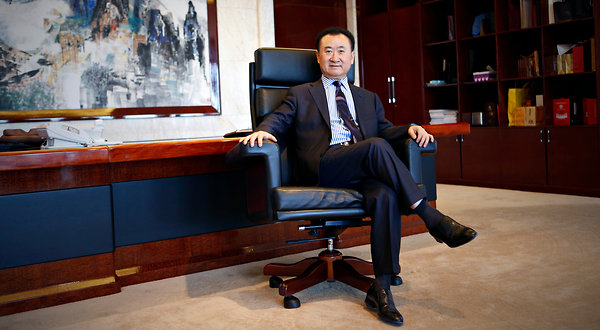
Wang Jianlin, owner of China’s biggest commercial land developer, is the nation’s wealthiest person, based on regulatory filings that show his non-real estate businesses are more valuable than previously calculated.

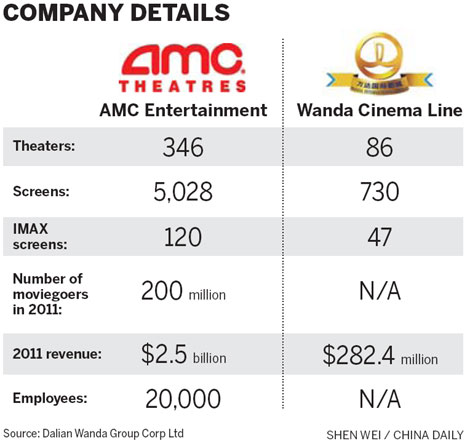
The chairman of closely held conglomerate Dalian Wanda Group, which became the world’s largest movie theater chain after acquiring AMC Entertainment Holdings Inc. last year for $2.6 billion, has a net worth of $14.2 billion, according to the Bloomberg Billionaires Index. He is $3.2 billion richer than Zong Qinghou, founder of Hangzhou Wahaha Group, China’s No. 3 beverage maker. Zong is the country’s second-wealthiest person. Read more of this post

Protect Yourself When Outsourcing to China

August 18, 2013, 4:49 p.m. ET

Protect Yourself When Outsourcing to China

SAABIRA CHAUDHURI

Q: If you’re going to source your product or parts from China, what special safeguards should you take?

A: Start the process of finding the right manufacturer using a site likeGlobalsources.com, which aims to help buyers connect with China-based suppliers, suggests Mike Bellamy, an author and owner of PassageMaker Sourcing Solutions.

When you find factories that might meet your needs, ask for references and find out if the manufacturers have a history of respecting intellectual property and doing solid work. But don’t offer those factories complete specifications or samples of the product you want created, advises Mr. Bellamy, since your idea might get filched. Instead, send or show them a similar product for comparison or some rough sketches. And ask for samples before you commit to an order. Read more of this post

China banks take a hit, world watching whether it can pull through financial reforms

Updated: Monday August 19, 2013 MYT 9:20:19 AM

China banks take a hit, world watching whether it can pull through financial reforms

CHINESE banks’ profits are expected to fall in the first half against a negative outlook for the next three years. The nine Hong Kong-listed mainland banks are expected to report about 10% growth in net earnings when they start releasing results this month, according to analysts. Meanwhile, the non-performing loans ratio is expected to rise by 0.93%. Some analysts see an increase in bad loans and interest rate liberalisation as denting mainland banks’ profits, says the South China Morning Post (SCMP). Regulators have asked lenders not to extend new loans to sectors hit by overcapacity, such as steel and cement. “That means companies will struggle in the case of a prolonged economic slowdown and have problems repaying existing loans,” says SCMP. Read more of this post

What’s Ailing America’s Cattle? Scientists Suspect Livestock-Feed Additives Are Behind Distress

August 18, 2013, 7:34 p.m. ET

What’s Ailing America’s Cattle?

Scientists Suspect Livestock-Feed Additives Are Behind Distress

JESSE NEWMAN and KELSEY GEE

MK-CF654_ADDITI_NS_20130818183909

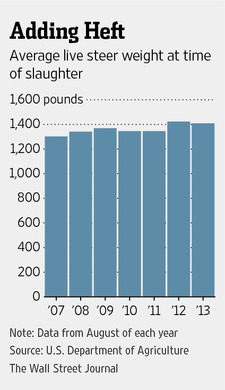
A growing number of cattle arriving for slaughter at U.S. meatpacking plants have recently shown unusual signs of distress. Some walked stiffly, while others had trouble moving or simply laid down, their tongues hanging from their mouths. A few even sat down in strange positions, looking more like dogs than cows.

“I’ve seen cattle walking down a truck ramp tippy-toed,” said Temple Grandin, a doctor of animal science and consultant to the livestock industry. “Normally, they just run down the truck ramp and jump out. We do not want to see bad become normal.” Read more of this post

Shale Grab in U.S. Stalls as Falling Values Repel Buyers

Shale Grab in U.S. Stalls as Falling Values Repel Buyers

Oil companies are hitting the brakes on a U.S. shale land grab that produced an abundance of cheap natural gas — and troubles for the industry.

The spending slowdown by international companies including BHP Billiton Ltd. (BHP) and Royal Dutch Shell Plc (RDSA) comes amid a series of write-downs of oil and gas shale assets, caused by plunging prices and disappointing wells. The companies are turning instead to developing current projects, unable to justify buying more property while fields bought during the 2009-2012 flurry remain below their purchase price, according to analysts. Read more of this post

Missed call has become part of daily life in India as a proxy for a pre-decided short message like “thinking of you” or “call me back” and often morph into modern-day Morse codes

Mobile advertising in India: Marketing a missed call

Aug 17th 2013, 8:30 by A.A.K. | MUMBAI

A TELEVISION advertisement in India for a mobile-phone operator opens with four friends staring forlornly at their car’s smashed windshield. “Call the police,” mutters one. His friend whips out a phone, dials for help and promptly hangs up after one ring. Others look at him quizzically. “I’ve given them a missed call,” he says sheepishly. “They’ll call back.” Everyone, incredulous, rolls their eyes in his direction, as the voiceover encourages viewers to switch to the operator’s dirt-cheap call rates.

The ad, in good humour, portrays how the missed call has become part of daily life in India. According to one estimate, 65% of India’s 860m mobile subscribers prefer it to a quick call. It is a proxy for a pre-decided short message like “thinking of you” or “call me back”. Missed calls often morph into modern-day Morse codes too. Roadside tea vendors routinely accept dropped calls from nearby mom-and-pop stores as a nudge for service; newspapers use it to urge customers to renew subscriptions; and bank balances can be requested the same way. Read more of this post

The Problem With Delhi’s Rich Kids: In India’s capital, the children of the nouveau riche often get whatever they want, apart from happiness

August 18, 2013, 9:00 AM

The Problem With Delhi’s Rich Kids

By Vibha Kumar

A woman I went to college with in New Delhi, now 29, lives in her family home on Prithviraj Road, one of the toniest parts of the capital. She has a shiny new convertible BMW 3 series, bought by her father. She doesn’t have a job. She called me recently and we met for lunch. She looked dull and withdrawn. She told me she was extremely depressed and felt that her life wasn’t worth living. She isn’t the only Delhi rich kid to feel this way. Sanjay Chugh, a Delhi-based psychiatrist, says he treats three or four young, wealthy, unhappy patients a day. “Such children are often brought up being told that they have nothing to worry about and that money can take care of everything,” he said. Often, newly wealthy parents don’t want their children to go through the hardships they experienced growing up, Mr. Chugh says. But they fail to teach them there is more to life than fancy drinks, new toys and branded clothes. On a recent evening at a posh lounge in Delhi, I saw Prada and Gucci-clad teenagers arrive in Lamborghinis, Jaguars and Porsches. They air kissed and went to the bar. “Hedonism is back,” a note on bar’s website says. After an hour or so of drinking, a chubby guy in the group got the bill. “Oh, just 60? Not bad,” he said loudly. It was 60,000 rupees ($1,000.) An acquaintance in Delhi says she spends most afternoons in her apartment, sitting on the couch drinking beer and smoking marijuana. Read more of this post
India can’t be a Jugaad Economy Forever

India can’t be a Jugaad Economy Forever

by Dinesh Narayanan | Aug 19, 2013

India has to implement key reforms in at least three areas—energy, land and labour—to get its economy back on track. It also needs to expand the ambit of economic and political freedom

Overview.indd Overview.indd

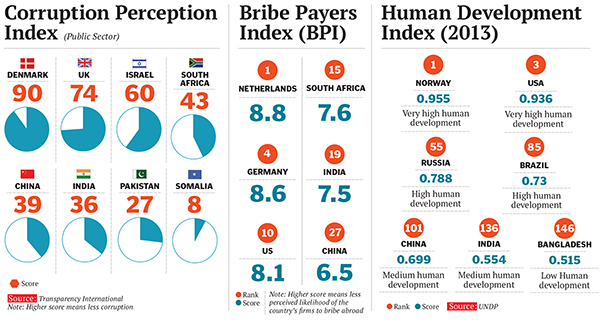
World Bank data suggest that India was ninth in the world in terms of new businesses registered in 2011. The cost of starting up a business is still high but it has steadily fallen from 70.1 percent of per capita gross national income in 2008 to 49.8 percent in 2012. The time taken to start a business in India has fallen from 33 days four years ago to 27 days in 2012. Newly released Planning Commission numbers show that India reduced extreme poverty by 15.3 percent  in seven years; that is, 138 million people were lifted out of absolute misery between 2004-05 and 2011-12. In the same period, millions of Indians moved up the social ladder to be counted as middle class. Sales of luxury cars, designer clothes and high-tech gadgets have been growing at 15-20 percent. A Bain & Company report on luxury has been quoted as estimating the number of people with disposable incomes of over $100,000 to top 132,000 in 2013, up 60 percent since 2006. Read more of this post

Chaebol criticized for handing shares to minors in advance to pay less gift tax

2013-08-19 10:54

Chaebol criticized for handing shares to minors

The number of stock-rich South Korean minors jumped 10 percent this month from a year earlier, data showed Monday, as more rich people handed over wealth to their offspring in advance to pay less gift tax. According to the data by local research firm Chaebul.com, the number of minors with shares worth more than 100 million won ($89,887) came to 268 as of Friday, compared to 243 tallied a year earlier. The number of South Korean minors with shares worth more than 1 billion won also jumped 31.3 percent over the cited period to reach 105, the data also said. Of the minors tallied, seven of them had shares worth more than 10 billion won. The richest in terms of value of shares held was the GS Group’s Executive Vice President Huh Yong-su’s eldest son, whose shares were worth 44.5 billion won, trailed by his second son at 18 billion won. The eldest son of Chung Mong-jin, who heads chemicals maker KCC Corp., ranked third with 17.2 billion won. The research firm said the on-year increase was brought on by a drop in the local bourse this year that made it cheaper for stockholders to turn over shares to their kids. Lower stock prices translate into lower gift taxes. South Korea’s benchmark Korea Composite Stock Price Index (KOSPI) closed at 1,920.11 Friday, down 1.97 percent from 1,957.91 tallied a year earlier. (Yonhap)