Korea’s National Pension Service (NPS) is under fire for poor management of taxpayers’ money after it was found to have provided pensions worth $51.3 million to unqualified people between 2009 and June this year

2013-08-13 16:42

NPS hit for mismanaging pensions

By Yi Whan-woo
The National Pension Service (NPS) is under fire for poor management of taxpayers’ money after it was found to have provided pensions worth 57.2 billion won ($51.3 million) to unqualified people between 2009 and June this year. According to data released by Shin Yee-jin of the ruling Saenuri Party, the country’s pension fund operator supplied that amount of pension to people not entitled to that money, including missing persons and the dead. Read more of this post

Energy Firm Makes Costly Fracking Bet—on Water

August 13, 2013, 8:09 p.m. ET

Energy Firm Makes Costly Fracking Bet—on Water

For Antero’s Planned Ohio River Pipeline, Payoff Hinges on Rainfall Patterns

RUSSELL GOLD

Antero Resources Inc., an energy company backed by New York private-equity firms, plans to spend more than half a billion dollars on a pipeline. But the 80 miles of pipe won’t transport oil or gas: They will carry water from the Ohio River to fracking sites in West Virginia and Ohio. The project is a costly wager that the hydraulic-fracturing industry’s thirst for reliable sources of water will grow over the next few years. Fracking, an oil-field technique driving the nation’s current energy boom, involves injecting vast quantities of water into the earth, along with other materials, to break up rock formations and unlock trapped oil and gas. Read more of this post

Whither China Seen in Australia as RBA Notes Slowdown

Whither China Seen in Australia as RBA Notes Slowdown: Economy

From his Manhattan office, Steven Englander looks to commentary from policy makers and executives in Sydney, not Beijing, for the best take on China’s economy.

“They get a direct, immediate view of China demand for highly cyclical products and have an incentive to give it a close read, so if they are sensing an extended slowdown I would take their views seriously,” said Englander, 58, head of Group of 10 currency strategy at Citigroup Inc. “It may be better to have an accurate view of a limited but important segment of Chinese demand, than an uncertain view of aggregate demand.” Read more of this post

Mall Owners Woo Hispanic Shoppers

August 13, 2013, 8:26 p.m. ET

Mall Owners Woo Hispanic Shoppers

MIRIAM JORDAN

MI-BX827_LATMAL_G_20130813181505

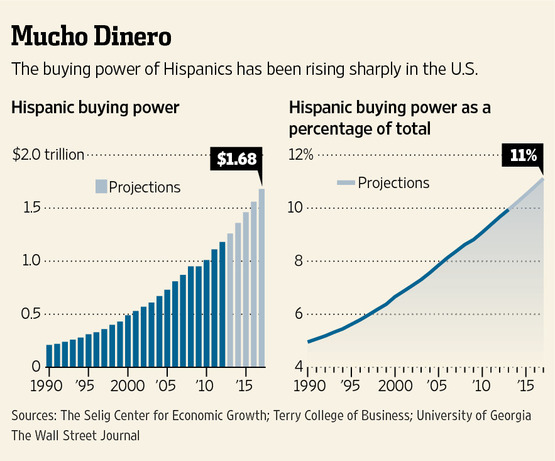
PANORAMA CITY, Calif.—On a recent Sunday, Spanish-speaking families swarmed the Panorama Mall here in the outskirts of Los Angeles for an afternoon of Latino entertainment. “We come for the mariachi, then we eat something and go shopping,” said Gloria Mesina, visiting the mall with her daughter, Viviana, and her granddaughter, Brisa. That is music to the ears of José Legaspi, a real-estate broker who joined forces with the mall’s owner, MacerichCo., MAC -2.20% to revitalize the shopping center by targeting Hispanics. The partners are among an emerging crop of commercial-property investors responding to the same demographic reality that has rocked the political landscape: the rise of Hispanics.

Hispanics accounted for more than half the population growth between 2000 and 2011; Latinas have more children than non-Hispanics; Hispanic households that earn $50,000 or more are rising at a faster clip than total U.S. households. Their households outspend other groups on beauty products, food and apparel, according to Nielsen Co. Read more of this post

JCPenney’s 100-year bonds swoon amid retailer’s turmoil

JCPenney’s 100-year bonds swoon amid retailer’s turmoil

1:02am EDT

By Dan Burns

(Reuters) – It was a “century” deal, but in hindsight it was hardly the deal of the century. More than 17 years and a dozen credit downgrades ago, JCPenney Co Inc. (JCP.N: Quote, Profile, Research, Stock Buzz) joined an elite club in capital markets circles by issuing a rare 100-year bond. The deal from Penney, then sporting a mid-range investment-grade rating of “A” from Standard & Poor’s and coming off record holiday-season sales, matched the year’s largest “century bond” deals at $500 million, but the company stood out as the only retailer in the mix. Read more of this post

Investors No Longer Bet the Farm on Deere; Results Should Shed More Light on Fears That Soft Commodities Are Slipping Like Hard Ones, Threatening Customers’ Incomes

August 13, 2013, 4:04 p.m. ET

Investors No Longer Bet the Farm on Deere

Wednesday’s Results Should Shed More Light on Fears That Soft Commodities Are Slipping Like Hard Ones, Threatening Customers’ Incomes

SPENCER JAKAB

Investors have been echoing Eddie Albert, who crooned that “Green Acres is the place for me.” Even after slipping recently, tractor maker Deere DE +0.64% & Co. has had a great decade. Its share price has plowed over not just the S&P 500, by 166 percentage points, but even fellow U.S. machinery giant Caterpillar Inc., CAT +0.29% by 74 points. That company also rode rising commodity prices and wealth in the developing world. But it did so through exposure to construction machinery and mineral resources—weak spots lately as China’s economy slows.

Read more of this post

Coca-Cola has announced the launch of its first herbal drink, Habu, for the Thai market. Thailand is the first country to unveil this new beverage

Coke picks Thailand for Habu launch

Kwanchai Rungfapaisarn
The Nation August 14, 2013 1:00 am

30212566-01_big

Diggy Dey, second left, business development director at Coca-Cola Thailand, and Charnvit Charindhorn, second right, senior vice president for marketing at ThaiNamthip, announce the launch of Coke

Coca-Cola has announced the launch of its first herbal drink, Habu, for the Thai market. Thailand is the first country to unveil this new beverage. Diggy Dey, business development director at Coca-Cola Thailand, said herbal beverages had always been an integral part of Thai culture, so the company saw an opportunity to develop one here, specifically made for Thai consumers. “The heritage of herbal drinks is the key inspiration behind the product and brand design – the brand name Habu is easy to pronounce and identifiably Asian with similarities to the English word ‘herbal’. Habu’s label and packaging are our modern interpretation of beautiful clay pots traditionally used to brew healing herbal drinks,” Dey said. The new ready-to-drink herbal-blended beverage is a combination of four cooling ingredients: rosella, liquorice, luo han guo, and cogon grass. Read more of this post

51 US Stocks Up 150%+ YTD

51 Stocks Up 150%+

MONDAY, AUGUST 12, 2013 AT 04:31PM

best ytd2013

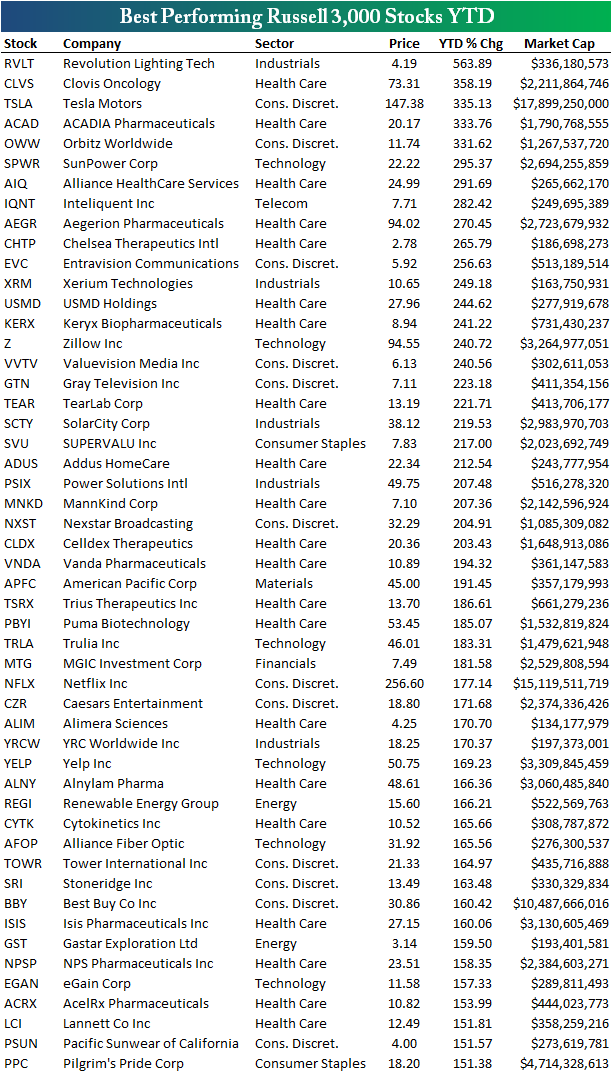
The Russell 3,000 index of large, mid and smallcap stocks represents roughly 98% of the US stock market.  So far this year, this cap-weighted index is up 19.41%.  The average stock in the index is up much more than that at 28.47%, so the smaller companies are significantly outperforming the big blue chips. Below is a list of the 51 Russell 3,000 stocks that are up more than 150% so far this year.  If you have owned any of these stocks since the close on December 31st, your portfolio is definitely thanking you for it.  As shown, Revolution Lighting Technologies (RVLT) ranks number one overall with a YTD gain of 563.89%.  On 12/31/12, RVLT closed at $0.63.  As of the close today, RVLT shares were at $4.19.   Read more of this post

US Treasury Finally Admits The Truth: It’s All POMO

US Treasury Finally Admits The Truth: It’s All POMO

Tyler Durden on 08/13/2013 18:15 -0400

No One Dares Fight Fed_0

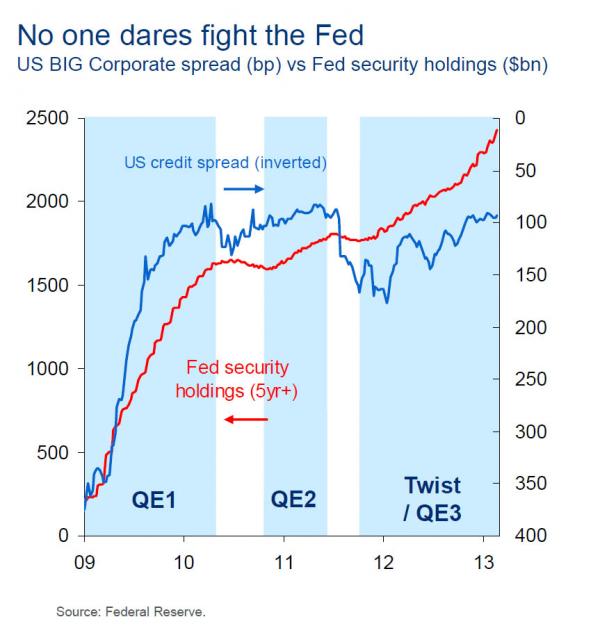
Back in 2010, when few still dared to question that the entire move in the market is predicated on the Fed’s daily POMO (then still on QE2), we laid out, in a way so easy even a caveman could grasp it, how every tiny move in the stock market is nothing but a function of the Fed’s daily POMO on those days in which Bernanke would be directly injecting liquidity into the capital markets using his Primary Dealer frontmen. Since then nearly three years have passed, and thousands of POMO days. All of which brings us to this quarter’s Treasury refunding presentation, and specifically the section “Effects of policy and market structure” from the Presentation to the Treasury Borrowing Advisory Committee, in which we learn that we had in fact been right all along, and that perhaps for the first time ever, the Treasury admitted that not only “no one dares fight the Fed” but that, as expected, it is “all POMO.” There, hidden on page 26, or slide 76 of 100, where the Treasury discusses “The Impact Of Monetary Policy”, the biggest “conspiracy theory” of all becomes merely the latest conspiracy fact. First, for corporate bonds… Read more of this post

The rise of the one-tenant REIT

The rise of the one-tenant REIT

Garry Marr | 13/08/12 | Last Updated: 13/08/13 2:02 PM ET
If you want to own publicly-traded retail real estate, your choice until recently was RioCan Real Estate Investment Trust, Calloway REIT or First Capital Realty Inc. — old school real estate landlords, behemoths now after one to two decades of growth in the ever-expanding Canadian retail market. Read more of this post

Ports a Hot Commodity

Aug 13, 2013

Ports a Hot Commodity

By Gillian Tan

The sale of 99-year leases attached to two Australian ports in the nation’s most-populous state for US$5.3 billion earlier this year was at a multiple so rich that two other owners of berths have since put their interests up for sale. Australian port assets are prized for their stable revenue and rarely come up for sale, but the country has emerged as a hotbed for port deals this year. Read more of this post

Legal Cloud Hangs Over Banks

August 12, 2013, 3:53 p.m. ET

Legal Cloud Hangs Over Banks

DAVID REILLY

MI-BX800_BANKHE_G_20130812210905

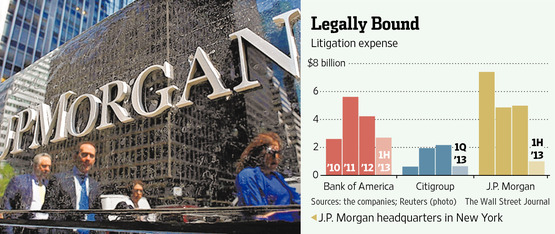
Almost five years after the worst throes of the financial crisis, the biggest U.S. banks face a widening array of legal challenges. The U.S. Department of Justice this month filed civil charges against Bank of AmericaBAC +0.69% alleging it defrauded investors when selling mortgage-backed debt in 2008. J.P. Morgan JPM +0.37% indicated in its most recent securities filing that it is also facing government scrutiny related to sales of such securities, even as it continues to grapple with multiple inquiries into its “London Whale” trading debacle.

Read more of this post

Here’s Why You Need To Worry About The IPO Boom

Here’s Why You Need To Worry About The IPO Boom

The Huffington Post  |  By Mark Gongloff Posted: 08/13/2013 12:27 pm EDT  |  Updated: 08/13/2013 12:45 pm EDT

The IPO market is back in full swing. Believe it or not, that’s bad news for the stock market. So far this year, 126 companies have priced initial public offerings in the U.S., according to IPO tracker Renaissance Capital, up 40 percent from a year ago. Those companies have raised $27.1 billion, which puts the total IPO market on track to raise more than $43 billion this year, by my estimate. Adjusted for inflation, that would be the most money raised in the U.S. since 2007. (Story continues below chart.) Why is this terrible news? Well, as MarketWatch columnist Mark Hulbert points out, peak moments of stock issuance are typically followed by bad stock-market returns. Read more of this post

Alleged Penny-Stock Scam Nets $140 Million

Updated August 13, 2013, 8:22 p.m. ET

Alleged Penny-Stock Scam Nets $140 Million

CHAD BRAY

Federal prosecutors said they uncovered an unusually sophisticated international scheme to sell stock in companies that barely existed, one that allegedly netted its organizers $140 million.

Working with throwaway cellphones and from call centers in places like Thailand and Canada, the people behind the alleged scheme plied unsuspecting investors with stock in companies such as Resource Group International, a Wyoming corporation based in Thailand that says it developed a revolutionary fertilizer, and RainEarth Inc.,RNER -12.50% a Nevada corporation with its principal office in Beijing that says it is in the mineral-exploration business and developing a specialized fiber, according to prosecutors. Read more of this post

India’s newspapers shrug off industry woes

August 13, 2013 9:00 am

India’s newspapers shrug off industry woes

By Victor Mallet in Kolkata, India

Newspaper executives in the US or Europe can only fantasise about the problems confronting their Indian peers: how to source the extra newsprint for rising circulations and catch the eye of the millions of new readers each year.

Chennai and Kolkata are a long way from Boston and Washington, where two of the best-known US titles were sold this month – the Boston Globe for only $70m, less than a tenth of the price the paper fetched a decade ago. Read more of this post

Rajan’s ideas can lift India’s corporate torpor; Business chiefs should be more vocal about performance. There is an Indian proverb about finding fault with others: “Those who can’t dance say the yard is tilted.”

August 13, 2013 2:46 pm

Rajan’s ideas can lift India’s corporate torpor

By James Crabtree in Mumbai

Business chiefs should be more vocal about performance

There is an Indian proverb about finding fault with others: “Those who can’t dance say the yard is tilted.” It is a saying that could easily be applied to the country’s corporate sector, as it seeks to assign blame for faltering growth. True enough, India’s situation looks increasingly dire: the rupee keeps tumbling, growth is stagnant, private investment has collapsed and corporate earnings show no sign of revival. As a result there is much quiet muttering from business types about their feckless political counterparts, alongside occasional respectful public requests for policy “reforms”. It is often noted that Indian business is unwilling to criticise its government openly. But it is just as true to say the recent slowdown has brought little in the way of self-examination from the corporate sector, parts of which are also badly in need of a shake-up. The upper echelons of Indian business can speak from a position of authority, given that the cream of India’s well-run large companies is among the few bright spots in a now-tarnished growth story.

Read more of this post

Prathap C. Reddy, the cardiologist who built a hospital chain valued at $2 billion over three decades in India, says he’s seeking growth overseas as the nation’s visa policies drive medical tourists to rivals.

Cayman to Singapore Gain as Rules Stump Clinics: Corporate India

Prathap C. Reddy, the cardiologist who built a hospital chain valued at $2 billion over three decades in India, says he’s seeking growth overseas as the nation’s visa policies drive medical tourists to rivals.

Apollo Hospitals Enterprise Ltd. (APHS) is considering hospitals in Indonesia, Cambodia and Tanzania, Reddy said in an interview at his Chennai office. Growth in the number of visitors seeking treatment for heart ailments, cancer and orthopedic surgery is falling short of Reddy’s estimates as India’s special visa for patients forces them to visit an immigration office, he said. Read more of this post

India increases gold tax third time this year in piecemeal approach to cut deficit and defend rupee

India unveils gold duties in piecemeal approach to defend rupee

7:13am EDT

By Rafael Nam and Swati Bhat

MUMBAI (Reuters) – India raised import taxes on gold and silver on Tuesday as policymakers scrambled to narrow a gaping current account deficit, but concerns about the slowing economy and fears of more capital outflows kept up pressure on the ailing rupee. The rupee got a small lift after the gold measures were announced in late afternoon, after earlier threatening to test record lows. Read more of this post

Foreign banks brace for India regulatory shake-up that will force them to set up separately capitalised local subsidiaries

Last updated: August 12, 2013 5:48 pm

Foreign banks brace for India regulatory shake-up

By James Crabtree in Mumbai

Standard Chartered, Citigroup and HSBC – the three largest foreign banks operating in India – are bracing themselves for a regulatory shake-up in the country that will, in effect, force them to set up separately capitalised local subsidiaries. The Reserve Bank of India’s new policy on overseas banks is “imminent”, and will potentially be unveiled as soon as this week, according to people familiar with the situation. Foreign banks control about 5 per cent of the assets in India’s banking sector, but face numerous regulatory restrictions, including strict limits on the number of branches they are permitted to open. Read more of this post

Made outside India: As growth slows and reforms falter, economic activity is shifting out of India

Made outside India: As growth slows and reforms falter, economic activity is shifting out of India

Aug 10th 2013 | COLOMBO, DUBAI AND MUMBAI |From the print edition

20130810_IRD006_0

INDIA’S diaspora of 25m people is something to behold. In colonial times Indian labourers and traders spread across the world, from Fiji to the Caribbean. A second wave of Indians left between the 1970s and mid-1990s, when the economy was in a semi-socialist rut. Migrant workers rushed to the Persian Gulf and South-East Asia, then booming. Educated folk and entrepreneurs fled to the rich world. Plenty struck gold, including engineers in Silicon Valley and Lakshmi Mittal, boss of ArcelorMittal, a giant steel firm. Often they now have little to do with India beyond sending cash to relatives and groaning as the once-vaunted economic miracle fades. Read more of this post

When ETFs are mousetraps

Aug. 12, 2013, 7:39 a.m. EDT

When ETFs are mousetraps

Commentary: How to avoid falling for the bait

By Chuck Jaffe, MarketWatch

In some respects, mutual fund companies are in the mousetrap business.

The question for investors is whether they are the rodent, getting snapped up by the contraptions that financial inventors are creating. That dichotomy was on full display Thursday when Charles Schwab (NYSE:SCHW)  Investment Management put out the cheese for its latest investment products, six new Schwab Fundamental Index ETFs that begin trading next week. There is no denying that the new products are cool and appealing, with the potential to prove themselves as “better.” It makes perfect sense that financial planners and money managers—Schwab officials said they had gotten a lot of requests from advisers for these new products—would be interested; it isn’t so clear, however, that the average fund/ETF investor should give a mouse’s whisker over the new products. Read more of this post

China’s longevity town overrun by the sick and rich

China’s longevity town overrun by the sick and rich

Staff Reporter

2013-08-13

Tens of thousands of patients, a quarter alone coming from Yangtze River Delta and especially the city of Shanghai, have flooded the “town of longevity” in Guangxi to seek a cure for their ailments. The secret of Bama, ranking fifth on a list of the world’s cities with the longest-living residents, is said to be in its clean spring water and fresh air high in negative oxygen ions, the Shanghai-based Jiefang Daily reports. Read more of this post

New Rules Expected for Annual Audit Reports requiring auditors to tell investors more about what they find in companies’ books

Updated August 12, 2013, 9:03 p.m. ET

New Rules Expected for Annual Audit Reports

MICHAEL RAPOPORT

MI-BX809_PCAOB_NS_20130812183005

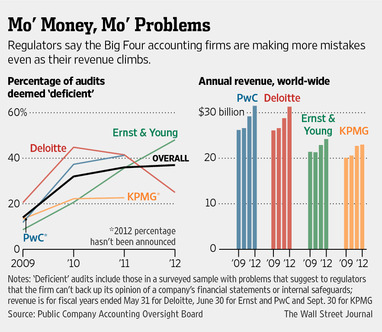
The annual audit report is about to get an extreme makeover. After seven decades in which the auditor’s letter hasn’t changed much, U.S. regulators on Tuesday are expected to propose major new rules requiring auditors to tell investors more about what they find in companies’ books. The Public Company Accounting Oversight Board, the government’s audit-industry regulator, is pushing the accounting industry to disclose more about its views on a company, which some say will make the document attached to each public company’s annual report more useful, albeit a little longer. While the PCAOB hasn’t said specifically what it will propose, having auditors provide their opinions on broader matters appears likely to be the crux of it. Regulators and industry critics say investors need more information from auditors about matters such as whether a company’s accounting is aggressive, and what auditors think are the most important features of a company’s finances. Many investors rely on the audit report to help assure them a company’s numbers are accurate. But some critics have become concerned that the letters’ boilerplate, pass-fail format doesn’t tell investors much about what is actually happening at a company or where problems may lie. “It’s been 70 years since there has been a fundamental change to the information the public receives about the audit,” PCAOB Chairman James Doty said. A revamped audit report will be “a significant step” in the effort to “provide more useful reporting to the public,” he said. Read more of this post

China Metal Recycling chairman Jacky Chun Chi-wai was held by police yesterday for alleged false accounting; China’s “Lady Buffett” Liu Yang and Norway’s central bank are all shareholders of China Metal Recycling

Metal firm chief held on fraud rap
Grace Cao
Tuesday, August 13, 2013

5_2013081222332749467Metal

China Metal Recycling (0773) chairman Jacky Chun Chi-wai was held by police yesterday for alleged false accounting, sources said. Police said that a 47-year-old man surnamed Chun was arrested yesterday afternoon for false accounting and had been detained for further inquiries. Sources confirmed that the person cited was Jacky Chun. Chun is the the fourth senior executive of China Metal Recycling to be taken in by police. Chun’s wife Lai Wun-yin and Leung Chong-shun, both non-executive directors, plus chief financial officer and company secretary Kenneth Greg Lam Po-kei were arrested earlier by the Commercial Crime Bureau. Last July 29, the Securities and Futures Commission moved to liquidate the firm for overstating its financial position . China Metal Recycling has sued Chun, his wife and 10 metal recycling firms for fraudulent breach of trust and causing the firm huge losses. The firm is also seeking payment of debts, losses and damages or other relief relating to false or misleading information on the firm’s financial position, the deployment of a scheme with the intention to deceive, dividends paid out on inflated profits, and purported sales and payments for fictitious transactions. It was reported that the firm took out a huge loan and land, along with warehouse receipts, were used as fake collateral. The Guangzhou-based firm’s shares have been suspended since January 28 after US shortseller Glaucus Research made allegations against it. Atlantis Investment Management chairwoman Liu Yang, Norway’s central bank and state-owned enterprise China Energy Conservation and Environmental Protection Group are all shareholders of China Metal Recycling. Read more of this post

Warren Buffett has invested $27.9 million in YG-1 to acquire a 10% stake in cutting tool maker; Buffett believed that it is better to become a major shareholder of YG-1 and receive stable supply of its products than compete with YG-1

S Korea-based YG-1 sets model of “creative economy”

Chung Soon-woo

2013.08.12

image_readtop_2013_707579_13762974831010577

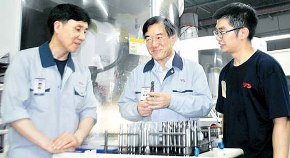
The world’s renowned investment guru Warren Buffett has invested 31.2 billion won ($27.9 million) in a small and mid-sized business (SMB) in Incheon, South Korea to acquire a 10 percent stake. The company that caught his attention was YG-1, Korea-based cutting tool manufacturer. Mr Buffet, who is also a stakeholder of ISCAR, another global leader in the field, believed that it is better to become a major shareholder of YG-1 and receive stable supply of its products than compete with YG-1. YG-1’s flagship product, which made Buffett intimidated, is an endmill. An endmill is an ultra-precision cutting tool, which is mainly used to shape autos, trains and aircrafts, or their components. It is also a must-item for manufacturing such high tech products as smartphones and robots. YG-1 has remained top dog in the global endmill market.  The company has recently gained attention again as it has demonstrated the way to take the path toward the “creative economy” initiative proclaimed by President Park Geun-hye. YG-1, established in 1981, has led the world with its end mills alone and the story of its founder Song Ho-geun (aged 61) is an example of a creative economy textbook. Unlike other SMBs, which do whatever it takes to make money, YG-1 has been dedicated only to endmills.

How the rise of A2 milk in an industry that has been reshaped by low-cost generic milk from big supermarkets is adding millions to the fortune of Rich Lister Tony Perich and provides a powerful lesson about the importance of brand differentiation; A2 is 26 per cent-owned by health food company Freedom Foods

Andrew Heathcote Rich Lists editor

How the rise of A2 milk is adding millions to the fortune of Rich Lister Tony Perich

Published 13 August 2013 09:53, Updated 13 August 2013 10:31

cdf189f2-ffe4-11e2-b753-b5ebb80452f8_755991595--646x363

A2 Corporation chief executive Geoff Babidge expects some slowdown after the Fonterra scare.Sasha Woolley

The rise of milk group A2 Corporation in an industry that has been reshaped by low-cost generic milk from big supermarkets Coles and Woolworths provides a powerful lesson about the importance of brand differentiation in a highly competitive market. Having claimed a strong foothold in the domestic milk market, A2 is eyeing lucrative opportunities overseas but recent events in the Chinese infant formula market highlight the difficulties of entering new territories. A2, which is listed on the New Zealand sharemarket, is 26 per cent-owned by health food company Freedom Foods, one of the best performers on the ASX in the last 12 months. In the year to August 5, Freedom Foods’s share price rose from 56¢ to $1.98 – a 230 per cent increase. Few listed companies can lay claim to such a big rise, which has lifted Freedom Foods’s market capitalisation to $230 million. Read more of this post

No fluffing up China’s slump; There is no entity today that has enough energy to rescue the global economy from a collapse that might be triggered by China

No fluffing up China’s slump

AUG 12, 2013

A big economic slump has started in China as predicted. The rest of the world has came to know about it through none other than Chinese President Xi Jinping and Prime Minister Li Keqiang. They disclosed to the world a steep rise in short-term interest rates, falling exports and a slump in the nation’s economic growth — undesirable facts and figures that those in power in Beijing would have concealed in the past. This is because the Xi-Li leadership has realized that the Chinese economy is in such dire straits that any further deterioration would cause a serious global impact. How should the whole world, including Japan, respond to this alarm? Read more of this post

Group-buying websites in China face funding crisis

Group-buying websites in China face funding crisis

Staff Reporter

2013-08-13

Group-buying websites emerged in China in March 2010 and immediately entered into cutthroat competition for market share. At the peak of the craze, 5,058 such websites were in the market, but there are only 943 left, chiefly due to a lack of funding, reports news portal Xkb.com.cn Last year, a total of 1,514 group-buying websites closed down or withdrew from the market, an average of four shutdowns per day, according to statistics from the China Electronic Commerce Research Center. Read more of this post

Does China have too many unpopular cities? Many lower-tier cities have actually been experiencing a net outflow of population while land sales there increased rapidly exacerbating the housing oversupply

Does China have too many unpopular cities?

Kate Mackenzie

| Aug 12 13:12 | 13 comments | Share

A little over half of China’s population is urbanised, and the country’s leaders plan to urbanise vast numbers of people over the next decade – although both the time frame and the number of people in the plan vary, depending where you look — both260m and 400m have been widely reported.

More clarity is expected at the Third Plenum of the 18th Central Committee of the Communist Party of China, probably in October. But could the country already have an excess of cities?

First up, a fascinating story from the WSJ:

Among the few business owners lured to a development park in Tieling New City is Bo Yuquan, the middle-aged owner of a flooring store. “Where are the people? There’s no one here,” said Mr. Bo. “I’ll be out of business soon. My staff and I are discussing moving to Beijing to find work.” Said Hu Jie, the designer of the new city’s landscape: “In 10 to 20 years, Tieling could be a good development, but only if you can manage to bring businesses in.” A city can certainly be sustainable if businesses start to pop up — but how does that happen, and what if it doesn’t? Jobs, naturally, can be a problem in this situation; a fact illustrated in the NY Times report on the recently-designated town of Qiyan, where high-rise housing for 6,000 replaced a village of about 200 households (residents from surrounding areas were encouraged to move there, too). A lack of jobs meant residents in newly-constructed Qiyan homes huddled around open fires for warmth because they couldn’t afford electricity. Read more of this post

The great Chinese collateral trade, illustrated; oldman estimates that in the copper collateral scheme alone, something in the region of $35bn-40bn may have been raised as of June 2013.

The great Chinese collateral trade, illustrated

Izabella Kaminska

| Aug 12 12:33 | 6 comments | Share

We’ve seen explanations of how the famous Chinese copper (and other commodity collateral) LC financing trade works in the past. But here’s a particularly good one from Goldman Sachs’ big report on China’s credit environment, which was out last week. The diagram also explains how SAFE’s new regulations are likely to restrict the trade from now on:

Copper-warrant-590x421

As Max Layton, from Goldman’s commodities research team, explains… over the last few years Chinese firms have been able to benefit from cheaper US interest rates by using various commodities with high value-to-density ratios, such as gold, copper, nickel and “high-tech” goods, as collateral. The deals were motivated by the fact that borrowing US dollars in this collateralised fashion was cheaper than borrowing in the domestic Chinese market. Goldman estimates that in the copper collateral scheme alone, something in the region of $35bn-40bn may have been raised as of June 2013.

Read more of this post