JPMorgan’s CEO Jamie Dimon Sees ‘Scary’ World as Interest Rates Return to Normal

Dimon Sees ‘Scary’ World as Interest Rates Return to Normal

Global markets will face increased volatility as central banks bring interest rates back to normal levels, JPMorgan Chase & Co. (JPM) Chief Executive Officer Jamie Dimon said.

“We should all hope for a normalization of interest rates — that’s a good thing,” Dimon said today during a panel discussion at the Fortune Global Forum in Chengdu, China. “As we go back to normal, it’s going to be scary, and it’s going to be kind of volatile.”

Investors have been encouraged to buy riskier assets as global central banks unleashed unprecedented monetary stimulus after the financial crisis of 2008. Concern that the policies would be reviewed grew last month following comments from Federal Reserve Chairman Ben S. Bernanke. Read more of this post


As Bond Prices Fall, Strategies Shift; Investors Move to Guard Assets as Companies Race Into Market to Borrow Funds

Updated June 6, 2013, 7:48 p.m. ET

As Bond Prices Fall, Strategies Shift

Investors Move to Guard Assets as Companies Race Into Market to Borrow Funds

By KATY BURNE, MIKE CHERNEY and CAROLYN CUI

A sharp fall in bond prices has sent investors scurrying to protect themselves amid fears that rising interest rates will put an end to decades of strong returns. The U-turn is forcing some companies to accelerate fundraising plans to take advantage of investor demand while it lasts. Read more of this post

A Bond Pro Readies a New Portfolio for Rising Interest Rates

A Bond Pro Readies a New Portfolio for Rising Interest Rates

Popularity often comes with a big price in the mutual fund world. Right about the time most of us become aware of a fund’s great performance and invest, its returns start to suffer. Academic studies show that a big influx of assets can make a fund less nimble and lead managers outside their ideal investment universe. It can also have a psychological effect on managers, who can become overly risk averse lest they make a mistake and lose all those assets.

New funds, of course, have a different problem. They’re untested so investors, often wisely, avoid them. The solution to this quandary: Find a new fund run by a very experienced manager. Read more of this post

JPMorgan ‘Afraid’ of Emerging Market Selloff Impact on Banks; BlackRock, the world’s biggest money manager, Trimmed Emerging-Market Holdings on Fed Taper Concern

BlackRock Trimmed Emerging-Market Holdings on Fed Taper Concern

BlackRock Inc. (BLK), the world’s biggest money manager, said it reduced emerging-market positions, citing concern a reduction in bond buying, or quantitative easing, by the Federal Reserve may curb support for the assets. “We had very little exposure to local emerging-market bonds but have trimmed our external emerging-market positions recently to reduce the levels of risk from this sector,” Scott Thiel, deputy chief investment officer of fundamental fixed-income in London, said today in an e-mailed statement. “Sustained accommodative U.S. monetary policy has benefited these markets and the potential reduction in QE could reduce that liquidity and source of support,” Thiel said.

To contact the reporter on this story: Mark McCord in London at mmccord2@bloomberg.net

JPMorgan ‘Afraid’ of Emerging Market Selloff Impact on Banks

The emerging market selloff sparked by speculation the Federal Reserve will reduce stimulus may cut revenue for investment banks including Standard Chartered Plc (STAN) and HSBC (HSBA) Holdings Plc, JPMorgan Chase & Co. (JPM)’s Cazenove said. Read more of this post

U.S. Bond Funds Suffer Second-Biggest Redemptions Since 1992

U.S. Bond Funds Suffer Second-Biggest Redemptions Since 1992 (1)

By Christian Baumgaertel on June 06, 2013

http://www.businessweek.com/news/2013-06-06/u-dot-s-dot-bond-funds-suffer-second-biggest-redemptions-since-1992-1

U.S. bond funds suffered their second-worst weekly withdrawals in more than two decades after global bond markets slumped in May.

Investors pulled $9.1 billion from fixed-income mutual funds and exchange-traded funds in the week through June 5, Denver-based Lipper said today in an e-mailed statement. That’s the second-biggest redemptions for a week since the company started tracking the data in 1992. Corporate high-yield mutual funds saw redemptions of $3.2 billion during the period, Lipper said, the largest weekly withdrawal on record. Read more of this post

$1 Trillion Debt Crushes Business Dreams of U.S. Students

$1 Trillion Debt Crushes Business Dreams of U.S. Students

Dr. Steve Sherick wants to build the emergency-care business he started two years ago that now employs seven doctors and two part-time administrators. The $300,000 in student loans he and his wife carry makes that prospect difficult, he said.

Sherick, 36, who contracts with a local hospital in Trinidad, Colorado, about 200 miles south of Denver, graduated in 2009 with about $140,000 of debt. That’s not counting the student loans of his wife, a pediatric oncologist, and their mortgage. He would like to hire a full-time administrator and offer more competitive salaries to entice doctors to work in the rural community. Read more of this post

Home Loan Rates Near 4% Send Buyers Scurrying: Mortgages

Home Loan Rates Near 4% Send Buyers Scurrying: Mortgages

Rob Braunstein said his search for a three-bedroom home on a quiet street in Needham, Massachusetts is taking on more urgency as he watches mortgage rates tick higher. Every increase, he worries, shrinks his budget by boosting monthly payments, he said.

The average rate for a 30-year fixed mortgage has risen for each of the past five weeks and is at the highest level in more than a year, according to government mortgage-buyer Freddie Mac. While that’s already put a dent in the refinancing boom that has powered bank earnings this year, for buyers like Braunstein, the message is clear: buy quickly. Read more of this post

STX Pan Ocean, South Korea’s biggest commodities shipping line, filed for court receivership after a drop in rates left it unable to pay off its debt.

STX Pan Ocean Files for Court Receivership on Debt, Losses

STX Pan Ocean Co. (028670), South Korea’s biggest commodities shipping line, filed for court receivership after a drop in rates left it unable to pay off its debt. “STX Pan Ocean has been in a liquidity crisis as the company can’t raise enough funds after a slump and delayed rebound in bulk-shipping markets,” the company said in an e-mailed statement in Seoul, where it filed for receivership. Shares of the shipping line, now halted for trading, have fallen 46 percent in Seoul this year as parent STX Group tries to sell stakes in businesses including Pan Ocean as rates drop. The Baltic Dry Index, a measure of commodity shipping costs, has plunged 90 percent since touching a record high in 2008, and any delay in recovery could hurt more companies. Read more of this post

Fannie Shares Seen as Worthless Surging in Disconnect

Fannie Shares Seen as Worthless Surging in Disconnect

Fannie Mae and Freddie Mac shares surged to five-year highs last week, giving them a combined market value of $48 billion, about the same as BlackRock Inc., the world’s largest money manager, and Starbucks Corp., the biggest coffee-shop operator.

The securities have climbed eightfold this year as the U.S. housing recovery led the mortgage financiers to record profits and speculation grew they would repay the government after their 2008 bailout and be released from conservatorship. Under a new bipartisan bill being prepared by U.S. senators, the companies would be liquidated and the stock could be worthless. Higher-ranking preferred securities, whose buyers include billionaire hedge fund manager Paulson & Co. and Bruce Berkowitz’s Fairholme Capital Management, are also at risk from the legislation. Read more of this post

Buffett Rail Rally Defies Analysts Seeing End to Gains

Buffett Rail Rally Defies Analysts Seeing End to Gains

Investors are driving railroad stocks to the best start to a year since 2008, looking past downgrades by Wall Street analysts, in a bet that Warren Buffett is right about the carriers’ long-term prospects.

A 22 percent surge for the Standard & Poor’s 500 Railroads Index in 2013 is outpacing the S&P 500’s 13 percent jump. The gains are being extended even with the proportion of buy ratings on Union Pacific Corp. (UNP), the largest U.S. railroad, and Kansas City Southern (KSU), the fastest growing, at the lowest since 2010.

Crude-oil cargo, a homebuilding rebound and the fastest auto-sales pace in six years are buoying earnings, and options market trading data analyzed by Bloomberg show investors expect the rally to continue. The rail index’s return has almost doubled the S&P 500’s advance since Buffett’s Berkshire Hathaway Inc. (BRK/A) agreed to buy Burlington Northern Santa Fe Corp. in 2009. Read more of this post

Brazil’s disappointing economy: Stuck in the mud

Brazil’s disappointing economy: Stuck in the mud

Feeble growth has forced a change of course. But the government’s room for manoeuvre is more limited than it was

Jun 8th 2013 | BRASÍLIA |From the print edition

20130608_AMD001_0

FAILING to meet low expectations is becoming a habit for Brazil’s economy. Figures published on May 29th showed that in the first quarter of this year it grew by just 0.6% (2.4% annualised), well short of the recovery analysts had expected. For the first time in years the country is running a trade deficit. Its primary fiscal surplus (ie, before interest payments) is shrinking and government debt is growing. Other emerging economies are also cutting growth forecasts, as China slows and the euro zone slumps. But Brazil’s woes started earlier than most and seem to be home-grown. Inflation close to 6.5% despite low growth suggests domestic rigidities are the main problem, rather than weak foreign demand. Read more of this post

New Revenue Recognition Rules Arriving As Soon As September

June 6, 2013, 2:55 PM ET

New Revenue Recognition Rules Arriving Soon

Emily Chasan

Senior Editor

The U.S. Financial Accounting Standards Board and London-based International Accounting Standards Board expect to complete their joint project to overhaul rules that govern the way companies recognize revenue as soon as September.

FASB has been working on a project to overhaul revenue recognition since 2002, and expects its new rules could take effect for reporting periods after January 2015. The proposed new rules are expected to make it easier for investors to compare revenues between companies by eliminating inconsistencies in some industry-specific rules, and changing the way revenue is recognized at companies with long-term service contracts or firms that have multiple delivery periods for a good or service and recognize revenue over time. Read more of this post

How the Robots Lost: High-Frequency Trading’s Rise and Fall

How the Robots Lost: High-Frequency Trading’s Rise and Fall

By Matthew Philips on June 06, 2013

http://www.businessweek.com/articles/2013-06-06/how-the-robots-lost-high-frequency-tradings-rise-and-fall

Steve Swanson was a typical 21-year-old computer nerd with a very atypical job. It was the summer of 1989, and he’d just earned a math degree from the College of Charleston. He tended toward T-shirts and flip-flops and liked Star Trek: The Next Generation. He also spent most of his time in the garage of his college statistics professor, Jim Hawkes, programming algorithms for what would become the world’s first high-frequency trading firm, Automated Trading Desk. Hawkes had hit on an idea to make money on the stock market using predictive formulas designed by his friend David Whitcomb, who taught finance at Rutgers University. It was Swanson’s job to turn Whitcomb’s formulas into computer code. By tapping market data beamed in through a satellite dish bolted to the roof of Hawkes’s garage, the system could predict stock prices 30 to 60 seconds into the future and automatically jump in and out of trades. They named it BORG, which stood for Brokered Order Routing Gateway. It was also a reference to the evil alien race in Star Trek that absorbed entire species into its cybernetic hive mind. Read more of this post

Relaxation Beverages Are on the Rise

Relaxation Beverages Are on the Rise

By Maura Kelly June 06, 2013

Relaxation beverages are taking off. Industry revenue doubled to $73.7 million from 2010 to 2011, and it’s expected to rise to $223.5 million in 2016. Below, six of the big sellers.

etc_opener24_605

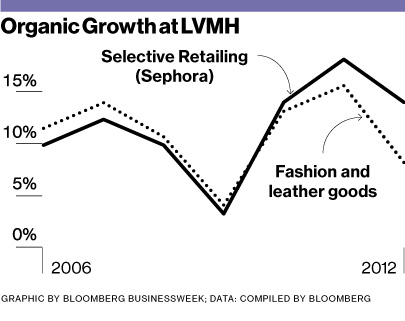
Cosmetics Seller Sephora Is Driving Growth at Luxury House LVMH; “Their business model is very clever”; Stocking exclusive products means Sephora can limit discounts, while private-label merchandise yields high profit margins

Cosmetics Seller Sephora Is Driving Growth at Luxury House LVMH

By Andrew Roberts on June 06, 2013

comp_sephorachart24_405

Justine Le Sassier wouldn’t be caught dead buying a Louis Vuitton handbag. “They don’t have any appeal,” the 18-year-old art student says while shopping on the Champs-Elysées. Happily for Vuitton’s owner, LVMH Moët Hennessy Louis Vuitton (MC), even if Le Sassier won’t shell out $1,300 for a purse, she’s crazy about the €13.90 ($18) foundation sold by Sephora, LVMH’s fast-growing international fragrance and cosmetics chain. “I love their makeup,” she says. “And it’s reasonably priced.” Read more of this post

Hoarding of grain inventory to receive government subsidies and illegally selling grain reserve to the market to reap a windfall; A recent fire at a storage facility has brought to the fore the problems linked with requiring so much gra

06.06.2013 17:10

Closer Look: Paying High Prices for Food Security Sacrifice

A recent fire at a storage facility has brought to the fore the problems linked with requiring so much grain held in store

By staff reporter Chang Hongxiao

A fire recently engulfed a regional grain reserve in the northeastern province of Heilongjiang has led to many questions, ranging from the cause of the blaze to why the grain was left in the open.

The fact that the fire occurred four days after a Communist Party discipline inspection team started to review the company’s top officials spurred further speculation. Read more of this post

Victor Shih: “This Cultural Revolution shock committed the post-Mao leadership to pursue decentralisation policies throughout much of the 1980s”

Mao’s rampages a driving force of regional growth

June 7, 2013

John Garnaut

The risks are growing that China, which underwrites the Australian economy, will succumb to a financial crisis. This has not sunk in for Australian policy makers, perhaps because the implications are just too large, but it is the view forming among a large number of investors and economists who watch the data and investigate ground-level conditions closely. It looks as though China is in the middle of one of history’s great credit expansions, and all that money is no longer generating growth in gross domestic product. The accelerator is pressed to the floor, the tank is getting low, but the wheels are not getting traction like they used to.

Read more of this post

China losing top-notch talent ‘at highest rate in world’; An average of 87 per cent of students in science and engineering stay overseas

China losing top-notch talent ‘at highest rate in world’

Friday, 07 June, 2013, 12:00am

Bloomberg in Beijing

China losing its best talent at highest rate in the world, says official from working group

China is losing top-notch talent at the highest rate in the world as students who seek degrees abroad opt to remain overseas, the official People’s Daily reported yesterday.

An average of 87 per cent of students in science and engineering stay overseas, the newspaper said, citing an official from a government working group on talent. China needs to compete better for human talent, the report cited the official as saying. Read more of this post

How the Gaokao Make or Break Chinese Lives

How the Gaokao Make or Break Chinese Lives

07JUN2013

On June 7th, around 9 million Chinese high school students will begin the three-day-longGaokao college entrance exam. Despite the massive scale of the test and the seemingly glacial pace of reform in Chinese education, some interesting developments have affected this year’s test takers – and by extension, prospective applicants to schools abroad. Read more of this post

With big U.S. pork buy and diet shift, China now asks: “Where’s the beef?”

With big U.S. pork buy and diet shift, China now asks: “Where’s the beef?”

Wed, Jun 5 2013

By Dominique Patton and Niu Shuping

DACHANG, China (Reuters) – With more money in their pockets, millions of Chinese are seeking a richer diet and switching to beef, driving imports to record levels and sending local meat firms abroad to scout for potential acquisition targets among beef farmers and processors.

The need to feed the world’s most populous nation has seen Chinese firms gobble up foreign dairy, sugar and cereal producers, and Shuanghui International’s $4.7 billion bid last week for top U.S. pork producer Smithfield Foods is just the country’s latest food ‘land grab’. Read more of this post

China Vanke Chairman Says Country Faces Risk of Home Bubble

China Vanke Chairman Says Country Faces Risk of Home Bubble

China Vanke Co. (000002) Chairman Wang Shi said the country’s property market faces the risk of a “bubble,” reiterating concerns the nation’s biggest developer by sales raised three months ago.

The bubble isn’t “light,” Wang said at a conference in Shanghai today. “If the bubble lasted, it will be dangerous.” Read more of this post

Beijing Raises Cab Fares as Taxis Disappear During Rush Hours

Beijing Raises Cab Fares as Taxis Disappear During Rush Hours

Beijing will raise taxi fares for the first time since 2006 to boost driver incomes after customer complaints that it’s becoming increasingly difficult to hail a cab in China’s capital city.

Starting from June 10, the base fare will be increased 30 percent to 13 yuan ($2.12) for the first 3 kilometers (1.86 miles), the Beijing Municipal Commission of Development and Reform said in a statement posted on its website. Each additional kilometer will cost 2.3 yuan, up from 2 yuan currently, according to the statement.

Beijing, which has been voted as having the world’s worst commute, is raising taxi fares to entice cab drivers to brave the morning and evening rush hours, when demand by the city’s 20.7 million residents is highest and traffic jams are at their most severe. Read more of this post

China’s trade threat leaves bitter taste in French wine world

China’s trade threat leaves bitter taste in French wine world

10:26am EDT

By Muriel Boselli and Catherine Bremer

PARIS (Reuters) – Beijing’s salvo at European wine exports has brought into focus simmering French unease about the growing power the Chinese wield over their cherished vines, as consumers, investors and even chateaux owners.

Responding to an EU move to impose duties on Chinese solar panels, China launched an anti-dumping inquiry into European wine sales this week that could lead to exporters in France, along with Spain and Italy, being hit with retaliatory duties.

The French government reacted angrily and indignant producers of Bordeaux – which China’s wealthy have developed a seemingly unquenchable thirst for – snorted that they had nothing to do with solar panels. Read more of this post

$24.6 billion of the global biotech industry’s turnover of $120 billion is based on products that originated in Israeli research

Israeli inventions underpin 20% of global biotech revenue

Pitango general partner Ruth Alon: $24.6 billion of the global biotech industry’s turnover of $120 billion is based on products that originated in Israeli research.

6 June 13 21:10, Gali Weinreb

Israel’s life sciences industry is manic-depressive. One moment, it’s preparing for catastrophe and pending collapse, and the next, it’s celebrating the industry’s hoped-for breakthrough. There is no argument that Israel’s science and medicine are outstanding, and there is the feeling that the growth of a thriving pharmaceutical industry is only a matter of time. But it is not easy to translate the vision into reality.

“If we examine how many products in the world are based on Israeli technology, we discover that the vision has already been partly realized,” saysPitango Venture Capital general partner Ruth Alon, who handles the firm’s life sciences business, and is chairwoman of the IATA BioMed 2013 Conference. Read more of this post

After tech success, Israel seeks life sciences growth

After tech success, Israel seeks life sciences growth

7:00am EDT

By Tova Cohen and Steven Scheer

HERZLIYA, Israel (Reuters) – Inspired by its success in high-tech electronics and software, Israel is hoping to pull off the same trick in life sciences. The Mediterranean country already boasts the world’s biggest generic drug maker and a host of smaller research-oriented companies. Now it aims to build on that foundation, offering incentives to multinationals to invest in a biopharmaceutical incubator fund, set up research centers and collaborate with local firms. High-tech has been one of Israel’s main growth engines and companies such as Intel Inc, IBM and Google Inc have major R&D centers in the country. Such companies make significant contributions to the tech sector’s advancement, says the government’s Office of the Chief Scientist (OCS), which hopes to see the creation of similar R&D hubs in the pharmaceutical industry. Read more of this post

A cancer that erodes morality and wellbeing: most of Thailand’s business leaders acknowledge that corruption has been rampant since 2010

A cancer that erodes morality and wellbeing

According to the IOD poll, most of Thailand’s business leaders acknowledge that corruption has been rampant since 2010. -The Nation/ANN 
Thu, Jun 06, 2013
The Nation/Asia News Network

Corruption infects Thailand at every level, causing harm to the individual citizen, the national economy and our business environment; our very future could lie in the balance. The cost of doing business in Thailand is increasing due to corruption. Between 10 and 30 per cent in extra costs are added to business operations because firms have to pay kickbacks, according to their executives. Sixty-three per cent of corporate executives surveyed recently by the Thai Institute of Directors (IOD) said corruption has an impact on their business operations at “high and very high levels”. Ninety-three per cent agreed that the problem of corruption continues at a seriously critical level.

Read more of this post

Fewest Hedge Funds Invest in Gold Since 2010 as Assets Fall 31%

Fewest Hedge Funds Invest in Gold Since 2010 as Assets Fall 31%

The rout in gold that drove the metal into a bear market cut the number of hedge funds investing in bullion to the lowest level since 2010 as assets slumped 31 percent this year on losses and redemptions.

Performance declines tied to volatility and withdrawals led either to closures or a shift in strategies, Farhan Mumtaz, an analyst at EurekaHedge Pte Ltd., the Singapore-based fund-research company, said in an interview. The number of funds investing in gold fell to 290 globally by May compared with 310 in December, and their assets shrank to $22.2 billion from $32.1 billion in the same period, he said on June 5. EurekaHedge has tracked gold-investing hedge funds for 10 years, he said. Read more of this post

Imported $60 Stout Opens Doors for Japan Craft Beer Revival; Domestic shipments by the nation’s five largest beermakers dropped to a record low for the eight straight year in 2012

$60 Imported Stout Opens Doors for Japan Craft Beer Revival

Naoyuki Ide is betting that a weaker yen will drive more Japanese people to drink his locally made craft beers.

The president of Yo-Ho Brewing Co. is boosting production capacity at the microbrewery in Nagano, central Japan, by 50 percent this year as he anticipates the currency’s decline will force importers to raise prices for foreign brands, giving local craft brewers such as his a competitive edge.

“If the yen weakens more, they’ll have to increase import beer prices in the near future,” Ide, whose company makes Yona Yona Ale and Tokyo Black beer, said in an interview. “Import beers cater to people’s growing taste for beer with character, but if customers are looking for something distinct, they may choose our beer instead, because it’ll be cheaper.” Read more of this post

Marico’s Harsh Mariwala: Ours is the story of a small Indian FMCG player globalising

Harsh Mariwala: Ours is the story of a small Indian FMCG player globalising

by Harsh Mariwala | Jun 5, 2013

topimg_21809_harsh_mariwala_300x400

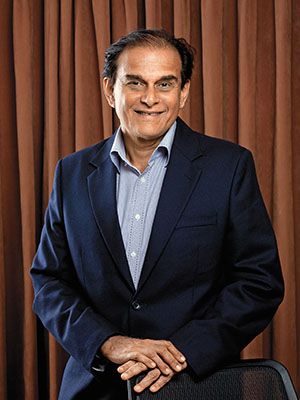
Harsh Mariwala realised if Marico had to get an international thrust, it needed a manager who wasn’t a part of the local business

We stepped out of india as marico needed to grow faster. We obviously needed to increase revenues, but a fast-growing company also attracts the best talent. One of the reasons we formed Marico was that we could closely associate the company with the FMCG industry. But we soon realised that as we were a small company, we couldn’t provide the kind of career-rotation opportunities that many large FMCG companies provided. And most importantly, we couldn’t rotate talent outside of India. Ours is the story of a small Indian FMCG player globalising. Over the years, analysts have often asked me why we are operating outside of India when the opportunity in India is huge.
My answer to that is simple: We are not growing our international business at the cost of our domestic business. Today, at approximately Rs 1,200 crore, our international business brings in a fourth of our revenues and we employ a total of 800 people overseas. When we first wanted to export, we couldn’t do so as export of coconut oil was banned. When the government started opening up the economy in 1991, we were able to persuade them to allow us to export. Read more of this post

Philippine to Thai Exchanges Try to Calm Investors on Stock Rout

Philippine to Thai Exchanges Try to Calm Investors on Stock Rout

Stock exchanges in the Philippines and Thailand have moved to soothe investors as the prospect of the U.S. Federal Reserve scaling back bond purchases prompted selloffs by overseas investors.

The Stock Exchange of Thailand President Charamporn Jotikasthira today urged investors not to panic, saying economic and corporate earnings growth in Southeast Asia’s second-biggest economy remains strong. Philippine Stock Exchange President Hans Sicat described the selloff as an “extreme overreaction.”

The Philippines benchmark index has slumped 11 percent and the Thai gauge 8.4 percent since May 22, when Fed Chairman Ben S. Bernanke said policy makers could consider reducing the pace of monetary stimulus if the nation’s labor market improves. Overseas investors have sold a net $414.4 million of Thai stocks and $147 million of Philippine shares this month. Read more of this post