Buffett and Munger dances to “Gangnam Style” + Buffett jokes in the cold and rainy Omaha weather: “If we had a company that sold coats we would have left you out there.”

Here’s What Buffett’s Saying at the Berkshire Annual Meeting

By Matt Koppenheffer | More Articles | Save For Later
May 4, 2013 | Comments (0)

Before Warren Buffett and Charlie Munger even sat down at Berkshire Hathaway‘s (NYSE:BRK-A  ) (NYSE: BRK-B  ) annual meeting, the annual “Berkshire video” showed a cartoon version of Buffett and Munger dancing to “Gangnam Style.” With that under your belt, it’s hard to feel that your day didn’t start off right. But that was just the warm-up for the much-awaited Q&A session with Buffett and Munger. Here is a look at some of what Buffett and Munger have been saying so far.

On first quarter earnings. Buffett noted that closures and persistentcy in GEICO policies. He called this trend “solid gold.”

On challenging Ariel Hsing in ping-pong at Borsheims. Buffett: “If you’re courageous you’ll show up with your paddle and you’ll look like an idiot.”

On trailing the market. Buffett conceded that if the market continues on the trajectory it’s on so far in 2013, Berkshire could trail the S&P 500  (SNPINDEX: ^GSPC  ) for a five-year period for the first time. Buffett said that it “won’t be a happy day, but won’t totally discourage us.” Munger chimed in with: “We’re slowing down, but it’ll still be very pleasant.”

On selling things to Berkshire shareholders. A shareholder asking a question thanked Buffett for letting everyone in early (it was cold and raining in Omaha this morning). Buffett quipped: “If we had a company that sold coats we would have left you out there.”

On selling Berkshire shares. To head off any rash moves by family members, Munger warned: “I want to say to the many Mungers in the audience, don’t be so stupid as to sell these shares.” Buffett quickly followed up with: “That goes to the Buffetts too.”

On negative implications of the H.J. Heinz  (NYSE: HNZ  )  deal. A questioner wondered whether Berkshire’s preferred position in the Heinz deal and the high price paid suggested that Buffett isn’t optimistic about the returns available in the market. Buffett responded simply that that was “totally inaccurate.” Munger later added on: “As you said, the report was totally wrong.”

On hiring executives from AIG  (NYSE: AIG  ) . Buffett pointed out that “these are people that reached out to Berkshire, in the case at least one of them had reached out numerous times in the past” and added that “we’ve had a number of people reach out since the announcement was made.” That’s a big positive for Berkshire since it’s looking to aggressively build out its commercial insurance capabilities.

Where Were You in 1979? The final year of the 1970s witnessed epochal shifts in power that ushered in the modern world.

May 3, 2013, 2:57 p.m. ET

Where Were You in 1979?

The final year of the 1970s witnessed epochal shifts in power that ushered in the modern world.

By Jonathan Karl

The 1970s seem destined to be a justly forgotten decade—a time of disco, stagflation and little of the social upheaval that defined the previous decade or the epic global changes of the one that followed. But Christian Caryl sees more than malaise when he looks at the 1970s; he sees one of history’s great turning points. “With the passage of time,” Mr. Caryl writes in “Strange Rebels: 1979 and the Birth of the 21st Century,” “the 1970s begin to appear less like a sideshow than the main event.”

Strange Rebels

By Christian Caryl
Basic, 407 pages, $28.99

As the title of Mr. Caryl’s book suggests, his focus is 1979—a year that brought Iran’s Islamic revolution, the siege of the U.S. embassy in Tehran, the Soviet invasion of Afghanistan, and the emergence of four leaders who, he argues, changed the course of history: Margaret Thatcher, the Ayatollah Khomeini, Deng Xiaoping and Pope John Paul II.

It is hard to imagine figures as different as these or a year quite as grim as 1979, but suspend your disbelief for a moment. Mr. Caryl makes a fairly compelling case that this was a year when history made a sharp turn and that each leader set in motion the seismic changes that came to shape our world today: the fall of the Soviet Union, the rise of China and the emergence of radical Islam. In 1979, Mr. Caryl says, “the twin forces of markets and religion, discounted for so long, came back with a vengeance.”

In January of that year, China’s new paramount leader, Deng Xiaoping, made a nine-day visit to the United States. He was not technically China’s head of state (he never held that title), but President Jimmy Carter welcomed him to the White House with a state dinner. At the dinner, Deng found himself seated at a table with actress Shirley MacLaine, who had spent time in China working on a documentary extolling the virtues of Maoism during the bloody Cultural Revolution. She told Deng how wonderful it had been for her to meet a professor plowing a field on a collective farm. “Deng looked at her scornfully . . . ,” Mr. Caryl writes. “Professors, he told her, should be teaching university classes, not planting vegetables.” Read more of this post

Munger Decries Wall Street Approach at Deposit-Taking Banks; Munger said that he was “a little less optimistic about the U.S. banking system” than Buffett is

Munger Decries Wall Street Approach at Deposit-Taking Banks

Berkshire Hathaway Inc. (BRK/A) Vice Chairman Charles Munger, whose firm owns stakes in some of the biggest U.S. lenders, said Wall Street trading risks should be curbed at deposit-taking institutions. “I do not see why massive derivative books should be mixed up with” government-insured deposits, Munger, 89, said yesterday during Omaha, Nebraska-based Berkshire’s annual meeting. “The more bankers want to be like investment bankers, instead of like bankers, the worse I like it.” Munger’s comments echo those of former financial executives and lawmakers who say the largest lenders still pose risks to the economy years after reforms and U.S. bailouts. Derivatives, which are used to hedge risks or for speculation, magnify the interconnectedness of firms including JPMorgan Chase & Co. (JPM) and Bank of America Corp. (BAC) Critics say that these so-called too-big- to-fail companies would get taxpayer help in a future crisis.

The Berkshire vice-chairman said his views about the industry differ with those of his longtime business partner, billionaire Chairman Warren Buffett. Responding to a question at the meeting about how too-big-to-fail affected Berkshire holdings, Buffett reiterated his support of U.S. lenders. In January, he said he guaranteed that banks no longer posed a threat to the economy because capital levels were higher. “I don’t worry about the banking system being the cause of the next bubble,” Buffett, 82, said yesterday. While lenders “won’t earn as high a return as they would’ve” previously, because of regulation, they still are “decent” investments, he said.

‘Less Optimistic’

Munger said that he was “a little less optimistic about the U.S. banking system” than Buffett is. Read more of this post

The Economist: Party Like It’s 1793? China’s New President Should Scare The Crap Out Of The Rest Of The World

China’s New President Should Scare The Crap Out Of The Rest Of The World

The Economist | May 4, 2013, 9:12 AM | 14,577 | 66

20130504_cna400

IN 1793 a British envoy, Lord Macartney, arrived at the court of the Chinese emperor, hoping to open an embassy. He brought with him a selection of gifts from his newly industrialising nation. The Qianlong emperor, whose country then accounted for about a third of global GDP, swatted him away: “Your sincere humility and obedience can clearly be seen,” he wrote to King George III, but we do not have “the slightest need for your country’s manufactures”. The British returned in the 1830s with gunboats to force trade open, and China’s attempts at reform ended in collapse, humiliation and, eventually, Maoism. China has made an extraordinary journey along the road back to greatness. Hundreds of millions have lifted themselves out of poverty, hundreds of millions more have joined the new middle class. It is on the verge of reclaiming what it sees as its rightful position in the world.

China’s global influence is expanding and within a decade its economy is expected to overtake America’s. In his first weeks in power, the new head of the ruling Communist Party, Xi Jinping, has evoked that rise with a new slogan which he is using, as belief in Marxism dies, to unite an increasingly diverse nation. He calls his new doctrine the “Chinese dream” evoking its American equivalent. Such slogans matter enormously in China (see “Xi Jinping’s vision: Chasing the Chinese dream”). News bulletins are full of his dream. Schools organise speaking competitions about it. A talent show on television is looking for “The Voice of the Chinese Dream”. Countries, like people, should dream. But what exactly is Mr Xi’s vision? It seems to include some American-style aspiration, which is welcome, but also a troubling whiff of nationalism and of repackaged authoritarianism. Read more of this post

As Best Buy’s ‘Five Star’ exits China, more foreign retailers jump in

As Best Buy’s ‘Five Star’ exits China, more foreign retailers jump in

Staff Reporter

2013-05-04

Foreign electronics retail giants such as Best Buy and Wonder City have repeatedly faced setbacks in China, but this hasn’t extinguished their enthusiasm as RadioShack approaches the mainland market, IT Times Weekly reports.

On March 18, consumer electronics retail giant Best Buy announced that Wang Jian, president of Five Star Appliance, its wholly owned subsidiary in China, will leave his post, though he will continue as a senior adviser for a smooth transition to help the new leadership until the end of June.

Wang’s departure means Best Buy’s “Five-Star era” has come to an end, as the subsidiary it bought in 2009 didn’t satisfy the parent company, insiders said. Best Buy will have to rethink its development strategy in China. Read more of this post

NYT: Malay majority are tired of the corruption and theft of public assets practiced in their name, greeted with enthusiasm the pledge to replace the corrupt ethnicity-based affirmative action program that has benefited cronies of PM Najib with a program that bases assistance on need

May 4, 2013

In Malaysia, a Historic Chance for Reform

By JOHN PANG

KUALA LUMPUR, Malaysia

MALAYSIANS are going to the polls Sunday for the most important election in our history. The opposition stands a real chance of winning, for the first time since independence from Britain in 1957. Recent polls show the People’s Alliance, the opposition coalition led by Anwar Ibrahim, running neck and neck with the governing National Front, led by Prime Minister Najib Razak. The National Front, the direct successor to the Alliance Party of the 1950s, has been one of the world’s longest-governing parties, outside of authoritarian regimes like China, North Korea and Cuba. For half a century, until 2008, it had a two-thirds parliamentary majority, which allowed it to amend Malaysia’s Constitution at will. Since the 1980s, the governing party has resorted to stoking fears among the country’s many ethnic communities — Malays, Chinese, Indians and many non-Malay indigenous peoples — to keep them beholden to its rule. It has abused affirmative action policies, intended to help impoverished ethnic Malays, in order to enrich its members and their cronies. Malaysia’s outdated model of governance — a system of racially exclusive parties that deliver patronage to captive racial voter blocs — is no longer sustainable. Read more of this post

Don’t Pay High Fees for Index Funds

May 3, 2013, 6:05 p.m. ET

Don’t Pay High Fees for Index Funds

By JOE LIGHT

You might think that a plain-vanilla index mutual fund is synonymous with low fees. But some such funds are charging expenses that might make even a high-turnover momentum-fund manager blush.

The indexing revolution has been a boon for investors. Big fund companies have launched many nearly identical mutual funds and exchange-traded funds that track indexes such as the Standard & Poor’s 500. With nothing to compete on but price, that’s meant ever lower expenses for investors.

According to an April report from the Investment Company Institute, a trade group, stock-fund investors on average paid 0.77% in expenses in 2012, or $77 per $10,000 invested. That was down from 0.79% in 2011 and from 1% a decade ago. Read more of this post

Risky Business: The Quiz That Could Steer You Wrong

May 3, 2013, 6:13 p.m. ET

Risky Business: The Quiz That Could Steer You Wrong

By JASON ZWEIG

BF-AE903_INVEST_G_20130503172321

With the stock and bond markets butting up against record highs, and volatility not far from all-time lows, that little red devil on your shoulder is whispering in your ear that it’s safe to take more risk again. Can you count on your broker or financial adviser to tell you how much risk is right for you?

Read more of this post

Receiver Gains Control of Some Assets of China’s ZST; Case Is Test of Investors’ Ability to Recoup Losses in Wake of Accounting Questions

May 3, 2013, 1:25 p.m. ET

Receiver Gains Control of Some Assets of China’s ZST

Case Is Test of Investors’ Ability to Recoup Losses in Wake of Accounting Questions

By MICHAEL RAPOPORT

The court-appointed receiver empowered to seize the assets of a U.S.-traded Chinese company facing accounting questions has chalked up his first successes.

The receiver, Robert Seiden, says he has obtained control over subsidiaries of the Chinese company, ZST Digital Networks Inc., ZSTN +13.33% in the British Virgin Islands and Hong Kong. He also has gained control of a ZST Digital bank account in Hong Kong, and is in the process of doing the same with ZST Digital bank accounts in China.

Mr. Seiden has been tasked with seizing and selling ZST Digital assets as part of a court’s novel remedy for a U.S. investor locked in a legal dispute with the network-equipment maker. The high-profile case may test the extent to which U.S. investors can recover losses from Chinese companies whose shares drop in the wake of accounting or disclosure problems. Read more of this post

Studying the Dark Art of Leaking Deal Talks

APRIL 29, 2013, 8:59 PM

Studying the Dark Art of Leaking Deal Talks

By ANDREW ROSS SORKIN

Psst.

That’s how you might imagine a “leak” of a big merger or acquisition would start. A well-placed phone call. An off-handed comment over lunch. A confidential document accidentally left on an airplane.

It seems as if news of most big deals is invariably leaked ahead of the official announcement. Of the biggest deals of the year so far — the buyout of Dell, Warren Buffett’s acquisition of Heinz, American Airlines–US Airways, Liberty Global-Virgin Media — none made it to the finish line without the news media finding out about it first, sometimes with weeks of advance notice, some with just hours to go.

An intriguing academic study casts new light on the dark arts of the leak — or what used to be affectionately known in London as “the Friday night drop.” (It’s a bit of lore, but deal leaks used to be delivered by envelope on Friday night on Fleet Street to the gossipy Sunday broadsheets where the news could be placed as a trial balloon ahead of the markets’ reopening on Monday.) Read more of this post

Seth Klarman: “If The Economy Is So Fragile That Government Can’t Allow Failure Then We Are Indeed Close To Collapse”

Seth Klarman: “If The Economy Is So Fragile That Government Can’t Allow Failure Then We Are Indeed Close To Collapse”

Tyler Durden on 05/03/2013 15:43 -0400

Following today’s flashback to the most euphoric and irrationally exuberant days of market peaks (and bubbles) gone by, driven entirely by the now constant central-planner dilution of current and future wealth, these selected excerpts from Seth Klarman’s latest letter to investors is just the cold water of common sense everyone needs:

From Seth Klarman of Baupost:

Is it possible that the average citizen understands our country’s fiscal situation better than many of our politicians or prominent economists? Read more of this post

Gazprom shows what happens when giants push their weight around for too long

Gazprom shows what happens when giants push their weight around for too long

By Steve LeVine 11 hours ago

If you wrote up a list of the world’s most vilified people and things, it currently would be topped by the Tsarnaev Brothers. Mohammed Soel Rana would probably be next, along with a few other Bangladeshi garment factory owners. But just a few years ago—in the middle-late 2000s—the list might have been led by Gazprom, the Russian gas giant that preferred to cut off service to Ukraine and the rest of Europe in the dead of winter rather than settle utility disputes the normal way.

What a difference five years makes. This mighty spearhead of Vladimir Putin’s foreign policy, according to The Wall Street Journal, finds itself pushed around(paywall) and having to offer discounts to Poland, Bulgaria and other relative small fry.

One thing that has changed Gazprom’s world is the global natural gas boom, which has undermined its previously unassailable dominance in Europe, where it supplies 25% of the market. Last year, outside gas pushed down Gazprom shipments to Europe by 3.6%; Gazprom’s profit fell by 9.5%. Investors have pummeled the stock, sending down Gazprom’s share price by 24% since September. Read more of this post

China calls time on expensive watches in face of crackdown

May 3, 2013 5:30 pm

China calls time on expensive watches in face of crackdown

By James Shotter in Zurich

Before accompanying the Chinese premier, Li Keqiang, on a visit to a neighbourhood ravaged by the earthquake in Sichuan two weeks ago, Fan Jiyue, a county party chief, took an important precaution: he removed his wristwatch.

His concern was understandable. China’s new leadership is cracking down hard on ostentatious displays of wealth by party officials and corruption. As a result, expensive watches – a popular gift given by those seeking to win favour with Chinese businessmen and politicians – have become a source of unwanted attention.

Unfortunately for Mr Fan, unwanted attention is precisely what his move brought him: the watch-shaped tan lines on his wrist were spotted by China’s eagle-eyed netizens, and pictures of the local official’s unadorned arm went viral on the Chinese internet. With predictable alacrity, the country’s censors had soon blocked searches for Mr Fan.

This sudden hostility to extravagance, which set in last autumn after Xi Jinping took over as Chinese president, has led to a big slowdown in Swiss watch exports to China – which over the past 10 years has been the fastest growing market for the Alpine nation’s timepieces. Read more of this post

Closer Look: The COSCO Maelstrom, China’s shipping giant struggling in a swirl of conflicting interests

05.02.2013 19:44

Closer Look: The COSCO Maelstrom

COSCO Chairman Wei Jiafu can save the company from struggling in a swirl of conflicting interests by taking the company’s shares off of public exchanges

By Wang Lan

Shipping giant China COSCO Holdings Co. Ltd. announced March 28 that the Shanghai Stock Exchange (SSE) would tag the company’s shares for “special treatment.” The measure is used to warn investors of a company’s possible delisting after a company reports two straight years of losses.

In 2011, COSCO lost 10.4 billion yuan, and it posted annual losses of 9.56 billion yuan in 2012, marking the second straight year the company reported a loss.

COSCO is not the only state-owned enterprise (SOE) which has failed to get out of the red. COSCO Chairman Wei Jiafu stated in early April at the Boao Forum in Hainan, “If the company is performing as badly as a few people say, how would it be possible for me to attend the BRICS Summit with government officials in Durban?” Wei went on to add, “I am not worried if the central government and the State Council supports COSCO.” His words sparked public acrimony. Read more of this post

Less Is More: Rogue Economists Champion Prosperity without Growth

05/02/2013 04:23 PM

Less Is More: Rogue Economists Champion Prosperity without Growth

By Nils Klawitter

For years, economists have posited that prosperity requires growth, with environmental damage as the regrettable but unavoidable consequence. A growing number of critics are now challenging this equation, though, calling for a radical revamping of the economic system.

Harald Welzer’s career as a critic of growth began with a few simple reflections. Just how progressive is it, he asked himself, when millions of hectares of land are used elsewhere in the world so that we keep down the cost of meat? How modern is it when producing a kilogram of salmon in a supposedly sustainable way requires feeding the fish five to six kilograms (11 to 13 pounds) of other types of fish?

If everyone used up as much space and resources as we do, says the 54-year-old Berlin-based social psychologist, we would need three earths. In Welzer’s eyes, this can hardly be called progress.

All of this made Welzer so angry that he wrote a book critical of equating this sort of progress with growth. The ruling class of economists, who he characterizes as “disdainers of reality” and “proponents of a world essentially limited by consumption,” is responsible for compulsively tying these two concepts together, he argues. His treatise, “Selbst denken” (“Thinking for Ourselves”), is a manual for phasing out the “totalitarian consumerism” that gives people desires that, until recently, they didn’t even suspect they would ever have. Read more of this post

Man vs. Machine: Are Any Jobs Safe from Innovation?

05/03/2013 10:49 AM

Man vs. Machine: Are Any Jobs Safe from Innovation?

By Thomas Schulz

Past warnings about how technological innovation threatens jobs have proved exaggerated. Yet the digital revolution now has many scholars warning that this time things are different, and that the breakneck speed of automation could wreak havoc on the global labor market.

The Massachusetts Institute of Technology (MIT), in Cambridge, ranks among the most prestigious universities in the United States and has a reputation for extolling the virtues of technological progress. Here, along the banks of the Charles River, researchers helped lay the foundations for modern computer technology and played a key role in paving the way to the digital age.

Andrew McAfee and Erik Brynjolfsson, two respected economists and directors at the MIT Center for Digital Business, are deeply committed to this tradition. This prompted them to set out to research the flood of IT innovations in recent years and write a book about how wonderful the digital revolution is for the entire economy.

But something didn’t add up here. The theory didn’t match reality. Read more of this post

Long-Term Unemployment Is Turning Jobless Into Pariahs

Long-Term Unemployment Is Turning Jobless Into Pariahs

Long-term unemployment is one of the most vexing problems the U.S. faces, and today’s jobs report shows all-too-meager progress in fixing it.

The U.S. created 165,000 new jobs in April, pushing down the unemployment rate to 7.5 percent from March’s 7.6 percent. But as of the end of April, 4.4 million Americans, or 37 percent of the unemployed, had been without a job for 27 weeks or longer, barely better than March’s 39 percent. The U.S. can’t afford to write off more than 4 million people who would like to work but haven’t for more than six months.

Long-term joblessness peaked in April 2010 at 6.7 million, so the picture might seem to be improving. Hidden within that number is this troubling fact: The average unemployed person has been out of work for 36.5 weeks. That’s not much better than the December 2011 duration of 40.7 weeks, which was the longest since World War II. Long-term unemployment at the start of the recession in December 2007 was 1.3 million people, and the average duration was 16.6 weeks.

Terrible things happen to people when they are out of work for long periods, numerous studies show. Beyond a sharp drop in income, long-term unemployment is associated with higher rates of suicide, cancer (especially among men) and divorce. The children of the long-term unemployed also show an increased probability of having to repeat a grade in school. Read more of this post

Chasing the Chinese dream: China’s new leader has been quick to consolidate his power. What does he now want for his country?

Xi Jinping’s vision

Chasing the Chinese dream

China’s new leader has been quick to consolidate his power. What does he now want for his country?

May 4th 2013 | BEIJING |From the print edition

20130504_cna40020130504_FBC519

THESE have been heady days for Chen Sisi, star of a song-and-dance group run by China’s nuclear-missile corps. For weeks her ballad “Chinese dream” has been topping the folk-song charts. She has performed it on state television against video backdrops of bullet trains, jets taking off from China’s newly launched aircraft-carrier and bucolic scenery. More than 1.1m fans follow her microblog, where she tweets about the Chinese dream.

Ms Chen is playing her part in a barrage of dream-themed propaganda unleashed by the Communist Party. Schools have been organising Chinese-dream speaking competitions. Some have put up “dream walls” on which students can stick notes describing their visions of the future. Party officials have selected model dreamers to tour workplaces and inspire others with their achievements. Academics are being encouraged to offer “Chinese dream” research proposals. Newspapers refer to it more and more (see chart). In December state media and government researchers, purportedly on the basis of studies of its usage, declared “dream” the Chinese character of the year for 2012.

It was, however, one very specific usage just before that December publication which set the country dreaming. On November 29th, two weeks after his appointment as the party’s general secretary and military commander-in-chief, Xi Jinping visited the grandiose National Museum next to Tiananmen Square. Flanked by six dour-looking, dark-clad colleagues from the Politburo’s standing committee, Mr Xi told a gaggle of press and museum workers that the “greatest Chinese dream” was the “great revival of the Chinese nation”. Read more of this post

Singapore’s economy: Manufacturers struggle as the city-state changes its economic model

Singapore’s economy: Manufacturers struggle as the city-state changes its economic model

CONTRARY to what many imagine about affluent Singapore, the economy is not all about banks and shopping malls. Manufacturing and industry account for about 30% of the country’s GDP, a strikingly high figure for an advanced economy. In Britain and France the figure is about 12% and in America even less. Nor is it all about sophisticated multinationals: three-fifths of Singapore’s economy is made up of small and medium-sized enterprises (SMEs). The government is proud of the mix of big and small, manufacturing and services, which has helped to spread risk during global downturns.

Now the model is under strain. While other South-East Asian countries have posted impressive, even record, rates of growth over the past few years, Singapore has struggled. In 2012 the economy grew by just 1.3%. This year will probably see only a marginal improvement, especially after the economy contracted in the first quarter, by 0.6% compared to the same period last year. The problems have much to do with the waning competitiveness of Singapore’s metal-bashers. Read more of this post

Money to burn: The muddle-headed world of American public-pension accounting

Money to burn: The muddle-headed world of American public-pension accounting

20130504_FND002_0

SLOWLY but surely the cost of America’s public-sector pension promises is becoming clear. Last year the best estimate of the shortfall was more than $4 trillion. To deal with its deficit, a giant Californian pension fund, CalPERS, recently announced plans that will increase contributions by employers (in effect, taxpayers) by up to a half, starting in 2015-16.

Shinzo Abe’s government looks likely to disappoint on fiscal consolidation

Japan’s public debt

Don’t mention the debt

Shinzo Abe’s government looks likely to disappoint on fiscal consolidation

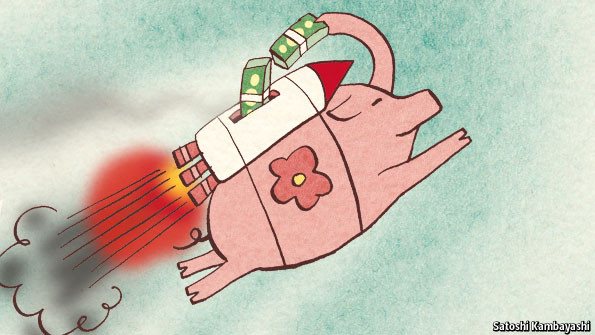
TO REVIVE Japan’s economy Shinzo Abe, its prime minister, has loosed three arrows. Temporary fiscal stimulus, monetary easing and structural reform together make up the strategy known as “Abenomics”. But many reckon there needs to be a fourth dart in the quiver: fiscal consolidation over the longer term to tackle the country’s vast public debt, which is expected to approach 240% of GDP next year (see chart).

Mr Abe’s party, the Liberal Democratic Party of Japan (LDP), last year co-operated with its main rival, the Democratic Party of Japan (DPJ), to pass a bill to raise the consumption tax from 5% to 8% in April 2014 and up to 10% in October 2015. For Yoshihiko Noda, the DPJ prime minister at the time, the bill represented the end of a crusade by his party to get Japan back on fiscal track. The extra consumption-tax revenue of {Yen}13.5 trillion ($14 billion) meant that a goal set in 2010 of halving the primary budget deficit (ie, before interest payments) to 3.2% of GDP by 2015 looked achievable. This modest target would not reduce Japan’s debt, but the bill was at least a small step in the right direction. Read more of this post

Regulators fret about the risk of a sudden rise in long-term bond yields

Regulators fret about the risk of a sudden rise in long-term bond yields

May 4th 2013 | Washington, DC |From the print edition

20130504_FNC513

THE Federal Reserve has long acknowledged trade-offs in its efforts to revive growth with ultra-easy monetary policy. Now those trade-offs are getting starker. On April 26th America’s economy was reported to have grown by 2.5% on an annualised rate in the first quarter: stupendous by European standards, but less than expected. On April 29th underlying inflation slipped to just 1.1%. On May 1st the Fed duly said it would keep rates near zero, as it has since 2008, and keep buying $85 billion of government bonds a month, although it may vary the pace depending on the outlook for inflation and jobs.

A prolonged period of low rates carries the risk of asset bubbles. In its annual report issued on April 25th America’s new Financial Stability Oversight Council (FSOC), a watchdog that includes the Fed, warned that a “sudden spike in yields and volatilities could trigger a disorderly adjustment, and potentially create outsized risks.” For its part, the IMF noted in its latest “Global Financial Stability Report” that “credit markets…are maturing more quickly than in typical cycles.” Read more of this post

Seth Klarman Cautions “False Sense Of Calm In The US”

Seth Klarman Cautions “False Sense Of Calm In The US”

April 30, 2013

By Tabinda Hussain

Seth Klarman’s Baupost Group was not able to translate the enthusiasm of equity markets into similar returns but the fund did well in Q1, according to Klarman’s latest letter to investors. As is the custom with Baupost, detail of returns and investments are released some time later. Just like last quarter, Baupost continues to benefit from the liquidation of Lehman Brothers Holdings Inc. (OTCMKTS:LEHMQ) debt. This time the fund boosted its cash balance by 2 percent of AUM through Lehman. Baupost is looking forward to more inflows from US and international Lehman debtors throughout the year.

Klarman again talks about overdrive in stocks that has lulled investors into a new comfort zone where theFed’s monetray easing is taken for granted. He takes a jab at Ben Bernanke again in his missive, saying that Bernanke will not take advice from the hedge funds and traders when he decides to take a u-turn onQE, and these investors will not have a sufficient door to exit from as inflation booms. Klarman has been against the trend of jumping on QE bandwagon and reiterates that there is a false sense of calm in the US which is betrayed by the slowdown in almost every other part of the world. He adds that the US public is not, however, duped by promises of growth and wealth from raising debt load, adding taxes and increasing spending cuts. While painting a realistic picture, Klarman convincingly writes, “They know that society’s wealth is not unlimited, and that if the economy is so fragile that the government cannot allow failure, then we are indeed close to collapse.” Read more of this post

Buffett’s Iscar workers anxious; “We’re feeling a real slowdown in the market. For months, there has been only enough work for half a day, and most of the day we drag out the hours.”

Iscar workers anxious

“We’re feeling a real slowdown in the market, and the depreciation of the dollar and euro have not helped.”

2 May 13 17:40, Shay Niv

While the Israeli economy celebrates the deal between the Wertheimer family and Warren Buffett, uncertainty, and even fear, reigns at Iscar Ltd’s plant in the Tefen Industrial Zone in the Galilee. “I heard that Buffett promised that as long as he lived, Iscar would continue to operate in Israel. But with all due respect, and I wish him a long life, how much longer does he have?” a production employee told “Globes”.

Iscar may have broken profit records in 2012, but the Wertheimer family may have sold its remaining stake at the right time: the same source at the company said that, for at least six months, production has been slumping, and that, as a result, management has slashed employees’ overtime and even ended the night and Friday shifts in some departments.

“We’re feeling a real slowdown in the market, and the depreciation of the dollar and euro have not helped us either, as most of our business is exports,” he said. “If during last Passover, we worked all the time, except for the Seder meal, this year, most departments were closed. For months, there has been only enough work for half a day, and most of the day we drag out the hours.” Read more of this post

Flexing antitrust muscle, China is a new merger hurdle; “Companies are thinking about the cost of doing business in China. In some cases, it’s a poison pill you have to swallow”

Insight: Flexing antitrust muscle, China is a new merger hurdle

Thu, May 2 2013

By Michael Martina

BEIJING (Reuters) – China’s new-found clout in regulating global mergers is causing headaches for companies seeking high-stakes deals that need Beijing’s approval. Where corporate lawyers and advisers were once primarily concerned with merger clearance in the United States and Europe, China’s anti-monopoly law – just five years old – has altered the calculus, as Beijing forces often painful delays with an antitrust regime that some see as an industrial policy tool. “It’s to the point where China is one of the key concerns that global companies now have when doing merger clearance deals,” said Peter Wang, an antitrust expert and Shanghai-based partner for law firm Jones Day. Tucked into the hulking Commerce Ministry (MOFCOM) a stone’s throw from Tiananmen Square, a handful of antitrust officials are what stands between multi-billion dollar mergers and access to the world’s second-largest economy. The hiccups in China’s system have the potential to gum up the works – extending firms’ funding needs and creating uncertainty around mergers.

Recent deals highlight concerns over the long delays in China’s merger reviews and the tough conditions that some experts see as limiting operational control for companies while not being particularly designed to curtail monopoly. Read more of this post

Banks’ taste for ‘zombie’ companies feeds overcapacity

Last updated: May 3, 2013 12:06 am

Banks’ taste for ‘zombie’ companies feeds overcapacity

By Louise Lucas

Banks are slimming down, but they still have a hand in the cookie jar – literally, in the case of Canadian Imperial Bank of Commerce.

CIBC is part owner of Burton’s Biscuits, maker of Jammie Dodgers. Barclays, better known for paying jaw-busting bonuses, owns a slice of Soreen’s fruity malt bread, while JPMorgan Chase houses fish fingers alongside the London Whale.

Critics charge that these incongruous larders explain why Schumpeterian creative destruction has failed to curb overcapacity in Britain’s £75bn-turnover food and drink industry.

By seizing control of companies through debt-for-equity swaps, as Barclays did with Soreen manufacturer McCambridge in 2008, or rolling over loans to companies barely able to service their debts, critics say banks are supporting “zombie companies”. The continued existence of such companies allows retailers to pummel suppliers’ margins, critics charge. Read more of this post

Malaysia: Climate for change; Despite impressive economic growth, there is pressure for change ahead of Sunday’s election

May 2, 2013 6:31 pm

Malaysia: Climate for change

By Jeremy Grant

Despite impressive economic growth, there is pressure for change ahead of Sunday’s election

Suhail Anwar Mohamed gathers a ball of rice and fish in his right hand and puts it in his mouth. The 24-year-old fire safety engineer is having lunch with a friend at a food court in Shah Allam, a town an hour’s drive from Kuala Lumpur, the Malaysian capital. Like many his age, Mr Suhail Anwar is a first-time voter in the country, whose 13.3m eligible voters go to the polls in a general election this Sunday – widely expected to be the closest in Malaysia’s history. The ruling coalition, which has dominated Malaysian politics since independence from Britain in 1957, faces a struggle. For the first time in generations it cannot count on the support of younger voters, such as Mr Suhail Anwar. He plans to vote for the opposition coalition because he is disgusted by what he says is pervasive corruption and an out-of-touch leadership. “I think we need a change in the economy and society,” he says. A Muslim, he especially likes the opposition coalition’s Islamist party, which he thinks will tackle corruption hard.

Read more of this post

Ron Paul & Jim Rogers: “There’s More Chaos To Come”

Ron Paul & Jim Rogers: “There’s More Chaos To Come”

Tyler Durden on 05/02/2013 17:14 -0400

These are clear warnings signs that a rational person simply cannot ignore.

Bottom line, Nations are going bust. And the worse things get, the more desperate their tactics become. This isn’t the first time that the world has been in this position. This time is not different. History shows that there are serious, serious consequences to running unsustainably high debts and deficits. And those consequences have almost invariably involved pillaging people’s wealth, savings, livelihoods and liberties… either directly or indirectly.

What’s happening right now is playing out in textbook fashion. More taxes, more debt, more printing, more confiscation, less freedom. I’m not talking about the end of the world here, I’m talking about difficult times ahead, and the things that go beyond economics. It’s time to face facts and look at how society will change (and has already changed).

Many people will resist the change and instead cling desperately to the old system – the cycle of debt and consumption that provided jobs, stability, and prosperity. These people will have their lives turned upside down because that system is gone forever. And in case it still weren’t obvious, here is three minutes of clarity from Ron Paul and Jim Rogers…“I would expect that there is going to be a lot more chaos still to come.” – Ron Paul; “They won’t take our bank accounts…they will take our retirement accounts.” – Jim Rogers

Read more of this post

Why Natural Gas-Powered Vehicles Are Catching On

Why Natural Gas-Powered Vehicles Are Catching On

By Bradley Olson on May 02, 2013

feat_naturalgasmap_605

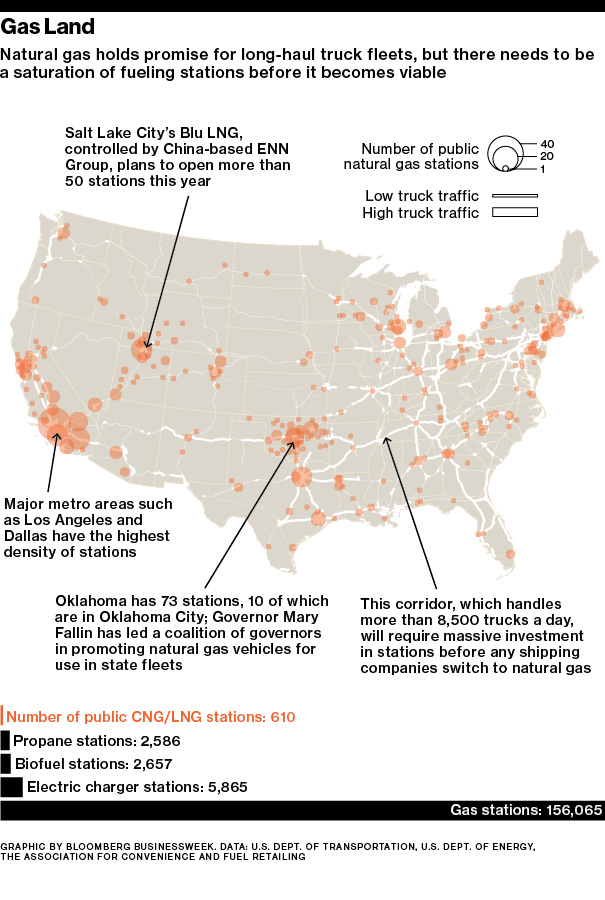
Facing soaring gasoline prices in 2011 and more than 100 miles of daily driving for his job as a traveling nurse, Daniel Piekarek confronted an uneasy choice: find cheaper gas or start updating his résumé. So, a few years before many of the world’s biggest companies would follow suit, Piekarek crossed his fingers and turned his life over to natural gas. On EBay (EBAY) he bought a used Honda Civic GX, the only commercially available natural gas vehicle in the U.S. at the time. “My costs went from $30 a day to $5 a day,” says Piekarek, who lives in Michigan and pays as low as the equivalent of $1.50 a gallon to fill up. “It’s been a real moneymaker.” Read more of this post

China’s Parents Crave Illegally Imported Baby Formula

China’s Parents Crave Illegally Imported Baby Formula

By Liza Lin and Julie Cruz on May 02, 2013

comp_babyformula19__01__630x420

For Hong Kong customs agents, baby formula is the new heroin. On March 1 a law went into effect limiting the amount of powdered milk travelers can carry out of Hong Kong to two 2-pound cans each. Since then, more people have been arrested for smuggling baby formula than were caught all of last year with heroin and cocaine. As of April 23, border officials say they’d seized nearly 20,000 pounds of powdered milk and arrested 879 people, many of whom were part of a smuggling syndicate. In 2012, 420-plus people were arrested for smuggling illegal drugs through Hong Kong.

Many Chinese parents are desperate to get their hands on foreign-made baby formula after numerous food safety scandals in recent years. In 2008 at least 22 Chinese companies were found to have sold dairy products containing melamine, a toxic chemical that can make diluted milk appear to have a higher protein content. Six babies died as a result. In 2011, China’s largest milk producer, China Mengniu Dairy (2319), said in a statement that moldy cattle feed led to excessive toxin levels in its milk. Last year another large milk producer, Inner Mongolia Yili Industrial Group (600887), recalled formula tainted with mercury. “Chinese consumers are so frightened and so sensitive to safety issues with milk powder that they are willing to pay a higher premium than consumers anywhere else,” says James Roy, a Shanghai-based senior analyst at China Market Research Group. That willingness to pay has led to baby formula shortages in Hong Kong, where food safety standards are higher. The surge in Chinese demand has even hit foreign markets, where baby formula is often cheaper than in China. Over the past year, stores in Germany, the U.K., and New Zealand have put limits on all bulk purchases of formula, such as Danone’s (BN)Aptamil and Mead Johnson Nutrition’s (MJN) Enfamil. Read more of this post