India’s thirst for whiskey may finally be waning

India’s thirst for whiskey may finally be waning

By Devjyot Ghoshal @DevjyotGhoshal an hour ago

Sometime in the last decade, Indians started consuming whiskey with such gusto that the subcontinent became the world’s biggest market for the spirit, in terms of volume.

Between 2007 and 2012, the country’s whiskey appetite doubled to over 1.4 billion litres, as everything from imported smoky single malts to throat-searing local varieties was swiftly knocked back. It seemed a thirst that couldn’t be quenched. Read more of this post
Why mobile money has failed to take off in India

Why mobile money has failed to take off in India

By Leo Mirani @lmirani 4 hours ago

As we report this week, in much of the developing world, mobile money is evolving. Initially just a means of making payments, it’s now becoming a platform for an entire financial-services industry. But one of the world’s biggest and poorest countries has remained immune to the attractions of mobile money. Despite the potential benefits, “the uptake has been limited,” says Graham Wright of MicroSave, a financial-inclusion organisation working in India. “And because of those challenges, the mobile operators are unsure about how much to invest in this business.” Read more of this post

As western automakers embrace aluminum, Asia still welded to steel

As western automakers embrace aluminum, Asia still welded to steel

Thu, Jun 19 2014

By Hyunjoo Jin and Meeyoung Cho

SEOUL (Reuters) – About four years ago, Hyundai Motor considered shifting from steel to aluminum body parts for its Genesis sedan to make it lighter, more fuel-efficient and more competitive with German luxury marques, two people familiar with the matter said.

Its affiliate Kia Motors made a similar move, building test versions of its premium K9 sedan, called K900 in the United States, using aluminum in body panels including the door, hood and trunk lid, two other people told Reuters. Read more of this post

Norway’s GPF 8 vs Singapore’s CPF 0

Norway’s GPF 8 vs Singapore’s CPF 0

June 15th, 2014 |  Author: Contributions

Norway 8 Singapore 0

No, that is not a football match score. That is how the writer grades Norway’s transparency in regards to its Sovereign Wealth Fund in comparison to Singapore. This article is about the transparency of the Norway’s Government Pension Fund, not about the link between pension pay out and the investment returns of the GPF. Norway operates a state pension system in which pension payouts are funded out of government budget. The GPF manages government reserves to smooth out the disruptive effect of oil prices and declining oil reserves on government finances and expenditures. Read more of this post

Sunni, Shiite groups in Iraq’s crisis explained

Sunni, Shiite groups in Iraq’s crisis explained

THE WALL STREET JOURNAL

JUNE 15, 2014 1:42PM

A LIGHTNING offensive by the Sunni group Islamic State of Iraq and al-Sham, or ISIS, has sparked the biggest crisis Iraq has faced since it plunged into sectarian violence following the US-led invasion of the country in 2003. Here’s a look at the group at the centre of the crisis. Read more of this post

How the China bubble could puncture U.S. banks

How the China bubble could puncture U.S. banks

Stephen Gandel

JUNE 13, 2014, 4:46 PM EDT

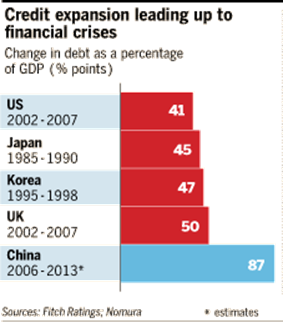
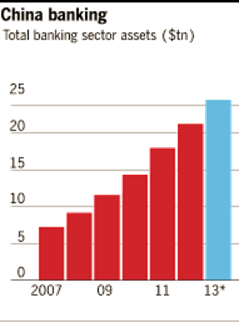
China is doing the global carry trade, and that could pose major risks for U.S. banks.

The conventional wisdom is that China doesn’t hold much direct risk for U.S. banks. Sure, if China were to have a financial crisis, and if it were to fall into recession — a long way to go, considering its recent annual growth of 7% — that would do serious damage to the global economy. American banks and the U.S. economy would feel that. But in terms of direct exposure to China, U.S. banks don’t stand to lose a lot. Read more of this post

Seoul’s Sprouting Startup Scene

Seoul’s Sprouting Startup Scene

Posted 3 hours ago by Sebastien Park (@parksebastien)

Editor’s note: Sebastien Park is an associate at Collaborative Fund.

A couple of years ago, a list of the world’s top startup ecosystems compared cities like Berlin, Tel Aviv, and London to get at what made startups successful. There wasn’t enough data to compare Asia at the time, but there’s one city in the region that’s quietly been developing into another important tech hub: Seoul.

When you first think of South Korea, you might think of Samsung, the singer/songwriter PSY, or even the occasional K-drama. Take a closer look and you’ll find that 80 percent of the population are LTE users, the country is among the top three in terms of mobile app revenue, or that it’s been ranked first by Bloomberg’s Global Innovation Index (based on things like density of public tech companies). Read more of this post

More Chinese firms eye potential of cold chain logistics

More Chinese firms eye potential of cold chain logistics

Staff Reporter

2014-06-15

The fresh food e-commerce sector is expected to post rapid growth over the next five years as several enterprises in China have made investments in the sector, which is expected to stimulate the development of cold chain logistics, reports Guangzhou’s 21st Century Business Herald. Read more of this post

Mountain climbing becomes commercial undertaking in China

Mountain climbing becomes commercial undertaking in China

Staff Reporter

2014-06-15

The controversy surrounding Wang Jing, co-founder of a Chinese outdoor sporting goods brand, who took a helicopter for part of her Mount Everest climb, has exposed once again the prevalence of commercial mountain climbing and other sports in China, reports Guangzhou’s Time Weekly. Read more of this post

Michael Spence: Rebooting China

MICHAEL SPENCE

Michael Spence, a Nobel laureate in economics, is Professor of Economics at NYU’s Stern School of Business, Distinguished Visiting Fellow at the Council on Foreign Relations, Senior Fellow at the Hoover Institution at Stanford University, and Academic Board Chairman of the Fung Global Institute in Hong Kong. He was the chairman of the independent Commission on Growth and Development, an international body that from 2006-2010 analyzed opportunities for global economic growth, and is the author of The Next Convergence – The Future of Economic Growth in a Multispeed World.

JUN 19, 2014

Rebooting China

MILAN – Despite China’s widely discussed economic slowdown, annual GDP growth remains above 7%, implying little cause for alarm – at least for now. The question is whether the government’s efforts to implement structural reforms and transform the economy’s growth model are working – that is, whether internal imbalances continue to threaten long-term economic performance. Given that China remains the global economy’s most important growth engine, the answer matters to everyone. Read more of this post

Hedge fund chiefs and former bankers enter the shadows

June 19, 2014 5:21 pm

Hedge fund chiefs and former bankers enter the shadows

By FT reporters

image002 image001-1

In the six years since the financial crisis, the financial services world has seen all kinds of new institutions take over lending deals and clients that were once the domain of traditional banks. There has also been a parallel transformation: the mutation of bankers into shadow bankers, writes Patrick Jenkins in London. Read more of this post

Mismanagement blamed for New Delhi’s water crisis

June 19, 2014 10:18 am

Mismanagement blamed for New Delhi’s water crisis

By Victor Mallet in Dwarka, IndiaAuthor alerts

Hunting for one of the necessities of life was not how Lakhvinder Singh, a former civil servant from India’s Telecommunications Department, imagined he would spend his otherwise comfortable retirement.

But as the summer temperature tops 45 degrees, Mr Singh and many of the other 500,000 residents of Dwarka – a fast-growing, middle-class satellite city on the western fringes of New Delhi – spend their days haggling with local authorities and gangsters from the neighbouring state of Haryana to buy tanker-loads of water. Read more of this post

Japan tries a new strategy for growth

June 18, 2014 6:34 pm

Japan tries a new strategy for growth

Shinzo Abe’s fresh package is wide-ranging but still timid

When he won a second term as Japan’s prime minister 18 months ago, Shinzo Abe promised to fight the country’s economic malaise with “three arrows”.

In order to boost Japan’s growth rate and end a decade and a half of falling prices, he declared that the country needed an unprecedented monetary loosening, a hefty fiscal stimulus and a strong dose of structural economic reform. Read more of this post

Beware central banks’ share-buying sprees; Revenue raising could ‘contribute to overheated asset prices’

Last updated: June 19, 2014 5:55 pm

Beware central banks’ share-buying sprees

By Ralph AtkinsAuthor alerts

Revenue raising could ‘contribute to overheated asset prices’

Like the rest of us, the world’s central bankers have had to cope since 2008 with low interest rates wiping out returns on their investments. They may attract little sympathy – who was it who slashed rates? But the consequences matter for markets, especially if central banks follow their own injunctions and move into riskier assets, notably equities. Read more of this post

The Corporate Daddy: Walmart, Starbucks, and the Fight Against Inequality; Walmart, the world’s largest public corporation, is a big part of the income-gap problem. It could be a big part of the solution

The Corporate Daddy

Walmart, Starbucks, and the Fight Against Inequality

JUNE 19, 2014

Timothy Egan

For some time now, Republicans in Congress have given up the pretense of doing anything to improve the lot of most Americans. Raising the minimum wage? They won’t even allow a vote to happen. Cleaner air for all? They may partially shut down the government in a coming fight on behalf of major polluters. Add to that the continuing obstruction of student loan relief efforts, and numerous attempts to defund health care, and you have a party actively working to make life miserable for millions. Read more of this post

Why We’re All Crony Capitalists, Like It or Not? Big business and big government are inextricably linked in ways that fans of free markets may not like but can’t really avoid

Why We’re All Crony Capitalists, Like It or Not

JUNE 19, 2014

Neil Irwin

If there’s one thing that populists on the left and right can agree upon, it is disdain for crony capitalism. It is a distaste for the cesspool of Washington influence, in which big-business lobbyists canoodle with lawmakers to get their way. It is anger at corporate welfare enriching America’s biggest companies at the expense of the little guy. Read more of this post

Monkeys Are Better Stockpickers Than You’d Think; Why dart-throwing primates demolish S&P 500 returns and most active fund managers don’t even come close

Monkeys Are Better Stockpickers Than You’d Think

Why dart-throwing primates demolish S&P 500 returns and most active fund managers don’t even come close.

JACK HOUGH

Updated June 19, 2014 4:14 p.m. ET

“A blindfolded monkey throwing darts at a newspaper’s financial pages could select a portfolio that would do just as well as one carefully selected by experts,” Burton Malkiel famously argued in his classic 1973 book, A Random Walk Down Wall Street. Read more of this post

CEOs can no longer do nothing – activist investors won’t let them; Chief executives owe it to shareholders to take bold action to ensure growth

CEOs can no longer do nothing – activist investors won’t let them

Chief executives owe it to shareholders to take bold action to ensure growth

When billionaire investor Carl Icahn started agitating for Apple to return cash to shareholders, the tech giant started to listen Photo: Bloomberg News

By Katherine Rushton

8:55PM BST 18 Jun 2014

One of the most clichéd questions I will admit to asking a chief executive is what keeps them awake at night. They never answer truthfully of course – at least not on the record – but privately they dissemble.

Twenty-odd years ago, the truthful response would have been the threat of a hostile takeover. It was an era of corporate raiding, after all. Read more of this post

Wiranto Sets Record Straight on Prabowo’s Military Discharge; “There were no instructions from military leaders at that time” to kidnap the activists whose protests would eventually lead to Suharto resigning”

Wiranto Sets Record Straight on Prabowo’s Military Discharge

By Jakarta Globe on 04:05 pm Jun 19, 2014

Prabowo Subianto’s dismissal from the military in 1998 is threatening to scupper his presidential hopes.(Reuters Photo/Beawiharta)

  1.  Indonesia’s last military commander under the strongman Suharto has confirmed that presidential candidate Prabowo Subianto, a top Army general at the time, was indeed discharged from the force for ordering the abduction of pro-democracy activists in 1997 and 1998.

Retired general Wiranto said in a televised press conference on Thursday that Prabowo’s dismissal was no secret, and denied that the recently leaked letter of dismissal was confidential. Read more of this post

2014 Election Turning Into a Tale of Deep Divisions

2014 Election Turning Into a Tale of Deep Divisions

By Nurhayat Indriyatno & Kennial Caroline Laia on 07:50 am Jun 20, 2014

Jakarta. Months before a single ballot had been cast in the presidential election, Indonesia’s oldest Islamic party was facing its most serious upheaval ever, one that threatened to tear it apart.

The kernel of that discontent was the unilateral endorsement by Suryadharma Ali — the chairman of the United Development Party (PPP) — of Prabowo Subianto, the presidential candidate from the Great Indonesia Movement Party (Gerindra). Read more of this post

First-Time Indonesian Voters a Force to Reckon With

First-Time Indonesian Voters a Force to Reckon With

By Nadine Sumedi on 08:05 am Jun 20, 2014

An estimated 67 million voters will be voting for the first time, and their ballots on July 9, 2014 will decide who will be the next president of Indonesia. (JG Photo/Afriadi Hikmal)

Jakarta. The presidential election on July 9 is widely anticipated by a range of Indonesians from all walks of life, from young people to the elderly. The event is seen as an important moment for Indonesians to choose the next leader to shape the country’s future. Read more of this post

Impact of Presidential Candidates’ TV Jousts Is Debatable

Impact of Presidential Candidates’ TV Jousts Is Debatable

By Pandu Rachmatika on 01:26 pm Jun 19, 2014

As the presidential election draws closer, public attention has turned to a series of debates between the two candidates. Many TV pundits and commentators firmly believe that the debates will be “game changers” that determine the final outcome of the July election.

That sentiment is supported by survey results announced by several polling outfits such as Cyrus, whose survey in May showed 58 percent of respondents believed the debates could affect their final choice of candidate. The importance of debates would seem to be substantial, however studies done to measure the effect of debates on polls have turned up results that suggest otherwise. Read more of this post

Indonesian Miners Delay Alumina Refinery Plans on Legal Uncertainty

Indonesian Miners Delay Alumina Refinery Plans on Legal Uncertainty

By Wilda Asmarini & Yayat Supriatna on 01:59 pm Jun 19, 2014

Jakarta. Bauxite producers are delaying plans to build alumina refineries in Indonesia due to legal uncertainty over a mineral ore export ban imposed five months ago, government and industry officials said.

Indonesia’s Constitutional Court has yet to decide on a legal challenge against a Jan. 12 export ban on bauxite, nickel and other mineral ores imposed by the government to force miners to build refineries and processing plants. Read more of this post

Indonesia’s Next Leader to Inherit Fragile Economy: Finance Minister

Indonesia’s Next Leader to Inherit Fragile Economy: Finance Minister

By Novrida Manurung & Neil Chatterjee on 08:44 am Jun 20, 2014

Indonesia’s next president will need to discard election rhetoric and focus on raising fuel prices and luring foreign investment to address the budget and current- account deficits, the outgoing finance minister said.

The economy is still fragile and the incoming administration must prepare for investors pulling funds from emerging markets such as Indonesia when the US Federal Reserve starts to increase borrowing costs, M. Chatib Basri said in an interview in Jakarta on Wednesday. Presidential candidates for the July election, Joko Widodo and Prabowo Subianto, have struck a protectionist tone in campaigning, saying they will look to renegotiate some contracts with foreign investors. Read more of this post

Indonesia Leads Defaults as Bakries Face a Third Time Around

Indonesia Leads Defaults as Bakries Face a Third Time Around

By David Yong & Harry Suhartono on 08:56 am Jun 20, 2014

Indonesia’s Bakrie family is seeking to avoid a third default on its companies’ debt in 16 months as the nation accounts for 74 percent of dollar bond delinquencies in Southeast Asia since 2008.

Coal miner Bumi Resources needs at least three quarters of votes at a noon bondholder meeting in Singapore on Friday to approve extending the maturity of $375 million of convertible bonds due in August by seven years, according to a memorandum sent to investors. The company, which was part of a failed venture between the Bakries and British financier Nathaniel Rothschild, missed a June 5 coupon payment and said it probably can’t redeem the notes without the delay. Read more of this post

BRICS bank: a good idea that can do grave harm

BRICS bank: a good idea that can do grave harm

Fri, Jun 6 2014

(The author is a Reuters Breakingviews columnist. The opinions expressed are his own.)

By Andy Mukherjee

SINGAPORE, June 6 (Reuters Breakingviews) – Brazil, Russia, India, China and South Africa want to clone the World Bank. It’s one of those worthwhile initiatives that can end up causing harm.

While the proposed BRICS Bank could help ease the $1.4 trillion-a-year infrastructure financing gap in developing nations, the new institution’s backers might be tempted to use it to further their own economic and foreign policy objectives. That could open the doors wide for projects that are social and environmental disasters. Read more of this post

Out of the 30 highest paid CEOs of listed Singapore companies, only half have long-term incentives worked into their 2013 pay

PUBLISHED JUNE 20, 2014

More firms align CEO pay with shareholder interest

But compliance remains a slow process, according to Freshwater Advisers pay review

SIOW LI SEN

LISEN@SPH.COM.SG   @SiowLiSenBT

They may have to be dragged into the light, but more Singapore companies are complying with the idea of aligning their interest to those of their shareholders – PHOTO: ST

[SINGAPORE] They may have to be dragged into the light, but more Singapore companies are complying with the idea of aligning their interest to those of their shareholders. Read more of this post

Loss-making budget carrier PT Mandala Airlines, which operates under the brand Tigerair Mandala, says it has decided to cease its operations as of July 1 after battling to keep its business alive

Mandala gives up hope, shuts down operations once again

Khoirul Amin, The Jakarta Post, Jakarta | Business | Thu, June 19 2014, 1:14 PM

Loss-making budget carrier PT Mandala Airlines, which operates under the brand Tigerair Mandala, says it has decided to cease its operations as of July 1 after battling to keep its business alive.
The chairman of Mandala’s board of commissioners, Jusman Syafii Djamal, said in a statement on Wednesday that his firm was no longer able to beat pressure in the country’s competitive aviation industry as well as surging operational costs.
“We have looked at every angle to make this work, and have also discussed with other potential strategic and financial investors. In addition to the overcapacity situation that has put significant pressure on yields, the weakening rupiah, which has depreciated more than 20 percent since the beginning of 2013, has also increased operating costs significantly,” he said. Read more of this post

Indonesia’s Financial Services Authority OJK cautious on ‘banking conglomeration’

OJK cautious on ‘banking conglomeration’

The Jakarta Post, Jakarta | Business | Fri, June 20 2014, 8:49 AM

The Financial Services Authority (OJK) will closely supervise what it calls “banking conglomeration”, in which several lenders also operate other businesses either in banking or non-banking sectors.

OJK deputy commissioner Endang Kusulanjari cited Bank Mandiri as an example, saying that the state lender also ran an insurance business through Axa Mandiri and Mandiri Sekuritas, its securities company. According to her, several lenders not only run business in other sectors but some of them also own shares in other banks. Read more of this post

Regulatory Scrutiny Transforms Washington’s Political-Intelligence Business; Alex Vogel Says Greater Compliance Burden is Among Reasons Spurring Shift From a Business in Regulators’ Cross Hairs

Regulatory Scrutiny Transforms Washington’s Political-Intelligence Business

Alex Vogel Says Greater Compliance Burden is Among Reasons Spurring Shift From a Business in Regulators’ Cross Hairs

BRODY MULLINS

Updated June 19, 2014 8:53 p.m. ET

Alex Vogel spent the last decade building a Washington lobbying business with a successful practice feeding investors information about potentially market-moving changes in policy.

But with federal investigators scrutinizing Washington’s interactions with hedge funds and other traders, Mr. Vogel is quitting his firm. His new venture, VogelHood Research, will make all its predictions based on computer algorithms using publicly available information—without ever talking to members of Congress or other policy makers. Read more of this post