Berkshire faces U.S. scrutiny on systemic risk: Bloomberg

Berkshire faces U.S. scrutiny on systemic risk: Bloomberg
6:41pm EST
(Reuters) – The U.S. risk council is looking to determine whether Warren Buffett’s Berkshire Hathaway Inc (BRKa.N: Quote, Profile, Research, Stock Buzz) could be systemically important, a tag that would subject it to stricter regulatory oversight, Bloomberg reported, citing two people familiar with the matter.
The U.S. Financial Stability Oversight Council’s (FSOC) study of Berkshire may not mean the panel is inclined to designate the Omaha, Nebraska-based company, Bloomberg said. (link.reuters.com/guh36v)
Berkshire was not immediately available to comment, while the U.S. Treasury declined to comment.
The council, led by Treasury Secretary Jacob Lew, is evaluating which non-bank financial companies could threaten financial stability if they were to fail, Bloomberg reported.
The council in July designated insurer American International Group (AIG.N: Quote, Profile, Research, Stock Buzz), GE Capital (GE.N: Quote, Profile, Research, Stock Buzz) and Prudential Financial Inc (PRU.N: Quote,Profile, Research, Stock Buzz) as systemically risky, thus bringing them under stricter regulatory oversight.
The risk council, which includes the heads of other financial regulatory agencies, is a relatively new federal body that is testing its powers under the 2010 Dodd-Frank financial reform law.
After a number of non-bank firms struggled during the 2007-2009 financial crisis, Dodd-Frank gave the regulatory council the power to identify potentially risky non-bank firms and regulate them more like banks.

Ayer Rajah could be Singapore’s Silicon Vallery

Thursday, Jan 23, 2014
Grace Chng
The Straits Times
FINALLY, Singapore will have its own hub for start-up companies that thrive from the buzz and shared advice of having like-minded outfits around them.
It could eventually become the Republic’s own Silicon Valley.
The likely move to formalise this centre is one of eight recommendations of the Entrepreneurship Review Committee (EnRC) to foster entrepreneurship here. The recommendations were released last week.
In recent years, excitement over start-ups here has increased. Seed funding, primarily from the Government, has led to many start-ups being founded.
Last year, about 20 start-ups were acquired by various corporations – the ultimate acid test of business success. The largest was the sale of online video streaming portal Viki to Japanese e-commerce giant Rakuten for a reported US$200 million (S$318 million).
A hub for start-ups will help build on this success. Not only is the start-up hub proposal timely, but it should also be anchored by Block 71, amid lush greenery in the Ayer Rajah industrial estate.
Block 71 has already become an unofficial start-up hub, as it is home to more than 100 start-ups, from chapati maker Zimplistic and online travel portal Flocations, to incubators such as NUS Enterprise and tech accelerator Joyful Frog Digital Incubator.
Not a week goes by without a talk, hackathon or an event being held there.
People who want to know about start-ups in Singapore naturally converge at Block 71.
I am privy to discussions on the start-up hub as I am a member of the EnRC.
Suffice to say that the Government is firm on developing the area into Singapore’s Silicon Valley, home to the world’s largest start-ups, venture capital firms and angel investors.
The Ayer Rajah Valley – a name I, not the government agencies, coined – ought to be the start-up hub. It is ready-made, thanks to Block 71.
Having a place to call home is good. But issues still remain.
A quick peek into history: Block 71, a former flatted factory owned by JTC Corporation, began as a special scheme three years ago under the Media Development Authority (MDA) to offer lower rental rates to interactive digital media and gaming start-ups. It also offered space to start-up incubators and venture capitalists.
MDA has 58 tenants including incubators in the five floors it manages. JTC runs the other two floors, also occupied by start-ups.
A few months ago, fears emerged that the precious start-up community in Block 71 would be destroyed when rumours surfaced that the MDA would not renew their three-year leases ending in March this year.
With a long list of start-ups waiting to rent space at Block 71, MDA wanted to turn some tenants out so that others may enjoy the preferential rental rates.
But the MDA delivered a surprise hongbao to its 58 start-up tenants. It informed them last week that their leases will be extended for a year.
A great move from MDA. But what next?
Block 71 will continue to have a scheme of special rental rates for new start-ups.
But who gets to stay and who will get the axe? Will the venture capitalists funding the start-ups have a say? Or will this be the job of bureaucrats?
These issues need settling.
One day, hopefully not too far in the future, Singapore’s own Apple and Google will emerge from the Ayer Rajah Valley.

China Auditors Barred for Six Months for Not Aiding SEC Probes

China Auditors Barred for Six Months for Not Aiding SEC Probes

Chinese affiliates of the four largest accounting firms were barred for six months from leading audits for U.S.-listed companies after failing to comply with Securities and Exchange Commission orders for documents at the heart of a series of accounting fraud probes.

The auditors’ “actions involved the flouting of the commission’s regulatory authority, which may not be as egregious as, say, accounting fraud, but is still egregious enough that it weighs against leniency,” U.S. Administrative Law Judge Cameron Elliot wrote in a decision posted today on the SEC’s website. The firms were also censured.

The firms receiving the bans are Deloitte Touche Tohmatsu CPA Ltd., Ernst & Young Hua Ming LLP, KPMG Huazhen and PricewaterhouseCoopers Zhong Tian CPAs Ltd. BDO China Dahua Co., Ltd. — now called Dahua CPA — was only censured since it had already withdrawn from the U.S. market.

The SEC filed an action against the auditors in 2012 after struggling for years to obtain information for dozens of accounting fraud probes at China-based companies. After an agreement between the two countries allowed some information to be shared, the accounting firms argued, unsuccessfully, that the SEC was getting what it needed and that the case jeopardized the listings of hundreds of Chinese companies trading in the U.S.

Dahua’s lawyer Deborah Meshulam declined to comment. Phone calls and e-mails to the other firms were not immediately answered.

The auditors are caught between U.S. law, which requires them to turn over all documents requested by regulators, and Chinese law, which prohibits transferring data to foreign parties that might contain state secrets. While the May accord between the two countries opened the door for some cooperation, it didn’t allow for inspections, a key requirement for audit firms doing work for U.S.-listed companies.

“To the extent Respondents found themselves between a rock and a hard place, it is because they wanted to be there,” the judge wrote. “A good faith effort to obey the law means a good faith effort to obey all law, not just the law that one wishes to follow.”

To contact the reporter on this story: Alan Katz in Washington at akatz5@bloomberg.net

Argentine Default-Era Chaos Relived as Blackouts Follow Looting

Argentine Default-Era Chaos Relived as Blackouts Follow Looting

For Dominga Kanaza, it wasn’t just the soaring inflation or the weeklong blackouts or even the looting that frayed her nerves.

It was all of them combined.

At one point last month, the 37-year-old shop owner refused to open the metal shutters protecting her corner grocery in downtown Buenos Aires more than a few inches — just enough to sell soda to passersby on a sweltering summer day.

“It was scary,” said Kanaza as she yelled out prices to customers while sipping on mate, Argentina’s caffeine-rich herbal drink. The looting that began in neighboring Cordoba province when police officers left streets unguarded to strike for higher pay had spread to the outskirts of Buenos Aires, sparking panic in Kanaza’s neighborhood. The chaos, she said, was like nothing she had seen since the rioting that followed the South American nation’s record $95 billion default in 2001.

Thirteen years after that collapse, President Cristina Fernandez de Kirchner is running out of time to avert another crisis. The policy mix that Fernandez and her late husband and predecessor, Nestor Kirchner, used to usher in 7 percent average annual growth over the past decade — higher government spending financed by printing money — is unraveling.

Inflation soared to 28 percent last year, according to opposition lawmaker Patricia Bullrich, who divulges monthly estimates for economists cowed into silence by Fernandez’s crackdown on price reports that clash with official figures. By the government’s count, inflation was less than 11 percent.

Peso Tumble

The peso sank 3.5 percent to a record low of 7.14 per dollar yesterday, according to Banco de la Nacion Argentina, and has plunged more than 25 percent in the past 12 months. That’s its worst selloff since the devaluation that followed the default. Currencies from only three countries in the world have fallen more: war-torn Syria, Iran and Venezuela.

Power outages like the one that sunk Kanaza’s shop into darkness are becoming more frequent, deepening the economic slump, after the nation’s grid atrophied under a decade of government-set electricity price controls. The International Monetary Fund, which censured Argentina last year for misreporting inflation, predicts economic growth will slow to 2.8 percent this year, about half the 5.1 percent average across developing nations.

Fernandez’s biggest financial problem is the loss of foreign reserves. They’ve tumbled 44 percent in the past three years to $29.5 billion as prices on the country’s soy and wheat exports slumped and Argentines circumvented currency controls created to keep dollars onshore. The government sought to stiffen those restrictions again yesterday, limiting people to two online purchases a year from overseas providers.

Default Concern

For a country that remains locked out of international debt markets as it haggles with billionaire hedge fund manager Paul Singer over lawsuits stemming from the default, the reserves are its main source of dollars to pay holders of $30 billion of bonds who accepted restructuring terms. When other foreign-currency obligations are included, the amount owed swells to $50 billion.

Investors are bracing for the possibility of another default. The country’s average dollar bond yield of 12 percent is the highest among major developing nations after Venezuela. Trading in swap contracts that insure bonds shows investors see a 79 percent probability of a halt in payments over the next five years, a reflection in part of concern that Singer’s demand of full repayment on the securities he kept from the 2001 default will disrupt debt servicing.

New Cabinet

“We’re seeing some sort of day of reckoning,” said Diego Ferro, co-chief investment officer in New York at Greylock Capital Management, which has been investing in the country’s debt since the 1990s. “The adjustment will have to happen if Argentina doesn’t want to hit a wall before 2015.”

Fernandez, 60, has overhauled her cabinet and reworked some policies in a bid to stem the capital flight. In her first day back on the job in November following surgery to remove a blood clot near her brain, she replaced the economy minister, cabinet chief, agriculture minister and central bank president. A day later, Guillermo Moreno, the trade secretary who played the strongman enforcing price controls, was gone.

The new cabinet pledged to work with the IMF to improve data, began talks to settle $6.5 billion of overdue debt with Paris Club creditor nations and unveiled plans to compensate Spain’s Repsol SA for the seizure of its local oil unit in 2012. Bonds advanced, driving yields on the country’s benchmark securities to a one-year low of 11.07 percent on Nov. 29.

Patagonia Getaway

Ferro doubts the measures are enough. Bolder steps, such as reaching a deal with Singer to regain access to overseas markets and lifting currency controls, are needed to regain investor confidence, he said. The bond rally began to falter in early December. By mid-month, all the gains had been erased.

An Economy Ministry spokeswoman didn’t return telephone calls seeking comment on the government’s financing plans.

Fernandez is giving no indication of what her next move is. After re-appearing following the five-week absence for surgery, she vanished again, spending much of December holed up in her 5,600-square-foot (520 square meters) brick villa in Patagonia. She went another five weeks without making a public appearance before unveiling a new student aid program before supporters in the presidential palace last night.

And that’s perhaps what angers Argentines like Miguel Llanes the most. While the looting spread across the country from Cordoba and the blackouts dragged on day after day in the capital city, Fernandez was nowhere to be seen. Llanes, unable to open his curtain shop in downtown Buenos Aires for over a week, vented by joining protesters who were burning tires and garbage in the streets.

“Where was the president?” he shouts.

And then he raises a question that holders of $50 billion of Argentine bonds are dying to know.

“How long will this last? They’ve spent all the money.”

To contact the reporters on this story: Charlie Devereux in London at cdevereux3@bloomberg.net; Camila Russo in Buenos Aires at crusso15@bloomberg.net

Rajan Rate Revamp Hinges on Curbing India Fiscal Spending Sprees

Rajan Rate Revamp Hinges on Curbing India Fiscal Spending Sprees

For India central bank Governor Raghuram Rajan to more than halve Asia’s highest inflation rate, he’ll face his biggest challenge yet: Convincing the country’s politicians to spend less money.

A Reserve Bank of India panel proposed adopting a 4 percent consumer-price-inflation target by 2016 as part of an overhaul that would also establish an independent monetary policy committee. The moves, which signal elevated interest rates, would require lawmakers to curb spending and change the statute that governs the RBI.

“If the government doesn’t commit itself to cutting down the deficit, then the monetary policy framework can’t do much,” said Rupa Rege Nitsure, an economist at Bank of Baroda in Mumbai and a member of the panel appointed by Rajan that made the proposals. “It critically hinges on the government cutting down wasteful expenditure.”

Rajan’s bid to lower consumer prices exceeding 9 percent in Asia’s third-biggest economy risks stalling without backing from the party that wins elections due by May. Prime Minister Manmohan Singh’s government has struggled to contain spending and a plunge in the rupee, which has stoked the cost of everything from onions to energy.

“Given the inclination of the political establishment for fiscal profligacy by way of huge welfare spending, the monetary policy framework might face hurdles,” said Arun Singh, an economist at Dun & Bradstreet Information Services India Pvt. in Mumbai. “What is now needed is for the government to come forward and say whether it’s ready to do the right thing.”

Price Surge

Consumer prices rose 9.87 percent in December from a year earlier, the fastest pace in a basket of 17 Asia-Pacific economies tracked by Bloomberg. The gauge has averaged 9.88 percent since it was created in 2011 as supply bottlenecks in everything from food to fuel stoke price rises.

The RBI currently uses wholesale-price inflation as the main cost-of-living measure to guide policy. The index, which conflates retail and producer prices and fails to reflect services, is more than six decades old.

Wholesale price inflation was 6.16 percent in December, the lowest in five months. It has averaged 6.65 percent in data compiled by Bloomberg going back to April 2005.

RBI rate policy should aim to reduce CPI to 8 percent within one year and 6 percent by 2016, at which point the 4 percent target would be adopted, the committee led by RBI Deputy Governor Urjit Patel said. The target should be at the center of a plus-or-minus 2 percentage point band, and there should be a rolling two-year horizon for meeting it, the panel said.

Premature

Arvind Mayaram, India’s Economic Affairs secretary, told ET Now television yesterday that it was premature to consider using CPI as a policy anchor due to structural issues and difficulties in curbing food inflation.

Finance Minister Palaniappan Chidambaram, who is attending the World Economic Forum meetings, said in Davos yesterday that he hadn’t seen the RBI report proposing a 4 percent CPI target. He said that a WPI target of 4 percent would be “reasonable.”

“We will never, never again allow our fiscal consolidation to weaken,” Chidambaram said in Davos. “That is priority number one.”

The minister reiterated on Jan. 15 that he will achieve his target of narrowing the fiscal deficit to a six-year low of 4.8 percent of gross domestic product this financial year. The shortfall in the eight months through November reached 94 percent of the full-year target of 5.4 trillion rupees ($87 billion).

Rural Wages

Singh said earlier this month that his government could have done better at controlling price rises. He more than doubled the guaranteed support prices for wheat and rice to boost the wages of Indian farmers, started a program to employ one adult in every poor rural household, and enacted a law that will provide cheaper food to about two-thirds of the country’s 1.2 billion people.

The RBI panel said the Indian government should reduce its budget deficit to 3 percent of GDP by March 2017, and commit to eliminating administered prices, wages and interest rates.

Those conditions might be “difficult to meet,” Standard Chartered Plc said in a note. “The pace of fiscal deficit consolidation and the move away from administered prices are political decisions over which the RBI has little control.”

Inflation-targeting regimes fall short of responding to asset price bubbles and often cannot respond appropriately to supply shocks, according to Deutsche Bank AG.

‘Out-Of-Fashion Club’

“India seems poised to join this out-of-fashion club,” Taimur Baig and Kaushik Das, Deutsche Bank economists in Singapore and Mumbai, wrote in a research report. “The road to inflation targeting is going to be long and hard, well beyond the 24 months envisaged in this well-intentioned report.”

Rajan surprised economists last month by holding the benchmark repurchase rate at 7.75 percent instead of adding to increases totaling 50 basis points since taking over the RBI. He will leave the rate unchanged at the next meeting on Jan. 28, according to all 18 economists in a Bloomberg News survey.

The rupee, which has fallen about 13 percent in the past year, strengthened 0.1 percent to 61.83 per dollar in Mumbai yesterday. The S&P BSE Sensex (SENSEX) gained 0.4 percent, while the yield on the 10-year bond rose to 8.61 percent from 8.55 percent on Jan. 21.

RBI Independence

The 1934 Reserve Bank of India Act says the federal government may give direction to the central bank on what it considers the public interest. The provision has never been used and doesn’t mention monetary policy, according to Chakravarthy Rangarajan, a former RBI governor who is chairman of Singh’s Economic Advisory Council.

“The Reserve Bank of India has taken decisions which it considers appropriate,” he said in an Oct. 9 interview. “Obviously the matter is discussed with the government, but I do not doubt the ability or independence of the central bank.”

Four previous reports have called for an independent monetary policy committee to set interest rates, the RBI panel said. That includes one in 2002 by former governor Y.V. Reddy suggesting legislative changes to the RBI Act.

Both inflation targeting and the establishment of a monetary policy committee require legal changes, according to Dhirendra Swarup, former expenditure secretary and member of a government panel set up to reform financial sector regulations. The RBI panel proposed a committee made of the governor, two other central bank officials and two outsiders to make decisions.

Sustainable Growth

Both the ruling Congress party and main opposition Bharatiya Janata Party would benefit from more responsible spending, Brinda Jagirdar, a former chief economist at State Bank of India, said in a telephone interview.

India’s economy grew 8.5 percent on average from 2009 to 2011, compared with 9.7 percent for China during that period, according to International Monetary Fund data. Gross domestic product in India expanded 5 percent last year, the slowest rate since 2003, and will probably grow at that pace in the fiscal year ending March 31, according to central bank estimates.

“A large fiscal deficit is the result of government spending, which in turn takes money away from the private sector and crimps investment,” she said. “So I don’t see any new government having a quarrel with the report’s logic. It in fact will help them form policy for sustainable economic growth.”

To contact the reporters on this story: Unni Krishnan in New Delhi at ukrishnan2@bloomberg.net; Kartik Goyal in Mumbai at kgoyal@bloomberg.net

Canada Loses Haven Status as Dollar Doesn’t Spark Exports

Canada Loses Haven Status as Dollar Doesn’t Spark Exports

Canada was the envy of developed economies following the global recession, boasting the world’s soundest banks and a robust housing market that helped push its currency above parity with the U.S. Those days are gone.

The dollar plunged to a four-year low yesterday and returns on Canada’s benchmark stock index were less than half of U.S. equities last year, underscoring an economy beset by the slowest rebound in exports since World War II. Consumers are tapped out with record household debt and governments are more focused on erasing budget deficits than providing stimulus.

With the outlook for other major economies improving and “the lack of job growth and economic growth here in Canada, comparatively I think we’re going to be sub-par for a little while at least,” said Brad Bardua, chief financial officer of Avigilon Corp. (AVO), the Vancouver-based maker of digital surveillance systems.

The recovery is so sluggish that Bank of Canada Governor Stephen Poloz may move as early as today to signal easier monetary policy while the Federal Reserve takes steps to taper stimulus, according to Gluskin Sheff & Associates Chief Economist David Rosenberg in Toronto and Sebastien Galy, senior forex strategist at Societe Generale SA in New York.

The International Monetary Fund yesterday forecast Canada’s economy would expand 2.2 percent this year, trailing both the U.S. and U.K. among Group of Seven countries. In 2009, Canada was the leader of the G-7 pack.

Missing Improvement

“The improvement in Canada hasn’t really been there since we started from a higher level,” said Malcolm J. Jones, a portfolio manager at Adroit Investment Management Ltd. in Edmonton, Alberta, who oversees about C$500 million ($456 million) of fixed-income securities.

The world’s 11th-largest economy, which relies on exports for about 30 percent of output, is struggling to build momentum for shipments abroad even as the dollar falls and the U.S. economy gathers steam. While the U.S. takes in about 75 percent of Canada’s exports, energy shipments have declined since 2011 as U.S. supplies have grown. Exports of metals have also fallen while auto and parts shipments are little changed over the past year.

“Fundamentally, Canada is a trees and rocks economy,” said David Garofalo, chief executive officer of Toronto-based HudBay Minerals Inc. by phone. “The weakness in the Canadian dollar reflects a softening of the commodities space.”

The Canadian dollar dropped beyond C$1.10 per U.S. dollar yesterday for the first time since 2009. At that time, the country was emerging from recession, buoyed by banks that remained solvent through the credit crisis and consumer that were ready to spend. The currency remains stronger than it was at any point from 1976 to 2006 — as it averaged 1.2870 per U.S. dollar during that period.

Stagnant Exports

Exports have been stagnant for more than two years, with shipments 19 percent below where they would be if the recovery followed the average of the last four economic cycles, according to Statistics Canada data compiled by Bloomberg.

“The big gap between our exports and the U.S. economy is the result of lost market share,” said Krishen Rangasamy, senior economist at National Bank Financial in Montreal. “That is the legacy of 10 years of the loonie appreciating,” he said, using the nickname for the Canadian dollar.

Canada’s benchmark Standard & Poor’s/TSX Composite Index has risen 9.1 percent over the past year, trailing the 24 percent gain for the Standard & Poor’s 500 Index, the third straight year of underperformance. Canadian government bonds due in five years or less yield more than U.S. Treasuries, with longer-dated U.S. debt carrying higher yields.

Canada’s manufacturing base has shrunk, meaning a weaker currency will provide less of a spark that it would have in the past.

Job Losses

Bombardier Inc. (BBD/B) said yesterday it was cutting 1,700 jobs in its aerospace division, or about 6 percent of the work force. The Montreal-based company is working to produce its new CSeries regional jet, a plane whose debut has been pushed back four times.

In December, Battle Creek, Michigan-based Kellogg Co. (K) closed a plant in London, Ontario, firing 500 workers who had produced Corn Flakes and All-Bran cereal. Weeks earlier, HJ Heinz Co., the ketchup-maker owned by Warren Buffett’s Berkshire Hathaway Inc. and 3G Capital, closed its plant in Leamington, Ontario, cutting 740 jobs.

“The tomatoes are going to go to the plants that have the low production costs,” Buffett said in November at an event in Detroit. “It’s really a question of having an unprofitable plant and concentrating production in a more profitable plant.” Heinz is based in Pittsburgh.

BlackBerry Cuts

Waterloo, Ontario-based BlackBerry Ltd. (BBRY) cut 4,500 jobs and wrote down $960 million of inventory in September. The smartphone maker, whose devices were once known as CrackBerrys for their addictive nature, now holds less than 3 percent of the global smartphone market.

Canada added a net 102,000 jobs last year, a 0.6 percent increase that was the slowest since 2009, Statistics Canada reported this month.

Stimulus options are limited. Canadian consumers, who took advantage of low interest rates and led the recovery by buying houses and cars, now face record levels of debt as a share of income. By contrast, U.S. debt burdens have been declining since a peak in 2007.

Governments, both federal and provincial, are paring deficits. While opposition lawmakers called for stimulus after the latest employment report, Finance Minister Jim Flaherty, who may introduce a new fiscal plan as early as next month, has ruled out major spending initiatives as the government seeks to return to surplus by the year beginning April 2015.

Short-Sighted Analysts

Prime Minister Stephen Harper said in an interview last week that analysts focusing on the sliding currency and weak jobs reports are being short-sighted.

The Canadian government has been “pleasantly surprised” by the strength of the Canadian economy since the end of the global recession, in the absence of similar growth for the country’s largest trading partner, Harper said.

“The strength of the American economy is a big deal,” Harper said Jan. 16. “For us to have better results we need to see the American economy expand.”

Economists are counting on the weaker loonie to boost exports and revive the economy. The Canadian dollar has dropped 10 percent in the past three months and foreign investors cut purchases of the country’s bonds last year, showing the country’s status as a haven is over.

Foreign investors bought a net C$36.9 billion of Canadian bonds through November last year, Statistics Canada reported last week, down 47 percent from C$69.8 billion in the same period of 2012.

Currency ‘Give-Back’

The currency’s drop “is a give-back to some degree,” said Andrew Gretzinger, fixed income portfolio manager with Manulife Asset Management in Toronto, which oversees C$16 billion in assets. “Canada had done better during the crisis.”

Canada’s superlative economic performance following the global recession made the economy a magnet for foreign investment and helped Mark Carney, then Bank of Canada governor, land a new job running the Bank of England.

“Canada is boring, it’s our trademark,” said Adroit Management’s Jones. “All of the exciting money is rushing out of Canada.”

Governor Poloz, who spurred the currency’s plunge by dropping a bias in October to raise interest rates, projects the weakness will help exports recover after the country recorded 23 straight monthly trade deficits.

Rate Announcement

Poloz will update the central bank’s economic forecasts and make an interest rate announcement at 10 a.m. in Ottawa today. While all 21 economists surveyed by Bloomberg forecast he’ll keep the main interest rate at 1 percent, investors will be looking to see if he introduces a bias to lower rates in the accompanying statement.

None of the 17 economists surveyed by Bloomberg News last week predicted the central bank would introduce an easing bias today.

Exports and investment have been disappointing and inflation has been “lower than we can explain,” Poloz said in a Dec. 18 interview in Ottawa.

To date, Poloz has pleaded for patience. The drop in the Canadian dollar is more reflective of the U.S. rebound, he said, and that will turn into more exports and spending.

“As we get a bottom in this through stronger exports from the stronger U.S. economy we are going to see, I think, the manufacturing sector recovering,” Poloz said. “That’s just the nature of how it works.”

Other commodity-linked currencies have been sliding against the U.S. dollar. The Australian dollar is down 8.7 percent in the past three months, while the South African rand is off 9.1 percent.

The depreciation is a boon for Avigilon, Bardua said. “It makes certain aspects of our business a little more costly but that’s overshot by the revenue side.”

To contact the reporter on this story: Greg Quinn in Ottawa at gquinn1@bloomberg.net

With Asia Conquered, Golf Looks to Latin America

With Asia Conquered, Golf Looks to Latin America

Globalization is a focus not just for the business elite gathered this week in Davos but also for professional golf.

The Masters Tournament, the U.S. Golf Association and the R&A have teamed up to bring a golf tournament to Argentina as part of “an initiative for the development of the game in Latin America.” The Latin America Amateur Championship will be Jan. 15-18, 2015, at Pilar Golf Club in Buenos Aires, giving 120 of the region’s top amateurs a chance to earn a spot in the Masters.

Recent years have seen golf’s growth mirror economic development in emerging markets. Leader boards at major tournaments are speckled with players from Europe, Asia and Australia (with some alarmist articles spouting concern at the foreign threat to American dominance in the sport). In 2009, the Masters and the R&A established the Asia-Pacific Amateur Championship, whose winner also has the chance to play at Augusta. The culmination of the sport’s globalization will occur in 2016, when golf will be included in the Summer Olympics in Rio de Janeiro.

Expansion to Latin America also demonstrates a cultural shift in golf, a sport traditionally associated with wealth and nobility and whose cost, space and equipment requirements are generally too great for poorer populations. The late Hugo Chavez criticized golf as “a bourgeois sport,” as his loyalists tried to close golf courses in Venezuela. The emergence of players such as Argentina’s Angel Cabrera and Colombia’s Camilo Villegas on the PGA Tour has gone a long way to reshape golf’s image.

Of course, there are still challenges to growing a sport in a part of the world defined by poverty and corruption. Look no further than the mess leading up to this year’s World Cup, as Brazil struggles to meet budgets and construction deadlines for a sport that already has an enormous following in the region. But with many beautiful golf courses in place and the backing of the sport’s major governing bodies, Latin America looks to be the new frontier in golf’s push to go global.

(Kavitha A. Davidson is a Bloomberg View columnist who writes about sports. Follow her on Twitter at @kavithadavidson.)

China’s Epic Offshore Wealth Revealed: How Chinese Oligarchs Quietly Parked Up To $4 Trillion In The Caribbean

China’s Epic Offshore Wealth Revealed: How Chinese Oligarchs Quietly Parked Up To $4 Trillion In The Caribbean

Submitted by Tyler Durden on 01/21/2014 20:02 -0500

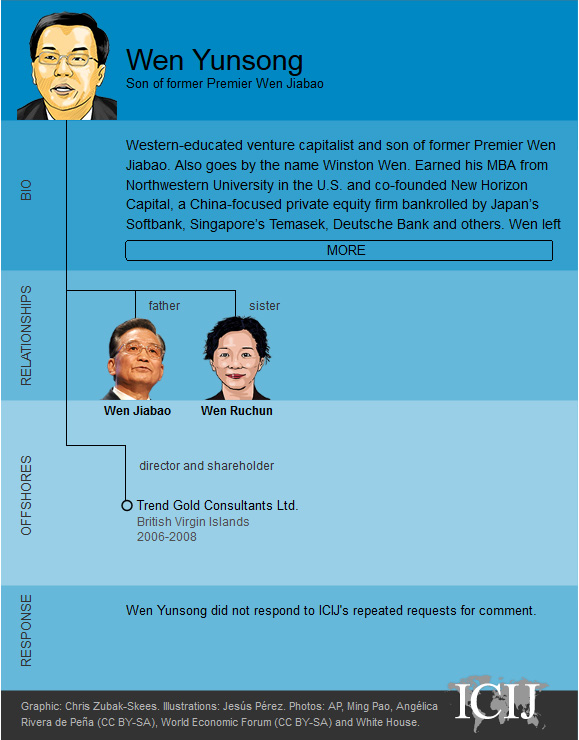
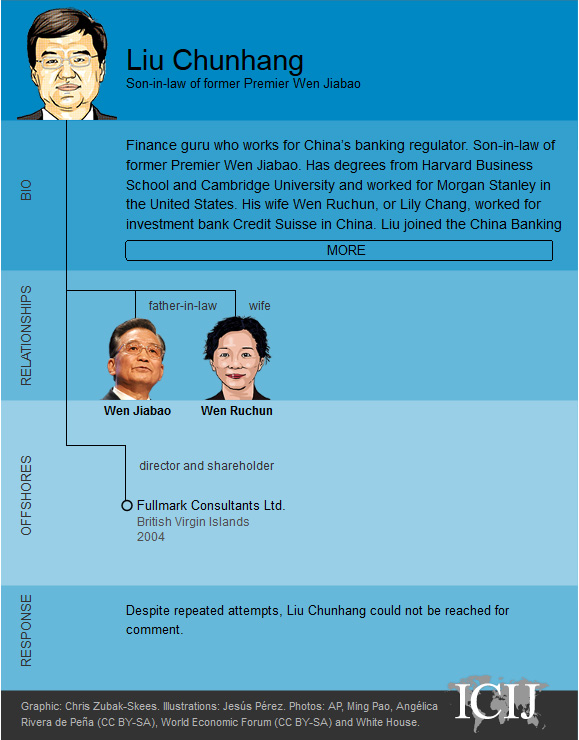
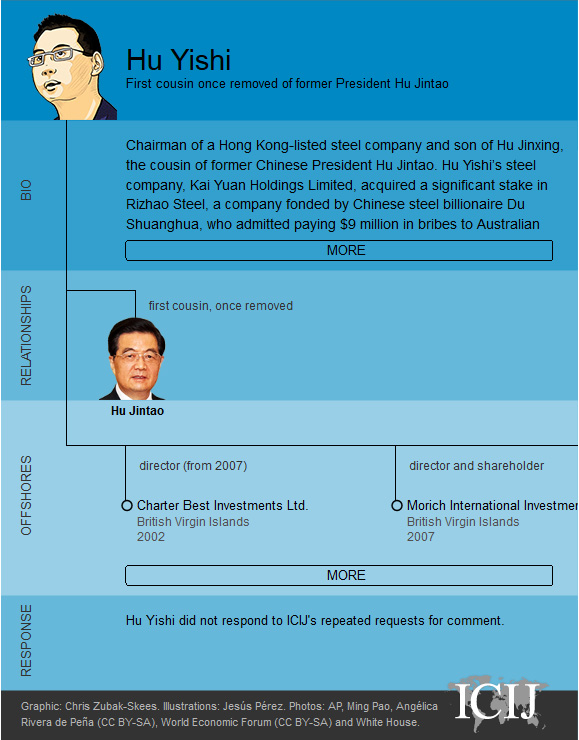
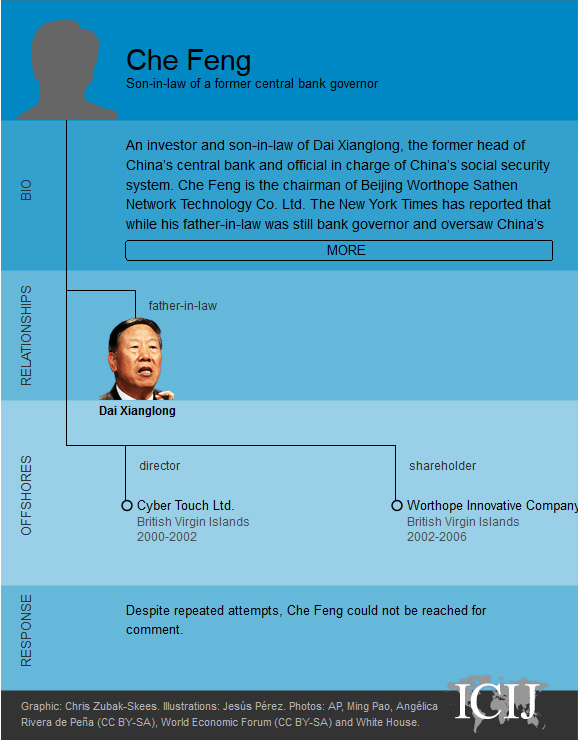
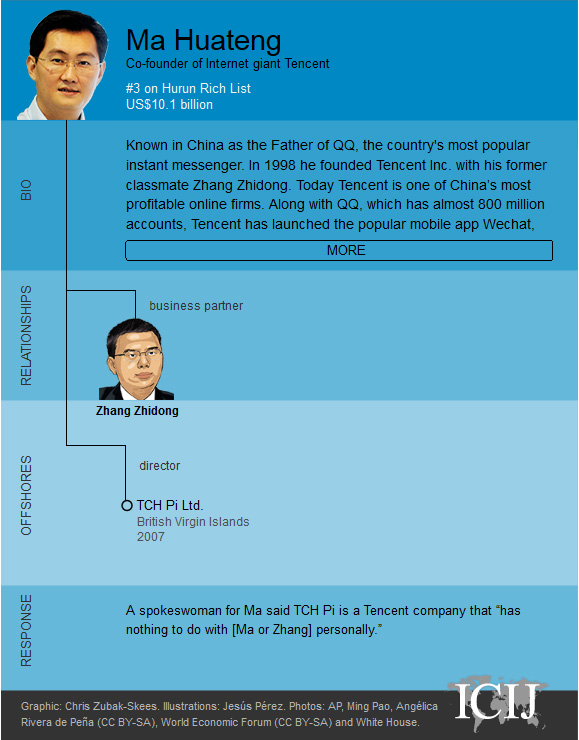
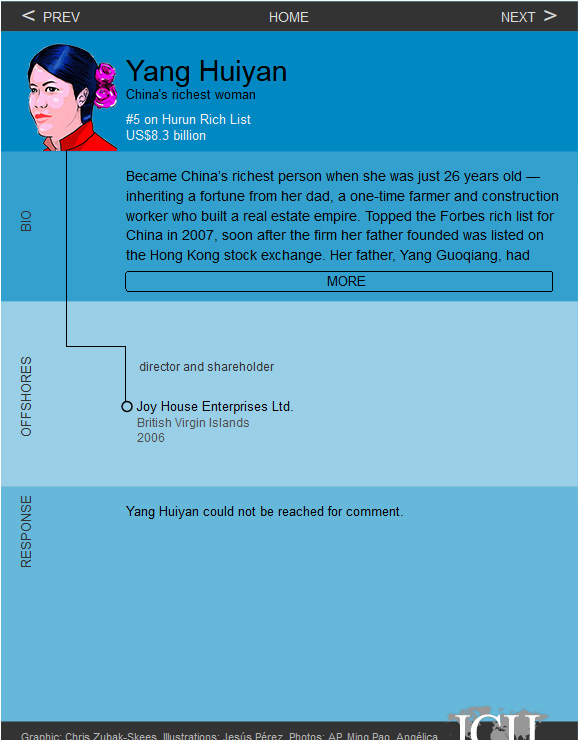
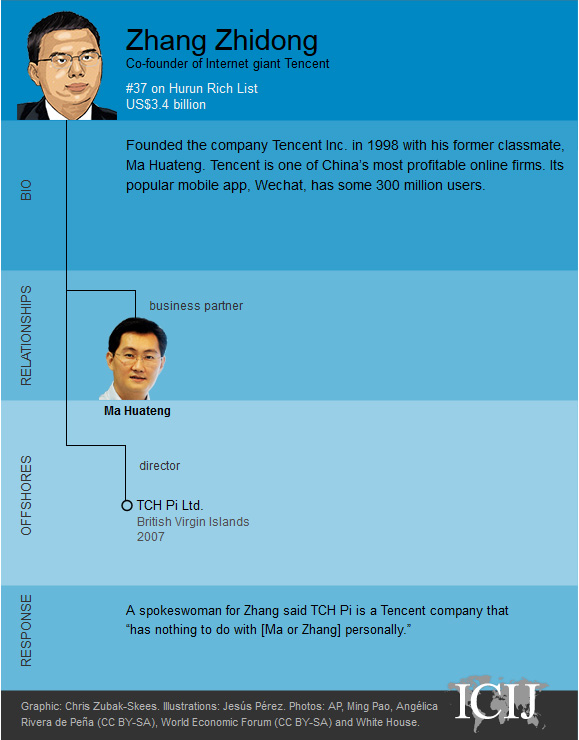
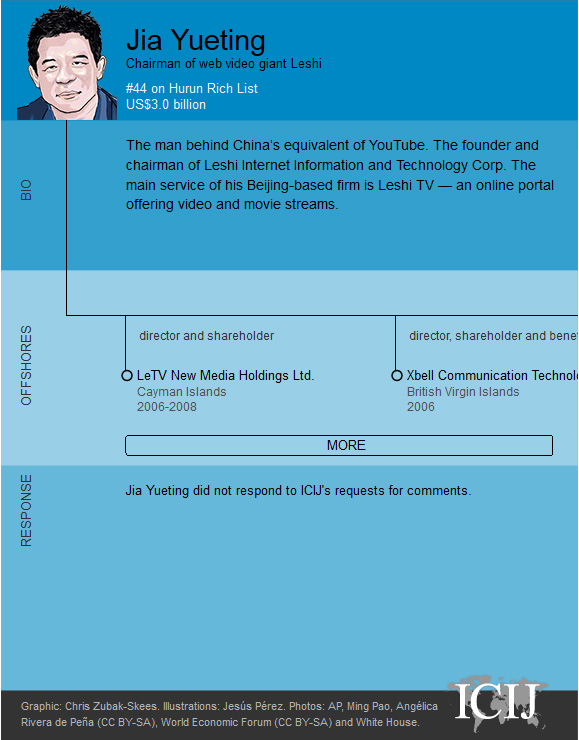
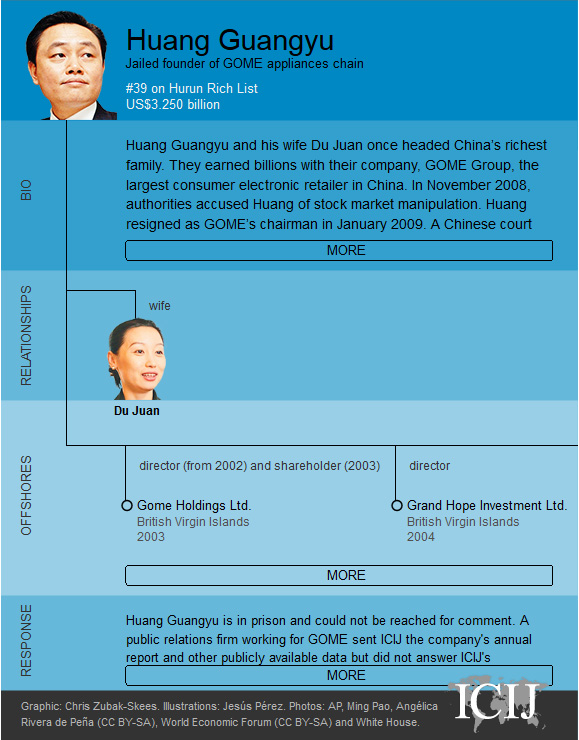
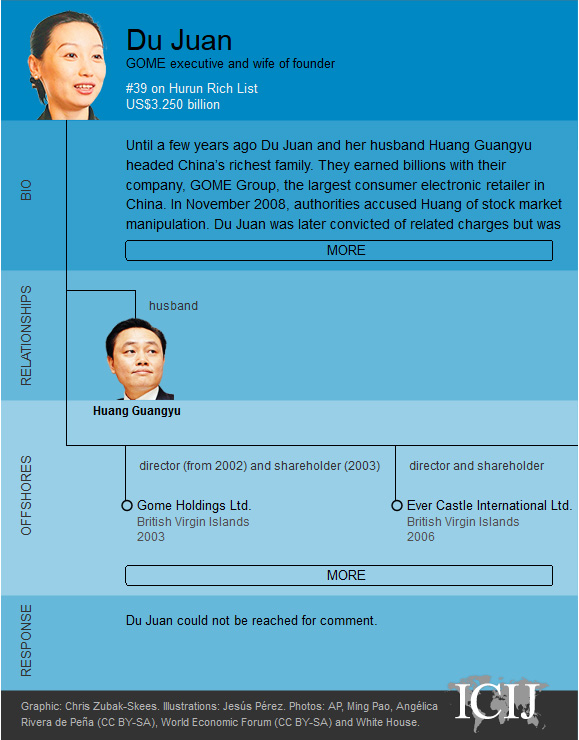
ICIJ 1 ICIJ 2 ICIJ 3 ICIJ 4 ICIJ 5 ICIJ 6 ICIJ 7 ICIJ 8 ICIJ 9 ICIJ 10 ICIJ 11 ICIJ 12 ICIJ 13 ICIJ 14 ICIJ 15 ICIJ 16

The last time the International Consortium of Investigative Journalists made a splash in the financial media was in April of last year year when it disclosed a trove of secret documents revealing a massive treasury of offshore wealth parked away from taxation-happy host governments. The context was clear: in the aftermath of the Cyprus deposit confiscation, public opinion had to turn against those who were exploiting offshore tax loophole in order to avoid a panic that the same “bail in” could happen to the common man. Read more of this post

Buffett’s Dairy Queen Targets Asia With Red-Bean Flavor; “We can leverage our people, we can leverage our supply chain”

Buffett’s Dairy Queen Targets Asia With Red-Bean Flavor

International Dairy Queen Inc., the fast-food chain owned by Warren Buffett’s Berkshire Hathaway Inc., opened locations in Taiwan and Vietnam as it targets expansion beyond the U.S and Canada. Read more of this post

Asian players develop an appetite for risky commodities trading

Asian players develop an appetite for risky commodities trading

Tuesday, 21 January, 2014, 8:49am

Ray Chan and George Chen

Capital-rich Asian firms show interest as Western banks exit sector

While Western financial giants have been exiting the high-risk, high-reward commodities trading business, capital-rich Asian firms, including state-owned banks and brokerages from China, have seized the opportunity to enter the market. Read more of this post

China Bailout Costs Jump Seen in Policy Bank Yield Surge

China Bailout Costs Jump Seen in Policy Bank Yield Surge

Doubts over the Chinese government’s ability to cope with escalating debt are showing up in record borrowing costs for the nation’s policy banks.

The average yield premium over the sovereign for five-year debt sold by China Development Bank, Export-Import Bank of China and Agricultural Development Bank of China widened 90 basis points from an August low to 142 basis points on Jan. 17, the highest in Chinabond data going back to 2007. The gap was 138 basis points yesterday. Yields have climbed on safer assets, including CDB’s, as delays in restructuring bad loans are stretching the central government’s ability to guarantee debt, Bank of America Merrill Lynch wrote in a report this week. Read more of this post

Beijing’s ‘Rat Tribe’ Scurry From High Costs Underground

Beijing’s ‘Rat Tribe’ Scurry From High Costs Underground

By Neil Connor on 3:05 pm January 22, 2014.

Beijing. Near Beijing’s $600 million Olympic stadium, migrant worker Ye Yiwen, her husband and two children cram into a tiny underground room, sheltering from the Chinese capital’s biting winter and soaring property prices. Read more of this post

Australia’s Housing Boom Spreads Beyond Sydney

Australia’s Housing Boom Spreads Beyond Sydney

Prices Fuel Debate Over Whether Central Bank Should Act

RACHEL PANNETT

Jan. 21, 2014 1:57 p.m. ET

Record-low interest rates and looser mortgage lending are boosting property speculation in Australia, with much of the recent strength in house prices driven by investors. The WSJ’s Rachel Pannett explains that while there is no bubble yet, there are worrying signs. Read more of this post

China IPOs No Lure as Investors Empty Trading Accounts; A-share markets shed US$176bn after China’s IPO ban lifted

China IPOs No Lure as Investors Empty Trading Accounts

Yao Lina, an accountant in Shanghai, says the 43 percent opening-day gain for China’s first initial public offering in more than a year isn’t enough to bring her back to the $3.2 trillion equity market. Read more of this post

Chinese Investors Try Police to Recoup Funds; Customers Say Product Is in Default; Trouble in Shadow Lending

Chinese Investors Try Police to Recoup Funds

Customers Say Product Is in Default; Trouble in Shadow Lending

LINGLING WEI

Updated Jan. 21, 2014 2:14 p.m. ET

BEIJING—In the latest sign of trouble in China’s loosely regulated shadow-banking sector, angry bank and insurance customers who bought an investment product that they say has since failed appealed to authorities to help them recoup about one billion yuan ($167 million). Read more of this post

It’s farewell to the golden chopsticks; President Xi Jinping has inaugurated an era of Chinese abstemiousness

January 21, 2014 3:26 pm

It’s farewell to the golden chopsticks

By Patti Waldmeir in Shanghai

President Xi Jinping has inaugurated an era of Chinese abstemiousness, writes Patti Waldmeir

This is normally the season to eat, drink and give away iPads in China. Before lunar new year, companies, institutions and government departments traditionally stage lavish parties in bling-bedecked venues where every raffle ticket is a winner. Think office Christmas parties, taken to another level. Read more of this post

Chinese leaders’ kin stash riches in offshore holdings: probe

Chinese leaders’ kin stash riches in offshore holdings: probe

Wednesday, January 22, 2014 – 10:55

AFP

HONG KONG – Relatives of top Chinese leaders including President Xi Jinping and former premier Wen Jiabao have used offshore tax havens to hide their wealth, according to a mammoth investigation released Wednesday. Read more of this post

Dukes of Chinese Moral Hazard; A Risky Shadow-Bank Investment Product May Not Be Allowed to Fail

Dukes of Chinese Moral Hazard

A Risky Shadow-Bank Investment Product May Not Be Allowed to Fail

AARON BACK

Jan. 21, 2014 1:12 a.m. ET

EM-AY683_CHINAH_NS_20140121140003

The prospect of a default is haunting China, with the country’s largest bank at the center. At issue are 3 billion yuan ($490 million) worth of investment products, yielding as much as 11.5%, that Industrial and Commercial Bank of China601398.SH +0.88% sold to high-net-worth customers. They are based on loans made by China Credit Trust Co., a shadow bank, to Zhenfu Energy Group, a debt-laden coal miner. China Credit Trust warned last week it may not be able to repay customers when the products mature at the end of this month. Read more of this post

Jiang Rises From Coal Mine to Davos Peak as ICBC Shines

Jiang Rises From Coal Mine to Davos Peak as ICBC Shines

As a young man during China’s Cultural Revolution, Jiang Jianqing was sent to the countryside to work as a farmer and a coal miner. This week, he arrives at the top of a Swiss mountain as chairman of the world’s most-profitable bank and representative of the most-populous nation. Read more of this post

More than half of China’s most powerful officials have links to tax havens. Now what?

More than half of China’s most powerful officials have links to tax havens. Now what?

By Heather Timmons @HeathaT

4 hours ago

Five current and recent members of the Chinese Communist Party’s most powerful group, the Politburo Standing Committee, have family members who are stashing assets in overseas tax havens, according to a wide-ranging report published Jan. 21 by the International Consortium of Investigative Journalists. Read more of this post

Pollution From China Is Hitting America’s West Coast

Pollution From China Is Hitting America’s West Coast

REUTERS

JAN. 21, 2014, 6:34 AM 65,529 71

Los Angeles received at least an extra day of smog a year from nitrogen oxide and carbon monoxide from China’s export-dependent factories. BEIJING (Reuters) – Pollution from China travels in large quantities across the Pacific Ocean to the United States, a new study has found, making environmental and health problems unexpected side effects of U.S. demand for cheap China-manufactured goods. Read more of this post

Private equity lessons from the pig factory; Financiers could play a transformational role at China’s SOEs

January 21, 2014 10:35 am

Private equity lessons from the pig factory

By Paul J Davies

Financiers could play a transformational role at China’s SOEs

When Shuanghui International lists in Hong Kong sometime in the next few months it will give the world a novel beast: a sino-US pork giant worth up to $12bn. But this beast almost certainly would not have been created without the push of private equity. Read more of this post

Struggling hotels in China cut star ratings to woo customers following Beijing’s crackdown on government excess

Struggling hotels in China cut star ratings to woo customers

Staff Reporter

2014-01-22

A total of 56 Chinese hotels have lowered or done away with their ratings to survive following Beijing’s crackdown on government excess, reports the state-run China News Service, citing Chen Miaolin, vice president of the China Tourism Association and chairman of the Zhejiang-based New Century Tourism Group. Read more of this post

China’s Sina, Baidu and Other Big Websites Are Hit With Disruptions

Jan 21, 2014

China’s Sina, Baidu and Other Big Websites Are Hit With Disruptions

PAUL MOZUR

A large portion of Internet traffic in China on Tuesday was redirected to servers run by a small U.S. company.  The company, which publicly opposes China’s efforts to control Internet content, says it wasn’t at fault. Read more of this post

Milk Reaches Record as U.S. Exports Climb Amid Drought

Milk Reaches Record as U.S. Exports Climb Amid Drought

Milk futures in Chicago jumped to the highest on record, signaling higher costs for consumers, as exports surge and a record drought threatens output in California, the nation’s top producer. Read more of this post

Brazilian shampoo, Italian ice cream, and Vietnamese detergent: Unilever’s take on consumer trends

Brazilian shampoo, Italian ice cream, and Vietnamese detergent: Unilever’s take on consumer trends

By Jason Karaian @jkaraian

January 21, 2014

There are few better barometers for global consumer goods demand than Unilever, given its uniquely diverse product range and sprawling geographic presence. So when the Anglo-Dutch company reports results, analysts comb its financial statements and parse its executives’ comments for clues on broader spending trends. Read more of this post

The Canadian company that runs the popular bike-sharing schemes in New York, London and Sydney has gone bankrupt, after two US cities withheld C$5.6m in payments amid widespread software glitches

January 21, 2014 7:43 pm

Public Bicycle-Sharing Company wobbles into bankruptcy

By Robert Wright in New York

The Canadian company that runs the popular bike-sharing schemes in New York, London and Sydney has gone bankrupt, after two US cities withheld C$5.6m in payments amid widespread software glitches. Read more of this post

Why hasn’t Japan’s massive government debt wreaked havoc (yet)?

Why hasn’t Japan’s massive government debt wreaked havoc (yet)?

Charles Yuji Horioka, Takaaki Nomoto, Akiko Terada-Hagiwara, 21 January 2014

Japan’s sovereign debt-to-GDP ratio is higher than any country in Europe and more than twice the OECD average. This column explains why Japan’s massive government debt did not wreak havoc in the past. Robust domestic saving and a temporary inflow of foreign capital caused by the Global Crisis have prevented a crisis thus far. As both of these factors become less applicable the government faces pressure to reduce debt-to-GDP ratio can be brought under control quickly. Read more of this post

Goldman’s Matsui Turns Abe to Womenomics for Japan Growth

Goldman’s Matsui Turns Abe to Womenomics for Japan Growth

When her sister graduated from Harvard University in 1981, Kathy Matsui’s father gave her a choice: Get accepted, or get ready for a lifetime of labor raising roses.

From the farm in Salinas, California, to Harvard and Goldman Sachs (GS) Group Inc. in Tokyo, the family work ethic has underpinned a career that lifted Matsui to the top of her profession. Now, 14 years after publishing her ideas on how to upend gender roles in the Japanese workforce under a doctrine known as womenomics, Matsui has the ear of Prime Minister Shinzo Abe, who made her research into a plank of his growth plan. Read more of this post

Japan’s centenarian companies survive by adapting

Centenarian companies survive by adapting

Wednesday, Jan 22, 2014

The Japan News/ Asia News Network

The business environment surrounding companies remains difficult despite the positive signs in the nation’s economy brought about by the Abenomics economic policies of Prime Minister Shinzo Abe. Read more of this post