Kindle: hot in China

Kindle: hot in China

Jun 19, 2013 12:41pm by Julie Zhu

It’s not just Apple that can generate sales buzz in China for new devices. A couple of weeks on from Amazon’s Kindle launch in China, and the new e-reading devices are becoming hot properties.

The company told beyondbrics in an email that the two Kindle tablets were sold out “almost immediately” and customers are leaving their contact information for the waiting list to be next in line for new stocks. Read more of this post

China Internet Security Stocks Rally on Snowden on speculation they will benefit from increased demand to protect domestic computer networks

China Internet Security Stocks Rally on Snowden: Shenzhen Mover

Surfilter Network Technology Co. jumped to a record as Chinese Internet security companies rallied on speculation they will benefit from increased demand to protect domestic computer networks.

Surfilter Network Technology, which provides website security products, jumped 6 percent to 25.49 yuan at the 11:30 a.m. local-time break in Shenzhen. Bluedon Information Safe Technology Co. (300297) added to yesterday’s 10 percent jump, rising 3 percent to 23.98 yuan. The Shenzhen Composite Index slid 1.1 percent, while the Shanghai Composite Index (SHCOMP) dropped 1.2 percent. Read more of this post

IBM to Sell Cloud Software Directly to Top Executives, going beyond the traditional model of doing business with chief information officers

IBM to Sell Cloud Software Directly to Top Executives

International Business Machines Corp. (IBM), the largest computer-services provider, said it will sell software over the Internet direct to corporate executives, going beyond the traditional model of doing business with chief information officers.

IBM will market more than 100 cloud applications to heads of marketing, supply chain, human resources and others, changing the way it sells software as competition from Silicon Valley startups mounts. Read more of this post

Two-year-old design website Fab is now worth more than $1 billion, thanks to an investment led in part by Chinese Internet giant Tencent

June 19, 2013, 12:03 a.m. ET

New Funding Values Fab at Over $1 Billion

By SPENCER E. ANTE and PAUL MOZUR

JASON_GOLDBERG

China’s Tencent is one of Fab’s investors. Pictured, Fab CEO Jason Goldberg.

Two-year-old design website Fab is now worth more than $1 billion, thanks to an investment led in part by Chinese Internet conglomerate Tencent Holdings Ltd.0700.HK -0.33% China’s largest listed Internet company is contributing to a $150 million round of venture capital and will appoint a director to Fab’s board. The deal values the Manhattan-based company at about $1 billion, not including the new capital, a Fab spokeswoman said. Read more of this post

Wal-Mart’s E-Stumble; After Years Giving Short Shrift to Web, Retailer Plays Catch-Up With Amazon

Updated June 19, 2013, 2:34 a.m. ET

Wal-Mart’s E-Stumble

After Years Giving Short Shrift to Web, Retailer Plays Catch-Up With Amazon

By SHELLY BANJO

MK-CE100_WALFLU_G_20130618173906

For more efficient shipping, Wal-Mart is creating a system that uses workers in stores to pack items and send them to customers. The WSJ’s Shelly Banjo tells Michael Arnold why Wal-Mart is lagging behind Amazon, the e-commerce leader.

Amazon.com Inc. AMZN +1.33% has become the runaway leader in online sales thanks to a network of more than 40 U.S. warehouses, some employing robotic assistants, which speeds orders to homes with ruthless efficiency. Read more of this post

Netflix Push Into Kids’ TV Shows With DreamWorks

Netflix Rises on Deal for Exclusive DreamWorks Programs

Netflix Inc. (NFLX), the dominant subscription video-streaming service, rose as much as 6 percent after agreeing to a multiyear deal with DreamWorks Animation SKG Inc. (DWA) to obtain original programming.

Netflix shares climbed $12.72 to $226.71 at 10:18 a.m. in New York, the biggest intraday increase since April 23. The stock has more than doubled this year. DreamWorks jumped 5.2 percent to $24. Read more of this post

Online Video-Ad Startups Rivaling Google Seen Near IPOs

Online Video-Ad Startups Rivaling Google Seen Near IPOs

Demand for Web commercials played alongside video clips is fueling growth at marketing startups, putting such companies as Tremor Video Inc., YuMe Inc. and Adap.tv Inc. on course for initial public offerings this year.

All three have picked bankers or are in discussions to sell shares to the public, according to people familiar with their plans, who asked not to be identified because the information hasn’t been publicly disclosed. Read more of this post

GE Hiring Thousands of Engineers to Build Industrial Web to connect everything from jet engines to medical-imaging machines to the Web and help customers run equipment more efficiently.

GE Hiring Thousands of Engineers to Build Industrial Web

General Electric Co. (GE) is hiring thousands of engineers near San Francisco in a push to connect everything from jet engines to medical-imaging machines to the Web and help customers run equipment more efficiently.

“We’ve opened a software center in East Bay, hiring thousands of software engineers to basically bring all the great innovation you’ve seen in Silicon Valley now to industry,” Beth Comstock, chief marketing officer at GE, said at the Bloomberg Next Big Thing Summit in Half Moon Bay, California. Read more of this post

Google’s Waze Deal Said to Give BlueRun 19-Fold Return

Google’s Waze Deal Said to Give BlueRun 19-Fold Return

Google Inc. (GOOG)’s $1.1 billion acquisition of Waze Inc. produced a 19-fold return for BlueRun Ventures, the biggest investor in the mobile-mapping company, a person familiar with the matter said.

Led by John Malloy, BlueRun had a stake of 15 percent in Waze that was worth more than $165 million at the time of sale, said the person, who asked not to be identified because the information isn’t public. The firm invested a total of $8.7 million in Waze, starting in 2008, Malloy said.

Waze is the first investment for BlueRun that’s fetched more than $1 billion since PayPal Inc., another portfolio company, was acquired by EBay Inc. (EBAY) in 2002. BlueRun, which changed its name from Nokia Venture Partners in 2005, has raised $540 million for its last two funds, Malloy said. About 65 percent of the portfolio is in mobile startups like Waze, which was founded in Israel, he said. Read more of this post

How to make it in America, the Waze way; With its high-profile acquisition by Google, the navigation start-up has shown other technology companies a route to combining Israeli expertise with a small U.S. presence.

How to make it in America, the Waze way

With its high-profile acquisition by Google, the navigation start-up has shown other technology companies a route to combining Israeli expertise with a small U.S. presence.

By Omer Shubert | Jun.17, 2013 | 6:31 PM

Outside the Silicon Valley offices of Waze, the day after Google purchased the Israeli navigation start-up for over a billion dollars, two Japanese tourists celebrated having found one of the company’s retail stores.

They could be excused for their confusion. The company’s offices – located in Palo Alto, California – are sandwiched between a Mexican restaurant and a furniture store. Down the block, the neighborhood turns high-class residential, featuring opulent homes with immaculately manicured yards. It’s not a place where you would expect to a hot, young high-tech company.

On the inside, the offices turned out to be even more out of step with stereotypical Silicon Valley culture. They were an open space about 650 square feet across, somewhat reminiscent of a one-bedroom Tel Aviv apartment. Read more of this post

How mobile payments might be the global money-laundering machine criminals have dreamed about

How mobile payments might be the global money-laundering machine criminals have dreamed about

By Josh Meyer @JoshMeyerDC June 17, 2013

Earlier this month, US prosecutors took down the global currency exchange Liberty Reserve and charged it with being the largest online money laundering operation in history, the “bank of choice for the criminal underworld.” More than a million customers used the Costa Rica-based company to wash more than $6 billion,according to an indictment. Besides drug traffickers, it alleged, Liberty Reserve’s illicit users included a wide array of gangsters and thugs, and criminal organizations engaged in credit card and investment fraud, identity theft, computer hacking, and child pornography.

But while Liberty Reserve and similar currency exchanges are getting a lot of attention these days from regulators and enforcement agencies, another global money-laundering frontier is not: mobile payments. Millions of people now use their mobile phones to do their banking, especially in developing parts of the world, and their numbers are growing daily. And hidden among them are criminals who some experts believe are engaged in just as wide a range of criminal activity as those using Liberty Reserve, albeit on a smaller scale—for now. Read more of this post

LinkedIn targets business news eyeballs

LinkedIn targets business news eyeballs

PUBLISHED: 6 HOURS 18 MINUTES AGO | UPDATE: 1 HOUR 5 MINUTES AGO

LESLIE KAUFMAN

LinkedIn came of age as the staid social media platform for business professionals: reliable, utilitarian and, well, boring.

Unlike Twitter or Facebook, which are hives of message activity that attract constant monitoring, LinkedIn for years warranted little more than an intermittent update to a résumé, or a check on a job search.

Then, in October, LinkedIn began offering its own content, called Influencers, which consists of a select group of people in leadership positions posting their musings on life, careers and the secrets of success in both. Suddenly, LinkedIn was filled with new age chief executive talk. Read more of this post

Samsung under pressure amid growing health fears faced by workers working in their plants

June 17, 2013 8:43 am

Samsung under pressure amid growing health fears

By Simon Mundy in Hwaseong

As thousands of workers stream out of Samsung Electronics’ semiconductor plant in the South Korean town of Hwaseong, Mr Lee, a 58-year-old restaurant owner, regards them with mixed emotions. The factory across the road guarantees his livelihood – about two-thirds of his customers work there, he estimates. But his views on the plant have shifted after it suffered two leaks of hydrofluoric acid gas in the past six months, which killed one worker and hospitalised several others.

“Everyone here has the same feeling,” he says. “On the one hand Samsung is great for business, but on the other, perhaps there are health risks. And lots of people are worried about the effect on property prices.” As Samsung has grown into one of the world’s largest corporations, it has found itself under growing scrutiny from activists and official bodies both at home and abroad. In Europe it has become a target for competition authorities, while its Chinese factories were the subject of allegations of illegal practice last year by China Labor Watch, a New York-based group. Read more of this post

From the ashes of Webvan, Amazon builds a grocery business

From the ashes of Webvan, Amazon builds a grocery business

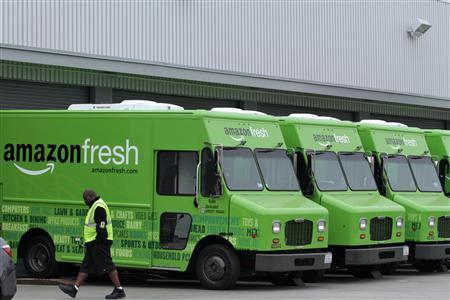
A worker walks past Amazon Fresh delivery vans parked at an Amazon Fresh warehouse in Inglewood

Sun, Jun 16 2013

By Alistair Barr

SAN FRANCISCO (Reuters) – The online grocery start-up Webvan may have been the single most expensive flame-out of the dot-com era, blowing through more than $800 million in venture capital and IPO proceeds in just over three years before shutting its doors in 2001. Twelve years later, though, Webvan is rising from the dead – in the form of an online grocery business called AmazonFresh. Four key Amazon.com Inc executives – Doug Herrington, Peter Ham, Mick Mountz and Mark Mastandrea – are former Webvan officials who have spent years analyzing and fixing the problems that led to the start-up’s demise. Kiva Systems, the robotics company that Amazon bought last year for $775 million in one of its largest-ever acquisitions, was built on ideas and technologies originally developed at Webvan and is a key part of the AmazonFresh strategy.

Read more of this post

Corning Bendable Willow™ Glass will help enable new, thinner applications and could revolutionize display manufacturing

Corning Is Working On A Bendable Version Of Its Gorilla Glass

JULIE BORT JUN. 17, 2013, 7:23 PM 1,144 1

One of the cool new technologies coming soon from the labs at Corning is a type of glass that’s so bendable, you’d swear it was plastic.  It’s called Willow Glass, and it’s designed to be used as a touchscreen, or for high-temperature displays, Corning’s Dr. Waguih Ishak, a vice president for Corning West Technology Center, said Monday on stage at Bloomberg’s Next Big Thing Summit. Think about that for a minute. With a bendable display, a watch computer could be adjusted to fit anyone’s wrist, no matter how big or small.  Ishak said that the glass would be available for devices by the end of 2013 or early 2014. Apple is using bendable glass in its as-yet unreleased “smart watch,” Nick Bilton of The New York Times reported in February.  Tech blogger Robert Scoble, who joined Ishak on stage during the presentation, said Willow Glass would work well with such a product.  “If I’m Tim Cook at Apple, I’d be looking at that for a watch with a flexible surface, a display with touch-sensor applications,” Scoble said.

Corning Launches Ultra-Slim Flexible Glass

Corning® Willow™ Glass will help enable new, thinner applications and could revolutionize display manufacturing

CORNING, N.Y., June 04, 2012 – Corning Incorporated (NYSE: GLW) announced the launch of Corning® Willow™ Glass, an ultra-slim flexible glass, which could revolutionize the shape and form of next-generation consumer electronic technologies. The company made the announcement today at the Society for Information Display’s Display Week, an industry tradeshow in Boston. Corning Willow Glass will help enable thin, light and cost-efficient applications including today’s slim displays and the smart surfaces of the future. The thinness, strength, and flexibility of the glass has the potential to enable displays to be “wrapped” around a device or structure. As well, Corning Willow Glass can be processed at temperatures up to 500° C. High temperature processing capability is essential for today’s high-end displays, and is a processing condition that cannot be supported with polymer films. Corning Willow Glass will enable the industry to pursue high-temperature, continuous “roll-to-roll” processes – similar to how newsprint is produced – that have been impossible until now. Read more of this post

What the data reveals about how to make SaaS secret sauce

What the data reveals about how to make SaaS secret sauce

BY BEN SESSER 
ON JUNE 15, 2013

screen-shot-2013-06-13-at-11-54-52-amscreen-shot-2013-06-15-at-10-09-40-amscreen-shot-2013-06-15-at-10-10-43-am screen-shot-2013-06-15-at-10-10-53-am

Life would be much easier if a great product was the only requirement for a great business. Of course, talk to any vineyard owner or long-time New York Times shareholder and they can attest that this is not the case.

Software as a service companies are no different. As challenging as it is to build great software someone is willing to buy, other pieces must fall into place for success.

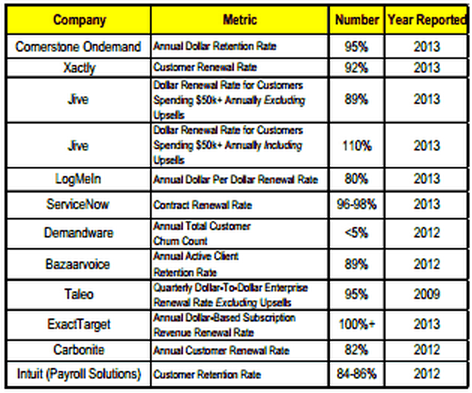
In SaaS, three critical pieces that must fall in place to create long-term value are price, customer acquisition cost, and churn. You need a sustainable mix of what customers will pay for your product, how much it costs to acquire customers, and how long you can keep them. Read more of this post

Italian Start-Ups Flock to Berlin

06/14/2013 03:46 PM

Crisis Migration

Italian Start-Ups Flock to Berlin

By Sophie Arts

With the economy at home in the doldrums, entrepreneurs from Italy have been flocking to Berlin recently. The job opportunities are plentiful and there is a growing Italian community within Germany’s vibrant high-tech start-up scene.

Young hipsters sipping bottles of Jever and Astra, IT entrepreneurs holding forth on their experiences in Silicon Valley and tables laden with boxes of pizza: The high-tech meet-up in May at one of Berlin’s myriad IT campuses was, at first glance, nothing special.

And yet there was one significant difference: Aside from frequent uses of terms like “venture capital,” “networking” and “assets,” the most common language spoken was not English. Rather, everyone was speaking Italian. Read more of this post

The Secret Science Behind Big Data And Word Of Mouth

The Secret Science Behind Big Data And Word Of Mouth

JONAH BERGER

posted yesterday

Editor’s note: Jonah Berger is a marketing professor at the Wharton School and author of the New York Times bestseller Contagious: Why Things Catch On. Follow him on Twitter @j1berger.

Why do some companies, products and services get more word of mouth than others? It’s not luck. There’s a science behind it. Social media gurus always preach that no one talks about boring products or boring ideas. So you would think that more interesting products and brands get talked about more. Surprisingly, they don’t.

Startups live and die by word of mouth. Whether it’s a new website, a revolutionary recruiting service, or B2B play, consumer awareness is always low at the beginning. No one realizes you exist, so you have to get the word out. But most new ventures don’t have a big advertising budget. They have to grow organically: Get existing customers or fans bringing in new ones — one at a time. Read more of this post

The Curse Of The Network Effect

The Curse Of The Network Effect

NIR EYAL

posted yesterday

Editor’s Note: Nir Eyal writes about the intersection of psychology, technology, and business for Dashboard.io and on his blogNirAndFar.com. Follow @dashboard_io and@nireyal.

Ethan Stock lived the Silicon Valley dream. He had recently sold his company to eBay and emanated the tanned skin and relaxed composure you’d expect of someone who just cashed a big corporate check. But as we sat across from one another in a Palo Alto coffee shop, I was surprised by what he said next. “Mediocrity is worse than failure, you know?” For seven years before the acquisition, Stock served as the founding CEO of Zvents, an online guide for local events. Though he was successful by anyone’s standards, I could tell he was a guy who, like me, had learned some hard lessons. Read more of this post

Rupee Seen Failing to Help Lift Infosys Margins: Corporate India

Rupee Seen Failing to Help Lift Infosys Margins: Corporate India

The rupee’s slide to a record low may fail to lift profit margins for India’s biggest software exporters as Infosys Ltd. (INFO) and Tata Consultancy Services Ltd. (TCS) pass on the currency benefit to clients in a race for orders.

India’s rupee has slumped 5.7 this quarter, making it the worst performer in Asia, and touched an all-time low of 58.985 a dollar on June 11. A weaker currency makes exports cheaper for overseas buyers, boosting demand. Still, Infosys shares fell 2.1 percent last week and Tata Consultancy tumbled 4.5 percent, the biggest declines since the five-day period ended April 26. Read more of this post

From spiders, a material to rival Kevlar; Synthesizing spider thread—which is stronger than nylon and even some metals—has been a vexing problem. Until now

From spiders, a material to rival Kevlar

June 14, 2013: 12:40 PM ET

Synthesizing spider thread—which is stronger than nylon and even some metals—has been a vexing problem. Until now.

By Michael Fitzpatrick

FORTUNE — A Japanese startup claims it has cracked the knotty problem of commercializing the production of spider thread, which, gram for gram, is stronger than nylon and even many metals. As one of nature’s super-substances — tougher than Kevlar yet significantly more elastic — scientists have been trying to recreate it in significant quantities in labs but failed for over a decade. By using synthetic biology techniques and a new spinning technology, Spiber Inc. says it is now able to produce many hundreds of grams of synthetic spider silk protein where past efforts have produced less than a few grams over a day. One gram of the special protein produces about 9,000 meters (29,527 feet) of silk.

Read more of this post

The race to destroy your data; Companies like Silent Circle, which promises to secure or get rid of consumers’ private information, have seen a surge in the wake of government spying reports

The race to destroy your data

June 14, 2013: 10:24 AM ET

silent-circle-test

Companies like Silent Circle, which promises to secure or get rid of consumers’ private information, have seen a surge in the wake of government spying reports.

FORTUNE — Silent Circle, an app that allows users to place encrypted phone calls, makes money on paranoia. Paranoia like, say, the fear that the government might build a massive surveillance operation in cooperation with major tech companies and then keep it secret from the public for years.

So naturally, after news broke that the government really was gathering large amounts of data on Americans’ phone calls and e-mails, Silent Circle found itself in a sweet spot. The company says reports of the National Security Agency’s data-gathering activities drove a huge increase in sales — up 480% in the last seven days. Read more of this post

From Silicon Wadi to Silicon Valley: How Waze found its way to Google; Nitzan Hirsch-Falk, the lawyer who headed map startup’s legal team, recounts each twist and turn that led to most exciting exit seen in Israel in recent years

From Silicon Wadi to Silicon Valley: How Waze found its way to Google

Nitzan Hirsch-Falk, the lawyer who headed map startup’s legal team, recounts each twist and turn that led to most exciting exit seen in Israel in recent years.

By Amir Teig and Inbal Orpaz | Jun.14, 2013 | 3:38 AM

Last Friday, after eight intensive days negotiating with Google, attorney Nitzan Hirsch-Falk left Google headquarters in California and went to the San Francisco International Airport. Just as he was about to board a return flight to Israel, Waze CEO Noam Bardin send him a text message asking him to come back.

“Afterward I realized they were just stressed,” says Hirsch-Falk, describing what happened on the day of the most exciting exit seen in Israel in recent years. “They basically needed me to hold their hand. We worked until 6 A.M. Saturday morning and closed the deal.”

By Tuesday evening the money was in Waze’s Israeli bank account. The man who has been with Waze for five years, from infancy to its phenomenal, $1.15 billion exit, can now relax. Together with Bardin, it was Hirsch-Falk who zipped in and out of the conference rooms of all the global technology giants. Read more of this post

How the NSA Could Get So Smart So Fast; Modern Computing Is Helping Companies and Governments Accurately Parse Vast Amounts of Data in a Matter of Minutes

Updated June 12, 2013, 7:51 p.m. ET

How the NSA Could Get So Smart So Fast

Modern Computing Is Helping Companies and Governments Accurately Parse Vast Amounts of Data in a Matter of Minutes

Five years ago it would have been unimaginable for a government agency such as the National Security Agency to efficiently parse millions of phone, text and online conversations for keywords that could have warned of an impending terrorist attack. Today, it’s much easier. Michael Hickins joins the News Hub.

By MICHAEL HICKINS

Five years ago it would have been unimaginable for a government agency such as the National Security Agency to efficiently parse millions of phone, text and online conversations for keywords that could have warned of an impending terrorist attack. Today, a set of new technologies make it relatively affordable and manageable for it do so. These technologies can store vastly different types of data in a single database, and can be processed rapidly using inexpensive hardware, without an analyst having to formulate a hypothesis. “They’ve substantially reduced the cost and greatly increased the [government’s] ability to analyze this type of data,” says Tom Davenport, an expert on analytics and a visiting professor at Harvard Business School. The technology needed to outfit data centers to perform these tasks has become “orders of magnitude” less expensive than in the past, he said. Read more of this post

How Location Data Is Being Collected And Transforming The Mobile Industry

INFOGRAPHIC: How Location Data Is Being Collected And Transforming The Mobile Industry

JOSH LUGER JUN. 14, 2013, 2:30 PM 1,214

slide1-8-1

With over 770 million GPS-enabled smartphones, location data has begun to permeate the entire mobile space. The possibilities for location-based services on mobile go beyond consumer-facing apps like FourSquare and Shopkick. It’s powering advertisements, and many other services — from weather to travel apps. In a recent report from BI Intelligence on location-based data, we analyze the opportunities emerging from this new local-mobile paradigm. We specifically examine how location-enabled mobile ads have generated excitement, look at how location-based feature have boosted engagement for apps, and demystify some of the underlying technologies and privacy issues. A pure GPS approach and the “lat-long” tags it generates is considered the standard for location data. But there are at least four other methods, sometimes used in combination, for pinpointing locationRead more of this post

Big data meets the Bard: A ‘literary lab’ that believes reading with computers is the future

June 14, 2013 6:29 pm

Big data meets the Bard

By John Sunyer

A ‘literary lab’ that believes reading with computers is the future

Here’s some advice for bibliophiles with teetering piles of books and not enough hours in the day: don’t read them. Instead, feed the books into a computer program and make graphs, maps and charts: it is the best way to get to grips with the vastness of literature. That, at least, is the recommendation of Franco Moretti, a 63-year-old professor of English at Stanford University and unofficial leader of a band of academics bringing a science-fiction thrill to the science of fiction. For centuries, the basic task of literary scholarship has been close reading of texts. But for digitally savvy academics such as Moretti, literary study doesn’t always require scholars actually to read books. This new approach to literature depends on computers to crunch “big data”, or stores of massive amounts of information, to produce new insights. Read more of this post

Value is Now Generated Pre-IPO; for companies going public before 2000, almost 75 percent of their eventual market value was realized in the public market, post-IPO; Who would have imagined that Splunk, which started out just analyzing log files, could be worth over $4 billion?

The Right Now Economy: The Next Wave of Startup Success

Mark Siegel6/12/13Follow @msiegel11

[Editor’s Note: Mark Siegel, managing director at Menlo Ventures, was the keynote speaker at IBF’sVenture Capital Investing Conference today in San Francisco. The post below summarizes his talk, in which he argued that the convergence of mobility, cloud infrastructure, social and big data—what he calls the Right Now Economy—sets the stage for $500 billion in venture returns over the next decade.]

Every technology cycle is driven by a huge disruptive new trend in innovation, such as the PC, the Internet/telecom boom, or the rise of social networking. We’re in the midst of the latest cycle, and it’s particularly compelling because it marks the convergence of four important trends: mobile, social, cloud infrastructure and Big Data.

These technological mega-trends have converged to create the real-time marketplaces of the Right Now Economy, which are already disrupting trillions of dollars in aggregate market value and have produced an incredibly fertile area for entrepreneurs to grow ideas into well-funded companies with the potential to take on established stalwarts. Read more of this post

Most technology companies fail. Some research suggests that three out of four venture backed companies don’t make it, and less than 1 percent achieve an initial public offering. To succeed, an entrepreneur must understand the three main risks facing every tech chief executive

The three risks

BY CHRISTOPHER LOCHHEAD 
ON JUNE 13, 2013

Let’s begin off with some cheery facts. Most technology companies fail. Some research suggests that three out of four venture backed companies don’t make it, and less than 1 percent achieve an initial public offering.

To succeed, an entrepreneur must understand the three main risks facing every technology chief executive:

1) Category risk: Is your market large, valuable, and growing?

Category risk is the most fundamental challenge facing both startup and large incumbent technology companies. After all, a market must exist for you to be the leader. If you want to sell bibles, there must be Christians. And if you want increasing revenues, margins and earnings over time, you must be positioned in a market that is large and growing. This means that building your category is equally important to building your company. It sounds crazy, but it’s true. Read more of this post

The car is the next major tech platform: GM’s CEO

The car is the next major tech platform: GM’s CEO

1:04pm EDT

By Tim McLaughlin

Boston (Reuters) – The car is the next great proving ground for communications technology, General Motors Co Chief Executive Dan Akerson said on Thursday.

The automobile will become a major platform for tech “and one with far better battery life than an iPhone,” he said in prepared remarks to the Chief Executives’ Club of Boston.

Developing better in-car technology is critical for automakers like GM to attract younger, tech-savvy buyers. If they can pull it off, the companies will generate new sources of revenue and boost profit margins. One approach may be for GM to sell advertising within the car itself, Akerson said last month. Read more of this post

Nvidia CEO Jen-Hsun Huang said sales of the company’s processors for use in cars will keep doubling every year to reach $1 billion annually as automakers seek to attract consumers with advanced features

Nvidia CEO Sees Automotive Business Growing to $1 Billion

Nvidia Corp. (NVDA) Chief Executive Officer Jen-Hsun Huang said sales of the company’s processors for use in cars will keep doubling every year to reach $1 billion annually as automakers seek to attract consumers with advanced features.

About 30 new models using Nvidia’s Tegra processor will be introduced in the next two to three years, Huang said in an interview yesterday. The company will add U.S. and Japanese automakers to a list of customers that includes Volkswagen AG (VOW)’s Audi and Tesla Motors Inc. (TSLA), Huang said.

The push into automobiles is part of Huang’s efforts to reduce the company’s reliance on personal-computer graphics cards amid the worst slump in PC sales on record. Customizable instrument screens and high-end navigation and entertainment systems, which until now have been the preserve of more expensive vehicles, are going to start appearing in cheaper cars as consumers demand features that match the look and utility of their smartphones, Huang said.

“Until now, it’s been quite slow,” Huang said. “It’s taken us about seven years to build a $100 million business. Now it’s doubling every year.” Read more of this post