Munger’s Wisdom and Comments on LKY in Notes on Daily Journal’s Shareholder Meeting
April 1, 2015 Leave a comment
R.E.S.-ilience in Value Creation 《竹经:经商经世离不得立根创新》
April 1, 2015 Leave a comment
Life
April 1, 2015 Leave a comment
| “Bamboo Innovators bend, not break, even in the most terrifying storm that would snap the mighty resisting oak tree. It survives, therefore it conquers.” |
| BAMBOO LETTER UPDATE | March 31, 2015 |
Bamboo Innovator Insight (Issue 75)
|
| Dear Friends,Can You Guess This Asian Wide-Moat Company?LKY’s Choice of the Most Influential Invention of the Millennium – and the Heart of its Technology
When a group of the very best leaders were asked by the Wall Street Journal in 1999 to pick the most influential invention of the millennium, the late Mr. Lee Kuan Yew alone shunned the printing press, electricity, the internal combustion engine and the internet and chose something odd: the air-conditioner. He explained that, before air-con, people living in the tropics were at a disadvantage because the heat and humidity damaged the quality of their work. Now, they “need no longer lag behind”. LKY was obsessed with productivity and driven to do his best in crafting his own greatest invention in Singapore. More than 25 years ago, there was an Asian company who was producing and selling air-conditioner with a productivity level that would have made LKY proud. And they were so good that the Japanese manufacturers got worried and tried lobbying to impose anti-dumping duties on the company’s imports into Japan. That didn’t work. Then the Japanese got clever, really clever. They drastically restricted the number of the most important Component X in the air-conditioner shipped to the company’s country. Overnight, the company’s impressive productivity machinery grinds to a halt. In the words of Mr. C, the chairman of the company: “That was when we realized deeply that if we lack the heart of the aircon, the X, the heart of technology, having sales orders is pointless since production cannot take place. That was when we decided to undertake the task of having control over the technological know-how in X and the new spinoff company was established with the vision of technical independence. Only with technical independence can you build for the long-term.” Our latest monthly Moat Report Asia for April 2015 examines an Asian company that is the world’s #4 air-conditioner X manufacturer with 10% market share, up from 3.5% in 2000. Regionally, the company is #1 in its domestic market with 39% share, 30% in North America, 12% in Europe, 9% in Japan, 13% in South America. The company also has niche dominance in X for the recreational vehicle (RV) market in North America with 60% market share and over 90% market share in a new application in X (“Y”) for a niche household appliance in Europe in partnership with Bosch. The company’s annual X capacity is 15m units and has plans to expand by 6m units to 21m units in 2H15. The company has a diversified customer base that include Carrier-United Technologies, Goodman-Daikin, Bosch, Electrolux, Miele, Haier, TCL, Midea, Sharp, Sanyo,. The company’s strategic shareholders include a Japanese electronics giant with equity stake of 4.86%. What makes It a wide-moat business? We are impressed with its advanced production and technological know-how: (1) Grinding: The company has developed deep intangible know-how in grinding technology for X, in which metals need to be ground to micrometer-level precision, thinner than a human hair. The company is able to achieve exceptional production efficiency of 68 ppm i.e. out of every 1 million units, only 68 are rejected, possibly the best quality standard in the industry. (2) Inverter controller: It is not possible to create an energy-saving air conditioner with satisfactory performance by attaching an inverter procured from an electronics parts maker to a conventional air conditioner. Making an energy-saving air conditioner requires knowledge that cannot be easily imitated, such as the ideal number of motor revolutions under certain operating conditions. Sophisticated control technologies are required to optimally control the temperature in multiple rooms with multi-split air conditioners. Above all, the company has superior R&D capabilities to leverage upon technology and know-how to enter into new higher-margin business, including adopting the open innovation business model to co-develop new products with external strategic partners. As a result, the company’s gross margin has risen from 12.97% in 2010 to 16.5% in 2013. These new businesses have promising market potential and scalability, including (1) higher-spec air-conditioner X for recreational vehicles (RV) in which the company has 60% market share in North America; (2) “Y” co-developed with Germany’s Bosch in which the company has >90% market share in Europe, and potential new customers in dish-dryer; (3) “Y” for commercial and residential applications; (4) breaking the Japanese dominance in high efficiency Brushless Direct Current (BLDC) motor product, (5) air-purifier in partnership with Sharp, (6) mini-X in portable fire extinguisher, mini-dehumidifier, portable aircon. Management shared that they have mid-to-long-term plans to develop BLDC motors for vehicles, DC inverter controller and high-end X for medical applications. The company pursued a vertical integration strategy and has the capability and know-how to make everything in-house at present, resulting in one of the most efficient working capital cycle in the industry. As the global #4 X manufacturer making 15m units, or one out of ten X in the world, the company has built formidable competitive advantages in scale and product quality, and it has bold plans to expand capacity to 21m units. Profit margin is likely to climb further as it extends its dominant market leadership in the higher-margin niche segments of North American recreational vehicle (RV) market with 60% market share, European “Y” market with over 90% market share and break into new applications and market segments and new applications in air purifiers in China in partnership with Sharp. The company’s short-term downside is protected by an attractive 6.37% dividend yield. The company has a visible long runway as it broke the long-time dominance of the Japanese in the multi-billion energy-efficient Brushless DC (BLDC) motor market with initial output of 1.5m units (ASP $10-11/unit) in Jan 2015 and a new plant with initial output of 3-5m units in 2H15 with potential to scale up capacity to a total of 24m units. Valuation is also decent and reasonably cheap for a world-class company with PE 12.6x, EV/EBIT 10.6x and EV/EBITDA 7.1x. Net profit and EBITDA could potentially double to $70m and $150m respectively in the next 5 years in FY2020, pointing towards a 280% growth in market value to $1.8bn based on a modest EV/EBITDA 12x. Despite being not profitable for as long as the first ten years since it was established in 1989 due to the lack of production scale, the company persisted in pursuing the aspiration of achieving technical independence in the heart of the air-conditioner technology – the X – under the leadership of its chairman Mr. C. Led by Chairman C and CEO L, the company showed grit and determination in breaking past the milestone of an accumulative 100m units in 2014 and has plans to produce and sell another 100m units by 2020/21. We think the perseverance and focus is rare in Asian firms and the company deserves a valuation premium. Q: “Chairman C, we admire your persistence and determination that resulted in [company’s name]’s success as the global #4 air-conditioner X company. What kept you going all these years? And how do you pass on your values to the corporate culture and your employees at [company’s name]?” Mr. C: “In life, we must have dreams and aspirations. With dreams, our life becomes beautiful. An enterprise must pursue its dreams too. Our initial dream was to have technical independence and to produce world-class products. We are now #4 in the world and aiming at overtaking #3 in the next five years. Above all, [company’s name] aims to pursue the dream of creating infinite possibilities in smart, innovative energy-saving and environmentally-friendly future with ‘[Company’s name] Inside’, like ‘Intel Inside’, for multiple products and applications because of our superior quality and innovation. The corporate culture is that all of us at [company’s name] must adjust rapidly to the changing world. Attitudes, morals and thinking are the starting point of thoughts. Only by allowing our attitude to change our habits, habit to change character and character to change life and maintain a positive outlook on life can the ‘responsibility, integrity, innovation’ values fill employees and grow with the company. Anyone with responsibility, motivation and ambition can help [Company’s name] to create a new chapter in history and keep rewriting it.” Who is Mr. C and this wide-moat Bamboo Innovator? PS: In remembrance of the late Mr. Lee Kuan Yew, modern Singapore’s founding father, we like to share an article series that we wrote five years ago about Berkshire Hathaway and Singapore, both wide-moat compounders created and built by visionary leaders. Part 1: The power of vision The success of Berkshire Hathaway and Singapore can be traced to their visionary leaders who work with winning teams Part 2: Lion Infrastructure and value investing Both of them are an ongoing team process that demands sacrifice, hard work and soberness to scale new heights http://www.businesstimes.com.sg/?dlink=/sub/views/story/0,4574,389848,00.html Part 3: Lion Infrastructure is the way to go To reach a US$2 trillion GDP in 2065, Singapore must create and build commercial assets with a special quality The Trilogy in One Document: Warm regards, KB The Moat Report Asia http://accountancy.smu.edu.sg/faculty/profile/108141/KEE-Koon-Boon A new monthly issue of The Moat Report Asia is now available! Access the in-depth idea presentation: http://www.moatreport.com/members/ Paid subscribers get:
|
April 1, 2015 Leave a comment
Life
March 30, 2015 Leave a comment
Remembering Lee Kuan Yew
Life
March 29, 2015 Leave a comment
Remembering Lee Kuan Yew
Life
March 28, 2015 Leave a comment
Remembering Lee Kuan Yew
Life
March 27, 2015 Leave a comment
Notice: The website AsianExtractor: Unearthing Accounting Fraud in Asia (www.AsianExtractor.com) is back online after seven days of technical problems.
Remembering Lee Kuan Yew
Life
March 26, 2015 Leave a comment
Notice: The website AsianExtractor: Unearthing Accounting Fraud in Asia (www.AsianExtractor.com) is back online after seven days of technical problems.
Remembering Lee Kuan Yew
Life
March 25, 2015 Leave a comment
Notice: The website AsianExtractor: Unearthing Accounting Fraud in Asia (www.AsianExtractor.com) is down on technical issues and we are trying to resolve the problem asap.
Remembering Lee Kuan Yew
Life
March 25, 2015 Leave a comment
Notice: The website AsianExtractor: Unearthing Accounting Fraud in Asia (www.AsianExtractor.com) is down on technical issues and we are trying to resolve the problem asap.
Remembering Lee Kuan Yew
Life
March 24, 2015 Leave a comment
| “Bamboo Innovators bend, not break, even in the most terrifying storm that would snap the mighty resisting oak tree. It survives, therefore it conquers.” |
| BAMBOO LETTER UPDATE | March 23, 2015 |
Bamboo Innovator Insight (Issue 74)
|
| Dear Friends,The Physics of Music and the Asian Innovators
At the admission interview of the high school applicants into the Accountancy program at the Singapore Management University last week, one of the candidates “C” cried during the interview – and I gave her the highest score 19/20 amongst all the candidates and wrote down “strongly recommend”. We like to share some of the conversations in this story which inspired the discussion about why for instance Singapore’s Creative Technology (CREAF SP, MV $74m) did not scale up to become the Apple of Singapore/Asia, collapsing from over a billion dollar in market value at its peak to $74 million today, as well as the deeper thought-provoking insights to understand and identify the hidden Asian innovators that include Loen Entertainment (016170 KS, MV $1.09bn) which had more than tripled since we last highlighted them in Aug 2013 in “Berkshire Hathaway Embracing Media? An Asian Perspective”. “C” did not have the straight-As profile (H2: AABD, H1: AC) and even had a “poor” General Paper score, which was strange given her vivid and heart-stirring writing in the application form describing herself and the various activities she does that contributed to helping others during her time at Hwa Chong Junior College. The first impression she would definitely give to others would be that of a stereotypical shy, self-conscious and introverted person. A checklist approach and mindset will definitely strike “C” out. I sense that there is brilliance beneath her shyness as some of my probing questions and observations revealed that she is an introspective, self-reflective and intellectually curious thinker and tinkerer capable of something rare that eludes the straight-As and well-rounded-CV students – to produce original thoughts and ideas. “C” is the only candidate that I have come across in these years to have applied for both the Accountancy and Information Systems degree programs. With her interests in the Science Students’ Research Council where she was in the International Science Youth Forum Nobel Forum Committee, it seems that she has a yearning to do and make something with her hands and brains, that she is a tinkerer, and a tinkerer who is keen to explore further her interest and confidence in “numbers” – and to peer into the “framework” behind the “numbers”. “C, I see that you are capable of deep thoughts. I think your General Paper score was because you are too self-conscious in your thoughts about how you come across to others, that you are afraid of being misunderstood in the eyes of others and that affected your writing in that time constraint and pressure in the exam setting. Are you able to share what is the proudest piece of work that you have done up, beyond all these society-imposed resume criteria to fill the CCAs/Community Service silos?” This is akin to asking what does a person do if he or she is not measured by the KPIs or observed by others – to understand their true character and authenticity as a leader and innovator. And “C” shared about her “The Physics and Science of Music” piece of project work and prototype that I find very interesting and aligned to her deep-thinker personality and untapped hidden potential as an innovator, a Maker who has the capacity and capability to engage in creative work and systems design, work which requires deep thoughts, tenacity and sacrifices to bear through the uncertainty, anguish and passions. The usual self-entitled Taker with straight-As will hardly bother with such meaningless pursuits that do not have deterministic and measurable outcomes. Under all those society-imposed boxes, “C” could not mention or write about this at all in the form. Instead, “C” said wistfully, “But this is probably not worth mentioning. There is no value to this. It probably cannot be commercialized.” Inspired by her sharing, I said, “Why not? Imagine if Creative Technology had focused on your idea and organizing vision in the science of music, the science of audio and sound, they probably would not have languished.” I explained very briefly to “C” that Creative Technology had brought to the world in 1989 the Sound Blaster, a stereo soundboard inserted into the computers to give the computer a voice to play music. And this technology was made widely available to the general consumer, bringing what was previously accessible only to the privileged and wealthy to the masses to enjoy. Creative became the first Singapore firm to be listed on the NASDAQ stock exchange and Sim Wong Hoo, the harmonica-playing founder of Creative, became the youngest self-made billionaire in Singapore at the age of 45. ******** When Creative’s founder Sim Wong Hoo was said to seek some government financial assistance at the NCB (National Computer Board, now known as IDA) to market the product at Comdex trade show in US, they ridiculed him, saying that no one would ever want to hear a sound from the PC. They rubbed salt in by mentioning that he was just a poly diploma holder and that he needs to develop something for the local market for which NCB would give him assistance. Later, funded by a venture capitalist, Sim showcased Sound Blaster in the exhibition in America and, according to some photos, even Michael Jackson visited his booth. Sim later said about his vision, “I looked at the PC and said it was dumb. I said computers should talk. Computers should play music. I believe in sound. I believe in music.” Creative dominated the PC audio market as the de facto standard for a decade and had sold 100 million units by 2000. The all-time high was in March 2000 at $64 per share; now Creative is $. By the 2000s, OEM PCs began to be built with sound boards integrated directly onto the motherboard and the Sound Blaster found itself reduced to a niche product. Creative went on to launch other less successful businesses and products that include the CD-ROM business in which they were forced to write off $100 million in inventory when the market collapsed due to a flood of cheaper alternative, Nomad Jukebox and ZEN series of portable media players (before Apple launched iPods), Prodikeys (a keyboard with piano keys), reportedly burning a billion dollar in R&D in developing both the Zii stem-cell-like processor with supercomputing power launched in 2009 and the HanZpad computer tablet launched in late 2011. After sharing the Creative story to “C”, I was thinking that Creative could well have been the innovator in Guitar Hero, the billion-dollar gaming franchise that rekindle music education in children and has found use in health and treatment of recovering patients. Creative could also possibly ride the rising popularity and profitability of podcast network and audio storytelling phenomenon (podcast subscriptions have passed over one billion in 2013 and monthly podcast listeners have more than tripled to over 75 million per month from 25 million before the onset of the 2007 crisis). Creative could possibly beat Pandora Media (P US, MV $3.4bn)/Spotify/Deezer/Beats Music (acquired by Apple); the Pandora music-streaming app are embedded by GM into the dashboards of most Chevrolets, Buicks and Cadillacs. Taiwan’s KKBox, started in late 2005 as a PC application, now has over 2 million paying subscribers paying a monthly fee of around $5 for unlimited access to its catalogue of more than 10 million Asian songs and value-added content and services and is valued at over a billion dollar, attracting a $105m investment from Singapore’s GIC in 2014. KKBox has a dominant position in Taiwan in knowing where the music listeners are and what songs and artists they like and now offers a mixture of music, entertainment news, and even organizes its own concerts that are broadcast across the countries they are operating in. Loen Entertainment (016170 KS, market cap $1.09bn) operates Korea’s largest online music retail platform MelOn with a 60% market share. Loen was founded in 1961 by former English-language-daily journalist Min Young-bin as YBM Sisa English, a language-learning tape creator. In the 1960s when Korea was an impoverished nation just out of war, the medium of studying English was limited to printed publications including magazines, books and dictionaries. YB Min launched the country’s first magazine for English learners in 1961 and “A Handbook of Business English” in 1967 in response to policies designed to drive exports. The next decade marked the use of audio and sound in language education. In 1970, supported by the U.S. government, YBM brought out English 900, a set of six books with 60 cassette tapes on 900 English sentence structures. YBM later expanded into a major K-Pop music record label which debuted hallyu celebrity Rain. SK Telecom bought a 60% stake in the music record firm in 2005, renaming it Loen to be put in charge of operating SK’s online music distribution service MelOn in 2009. With the cataloguing know-how developed over the years, MelOn grew to become the most used online music sales in Korea. SK later sold its 52.6% stake in Loen to a foreign PE firm for $239m in Jul 2013. Organized by the science of music, an idea larger than oneself, the possibilities from business model innovation are more scalable and sustainable, instead of jumping around in chasing trends and themes like Creative did in repeating familiar hardware-based business models that had worked successfully for a while in the past but failed subsequently to remain sustainable. ******** Because I sense that her community service work is based on a genuine heart, which is rare, I asked “C” gently whether that was shaped by some personal or family experience and she said something moving and aspirational, which was not discernible at all in her opening introduction and write-up. People like “C” will always be misunderstood, and misunderstood badly, because the harsh and pretentious world look solely at the superficial skin, the poise, the posturing and never the inner worth and potential. “C” is the potential innovator and authentic caring leader who can contribute to improving the world and the people around her and she has far bigger potential that she realizes and that hidden potential needs to be unlocked with an opportunity. In our years of interacting and observing entrepreneurs and managers in Asia, we find that there seemed to be two kinds: some who would look for flaws in ideas and people, and then pounce to kill them; and others who started from a place of seeking and promoting good, new and original ideas and people. When the “idea and people promoter” saw flaws, they pointed them out gently, in the spirit of improving them – not eviscerating them. The “idea and people killer” were not aware that they were serving some other agenda, which was often to show others how high their standards are. The innovators understand the difficult, ephemeral process of developing the new. The innovators understand that looking beyond the pretty and rigorous checklist for something original, authentic, something surprising and unproven, are necessary for genuine value creation – and must be a conscious effort. We also want to observe that the corporate culture are NOT infested with the kind of people that populated Disney in the late 1970s as remarked by Pixar’s founder Ed Catmull in his inspiring and thought-provoking book Creativity, Inc.: Overcoming the Unseen Forces That Stand in the Way of True Inspiration: “Unbeknownst to me, soon after our meeting at Lucasfilm, John Lasseter would lose his job at Disney. Apparently, his supervisors felt that The Brave Little Toaster was – like him – a little too avant-garde. They listened to his pitch and, immediately afterward, fired him. What John hadn’t realized when he joined Disney Animation, however, was that the studio was going through a rough, fallow period. The animation there had plateaued much earlier – no significant technical advances had been made since 1961’s 101 Dalmatians, and many of its young, talented animators had left the studio, reacting in part to an increasingly hierarchical culture that didn’t value their ideas. When John arrived in 1979, Frank Thomas, Ollie Johnston, and the rest of the Nine Old Men were getting up in years – the youngest was 65 – and had stepped away from day-to-day business of moviemaking, leaving the studio in the hands of a group of lesser artists who had been waiting in the wings for decades. These men felt in was their turn to be in charge but were so insecure about their standing within the company that they clung to their newfound status by stifling – not encouraging – younger talents. Not only were they not interested in the ideas of their fledgling animators, they exercised a sort of punitive power. They were seemingly determined that those beneath them not rise in the ranks any faster than they already had.” We think this lesson from Disney is poignant for Asia which is at a critical transition phase in succession risk (and opportunity) with the patriarchs and matriarchs handing over the reins of their business empires to the right capital allocators, whether to their heirs or professional managers. Many of the Asian successors are like Disney’s highly experienced and well-qualified men-in-charge in the late 1970s. Above all, we think a corporate culture focused on KPIs is downright unhealthy as it results in gaming of the performance measurement system and distances people from creating an idea larger than oneself that can involve co-creators in the value creation process. What is this “idea larger than oneself” which we emphasized in many of our writings? Take the case of Hemant Amin, founder, chairman and CEO of Asiamin Capital, a low-profile, successful multi-million single family office, and our guest speaker for the Singapore Management University students in the course ACCT004 Accounting Fraud in Asia with the presentation topic “A Family Office Investment Journey and Understanding the DNA of Fraudulent Promoters”. We mentioned in a thank you note to Hemant that this idea larger than oneself is also about practicing and living out the values of Buffett-Munger: Hi Hemant, Thanks much – a recurring theme in the Compounders is that they are obsessed with creating an idea larger than themselves, whether it is Buffett-Munger with their philosophy manifested in their creation of Berkshire Hathaway or yourself in practicing and living out the values of a true value investor to educate and inspire the next generation of leaders! 🙂 Take the case of Lee Bakunin, a very early Berkshire Hathaway value investor whom we respect and admire greatly. A lawyer by training, Lee is the author of the upcoming book “How to Negotiate Like Warren Buffett”. The book’s vision is an idea larger than oneself. With the book, Lee has transcended beyond material wealth. He can remove himself from the equation and the ideas in the book will profoundly influence and impact positively the readers. Those who practice the philosophy in the book will become the idea itself. We hope to be able to have the opportunity in the future to invite Lee to address the SMU students taking the course Accounting Fraud in Asia and to inspire them with his wisdom and values. Hence, value investors should simply ask, can the Asian entrepreneur-emperor remove himself or herself from the business equation and the business can still compound in value? Only if he or she has created an idea larger than oneself. This is the true and only KPI that should matter in identifying the wide-moat compounder and Bamboo Innovator in Asia. And “C”s question to me at the end of the interview was also simple and brilliant, again reflecting her deep-introspective character. Having done admission interviews before, this was the first time I was asked such a question. “C, you are very good, don’t let anyone tell you anything otherwise,” I told her at the end. I think she cried softly two times during the interview because she felt she was understood, that her inner self was understood, that what she was trying to achieve at an emotional level was understood. “C” would still need to go through the admissions office’s elimination process based on the number of available places and we hope that she can get into SMU and the program(s) of her choice. We wish her all the best in creating the music of accounting for the business community and society in the years ahead. Warm regards, KB The Moat Report Asia http://accountancy.smu.edu.sg/faculty/profile/108141/KEE-Koon-Boon A new monthly issue of The Moat Report Asia is now available! Access the in-depth idea presentation: |
March 23, 2015 Leave a comment
Notice: The website AsianExtractor: Unearthing Accounting Fraud in Asia (www.AsianExtractor.com) is down on technical issues and we are trying to resolve the problem asap.
Remembering Lee Kuan Yew
Life
March 22, 2015 Leave a comment
Notice: The website AsianExtractor: Unearthing Accounting Fraud in Asia (www.AsianExtractor.com) is down on technical issues and we are trying to resolve the problem asap.
Life
March 21, 2015 Leave a comment
Notice: The website AsianExtractor: Unearthing Accounting Fraud in Asia (www.AsianExtractor.com) is down on technical issues and we are trying to resolve the problem asap.
Life
Investing Process
Greater China
Japan & Korea
ASEAN
Macro
TMT
Healthcare
Consumer & Others
March 20, 2015 Leave a comment
Notice: The website AsianExtractor: Unearthing Accounting Fraud in Asia (www.AsianExtractor.com) is down on technical issues and we are trying to resolve the problem asap.
Life
Greater China
India
Japan & Korea
ASEAN
Macro
Energy & Commodities
Healthcare
TMT
Consumer & Others
March 19, 2015 Leave a comment
Notice: The website AsianExtractor: Unearthing Accounting Fraud in Asia (www.AsianExtractor.com) is down on technical issues and we are trying to resolve the problem asap.
Life
Greater China
India
Japan & Korea
ASEAN
Macro
Energy & Commodities
TMT
Healthcare
Consumer & Others
March 19, 2015 Leave a comment
Life
Greater China
India
Japan & Korea
ASEAN
Macro
Energy & Commodities
TMT
Healthcare
Consumer & Others
March 19, 2015 Leave a comment
Life
Greater China
India
Japan & Korea
ASEAN
Macro
Energy & Commodities
TMT
Healthcare
Consumer & Others
March 16, 2015 Leave a comment
| “Bamboo Innovators bend, not break, even in the most terrifying storm that would snap the mighty resisting oak tree. It survives, therefore it conquers.” |
| BAMBOO LETTER UPDATE | March 16, 2015 |
Bamboo Innovator Insight (Issue 73)
|
| Part 1: A Family Office Investment Journey and Understanding the DNA of Fraudulent PromotersDear Moat Report Asia subscribers in Singapore,I have invited a guest speaker. He is Hemant Amin, founder, chairman and CEO of Asiamin Capital, a low-profile, successful multi-million single family office. He will be talking about his family office investment journey and understanding the DNA of fraudulent promoters in the Indian and Asian context with actual Indian cases accumulated from his wealth of experience in investing in Asia and India, where he is an early investor in Narayana Murthy’s Infosys which compounded over 60-folds for him: http://www.beyondproxy.com/grey-world/. His capital allocation track record over the past decade from 2004 to 2014 is outstanding, compounding at 29.3% and trouncing the S&P index by a factor of 3.6 times over the same period; a $1,000 would yield $16,857 during the period.
After witnessing over the decade plus how the Asian capital jungle has turned increasingly into a fertile ground for insiders-promoters-syndicates who have the incentive and power to manipulate prices and volumes, to deceive investors with fraudulent financial numbers, and to inject market “action” via positive corporate announcements of various sorts to excite the senses but rarely materializing subsequently in economic substance, luring investors and their funds in and then offloading the shares a pump-and-dump stock manipulation scheme, I desperately and madly wanted the SMU students to learn from a rare positive role model in the Asian capital jungle – and Hemant’s name is at the top of my list to invite as a guest speaker to inspire the students. Hemant showed that it is still possible to win as a value investor because of one having not only the right investing approach but more importantly, having the right values in life. That it is possible to create value without compromising on values in this harsh, pretentious and messy world. That one can avoid investing in the fraudulent promoters by understanding their DNA. It is immediately obvious that only someone who has a deep thinking process and value system can craft out such thought-provoking insights. Hemant’s carefully-prepared presentation material reflects and exudes his deep introspection, knowledge, resilient investment process and values. Having weathered through adversities and the mental drain in fighting the fraudulent promoters to reclaim the money invested, Hemant’s investment journey took a life-changing turn when he attended Berkshire Hathaway’s AGM in 1997 for the first time – and Hemant has made the pilgrimage to Omaha every year since. Hemant started to focus on the quality of the management and the business model and understood the difference between statistically-cheap cigar butts generated from net-net screens and checklists made famous by Benjamin Graham vs compounders which was the focus of Charlie Munger, the Vice-Chairman of Berkshire Hathaway and the influential partner to Buffett’s success. Because Hemant’s presentation is so good, I have invited the team of economic crime prosecutors at AGC (Attorney’s General Chambers) Financial & Securities Crime Division who might be coming over for the presentation. The AGC has recently invited me for a talk session on accounting and securities fraud in Asia with their DPPs; it is a great honor and I wish to share with them Hemant’s great insights. It will be great if you wish to join us on 17 March (Tuesday) at 4.30pm till 7pm. Warm regards, KB The Moat Report Asia http://accountancy.smu.edu.sg/faculty/profile/108141/KEE-Koon-Boon PS: We are honored that Hemant is a fellow Moat Report Asia subscriber. We will be making Hemant’s presentation material available for our Moat Report Asia subscribers. Part 2: Mocking Asia, the Pixar Solution and the R.E.S.-ilence Handle “If we were to mock Singapore, we would say it is a nation of bankers and real-estate developers. What we would like to become is a nation of entrepreneurs. The country is missing a big trick about how it thinks about entrepreneurial thinking. We make a list of all the things we want to do and we say okay, check, we’ve done that. It’s a list-building mentality. It’s not an opportunity-framing mentality – which is what entrepreneurial thinking is about… You cannot beat Apple by becoming more like Apple… We have to embrace being Asian… We have to build something uniquely Asian.” – Singapore Management University (SMU) business dean Gerard George in “Thinking Beyond the Checklist”, 13 March 2015 “But my internal sense of purpose – the thing that had led me to sleep on the floor of the computer lab in graduate school just to get more hours on the mainframe, that kept me awake at night, as a kid, solving puzzles in my head, that fueled my every workday – had gone missing. I’d spent two decades building a train and laying its track. Now, the thought of merely driving it struck me as a far less interesting task. Was making one film after another enough to engage me? I wondered. What would be my organizing principle now? My desire to protect Pixar from the forces that ruin so many businesses gave me renewed focus. I began to see my role as a leader more clearly. I would devote myself to learning how to build not just a successful company but a sustainable creative culture. As I turned my attention from solving technical problems to engaging with the philosophy of sound management, I was excited once again – and sure that our second act could be as exhilarating as our first.” – Pixar’s founder Ed Catmull in Creativity, Inc: Overcoming the Unseen Forces That Stand in the Way of True Inspiration For the last 50 years in Singapore and Asia, which is built on the foundation of the farsighted pioneers who established the place as a magnet of FDI flow and MNCs, all firms and entrepreneurs had to do was answer the phone from clients and lease more office space. And excess profits are used to reinvest in trading and accumulating property assets and financial engineering activities. “Positional leadership” are prized on those who can maneuver the giant organizational machinery with their “well-rounded” skill-set and climb to the apex. That run is possibly over. Relationship-based deal-making capabilities coupled with access to cheap financing have experienced diminishing marginal returns, even losses, and internal in-fighting and succession woes have fueled a hidden vicious race to the bottom in accounting tunneling of group resources that is hidden at the surface. Like an inverted U-curve that was also highlighted earlier in May 2013 in Pilgrimage to Omaha + Entrepreneurship, Asian-Style: “As value investors in Asia should know, path dependency has influenced the Southeast Asian (ASEAN) economy, which is the product of a relationship between political patronage and economic elitist power that developed in its initial starting point in the colonial era, and this politics-business nexus was sustained with a different cast of characters. Bet on the wrong jockey (entrepreneur) and the race is over. The Asian horse (business) doesn’t matter much; the ownership of the horse can change, a far more important information to monitor and analyze. Alas to the ones who are not in the insider’s track. These big Asian horses are often grants to quasi-monopoly or regulated/ protected concessions, normally in domestic goods and services industries without a requirement to generate the technological capabilities to compete on the global arena. These asset-based, deal-making trading businesses that form the foundation of many Asian tycoons are akin to elite forms of barber-like “services” in which the fiercely global competition cannot attack with impunity, such as commodities, construction/ infrastructure/ property, financial services. As Joe Studwell pointed out in his insightful book “Asian Godfathers: Money and Power in Hong Kong and Southeast Asia”, Southeast Asia has all the trappings of a modern dazzling economy with its high-tech factories and high-rise buildings but few indigenous, large-scale companies producing world-class products and services. The scraps that trickle down the big, long tables of the Asian tycoons are left to be competed fiercely in a lose-lose situation at the SME level. Even with the export-driven boom, the SME’s role as middlemen in taking and executing orders efficiently from their MNC customers has limited the scalability of their business model.” Growth and entrepreneurship in Asia is not driven by innovation and science given that every creative field — innovation, science, music, movies, books, art — follows a Power Law. They bring into the world richly valued things which did not exist before. And these creations like Pixar take time and effort of a different nature as compared to the asset-based, deal-making trading businesses and positional leadership skill-set for big corporates in Asia. From Pixar’s founder Ed Catmull story encapsulated in his inspiring book Creativity, Inc, we can sense and observe that the true innovator and compounder have:
Our mental model for navigating the Big Transition in Asia is to identify the Pixars and Bamboo Innovators, investing in the emerging tycoons, the innovators and the wide moats they are building – before they become obvious. We have discussed earlier about the philosophy of “Good is not the absence of evil”: how the value investor can only eliminate the “evil” ones with potential misgovernance and accounting tunneling fraud to limit downside risks – and still neglect and overlook the “good” compounders. And each time round there is a credit crisis punctuating the markets, there is an increasing premium on valuation for wide-moat business models in Asia as the Innovators stood apart from the Imitators and the swarming Incompetents. Value investors in Asia need to take the leap to become more Munger-like in selecting companies with wide moats that can generate compounding returns rather than dwell with a false sense of security in the realm of statistically cheap stocks that turn out to be either fraudulent or value traps. Starting next week, we will start expanding on these thoughts of finding the emerging tycoons in Asia and the wide moats they are building – before they become obvious. As we have highlighted in “Any Benjamin Franklin in Asia? (Part 2): Reflections from the Story of Linkabit-Qualcomm and the Inverted U-Curve of Singapore/Asia”: “True compounders have no time to waste and their brains and time are purposed towards ideas larger than themselves. In our interaction with Asian management over the past decade plus, the Bamboo Innovator like to sense this almost child-like fervour and time spent for ideas, which in the Asian context is deemed immature and foolish since the successful wealthy towkays feel that the mind should be occupied by the loud thought of “can make money or not” or “can be more famous and prominent or not”. That makes the difference between a wealthy local tycoon who creates wealth largely for himself or herself with the usually visible display of lifestyle to portray success and posturing activities to gain fame and social respect as compared to the quiet low-profile inventor-entrepreneurs who lived in the basement constantly thinking and worrying and keeping the ideas burning towards the flames of creation and scaling up.” As we have discussed, a checklist approach in examining “successful” companies might overlook the resilient Bamboo Innovators. After all, there are much larger impressive trees in the forest. By comparison a bamboo looks smaller, thinner, and fragile. The list of Bamboo Innovators is a surprising one; many of them are not the typical ones that one would come across. While the details are always different, certain features of the Bamboo Innovators are remarkably similar to those that resulted in the astonishing vitality in bamboo: the R.E.S.-ilience factors in value creation.
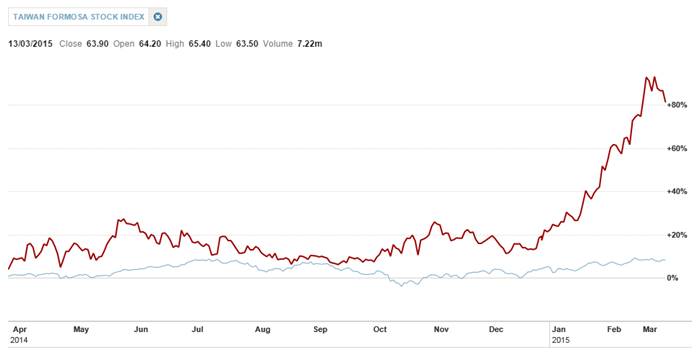
Sheaths are not the most obvious structures on a bamboo plant, but they are, perhaps, the most complicated. As the bamboo shoot breaks through the earth’s surface and reaches for the sun, it is covered and protected by a set of distinctive sheaths. Every soft and vulnerable emerging node of rhizome (root), culm, or branch bears a sheath that protects it during growth until it hardens. The outer surface of the culm sheath is usually tough while the inner surface is always smooth and glossy which allows the internode to rise rapidly through its casing. Similarly, upon crafting the culture and creating the context for resilient growth, sheath leaders play the role of protecting emerging nodes of innovation at the periphery from harm. An illuminating example would be how Singapore’s founding Prime Minister Lee Kuan Yew cleared the political obstacles and laid the ground to allow for the innovations devised by his key economic architect Dr. Goh Keng Swee to be implemented, as commented by Lee himself in his eulogy for Goh on 23 May 2010: “He [Goh Keng Swee] was my trouble-shooter. I settled the political conditions so that his tough policies we together formulated could be executed.” Like its tough outer surface, sheath leaders are brutally honest in recognizing a problem rather than to pretend there is none. Without gratitude, honesty cannot be brought out meaningfully, since gratitude is the ability to see value even in humble, unremarkable and problematic situations as areas to improve through providing his or her service. Gratitude is antiheroic. It does not depend on courage or strength or talent. It is based on our incompleteness and born only where solidarity and the awareness of problems are present. If we are honest and do not hide it from ourselves, we can proactively work to receive the goodness and opportunities that life offers us and we can be grateful. With its smooth inner surface, sheath leaders are able to weave diverse networks and groups who might otherwise be excluded into a coherent whole, quite unlike the typical command-and-control “position/title-based” leadership Sheath leaders are able to give voice to the unpopular, unconventional, unorthodox views to foster innovation. With this understanding of Sheath leadership in the Bamboo Innovator framework, we like to briefly discuss about Taiwan Paiho (TWSE: 9938 TT) which is up 80% since we highlighted the company in our Monthly Moat report in March 2014. Paiho is the world’s largest touch fastener tape maker (1.3m km/yr, >10% market share) with applications in apparel, shoes, diapers, car seats etc. All top 20 global athletic shoe brands, including Nike, Adidas, Reebok, Sketchers, UnderArmor are customers whom Paiho has forged long-term “spec-in” partnerships with. Taiwan Paiho (TWSE: 9938 TT) – Stock Price Performance Vs Taiwan Formosa Stock Index
What struck us was how Paiho founder and CEO Vergil Cheng tried to cultivate a sustainable culture of innovation by giving voice to diverse views so that everyone are co-creators in the value creation process rather than just a few dealmakers/rainmakers or the emperor himself, the same mindset as Pixar’s Ed Catmull: “The importance of R&D cannot be emphasized enough; it’s akin to helping the engineers and developers to “carry books”. At Paiho, all business unit managers and supervisors and above are automatically listed as a R&D personnel and can present their idea proposal. When a R&D project requires funding and the supervisor dare not make the decision whether or not to proceed, the business owner can provide his or her opinion. The investment opinion must not be based on the general macroeconomic outlook, but whether the specific product can have a breakthrough market potential.*“ Cheng explains how innovations enabled Paiho to pursue unique opportunities to widen its economic moat: “Winning in a price war is a transient race; continuous innovation in product quality is like a marathon and the sustainable way to win. A pair of branded sports shoe is around TWD 2,000-3,000 ($66-100). So if the tape fastener in the branded shoe is of an inferior quality, the customer will scold the brand owner and not the fastener supplier. So the brand owner will be very strict in selecting the best supplier and not go for the lowest price supplier. Paiho is one of the rare few Taiwan and even Asian shoe materials company with proven R&D capabilities and is involved in the design stage with the client before the new product is launched. Our “spec-in” long-term partnerships with all the top 20 athletic sports shoe companies develop new materials/designs and provide better and patented solutions to avoid price competition and maintain stable margin. We send 8,000 pieces of sample products to our clients for them to do their trial tests. Only by doing co-R&D work with the world’s best brands and growing together with them can we provide the best customer service and solution, to master and even lead the industry trend. Our comprehensive product range is also protected by over 110 patents. Some of these patented innovations include our water-resistant tape fastener which can maintain its ‘stickiness’ in the water and is designed for water sports activities.*” We particularly like a profound quote by Pixar’s Ed Catmull: “Imagine an old, heavy suitcase whose well-worn handles are hanging by a few threads. The handle is “Trust the Process” or “Story is King” – a pithy statement that seems, on the face of it, to stand for so much more. The suitcase represents all that has gone into the formation of the phrases: the experience, the deep wisdom, the truths that emerge from struggle. Too often, we grab the handle and – without realizing it – walk off without the suitcase. What’s more, we don’t even think about what we’ve left behind. After all, the handle is so much easier to carry around than the suitcase.” We think that there are many thoughts and statements about how Asia needs to be more entrepreneurial and innovative, akin to Ed Catmull’s “handle” trying to lift up the old, heavy suitcase of Asia. Unless one has a R.E.S.-ilience handle and framework to carry this suitcase, it will be difficult to invest in the emerging tycoons, the innovators and the wide moats they are building, like Taiwan Paiho and Vergil Cheng – before they become obvious – and uncover the hidden wealth inside during this critical transition period and in the coming decades ahead. *Chinese to English translation by KB Kee. Any translation errors are KB’s. Warm regards, KB The Moat Report Asia http://accountancy.smu.edu.sg/faculty/profile/108141/KEE-Koon-Boon A new monthly issue of The Moat Report Asia is now available! Access the in-depth idea presentation: |
March 16, 2015 Leave a comment
Life
Investing Process
Greater China
India
Japan & Korea
ASEAN
Macro
TMT
Energy & Commodities
Consumer & Others
March 15, 2015 Leave a comment
Life
Investing Process
Greater China
Japan & Korea
ASEAN
Macro
Energy & Commodities
TMT
Consumer & Others
March 14, 2015 Leave a comment
Life
Investing Process
Greater China
India
Japan & Korea
ASEAN
Macro
Energy & Commodities
TMT
Consumer & Others
March 13, 2015 Leave a comment
Life
Books
Investing Process
Greater China
India
Japan & Korea
ASEAN
Macro
TMT
Healthcare
Energy & Commodities
Consumer & Others
March 12, 2015 Leave a comment
Life
Greater China
India
Japan & Korea
ASEAN
Macro
Energy & Commodities
Healthcare
TMT
March 11, 2015 Leave a comment
Life
Greater China
Japan & Korea
ASEAN
Macro
Healthcare
TMT
Consumer & Others
March 10, 2015 Leave a comment
Life
Investing Process
Greater China
India
Japan & Korea
ASEAN/Singapore
Macro
Energy & Commodities
TMT
Healthcare
Consumer & Others
March 9, 2015 Leave a comment
| “Bamboo Innovators bend, not break, even in the most terrifying storm that would snap the mighty resisting oak tree. It survives, therefore it conquers.” |
| BAMBOO LETTER UPDATE | March 9, 2015 |
Bamboo Innovator Insight (Issue 72)
|
| Dear FriendsThe Accounting of Words & The Hiss of the Asian Snake“No, you can’t hide behind GAAP. GAAP accounting rules are the ones that we all live by and they are very strict. We had both KPMG and Ernst & Young restate that they are ok with our numbers.”
This was the hissing sound made by Computer Associates’ Chairman and CEO Sanjay Kumar before he was later sentenced to 12 years in prison for his role in the $2.2 billion accounting fraud. The accounting disclosure of words — the level of disclosure (how much you say), its tone (what do you mean), and its transparency (how you say it) — can be an additional helpful tool for investors and regulators to ferret out the Asian Snake engaging opportunistically in accounting fraud. As Buffett puts it wisely: “Under any rules, if the CEO, wants to obfuscate, they can do that; and if they want to make it clear, they can do that. If they want to provide you with fluff, they can do that. If they want to provide you with substance, they can do that. The CEO will look at any rules through his own particular glasses, and either look at them as a way to give his shareholders more information, or to do some kind of tap dance number.” Despite the approximately 50/50 mix in preparing financial disclosures, the overwhelming focus is on accounting numbers. Significantly less time is spent looking at the context or the communication of these numbers. Opportunities are thus presented for investors and regulators to analyze not only the text of the Annual Report, Management Discussion & Analysis (MD&A) sections and IPO prospectuses, but also press releases, conference calls, and management interviews, etc. Investors may scrutinize the content for truthful revelation or opportunistic structuring of language in these situations by managers intent on hiding adverse information from investors. We will be examining and applying textual and unstructured data analysis tools – such as the FOG Index, the Narcissism Index, Tone Management, the 4Cs (Candor, Context, Complexity/ Confusion, Contradictions/ (in)Consistencies) etc – in different real-world western and Asian cases, including understanding their limitations. Week 1 – Survival in the Asian Capital Jungle: Who Knows What When? (108 slides) Week 2 – Western Tools to Catch An Asian Snake? (111 slides) Week 3 – The Incentivized Asian “Wedge” Snake to Tunnel Corporate Wealth (revised to 105 slides from 86 slides) Week 4-5 – Shedding of the Asian Snake’s Skin, The Opportunistic Tunneling of Corporate Wealth (157 slides) Week 6 – Descend into the Asian Snake’s Lair, Occult Offshore Centers, Tax-Tunneling, and Consolidation Craftiness (89 slides) Week 7-9 – The Asian Snake Charmer and Stock Manipulation Scheme (112 slides) Week 10 – The Accounting of Words & The Hiss of the Asian Snake (57 slides) Warm regards, KB The Moat Report Asia http://accountancy.smu.edu.sg/faculty/profile/108141/KEE-Koon-Boon A new monthly issue of The Moat Report Asia is now available! Access the in-depth idea presentation: |

咬定青山不放松,立根原在破岩中。 千磨万击还坚劲,任尔东西南北风。
 Bamboo Innovator