The name game: New web domain names hit the market

The name game: New web domain names hit the market

Feb 8th 2014 | From the print edition

AFTER the dotcom boom of the 1990s, the world is about to experience a boom in dots. Over 1,000 new generic top-level domain names (gTLDs) are set to join the 22 existing ones, such as .com and .org, and the 280 country-specific ones, such as .uk, that now grace the end of web addresses. The Internet Corporation for Assigned Names and Numbers (ICANN), the non-profit organisation that manages the web’s address book, reckons this will boost competition and innovation. It will also increase the cost to businesses of protecting their brands.

Some of the new gTLDs, such as .guru and .sexy, will flatter owners’ egos. Others, such as .clothing and .photography, will be used by firms to tout their wares. Among the first to go live, on February 4th, was “.web” written in Arabic script. That made history: until now all generic top-level domains have been written in Latin lettering, meaning internet users with Arabic keyboards had to wrestle with ALT, CTRL and the like to type the last few letters of most websites’ names. Other gTLDs in scripts such as Chinese and Russian will follow in the coming months.

Firms including Apple, Ford and IWC, a watchmaker, have already applied to register their names as gTLDs. That will allow them to ensure they are not used by crooks or cybersquatters. Google, Amazon and others have applied for numerous gTLDs, including .app and .kindle, presumably because they want to use them and think they can make money by selling the right to use “second-level” domains (for example, economist.app), typically for $10-50 a year. Firms may also be keen to buy certain second-level domains to stop them falling into the wrong hands. Donuts, a company that has lodged hundreds of applications for gTLDs, has .wtf and .sucks on its list.

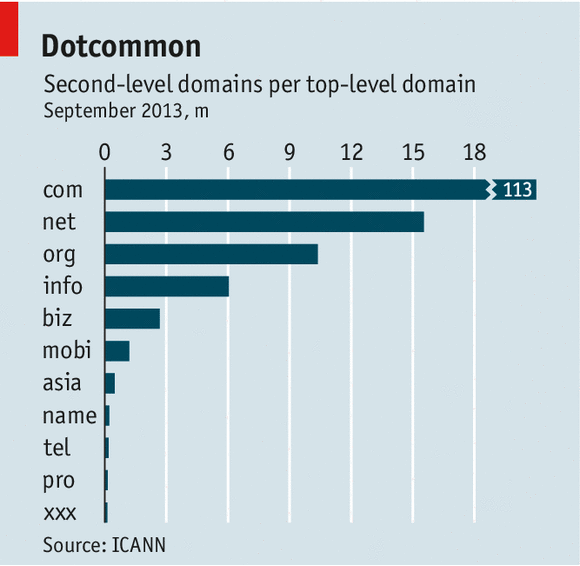
But there are costs to owning a gTLD. Firms must pay $185,000 to ICANN when applying for one, plus $25,000 for each year they use it. Deciding which ones to splash out on is tricky. New domains including .biz and .mobi have been added in the past, but have failed to put a dent in the wildly popular .com (see chart).

image001-10

The avalanche of new domains may also confuse web users, who often get to their destinations via search engines rather than by typing web addresses into browsers. Greater choice and competition should eventually bring them benefits. But the transition may be .complicated.


Government-to-government trade: Unbundling the nation state; Countries have started to outsource public services to each other

Government-to-government trade: Unbundling the nation state; Countries have started to outsource public services to each other

Feb 8th 2014 | From the print edition

NIGERIAN pineapple for breakfast, Peruvian quinoa for lunch and Japanese sushi for dinner. Two centuries ago, when David Ricardo advocated specialisation and free trade, the notion that international exchange in goods and services could make such a cosmopolitan diet commonplace would have seemed fanciful. Read more of this post

If Brazilians find themselves in a tight spot, they say they are in a saia justa (a tight skirt); Brazil’s president has left herself little room for economic manoeuvre ahead of a difficult re-election campaign

Brazil’s president has left herself little room for economic manoeuvre ahead of a difficult re-election campaign

Feb 8th 2014 | From the print edition

IF BRAZILIANS find themselves in a tight spot, they say they are in a saia justa (a tight skirt). Although she usually prefers trouser suits, that is precisely where Dilma Rousseff finds herself. Later this month she will launch her campaign to win a second term in a presidential election due on October 5th. Normally at this stage of the political cycle, as in the run-up to elections in 2006 and 2010, the government would be ramping up spending. But when Ms Rousseff spoke to the World Economic Forum in Davos last month, with the São Paulo stockmarket and the real dipping along with other emerging economies, she felt impelled to stress her commitment to being strait-laced. Read more of this post

Technology v the BBC: Yesterday’s news; The licence fee is becoming ever harder to justify

Technology v the BBC: Yesterday’s news; The licence fee is becoming ever harder to justify

Feb 8th 2014 | From the print edition

EMILY CHAPMAN keeps her television under the bed. Two years ago the 27-year-old from London cancelled her TV licence in an effort to spend fewer hours in front of the box. Now she and her boyfriend watch DVDs on a laptop and BBC programmes through iPlayer, an online video service. That is more compelling than she expected: “Our screen time has probably gone up.” Read more of this post

Into the melting pot: The rapid rise of mixed-race Britain is changing neighbourhoods-and perplexing the authorities

Into the melting pot: The rapid rise of mixed-race Britain is changing neighbourhoods—and perplexing the authorities

Feb 8th 2014 | From the print edition

ZADIE SMITH, a novelist born to a black Jamaican mother and a white British father, recently recalled that when she was growing up in Willesden Green, a London district with a large immigrant population, “nothing could be more normal than a mixed-race girl”. The surprise, she said, was entering publishing and finding that people thought it unusual. Nobody could get that impression now: Britons are mixing at extraordinary speed. Read more of this post

Nanomanufacturing in America: Small but imperfectly formed

Nanomanufacturing in America: Small but imperfectly formed

Feb 7th 2014, 14:00 by P.H.| WASHINGTON D.C.

VACUUM TUBES, semiconductors and the internet have changed how we live; now nanotechnology promises a similar revolution. Nanocoatings that make it impossible for liquid to even touch a treated surface are transforming material science. Carbon nanotubes can help artificial muscles behave like the real thing, while nanoscale drug delivery can target cancer cells with deadly accuracy. Concrete infused with nanofibres can be self-sensing, enabling roads and bridges to be monitored remotely for structural weakness or traffic volumes. Read more of this post

Politics in Myanmar: Not so fast; Aung San Suu Kyi’s road to the presidency grows longer and more winding

Politics in Myanmar: Not so fast; Aung San Suu Kyi’s road to the presidency grows longer and more winding

Feb 8th 2014 | SINGAPORE | From the print edition

EVER since Myanmar’s army-dominated government began its political reforms in 2011, the question of whether the country’s most popular politician would be able to stand for president next year has hung over the whole process. Aung San Suu Kyi is a Nobel laureate, among the most famous women in the world, and leader of the country’s biggest opposition party, the National League for Democracy (NLD). But all this will count for nothing if Myanmar’s constitution continues to bar Miss Suu Kyi from standing for president. Changing the constitution to allow this has become the single most important test for the country’s reformers. But to judge by recent events, altering the constitution will be harder than many had expected. Read more of this post

Approaching the endgame: A messy poll leaves Thailand in an even worse pickle

Approaching the endgame: A messy poll leaves Thailand in an even worse pickle

Feb 8th 2014 | From the print edition

ELECTIONS are supposed to provide political solutions. The one Thailand held on February 2nd served only to further exacerbate its problems. Both sides of the political divide claimed a victory. The governing Pheu Thai party, which had defied protesters’ efforts to scupper the vote through disruption, intimidation and a boycott, could boast that nearly 90% of polling stations opened for business and that nearly half of voters turned out. But the protesters and the main opposition Democrat Party which backs them thwarted voting in enough places to mean that, constitutionally, no government can be formed. They may now succeed in having the whole election annulled by the courts. And these might even find a reason to dissolve Pheu Thai. The enemies of Yingluck Shinawatra, the prime minister, are inching closer to their goal of forcing her to resign. Read more of this post

Emerging Markets Buffeted By Bipolar World: America’s rock, China’s hard place

Emerging Markets Buffeted By Bipolar World

By Mike Dolan on 11:32 am February 6, 2014.

London. Ailing emerging markets are caught between a rock and a hard place — Washington and Beijing to be more precise.

For much of 2013, the investor narrative was that currencies and stock markets from Mumbai to Moscow and Istanbul to Johannesburg were running aground as Federal Reserve largesse ebbed away. Read more of this post

The founder of Sri Rejeki Isman Textile Group and one of the richest men in Indonesia, H.M. Lukminto, died on Wednesday night, according to family sources in Singapore. He was 67 years old

Sritex Founder Dies of a Heart Attack

By Ari Susanto on 8:58 am February 7, 2014.

Solo. The founder of Sri Rejeki Isman Textile Group and one of the richest men in Indonesia, H.M. Lukminto, died on Wednesday night, according to family sources in Singapore. He was 67 years old. Read more of this post

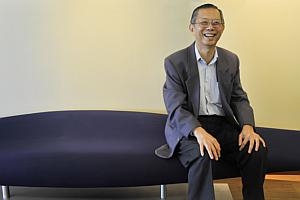
The mandarin and the teacher: Long-time civil servant Lim Siong Guan talks to Vikram Khanna about Singapore’s generational challenges and the art of leadership

PUBLISHED FEBRUARY 08, 2014

The mandarin and the teacher

Long-time civil servant Lim Siong Guan talks to Vikram Khanna about Singapore’s generational challenges and the art of leadership

image001-24

IT is hard to imagine a career in the Singapore civil service as rich in variety, accomplishment and distinction as that of Lim Siong Guan. In his 37 years in the service, he has held positions at almost all levels. He has been an engineer in the Sewerage Department, started a flying club to groom pilots for the air force, procured tanks and artillery for the military, worked with school teachers and principals to reshape education policy, helped draw up national budgets, promoted innovation in the civil service, pioneered the development of e-services in government and also oversaw Singapore’s investments. Read more of this post

Emerging market equity fund outflows this year surpass whole of 2013

Updated: Friday February 7, 2014 MYT 5:57:39 PM

Emerging market equity fund outflows this year surpass whole of 2013

LONDON: Outflows from emerging market equity funds since the start of this year now exceed those for all of 2013 after investors continued to flee emerging stock and bond funds during the past week, banks said on Friday, citing EPFR Global data. Read more of this post

The fiasco with KLIA2: Time to get a handle on cost

Updated: Saturday February 8, 2014 MYT 8:05:37 AM

Time to get a handle on cost

BY JAGDEV SINGH SIDHU

A DELAY in finishing off big projects makes news and it’s often an embarrassment when a project is bogged down and completed beyond the original deadline.

It reveals poor planning and execution, but the one aspect that really slips the minds of many is whether the project is completed within the original budget. Read more of this post

If our first prime minister was still alive, what would he say about Malaysia today?

Updated: Tuesday February 4, 2014 MYT 6:54:06 AM

Remembering the Tunku

BY WAN SAIFUL WAN JAN

If our first prime minister was still alive, what would he say about Malaysia today?

THIS Saturday, Feb 8, marks the 111th birthday of Tunku Abdul Rahman. Not only did he take our country to independence in 1957, he also led the coming together of four entities – Sabah, Sarawak, Singapore and Malaya – to form the Federation of Malaysia. Read more of this post

Tan Sri Andrew Sheng: Celebrating Chinese New Ye

Updated: Saturday February 8, 2014 MYT 8:03:43 AM

Celebrating Chinese New Year

BY TAN SRI ANDREW SHENG

image001-23

It is the time for great story-telling

CHINESE New Year is a time for family and friends. The astrologers say the Year of the Horse is supposed to be a sign of activity and surely there will be prosperity for many.

The Chinese zodiac consists of a 12-year cycle with one animal for each year: rat, ox, tiger, rabbit, dragon, snake, horse, goat, monkey, rooster, dog and pig. The CLSA annual tongue-in-cheek Feng Shui Index forecasts that the coming Year of the Wood Horse will be “pure bull from teeth to tail”, with the Hong Kong Hang Seng Index hitting 28,105, compared with the current level of 21,800.

Chinese New Year is basically all about family time, with elders using the occasion to tell stories to the children, with the most popular being those from the Romance of the Three Kingdoms and the Journey to the West. Story telling today is a lost art because children are more entertained by cartoon and movie versions of these stories.

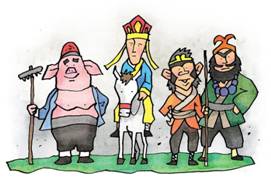
The Journey to the West is one of the most popular classics written in the Ming Dynasty (1368-1644) about the pilgrimage to India of a Chinese monk, Tang Xuanzang (602-664 AD), during the Tang Dynasty (608-907) to learn Buddhism, returning with Buddhist scripts and converting much of China to Buddhism. The novel comprises 100 chapters, which suggests that it is a compilation of episodes told by storytellers who would dramatise the stories with poetry, prose and historical allusions just to create greater appeal to their audience.

The whole journey is shrouded in myth and fantasies, because Xuanzang was accompanied by four disciples, assigned by the diety Guan Yin to protect him during the pilgrimage. The first is the monkey king, Sun Wukong, a clever rascal prone to excesses, against which Guan Yin had to put on him a golden headband, with which Tang could control the monkey if it gets out of hand.

The second disciple is an unfilial dragon transformed into a white horse to serve Tang to atone for the sins of its past life. The third disciple is the greedy pig Zhu Bajie, who is a good fighter, to protect the pilgrims, but spends a lot of time distracted by food and sex. Last is the stalwart Sha Wujing, a sand spirit who is the more serious defender of the monk when Sun Wukong and Zhu Bajie are fooling around elsewhere.

Journey to the West is highly comical, funny and fantastical, enjoyed by children and adults alike. It has been translated into many languages, the most popular in English being the translation by Arthur Waley called Monkey. In his foreword to that translation, the Chinese philosopher Hu Shih claimed it was a book of “profound nonsense”.

Is it such a simple fantasy tale?

I always thought that Journey to the West is a profound, deep allegorical text on the contradictions within the Chinese character, as it melds three key philosophies in China – Buddhism, Confucianism and Taoism.

The appeal of the book lies in the contrast between the monk as a straight, gentle human being, whereas his fantastic and crooked disciples bring out the comic, tragic, sins, virtues, crimes and good deeds – all tests, trials and tribulations that a person seeking enlightenment has to go through.

Life is a journey, with a beginning, middle and an end. But Buddhism and Indian philosophy shares with Taoism and the Book of Change (the earliest Chinese philosophy) the idea of a karmic cycle, that we transcend from one life to another – in other words, an unending journey.

The book begins not with the monk’s journey, but the birth of the monkey, aptly named Wukong, meaning an awakening or enlightenment to the emptiness of mind, when one realises the meaning or meaninglessness of human desire.

At the beginning, the monkey is wild, combative and destructive, wreaking havoc in heaven, but in the end, he realises that he cannot escape Buddha’s hand – the all-reaching compassion of enlightenment and one’s fate.

Like all good stories with good endings, the book ends with Xuanzang and the monkey attaining Buddha status, as well as rewards and recognition for the other pilgrims.

Various experts have pointed out the deep meaning and numerology in various parts of the book. Xuanzang or sometimes called Sanzang (Tripitaka) means the three collections of Buddhist sacred texts that he brought back from India. Zhu Bajie means Eight Sins or forbidden things. Three and Eight are good numbers for Chinese.

In advance of the Third Plenum last October, the Development Research Centre of the Chinese State Council gave an introduction to the reform intentions through what is popularly known as the “383 plan”.

The plan is called 383, because it highlights the key relationships between the state, market and enterprises. There are eight key areas of reform: governance, competition policy, land, finance, public finance, state assets, innovation, and liberalisation of international trade and finance. Finally, there are three correlated goals: reducing external imbalances, building social inclusiveness, and improving governance through tackling inefficiency and corruption.

I wonder whether it is a coincidence that the 383 plan seems like China’s newJourney to the West. If it is anything like the classic, the new journey will be full of drama, twists and turns and never boring.

The Year of the Horse is half-way through the 12-year cycle, marking the beginning of the second half. The first half began with the Year of the Rat (2008), a year of crisis in the West, but one of the fastest growth period for China and indeed many emerging markets, partly the result of quantitative easing in the West.

Will the next six years involve a period of slower growth, less tumultuous and perhaps more stable?

Only time will tell.

The journey of a thousand miles begins with the first step. Every day, every year begins anew with the first step. Gong Xi Fa Cai to all who celebrate Chinese New Year.

Tan Sri Andrew Sheng is president of the Fung Global Institute.
 

Malaysian tycoon Tan Sri Robert Tan seems to be on a roll to unlock the values of some listed companies; A close associate of Tun Daim Zainuddin, Tan’s company Spanco obtained a privatised contract in 1993 to service govt-owned vehicles.

Updated: Saturday February 8, 2014 MYT 11:11:18 AM

Robert Tan’s PDZ in the limelight

BY WONG WEI-SHEN

LOW-PROFILE tycoon Tan Sri Robert Tan Hua Choon seems to be on a roll to unlock the values of some his listed companies. His modus operandi: the entry of new shareholders that bring with them new businesses.

The 72-year-old, dubbed the elusive “Casio King”, only last month saw his Malaysia Aica Bhd (Maica) make headlines after it received a takeover offer from property developer Sunsuria Development Sdn Bhd. The move sent Maica shares sky rocketing by some 60%. Read more of this post

Beijing may introduce congestion charge as early as 2015

Beijing may introduce congestion charge as early as 2015

Staff Reporter

2014-02-08

Beijing is to unveil plans for a low-emission zone and vehicle congestion charge by the end of the year, with the measures to come into effect as early as 2015, reports the Beijing Youth Daily, the official paper of the Communist Youth League of China in Beijing. Read more of this post

New chief, another one-word slogan for Microsoft; Ballmer walking on stage at a conference in 2006, sweat staining his armpits and chest while he passionately bellowed, “Developers! Developers! Developers! Developers! Developers!”

New chief, another one-word slogan for Microsoft

Published 05 February 2014 18:04, Updated 06 February 2014 10:20

Nick Bilton

You might remember a now-famous scene with Steven A. Ballmer, then the chief executive of Microsoft, walking on stage at a conference in 2006, sweat staining his armpits and chest while he passionately bellowed, “Developers! Developers! Developers! Developers! Developers!” Read more of this post

Rent poor households estimated at 27,000 to 31,000 in Seoul

Rent poor households estimated at 27,000 to 31,000 in Seoul

Ko Jae-man

2014.02.07 17:12:48

The rent poor refer to those who barely make their ends meet by spending most of their income on pricy housing rents. Generally, those whose housing rents represent over 30 percent of their total income fall into the category of the rent poor.  Read more of this post

Using data to pick the optimal start-up name? Whatever you do, don’t pick a name that starts with the letter J. Or K. Or Q. Instead, favor names beginning with T, O and A.

Using data to pick the optimal start-up name?

February 7, 2014: 5:04 PM ET

When analyzing data, be careful not to confuse correlation for causation.

By Tomasz Tunguz, contributor

FORTUNE — Naming your startup can be one of the hardest things to do when starting a company. Each founder must agree. The domain must be available to buy. Lastly, and perhaps most importantly, investors need to like it because the first letter of startup’s name has meaningful impact on how easily the company will be able to raise money. Read more of this post

At GE, a push for innovation through partnerships; The industrial titan is using its investment arm to partner with outside companies to produce and commercialize new products

At GE, a push for innovation through partnerships

By Chanelle Bessette February 7, 2014: 2:37 PM ET

The industrial titan is using its investment arm to partner with outside companies to produce and commercialize new products.

FORTUNE — General Electric (GE) has a long history of developing, manufacturing, and selling products across more than a dozen sectors, but the industrial giant is using its investment arm to find untapped resources for innovation. Read more of this post

Secrets of the Brain: New technologies are shedding light on biology’s greatest unsolved mystery: how the brain really works.

Published: February 2014

Secrets of the Brain: New technologies are shedding light on biology’s greatest unsolved mystery: how the brain really works.

By Carl Zimmer

Van Wedeen strokes his half-gray beard and leans toward his computer screen, scrolling through a cascade of files. We’re sitting in a windowless library, surrounded by speckled boxes of old letters, curling issues of scientific journals, and an old slide projector that no one has gotten around to throwing out.

“It’ll take me a moment to locate your brain,” he says. Read more of this post

A Netflix for Books?

A Netflix for Books?

By Peter Osnos

The Book-of-the-Month Club (BOMC) was founded in 1926. In the 1980s, it was one of publishing’s most formidable enterprises, with millions of members across the country. It had a panel of distinguished judges whose choice of main selections assured a book high visibility and a substantial payment to the author and publisher. The mail-order book club business and its subsidiaries still function, though on a much smaller scale, having been sold and consolidated over the years into gradual irrelevance. But the principle of subscribing for content is again a hot subject, as digital dominance expands from video and music on-demand to the possibilities for books.  Read more of this post

Refresh’s personal dossiers take the work out of small talk; If the future gets its way we may never have to remember anything about anyone ever again

Refresh’s personal dossiers take the work out of small talk

BY JAMES ROBINSON 
ON FEBRUARY 6, 2014

If the future gets its way we may never have to remember anything about anyone ever again.

Immediately after speaking with Bhavin Shah, co-founder of Refresh, I downloaded his startup’s app, billed to be the only mobile service that provides “dossiers” of information about the people you know, meet and run into. After giving it access to a not inconsiderable amount of my personal information – calendar, email accounts, Facebook, Twitter, LinkedIn – it whirred into life. Read more of this post

Your Weakness May Be Your Competitive Advantage

Your Weakness May Be Your Competitive Advantage

by Dorie Clark  |   9:00 AM February 5, 2014

Midway through the workshop I was teaching on professional reinvention, I gave participants an assignment: create a narrative citing your professional strengths. After the break, a woman named Alison raised her hand. “This one was difficult for me,” she said. “I thought about what was special about me: I’m a strategic thinker, and I can get things done. But other people can do that, too. I’m not sure how I can really stand out as I’m applying for jobs.” She isn’t alone. For many of us, it’s hard to identify exactly what about us — if anything — is valuable or unique. Read more of this post

The First Strategic Question Every Business Must Ask: What business are you in? It seems like a straightforward question, and one that should take no time to answer

The First Strategic Question Every Business Must Ask

by Anthony K. Tjan  |   8:00 AM February 6, 2014

What business are you in?  It seems like a straightforward question, and one that should take no time to answer.  But the truth is that most company leaders are too narrow in defining their competitive landscape or market space.  They fail to see the potential for “non-traditional” competitors, and therefore often misperceive their basic business definition and future market space. Read more of this post

To go mainstream, Twitter needs to kill the stream

To go mainstream, Twitter needs to kill the stream

Matthew Braga | February 7, 2014 | Last Updated: Feb 7 4:27 PM ET
There are people that believe Twitter is all about the stream – that, if you just keep scrolling, the wonders of the world will coalesce into a single, hypnotic column. The stream is where bite-sized hits from Benghazi and the Grammy’s can exist side-by-side amidst tweets from friends on some movie you all saw last night. If that’s not the definition of information density, of how a new generation of internet-connected youth consume things we loosely term as “news,” I dare you to find me a better definition of what is. Read more of this post

It’s Time to Put Your Strategy on a Diet

It’s Time to Put Your Strategy on a Diet

by Nick Tasler  |   12:00 PM February 5, 2014

David Packard once famously quipped, “More companies die from overeating than starvation.” As it turns out, recent studies about dieting show that Packard’s clever metaphor might be more instructive than he ever imagined — and they can provide modern leaders with important lessons about planning and strategy. Read more of this post

Winter Olympics 2014 puts Russia’s corruption — and incompetence —on world stage

Winter Olympics 2014 puts Russia’s corruption — and incompetence —on world stage

Diane Francis | February 7, 2014 | Last Updated: Feb 7 1:33 PM ET
In 1787, Czarina Catherine II went to Ukraine and Crimea to inspect her new acquisitions. They had been devastated by war, but when she arrived, her trusted military leader Grigori Potemkin ordered the construction of fake villages to impress the Empress and her allies. Read more of this post

How Microsoft Avoided the Peter Principle with Nadella

How Microsoft Avoided the Peter Principle with Nadella

by Dennis Carey and Michael Useem  |   9:25 AM February 6, 2014

In one of the most widely scrutinized CEO successions ever, Microsoft directors selected insider Satya Nadella to run the company, only their third CEO pick in the firm’s nearly 40-year history.  His challenges will be enormous. For starters, he will be running a $75 billion+ enterprise with some 100,000 employees, an army of software engineers and many moving parts. For finishers, he will have to change its treads—redirect its strategy—while barreling down a highway with no map for what lies ahead. Read more of this post