Tired Asian Businessmen, Assessing Management Quality and the $15 Billion Oshin Retail Stock in China (Bamboo Innovator Insight)

The following article is extracted from the Bamboo Innovator Insight weekly column blog related to the context and thought leadership behind the stock idea generation process of Asian wide-moat businesses that are featured in the monthly entitled The Moat Report Asia. Fellow value investors get to go behind the scene to learn thought-provoking timely insights on key macro and industry trends in Asia, as well as benefit from the occasional discussion of potential red flags, misgovernance or fraud-detection trails ahead of time to enhance the critical-thinking skill about the myriad pitfalls of investing in Asia at the microstructure- and firm-level.

  • Tired Asian Businessmen, Assessing Management Quality and the $15 Billion Oshin Retail Stock in China, Oct 28, 2013 (Moat Report Asia, BeyondProxy)
Oshin

Dear Friends and All,

Tired Asian Businessmen, Assessing Management Quality and the $15 Billion Oshin Retail Stock in China

“A tired businessman is one whose business is usually not a successful one.” – Joseph R. Grundy (1863-1961), Quaker businessman and US senator

“For many CEOs the hours are relentless; you’re working around the clock seven days of the week. I need a break. I think three-and-a-half years in the department store is a long time and if you think about our restructuring post the global financial crisis [and] us not being ready for the digital world, it has taken its toll and I’m just simply tired. The past three-and-a-half years as a CEO … weren’t normal, let’s face it. It was tough going and I am signalling my intention to resign ….” – Paul Zahra, CEO of David Jones, on Oct 22, 2013

Tears were welling up in my eyes this week. Not over Paul Zahra’s shocking announcement on Oct 22, 2013 over his sudden resignation as CEO of Australian upmarket departmental store David Jones (ASX: DJS, MV A$1.48 billion) and the even more shockingly frank explanation: Because he is “simply tired” and “burnt out”. Zahra could have confined his decision to the usual “personal reasons” but he chose to elaborate.

I was fighting back tears over watching the Japanese movie Oshin (おしん) that was shown in the theatres. The movie is a remake of the iconic 1983 Japanese TV drama which was a global hit. The never-tired spirit of Oshin, about a poor girl who perseveres and triumph against the odds despite all the bullying and adversities, has stood in sharp contrast to the admission by Paul Zahra. David Jones was down 44% since Zahra took over in 2010 and has reported consistent falls in revenue and is only now looking at the prospect of earnings growth. Zahra was recently credited for the potential reversal in fortune and he was awarded 88% of his short-term incentive payment.

Oshin is inspired by the touching story of the late Katsu Wada, the indefatigable entrepreneur who founded the once-successful Japanese departmental chain Yaohan in 1930. The film-maker explained that the 30-year lag for the movie version of the series was to celebrate the 30th anniversary of Oshin and that even after 30 years, “there are some things that never change, like the inspirational story of perseverance”. Even though I have watched the TV series like most older-generation Asians and am familiar with the story, I still cried in one particular scene. Before Oshin’s beloved grandmother died, she had a mouthful of the rice porridge – wages that were earned by Oshin when she was taken in by the kind and wise matriarch Mrs Yashiro in exchange for her labor at the Kagawa-family rice dealer shop. Oshin’s grandmother’s touching parting words: “The rice is very tasty.”

The death of her grandmother steels Oshin’s resolve to make something good out of her life. The story of Oshin is to remind people to cherish those around them and to keep going no matter what happens. Perhaps I was also a little emotional because building up The Moat Report Asia has its unique challenges and what kept me going was the sense of duty to value-add to our subscribers and readers with authentic and refreshing views about resilient compounders in Asia as accounting frauds of companies with attractive quant financials and net-net numbers break out systematically and syndicates manipulating share prices and volumes run rampant. Like Oshin who treasure the people around her, I cherish every one of our subscribers and they come from North America, the Nordic, Europe, the Oceania and Asia, including value investors with over $20 billion in asset under management in equities.

Quaker entrepreneur Joseph Grundy (1863-1961) illuminated a useful way to assess management quality with his penetrating quote: “A tired businessman is one whose business is usually not a successful one.” The story of Paul Zahra and Oshin highlighted two interesting questions:

  • Avoiding stocks whose companies are run by managers who are tired appear to be a sound method to lower downside risks. If so, is it possible to know in advance why managers get tired and burn out?
  • Why then do others not get tired like Oshin? How to identify and invest in stocks whose management and culture that have such Oshin-like quality?

To answer these questions, let’s explore the case of the $94-billiion retail grocery market in China:

  • Why is there one Oshin-like company in China, with a market value of $15 billion, who is growing sustainably when everyone else, from Tesco, Wal-Mart to Asia’s richest businessman Li Ka-Shing’s Park N’Shop and Thai billionaire tycoon’s CP Lotus, are “tired” with faltering growth and losses?
  • Also, what are the 3Ms that resulted in entrepreneurs and managers to not become tired? The 3Ms is also a simple and practical way to help value investors assess management quality.
  • How can companies avoid the fate of a Yaohan and investors to detect the downfall ahead of time?

“In business, I look for economic castles protected by unbreachable ‘moats’.”

– Warren Buffett

The Moat Report Asia is a research service focused exclusively on competitively advantaged, attractively priced public companies in Asia. Together with our European partners BeyondProxy and The Manual of Ideas, the idea-oriented acclaimed monthly research publication for institutional and private investors, we scour Asia to produce The Moat Report Asia, a monthly in-depth presentation report highlighting an undervalued wide-moat business in Asia with an innovative and resilient business model to compound value in uncertain times.

Learn more about membership benefits here: http://www.moatreport.com/subscription/

Our latest upcoming monthly issue for the month of October examines a Northeast Asia-listed company with global #1 market share leadership in 4 different products, including making the components for an innovative consumer product whose sales have climbed from $90 million to $526 million in the recent three years. The company is a hidden global consolidator with underappreciated growth. The stock is trading at PE 11.5x, EV/EBITDA 9x and generates a sustainable dividend yield 5.75%.

Our past monthly issues in August and September investigate a Taiwan and Southeast-Asian-listed entrepreneurial company, both with a dominant 80% domestic market share and have innovative business models to generate substantial cashflow to support both expansion and a 4-5% dividend yield. There is also a behind-the-scene conversation with the CEO of the two companies to understand their thinking process in building up the business.

The Moat Report Asia Members’ Forum has been getting penetrating quality dialogues from our existing institutional subscribers from North America, the Nordic, Europe, the Oceania and Asia, including professional value investors with over $20 billion in asset under management in equities. Questions range from:

  • The nuances of internal dealings in Asia, including the case discussion of the recent deal in which HK billionaire’s Lee Shau-kee Henderson Land acquiring Towngas or Hong Kong & China Gas (3 HK) from his family holdings, seemingly déjà vu from the early Oct 2007 transaction when the market peak.
  • The case of F&N Singapore spinning out its property unit FCL Trust and getting “free” special dividend-in-specie and the potential risk in asset swap restructuring to deleverage the hidden debt in the entire Group balance sheet.
  • The dilemma of whether to invest in a Southeast Asian-listed company and hidden champion with a domestic market share of 60% due to family squabbles and a legal suit over the company’s ownership.
  • Discussion of the wise and thoughtful 107-year-old Irving Kahn’s investment into a US-listed but Hong Kong-based electronics company with development property project in Shenzhen’s Qianhai zone and the possible corporate governance risks that could be underestimated or overlooked, as well as their history of listing some assets in HK in 2004.. This is also a case study of “buy one get one free” in John’s highly-acclaimed book The Manual of Ideas in which the “free” property is lumped together with the (eroding) core business to make the combined entity look cheap and undervalued. What are the potential areas that value investors need to watch out for when adapting the SOTP (sum-of-the-parts) valuation method in Asia?
  • And many more intriguing questions.

Do find out more in how you can benefit from authentic and candid on-the-ground insights that sell-side analysts and brokers, with their inherent conflict-of-interests, inevitable focus on conventional stock coverage and different clientele priorities, are unwilling or unable to share. Think of this as pressing the Bloomberg “Help Help” button to navigate the Asian capital jungle. Institutional subscribers also get access to the Bamboo Innovator Index of 200+ companies and Watchlist of 500+ companies in Asia and the Database has eliminated companies with a higher probability of accounting frauds and  misgovernance as well as the alluring value traps.

The Omidyar way of giving: The founder of eBay aims to be a more entrepreneurial philanthropist than his predecessors

The Omidyar way of giving: The founder of eBay aims to be a more entrepreneurial philanthropist than his predecessors

Oct 26th 2013 |From the print edition

20131026_WBD000_1

THE billionaire’s dilemma: spend $250m on buying the venerable Washington Post, or splash the cash on a start-up news network to be headed by a controversial investigative journalist with no experience of running anything? It is entirely in character that Pierre Omidyar chose the second option, bankrolling the new journalism venture of Glenn Greenwald, best known for his reporting on the National Security Agency. Mr Omidyar did not become a billionaire at the age of 31 by fixing an established institution, but by building eBay from scratch into a worldwide online marketplace. And fostering innovative start-ups with an ambition to improve the world has been the focus of his philanthropy since he gave up his executive role at eBay while still in his 30s. Mr Omidyar, who is now 46, has already deployed $1 billion of his fortune to this end, which puts his $250m media investment into perspective: a big bet, but not that big. Read more of this post

Turkey’s infrastructure: Next week marks the opening of a grand new tunnel under the Bosphorus

Turkey’s infrastructure: Next week marks the opening of a grand new tunnel under the Bosphorus

Oct 26th 2013 | ISTANBUL |From the print edition

20131026_EUM999

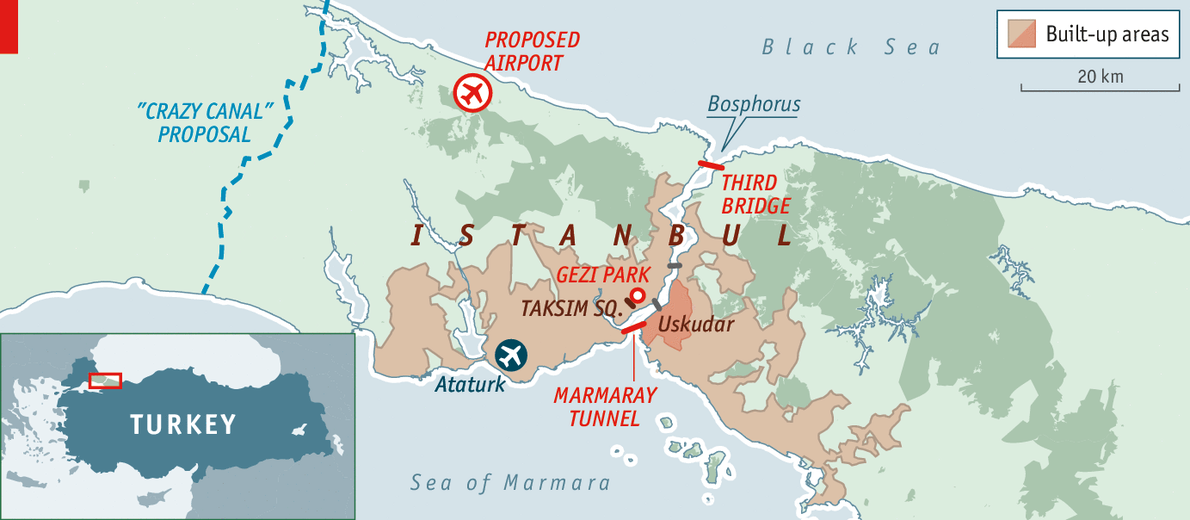
ABDUL MEJID I, the Ottoman’s 31st sultan, had a dream. Reigning between 1839 and 1861, the determinedly Western-leaning sultan envisaged the construction of a submerged tunnel under the Bosphorus Straits connecting Asia to Europe. A French architect duly came up with a blueprint. But a dearth of technology and cash stood in the way. The sultan’s dream is now coming true, 150 years later. The world’s first sea tunnel linking two continents will be inaugurated on October 29th, marking the 90th anniversary of the founding of Ataturk’s Republic. Stretching over 76km (47 miles), and with 1.4km of it laid at the bottom of the sea, the $3 billion “Marmaray” rail system will “eventually link London to Beijing, creating unimagined global connections” boasts Mustafa Kara, mayor of Istanbul’s Uskudar district, where the tunnel comes out. Read more of this post

Bangladesh’s clothing industry: Bursting at the seams; As workers continue to die in unsafe factories, the industry keeps booming

Bangladesh’s clothing industry: Bursting at the seams; As workers continue to die in unsafe factories, the industry keeps booming

Oct 26th 2013 | DHAKA |From the print edition

AFTER the Rana Plaza clothing factory near Dhaka collapsed in April, killing at least 1,100 people, the big Western clothing companies that have their garments run up in Bangladesh came under pressure to intervene more forcefully to improve safety and working conditions in the workshops they buy from. Two groups of retailers and fashion brands, one mainly North American and one mainly European, have begun implementing new monitoring schemes. On October 24th Primark, a big British retailer, said it would extend for another three months the aid it is giving to families affected by the disaster, while it works on a long-term compensation scheme. Read more of this post

Mexico’s maquiladoras: Big maq attack; A 50-year-old export industry that provides millions of jobs has to reinvent itself quickly to stay competitive

Mexico’s maquiladoras: Big maq attack; A 50-year-old export industry that provides millions of jobs has to reinvent itself quickly to stay competitive

Oct 26th 2013 | TIJUANA |From the print edition

“ELECTRONICS are like drugs. You can buy them for $1 and sell them for $40,” says Jordi Muñoz, a 27-year-old Mexican entrepreneur. People in Tijuana, where he makes small, insectlike drones (pilotless aircraft) for civilian use, would probably prefer he used a different metaphor: the city is trying to put its narcotic reputation behind it. But Mr Muñoz feels free to say what he likes, because he has found the holy grail for exporters in northern Mexico. He has brought inventive flair, not just deft fingerwork, to the process of making things (see article). Read more of this post

Creating customers for life in the everything-as-a-service (XaaS) economy

Creating customers for life in the everything-as-a-service (XaaS) economy

BY ESMERALDA SWARTZ 
ON OCTOBER 28, 2013

Search “everything-as-a service” (XaaS) and Google will spit out more than 1.5 billion results. Just based on its nomenclature, you can guess that XaaS is used to describe a variety of business models where almost anything can be delivered as-a-service — automobiles, wind turbines, jet engines and network devices are just a few examples. It’s not surprising that enterprises have begun to recognize the opportunity around the globe to transition business models to the cloud to take advantage of the XaaS trend. Gartner forecasts that the market for applications, application infrastructure and systems infrastructure delivered as public cloud services will reach $43 billion in 2015. Read more of this post

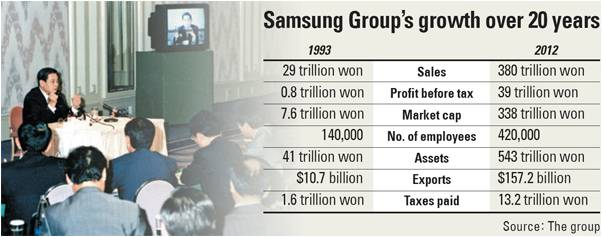
Samsung commemorates 20th anniversary of the Frankfurt Declaration, in which Lee’s call for a crisis-conscious business management philosophy, named New Management, began the strenuous and extraordinary transformation of a B2B parts manufacturer into a trendsetting global leader

Samsung lauds 2 decades of crises

Chairman Lee’s New Management born at emergency meeting

BY MOON GWANG-LIP [joe@joongang.co.kr]

Oct 29,2013

Samsung couple Samsung 20 years

Arguably the biggest success of Samsung Group is not semiconductors or displays or even the smartphones that have put the brand among the most famous and appreciated in the world. Those products, analysts say, are merely the fruit of the group’s biggest achievement: a continuing sense of crisis that many industrialists in history have tried to inculcate in their companies. Few have done it so well as Samsung’s Lee Kun-hee.  Read more of this post

Israeli company that pioneered flash drives has lessons for the start-up nation; M-Systems was a rare case of an Israeli start-up creating both a consumer hit and hundreds of jobs

Israeli company that pioneered flash drives has lessons for the start-up nation

M-Systems was a rare case of an Israeli start-up creating both a consumer hit and hundreds of jobs.

By Amitai Ziv | Oct. 29, 2013 | 6:11 PM

3820902339

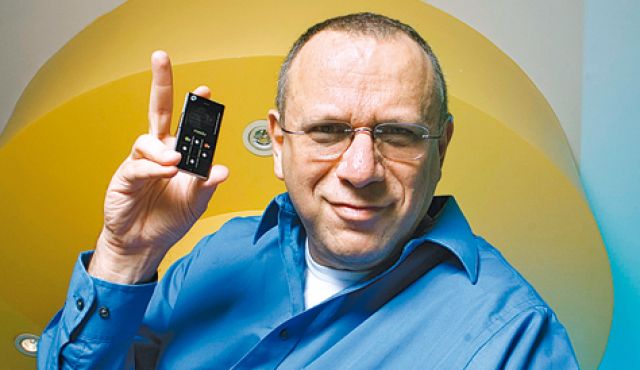
“Dov had amazing timing. It couldn’t have been better,” says one former M-Systems employee, recalling the $1.5 billion sale in 2006 of the high-tech company that Dov Moran founded and led. “Today, the DiskOnKey is technology with a glorious past,” says the former employee, referring to the company’s brand name for its USB flash drive, an external digital memory device. “On the other hand, how would our lives have been in the 1980s without cassette tapes?” His meaning is clear – USB drives were a very important and useful product in their heyday, but no longer. But the story for the devices isn’t quite over. Fifteen years after they were first invented, USB flash drives continue to be sold throughout the world and the story of M-Systems continues to fuel Israeli high-tech dreams, as proof that Israel can spawn large technology companies. In addition, the proceeds from the buyout continue to finance and generate new startups to this day.

Read more of this post

Getting published is easy; getting noticed is trickier; How can writers make themselves heard in the age of blog and self-publishing saturation?

Getting published is easy; getting noticed is trickier

How can writers make themselves heard in the age of blog and self-publishing saturation? Japan authors offer a diverse range of views

BY GIANNI SIMONE

OCT 28, 2013

“Writers shouldn’t be afraid of using their imagination,” Hugh Ashton says, before launching into a quote from Sherlock Holmes: “When you have eliminated the impossible, whatever remains, however improbable, must be the truth.” Ashton, a Japan-based author of new Holmes material and other novels, takes the sleuth’s words very seriously. “I find his character and working practices can be applied to the writer’s trade,” he says. “Indeed, as long as the plot has some plausibility, it’s a good plot. There are some very strange things that happen in real life, after all,” he adds, explaining the message he takes from the words of Arthur Conan Doyle’s best-known character. Read more of this post

Walking the leadership tightrope

Walking the leadership tightrope

PUBLISHED: 4 HOURS 21 MINUTES AGO | UPDATE: 0 HOUR 6 MINUTES AGO

LYNDA GRATTON

If you’re a business leader today, you’re working to understand and balance the perspectives of an unprecedented variety of stakeholders, from NGOs that are becoming more voracious in their demands to workers who are increasingly hard to engage. And you’re doing so in a world that is more transparent and connected than ever before. It’s a tough challenge. I found myself reflecting on this recently while speaking with two business leaders in one of the world’s great pharmaceutical companies. The conversation turned to the growing complexity of the business environment, and the question was inevitably posed: what had I, as a business professor, managed to figure out about what it takes to succeed under such conditions? In no particular order, here are my thoughts: Read more of this post

The chairman of Tsui Wah Holdings (1314), Lee Yuen-hong, was but a humble cha chaan teng delivery boy when he started his working life in the 1960s

Serving up success
Karen Chiu
Monday, October 28, 2013

6_2013102801202639780leader2

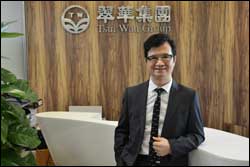
The chairman of Tsui Wah Holdings (1314), Lee Yuen-hong, was but a humble cha chaan teng delivery boy when he started his working life in the 1960s. But through sheer hard work and perseverance, the 58-year-old is now the proud owner of the listed Tsui Wah chain, boasting 25 cha chaan teng in the territory, one in Macau and eight in the mainland. What sets Tsui Wah apart from other cha chaan teng is the ethos that Lee upholds. We have used our heart to keep the taste of local favorites at our eatery for nearly five decades, even in the face of challenges, Lee says, noting how the chain has evolved in an innovative manner to stay in step with the rapidly changing eating habits of Hongkongers. Read more of this post

Top bosses fear striking out; Increasing shareholder scrutiny is leading to a drop in top executives’ fixed pay

Top bosses fear striking out

October 27, 2013

John Collett

Increasing shareholder scrutiny is leading to a drop in top executives’ fixed pay.

Just the threat of facing a second strike makes directors more accountable. Photo: Jessica Shapiro

Rule changes to give shareholders more say over the pay arrangements of top executives are reining in excessive pay packets, according to researchers at Griffith University. The ”two-strikes” rule was legislated in 2011, and there is evidence that executive compensation is being curbed and boards of directors are paying more attention to shareholder views, says Associate Professor Reza Monem from the Griffith Business School. Read more of this post

How not to be a boss like Kevin Rudd; Don’t take all the glory or blame others for your mistakes. “The best companies are run from the bottom up. Rudd never recognised that. That was his mistake.”

How not to be a boss like Kevin Rudd

October 24, 2013

Adam Courtenay

Don’t take all the glory or blame others for your mistakes. Alex Hamill says it’s not uncommon to find bastards in leadership positions. It took just one word from former attorney-general Nicola Roxon to question not only the character of Kevin Rudd but his leadership. Delivering the John Button Memorial Lecture this month, Roxon called her former boss a “bastard”. The party never addressed his management problems or explained properly why he was dumped in favour of Julia Gillard, she said.

“The best companies are run from the bottom up. Rudd never recognised that. That was his mistake.”  Read more of this post

Getting published is easy; getting noticed is trickier; How can writers make themselves heard in the age of blog and self-publishing saturation?

Getting published is easy; getting noticed is trickier

How can writers make themselves heard in the age of blog and self-publishing saturation? Japan authors offer a diverse range of views

BY GIANNI SIMONE

OCT 28, 2013

“Writers shouldn’t be afraid of using their imagination,” Hugh Ashton says, before launching into a quote from Sherlock Holmes: “When you have eliminated the impossible, whatever remains, however improbable, must be the truth.” Ashton, a Japan-based author of new Holmes material and other novels, takes the sleuth’s words very seriously. “I find his character and working practices can be applied to the writer’s trade,” he says. “Indeed, as long as the plot has some plausibility, it’s a good plot. There are some very strange things that happen in real life, after all,” he adds, explaining the message he takes from the words of Arthur Conan Doyle’s best-known character. Read more of this post

Rising household debt threatens Asian banks: S&P

Rising household debt threatens Asian banks: S&P

BANGKOK, OCT 29:  

Rising household debt in East Asia could undermine the creditworthiness of some of the region’s banks, ratings agency Standard & Poor said on Tuesday. The warning was made in an S&P report evaluating the asset quality of banks in Malaysia, Thailand, Singapore, Korea, Hong Kong, and China. “Rising household debt fuelled by rapid loan growth and easy monetary conditions could weaken the credit quality of banks in Asia,” said S&P’s credit analyst Ivan Tan. “Potential asset bubbles and imbalances are building up in some countries, and could put the banks at risk.” Malaysia, Thailand, Singapore, and Korea have the highest household debt in Asia, according to the report, with banks in Malaysia and Thailand deemed the most vulnerable to non-performing loans in the household segment. The international credit rating agency said it did not anticipate “a sharp unwinding of household balance sheets” but warned that “a severe economic downturn leading to a rise in unemployment and a significant fall in property prices would hurt financial institutions.” It added that Asia’s major banks have generally healthy financial positions by global standards.

How Anxiety Can Lead Your Decisions Astray

How Anxiety Can Lead Your Decisions Astray

by Francesca Gino  |   8:00 AM October 29, 2013

High-stakes decisions — which can range from starting a business to consummating a joint venture to hiring or firing someone — have something in common: they involve high levels of uncertainty. When so much is unknown or unknowable, trying to decide what the right course of action might be triggers anxiety. In response, many of us seek the counsel of others to help us make these weighty decisions. Read more of this post

The Big Lesson from Twelve Good Decisions

The Big Lesson from Twelve Good Decisions

by Tom Davenport  |   8:00 AM October 28, 2013

How is it that managers facing high-stakes decisions, despite all the resources and knowledge available to them, often make them so poorly?  In large part, it’s because their whole perspective on decision-making is wrong. Managers think of major decisions as choices they must make in order for the work of the organization to proceed. The truth is that decision-making is work.  This simple shift in perspective – seeing big decisions as tasks to be managed – has huge implications. It means they should be approached with the same level of discipline and direction good managers bring to other areas.  It means everyone understands that decisions improve when the right people, tools, and processes are brought to bear on them. Read more of this post

Asia’s export engine stuck in neutral despite US uptick

Updated: Tuesday October 29, 2013 MYT 11:46:00 AM

Asia’s export engine stuck in neutral despite US uptick

HONG KONG: Asia’s once-reliable export engine remains stalled two years into a global economic recovery, raising concerns about the region’s competitiveness and its ability to motor through the next tough time for emerging markets. Exports from seven of East Asia’s biggest exporters – Japan, China, South Korea, Taiwan, Thailand, Hong Kong and Singapore – grew by just 0.8% in the third quarter, according to a Reuters analysis of national trade data, led by a 3.1% gain in exports to the US from the same three months of 2012. The data reinforces a worrying trend in a region where gross exports represent more than a third of its combined economic output: since peaking in 2010 as the global economy rebounded from financial crisis, Asia’s export growth has rapidly cooled. Read more of this post

In New York, How to Hothouse Your Tot; The pursuit of educational excellence is so competitive in New York that some babies are given personal tuition in French and Chinese, and four-year-olds are hothoused for the best schools

In New York, How to Hothouse Your Tot

The pursuit of educational excellence is so competitive in New York that some babies are given personal tuition in French and Chinese, and four-year-olds are hothoused for the best schools.

By Veronique Dupont on 10:24 am October 28, 2013.
New York City. The pursuit of educational excellence is so competitive in New York that some babies are given personal tuition in French and Chinese, and four-year-olds are hothoused for the best schools. Some of the richest, most competitive, most fashionable parents on the planet leave no stone unturned in the fight to provide their children with the upper hand. Babies who cannot even form sentences in their native English are signed up to “baby and me” lessons in Chinese or French in the ultra-trendy TriBeCa neighborhood of Manhattan. Read more of this post

Nature’s own walls, like reefs and marshes, have appeal and provide many other benefits, but questions remain on how much protection they would provide, especially in a major storm

October 28, 2013

Natural Allies for the Next Sandy

By HENRY FOUNTAIN

The floodwaters from Hurricane Sandy had barely receded in New York last fall when the suggestions started coming for ways to keep the city and other low-lying areas safe in future storms. Higher flood walls and more bulkheads were needed, some experts said. Others called for even bigger engineering projects, like storm-surge barriers, to keep the water at bay. But the most intriguing suggestions involved natural approaches. Why not return New York to its glory days as an oyster capital, some argued, and build reefs in the harbor that could help beat down a storm’s waves? Why not turn Lower Manhattan into an aquatic Shangri-La, fringing it in marshland that could reduce surging storm waters? Read more of this post

Jump-Starter Kits for the Mind; Low-level electric current offers promise, and potential perils, as a way to stimulate the brain, but many do-it-yourselfers aren’t waiting for confirmation. They’re rushing to buy kits online or hooking themselves

October 28, 2013

Jump-Starter Kits for the Mind

By KATE MURPHY

Whether it’s hitting a golf ball, playing the piano or speaking a foreign language, becoming really good at something requires practice. Repetition creates neural pathways in the brain, so the behavior eventually becomes more automatic and outside distractions have less impact. It’s called being in the zone. But what if you could establish the neural pathways that lead to virtuosity more quickly? That is the promise of transcranial direct current stimulation, or tDCS — the passage of very low-level electrical current through targeted areas of the brain. Several studies conducted in medical and military settings indicate tDCS may bring improvements in cognitive function, motor skills and mood. Read more of this post

Formula One boss Bernie Ecclestone made “corrupt bargain” in bid to stay in position of influence in sport, court told

Bernie Ecclestone made ‘corrupt bargain’ to cling to power in Formula One

Formula One boss Bernie Ecclestone made “corrupt bargain” in bid to stay in position of influence in sport, court told

A German media company which claims it lost out as a result of the deal is taking legal action against Mr Ecclestone Photo: REX FEATURES

2:45PM GMT 29 Oct 2013

Bernie Ecclestone, the boss of Formula 1 motor racing, made a “corrupt bargain” in a bid to stay in a position of influence in the sport, the High Court has been told. Mr Ecclestone allegedly entered into an agreement with a banker to facilitate the sale of the Formula 1 group to a buyer chosen by him, Mr Justice Newey heard at the hearing in London. A German media company which claims it lost out as a result of the deal is taking legal action against Mr Ecclestone. Read more of this post

Giant mirrors bring winter sun to remote Norwegian village

Giant mirrors bring winter sun to remote Norwegian village

BY PIERRE-HENRY DESHAYES

AFP-JIJI OCT 29, 2013

fs20131030a1a-870x580

Sunrise: Three giant mirrors erected on the mountainside above Rjukan, Norway, reflect sunshine toward the center of the town below. | AFP-JIJI

OSLO – Residents of a remote village nestled in a steep-sided valley in southern Norway are about to enjoy winter sunlight for the first time ever thanks to giant mirrors. The mountains that surround the village of Rjukan are far from Himalayan, but they are high enough to deprive its 3,500 inhabitants of direct sunlight for six months a year. That was before a century-old idea, as old as Rjukan itself, was brought to life: to install mirrors on a 400-meter high peak to deflect sunrays toward the central square. “The idea was a little crazy, but madness is our middle name,” said Oeystein Haugan, a local project coordinator. Read more of this post

A hard look at Paul Reichmann’s long goodbye

A hard look at Paul Reichmann’s long goodbye

Peter Foster | 27/10/13 4:15 PM ET
The following Peter Foster column appeared September 22, 2009, as Paul Reichmann was about to loose control of the last vestiges of his retail empire.  Mr. Reichmann , 82, died last week.

Paul Reichmann was once the reigning genius not merely of Canadian business but of the global real estate industry. Now he is reportedly about to lose his stake in Canary Wharf, the spectacular London development whose construction sunk Olympia & York, the company he controlled, in 1991. His 8.45% share was apparently pledged as collateral for a loan that has been called. Read more of this post

There has been a sharp rise in the number of children receiving medical consultations for emotional problems, an expert said

Pressures pile on kids
Staff reporters
Tuesday, October 29, 2013

There has been a sharp rise in the number of children receiving medical consultations for emotional problems, an expert said. Psychiatrist Kathy Chan Po-man said she is now handling at least one such case every month as against one very several months 10 years ago. One out of every four children she treats is below the age of eight. Read more of this post

The revised consumer rights law, which includes a seven-day cooling-off period to return goods for refunds, has raised concerns among online shop owners about potential cost increases

Online shop owners fret over revision

Updated: 2013-10-29 09:01

By Xu Wei ( China Daily) Read more of this post

Shanghai’s two leading press groups merged to create the country’s biggest newspaper company

Merger creates biggest media group

By Ding Yining and Ye Zhen | October 29, 2013, Tuesday |  PRINT EDITION

Shanghai’s two leading press groups merged yesterday, creating the country’s biggest newspaper company and the new parent company of Shanghai Daily, in a bid to press ahead with reforms and develop multimedia platforms to drive growth. The merger between the Jiefang Daily Group and Wenhui-Xinmin United Press Group will create a consolidated group with total assets of 20.87 billion yuan (US$3.42 billion) and net assets of 7.626 billion yuan. Read more of this post

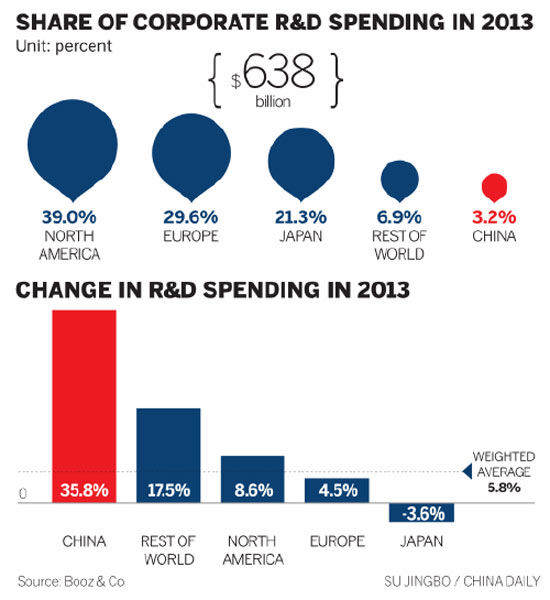
Despite R&D spending, China lags in innovation

Despite R&D spending, China lags in innovation

Updated: 2013-10-29 10:03

By Meng Jing ( China Daily)

0023ae606c3e13d957041d Read more of this post

Chinese telecoms accused of complicity in text spam

Chinese telecoms accused of complicity in text spam

Chen Chu-chun and Staff Reporter

2013-10-29

China’s three major telecom carriers have been accused of serving as accomplices to mobile spam firms in sending out a massive amount of “junk text.” The three companies have denied the accusation, raised in a broadcast by state broadcaster Central China Television. Mobile spam firms, which typically can rake in 3 million yuan (US$493,000) in monthly profits, can send out mass messages through special devices or computers. Read more of this post

China’s richest men give their thoughts on property market; Wahaha’s Zong: “No construction of new property should be allowed. Housing bubbles have formed and it would be terrible to build more houses”

China’s richest men give their thoughts on property market

Kao Hang and Staff Reporter

2013-10-29

Zong Qinghou, chairman of China’s largest beverage producer Wahaha Group, has called for a halt in housing construction, reports the Chinese-language Beijing Times. Zong, attending the second World Zhejiang Entrepreneurs Convention held in Hangzhou in eastern China’s Zhejiang province on Sunday, interrupted a speaker to say that “no construction of new property should be allowed.” The Wahaha chairman — the country’s second richest man — objected to the massive construction taking place across the country under the pretext of urbanization. He said that vacant housing is now evident not only in major cities but also in rural areas, noting: “housing bubbles have formed and it would be terrible to build more houses.” Read more of this post