Amazon’s Jeff Bezos Explains Why We Love Some Companies And Fear Others

Amazon’s Jeff Bezos Explains Why We Love Some Companies And Fear Others

MAX NISEN OCT. 24, 2013, 3:33 PM 1,953 1

Amazon has grown rapidly from e-commerce pioneer and bookseller to a behemoth that sells just about anything you can think of. And considering Amazon Web Services, which helps run everything from Netflix to DropBox, there are more services than most people would imagine. According to Brad Stone’s new book “The Everything Store,”  that omnipresence made its CEO Jeff Bezos wonder how Amazon could avoid becoming one of those companies that people hate for its size and power. The company had already been criticized for how it pays sales tax, eBook pricing, certain acquisitions, and ill-thought out marketing efforts, like an aggressive price comparison app. He wanted to know how the company could be “loved, not feared.” Bezos wrote a memo called “Amazon.love,” which Stone was able to obtain, that he distributed to his “S-team” of top executives. In it, he highlighted the fact that some multibillion-dollar companies have managed to remain beloved, or at least thought of as “cool” by customers. Think Apple, Whole Foods, Costco, Nike, and Google. Others get piled on, rather than defended, if things go badly. Think Microsoft, Goldman Sachs, ExxonMobil, and Wal-Mart. Both sets of companies do very well. But the core of Amazon’s ethos and culture is that the customer always comes first. Because the customer loses trust if they fear that you’re out to take advantage of them, Amazon’s sheer size makes that a worry. Bezos laid out the core differences between the two types of businesses in the memo. It’s a playbook for any business that aspires to be loved, instead of feared. Via “The Everything Store”:

  • Rudeness is not cool.
  • Defeating tiny guys is not cool.
  • Close-following is not cool.
  • Young is cool.
  • Risk taking is cool.
  • Winning is cool.
  • Polite is cool.
  • Defeating bigger, unsympathetic guys is cool.
  • Inventing is cool.
  • Explorers are cool.
  • Conquerors are not cool.
  • Obsessing over competitors is not cool.
  • Empowering others is cool.
  • Capturing all the value only for the company is not cool.
  • Leadership is cool.
  • Conviction is cool.
  • Straightforwardness is cool.
  • Pandering to the crowd is not cool.
  • Hypocrisy is not cool.
  • Authenticity is cool.
  • Thinking big is cool.
  • The unexpected is cool.
  • Missionaries are cool.
  • Mercenaries are not cool.

After ranking companies on those attributes, Bezos concluded that customer focus alone isn’t enough. Being inventive isn’t enough, either. Beloved companies manage to make what he describes as “that pioneering spirit” perceived and felt by their customers. When customers believe the company has a vision of the future that they want to be a part of and trust it can deliver on that vision, then they are more likely to support it.

China conjures up new ‘bad bank’ magic trick; Solution to prospect of growing bad debts is same as in the past

October 24, 2013 6:04 am

China conjures up new ‘bad bank’ magic trick

By Henny Sender

Solution to prospect of growing bad debts is same as in the past

Beijing is authorising the establishment of a second batch of so-called bad banks, this time at the provincial level, as it continues its slow move towards more financial deregulation. This time around the incentive is to prepare for any nasty side-effects as interest rate controls are gradually relaxed. Those include a rise in the cost of capital for already cash-strapped Chinese companies as well as the possible risk of accidents in Chinese banks that have not had to worry about asset liability management in the past. The purpose is also to deal with a new round of bad debts following the stimulus programme adopted in the wake of the global financial crisis. Read more of this post

Michael Petis: Hidden China Debt MUST Still be Repaid

Hidden Debt MUST Still be Repaid

Michael Petis, 2013-10-24 13:57:13

导读:中国庞大的外汇储备是否能用来清理银行坏账?当然不能。用外汇储备纾困银行只能减少央行资产,而债务不会相应减少。换言之,外汇储备转移多少,央行净负债将增加多少。
谁来承担中国银行里的坏账损失?要是家庭部门继续像目前这样承受损失——不管是通过抑制利率这种隐藏的方式,还是以更明显的形式,如税收,来实现——中国银行体系的坏账必将压制家庭消费开支的增长。中国的债务增加的速度似乎比偿还能力的增长快得多,说明未来的增长必定会放缓。

Five or six years ago, a few skeptics first started pointing out that the credit dynamics underlying Chinese growth was creating an unsustainable increase in debt. This, they warned, would ultimately undermine the banking system and cause growth to collapse if it were not addressed in time. There were three standard rejoinders to the warnings. First, analysts argued that investment was not being misallocated, and because credit growth poured mostly into investment, it did not therefore follow, as the skeptics argued, that debt was rising faster than debt servicing capacity. Although I think few analysts still support this argument, there remain some analysts who do not think China has an overinvestment problem. For example my Carnegie colleague Yukon Huang, who has argued, for example in one of the FT blogs that China is actually underinvested: Read more of this post

If Chinese companies cannot use the IPO proceeds to fund losses in the VIE, so how did the funds get into the VIE? Loan payable by the VIE to a related company is eliminated in consolidation. How was this loan legal?

Four new IPOs and forex problems

SFC proposes audit regulatory reforms

We have had several Chinese companies file for IPOs in the US recently.500.com is an online sports lottery company.58.com is China’s copy of Craigslist. Sungy Mobile is mobile internet, mostly games.Qunar Cayman Islands is similar to Kayak.

Auditors of these companies are:

500.com           EY
58.com             PwC
Sungy Mobile    KPMG
Qunar               EY

Deloitte won none of these engagements although it previously had the largest market share by number of companies. Some private equity people have told me that they have been avoiding Deloitte for fear that their SEC problems might get in the way of a timely offering. The problems that the Big Four are having with the SEC get extensive coverage in the risk factors, with three of them saying that if the SEC acts against the China Big Four, they willnot be able to file financial statements and may be delisted. I was pleased to see that KPMG signed Sungy’s report using its mainland affiliate, breaking from its former practice of signing these reports in Hong Kong. The mainland affiliate does the audits; it needs to sign the reports.  Read more of this post

Accounting World, Still Resisting Sunlight; The American accounting industry has fiercely battled any attempt by regulators to require partners to sign off publicly on audits

October 24, 2013

Accounting World, Still Resisting Sunlight

By FLOYD NORRIS

The accounting business has sometimes had an attitude of — how shall I put it? — contempt for those who would regulate it. The people who run the major firms know best, and regulators should yield to their superior judgment. Nowhere is that clearer than when regulators penalize partners of big firms. The Tammy Wynette song “Stand by Your Man” could be the industry’s anthem. In 2001, when the Securities and Exchange Commission settled charges against Arthur Andersen for its involvement in financial fraud at Waste Management, a partner named Robert G. Kutsenda was banned for a year. He was not the partner in charge of the Waste Management audit, but an e-mail showed he had approved accounting that the S.E.C. said was improper. Read more of this post

Ideo’s David Kelley: How Did I Get Here? The design guru on his contribution to Boeing’s 747, collaborating on the artistic Enorme phone, and other high points of his career

Ideo’s David Kelley: How Did I Get Here?

October 24, 2013

The design guru on his contribution to Boeing’s 747, collaborating on the artistic Enorme phone, and other high points of his career.

etc_backpage44_970


Marina Mahathir: The cost of telling the truth; It takes courage to stand one’s ground, but the greatest reward is the ability to sleep at night, knowing that one’s conscience is clear

Updated: Thursday October 24, 2013 MYT 9:07:53 AM

The cost of telling the truth

BY MARINA MAHATHIR

It takes courage to stand one’s ground, but the greatest reward is the ability to sleep at night, knowing that one’s conscience is clear.

WHEN parents try to teach their young children certain values and behaviours, consistency is the key. When you tell children that lying is wrong, then they must never catch you telling untruths. If you say there’s no money to buy some fancy new toy, then you can’t come home with a brand new car without them wondering how come you can afford that. Children have natural radar for hypocrisy. It is tuned to catch any inconsistencies, white lies or complete untruths that parents spout because these grate against the natural sense of fairness that kids have. And every time they catch their parents out, a small bit of parental authority erodes. This anti-hypocrisy radar is only maintained if the child doesn’t then learn that to be hypocritical is more rewarding than to be true to one’s own conscience. If they find that there is nothing to be gained from telling the truth, and everything to gain from fudging facts, then the children grow up with their moral compass askew. They learn not to take responsibility for their own misdeeds but to blame others for it. Thus you get stories, for example, about kids who blame their maids for not putting their homework in their schoolbags on the day they are meant to pass them up. Unfortunately there are more and more adults behaving in this way these days. Read more of this post

Getting Ph.D.s to Think Like Entrepreneurs; Hundreds of scientists have participated in business boot camps sponsored by the National Science Foundation.

Getting Ph.D.s to Think Like Entrepreneurs

By Nick Leiber October 24, 2013

In a crowded hotel conference room in downtown Brooklyn, N.Y., in October, Jerry Engel told dozens of earnest young scientists and engineers to cut the “scientific crap” and instead identify would-be customers who might care about their products. Frank Rimalovski piled on, urging attendees presenting research that they wanted to turn into businesses—from bone grafts to facial-recognition software—“to focus on the problem, not the solution.” Read more of this post

“It’s 1776 in Indonesia”: From Washington, Some Lessons for Jokowi; many Indonesians hope that Joko can do for Indonesia what Obama is perceived to have done for America. Obama finds himself frustrated by members of his own party weary of his leadership and increasingly willing to defy him”

From Washington, Some Lessons for Jokowi

By Stanley Weiss on 1:45 pm October 24, 2013.
In 1949, a young press attache was dispatched from Jakarta to New York, with the difficult task of convincing the American public to support young Indonesians in their fight against Dutch forces that had ruled Indonesia for more than a century. Realizing that Indonesia, like America before it, was seeking to create a sovereign nation by breaking the colonial ties that bound it to a single European power, he produced an eloquent paper that harkened back to the year America declared independence from Great Britain. Its provocative title? “It’s 1776 in Indonesia.” Read more of this post

Economy-class activist investor crashes the corporate party

Economy-class activist investor crashes the corporate party

ROSS KERBER, REUTERS OCT. 24, 2013, 6:12 AM 10,248 9

LOS ANGELES (Reuters) – Shareholder activists come in different flavors. One is the deep-pocketed investor, such as Carl Icahn or Dan Loeb, who takes big stakes in companies and forces management to change strategy. Another type is the persistent provocateur who buys a handful of shares and agitates on a shoestring. That’s John Chevedden. Now 67 years old, Chevedden launched his career as an activist – he rejects the term “gadfly” – after being laid off from the aerospace industry in the early 1990s. Since then, he has unleashed a relentless flow of shareholder proxy measures at some of the largest U.S. companies.

Read more of this post

Why Can People Live In Hiroshima And Nagasaki Now, But Not Chernobyl?

Why Can People Live In Hiroshima And Nagasaki Now, But Not Chernobyl?

MELISSA, TODAY I FOUND OUT OCT. 24, 2013, 9:50 AM 8,925 16

On August 6 and 9, 1945, U.S. airmen dropped the nuclear bombs Little Boy and Fat Man on the Japanese cities of Hiroshima and Nagasaki. On April 26, 1986, the number four reactor at the Chernobyl Nuclear Power Plant in the Ukraine exploded. Today, over 1.6 million people live and seem to be thriving in Hiroshima and Nagasaki, yet the Chernobyl exclusion zone, a 30 square kilometer area surrounding the plant, remains relatively uninhabited. Here’s why. Read more of this post

The making of Amsterdam: How the Dutch capital gave birth to the Enlightenment

The making of Amsterdam: How the Dutch capital gave birth to the Enlightenment

Oct 26th 2013 |From the print edition

Amsterdam: A History of the World’s Most Liberal City. By Russell Shorto.Doubleday; 368 pages; $28.95. Little, Brown; £25. Buy from Amazon.com,Amazon.co.uk

DURING its rise in the 17th century, Amsterdam was an important haven for religious dissidents. It was also the publishing centre for the racy philosophical tracts that were too hot to be printed in France or England. The city’s economic fortunes were born of its embrace of international trade and of financial innovation. And the highly profitable Dutch East India Company was the world’s first joint-stock company, leading in time to the world’s first stock and options markets. Read more of this post

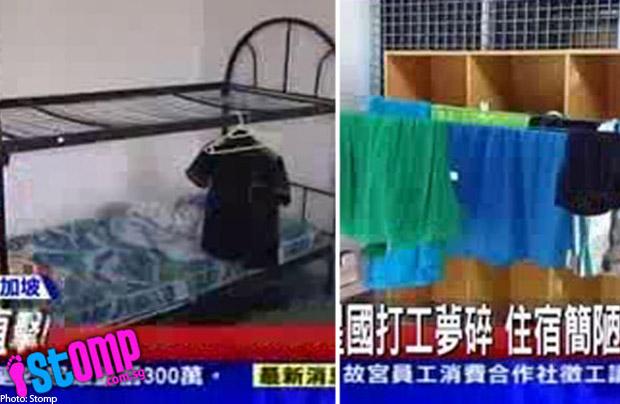
Overcrowding, broken furniture and bed bugs: Foreign students complain about S’pore hostels

Overcrowding, broken furniture and bed bugs: Foreign students complain about S’pore hostels

hostel

Stomp
Thursday, Oct 24, 2013

A recent news report by a Taiwan media company highlighted the poor living conditions of foreign students who come to Singapore seeking work, and how this greatly differed from what they had been promised. In the video published by China Times which Stomp readers Derome and Steric alerted Stomp to, an 18-year-old Taiwanese student shares his experience about how he had come to Singapore to work and study English at the same time. Despite paying $280 for a room every month, he has to share the space with six to eight others. The tenants also have to take turns and wait to use a small bathroom. Read more of this post

This ‘Reverse Microwave’ Chills Beer In 45 Seconds

This ‘Reverse Microwave’ Chills Beer In 45 Seconds

CAMERON CIMCIK, FOODBEAST
OCT. 24, 2013, 10:49 AM 5,699 6

Microwaves are handy little units when we want to heat food or drinks up quickly. However, never before has there been a gadget that does just the opposite — cooling without the long wait. That is, until now. A product of Enviro-Cool Limited, V-Tex is an environmentally-friendly, efficient system that cools beverages in a matter of seconds. From wine bottles to soda cans, the unit is able to chill drinks in all types of containers without disturbing carbonation. How? V-Tex uses a “start stop rotational sequence” to create a Rankine vortex, which essentially keeps a drink in its original state while quickly bringing down the temperature. The reverse microwave requires nearly 80% less energy than many standard drink chillers, allowing consumers to save money and keep things green. It also frees up standard refrigerator space, since most beverages can be stored at room temperature elsewhere until right before serving. Enviro-Cool plans to release both commercial and domestic versions of V-Tex, but until then, we’ll have to settle for poppin’ bottles in the fridge. See how it works below:

Tencent Has Invested $2 bn in Overseas Markets. Here’s the Full List

Tencent Has Invested $2 bn in Overseas Markets. Here’s the Full List.

By Tracey Xiang on October 23, 2013

Tencent has invested $2 billion in overseas markets, a large part of which went to startups, disclosed Martin Lau, president of Tencent, at GMIC 2013 Sillicon Valley. Not only does Tencent inject money into those startups, the company would also pass on experience or help them enter China market, he said. Online gaming has been the major contributor to its total revenues and Tencent counts on mobile gaming in order to monetize the huge user base it has already had through WeChat, Mobile QQ and other mobile apps. So most of foreign businesses Tencent has stakes in are gaming-related. Below is a list of overseas investments we have heard about since the company started making investments in other companies, big or small — Years back Chinese Internet companies preferred to develop me-too products by themselves. Tencent was famous for that it could always kill the existing ones with better-than-copy versions. Read more of this post

Traders in Yiwu cashing in on e-commerce shops

Traders in Yiwu cashing in on e-commerce shops

Updated: 2013-10-25 02:19

By YU RAN in Yiwu, Zhejiang ( China Daily) Read more of this post

Spike in China money rates raises cash-crunch fears

October 24, 2013 5:32 am

Spike in China money rates raises cash-crunch fears

By Simon Rabinovitch in Shanghai

China’s money rates shot up on Thursday after the central bank withdrew cash from the financial system, fuelling worries that the world’s second-biggest economy might see a replay of a liquidity squeeze that rattled global markets earlier this year. Read more of this post

Response to a City’s Smog Points to a Change in Chinese Attitude

October 24, 2013

Response to a City’s Smog Points to a Change in Chinese Attitude

By EDWARD WONG

BEIJING — Emergency measures came swiftly in Harbin, the northeastern city blanketed with hazardous smog this week: Schools were shut down, buses ordered off the roads, the airport closed, police roadblocks set up to check tailpipe emissions from cars. City officials even fanned out in the surrounding countryside, ordering farmers to stop burning the cornstalks left in their fields after the harvest. They were reacting to the first notable surge of air pollution in China this autumn. Residents across the nation’s north fear that the smog is a sign of things to come. With winter approaching, cities north of the Huai River are turning on their coal-fired municipal heating systems, whose emissions were found in one study to shorten residents’ life spans by an average of five years. Read more of this post

New China H7N9 bird flu cases ‘signal potential winter epidemic’

New China H7N9 bird flu cases ‘signal potential winter epidemic’

By Kate Kelland

LONDON (Reuters) – Fresh human cases in eastern China of a deadly new strain of bird flu signal the potential for “a new epidemic wave” of the disease in coming winter months, scientists said on Thursday. The strain, known as H7N9, emerged for the first time in humans earlier this year and killed around 45 of the some 135 people it infected before appearing to peter out in China During the summer. Read more of this post

Muddy Waters Risks Curbing Chinese IPO Demand

Muddy Waters Risks Curbing IPO Demand: China Overnight

By Belinda Cao and Matthew Kanterman – Oct 24, 2013

Short seller Muddy Waters LLC’s call to sell shares of Chinese mobile-security service provider NQ Mobile Inc. (NQ) will hinder initial public offerings from the country, Needham & Co. said. Shares of NQ Mobile tumbled as much as 63 percent in New York yesterday before trading was halted. The Bloomberg China-US Equity Index of the most-traded Chinese stocks in the U.S. climbed 0.5 percent to 103.26, led by New Oriental Education & Technology Group (EDU) and Vipshop Holdings Ltd. Read more of this post

Chinese Moviegoers Prefer Local Films to Hollywood’s

Chinese Moviegoers Prefer Local Films to Hollywood’s

By Christopher Palmeri October 24, 2013

A year ago the Chinese government raised the number of foreign films allowed into the country to 34 from 20 per year. Many thought Hollywood studios were set to play a starring role in the world’s second-largest movie market. Instead, Chinese filmmakers are capturing most of the industry’s growth because of booming interest in local productions and talent. A case in point: Journey to the West: Conquering the Demons. The action-adventure film, featuring a Buddhist monk who battles a pig demon and a monkey king, is China’s top-grossing film this year, with $189 million in ticket sales. Read more of this post

China Said to Plan Letting More Companies Sell Short-Term Debt

China Said to Plan Letting More Companies Sell Short-Term Debt

By Bloomberg News – Oct 24, 2013

China plans to let more companies sell short-term debt that matures in 270 days or less, said two people with direct knowledge of the matter. The National Association of Financial Market Institutional Investors, which regulates the sales, will require issuers to have a credit grade of AA+ or above from China Credit Rating Co. in addition to a similar rating from another company, said the people, who asked not to be identified as they weren’t authorized to speak publicly about the plans. Read more of this post

China Party’s Secretive Judicial System Laid Bare in Torture Case

China Party’s Secretive Judicial System Laid Bare in Torture Case

By Sui-Lee Wee on 3:18 pm October 24, 2013.
As Yu Qiyi’s interrogation entered its 39th day, officials from the Chinese Communist Party’s anti-corruption watchdog debated how to get a confession out of the detained man, the chief engineer at a state-owned firm in eastern Wenzhou city. One official noted he had forced Yu’s head under water the night before. A day later, Yu died after being dunked repeatedly in a bucket of ice-cold water. Read more of this post

Betel nut industry in Hunan now worth RMB10bn a year

Betel nut industry in Hunan now worth RMB10bn a year

Staff Reporter

2013-10-25

China’s huge industry supply chain for areca nut — more commonly known as betel nut — involves 2.3 million farmers in the southern island province of Hainan and more than 400,000 workers in Hunan’s betel nut-processing industry, which has a production value of nearly 10 billion yuan (US$1.6 billion), the Guangzhou-based Time Weekly reports. The size of the industry has come under the spotlight after reports that chewing betel nut can lead to cancer. About 1 billion people in the world consume the nut for its mild stimulant properties, chiefly in India, where it is known as paan, and throughout Southeast Asia. It is popular in Taiwan and in mainland China its use is centered on the south-central province of Hunan. India and Taiwan grow betel nut locally which is consumed fresh; Hunan, not originally a producer, imports its betel nuts and processes them with preservatives and flavorings. Read more of this post

‘Beautiful China’ tourism pitch clouded over in smog

‘Beautiful China’ tourism pitch clouded over in smog

October 24, 2013

Beijing: Forget all the headlines about eye-watering pollution in Beijing and Shanghai — the Middle Kingdom’s latest tourism slogan invites visitors to “Beautiful China.” Adorning buses and trains in cities such as London, the marketing effort has been derided as particularly inept at a time when record-busting smog has drawn attention to the environmental and health costs of China’s unfettered industrialisation. Like this year’s typically clunky theme for visitors “China Ocean Tourism Year,” the slogan highlights the tin ear of an industry that has ridden the coattails of China’s rapid economic growth and increased global prominence but failed to keep up with international travel trends. Read more of this post

Baidu Raises Eyebrows by Promising High 8% Yield on New Investment Product; Baidu Can’t Guarantee Returns on Online Fund Products, CSRC Says

10.23.2013 16:28

Baidu Raises Eyebrows by Promising High Yield on New Investment Product

Search engine company pledges 8 percent return, but then deletes the weibo post that made the guarantee

By staff reporter Liu Zhuozhe

(Beijing) – Baidu, China’s version of Google, is in the spotlight over exceptionally high returns it promised for an investment product the company plans to unveil. The search engine firm said on October 21 on weibo, the country’s Twitter-like microblog service, that it will introduce a wealth management service on its website on October 28 in cooperation with China AMC, the largest public fund management company in China. The service, called Bai Fa, will have an annual yield of 8 percent and investors can withdraw money from their account at any time, the announcement said. Baidu did not explain how it works. Read more of this post

South Korea’s education system: The great decompression; There are perils for a country in having all your children working too hard for one big exam

South Korea’s education system: The great decompression; There are perils for a country in having all your children working too hard for one big exam

Oct 26th 2013 |From the print edition

FEW countries have done better than South Korea over the past half-century. Within the span of a single working life, its economy has grown 17-fold, its government has evolved from an austere dictatorship into a rowdy democracy, and its culture, once scarred by censorship, now beguiles the world with its music, soap operas and cinema. Scholars enthuse about the speed and precocity of its “compressed development”. Read more of this post

Mercedes Halves Costs as Gangnam Showrooms Boom: Korea Markets

Mercedes Halves Costs as Gangnam Showrooms Boom: Korea Markets

Mercedes-Benz Financial Services Korea Co. slashed borrowing costs by more than 50 percent as record demand for imported cars in Seoul’s Gangnam luxury-goods district spurs its lending business. The unit of German automotive group Daimler AG (DAI) sold 130 billion won ($122 million) of two-year notes on Oct. 14 at 3.38 percent, 57 basis points more than similar-maturity government bonds, data compiled by Bloomberg show. That’s lower than both the spread on 2014 securities sold in November of 123 basis points and the average premium for two-year A+ rated finance debt of 73. The sale was expanded by 30 percent to meet demand. Read more of this post

Word of mouth has turned Yeti’s sturdy ice chests, which are priced as high as $1,300, into a cult brand

The Most Expensive, Bear-Proof, Thief-Baiting Way to Keep Your Beer Cold

By Keenan Mayo October 17, 2013

sb_cooler44__01__315inline

When he went fishing, Roy Seiders had a habit of breaking his coolers. It was 2005, and the Austin (Tex.)-based builder of fishing boats was desperate for something tougher than a typical Igloo or Rubbermaid (NWL). “Everything about my boat was durable except for the coolers, which you need to store fish and keep drinks cold,” he says. “But you also need them as seats—or as a casting platform where you can stand and cast to the fish.” So Seiders and his older brother Ryan, who makes fishing rods (their father owns Flex Coat, which creates an epoxy “wrap finish” for fishing rods), set out to make a cooler that could stand up to their own abuse. Read more of this post

Bunge may struggle to lure suitors for loss-making sugar mills bought four years ago for $1.5 billion when they were considered the crown jewels of a burgeoning biofuel industry

Bunge may struggle to lure suitors for loss-making sugar mills

12:25am EDT

By Chris Prentice and Reese Ewing

NEW YORK/SAO PAULO (Reuters) – When Bunge Ltd (BG.N: Quote, Profile, Research, Stock Buzz) bought five sugar mills in Brazil’s Sao Paulo state four years ago for $1.5 billion, they were considered the crown jewels of a burgeoning biofuel industry. Now, they may be little more than millstones, hard-to-sell assets at a time of crushed margins and weak prices. In the industry’s first major capitulation to depressed market conditions, Bunge’s new chief executive announced on Thursday he will explore options, including a sale, for the loss-making business. Read more of this post