Start-Up Reinvents the Bicycle Wheel; “The Copenhagen Wheel” transforms a normal bicycles into a hybrid e-bike

OCTOBER 21, 2013, 8:59 PM

Start-Up Reinvents the Bicycle Wheel

By NICK BILTON

bits-wheel-tmagArticle

“The Copenhagen Wheel” transforms a normal bicycles into a hybrid e-bike.

It’s rare that a company comes along and reinvents the wheel, but it looks like that is about to happen. Superpedestrian, a start-up in Boston, announced on Monday that it has received $2.1 million in financing to help build a wheel that transforms some standard bicycles into hybrid e-bikes. The product, the Copenhagen Wheel, is a design from the Massachusetts Institute of Technology SENSEable City Laboratory. The original goal of the wheel was to entice more people to more bicycles in large cities in lieu of cars by giving them help from a motor. Read more of this post

Why is pivot such a dirty word?

Why is pivot such a dirty word?

BY CARMEL DEAMICIS 
ON OCTOBER 21, 2013

If I had a dollar every time someone explained to me why their company’s shift in priorities wasn’t a pivot, well, I might not be a millionaire, but I’d probably have enough to treat everyone at the bar that night. “I wouldn’t say it’s a pivot so much as…” An iteration. A new feature. A shift in priorities. No company that pivots thinks it’s pivoting. Or at least, no company that pivots wants to admit it to a member of the press. The word pivot’s use in startup land comes from the book The Lean Startup, where author Eric Ries defines it as, “Structured course correction designed to test a new fundamental hypothesis about the product, strategy, and engine of growth.” Despite his clear definition, the term has subjective meanings that color it. It’s associated with failure. Read more of this post
Mapping China’s Surnames 制图 “老百姓”

Mapping China’s Surnames 制图 “老百姓”

by ASTOKOLS27 on Oct 20, 2013 • 9:56 pmNo Comments

Li-300x270 wang--300x258 zhang-300x267 C-hen-300x256 guo-300x255 ma-300x210

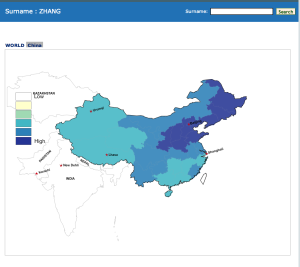
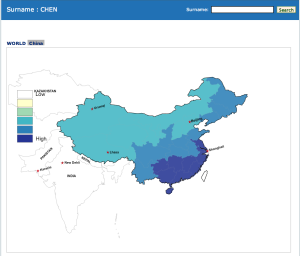
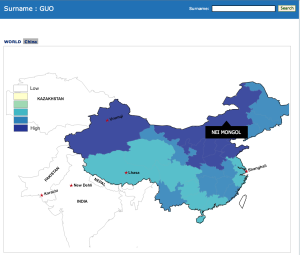
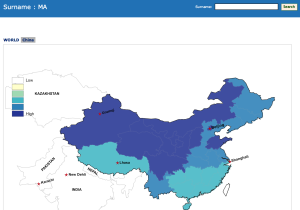
Using this cool new website that maps global surnames according to geographic origin, I was able to map a few of the most common Chinese surnames.  The map shows data at the sub-national level, enabling a province-level map of China’s surnames.  China presents a unique context in which to study the origin of surnames due to the continuity and prevalence of recorded Chinese characters associated with each surname, and the relatively low number of total surnames.  There are, by some estimates, 4,100 surnames in China, while in the US that number is around 6.2 million total. The geographic spread of names in China could be explained in many ways: from population and migration patterns over history, the geographic divisions between north and south, and watersheds.  Historian William Skinner’s came up with the concept of  “macro-regions”  that defined patterns of trade, commerce, language, and culture in China. With China’s massive internal migration today, one might think that the importance of geographic divisions such as the macro-regions, would fade.  As these maps show, that is clearly not the case. Here’s are maps for some of the most common surnames*: Purple indicates a high density of surnames in that province. Read more of this post
Leaders need trust more than Twitter; Running a business raises many questions to which ‘social media’ is not the answer

October 21, 2013 3:32 pm

Leaders need trust more than Twitter

By Andrew Hill

Running a business raises many questions to which ‘social media’ is not the answer

Irecently spent time sifting strategic plans for seven non-profit organisations, drawn up by teams of MBA students for an FT competition, the winner of which will be announced this week. It was a rare insight into how bright young executives are thinking and I am sure their efforts will benefit the non-profits themselves. But one thing stood out: the number of entrants that believed that, whatever the problem, social media would help solve it. Raising money? Go to Twitter. Building local, national and international support? TryFacebook. Read more of this post

Economic Theory, via YouTube and Cartoon; Ray Dalio, the founder of the largest hedge fund, offers a 30-minute lecture in how the economy works. No tuition necessary, just a connection to YouTube

OCTOBER 21, 2013, 8:53 PM

Economic Theory, via YouTube and Cartoon

By ANDREW ROSS SORKIN

Forget Econ 101. Take a look at the lessons in Dalio 101. Ray Dalio, the 64-year-old founder of Bridgewater Associates, the largest hedge fund in the world with some $150 billion under management, has quietly begun teaching his investment secrets on YouTube. Mr. Dalio, who is said to be worth some $13 billion, was one of the few investors to see the financial crisis of 2008 developing, and perhaps just as important, the rebound. He’s made his money by predicting big macroeconomic cycles. His economic theories, up until now, have been known only to a small group of investors and those willing to pay his firm 2 percent management fees and 20 percent of the investment profits.

Read more of this post

The Inefficient Market Hypothesis

OCTOBER 21, 2013, 12:01 AM

The Inefficient Market Hypothesis

By NANCY FOLBRE

Nancy Folbre is professor emerita of economics at the University of Massachusetts, Amherst.

Either it was a partisan compromise, or the Nobel Memorial Prize in Economic Science committee simply hedged its bets, bestowing its annual prize on three economists, two of whom represent divergent views. One Financial Times blogger compared it to a joint celebration of Milton Friedman and John Maynard Keynes. John Kay, also writing in The Financial Times, put it more sharply, as “awarding the physics prize jointly to Ptolemy for his theory that the Earth is the center of the universe and to Copernicus for showing it is not.” Read more of this post

Repeatedly burned, short sellers avoid momentum stocks

Updated: Tuesday October 22, 2013 MYT 6:55:17 AM

Repeatedly burned, short sellers avoid momentum stocks

NEW YORK: Even as some of Wall Street’s biggest trading favorites – considered by many to be massively overvalued – report earnings this week, short sellers are staying away. Shorts have become gun-shy as the market has continued to rally, making bets against high-flying stocks like Netflix or Tesla very expensive ones. Steep losses have been amplified by “short squeezes,” where shorts are forced to cover their bets to prevent further losses. Read more of this post

What happens when retailer Sears is supposedly valuable for its tangible property assets and the business is managed by a dealmaker? 18 Depressing Photos That Show Why Nobody Wants To Shop At Sears

18 Depressing Photos That Show Why Nobody Wants To Shop At Sears

ASHLEY LUTZ OCT. 21, 2013, 8:26 AM 71,887 57

Sears, once America’s golden retailer, is a company in crisis.  The company has shuttered hundreds of stores in recent years. The embattled company has been selling some its most profitable stores to raise money. Brian Sozzi, chief equities strategist at Belus Capital Advisors, took poignant photos inside of New Jersey  and New York Sears locations. “To understand why Sears is in a ‘sell stores mode’ one must look no further than the stores themselves, where the truth is to be found,” Sozzi writes. His photos show the sad reality of what Sears is today.

Sears’ mannequins are outdated in comparison with competitors like Macy’s, Lord & Taylor, and JCPenney, Sozzi says. “If you are living darn near paycheck to paycheck, does this presentation excite you about making a purchase with a couple saved up electronic dollars?”

shld-mann-e1382137232438

Sozzi points out that this display is confusing. “Huh? A random football themed carpet with no promotion around it?” he says.

football-carpet1-e1382137446920 Read more of this post

Why Transformation Needs a Second Chapter: Lean, but Not Yet Mean

Why Transformation Needs a Second Chapter: Lean, but Not Yet Mean

by Martin Reeves, Kaelin Goulet, Gideon Walter, and Michael Shanahan

OCTOBER 21, 2013

LeanNotMean_Ex1_lg_tcm80-146756 LeanNotMean_Ex2_lg_tcm80-146760

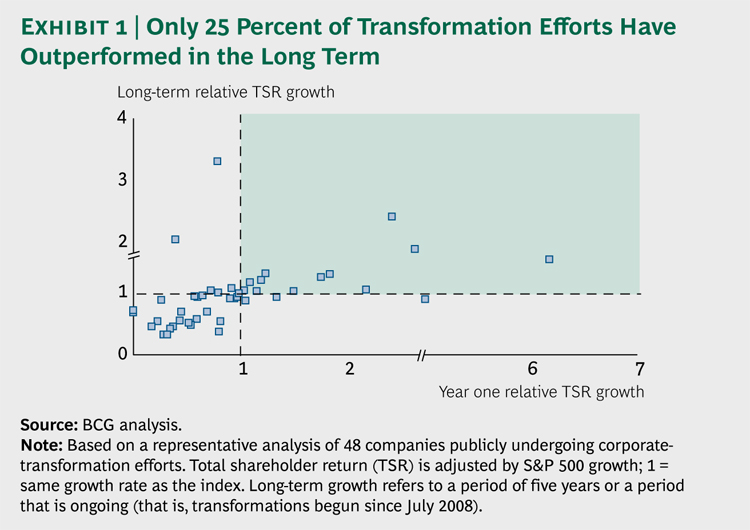
It’s a well-known mantra in business: “You can’t cut your way to greatness.” Nonetheless, painful cost cutting and other defensive measures are a familiar strategy for staying afloat. They are quick and obvious and deliver tangible results, but they are not in themselves a recipe for success. What does a CEO driving a turnaround do after these “easy” measures have been exhausted? Read more of this post

Wang Fengying, China’s only female motor industry CEO

Wang Fengying, China’s only female motor industry CEO

Staff Reporter

2013-10-21

CFP420550083-103435_copy1

Wang Fengying at a Great Wall Motor product launch in Tianjin in August 2011. (Photo/CFP)

Wang Fengying, general manager and CEO of Great Wall Motor Company, is the only female CEO in China’s massive motor industry. Born in October 1970 in the city of Baoding in north China’s Hebei province, Wang obtained her bachelor’s degree from the Tianjin Institute of Finance and began working for Great Wall Motor in 1991. She later returned to her alma mater and completed a master’s degree in economics in 1999. Wang, who turns 43 this month, as spent her entire career at Great Wall Motor. After working at the company for 13 years, predominantly in sales and marketing, she was promoted to general manager and CEO, making her the first — and to date only — female chief executive of a motor vehicle manufacturer in China. Read more of this post

Shanghai ZPMC, the world’s biggest maker of container cranes, move from profit to loss; ZPMC reached the limits to fast growth

October 21, 2013 3:33 pm

Crane maker’s move from profit to loss

By Olaf Plötner and Wang Xuyi

The story. Shanghai Zhenhua Heavy Industries (also known as ZPMC), the world’s biggest maker of container cranes, was founded in 1992 by the charismatic Guan Tongxian. By 2001, ZPMC had listed in Shanghai and was the global leader in a market traditionally dominated by European, North American and Japanese companies. In 2008 its market share was estimated at more than 70 per cent, and profits were above the industry norm. But by 2012 revenues were falling and the company was experiencing operating losses of Rmb1.3bn. What had gone wrong? Read more of this post

How the Chinese Learned to Embrace Independent Travel; 70 percent of Chinese tourists traveling abroad are now choosing to go independently

How the Chinese Learned to Embrace Independent Travel

By Gabrielle Jaffe

For years, the prevailing image of Chinese travelers was this: masses of red-hat wearing people organized in tour groups, pouring out of big, noisy buses. But this stereotype is now out of date. According to a recent report from Hotels.com’s Chinese International Travel Monitor, 70 percent of Chinese tourists traveling abroad are now choosing to go independently. Read more of this post

Ghost cities springing up near China’s first-tier cities

Ghost cities springing up near China’s first-tier cities

Kao Hang and Staff Reporter

2013-10-22

China’s property prices have continued to boom, but the phenomenon of the so-called ghost cities, a result of high vacancy rates, has been worsening. In the past, the ghost cities were mainly third-tier or fourth-tier cities, but recently first-tier cities have also seen the rise of this phenomenon, with Shenzhen’s neighboring Daya Bay area going into an apparent state of hibernation, ringing alarm bells in relation to the abnormal development of the mainland property market, our sister paper Want Daily reports. Read more of this post

FTZ ‘Negative List’ Positively Disappoints Analysts; It’s too long, critics say, and worse yet a Shanghai official admits it is to some extent a copy of an existing catalog on foreign investment

10.21.2013 17:17

FTZ ‘Negative List’ Positively Disappoints Analysts

It’s too long, critics say, and worse yet a Shanghai official admits it is to some extent a copy of an existing catalog on foreign investment

By staff reporter Yu Hairong

(Beijing) – A closer examination of the Shanghai Free Trade Zone (FTZ) “negative list” in comparison with the policy that guides foreign investment elsewhere in the country has left many observers disappointed. Supposedly a big step toward greater openness, the list has aroused criticism for containing too many items – 190 special regulatory measures for roughly 17.8 percent of all industries in the country. Read more of this post

China: An Increasingly Risky Bet for Drug Makers

October 21, 2013, 7:34 PM

China: An Increasingly Risky Bet for Drug Makers

For the world’s largest pharmaceutical companies, China is an increasingly critical, yet risky bet. Multinational drug companies expect sales from China to continue to grow quickly, as they did last year, accounting for 3.8% of total sales, up from 3% in 2011, according to a new report from consultancy McKinsey & Co. Meanwhile, nearly half of the 50 senior pharmaceutical industry executives surveyed said that they expect China to account for over 10% of their global sales by 2020, when China is projected to become the world’s second-largest pharmaceutical market. Sales of 85 brands exceeded $50 million in China last year, with 11 surpassing $200 million, according to the study. Read more of this post

Asia, Where Mobile Games Flowered, Extends Its Reach

October 21, 2013

Asia, Where Mobile Games Flowered, Extends Its Reach

By ERIC PFANNER

TOKYO — When SoftBank, the Japanese telecommunications provider, announced last week that it had agreed to buy a 51 percent stake in a Finnish mobile game company for $1.5 billion, many people in both industries reacted with disbelief. Suddenly Supercell, a three-year-old game developer in Helsinki with only 100 or so employees and two successful games, was worth $3 billion. The investment in Supercell, the developer of Hay Day and Clash of Clans, reflects the growing global ambitions of Asian companies like SoftBank in mobile gaming, the fastest-growing part of the game business. Read more of this post

Is Smart Wi-Fi Router the Next Big Thing in China?

Is Smart Wi-Fi Router the Next Big Thing in China?

By Tracey Xiang on October 12, 2013

Smart Wi-Fi router HiWiFi confirmed that it had risen some ten million dollars in Series A funding from Innovation Works and GGV Capital. It is rumored that famous Chinese angel investors, Zhou Hongyi and Lei Jun, and Baidu showed interest in it too. The gadget caught our eye because of a built-in app that helps users in mainland China visit web services inaccessible here. More than 20 thousand pieces have reportedly been sold since July launch.

Read more of this post

Omnichannel Alchemy: Turning Online Grocery Sales to Gold

Omnichannel Alchemy: Turning Online Grocery Sales to Gold

by Chris Biggs and Julian Suhren

OCTOBER 02, 2013

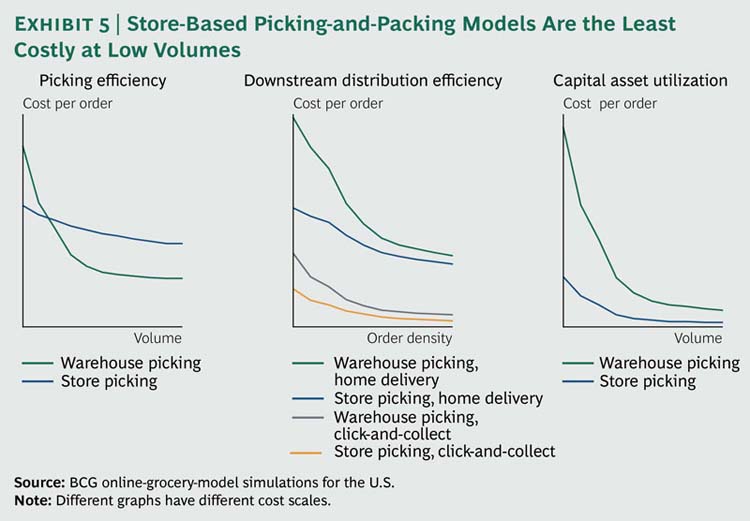
Ask most industry executives about the prospects for online grocery shopping, and you’ll encounter hesitancy, if not skepticism. Ask consumers—especially younger, more affluent consumers and families—and they’ll tell you that they are excited by the idea. They wonder why the industry has been slow to deliver. Online grocery shopping has yet to take off in most countries for many reasons—cost, logistical complexity, and the prospects for profitability key among them. There’s also the fact that many of the business’s early pioneers went bust. We believe that the prevailing doubtful view is about to hit its expiration date. We expect the global online grocery market to reach $100 billion by 2018. (See Exhibit 1.) Based onnew consumer research in eight countries1, as well as on our experience with leading companies around the world, we also believe that establishing profitable online grocery operations is not only possible, it is essential for those that want to continue to grow and maintain market leadership. Early movers will seize a significant competitive advantage over those that come late to the game.

Omnichannel-Alchemy-ex1_large_tcm80-145454 Omnichannel-Alchemy-ex2-NEW_large_tcm80-145457 Omnichannel-Alchemy-ex3_large_tcm80-145460 Omnichannel-Alchemy-ex4_large_tcm80-145463 Omnichannel-Alchemy-ex5_large_tcm80-145466 Read more of this post

Smartwatches Pose 1970s-Style Threat to Swiss Industry

Smartwatches Pose 1970s-Style Threat to Swiss Industry

In the 1970s, Switzerland’s watchmakers were almost put out of business when they underestimated the importance of the quartz watch. Though the industry recovered and is even prospering, today it faces a new technological challenge from “smartwatches” such as Samsung Electronics Co. (005930)’s $299 Galaxy Gear. As with quartz four decades ago, the devices are being met with a shrug. According to a survey by consultants Deloitte, two-thirds of executives in the Swiss industry say smartwatches pose no threat. Read more of this post

With Amazon’s Kindle Worlds, fanfiction authors can now earn money from their formerly not-for-profit enterprise

Updated: Thursday October 17, 2013 MYT 11:58:23 AM

Playing in other worlds

BY ELIZABETH TAI

With Amazon’s Kindle Worlds, fanfiction authors can now earn money from their formerly not-for-profit enterprise.

I CONFESS: I’m an occasional reader of the weird, wacky and wonderful of fanfiction where people write stories based on their favourite TV shows or books. Some do it so well that it might’ve been another episode of the series. Others go in directions that would probably be unauthorised by right holders: relationship pairings that would raise eyebrows, crossovers with other TV shows, gender swaps, male pregnancies… Read more of this post

With gargantuan revenue, Amazon’s recent profits have been slim to nonexistent. In its quest to become the world’s bazaar, are earnings beside the point?

October 21, 2013

Sales Are Colossal, Shares Are Soaring. All Amazon.com Is Missing Is a Profit.

By DAVID STREITFELD

22amazon-gfc-articleInline

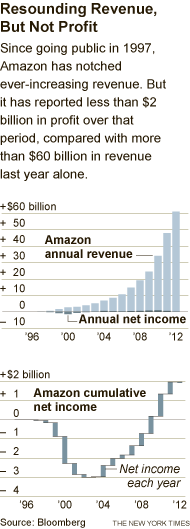
SAN FRANCISCO — Nearly every day, Amazon announces a new venture. It just bought an online education company and introduced a payment mechanism for Internet retailers that competes with PayPal. It started selling wine for the first time in New York, updated its line of tablets, gave the go-ahead to three new comedy pilots and began a design competition for its fashion division. It is setting up mini-warehouses inside suppliers like Procter & Gamble to ship goods faster. But one thing it will not be announcing this month: a significant profit. Who cares? Amazon lost money in 2012, and analysts are anticipating another loss when the company releases its third-quarter results on Thursday. Yet the stock is at a record high. Read more of this post

Twitter arrives on TV in India with Airtel deal

Twitter arrives on TV in India with Airtel deal

October 21, 2013

by Pankaj Maru

Technology and platform convergence is the next big thing that businesses are looking for – whether it be mobile and internet or internet and TV. It’s all about a revenue stream for the future. Airtel Digital TV, an arm of Indian telco Bharti Airtel, revealed today that it has integrated Twitter with its digital TV offerings for the first time. With this new form of convergence, users can actually tweet while watching TV and can view tweets related to their TV shows as well. It launches tomorrow at no extra charge to subscribers. Read more of this post

Rice losses at ‘Bt200 bn a year’

Rice losses at ‘Bt200 bn a year’

The Nation October 22, 2013 1:00 am

The Finance Ministry yesterday put the annual losses from the government’s controversial rice-pledging scheme in the vicinity of Bt200 billion after wrapping up its audit.
Supa Piyajitti, deputy permanent secretary and chairwoman of the audit team, did not disclose the exact figure from the audit report signed by her former boss Areepong Bhoocha-oom. Areepong was transferred from permanent secretary of the ministry to the post of secretary-general of the Public Sector Development Commission, reportedly for his inability to control Finance Ministry officials who repeatedly expressed concerns over the scheme’s impact on the national fiscal position. Read more of this post

China Metal Recycler, accused of fraudulent accounting, in wind-up fight; Atlantis Investment Management Liu Yang, dubbed “China’s female Buffett”, sold 4.42m shares in Aug off-market at HK$1, a discount of 90%

Recycler steels in wind-up fight
Gary Chau
Tuesday, October 22, 2013
China Metal Recycling (0773) chairman Chun Chi-wai said yesterday a petition by the Securities and Futures Commission to liquidate his company is not in the interests of shareholders. It was Chun’s first public statement since his arrest in July for alleged fraudulent accounting. Outside the High Court, he said the liquidation is neither fair nor appropriate and claimed he did nothing illegal. The SFC probe has already affected the Guangzhou-based recycler’s operations and caused losses, he said. Read more of this post

With psy and currency swaps S. Korea grabs global influence

Updated: Tuesday October 22, 2013 MYT 7:12:59 AM

With psy and currency swaps S. Korea grabs global influence

SEOUL: From rapper Psy to overseas financial aid, an economically and culturally confidentSouth Korea appears to be taking on bigger neighbours Japan and China for the hearts and minds of the rest of Asia and beyond.Its most recent effort to leverage brand “Korea” – three currency swap deals worth more than $20 billion that were announced this month. South Korea had the seventh largest currency reserves in the world at the end of August, worth $331.1 billion, according to the Bank of Korea. It can easily afford to match cultural diplomacy with economic muscle as it competes with Japan and China for influence. Read more of this post

Market attention has been focused on Dongbu Group in recent weeks, based on fears that the group is dogged with an impending liquidity shortage like the ailing Tongyang Group

2013-10-21 17:22

Dongbu’s health still in question

By Kim Rahn

K2013102100197-200

Market attention has been focused on Dongbu Group in recent weeks, based on fears that the group is dogged with an impending liquidity shortage like the ailing Tongyang Group. Despite the face saving denial by its chief, analysts remain skeptical of the group’s financial strength. This recent speculation has been influenced by the failure of some of Tongyang’s affiliates to pay maturing debts and filing for court receivership at the end of last month. Read more of this post

How should we promote Korea to the outside world? Going beyond K-pop and tradition

Going beyond K-pop and tradition

Oct 22,2013

by Daniel Tudor

How should we promote Korea to the outside world?
This is a question that comes up again and again in the media and in public life. It reared its head again recently with a rather bizarre “romantic mushrooms” campaign for Korean food in the United States. So much time and money is spent on promoting Korea and Korean culture that it constantly amazes me how counter-productive such campaigns are.
Since I am a foreigner (yawn), I expect some readers will consider this an “attack” on Korea, or at least, a “critical” article. Please do not take it that way. I am simply a person who fell in love with Korea as a tourist, and decided to stay. I want to promote Korea, so others can experience the same thing. This is why I want to openly offer my own suggestions on how Korea should and should not promote itself.  Read more of this post

Abenomics might eat itself, a Pettis production

Abenomics might eat itself, a Pettis production

David Keohane

| Oct 21 12:28 | 9 comments | Share

It may seem like an odd time to stress out about Japan running an overly aggressive current account surplus, which might in turn push Abenomics off the tracks, but since the fears over a deficit have been so well covered… This is from Michael Pettis, who argues that one of the automatic, if not always intended consequences of Abenomics is to really force up Japan’s current account surplus, and it’s not clear the world will be ready or able to absorb it. In his defense he’s looking a few years, rather than quarters, out: What matters, I think, is that in order to generate growth Tokyo is planning to implement polices aimed at raising both inflation and real GDP, and these policies are likely to force up the national savings rate relative to investment. Read more of this post

Indonesia’s anti-corruption website is now getting 1,000 crowdsourced reports every day

Indonesia’s anti-corruption website is now getting 1,000 crowdsourced reports every day

October 21, 2013

by Enricko Lukman

lapor-ads

While a lot of people are skeptical that the Indonesian government has what it takes to build a good tech product, this is one of those cases where the government proves its skeptics wrong. It’s been six months since we discussed Indonesia’s anti-corruption weapon Lapor. The team behind Lapor, the President’s Delivery Unit of Development Monitoring and Oversight (UKP4), tells Tech in Asia that the site is proving popular. Lapor allows citizens to report on the wrongdoings of Indonesia’s government via a website, mobile app, or SMS. It could range from bribery by traffic officers to massive corruption by politicians. Read more of this post

Stiletto Networks Grow as Women Rise on Boards: Corporate India

Stiletto Networks Grow as Women Rise on Boards: Corporate India

Egon Zehnder International, an executive search firm, is getting three times as many calls as last year at its Mumbai office from Indian companies seeking women for board positions, spurred by a new law. Enacted in August by India’s parliament, the Companies Act requires every listed company to have at least one female director within a year, while others reporting minimum revenue of 3 billion rupees ($49 million) have three years to comply. The legislation and a scramble for qualified candidates are spawning girls-only networking forums through which they mentor and recommend each other, much like their Wall Street peers. Read more of this post