How Havaianas built a global brand; Flip-flop maker excelled at planning and marketing

September 2, 2013 6:10 pm

How Havaianas built a global brand

By Dominique Turpin

download (17)

The story

The Havaianas brand of rubber flip-flop sandals started life 50 years ago as a basic shoe for poor plantation workers in Brazil. The brand became a staple in the country before gaining fresh impetus in the mid-1990s, when parent company Alpargatas decided to reposition the declining brand as an aspirational fashion product. It hired leading designers to come up with attractive colours and designs and soon Brazilian and then international celebrities were wearing the new, colourful and stylish, higher-priced sandals. Sales grew rapidly. However, the market was saturated in Brazil, where Havaianas sold 850 pairs of flip-flops for every 1,000 people in 2007. And although it was enjoying strong overseas sales growth in 65 countries, it did not have a strategy for international expansion. In 2008 Marcio Luiz Simoes Utsch, Alpargatas chief executive, decided to try to turn Havaianas into Brazil’s first truly global brand. Read more of this post
The Perfect Nap: Sleeping Is a Mix of Art and Science; Why Some Snoozing Sessions Leave You Groggy While Others Help

Updated September 2, 2013, 10:12 p.m. ET

The Perfect Nap: Sleeping Is a Mix of Art and Science

Why Some Snoozing Sessions Leave You Groggy While Others Help

SUMATHI REDDY

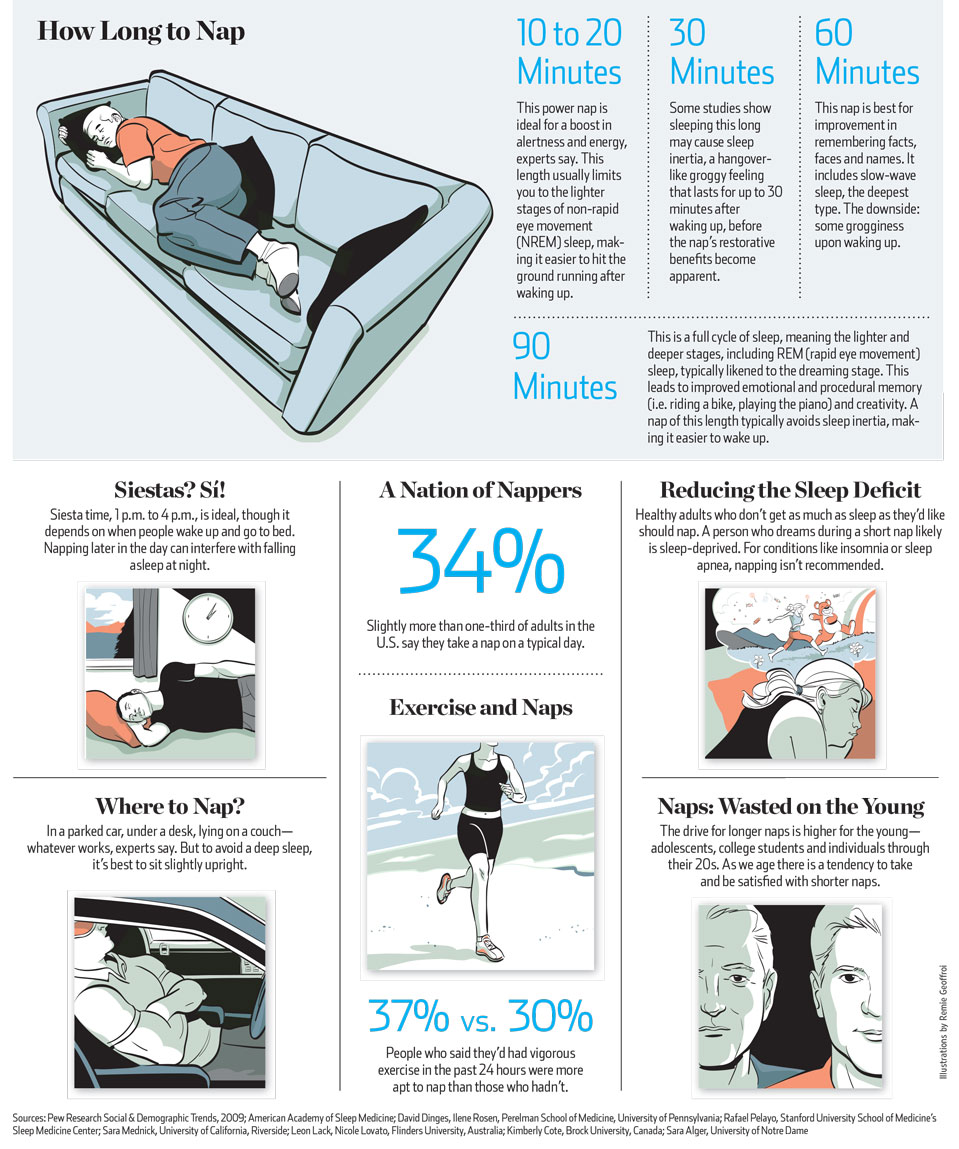
OB-YT345_SLEEP0_G_20130902231003

There’s an art to napping. Studies have found different benefits—and detriments—to a nap’s timing, duration and even effect on different people, depending on one’s age and possibly genetics. “Naps are actually more complicated than we realize,” said David Dinges, a sleep scientist at the University of Pennsylvania’s Perelman School of Medicine. “You have to be deliberative about when you’re going to nap, how long you’re going to nap and if you’re trying to use the nap relative to work or what you have coming up.” Read more of this post

“The Firm,” by Duff McDonald, chronicles the rise of McKinsey, the world’s most influential management consulting firm, but also cites its many failures.

SEPTEMBER 2, 2013, 9:14 PM

In a New Book, McKinsey & Co. Isn’t All Roses

By ANDREW ROSS SORKIN

“You can’t get fired for hiring McKinsey & Company.”

It is a refrain that has been whispered in the corner offices and halls of corporate America for years as a justification — or, at least, a rationalization — for hiring McKinsey, the world’s most influential management consulting firm. The secretive firm has been the go-to strategy consigliere for the globe’s top companies — from Procter & Gamble to American Express — as well as governments for more than a half century. Its influence is staggering. Consider this: More current and former Fortune 500 C.E.O.’s are alumni of McKinsey than of any other company. So why has its advice, at times, turned out to be so bad? Read more of this post

Banking grandee Lord Jacob Rothschild shuns private jets for EasyJet at a “jam-packed” airport

Banking grandee Lord Rothschild shuns private jets for EasyJet

rothschild_2313826b

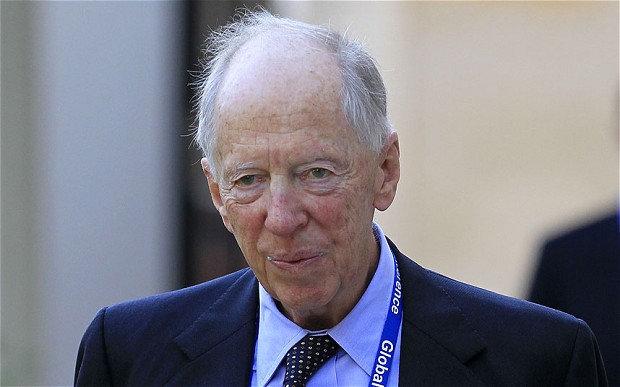
Flying low-cost: Lord Jacob Rothschild made the trip back from his Corfu villa this week on EasyJet Photo: AP

By Harriet Dennys, City Diary Editor

7:00AM BST 29 Aug 2013

Lord Jacob Rothschild may own “the most fabulous” villa on Corfu, but he still flies home from holiday on EasyJet. The patriarch of the Rothschild’s family business, RIT Capital Partners, was spotted sitting quietly at a “jam-packed” Corfu airport on Monday, as he waited for the same budget flight as mortals without a £2bn banking dynasty to their name – not a private jet in sight. “Lord Rothschild wasn’t even on speedy boarding,” says Diary’s man at passport control. “He just queued up amongst the sunburnt and tattooed holidaymakers, who were no doubt unaware of this distinguished passenger.” Quite a contrast to the low-key investment banking grandee’s son Nat, whose forays into Indonesian coal miner Bumi have been nothing if not colourful. Last time financier Nat made a splash in the Med, he was hosting a £1m fortieth birthday party in the port of Montenegro – private jets galore.


Chinese Educators Look to American Classrooms; While the world may be dazzled by Chinese students’ test scores, educators in China worry that the lack of hands-on science learning is stifling innovation and critical thinking

September 2, 2013

Chinese Educators Look to American Classrooms

By DAN LEVIN

BEIJING — To prepare for an endless barrage of secondary-school exams, Zhang Ruifan learned to memorize entire science textbooks. So when his family sent him to high school in the United States, he was so far ahead of his fellow freshmen in math and science that he usually knew the correct answer even before the teacher had finished speaking. “I’d just blurt it out,” he said in an interview while back home here this summer. But Ruifan, 15, who goes by Derek in the United States, soon discovered that science was more than just facts and formulas meant to be regurgitated on tests. Read more of this post

Are family offices just private banks in family offices’ clothing? The new vogue for the title “family office” could be undermining the credibility of the model

FAMILY OFFICES AND NIGHT CLUBS

ARTICLE | 2 SEPTEMBER, 2013 12:43 PM | BY DAVID BAIN

What is it with family offices these days? They appear to be everywhere. How much so? Well for starters Bloomberg Markets recently ran a big story about the top 50 multi family offices in the world, which was picked up by much of the world’s financial press afterwards. Then there are the stories about hedge funds turning themselves into family offices. Some of these have been big, like George Soros’s legendary Quantum hedge fund becoming a family office after it dumped money from investors not connected to the family. Others, lesser-known offices but nonetheless big, have also converted to family offices, like New York-based Covepoint Capital and Brencourt Advisors. Read more of this post

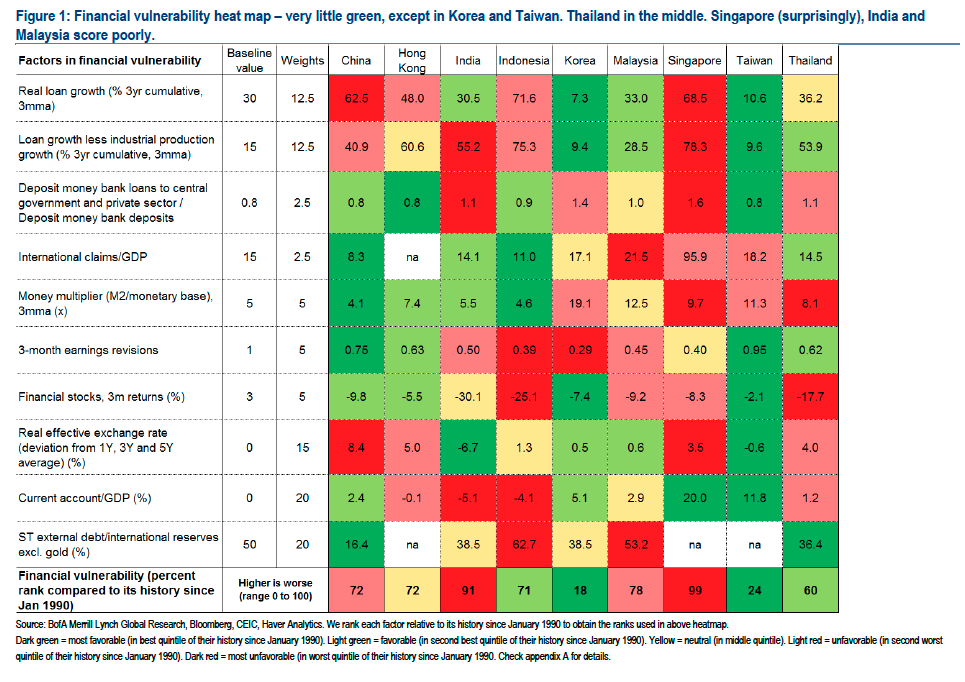
Asia financial vulnerability heat map

Screen-shot-2013-09-02-at-2.57.55-PM

“If bubbles in residential properties burst, people can still sell them if the sticker price is low enough, because people always need a place to live. But once the commercial property market crashes, nobody is willing to rent a shop that loses money every day”

An urban inferiority complex

Updated: 2013-09-02 07:35

By Wang Chao ( China Daily)

Industry insider points to a problem that is bubbling under the surface Read more of this post

Deng Xiaoping’s Lessons for Today’s China

Deng Xiaoping’s Lessons for Today’s China

What would Deng Xiaoping make of Charles Xue?

It’s a surprisingly edifying question. In the past few weeks, Chinese authorities have been eager to show their allegiance to the rule of law. They have gone after Western pharmaceutical companies for bribery, milk-powder suppliers for price-fixing and a well-known British investigator for illegally obtaining information about Chinese citizens. The most riveting spectacle — the often salacious testimony in the trial of Bo Xilai, a former Politburo member — had hardly ended when reports emerged that the next target might be Bo’s mentor, Zhou Yongkang, who would be the highest-ranking party member brought down for corruption since the Cultural Revolution. Read more of this post

Chinese Banks Contribute 70% of Profits in Services, Raising Concerns over Structural Imbalances

Chinese Banks Contribute 70Pct of Profits in Services, Raising Concerns over Structural Imbalances

09-02 13:46 Caijing

Banks’ profits have grown rapidly from 58 percent in 2009 and 68 percent in 2013, as a share of total profits in services.

Extra-high profitability in Chinese banks, most of which are state-owned or state-backed, has raised concerns about structural imbalances in services, a sector that has been attached much importance in steering a growth model away from exports to consumption. Chinese banks have generated nearly 70 percent of profits in total among the top 500 companies in services, although the number of banks only accounts one tenth of total, a report issued by the China Enterprise Confederation (CEC) over the weekend showed. Read more of this post

China Wuhan Debt-to-GDP Ratio at 185.64%

China Wuhan Debt-to-GDP Ratio at 185.64Pct

09-02 15:24 Caijing

The lcoal government’s debt-to-GDP ratio was 1.5 times higher than the U.S. red line on government debt levels. Debt-to-GDP ratio in Wuhan, the capital city of South China’s Hubei province, could stand out at 185.64 percent, among the highest in Chinese cities, local media said. The city is one of a lengthy list of Chinese cities which are under the inspection of the National Audit Office for their debt piles, starting from early August amid fears of a government debt crisis. Local government of Wuhan has amassed a huge amount of debt in recent years due to aggressive urban construction, with statistics showing ending June 2012, the city had 203.7 billion yuan in debt outstanding. Read more of this post

China’s retail industry increasingly resembles an army of mice running on wheels. More and more money is being invested, but at the end of the day, companies find themselves running neck and neck with the rest of the competition

How fast companies dodge price wars

Updated: 2013-09-02 07:36

( China Daily) Read more of this post

China’s consumers aren’t living up to sales pitch; Spike in bad loans worries retailers in China

China’s consumers aren’t living up to sales pitch

Decelerating investment in housing, infrastructure and manufacturing, is dragging on incomes.

August 28, 2013 @ 10:41 am

By John Foley

The author is a Reuters Breakingviews columnist. The opinions expressed are his own.

Consumer brands in China are finding their rewards aren’t quite as advertised. Growth in purchases of a wide range of goods has slowed sharply over the past year, and companies ranging from Samsonite to Apple are reporting disappointing Chinese sales figures. Consumers in the world’s second-largest economy will have their day, but the idea they alone can sustain growth looks threadbare. Read more of this post

It’s China vs. China in GMO Food Fight

September 3, 2013, 7:30 AM

It’s China vs. China in GMO Food Fight

Top of Form

China’s fierce public debate on genetically modified food, long a political hot potato in a country obsessed with how to feed its 1.3 billion citizens, has become the subject of a spat between big guns from two of its most powerful governing institutions. Two weeks ago, a major-general in the People’s Liberation Army took to a popular newspaper to publish (in Chinese) a series of pointed rhetorical questions about Beijing’s policy allowing more trade in genetically modified grains, suggesting that genetically modified organisms, or GMO, are a strategy by which a Western conspiracy to supplant China’s food security is taking shape. GMOs are organisms that have had their genetic blueprint artificially re-engineered; for example, crops altered to become bug-resistant. Read more of this post

China’s top restaurants reeling over new austerity

China’s top restaurants reeling over new austerity

By DIDI TANG, Associated Press | September 3, 2013 | Updated: September 3, 2013 3:18am

BEIJING (AP) — The shark’s fin, bird’s nest and abalone are gone from the offerings at Beijing’s Xiang E Qingrestaurant — a favorite of Communist Party cadres just months ago. Diners are now left with less exotic fare such as shredded beef, pickled turnip and fried peanuts. China’s high-end restaurants have gone into crisis under leader Xi Jinping‘s campaign to crack down on the kinds of party extravagances that have angered ordinary Chinese, such as dining on the public dime. To stem big losses and avoid the now-tarnished image of VIP banquet halls, these restaurants have been busy reinventing themselves. Read more of this post

With Labs Pumping Out Legal Highs, China Is the New Front in the Global Drug War

With Labs Pumping Out Legal Highs, China Is the New Front in the Global Drug War

By Charlie CampbellSept. 02, 201310 Comments

The drugs arrived in an “unnamed, unmarked package,” recalls Timothy LaMere. The rest of what happened that night is more of a blur. After sharing the 2C-E — a synthetic imitation of the rave drug ecstasy — with friends at a house party in Blaine, Minn., things started to go very wrong. Those who took the drug became dangerously unwell — sweating, shaking, rolling around on the floor and experiencing seizures and severe pain. LaMere was among 10 people hospitalized, while one friend, 19-year-old Trevor Robinson, father of a 5-month-old baby, died after “punching walls, breaking items, staring and having dilated pupils and yelling,” according to the criminal complaint. LaMere is currently serving a 10-year sentence for third-degree unintentional murder in a state correctional facility. “I feel horrible. I feel horrible for Trevor’s family — I was close to his mum before — and I feel horrible for anyone who knew him,” he tells TIME. Read more of this post

Wison Engineering Services Says Billionaire Founder Hua Bangsong Assists With China Corruption Probe on its business relationship with PetroChina

Wison Says Founder Hua Bangsong Assists With China Probe

Wison Engineering Services Co. said its controlling shareholder Hua Bangsong is helping China’s authorities with their investigations, amid a corruption probe into its one-time largest client PetroChina Co. Wison has been informed that Hua “is now assisting the relevant authorities in the PRC in their investigations,” the company said today in a Hong Kong stock exchange filing. Wison fell 16 percent yesterday before its shares were halted. The company said it noted recent press reports on its business relationship with PetroChina Co., the country’s biggest oil and gas producer whose former chairman Jiang Jiemin and four other senior executives are being investigated by the government. Wison provides consulting, engineering and construction services to chemical factories and oil refineries. Read more of this post

What’s next for ChiNext? Black sheep is comeback kid

What’s next for ChiNext? Black sheep is comeback kid

By Ye Zhen | August 12, 2013, Monday |  PRINT EDITION

CHINEXT, the once troubled board for start-up companies in the southern city of Shenzhen, has been logging strong performance this year, underscoring expectations that the commitment by China’s new leadership to rebalance the economy will benefit small and private businesses. The ChiNext Index, which tracks a Nasdaq-style exchange for growth enterprises, has leapt a stunning 63 percent so far this year, while the CSI 300 index, the benchmark for blue chips in Shanghai and Shenzhen, has slumped 10 percent. ChiNext closed at 1,172.52 points on Friday. Read more of this post

Unfinished Business – China Mobile’s Corruption Woes Roll On

Unfinished Business – China Mobile’s Corruption Woes Roll On – Economic Observer Online

By Liao Jiehua (廖杰华) , Chen Yong (陈勇) and Wu Qiaofa (吴侨发)
Issue 634 ,Aug 26, 2013  
Executives continue to fall to corruption charges at the world’s largest mobile phone operator. On Aug 19, Xu Long (徐龙), chairman of China Mobile’s Guangdong branch (Guangdong Mobile), was placed under investigation for “serious disciplinary violations.” Economic Observer learned that as far back as 2010, the Zhejiang Provincial Commission of Discipline Inspection had begun investigating Xu; and auditing authorities have also looked into him on five separate occasions. But nothing concrete was ever discovered.
However, everything began to unravel when two other high China Mobile officials, Li Xinze (李欣泽) and Sun Lian (孙炼), were interrogated in April and July respectively. These men have reportedly led authorities to many new clues implicating Xu Long. Read more of this post

China’s oil boss `must have embezzled huge amount’

Oil boss `must have embezzled huge amount’ 
Grace Cao
Tuesday, September 03, 2013
The director of the State-owned Assets Supervision and Administration Commission, Jiang Jiemin, who is under investigation, “must have embezzled a huge amount of money,” official mainland media reported. Jiang, a former boss of PetroChina Group, is being investigated by the Communist Party’s Central Commission for Discipline Inspection. The commission yesterday launched a new website to facilitate reporting about corruption and its chief, Wang Qishan, visited the operations. Jiang is facing a probe for serious disciplinary violations. Read more of this post

China sacks head of state asset regulator Jiang Jiemin amid graft probe

China sacks head of state asset regulator Jiang Jiemin amid graft probe

Tuesday, 03 September, 2013, 11:30am

Reuters in Beijing

Top Chinese economic official Jiang Jiemin has been sacked as head of the body overseeing state-owned companies for “suspected serious disciplinary violations”, the official Xinhua news agency reported on Tuesday. The phrase is normally used as code for corruption in China, and the move comes as the country’s leaders step up a campaign against graft. Xinhua cited the powerful Organisation Department of the ruling Communist party. Read more of this post

Why The Lingerie Industry Can’t Compete With Victoria’s Secret; Victoria’s Secret didn’t start dominating lingerie until it stopped being cheap and began focusing on the customer experience

Why The Lingerie Industry Can’t Compete With Victoria’s Secret

ASHLEY LUTZ SEP. 2, 2013, 4:37 PM 5,371 6

Victoria’s Secret is facing a deluge of competition from lingerie start-ups that seek to challenge the brand. Brands like AdoreMe, Intimint, and True & Co. are trying to seduce Victoria’s Secret customers with lower prices and more tailored selections.  AdoreMe offers direct-to-consumer lingerie at about half of Victoria’s Secret prices. Intimint asks customers to take a quiz and sends them new lingerie selections every month, based on their preferences. True & Co. sends women five bras a month, giving them the option of keeping what they like and sending back what they don’t. While these brands are consumer-friendly and creative, their business models ignore exactly what makes Victoria’s Secret so successful. In the ’90s, Victoria’s Secret used to focus on value. But the brand floundered because there was nothing to set it apart from other price-friendly brands like Hanes and Maidenform. Victoria’s Secret didn’t start dominating lingerie until it stopped being cheap and began focusing on the customer experience.  Read more of this post

‘Deeping’ food attracts consumers for its exceptionally deeper and richer taste and it is healthier at the same time

2013-09-02 18:28

‘Deeping’ food attracts consumers

By Rachel Lee

K2013090200130-200

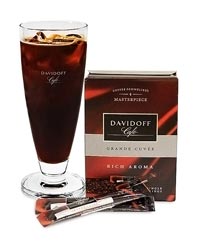
This photo shows the Davidoff Cafe Rich Aroma Instant Stick Cafe made by Davidoff Cafe, a premium European coffee maker. The coffee stick, which was first launched in 2008, has become popular again among savvy consumers for its exceptionally deeper and richer taste.

It’s different from dipping food. Consumers’ love and interest in food concepts like well being and healing has now gone further: they want deeping food. It is a type of food that is regarded healthy and has a deeper, richer taste at the same time. “Consumers have long been seeking healthy, healing food and now the taste element has been added to their interest,” said a Davidoff Cafe spokesman. Read more of this post

Purchasing Chinese goods online booming in Vietnam

Purchasing Chinese goods online booming in Vietnam

By Nguyen Thi Thuy Anh, Zhang Jianhua (Xinhua)    14:22, August 31, 2013

Like anywhere else in the world, the use of the Internet and e-commerce has flourished inVietnam, especially in the capital Hanoi.
In fact, for the past few years, the Vietnamese people have been purchasing goods online,including products from abroad.
With rapid development of commodity production with various designs and the growth ofonline websites, more and more Vietnamese people choose to buy Chinese commoditiesonline. Read more of this post

Subscription commerce companies are struggling. Here’s how to fix them

Subscription commerce companies are struggling. Here’s how to fix them

BY TOM CAPORASO 
ON SEPTEMBER 2, 2013

You’d think the way the media has covered subscription commerce that it’s some brand-new innovative idea that ShoeDazzle, BirchBox, or Dollar Shave Club just invented. But subscription services have been around a long time. Think of your grandmother getting milk delivered to her front porch, the paperboy tossing the daily newspaper somewhere in the vicinity of your porch, or my favorite: the weekly Charles Chips delivery. Read more of this post

Microsoft in $7 Billion Deal for Nokia Cellphone Business

September 2, 2013, 11:51 p.m. ET

Microsoft in $7 Billion Deal for Nokia Cellphone Business

SHIRA OVIDE

Microsoft Corp. MSFT -0.45% struck a $7 billion deal to acquire Nokia Corp.’sNOK1V.HE +1.30% core cellphone business, a bold move to try to catch up in a fast-growing mobile business that is now dominated by Samsung 005930.SE -0.44% andApple AAPL -0.91% . The deal comes on the heels of announcing the planned retirement of Microsoft Chief Executive Steve Ballmer. As part of the deal for the devices-and-services business, Microsoft will bring aboard several executives who could be contenders for Mr. Ballmer’s job. Read more of this post

How Velti, One Of The Largest Mobile Ad Companies On The Planet, Lost $130 Million

How Velti, One Of The Largest Mobile Ad Companies On The Planet, Lost $130 Million

JIM EDWARDS SEP. 2, 2013, 3:34 PM 2,493 2

Until recently, Velti was one of the world’s huge mobile adtech success stories. It staged a big, early IPO in 2011, raising $150 million in cash. It had more than 1,000 employees around the world. It had an eye-popping, spaceship-like new headquarters in San Francisco. And it signed some of the biggest mobile ad deals ever seen — one client pledged a $27 million budget to the company in 2012. Business Insider even lauded CEO Alex Moukas as one of the most important people in mobile advertising. Today, the company is a disaster area. Read more of this post

Digital Technology Lets Dentists Make a Crown While a Patient Waits; The one-day crown systems are sold by Sirona Dental Systems

September 2, 2013, 4:44 p.m. ET

Are One-Day Crowns Worth the No Wait?

Digital Technology Lets Dentists Make a Crown While a Patient Waits

LAURA JOHANNES

PJ-BQ247_ACHES_DV_20130902215649

The E4D system includes machines for digital impressions and milling.

The Ache: Getting a crown for a weak or damaged tooth can be a big pain—and not just in the tooth. The process usually requires at least two dentist visits and a one-to-three-week wait for the crown to be made.

The Claim: Dentists say, with digital technology, they can make a crown in the office while a patient waits. The process takes only an hour or two.

The Verdict: One-day crown technology is convenient and produces durable ceramic crowns, dentists say. But there are “aesthetic limitations” to the one-day crown procedure making it a less appealing option for front teeth, says Jacinthe M. Paquette, a Newport Beach, Calif., prosthodontist.

A crown is a cap made to cover a damaged tooth. To prepare for the crown, dentists drill to remove the decayed portion and shape the tooth for the crown. Depending on the dentist and location, a traditional crown can cost $800 to $2,000 or more, and take at least two visits and a wait in between while a lab makes the crown. Read more of this post

As violence linked to the crisis in neighbouring Syria increasingly slips over the border, the Lebanese have come up with a novel way of coping: advance-warning apps

September 2, 2013 7:23 pm

Lebanon turns to apps to avoid growing violence linked to Syria

By Abigail Fielding-Smith in Beirut

As violence linked to the crisis in neighbouring Syria increasingly slips over the border, the Lebanese have come up with a novel way of coping: advance-warning apps. Smartphone applications that map gun battles and differentiate between fireworks and gunfire, offer paths around roadblocks and even contact the army in the event of kidnap are becoming a must-have for Lebanese commuters. “In other places in the world, the only thing that might obstruct your path is traffic,” said Mohammad Taha, an entrepreneur behind one of the products. “In Lebanonthere are many things that can happen.” Read more of this post

Andreessen Horowitz’s Scott Weiss On Why There Will Be 30 New Franchises In The Enterprise

Andreessen Horowitz’s Scott Weiss On Why There Will Be 30 New Franchises In The Enterprise

LEENA RAO

posted 9 hours ago

The future of enterprise software is anything but boring. Andreessen Horowitz partner Scott Weiss aptly predicted his guest post titled “30 New Franchises” a few weeks ago, there a massive opportunity to create new multi-billion-dollar enterprise franchises despite incumbents throwing massive amounts of money to acquire these franchises. These companies, such as Box and many others, are choosing to stay independent. Weiss himself should now–he sold his enterprise company IronPort Systems to one of the most well known incumbents in the space, Cisco, back in 2007. And we decided to create an enterprise panel at Disrupt SF around Weiss’ predictions, with the CEO’s of Box, Zendesk and Nebula (you can still buy tickets here). We sat down with Weiss to hear more about his theories behind “30 Franchises.” You can read the entirety of our conversation below. Read more of this post