Stella International Takes on LVMH to Expand in Paris

Stella International Takes on LVMH to Expand in Paris

Stella International Holdings Ltd. (1836), the Asian shoemaker that manufactures for companies such as Prada SpA (1913), plans to expand its own brands in Paris, turning into a lower priced competitor to luxury clients there.

The contract manufacturer plans to add two shops in Paris by end of this year and expand into other locations in Europe, Stephen Chi, chief executive officer of the company’s women’s footwear and retail business division, said in a July 10 phone interview. The company, which was founded in Taiwan and trades on the Hong Kong stock exchange, already has one Paris store. Read more of this post

China Wealth Eluding Foreigners as Equities Earn 1% for 20 Years

China Wealth Eluding Foreigners as Equities Earn 1% for 20 Years

China’s 20-year economic boom has boosted the wealth of its 1.3 billion citizens at the fastest pace worldwide and spawned some of the biggest companies in history. Foreigners earned less than 1 percent a year investing in Chinese stocks, a sixth of what they would have made owning U.S. Treasury bills.

The MSCI China Index has gained about 14 percent, including dividends, since Tsingtao Brewery Co. (168) became the first mainland company to sell H shares to international investors in Hong Kong in July 1993. That compares with a 452 percent return in the Standard & Poor’s 500 Index, 322 percent in the MSCI Emerging Markets Index and 86 percent from Treasuries. Only the MSCI Japan Index had a weaker performance among the 10 largest markets, losing about 1 percent. Read more of this post

Serendipity and Samples Can Save Barnes & Noble

Serendipity and Samples Can Save Barnes & Noble

Turmoil at Barnes & Noble Inc. (BKS), where Chief Executive Officer William Lynch resigned last week after the company posted an unexpectedly large loss in the quarter ended April 30, has people in the publishing industry worried. “We’re all forced to ask: What would the book discovery environment look like without Barnes & Noble?” writes Rich Fahle, a former Borders executive who runs a marketing agency for authors.

The question zeroes in on a growing problem for the U.S. book industry. Although readers increasingly purchase books online, they still rely on physical bookstores to discover what to buy. In-store displays are the most common way, after personal recommendations, that frequent buyers find new books, accounting for about 20 percent of purchases, according to a survey by the Codex Group. Yet brick-and-mortar stores are disappearing, as customers defect to the convenience and, in many cases, lower prices of Amazon.com Inc. Read more of this post

Dymocks: out of the ashes; The reports of the iconic bookshop’s demise have been greatly exaggerated

Dymocks: out of the ashes

July 15, 2013

Belinda Williams

The reports of the iconic bookshop’s demise have been greatly exaggerated. There are many lessons to be learnt from a notoriously gloomy prediction made two years ago that online shopping would see the end of Australian bookstores. “In five years, other than a few specialist booksellers in capital cities, we will not see a bookstore; they will cease to exist,” then federal small business minister Nick Sherry stated at the time while launching a program to encourage small businesses to expand online. Today, Dymocks bookstores are still standing. In fact, the iconic bookstore claims to have sold more books last year than ever before. But customers’ reading appetites cannot be solely credited for the 130-year-old bookseller’s endurance. The collapse of REDgroup (parent of Borders and Angus & Robertson chains) saw the abrupt departure of Dymocks’ sidewalk competition. Read more of this post

Young professionals in Malaysia struggle to own property

Young professionals in Malaysia struggle to own property

Now with rising house prices and a shorter home loan repayment period, some say it has become an impossible struggle. -The Star/ANN
Christina Chin
Sun, Jul 14, 2013
The Star/Asia News Network

Chua pondering the possibility of ever owning his first apartment in Penang. Malaysia – Wanting and actually being able to afford your own place are two very different things. With the oversupply of high-end condominiums shadowing the property market, fresh graduates and young professionals may have to either send out an SOS to their parents for cash or live at home because having “my own space” just got a little tougher. Fresh graduate K.T.S. Chua, 23, who recently took out a RM30,000 personal loan to start a hotdog business, is relieved at narrowly missing the July new personal loan cap ruling but the shorter home loan repayment period has dampened the budding entrepreneur’s plan for a bachelor pad. He currently lives at home with his parents and two brothers. “I was looking to get a place of my own; unfortunately, the new ruling will gravely affect my plans to purchase a home. Without the new cap, it is already so hard for me to buy property and I will have to put it on hold. Read more of this post

Why Economics Cannot Explain the Modern World

Why Economics Cannot Explain the Modern World

Deirdre Nansen McCloskey University of Illinois at Chicago – Department of Economics

June 2013
Economic Record, Vol. 89, pp. 8-22, 2013

Abstract: 
Why indeed? Because the Great Fact, 1800 to the present, incomes rising by a factor of a factor of 30, and higher if quality is acknowledged, cannot be explained by piling brick on brick, or BA on BA, in the absence of new ideas. As Keynes said, the marginal product of capital would be driven quickly down to zero. If the key were accumulation, which economists love, the Great Fact of modern growth would have happened earlier, or in China. Only ideas, in an environment of liberty and dignity for ordinary people, historically unique to northwestern Europe, work.

Embracing Co-Creation Thinking in Economics

Embracing Co-Creation Thinking in Economics

Avik Chakrabarti University of Michigan – Stephen M. Ross School of Business

Venkatram Ramaswamy Stephen M. Ross School of Business at the University of Michigan

June 2013
Ross School of Business Paper No. 1188

Abstract: 
Economics without the lens of co-creation, in the new evolving economy, blurs visibility. We provide a framework that can reshape economic thinking with co-creation at the core. In particular, an individual’s experience from co-creation is at the foundation of our economic apparatus. This is consistent with the mounting evidence on the new evolving economy where the conventional firm-centric view is of little relevance. We compare and contrast key elements of our co-creation thinking with conventional economic thinking. We show how fundamental economic concepts, such as surplus and efficiency, must be modified in order to incorporate co-creation experiences. We also posit a principle of co-creative advantage to guide efficient co-creation.

The Network Origins of Large Economic Downturns

The Network Origins of Large Economic Downturns

Daron Acemoglu Massachusetts Institute of Technology (MIT) – Department of Economics; Centre for Economic Policy Research (CEPR); National Bureau of Economic Research (NBER)

Asuman E. Ozdaglar Massachusetts Institute of Technology (MIT) – Department of Electrical Engineering and Computer Science

Alireza Tahbaz-Salehi Columbia Business School – Decision Risk and Operations

June 13, 2013
Columbia Business School Research Paper

Abstract: 
This paper shows that large economic downturns may result from the propagation of microeconomic shocks over the input-output linkages across different firms or sectors within the economy. Building on the framework of Acemoglu et al. (2012), we argue that the economy’s input-output structure can fundamentally reshape the distribution of aggregate output, increasing the likelihood of large downturns from infinitesimal to substantial. More specifically, we show that an economy with non-trivial intersectoral input-output linkages that is subject to thin-tailed productivity shocks may exhibit deep recessions as frequently as economies that are subject to heavy-tailed shocks. Moreover, we show that in the presence of input-output linkages, aggregate volatility is not necessarily a sufficient statistic for the likelihood of large downturns. Rather, depending on the shape of the distribution of the idiosyncratic shocks, different features of the economy’s input-output network may be of first-order importance. Finally, our results establish that the effects of the economy’s input-output structure and the nature of the idiosyncratic firm-level shocks on aggregate output are not separable, in the sense that the likelihood of large economic downturns is determined by the interplay between the two.

Governance Through Threat: Does Short Selling Improve Internal Governance?

Governance Through Threat: Does Short Selling Improve Internal Governance?

Massimo Massa INSEAD – Finance

Bohui Zhang The University of New South Wales – School of Banking and Finance; Financial Research Network (FIRN)

Hong Zhang INSEAD – Finance

July 9, 2013
INSEAD Working Paper No. 2013/83/FIN

Abstract: 
We explore the relationship between internal governance and the disciplining mechanisms created by the threat of short selling (i.e. “short-selling potential”). We argue that the presence of short selling increases the cost of agency problems for shareholders and incentivizes them to improve internal governance. Our stock-level tests across 23 developed countries during 2003-2009 confirm that the threat of short selling significantly enhances the quality of internal governance. This effect is stronger for financially constrained firms and more pronounced in countries with weak institutional environments. The governance impact of short selling leads to an improvement in firms’ operating performance.

Investor Awareness and PSY-chology Surrounding ‘Gangnam Style’

Investor Awareness and PSY-chology Surrounding ‘Gangnam Style’

Y. Han (Andy) Kim Nanyang Technological University (NTU)

Ho Sung Jung Bank of Korea

July 11, 2013

Abstract: 
The historically unprecedented success of “Gangnam Style,” the 18th K-pop single by the South Korean rapper musician PSY that went global in 2012, was an exogenous shock to investor awareness and enthusiasm about DI Corp., the company founded by the Korean rapper’s father. Equipped with Korean microstructure data that identifies non-resident foreign individual investors by their country of origin, we study the impact of investor awareness and enthusiasm about DI Corp.’s stock and related individual investor behavior. We find that the number of unique countries where non-resident foreign institutional investors place orders for the DI Corp. stock (excluding offshore Koreans) more than doubled after “Gangnam Style” was released, which supports Merton (1987). In addition, using the count of parody videos and flash mobs uploaded on YouTube from each country as a proxy for the enthusiasm of individual investors about DI Corp., we find that non-resident (resident) foreign individual investors become net buyers (sellers) when the count of the uploads increases in their country. In contrast, we find that non-resident foreign institutional investors short sell the stock after the release of the song, except for a period of excessive cost of arbitrage.

The Twilight Zone: OTC Regulatory Regimes and Market Quality

The Twilight Zone: OTC Regulatory Regimes and Market Quality

Ulf Brüggemann Humboldt University of Berlin – School of Business and Economics

Aditya Kaul University of Alberta – Department of Finance and Statistical Analysis

Christian Leuz University of Chicago – Booth School of Business; National Bureau of Economic Research (NBER); European Corporate Governance Institute (ECGI); Center for Financial Studies (CFS); University of Pennsylvania – Wharton Financial Institutions Center; CESifo Research Network

Ingrid M. Werner The Ohio State University – Fisher College of Business

July 9, 2013
Fisher College of Business Working Paper No. 2013-03-09
Charles A. Dice Center Working Paper No. 2013-09

Abstract: 
We analyze a comprehensive sample of more than 10,000 U.S. stocks in the OTC market. As little is known about this market, we first characterize OTC firms by trading venue and provide evidence on survival, success, frequency of venue changes, reporting status, and trading activity. A large number of new firms appear on the OTC market each year. With few exceptions, these new firms exhibit poor performance and rarely rise to trade on traditional exchanges. We analyze how market liquidity, price efficiency and crash risk, all of which capture aspects of market quality, differ across OTC venues and firms subject to different regulatory regimes, including federal securities and state blue sky laws. We show that OTC firms that are subject to stricter regulatory regimes have higher market liquidity and price efficiency, and lower return skewness. We also analyze OTC market features that are potential substitutes for SEC registration, such as publication in a securities manual or state merit reviews, and provide evidence on their capital-market effects. This evidence is relevant in light of the JOBS Act and the ensuing relaxation of SEC registration requirements. Overall, our results suggest that investors consider information and regulatory differences when trading OTC stocks.

Enforcement of Accounting Standards in Germany: The Pre- and Post-Misstatement Development of Censured Firms

Enforcement of Accounting Standards in Germany: The Pre- and Post-Misstatement Development of Censured Firms

Manuel Strohmenger University of Wuerzburg

June 20, 2013

Abstract: 
This paper focuses on implementation of a two-tiered external financial reporting enforcement mechanism in Germany 2004. The first objective of the study is the systematically evaluation of the information contained in 151 disclosed error announcements. I find that error announcement on average contain 3.64 single errors and 77% affect the reported profit. Small, high levered and relatively unprofitable firms are overrepresented by the sample of misstatement firms. In a second step, I investigate the development of censured firms over time; I track the pre- and post-misstatement development of the firms in terms of balance sheet data, financial ratios and (real) earnings management. The analysis detects increasing leverage ratios and a decline in profitability overtime. In the year of misstatement firms report large total and discretionary accruals, indicating earnings management. Compared to matched control firms, significant differences in profitability, market valuation, earnings management and real activities manipulations are observable. A major contribution of this study is the examination of trends in financial data and (real) earnings management over a number of years round misstatement as well as the elaboration of the distinction to non-misstating firms. My results show the meaning of the enforcement of IFRS for the quality of financial reporting to standard setters, policy makers, and investors in Germany.

Executive Compensation and Corporate Fraud in China

Executive Compensation and Corporate Fraud in China

Martin J. Conyon University of Pennsylvania – The Wharton School; European Corporate Governance Institute (ECGI)

Lerong He SUNY College at Brockport; University of Pennsylvania – The Wharton School

July 11, 2013

Abstract: 
This study investigates the relation between CEO compensation and corporate fraud in China. We document a significantly negative correlation between CEO compensation and corporate fraud using data on publicly traded firms between 2005 and 2010. Our findings are consistent with the hypothesis that the firm’s owners and the board of directors penalize CEOs for fraud by awarding lower pay. We also find that executive compensation is lower in firms that commit more severe frauds. Panel data fixed effects and propensity score methods are used to demonstrate these effects. We also show that CEOs of privately controlled firms, firms that split the posts of CEO and chairman, and CEOs of firms located in developed regions, suffer larger compensation penalties for committing financial fraud. Finally, we show that CEOs at firms that commit fraud are more likely to be replaced (lose their jobs) compared to non-fraud firms.

Discretionary Disclosure of Customer Information and Average Stock Returns

Discretionary Disclosure of Customer Information and Average Stock Returns

Li-Wen Chen National Chung Cheng University

Hsin-Yi Yu National University of Kaohsiung

Chia-Tien Kelly Hsieh Durham Business School

July 1, 2013

Abstract: 
Firms with lower levels of disclosure hold more private information and thereby generate undiversified risk. This paper investigates the effect of discretionary disclosure of customer identities on average stock returns. Using a data set of firms’ principal customers, we find a negative relationship between the disclosure level of customer information and the cross-section of returns, after controlling for size, book-to-market ratio, momentum, and other return determinants. We also observe that individual investors are inclined to buy stocks that report more customer information. Overall, poor information on customer identity has higher costs of capital than do firms with good information quality.

‘Humans aren’t broken. They’re never broken,’ says Hugh Herr, the man on the frontier of prosthetic invention, including his own legs.

July 12, 2013, 6:31 p.m. ET

The Weekend Interview With Hugh Herr: The Liberating Age of Bionics

‘Humans aren’t broken. They’re never broken,’ says Hugh Herr, the man on the frontier of prosthetic invention, including his own legs.

JOSEPH RAGO

ED-AQ989A_winte_G_20130712182910

‘It’s extraordinary that we live in this day and age with all our wonderful modern technology, and still we have shoes that give us blisters,” says Hugh Herr, with more than a little incredulity and perhaps even fresh anger at this lack of progress. “Shoes are one of the oldest devices that exist across the human timeline and it is juststaggering that we haven’t figured out that problem.” It’s a remarkable observation, on reflection, in more ways than one. Footwear and its discontents are more or less inevitabilities most of us take for granted. Also, Dr. Herr lacks biological legs below the knee. He is fitted with bionic prosthetics of his own invention, known as BiOMs, with his trousers rolled to display what he calls their “machine beauty.” Dr. Herr (pictured nearby) is the director of the Biomechatronics Research Group at the Massachusetts Institute of Technology Media Lab and a world leader at the frontiers of limb replacement and rehabilitation. Read more of this post

The hidden costs of investing

July 12, 2013 5:43 pm

The hidden costs of investing

By Lucy Warwick-Ching

Hidden Costs

Picture the scene. You’ve splashed out on the latest Aston Martin. But as you climb into the driver’s seat you’re asked to pay a fee for the key to the car and another charge for its manual. Then, just as you’re about to drive off the dealer’s forecourt you’re hit with yet more charges – an exit fee for leaving the garage, followed by separate charges for the leather seats and passenger door. Most of us wouldn’t keep silent if this scenario happened in real life, so why do so few investors complain about the percentage of their money that goes on charges? “Confusion about charges on investment funds and pensions has left most investors in the dark about how much they are paying,” says Gina Miller of SCM Private, a wealth manager, who is spearheading a“True & Fair Campaign” to encourage better disclosure of investing costs. Read more of this post

Restoring NCR’s Ka-ching! Under William Nuti, 129-year-old NCR has become the leading seller of ATMs and other digital point-of-sale devices. From the Bronx to the boardroom

SATURDAY, JULY 13, 2013

Restoring NCR’s Ka-ching!

By DYAN MACHAN | MORE ARTICLES BY AUTHOR

Under William Nuti, 129-year-old NCR has become the leading seller of ATMs and other digital point-of-sale devices. From the Bronx to the boardroom.

images (20)ON-BB524_SPOTLI_G_20130713003915

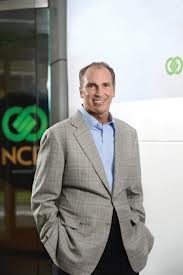
Even by the rough-and-tumble standards of the Bronx, William Nuti was a clever and resourceful kid. As a nine-year-old newspaper boy in New York City’s northernmost borough, Nuti would work his way up an apartment building until he got to the roof. Then he would leap to the roof of the adjacent building, and work his way down again. Nuti’s Batman-like days might be over, but the same problem-solving instincts have served him well in the corporate world. As chief executive since 2005 of NCR (ticker: NCR), he has helped reinvent the company once known as National Cash Register, or “The Cash,” for the digital-commerce age.  Read more of this post

Rooting for Mother Teresa

July 12, 2013

Rooting for Mother Teresa

By ADA CALHOUN

POPE FRANCIS last week approved two of his predecessors for sainthood — John Paul II and John XXIII — fast-tracking the latter in spite of his having only one miracle to his credit rather than the usual two. Mother Teresa, who died in 1997, has not been given the same exemption (she also has just one miracle) and remains merely beatified.

Having volunteered for a time with Mother Teresa, I find myself rooting for her cause as if for the home team. And on principle I’m disappointed by the message sent when two men with complex legacies outpace a woman who devoted herself completely to serving others. Read more of this post

Momentum investing is bad for your wealth; Managers should focus on companies, not prices

July 12, 2013 5:46 pm

Momentum investing is bad for your wealth

By Paul Woolley

Managers should focus on companies, not prices, says Paul Woolley

The role of the finance sector is to channel savings into productive investment. Those of us who invest directly in shares can form their own views on how best to do that. Everyone else is reliant on the industry to do it for them. Institutions such as pension funds fulfil this role, acting as the collection point for savers’ capital and setting the terms for how it is allocated. We innocently assume that our capital is directed to those sectors and companies with the best earnings potential. That way we receive the highest returns and the economy flourishes. The sad truth is that isn’t how it works in reality. The bulk of investment is now conducted without reference to economic value. There are only two basic strategies for managing equity portfolios in particular: fundamental investing – based on expected future cash flows – and momentum investing, or trend following, which considers only short-run price changes and disregards value. Fundamental investing calls for patience. Investors must wait either for prices to reflect the full value of the underlying business, or earnings to crystallise as dividends. Momentum investing delivers quick gratification – or not, depending on how long trends last. Read more of this post

The Courts CEO who’s a little bit of a maverick

The Courts CEO who’s a little bit of a maverick

At 17, he dropped out of school to work. At 20, he got married and became a father four years later. And by 32, he was Managing Director of electronics and furniture retailer Courts Singapore.

BY NEO CHAI CHIN –

15 HOURS 30 MIN AGO

11-courts-young-lions

At 17, he dropped out of school to work. At 20, he got married and became a father four years later. And by 32, he was Managing Director of electronics and furniture retailer Courts Singapore. Mr Terry O’Connor, the Chief Executive of Courts Asia today, has not achieved the milestones in his life in the most conventional timeline or order. So it is rather appropriate that the latest feather in his cap, a pacey and engaging book that chronicles his adventures and that of the company, is titled: Why Not? The Story of a Retail Maverick and Courts. Launched this month, the first print run of 2,500 has already sold out. Read more of this post

Make Moments Of Clarity Turning Points For Your Life

7/12/2013 @ 3:57PM |3,723 views

Make Moments Of Clarity Turning Points For Your Life

By Marc Miller, Next AvenueContributor

We’ve all had it happen. Some major shift happens in life, maybe someone dies or becomes ill, you lose a job or you get a divorce. Alternatively, the event could be something positive like the first day of your dream job. Either way, it completely alters your perspective on life for a moment. The future you saw for yourself changes and suddenly you can’t believe that the niggling issues that have been plaguing you – the ding on your car, your annoying co-worker – bothered you so much.

What Moments of Clarity Teach Us

I call these times Moments of Clarity. For a brief period, you see what’s really important in life. You may even resolve to change your habits or thinking to reflect your newfound perspective. Trouble is, many people let these moments fade. When that happens, your former concerns reassert themselves and once again you get preoccupied by the ding on your car. But if you instead embrace your light-bulb moments and commit yourself to learn from them, even years after the actual perspective shift takes place, the result can be life changing. You may find yourself at the cusp of an entirely new career. Read more of this post

Of course it’s important to read the great poets and novelists. But not in a university classroom, where literature has been turned into a bland, soulless competition for grades and status

July 12, 2013, 7:44 p.m. ET

Who Ruined the Humanities?

Of course it’s important to read the great poets and novelists. But not in a university classroom, where literature has been turned into a bland, soulless competition for grades and status.

LEE SIEGEL

Fewer and fewer undergraduates are majoring in the humanities, and critic Lee Siegel couldn’t be happier. As he tells WSJ’s Gary Rosen, great poetry and novels are meant to be experienced in private and alone, away from the competitive pressures of the classroom. You’ve probably heard the baleful reports. The number of college students majoring in the humanities is plummeting, according to a big study released last month by the American Academy of Arts & Sciences. The news has provoked a flood of high-minded essays deploring the development as a symptom and portent of American decline. But there is another way to look at this supposed revelation (the number of humanities majors has actually been falling since the 1970s). Read more of this post

Bill of rights or branding exercise? As the Magna Carta approaches its 800th anniversary, it has become a symbol of issues that stray far from its original remit

July 12, 2013 6:06 pm

Thoroughly modern Magna Carta

By Peter Aspden

Bill of rights or branding exercise? As the Magna Carta approaches its 800th anniversary, it has become a symbol of issues that stray far from its original remit

It was, as these things go, something of a flop. The Magna Carta was a document hammered out between King John and a group of feisty barons in the summer of 1215 that set out an agreement between them on the subjects of England’s taxation, feudal rights and justice. It was the culmination of a sticky period for both parties, and must have been greeted with some eyebrow-raising on that evening’s edition of Newsnight. The most striking part of the charter allowed, for the first time, for the powers of the king to be limited by a written document. Observers hoped that it heralded a new era of collaboration between the monarch and his subjects. But the dawn was false. The Magna Carta was valid for just 10 weeks. Read more of this post

The New Wave of IPOs: Initial public offerings are back in vogue. Here’s why investors should be wary

July 12, 2013, 5:57 p.m. ET

The New Wave of IPOs: Initial public offerings are back in vogue. Here’s why investors should be wary.

TELIS DEMOS and JOE LIGHT

BF-AF338_13WIws_G_20130712182714

There are lots of IPOs to pick from. But that doesn’t mean you should. The U.S. initial-public-offering market is on track this year to produce the most deals since 2007. In the second quarter, 80 companies publicly began the process of registering for an IPO in the U.S., more than double the number that did so in the same period a year ago, according to accounting firm PricewaterhouseCoopers. The publicly available IPO pipeline includes 140 companies seeking to raise a total of $30.5 billion, the firm said. That is on the top of the 95 companies that already have debuted this year, which have raised $23 billion, according to market-data firm Dealogic. Some of the best-performing IPOs this year have been those of familiar companies, such as SeaWorld Entertainment, SEAS -1.54% whose shares are up 42% since its April debut; restaurant chain Noodles & Co.,NDLS -1.72% which has jumped 139% from its June IPO; and Norwegian Cruise Line Holdings, NCLH +0.32% up 66% from its January deal. By comparison, the Standard & Poor’s 500-stock index is up 18% so far this year. There have been duds, too. Gogo, GOGO +6.88% which provides Internet services on airplanes, and online ad network Tremor Video TRMR -0.38% are down 18% and 20%, respectively, since their June debuts. Read more of this post

Covidien’s Wide-Moat Device Business Positioned Well for Long-Term Growth

Covidien’s Wide-Moat Device Business Positioned Well for Long-Term Growth

By Alex Morozov, CFA | 07-12-13 | 06:00 AM | Email Article

With the spin-off of the no-moat pharmaceutical segment,  Covidien‘s (COV)business is largely composed of products that garner strong competitive positioning in the marketplace. The company’s device business has wide-moat attributes because of its strong intellectual property and significant switching costs, which imply high barriers to entry. Given Covidien’s focus on products that deliver value to patients, providers, and payers, it is well positioned to prosper as more provisions of the U.S. Affordable Care Act take effect, while many of its peers will face significant regulatory and reimbursement pressures. The company’s growth prospects are healthy, buoyed by a particularly productive pipeline. As a result, we continue to believe the firm deserves a valuation premium compared with some of its medical technology peers. Read more of this post

Michael Birch, the founder of Bebo, bought the website back for a mere £1m. How will he make it fashionable again?

Bebo ‘has to be different to get people hooked’, says founder Michael Birch

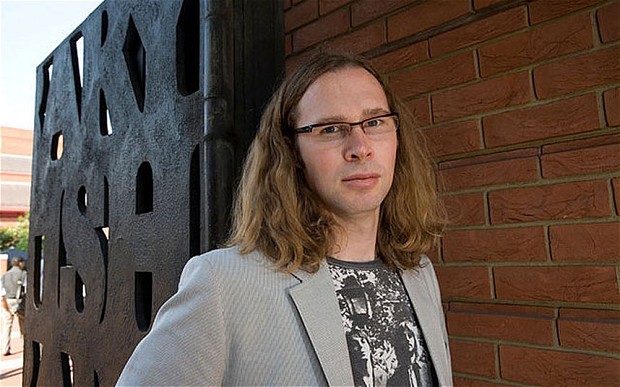
Last week, the founder of Bebo bought the website back for a mere £1m. How will he make it fashionable again? All the old code will be thrown away, he tells Edwin Smith .

birch_2616267b

Michael Birch believes London’s tech sector problem is that the brightest UK graduates are too easily tempted by the high starting salaries on offer in the financial sector Photo: Alamy

By Edwin Smith

9:15PM BST 13 Jul 2013

There’s a scene in the Judd Apatow-produced cult comedy Superbadwhere two high school students are accosted by a suspicious character who tries to befriend them. The audience starts to think there might be something weird about this guy because of the way he talks and the fact that he’s trying to make friends with teenagers despite being in his 30s. Then come’s the clincher: “So,” he asks. “[Are] you guys on Myspace?”. In 2005, two years after Myspace was founded, News Corp paid $580m for it. By 2007, the year in which Superbad was shown at cinemas, it was already a byword for being uncool and out of touch. Fast-forward to 2011 and the social network’s value had plummeted. It was offloaded for a mere $35m to Specific Media Group and Danny Trejo, the Hollywood actor. The lesson was clear: things move fast in social media and what is hot and what is not can swing around with alarming speed. Read more of this post

Deutsche Bank Opaque Loans From Brazil to Italy Hide Risk

Deutsche Bank Opaque Loans From Brazil to Italy Hide Risk

By Elisa Martinuzzi and Vernon Silver – Jul 10, 2013

Deutsche Bank AG (DBK), perennially among the top three in global credit markets, made billions of dollars of loans to banks worldwide since 2008 and accounted for them in a way that obscured their continuing risk to investors.

Germany’s largest bank managed to lend to firms from Brazil to Italy while making the transactions disappear from its balance sheet, even though it still is owed the money, according to four people with knowledge of the practice and internal documents provided to Bloomberg News. Read more of this post

Estonia’s technology cluster

Estonia’s technology cluster

Jul 11th 2013, 15:00 by L.S. | TALLINN

IT TAKES just five minutes to register a firm in Estonia, says Mihkel Tikk, the head of the country’s online portal, a one-stop-shop for e-government services. Entrepreneurs wishing to start a firm log in with their national electronic identity-card and a few clicks later the confirmation arrives by e-mail. That service and many other equally convenient electronic offerings are a big reason why Tallinn, Estonia’s capital, is now mentioned in the same breath as Berlin, London and even Silicon Valley. According to one estimate, Estonia holds the world record in start-ups per person—a sizeable feat considering that the country has only 1.3m people.

International venture capitalists have taken notice (one, Dave McClure, created a hashtag on Twitter to describe the phenomenon: #EstonianMafia). And they are also investing. In May Transferwise, which offers a cheap way to send money across borders, announced that it raked in $6m in funding, with Peter Thiel, the co-founder of PayPal, being the lead investor. In April Fits.me, a virtual fitting room, raised £5m ($7.6m). Nearly a tenth of the firms in the portfolio of Seedcamp, a noted group of European angel investors, hails from Estonia, including Erply, a fast-growing maker of web-based retail software, which raised $2.15m in May. Read more of this post

5 Mobile Payments Data Points That Will Blow Your Mind

5 Mobile Payments Data Points That Will Blow Your Mind

JOSH LUGER JUL. 12, 2013, 2:20 PM 1,271

Consumers gravitate to convenience. That’s as true with payment technologies as it is with anything else. A prime example is the decades-old trend away from cash or checks and toward credit cards. Now, the mass adoption of smartphones and tablets has set the stage for a new move — away from fixed-point, card-based transactions and toward those completed on mobile. The old dream of the “digital wallet” is coming true in a very particular mobile-led fashion. In a recent report from BI Intelligence,  we explain the main types of mobile payments, analyze the state of the mobile payments race, examine the matchup between card readers and near-field communications (NFC), look at how traditional banks, credit card companies, and card processors are responding to the mobile payments threat, and detail who is furthest along in developing the all-in-one solution for merchants and consumers. Here are 5 data points that help underscore the explosion: Read more of this post

Asian Chat Giants Covet ‘Exciting’ Indonesian Mobile Market

Asian Chat Giants Covet ‘Exciting’ Mobile Market

By Hayat Indriyatno,Stephanie Hendarta& Diska Putri Pamungkas on 1:05 pm July 13, 2013.
The strong adoption of mobile social media, including chat apps,by Indonesian youths has seen major players from South Korea, Japan and China scrambling for a slice of the year ever-expanding market. Natasya Sandjojo is the quintessential Indonesian university student, constantly keeping in touch with her friends by firing off phone messages or calling them up. And like many tech-savvy Indonesian youths, she has found a way to do that virtually for free. “I prefer using a mobile chatting application over texting because it doesn’t charge me every time I send a message,” she says. “I originally decided to download KakaoTalk because a lot of my friends were using it. I can use the app to call my friends, free of charge. There’s this feature in it that lets me call using different sound effects, such as a cat’s voice. It makes calling friends a lot more fun.”

KakaoTalk is one of several mobile messaging applications that have taken Indonesia by storm over the past couple of years. Their popularity is underpinned by the fact that they allow users to send messages and make voice or even video calls over a mobile data connection or Wi-Fi network — known in industry parlance as “over the top” services because they bypass the traditional cellular phone and text messaging platforms. Read more of this post