Emerging Markets Hit by IMF Forecast; Lower Growth Prospects Further Rattle Developing Nations

Updated July 9, 2013, 9:00 p.m. ET

Emerging Markets Hit by IMF Forecast

Lower Growth Prospects Further Rattle Developing Nations

ERIN MCCARTHY, CHARLES FORELLE and IAN TALLEY

MI-BX090_Emergi_G_20130709190307

Investor fears that the end of easy money is at hand are ricocheting around the globe, slamming financial markets and squeezing economic growth prospects from Brazil to Turkey. In the latest fallout, the International Monetary Fund on Tuesday trimmed its global-growth forecast, reducing its projections for emerging markets such as China and Russia. The report highlights the difficulties facing nations that recently were flooded with investor cash amid a global search for yield, but now face outflows as interest rates rise in the U.S. The IMF’s move underscores the ripple effects as markets brace for the withdrawal of central-bank stimulus policies. Scores of riskier markets have been whipsawed since Federal Reserve Chairman Ben Bernanke signaled this spring that the central bank’s monthly bond purchases, currently $85 billion, eventually will be curtailed. Many investors expect the sharp moves to continue as participants grapple with Fed policy and economic uncertainty. Read more of this post
The political nightmare of a slowing China

The political nightmare of a slowing China

The recent financial turmoil in China, with interbank loan rates spiking to double digits within days, provides further confirmation that the world’s second-largest economy is headed for a hard landing.

4 HOURS 40 MIN AGO

The recent financial turmoil in China, with interbank loan rates spiking to double digits within days, provides further confirmation that the world’s second-largest economy is headed for a hard landing. Fuelled by massive credit growth, the economy has taken on a level of financial leverage that is the highest among emerging markets. This will not end well. Indeed, a recent study by Nomura Securities finds that China’s financial-risk profile today uncannily resembles those of Thailand, Japan, Spain and the United States on the eve of their financial crises. Read more of this post

More Taiwanese firms in China heading home

More Taiwanese firms in China heading home

A growing wave of Taiwanese companies that rode the tide of cheap manufacturing in China are returning home. But they play it safe by relocating partially as costs rise in China. -ST
Lee Seok Hwai
Wed, Jul 10, 2013
The Straits Times

TAIPEI – A growing wave of Taiwanese companies that rode the tide of cheap manufacturing in China over the last three decades are returning home as costs on the mainland creep up. But they are hedging their bets by keeping most of their existing operations in China and relocating only partially or investing in new facilities – focused on research and development (R&D) or more sophisticated manufacturing – back in Taiwan, where wages have remained stagnant for the past decade because of an underperforming economy. Read more of this post

Japan’s Bullet Trains Face Challenge From Low-Fare Airlines

Japan’s Bullet Trains Face Challenge From Low-Fare Airlines

The battle between three new budget airlines in Japan is benefiting businessmen as well as tourists, as operators of the bullet trains that have dominated long-distance travel since 1964 cut prices to defend market share.

West Japan Railway Co. (9021) and Kyushu Railway Co. started reducing advance ticket prices this month by as much as 34 percent to 14,000 yen ($140) between the central city of Osaka and the southern city of Kagoshima over the next three months. Read more of this post

Bible holds lessons for future of energy; The Genesis message about preparing for harsh times should be applied to fuel production

July 9, 2013 7:11 pm

Bible holds lessons for future of energy

The Genesis message about preparing for harsh times should be applied to fuel production

The writers of Genesis understood the commodity cycle very well. When the pharaoh dreamt of seven fat cows being eaten by seven lean ones, it was a warning to prepare in the good times for harsher days to come. It is a Biblical lesson that energy policy makers would do well to relearn.

In the global oil market, we are in the fat years. Not only is the US enjoying a fully fledged oil boom, but production is set to grow in Canada and Kazakhstan, Iraq and Brazil. It is tempting to think that we are entering an “age of abundance”, in which concerns about oil security are behind us. Read more of this post

‘Abenomics’ Brings an IPO Flood

Jul 9, 2013

‘Abenomics’ Brings an IPO Flood

By Kana Inagaki

AM-AZ347_AMONEY_NS_20130709041208

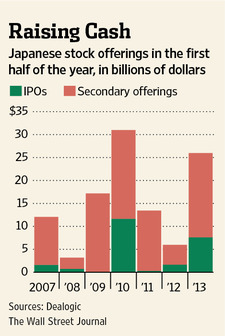
As equity fundraising slows in other Asian markets, Japanese companies such as Suntory Beverage & Food Ltd. 2587.TO +2.37% are raising billions of dollars by issuing shares, pushing capital raising in Japan during the first half of 2013 to a three-year high. Olympus Corp. 7733.TO +2.36% said Monday that it would seek to raise as much as $1.2 billion through a new share offering. Last week, advertising company Dentsu Inc. 4324.TO -0.31%and home builder Daiwa House Industry Co. 1925.TO +0.22% said they would look to raise $1.2 billion and $1.4 billion, respectively. And Suntory Beverage & Food Ltd. listed in Tokyo last week after raising $3.9 billion in Asia’s biggest initial public offering this year. Read more of this post

Japanese Fans Mourn Demise of 25-Year-Old ‘Potato Snack’; The weak yen may be a boon for exporters like Toyota but it was the last straw for Potato Snack

July 9, 2013, 10:32 p.m. ET

Japanese Fans Mourn Demise of ‘Potato Snack’

Crisp Once Came in Salami, Pudding, Octopus Flavors; Memorials, Hoarding

ELEANOR WARNOCK

2.JPG

A hostess at a pachinko parlor in Koshu, Japan, posed with Potato Snack. Players can select sweets and snacks as prizes for playing pachinko, or Japanese pinball.

The weak yen may be a boon for exporters like Toyota Motor Corp., 7203.TO 0.00%but it was the last straw for Potato Snack. The 25-year-old Japanese cracker, sold four in a 30-cent bag, had already been pummeled by years of stagnant demand. With the prospect of a weakening currency pushing higher costs of imported ingredients, maker Izumi Seika Co. pulled the plug on the unit that makes Potato Snack last month, to the dismay of die-hard fans. Heartbroken consumers have poured out their grief over the Internet, sending more than 100,000 tweets and uploading a score of video eulogies to YouTube. Devotees have staged farewell parties for the snack, which had a texture like deep-fried wonton and came in flavors from fried chicken to salami.

Read more of this post

Malaysian Stocks First From Worst on Lowest Volatility

Malaysian Stocks First From Worst on Lowest Volatility

At a time when slowing economic growth and political protests from Brazil to Turkey are spurring capital flight from emerging markets, Malaysia has turned into a refuge for equity investors.

The FTSE Bursa Malaysia KLCI Index was the biggest loser in Asia just four months ago as the closest elections in 55 years threatened the ruling coalition’s plans to spend $444 billion on infrastructure. Now the $478 billion stock market is the region’s best performer, after Prime Minister Najib Razak’s May 5 poll victory sparked a 4.2 percent rally in the KLCI index. Read more of this post

Mega-Bridge Tests Yudhoyono With Legacy in Focus; “He wants to leave these tangible, physical legacies, and the bridge is clearly one of them. The real worry is that this bridge would become a white eelephant. It would not just be costly, but it would actually blow up Indonesia’s well deserved achievement of macroeconomic stability.”

Mega-Bridge Tests Yudhoyono With Legacy in Focus: Southeast Asia

For Aat Djunaidi, a 12-hour wait to catch a ferry linking Indonesia’s most-populous islands isn’t so bad. On some trips the 41-year-old waits for two days before his truck can cross the Sunda Strait from Java into Sumatra. “If they build a bridge, it would take just 20 minutes to cross,” Djunaidi, who makes the journey three times a week to transport Suzuki motorcycles, said while waiting at the back of a four-kilometer (2.4-mile) queue. “I’d be happy if I get to use the bridge in my lifetime.” Indonesia will soon decide whether to proceed with what would be the world’s largest suspension bridge, according to Luky Eko Wuryanto, a deputy minister overseeing infrastructure projects. First conceived half a century ago, the planned 29-kilometer link that would cost an estimated $15 billion has spawned a debate over the best way to reduce logistics costs in a country with more than 17,000 islands and 250 million people. Read more of this post

Even Levy’s $7,000-a-Day Matched by Other Arts Titans

Even Levy’s $7,000-a-Day Matched by Other Arts Titans

Reynold Levy made about $7,000 each weekday as president of Lincoln Center for the Performing Arts.

Glenn Lowry, director of the Museum of Modern Art, earned about the same, $1.8 million in 2011.

The senior Carnegie Hall stagehand’s reward for moving a piano: that’s anyone’s guess, but his annual pay was $465,000.

As the pillars of New York culture attempted to rebound from the financial crisis in 2011, so did compensation at the top. Read more of this post

Commodity Traders’ Buildup on Easy Money Seen as Risk in Report; 10 largest trading houses with $1 trillion in revenue could potentially become “too physical to fail.”

Commodity Traders’ Buildup on Easy Money Seen as Risk in Report

Trading houses active in multiple commodity markets have built up physical holdings through easy access to financing, creating a possible systemic risk, according to a report by the Centre for European Policy Studies. Disclosure of physical holdings and a minimum amount of information that must be provided to regulators could reduce the risks for governments that might have to bail out trading houses, Brussels-based CEPS wrote in a statement with the European Capital Markets Institute. The 10 largest trading houses had about $1 trillion in revenue in 2011, according to CEPS and ECMI, and trading houses could potentially become “too physical to fail.” Read more of this post

Iran’s LNG Dreams Vanish as U.S. Shale Gas Looms

Iran’s LNG Dreams Vanish as U.S. Shale Gas Looms

Iran’s ambition to exploit the world’s biggest natural gas reserves, stymied for years by U.S. sanctions, faces an even sterner test as rising global output and the North American shale boom threaten to erode prices.

The Persian Gulf state would need a decade to build planned export capacity of at least 40 million metric tons a year of liquefied natural gas even if unfettered by economic curbs over its nuclear program, say analysts including Tony Regan at Tri-Zen International Pte. A surge in U.S., Canadian and Australian gas from shale deposits may depress prices for new LNG projects by 35 percent, according to Barclays Plc and Royal Bank of Canada, reducing Iran’s potential profit from selling the fuel. Read more of this post

Chevron Indonesia graft case spooks investors

July 9, 2013 7:11 am

Chevron Indonesia graft case spooks investors

By Ben Bland in Jakarta

When Endah Rumbiyanti, an environmental manager for Chevron, left her Sumatra home for Jakarta to be interviewed about a corruption case, she told her five young children she would be back in two days. After arriving in the Indonesian capital, however, she was detained by the attorney-general’s office and held for 63 days before her lawyers had the detention ruled illegal. Her arrest appeared to also come as a surprise to her captors: she was held in a parking lot until a cell was found for her in a men’s prison. It was one of many Kafkaesque aspects of a case in which Ms Rumbiyanti, 37, and four other employees of Chevron – the US company that is Indonesia’s biggest crude oil producer – are accused of corruption and causing millions of dollars of losses to the state, even though no government funds have been disbursed. The case has highlighted the unpredictable nature of Indonesia’s justice system as officials and departments fight for power in a democracy that is still evolving 15 years after the end of General Suharto’s 32-year dictatorship. Read more of this post

Crisis of confidence in government handling of corruption, survey shows

Crisis of confidence in government handling of corruption, survey shows

1:07am EDT

By Erik Kirschbaum

BERLIN (Reuters) – A majority of people worldwide believes corruption has worsened in the last two years and they see governments as less effective at fighting it since the 2008 financial crisis, a survey by Transparency International organization showed on Tuesday. The “Global Corruption Barometer” is the biggest ever conducted by the Berlin-based watchdog, with 114,000 people responding in 107 countries in the survey of opinions on corruption and which institutions are considered most corrupt. Read more of this post

Indonesian voters losing faith in lawmakers

Indonesian voters losing faith in lawmakers

About 49 million, or 29 per cent of the electorate, failed to vote in 2009. -ST
John McBeth
Wed, Jul 10, 2013
The Straits Times

Wracked by corruption allegations, President Susilo Bambang Yudhoyono’s (centre) majority Democrats are expected to take a major hit at next year’s general elections though his personal popularity remains high.

INDONESIA – Something quite astonishing has happened to Indonesia’s political parties ahead of next year’s general elections: An unprecedented 90 per cent of the candidates are incumbents. And all but a handful are standing in the electorates they currently represent. How and why is difficult to explain. In previous elections – in 1999, 2004 and 2009 – there was a 70 per cent to 75 per cent turnover in each new Parliament. This was either because sitting legislators were dropped by their parties or failed to make the cut at the ballot box. Read more of this post

DoubleLine Webcast On “The End Of QE As We Know It” With Bond Rout Update

DoubleLine Webcast On “The End Of QE As We Know It” With Bond Rout Update

Tyler Durden on 07/09/2013 16:20 -0400

Jeff Gundlach may not be present at today’s DoubleLine live webcast titled ominously enough “The End of QE as We Know It”, which will be led by the firm’s Jeffrey Sherman, but the firm is sure to provide some guidance on how the recent bond rout has impacted bond funds, and what the future of risk duration is in a time when Bernanke seems hell bent on pushing everyone out of bonds and into stocks.

Financial Reporting and Firm Valuation: Relevance Lost or Relevance Regained?

Financial Reporting and Firm Valuation: Relevance Lost or Relevance Regained?

Luzi Hail University of Pennsylvania – The Wharton School

June 19, 2013
Accounting and Business Research, Vol. 43, No. 4, pp. 329-358, 2013

Abstract: 
In this study, I examine whether balance sheet and income statement numbers have lost or regained their relevance over the last 30 years. Institutional and macroeconomic factors like the global trend towards strengthening regulation and harmonizing financial reporting, the extended use of fair values over historical cost, and the recurring occurrence of accounting scandals, market bubbles, and financial crises make it likely that the role of financial reporting for firm valuation has changed. Following prior research, I estimate four models for the concurrent relation between market value and accounting numbers, and then examine the pattern in explanatory power over time. I find that the loss in relevance of the income statement continues in recent years and is present in a large international sample, in particular in countries with strong institutions. While the overall relevance of the balance sheet remains stable, I find a downward trend during the first sample half, which reverses in the second half, especially in common law countries with strong investor protection, strict disclosure requirements, and integrated markets. Even though several caveats apply, the results suggest that changes in the economy, the institutional environment, and in how firms operate affect the relative importance of accounting information for the use in firm valuation by outside stakeholders.

Do Firms that Wish to Be Acquired Manage Their Earnings? Evidence from Major European Countries

Do Firms that Wish to Be Acquired Manage Their Earnings? Evidence from Major European Countries

Seraina C. Anagnostopoulou Athens University of Economics and Business – Department of Accounting and Finance

Andrianos E. Tsekrekos Athens University of Economics and Business – Department of Accounting and Finance

June 21, 2013
International Review of Financial Analysis, Forthcoming

Abstract: 
In this paper, we examine whether findings on downwards accrual-based earnings management for firms publicly ‘seeking a buyer’ from the US can be extrapolated outside of the US context, given that past research has indicated that the function of the Merger and Acquisition (M&A) markets is highly dependent on the degree of competition in a country. We test for the existence of earnings management (EM) around such events for firms listed in the largest European stock exchanges between 2000 and 2009, and get evidence that downwards earnings management around ‘seeking buyer’ announcements more strongly holds for the country with the most competitive market for corporate control in our sample, that is the UK. We consider this finding indicative of the fact that a competitive M&A environment may induce earnings management-prone behavior. We further testify significantly positive abnormal returns around ‘seeking buyer’ announcements for firms from the UK, but limited such evidence for the other countries, a finding we also attribute to differences in competition and uneven split of benefits among bidders and targets in M&A markets. Finally, we find that EM positively affects abnormal returns around ‘seeking buyer’ announcements, indicating that market participants tend to compensate for upwards EM, regardless of the degree of competition of the M&A market of a country.

Shaping Innovation Processes Through Humor

Shaping Innovation Processes Through Humor

Marcel Bogers University of Southern Denmark

Trine Heinemann University of Helsinki

June 18, 2013
Proceedings of the Participatory Innovation Conference; June 18-20, 2013; Lahti, Finland; pp. 325-329

Abstract: 
In this paper we present a case study of how humor is employed at the micro-level of collaborative innovation processes. Based on data from workshops in which participants work together to construct new business models for a particular company, we employ the method of Conversation Analysis to find that humor (laughter) may be an important condition for the acceptance of proposals at the interactional micro-level of innovation processes. A particular finding is that company-internal representatives’ use of humor differs from company-external participants in terms of their orientation to having different rights and responsibilities in the innovation process.

U.S. SEC says audit firms hinder accounting fraud probes at U.S.-listed Chinese firms

U.S. SEC says audit firms hinder accounting fraud probes

Mon, Jul 8 2013

By Sarah N. Lynch

WASHINGTON, July 8 (Reuters) – U.S. federal regulators tried to persuade a judge on Monday to sanction the Chinese arms of the world’s top five accounting firms, saying their refusal to hand over audit work papers has hindered investigations into fraud at U.S.-listed Chinese firms.

In testimony during a hearing at the U.S. Securities and Exchange Commission, an SEC official alleged that Deloitte Touche Tohmatsu LLP’s failure to turn over audit records has stalled a three-year-old probe into financial fraud at a large solar power company. Read more of this post

Has China President Xi’s graft crackdown run out of steam? Analysts say candid coverage of ‘consultations’ may indicate leadership lacks will to take action

Has Xi’s graft crackdown run out of steam?

Tuesday, 09 July, 2013, 12:00am

Cary Huang cary.huang@scmp.com

Analysts say candid coverage of ‘consultations’ may indicate leadership lacks will to take action

President Xi Jinping has consulted retired party leaders on his anti-corruption and austerity campaign, the Communist Party’s official newspaper reported on Monday – a move some analysts believe is a sign that the current leadership lacks the confidence or political will to ring the changes of real political reform.

People’s Daily yesterday gave a rare glimpse into behind-the-scenes details of the intensive politburo meetings on June 22-25. The meetings assessed the anti-corruption and frugality measures that Xi launched earlier this year. Read more of this post

Chinese Cash Squeeze Causes Auto Dealer Panic

Chinese Cash Squeeze Causes Auto Dealer Panic, Group Says

By Bloomberg News – Jul 9, 2013

China’s money-market squeeze, which sent interbank borrowing costs soaring last month, may prompt auto dealers to cut vehicle orders and slow expansion plans to conserve cash, according to an industry group.

“The cash crunch has led to psychological panic among dealers over access to financing,” Luo Lei, deputy secretary-general of the China Automobile Dealers Association, said in a telephone interview from Beijing today. “So far, it hasn’t caused any real damage to the industry, but if the cash crunch continues, the impact will spread to auto dealers.” Read more of this post

Canada Loses Luster as Destination for Corrupt Chinese Cash; Canada became the first country to reach a deal with China to share forfeited assets in an effort to target international organized crime

July 6, 2013, 5:20 AM

Canada Loses Luster as Destination for Corrupt Chinese Cash

Chinese fugitives who touched down in Vancouver or Toronto with suitcases of illicit cash might find it harder to keep their fortunes.

Canada became the first country to reach a deal with China to share forfeited assets in an effort to target international organized crime, according to the official Xinhua News Agency. Once the pact is signed, one country will be able to get money back if a fugitive transfers illegal assets to the other, according to Xinhua.

“Canada is not, and will not be seen as, a safe haven for the proceeds of crime,” said Canadian Foreign Affairs Minister John Baird in a news release about the pact. Read more of this post

The world according to investors

world-investors

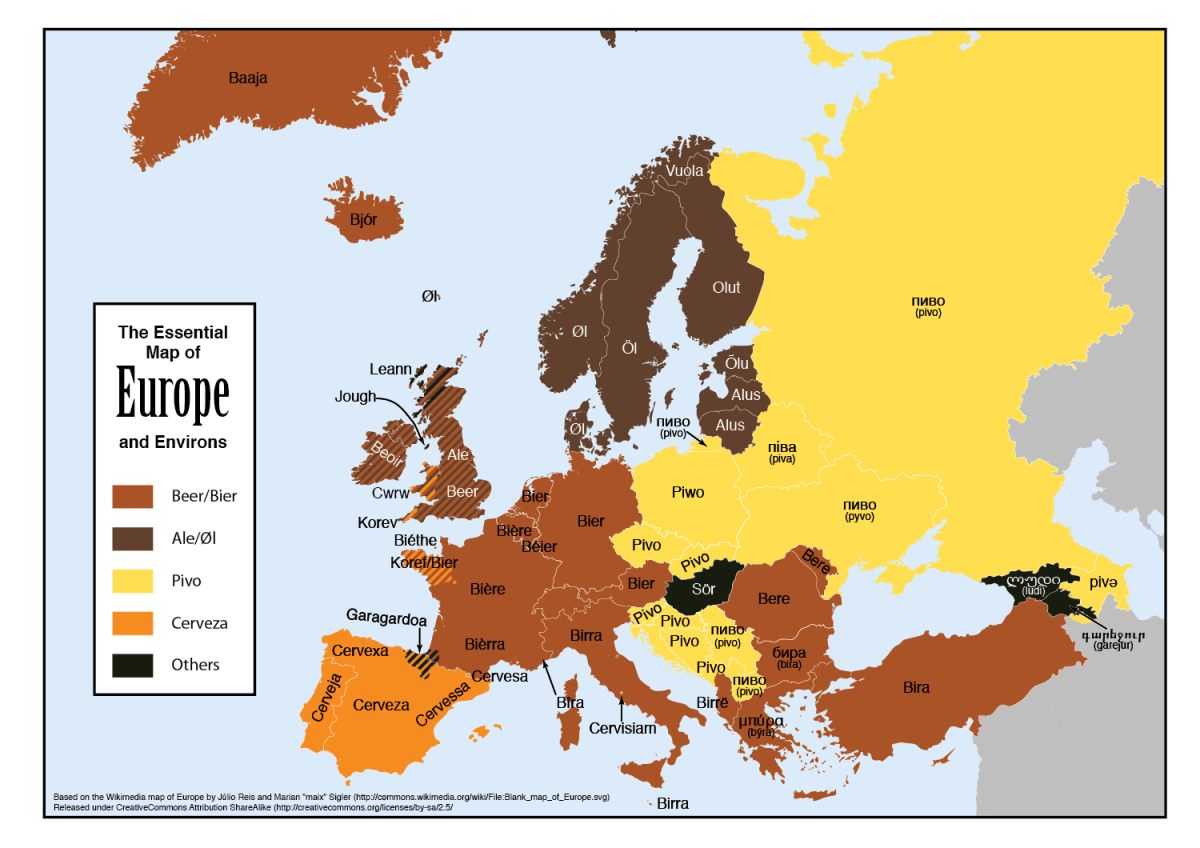
How To Say ‘Beer’ In Every Language While You’re Traveling Across Europe [MAP]

eurobeer-map

Widespread delisting of Chinese companies has investors rethinking due diligence and looking harder for subtle clues that something is amiss

Due diligence in China: Art, science, and self-defense

Widespread delisting of Chinese companies has investors rethinking due diligence and looking harder for subtle clues that something is amiss.

July 2013 | byDavid Cogman

Image_Web_ChinaDiligence_ex

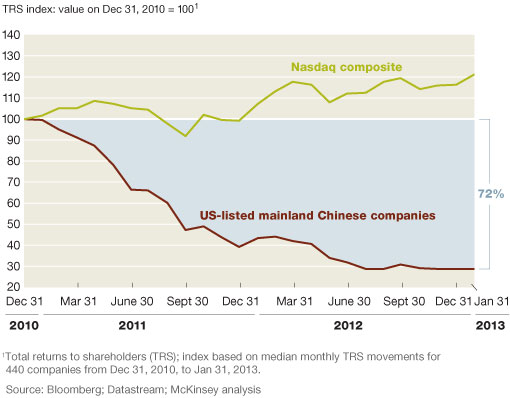
It’s not often that the credibility of an entire class of companies is called into question at once. The aggregate market capitalization of US-listed Chinese companies1 fell in 2011 and 2012 by 72 percent—and around one in five was delisted2 —even as the Nasdaq rose by 12 percent (exhibit). Nor is delisting of Chinese companies purely a US phenomenon: since 2008, around one in ten Chinese companies listed in Singapore has also been delisted or suspended. In recent years, the aggregate market capitalization of US-listed Chinese companies has fallen dramatically. Read more of this post

Why can’t they all just get along? Stress-fuelled conflict in the workplace is increasing and ultimately warring staff are the problem of the business

Why can’t they all just get along?

July 3, 2013

Belinda Williams

Stress-fuelled conflict in the workplace is increasing and ultimately warring staff are the problem of the business.

There’s nothing more frustrating for small business owners with massive financial responsibilities than to be dragged into the perceived petty squabbles of feuding staff. But it’s actually that unsympathetic attitude that can prolong the standoff.

A common cause of workplace tiffs is unmanaged stress, psychologist Rebecca Henshall says. Read more of this post

Singapore’s education system should not be Finland; Education reform in Singapore is not just about planning and logic. It needs to address a societal culture; Singapore has to watch out that the competitiveness which contributes to achievement does not become destructive of people’s ability to circulate knowledge, develop their whole character and experience happiness

Singapore should not be Finland

As the national conversation continues over the future shape of Singapore’s education system, the example of Finland has cropped up now and again.

5 HOURS 19 MIN AGO

As the national conversation continues over the future shape of Singapore’s education system, the example of Finland has cropped up now and again. Should we emulate the Finnish system where tuition is unheard of, students take a compulsory national examination only at age 18-19, and teachers are given tremendous autonomy? After all, Finnish students have consistently scored among the top in the world on standardised tests — so could this be a lower-stress path to success? TODAY’s reports on Finland’s model, published in March, inspired its own “conversation” between two education experts — the National Institute of Education’s (NIE) Associate Professor Ng Pak Tee and Boston College’s Professor Andy Hargreaves. Both have worked together closely on high-performing education systems since 2011, when Prof Hargreaves visited NIE as CJ Koh Professor and Assoc Prof Ng visited Boston College as Visiting Scholar. Read more of this post

Nostalgia, long considered a disorder, is now recognized to counteract loneliness, boredom and anxiety — making life seem more meaningful and death less frightening

July 8, 2013

What Is Nostalgia Good For? Quite a Bit, Research Shows

By JOHN TIERNEY

SOUTHAMPTON, England — Not long after moving to the University of Southampton, Constantine Sedikides had lunch with a colleague in the psychology department and described some unusual symptoms he’d been feeling. A few times a week, he was suddenly hit with nostalgia for his previous home at the University of North Carolina: memories of old friends, Tar Heel basketball games, fried okra, the sweet smells of autumn in Chapel Hill. His colleague, a clinical psychologist, made an immediate diagnosis. He must be depressed. Why else live in the past? Nostalgia had been considered a disorder ever since the term was coined by a 17th-century Swiss physician who attributed soldiers’ mental and physical maladies to their longing to return home — nostos in Greek, and the accompanying pain, algosBut Dr. Sedikides didn’t want to return to any home — not to Chapel Hill, not to his native Greece — and he insisted to his lunch companion that he wasn’t in pain.. Read more of this post

New Therapies to Help Stroke Survivors Recover Language Years After Injury

July 8, 2013, 7:00 p.m. ET

New Therapies to Help Stroke Survivors Recover Language Years After Injury

Nearly 20% of stroke victims are under 55, compared with fewer than 13% in the early 1990s, according to a 2012 study

LAURA LANDRO

An estimated two million Americans who have suffered a stroke or other brain injury have the condition known as aphasia. Evidence continues to emerge showing that the brain is able to recover even many years following injury. Laura Landro joins Lunch Break to discuss. Photo: Rehabilitation Institute of Chicago. Eunice Bustillo faced a long recovery following a stroke at age 40. After a week in the hospital and a month at a rehabilitation center, she continued to have trouble with vision and motor functions. Even more difficult for Ms. Bustillo, the owner of a consulting business and the mother of a son who was 3 at the time, was overcoming aphasia, a language disorder that is a common aftereffect of stroke. Aphasia impairs the ability to process and understand language, including speaking, reading and writing, while leaving intelligence unaffected. Recovery can require intensive therapy including hours of practice to repair and reorganize damaged language functions in the brain. Read more of this post