Koreans Find Breaking Up With Chaebol Hard to Do

Koreans Find Breaking Up With Chaebol Hard to Do

Everyone loves a good perp walk. For South Koreans, Lee Jay Hyun’s made great theater.

The sight of Lee — chairman of the conglomerate CJ Group and grandson of Samsung’s legendary founder — being led away by police last week on embezzlement and tax-evasion charges has been portrayed as an early victory for President Park Geun Hye’s five-month-old government. The arrest supposedly shows that Park is serious about reining in the chaebol — family-owned behemoths that continue to dominate Asia’s fourth-biggest economy and hog much of the nation’s wealth.

The reality, of course, is far more complicated. Past attempts to bring tycoons to heel have also been greeted with great fanfare, only to fizzle out. In April 2008, Lee’s uncle, Samsung Chairman Lee Kun Hee, resigned after being charged with criminal tax evasion. His ignominious fall was heralded as the end of the chaebol — until then-President Lee Myung Bak pardoned him eight months later, allowing Korea’s richest man to return to work. Read more of this post

Stronger Than Steel: The Amazing Spider Web; Jap startup has produced an artificial spider thread that it claims is equal to steel in tensile strength yet as flexible as rubber

July 8, 2013, 8:08 p.m. ET

Can Spider Web Be Replicated? A Japanese Startup Thinks So.

Recreating the Silk of an Arachnid Could Produce the Most Durable of Fabrics

Spiber says its thread is spun into fabric that equals steel in tensile strength yet is flexible like rubber

OB-YC774_spider_DV_20130708200324

Spiber bioengineers bacteria with recombinant DNA to produce spider-thread

MAYUMI NEGISHI

Centuries before Spider-Man, people sought to harvest spider silk, a fiber that is so uniquely powerful it not only catches prey but could serve as a highly durable fabric. Pulling thread from an arachnid, however, is painstakingly slow. And putting too many spiders in close proximity makes them territorial and inclined to kill one another. Now, a Japanese startup called Spiber Inc. said it has produced an artificial spider thread that it claims is equal to steel in tensile strength yet as flexible as rubber. The company hopes to spin enough of the thread for mass production within two years, potentially opening the door to creating lighter but stronger auto parts, surgical materials and bulletproof vests. “Spider thread is amazing material—it’s so light, yet so strong and flexible. It can absorb so much energy,” said Spiber President Kazuhide Sekiyama, who came up with the idea to replicate spider thread in college during an all-night drinking session talking about “bug technology.” Read more of this post

Is this Aussie app the next iTunes sensation? Simone Eyles and Mariusz Stankiewicz are this week celebrating the 150,000th coffee sold through their mobile coffee ordering app 365cups

Is this Aussie app the next iTunes sensation?

July 5, 2013

Claire Dunn

Order a coffee from your phone and it’s ready by the time you get to the cafe. Genius.

365cups is revolutionising the takeaway coffee market.

Self-made “app-reneurs” from the bush Simone Eyles and Mariusz Stankiewicz are this week celebrating the 150,000th coffee sold through their mobile coffee ordering app 365cups. The idea, born over a cup of coffee between the former flatmates in their home town of Wagga Wagga, and launched in January 2011, is now generating more than $1.3 million in revenue for their cafe clients, with more than 1000 orders a day across Australia and New Zealand and rising. By downloading the free app for iPhone or Android smartphones, customers can place an order with their favourite (or nearest) cafe linked to the system, nominate a collection time, pay either on arrival or through credit topped up on the app, and have their order ready to go when they arrive. A monthly subscription fee paid by cafes entitles them to a virtual store where they can upload their menu, and receive customers orders via iPad or a custom-made printer. A recent initiative means cafes can directly email their app customers with loyalty programs and menu specials. Read more of this post

Lam Eyes Next $1B Opportunity; The man who helped establish the plasma etcher in the 1980s hopes to ride e-beam to the rescue of a chip-making process running out of gas

Lam Eyes Next $1B Opportunity

Rick Merritt
7/8/2013 12:30 PM EDT

143053_736171143107_796699

SANTA CLARA, Calif. — At 70, David K. Lam is as excited as ever about the future of the semiconductor industry and what he says is his billion-dollar opportunity to nudge it forward for the second time. Thirty years ago, Lam helped establish the plasma etcher that became a workhorse tool for cutting fine lines in chips. By fielding a reliable, automated version of the tool, the company that bore his name became the first founded by an Asian American to go public on NASDAQ. Today he has a new venture he thinks could give the industry a lift at a time when it’s getting hard to keep making chips faster, smaller, and cheaper. This time Lam is taking what many have seen as a rival technology — direct electron-beam lithography — and bringing it into the conventional process flow. “In the old days most new semiconductor technologies were disruptive now they have to be complementary — you have to find ways to use what you have,” said Lam. Read more of this post

LVMH Acquires Cashmere Clothier Loro Piana for $2.6 Billion

LVMH Acquires Cashmere Clothier Loro Piana for $2.6 Billion

LVMH Moet Hennessy Louis Vuitton SA (MC) agreed to pay 2 billion euros ($2.57 billion) for 80 percent of Italian cashmere clothier Loro Piana SpA, adding a high-quality textile producer to its burgeoning portfolio of luxury brands.

The transaction, which is subject to approval by competition authorities, values Quarona, Italy-based Loro Piana at 2.7 billion euros, LVMH said yesterday in a statement after the market closed. The family owners of the maker of $1,385 cashmere sweaters will retain a 20 percent stake in the business, Paris-based LVMH said.

“Loro Piana is quintessentially high-end while a lot of LVMH is mass luxury,” said Luca Solca, an analyst at Exane BNP Paribas in London, adding that he expects the market to favor the deal. With the purchase, “LVMH can acquire a trophy asset” and get growth opportunities for the future without stretching its balance sheet. Read more of this post

Brocade chair Dave House tells how he got IBM to sign up for the Intel Inside program and management lessons he adapted from Andy Grove

Tearing Up a $125M Check to Big Blue

Rick Merritt
7/8/2013 12:20 PM EDT

122141_786163

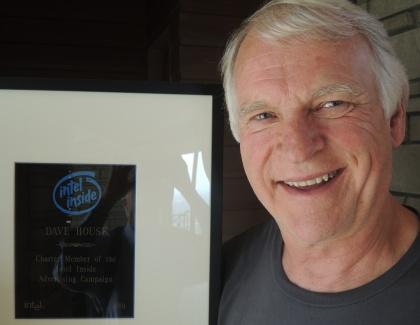
House shows a plaque commemorating the Intel Inside program.

SARATOGA, Calif. – Dave House still recalls the day he wrote IBM executives a $125 million check then tore it up in front of their eyes. It was perhaps one of the boldest moves in his 13 years as a top executive at Intel, a company known for its boldness. In this second part of an interview at his home in the hills above Silicon Valley, House recounts his role in the “Intel Inside” campaign that put the x86 giant at odds with its OEM customers. Now the chairman of Brocade Communications, House also shares management lessons learned working under Intel’s Andy Grove. Dennis Carter developed the idea of branding Intel chips direct to consumers. House recalled the day Carter showed him an ad from Japan using an early version of the logo. “I said, ‘that’s Jap-lish,'” House said. “I pulled out stationary that said ‘Intel, the computer inside,’ I wrote ‘Intel Inside’ and put a circle around it and said that’s better,” he said. Read more of this post

Food companies are experimenting more and more with exotic flavors and ethnic staples to appeal to a rising number of Latino and Asian immigrants

July 8, 2013

American Tastes Branch Out, and Food Makers Follow

By STEPHANIE STROM

FOOD-A-articleLarge

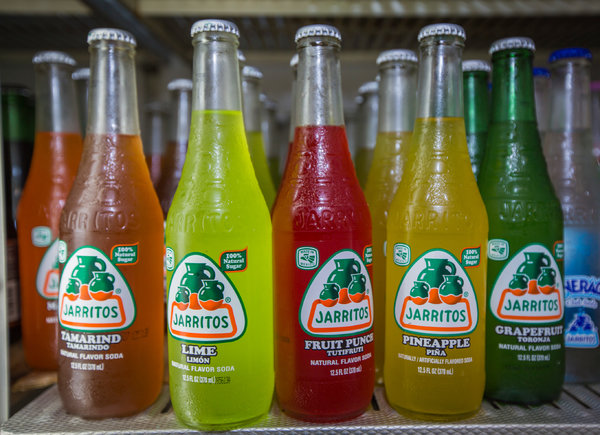
Jarritos, the Mexican fruit-flavored soda in brilliant hues rarely found in nature, has entered the mainstream in California and will soon be in conventional groceries elsewhere.

NEW BERN, N.C. — If chicken producers could breed a bird with three legs, they would. These days, they can hardly keep up with the demand for thighs and other pieces of dark meat that had once been among the least desirable parts of a chicken. “Demographics are changing,” Bill Lovette, chief executive of Pilgrim’s Pride, a division of JBS S.A., told a group at the recent Chicken Media Summit here. “There is a growing population that prefers dark meat.” While the effect of changing demographics has been seen in voting patterns and employment trends, the growing influence on America’s palate of the influx of immigrants from Latin America and Asia has been more subtle, even as grocery shelves increasingly display products containing ingredients like lemon grass and sriracha peppers. Read more of this post

China faces a difficult credit bubble workout; It will take Beijing years to tackle excess credit and over-investment

July 8, 2013 11:50 am

Markets Insight: China faces a difficult credit bubble workout

By Gavyn Davies

It will take Beijing years to tackle excess credit and over-investment

The financial shock which has recently hit the emerging markets stemmed in part from a period of severe stress in the Chinese money markets, which has now been brought under control. But the challenges facing China are chronic, not acute. And since the country is much more than “first among equals” in the Brics, a prolonged slowdown in its economy would keep all emerging market assets under pressure for a long while. Read more of this post

Australia’s stock market regulator will increase scrutiny of analysts as part of a clampdown on selective briefings after questions were raised over coverage of Newcrest Mining

Australia Aims Spotlight on Disclosure After Newcrest Slump

Joe Schneider and David StringerJul 08, 2013 2:41 am ET

July 8 (Bloomberg) — Australia’s stock market regulator will increase scrutiny of analysts as part of a clampdown on selective briefings after questions were raised over coverage of Newcrest Mining Ltd. The Australian Securities & Investments Commission will make spot checks on company briefings and communications with analysts in the current half of the year, the regulator said yesterday in a statement. Newcrest shares fell 12 percent in the two days before the company announced a possible A$6 billion ($5.5 billion) writedown, raising concern of selective briefing. Australia requires companies to disclose all market-sensitive information to the Australian Stock Exchange. Newcrest has said it didn’t selectively brief analysts ahead of the announcement. Read more of this post

Why I Became a Chinese Shadow Banker

Why I Became a Chinese Shadow Banker

In the fall of 2010, as deputy head of China investment banking at UBS AG, I spoke to a group of wealthy investors in Beijing about the outlook for Chinese stocks. A rumpled, 50-something man from Hangzhou named Wang Zhigang pulled me aside afterward and asked for my advice about investing. Until then, he had made his money through curbside lending, not stocks. But, he lamented, his returns had dropped from more than 30 percent a year to a mere 23 percent. He worried about his personal fortune, which he had built up from nothing to almost 3 billion yuan (about $445 million back then).

He hardly needed my advice, I told him. “With your performance, even Ba-Fei-Te should farm out some money for you to manage!” I said, referring to Warren Buffett’s name in Chinese. Read more of this post

Shadow banking bolsters China Inc as Beijing tightens credit? “There’s the risk of quenching thirst by drinking poison”

Shadow banking bolsters China Inc as Beijing tightens credit

9:14pm EDT

By Samuel Shen and Michael Flaherty

SHANGHAI/HONG KONG (Reuters) – Wang Zhiyong, the founder of a Shanghai-based gift card company, tried twice to get a bank loan for his business and failed both times. So Wang turned to China’s vast network of alternative lenders, opting for a so called “curb side” loan. Such a loan is just one segment of the country’s shadow banking system, which includes pawn shops, credit guarantee firms, trust companies and other mechanisms as sources of funds for Chinese borrowers. “Banks never lend a hand to start-ups like us,” said Wang, 40. “They only go after big companies and state-owned firms.” The dearth of bank credit available to China’s millions of small to mid-sized companies is expected to tighten as authorities seek to rebalance the world’s second-biggest economy. Read more of this post

India Suspends ‘Buy India’ Provisions after just five months

Updated July 8, 2013, 5:55 p.m. ET

India Suspends ‘Buy India’ Provisions

R. JAI KRISHNA

NEW DELHI—India on Monday suspended its “Buy India” guidelines, which had come under fire, after just five months. The entire policy “will be revisited and reviewed,” according to a statement on the prime minister’s website. The guidelines, introduced in February, mandated that electronic goods purchased by the government contain a certain proportion of locally made hardware. “There have been some reservations,” India’s telecommunications secretary, M.F. Farooqui, said on the sidelines of an industry event in New Delhi. “We wanted to address that.” Global investors had requested that India reconsider the policy, said Guarav Verma, head of the New York office for the U.S.-India Business Council. International companies had told the government that the policy might prompt them to set up operations elsewhere, he added. Read more of this post

Fracking Firms Face New Crop of Competitors; Schlumberger, Halliburton, Baker Hughes Struggle to Distinguish Themselves as Smaller Rivals Crowd the Marketplace

July 8, 2013, 7:31 p.m. ET

Fracking Firms Face New Crop of Competitors

Schlumberger, Halliburton, Baker Hughes Struggle to Distinguish Themselves as Smaller Rivals Crowd the Marketplace

ALISON SIDER

MK-CE563_FANCYF_G_20130708173005

So many companies have jumped into the hydraulic-fracturing business that the price of performing the key part of the oil- and gas-drilling technique has plunged in recent years, forcing fracking’s pioneers to play up new technologies to stand out. Schlumberger Ltd., SLB +0.94% Halliburton Co. HAL +0.48% and BJ Services, a company that is now a subsidiary of Baker Hughes Inc., BHI +1.25% once did nearly all the hydraulic-fracturing work in the U.S., helping energy companies unlock previously unreachable oil and natural gas in shale formations and ushering in a boom in domestic energy production.

Read more of this post

Central Bankers Hone Tools to Pop Bubbles

July 8, 2013, 11:04 p.m. ET

Central Bankers Hone Tools to Pop Bubbles

DAVID WESSEL and ALEX FRANGOS

P1-BM220_MACROP_NS_20130708181808P1-BM222_MACROP_NS_20130708182103P1-BM223_MACROP_NS_20130708182106P1-BM221_MACROP_NS_20130708181507

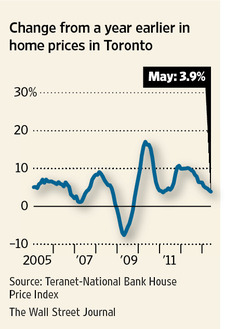
In Seoul’s upscale Gangnam neighborhood, made famous by pop star Psy’s viral music video, government curbs on real-estate lending froze a market in which home prices had been rising as fast as 25% a year. In Toronto, housing prices reversed their rapid rise and fell for five months after the government changed rules to effectively increase monthly payments on new loans. But in Tel Aviv, home prices kept right on climbing—up 11% over the past year for a three-bedroom apartment—even after the central bank boosted minimum down payments and made mortgage lending less attractive to banks.

Central bankers everywhere else are watching these experiments closely, among them Ben Bernanke, chairman of the U.S. Federal Reserve. He and his counterparts around the world, seared by the worst financial crisis in 75 years, are searching for ways to halt borrowing binges before they morph into bubbles, and to push lenders to shore up their defenses before the next crisis arrives. Read more of this post

LVMH’s Bernard Arnault has collected scores of brands but his quest for Hermès has ignited a fierce handbag war

July 8, 2013 6:55 pm

Luxury: Object of desire

By Scheherazade Daneshkhu

LVMH’s Bernard Arnault has collected scores of brands but his quest for Hermès has ignited a fierce handbag war

Bernard Arnault, the billionaire head of French luxury goods group LVMH, once dismissed a question about a rival group, saying: “As far as competitors, there are two I admire: Chanel and Hermès.” That was soon after Mr Arnault’s tenacious “handbag war” for control of Gucci, the Italian leather goods maker, ended in rare defeat at the hands of arch-rival François Pinault’s PPR group (now known as Kering) more than a decade ago. Now Mr Arnault is involved in a second handbag war – this time for Hermès – regarded as the crème de la crème of luxury goods companies for the quality and craftsmanship of its bags and silk scarves and ties. Read more of this post

Hedge funds lose 2-second edge on econ report; Reuters agreed to end its practice of giving high-frequency traders an early look at potentially market-moving consumer survey results that could mean millions of dollars in profits

Hedge funds lose 2-second edge on econ report

Kevin McCoy, USA TODAY11:45 a.m. EDT July 8, 2013

STORY HIGHLIGHTS

Results from consumer surveys will no longer go early to high-frequency traders

High-speed computers are able to make trades within the two-second gap

Reports also not being distributed early to news organizations

Financial information giant Thomson Reuters Monday agreed to end its practice of giving high-frequency traders an early look at potentially market-moving consumer survey results that could mean millions of dollars in profits. Changing the policy amid an investigation by New York Attorney General Eric Schneiderman, the company said it would no longer provide early access of the University of Michigan consumer survey findings issued every other Friday at 9:55 a.m ET. Financial information giant Thomson Reuters Monday agreed to end its practice of giving high-frequency traders an early look at potentially market-moving consumer survey results that could mean millions of dollars in profits. Read more of this post

Earnings Management to Avoid Additional Disclosures: Evidence from Germany

Earnings Management to Avoid Additional Disclosures: Evidence from Germany

Joerg R. Werner Frankfurt School of Finance & Management gemeinnützige GmbH

Hanno Dachwitz Frankfurt School of Finance & Management gemeinnützige GmbH

March 28, 2013

Abstract: 
This paper sheds light on measures undertaken by firms to avoid additional mandatory disclosure requirements. Basically, the firms analyzed in our setting have a choice between laying off employees or exerting some kind of earnings management to avoid increased disclosures. Based on a sample of German firms, we empirically show that earnings management is more likely to occur compared to other measures under such circumstances. The paper contributes to the literature dealing with costs of mandatory disclosures.

Going Beyond Heroic-Leaders in Development

Going Beyond Heroic-Leaders in Development

Matthew Andrews Harvard University – Harvard Kennedy School (HKS)

June 10, 2013
HKS Working Paper No. RWP13-021

Abstract: 
Leadership is an under-studied topic in the international development literature. When the topic is broached it is usually in support of what might be called a ‘hero orthodoxy’: One or other individual is identified as the hero of a specific achievement. The current article offers a three part argument why this orthodoxy is problematic and wrong for many developing countries, however. It suggests first that heroes have not emerged in many countries for a long period and individuals who may have been considered heroes in the past often turned out less than heroic. It posits second that heroes are actually at least as much the product of their contexts as they turned out to be the shapers of such. It proposes third that the stories about hero-leaders doing special things mask the way such special things emerge from the complex interactions of many actors – some important and some mundane. Leadership, it appears, is about multi-agent groups and not single-agent autocrats. The conclusion posits that romantic notions of heroic-leadership in development become less convincing when one appreciates these three arguments. It calls development theorists and practitioners to go beyond the heroic-leader perspective.

Crying Wolf Leadership Style and Ways

Crying Wolf Leadership Style and Ways

Kim Cheng Patrick Low BusinesscrAFT Consultancy (Asia Pacific); University of South Australia; Bang College of Business – Kazakhstan Institute of Management; Universiti Brunei Darussalam

July 3, 2013
Business Journal for Entrepreneurs, Volume 2013, Issue 2 p. 51-67

Abstract: 
The well-known tale involves a shepherd boy who often misleads or deceives nearby villagers into thinking a wolf is attacking his flock. In this paper, as the title suggests, through literature review and discussion, the academician-practitioner examines the features, the workings and the various ways of crying wolf leadership. It is basically about leaders who keep on crying, “Wolf! Wolf!”, urging and exhorting their people of crisis ahead or that the sky might fall sooner than expected. The associated advantages and disadvantages of such a leadership style are also examined.

No idea is perfect, so just get going; Jeremy Carson, founder of 100bodycare, explains why you don’t need a perfect idea to get going in business

Start-up diary: No idea is perfect, so just get going

Jeremy Carson, founder of 100bodycare, explains why you don’t need a perfect idea to get going in business – and reveals the mistakes he made that saw him take three years to make just three shower gels.

100bodycarejeremyc_2605497b

Jeremy Carson, founder of 100bodycare, choosing ingredients for his products

9:30AM BST 02 Jul 2013

Should I start my own business? It’s a question that many people agonise over throughout their career. They read the business pages and ask themselves if they have the traits, experience and right attitude to risk. After setting up my business three years ago, I’ve come to believe these questions are pointless. In that time, I’ve met many business people – from the founder of international food companies like Ella’s Kitchen, to student enterprises. The founders’ traits, experience and attitudes to risk could not be more different. The only common theme seems to be the drive to make your own decisions. This was what I saw in those people and it’s also what I believe motivated me as I look back and search for the reason I decided to start-up from nothing. My business has just started trading. I make a range of 100pc natural toiletries with sports recovery benefits. It’s taken me three long years to get to this stage in which time I’ve identified the right people to work with, developed product formulations, resolved production issues, tested numerous types of packaging, searched for ingredients suppliers and negotiated with retailers. Where did my motivation come from? It was a complete accident. I had just taken a job working abroad and was one month from my start date when a pain I had in my right ankle was diagnosed as severe arthritis. I needed hospital treatment and couldn’t take the role. Luckily, my future employer agreed to keep my position open for three months. For the first time in my life, I was given ample time to think about what I’d learned over my 12 year career. Like most people on a career break, I debated the merits of starting a business. I was buoyed by the false confidence which came from having once started a business as a student and being labelled as an “intrapreneur” by a large corporation. But, as usual, I concluded the time wasn’t right. However, as the sessions to restrengthen my leg continued, I kept thinking of how frustrated I was with the lack of independence that I had in my previous jobs and would continue to have if I stayed in that life. It always concerned me that in large corporations, it seemed that no matter how far your career progressed you would never really make your own decisions. I remember speaking to a managing director who told me that every month he would fly to monthly meetings to be told what to do by his executive board. With this thought going around in my head I, finally decided that I wanted to develop a business that was uniquely my own. Read more of this post

What Is Resilience? “Resilience,” like love, is difficult to define. Yet everyone is talking about how to build or maintain it

What Is Resilience?

05 July 2013

Brian Walker, a research fellow at the Commonwealth Scientific and Industrial Research Organization (CSIRO) in Australia and at the Stockholm Resilience Center, is Chair of the Resilience Alliance.

CANBERRA – “Resilience,” like love, is difficult to define. Yet everyone – from United Nations Secretary-General Ban Ki-moon to government agencies, company boards, and community groups – is talking about how to build or maintain it. So, is resilience a useful concept or just a fleeting buzzword? To answer that question, we need to start with a different one: How much do you think you can change without becoming a different person? How much can an ecosystem, city, or business change before it looks and functions like a different kind of ecosystem, city, or business? All of these are self-organizing systems. Your body, for example, maintains a constant temperature of approximately 37 degrees Celsius. If your body temperature rises, you start to sweat in order to cool down; if your temperature falls, your muscles vibrate (shiver) to warm up. Your body relies on negative feedbacks to keep it functioning in the same way. That is basically the definition of resilience: the capacity of a system to absorb disturbance, re-organize, and keep functioning in much the same way as before. Read more of this post

China’s Ordos, the Chinese ghost city known for its empty skyscrapers is struggling to repay debt and has resorted to borrowing from companies to pay workers

China’s Ordos Struggles to Repay Debt: Xinhua Magazine

A Chinese city known for its empty skyscrapers is struggling to repay debt and has resorted to borrowing from companies to pay workers, a magazine published by the official Xinhua News Agency reported. Some district governments of Ordos, Inner Mongolia, had to borrow money from companies to pay salaries of municipal employees, Economy & Nation Weekly said in a July 5 report on its website. Ordos local-government entities have amassed 240 billion yuan ($39 billion) of debt, while the city had 37.5 billion yuan of revenue last year, the publication said without specifying annual interest costs. The report adds to signs of strains in an economy that probably decelerated for a second straight quarter as overseas and domestic demand slowed and Premier Li Keqiang reined in credit growth. China Rongsheng Heavy Industries Group Holdings Ltd. (1101), the country’s biggest shipyard outside state control, said last week it’s seeking financial support from the government after orders plunged. “Isolated default cases will happen in places like Ordos – – people know investment in these places is unsustainable,” said Ding Shuang, senior China economist at Citigroup Inc. in Hong Kong. Two phone calls to Ordos’s government general affairs office went unanswered. The city is also known as Erdos. Vice Finance Minister Zhu Guangyao said last week that China should be on “high alert” to risks in local government debt. Coal-rich Ordos is known for a building frenzy in recent years, including a new area named Kangbashi that was designed to accommodate 300,000 people.

To contact Bloomberg News staff for this story: Xin Zhou in Beijing at xzhou68@bloomberg.net

China Cash Squeeze Seen Creating Vietnam-Size Credit Hole

China Cash Squeeze Seen Creating Vietnam-Size Credit Hole

China’s money-market cash squeeze is likely to reduce credit growth this year by 750 billion yuan ($122 billion), an amount equivalent to the size of Vietnam’s economy, according to a Bloomberg News survey. The number is the median estimate of 15 analysts, whose projections last week ranged from cuts of 20 billion yuan to 3 trillion yuan. The majority of respondents also said they approve of the government’s handling of the credit crunch and said the episode reinforces their expectations for policy reforms such as loosening controls on interest rates. Read more of this post

Connect, Then Lead

Connect, Then Lead

by Amy J.C. Cuddy, Matthew Kohut, and John Neffinger

Is it better to be loved or feared?

R1307C_A

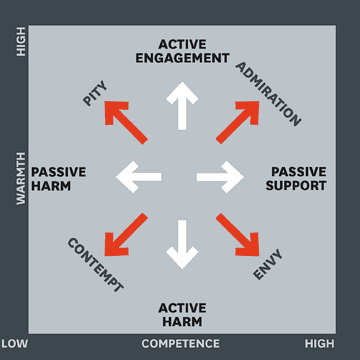
Niccolò Machiavelli pondered that timeless conundrum 500 years ago and hedged his bets. “It may be answered that one should wish to be both,” he acknowledged, “but because it is difficult to unite them in one person, it is much safer to be feared than loved.”

Now behavioral science is weighing in with research showing that Machiavelli had it partly right: When we judge others—especially our leaders—we look first at two characteristics: how lovable they are (their warmth, communion, or trustworthiness) and how fearsome they are (their strength, agency, or competence). Although there is some disagreement about the proper labels for the traits, researchers agree that they are the two primary dimensions of social judgment. Read more of this post

How Experts Gain Influence

How Experts Gain Influence

by Anette Mikes, Matthew Hall, and Yuval Millo

R1307E_A

In 2006 the risk management chiefs of two British financial institutions—we’ll call them Saxon Bank and Anglo Bank—were in similar situations. Each reported directly to the CEO and had, in theory, the same influence in their organizations. But by 2011 Saxon’s risk management group, unified around a common purpose, was deeply engaged in critical work throughout the bank, while Anglo’s, divided into two specialized and loosely connected groups, had little visibility outside specific areas of expertise.

Our close study of these two banks offers lessons for other functional experts in search of influence, from management consultants and internal auditors to HR and marketing executives. We have identified four competencies—trailblazing, toolmaking, teamwork, and translation—that help functional leaders or groups in any organization compete for top management’s limited time and attention, and ultimately increase their impact. Read more of this post

The Uses (and Abuses) of Influence: An Interview with Robert Cialdini

The Uses (and Abuses) of Influence

An Interview with Robert Cialdini by Sarah Cliffe

Robert Cialdini, considered the leading social scientist in the field of influence, was initially drawn to the topic because he saw how easily people could step over an ethical line into manipulation or even abuse. His 2001 book Influence, which laid out six principles of persuasion, was eloquent about the dangers of persuasive techniques in the wrong hands. A best-selling article he wrote for HBR the same year, “Harnessing the Science of Persuasion,” looked at the positive side of persuasion: how managers could use those principles to run their organizations more effectively. Cialdini is the Regents’ Professor Emeritus of Psychology and Marketing at Arizona State University and the president of the consulting firm Influence at Work. In this edited interview with HBR executive editor Sarah Cliffe, he drills deeper into everyday uses of persuasion inside businesses and describes new research on the ethics of influence. Read more of this post

“Made In America”

“Made In America”

MATT BURNS

Friday, July 5th, 2013

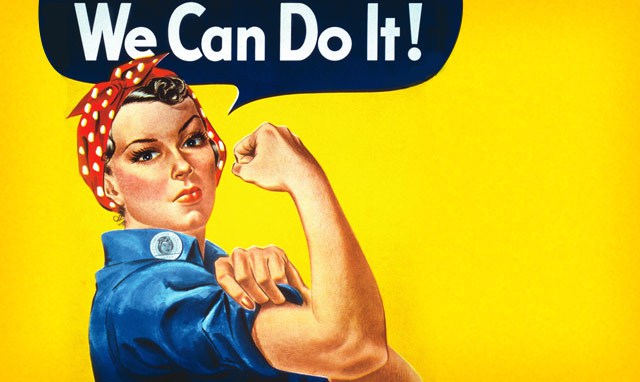
we-can-do-it

The five-day work week. Chevrolet. Grand Funk Railroad. Steel plants on the shores of Lake Michigan. This is America.

There is a rebirth happening right now. It’s happening all over the country. Pockets of makers here, a consumer electronics company there. A startup accelerator in beautiful Harbor Springs, Mich. They’re appearing all over this land. And it’s all heavily advertised. “Made in America” is, sadly, in vogue right now. “Imported from Detroit”, “This American buys American.” All bumper sticker catch phrases fueling America’s greatest innovation: capitalism. And why not? Manufacturing is the brawn that built this land but capitalism is the beating heart. Capitalism drives this country. And it drove companies out, too. Labor is cheaper elsewhere. Tim Cook’s supply chain management became the norm. Profit and loss statements trended towards “build it somewhere else.” “Made in China”. It’s stamped on the bottom of my coffee mug. On the back of my phone. It’s everywhere because we put it there. There was a time not all that long ago that America was the center of manufacturing and innovation. General Motors. Bell Labs. Motorola. Fairchild Semiconductor. Silicon Valley. The lone entrepreneur making it big. America has always been a land of chance. Risk it all and move out west. Find gold. Build with silicon. It’s this sense of entrepreneurship that makes the country great. Most startups fail. A dramatic amount fail. But it’s that sense of possibility that initially made America great and is fueling its current growth. Read more of this post

On its 80th birthday, beer can back in style; Technology once again is transforming how Americans drink their beer

On its 80th birthday, beer can back in style

Michael Felberbaum, AP Business Writer9 a.m. EDT July 7, 2013

Brewers like Sam Adams design special cans to improve flavor experience

Major beer companies add features like the punch-top or bowtie

Craft brewers, like Sly Fox, are re-imagining the can with a “topless” version

nb20130722f2a-870x489

RICHMOND, Va. (AP) — Nearly 80 years ago Richmond revolutionized the beer world. For it was in this Southern city in 1935 that canned beer — complete with how-to instructions — was first sold. Krueger’s Cream Ale and its punch-top can became an instant hit, propelling the humble beer can to iconic status. That is, until Americans returned to bottles and the beloved craft brews they contained, a cultural turn that left canned beer looking decidedly low-brow. But more recently craft brewers rediscovered cans, realizing they weren’t just retro-cool, but with a few tweaks might even be able to kick bottles in the can. Welcome to the beer can revolution, 2013-style. Technology once again is transforming how Americans drink their beer. Read more of this post

Why We Underestimate Risk by Omitting Time as a Factor

Why We Underestimate Risk by Omitting Time as a Factor

Suppose I offer you a simple gamble. Throw a dice: If you get a six, you win $10; if not, you lose $1. The loss is more likely; the win brings more money. Willing to play? The generally accepted way for deciding in such cases — developed originally by the French mathematician Blaise Pascal in the 17th century — is to think of probabilities. The outcome will always be a win or loss, but imagine playing millions of times. What will happen on average? Clearly, you’ll lose $1 about five times out of six, and you’ll win $10 about one time out of six. Over many gambles, this averages out to about 83 cents per try. Hence, the gamble has a positive “expected” payoff and is worth it, even if the gain is trifling. Play a million times and you’re sure to win big. But here’s something odd. Suppose I offer precisely the same gamble, only scaled up. Roll a six and you now win not $10, but 10 times your total current wealth; if you roll anything else, you lose your entire wealth (including property, pensions and all possessions). Your expected profit is now far bigger — equal to 83 percent of your total current wealth. Still want to play? It turns out that most people won’t take the latter bet, even though it will, on average, pay off handsomely. Why not? For most of us, putting everything on the line seems too risky. Intuitively, we understand that getting wiped out carries a brutal finality, curtailing future options and possibilities. Read more of this post

Douglas J. Dayton, Target Stores’ Founding President, Dies at 88

Douglas J. Dayton, Target Stores’ Founding President, Dies at 88

Target Dayton

Douglas J. Dayton, who served as the first president of Target department stores when his family’s retailing company created the chain 61 years ago, has died. He was 88. He died on July 5 at his home in Wayzata, Minnesota, following a long battle with cancer, his wife, Wendy Dayton, said. With four brothers, Dayton took over and reshaped the Dayton Co., which had begun under their grandfather, George Draper Dayton, as Dayton’s department store in downtown Minneapolis. When the company in 1961 formed the discount chain called Target, Dayton became president. The first Target opened in May 1962 in Roseville, Minnesota. By the end of that year, three other Target stores were open, all in the suburbs of the Twin Cities of Minneapolis and St. Paul. In 1966, Target expanded outside Minnesota, opening stores around Denver. Read more of this post