Fears for depositors in euro periphery; ‘Bail-in’ plans could lead to fresh nervousness

July 1, 2013 5:19 pm

Bail-in fears grow for big depositors in euro periphery

By Christopher Thompson and Ralph Atkins

Preventing capital flight from banks in crisis-hit countries has been a priority for eurozone policy makers. But have they just shot themselves in the foot?

At the height of the region’s debt problems, the amounts held by foreigners in banks in Spain, Italy and other eurozone “periphery” countries shrunk worryingly.

Recent months have seen signs of improvement – thanks to a pledge by the European Central Bank to prevent a eurozone break-up, as well as government efforts to boost confidence in the banking system. Read more of this post

China censors urge media to curb ‘cash crunch’ coverage

Last updated: July 2, 2013 4:50 am

China censors urge media to curb ‘cash crunch’ coverage

By Simon Rabinovitch in Shanghai

With a cash crunch roiling the Chinese economy, propaganda authorities have told local media to tone down their reporting to help stabilise financial markets.

In a directive written last week and transmitted over the past few days to newspapers and television stations, local propaganda departments of the Communist party instructed reporters to stop “hyping the so-called cash crunch” and to spread the message that the country’s markets are well stocked with money. Read more of this post

Ban looms on pension ‘consultancy fees’

July 1, 2013 4:33 pm

Ban looms on pension ‘consultancy fees’

By Josephine Cumbo

A ban on deducting charges from members’ pension pots with their consent, known as “consultancy charging”, is set to come in by November under government plans outlined on Monday. Draft regulations before parliament would stop employers from consultancy charging in schemes used for automatic enrolment. Consultancy charging allows employers to pay a professional adviser for pensions management work out of employee pension contributions. Research by Which?, the consumer group, found that the charges could reduce a member’s first year savings by up to 50 per cent and said the impact of charges was particularly damaging for low earners and those who change jobs frequently. In May, Steve Webb, the pensions minister, announced plans to ban the practice for automatic enrolment schemes, saying, “it is vital that the pension savings of individuals who are automatically enrolled are protected”. Under the draft regulations, a scheme that allows the deduction of charges from contributions will no longer be allowed to remain as an automatic enrolment scheme if those charges are made to a third party. The definition of a third party excludes trustees and providers. The draft regulations will not cover “legally enforceable” consultancy charging agreements in place before May 10 when the minister announced his plans for a ban. The government expects the ban could come into force by November at the latest. It added that it intends to extend the prohibition on consultancy charges to all qualifying schemes.

The London Metal Exchange has proposed changes to its warehouse network aimed at reducing long waits for aluminum, copper and other metals that have sparked complaints from industrial consumers.

Updated July 1, 2013, 7:59 p.m. ET

LME Aims to Ease Metals Gridlock

The London Metal Exchange has proposed changes to its warehouse network aimed at reducing long waits for aluminum, copper and other metals that have sparked complaints from industrial consumers.

Since 2011, companies that use metal to make everything from wires to pipes to beer cans have complained that bottlenecks at warehouses licensed by LME—but owned by banks and commodities-trading firms—have driven up their costs.. Read more of this post

Booms, busts and protests – normal life in emerging countries; Unrest and slowdowns mark the end of a placid decade, writes Ruchir Sharma

July 1, 2013 6:57 pm

Booms, busts and protests – normal life in emerging countries

By Ruchir Sharma

Unrest and slowdowns mark the end of a placid decade, writes Ruchir Sharma

Protests erupt in the formerly happy middle classes of Turkey and Brazil. A credit crisis threatens the Chinese economic juggernaut. Money flees the stocks, bonds and currencies of emerging nations. Is this the end of the emerging world miracle? Not exactly. This marks a return to the normal postwar cycle of recession and recovery, political unrest and calm, after a misleadingly placid decade. Read more of this post

Evernote’s Biggest Rival in China – Netease’s Youdao YunBiJi – is Way Ahead With 15 Million Users

Evernote’s Biggest Rival in China is Way Ahead With 15 Million Users

July 1, 2013

by Steven Millward

Netease-Cloud-Notes-app

We know that Evernote has four million users in China right now, but the nation is also home to a few note sync clones that have had more time to gain traction before Evernote properly launched in China in May 2012. Evernote’s biggest rival in China is Netease’s (NASDAQ:NTES) Youdao YunBiJi which, in new figures revealed last week, has risen to 15 million users. Read more of this post

How risky do you want your bank investments to be? Don’t laugh, it is a serious question.

July 1, 2013, 5:41 p.m. ET

Tracking Risk Isn’t So Easy

FRANCESCO GUERRERA

MI-BW914_GUERCO_G_20130701171204

How risky do you want your bank investments to be? Don’t laugh, it is a serious question. These days, investors can adopt a buffet-style approach to bank risk. To get a sense of what is on offer, take a look at the table accompanying this column. It is an attempt by Fitch Ratings to get an apples-to-apples comparison of banks’ “value-at-risk,” or VAR, the most common yardstick of trading risk. VAR is designed to measure the maximum trading losses faced by a bank in a single day. Read more of this post

Indian policy makers are urging citizens to resist buying gold and boosting scrutiny of speculative currency trades after import curbs and dollar sales failed to stem the world’s biggest currency loss

India Urges Resisting Gold as Curbs Fail to Stem Currency Slump

Indian policy makers are urging citizens to resist buying gold and boosting scrutiny of speculative currency trades after import curbs and dollar sales failed to stem the world’s biggest currency loss.

The rupee fell 4.9 percent last month, the worst performance among 78 global currencies tracked by Bloomberg, as the Federal Reserve signaled it may pare stimulus measures this year. The currency plunged to an all-time low of 60.7650 per dollar on June 26. Standard Chartered Plc and Credit Suisse Group AG predict a decline to around 62 in a year. Read more of this post

Japanese banks’ addiction to government bonds is proving hard to break, potentially undermining Prime Minister Shinzo Abe’s plans to revive the world’s third-largest economy.

Banks Stay Bond-Addicted as Cash Hoarders Prevail: Japan Credit

Japanese banks’ addiction to government bonds is proving hard to break, potentially undermining Prime Minister Shinzo Abe’s plans to revive the world’s third-largest economy.

Lenders, which loaded up on debt as loan demand stagnated in recent years, want to reduce the risk of losses on their 151 trillion yen ($1.5 trillion) in holdings as the bond market gyrates and yields climb following efforts by the government and central bank to spark inflation. Read more of this post

Japanese Men’s Allowance at 1982 Low as They Await Abenomics

Japanese Men’s Allowance at 1982 Low as They Await Abenomics

The average Japanese husband’s monthly allowance slumped to the lowest level since 1982 at the start of the financial year as workers await the dividends promised by Abenomics.

Salarymen’s spending money, typically set by wives managing family budgets, was 38,457 yen ($386), down 3 percent from last year and less than half the 1990 peak, according to Shinsei Bank Ltd., a Tokyo-based lender whose data go back to 1979. The survey of 2,000 people was done April 20th and 22nd via the Internet, the report published June 28 showed. Read more of this post

Emerging Markets Hit by Converging Forces

Updated July 1, 2013, 9:15 p.m. ET

Emerging Markets Hit by Converging Forces

ALEX FRANGOS in Hong Kong and PATRICK MCGROARTY in Johannesburg

MI-BW890B_EMERG_G_20130701175105

Countries from Turkey to Brazil to China are getting hit by a brutal combination of events, as economies slow, investors pull out cash, commodity prices tumble and protesters take to the streets—all fresh reminders that these markets can be difficult places to try to make money.

An outflow of funds from so-called emerging markets has picked up pace over the past month, triggered by expectations among some investors that the days of easy money globally are coming to an end as the U.S. economy recovers. Read more of this post

Hong Kong Realtors May Lose Jobs on Curbs, Midland Says

Hong Kong Realtors May Lose Jobs on Curbs, Midland Says

About a third of Hong Kong’s property agents may lose their jobs over the next year if the government persists with its real estate curbs, according to realtor Midland Holdings Ltd. (1200)

“For the industry, we’re probably looking at the lowest point for over two decades,” Angela Wong, deputy chairman and the daughter of Midland chairman and founder Freddie Wong, said. “The worst thing is that it’s now a stagnant market so we’re not sure whether we should expand or contract. This is tough.” Read more of this post

What are the accounting standards in China? How prevalent is accounting fraud?

July 1, 2013

The Chinese Financial System: An Introduction and Overview

By: Douglas J. Elliott and Kai Yan

The fear of slower Chinese growth has significant ramification for the global economy. The importance of China, and the central role of its financial system in fuelling that nation’s growth, led Douglas Elliot and Kai Yan to write a comprehensive overview of the Chinese financial system in the backdrop of the 5th meeting of the U.S.-China Strategic & Economic Dialogue.

Key questions this report will address include:

What is the overall structure of China’s financial system?

Who regulates the financial system?

How does political influence on personnel appointments affect the large state-owned financial institutions?

What are the accounting standards in China? How prevalent is accounting fraud?

Inside China’s Bank-Rate Missteps

Updated July 1, 2013, 7:34 p.m. ET

Inside China’s Bank-Rate Missteps

LINGLING WEI and BOB DAVIS

P1-BM153A_CDEBT_G_20130701185404

BEIJING—A rare peek into the actions of China’s leaders in a month when a Chinese cash crunch spooked global investors shows a leadership falling short in its struggle to redirect China’s economy and also faltering in its efforts to communicate its intentions to markets.

The People’s Bank of China instigated the cash shortages that catapulted Chinese interest rates to nosebleed highs during the past two weeks because the central bank felt it had no alternative amid what it saw as out-of-control credit growth, according to an internal document reviewed by The Wall Street Journal. Read more of this post

Shadow Banking Threatens China’s Economy—but What Is It, Exactly?

Shadow Banking Threatens China’s Economy—but What Is It, Exactly?

By Ryan Perkins

Last week, the Shanghai interbank offered rate (Shibor), China’s once-anonymous version of London’s LIBOR, made news around the world when it suddenly spiked at all time high. Expected to lower this rate by injecting cash into struggling Chinese banks, the People’s Bank of China (the country’s equivalent of the Fed) instead did nothing, leading to speculation that China’s leaders were finally prepared to tackle the economy’s overheating problem. In the process, the media appears to have finally taken notice of the potential dangers that lurk within the byzantine industry that is Chinese finance. Reviewing the headlines, a series of arcane, sinister terms leap out: Off-balance sheet lending. Inter-corporate finance. And, most prominently, shadow banking. Read more of this post

How Fed Avoids Deterring Bondholders With 7% Jobless Is Mystery

How Fed Avoids Deterring Bondholders With 7% Jobless Is Mystery

Unemployment will fall to about 7 percent in the fourth quarter, according to economists at five of the world’s largest banks, creating more confusion among investors about the Federal Reserve’s bond-buying plans.

Fed Chairman Ben S. Bernanke said last month that the central bank could stop purchasing assets around the middle of next year when joblessness “would likely be in the vicinity of 7 percent.” Bank of Tokyo-Mitsubishi UFJ, Barclays Plc, Citigroup Inc., Deutsche Bank AG and UBS AG all predict the rate will be either at or just above that level in the fourth quarter, six months sooner than Bernanke projected. Read more of this post

DuckDuckGo, a search engine that eschews tracking, sees traffic soar

DuckDuckGo sees user base jump, fueled by tracking concerns

By Hayley Tsukayama, Published: July 1

Privacy worries about tracking across the Web have fueled a tremendous jump in the number of users at DuckDuckGo, a smaller search engine that promises never to track its users. The flood started almost the moment stories broke detailing the U.S. National Security Agency’s PRISM surveillance program, said Gabriel Weinberg, the creator and chief executive of the search engine.

“We’re up about 90 percent from a few weeks ago,” Weinberg said in an interview with The Washington Post. The site is now regularly logging at least 3 million searches a day, according to its traffic page. While that doesn’t come remotely close to challenging Google, Weinberg said that he thinks DuckDuckGo’s growth in recent weeks shows that there is a population of Internet users looking for alternatives to safeguard their privacy. Read more of this post

Italy Pushes $1,280 Silk Sweaters as Recession Cure

Italy Pushes $1,280 Silk Sweaters as Recession Cure

In a small workroom whose window overlooks the Umbrian countryside, women hold gray silk-linen cardigan sweaters up to light tables one-by-one, checking every knot and seam. When a worker finds a hole, she puts the sweater in a bag destined for repair or recycling.

This is how Brunello Cucinelli’s fashion company tapped demand for quality Italian goods to lift sales of its $1,280 sweaters and other products by 15 percent last year. It’s a bright spot in a country where unemployment yesterday reached a record, industrial production is down 25 percent from 2007 and the longest slump in more than 20 years isn’t abating. Read more of this post

China’s Slowdown Could Slam Hong Kong

China’s Slowdown Could Slam Hong Kong

In the run-up to Hong Kong’s return to China in 1997, the world wondered what officials in Beijing would do with the place. Would Hong Kong’s dynamism and openness catalyze change in China, or would the Communist Party try to remake the freewheeling city-state in its image?

Sixteen years on, we know it’s more the latter than the former. Beijing has shackled Hong Kong with one bad, handpicked leader after another. China’s commissars and their local lackeys continue to push anti-sedition laws, patriotic education and Mandarin on 7 million people who seek democracy and prefer Cantonese. Read more of this post

Brent-WTI Oil Spread Shrinks to $5 for First Time in 2 1/2 Years

Brent-WTI Oil Spread Shrinks to $5 for First Time in 2 1/2 Years

The difference between the world’s two most-traded crude oil grades shrank to less than $5 a barrel for the first time in about 2 1/2 years, underlining the easing of a supply bottleneck in the U.S.

North Sea Brent crude was $4.99 a barrel more than West Texas Intermediate today. It’s the first time the spread between the two grades has been at $5 or less since Jan. 18, 2011, on an intraday basis, according to data compiled by Bloomberg. WTI, the main U.S. crude grade, had been typically the more expensive grade until mid-2010. Read more of this post

ETF Investors Are Caught by Surprise as Prices Diverge

ETF Investors Are Caught by Surprise as Prices Diverge

David Blain, a financial adviser in New Bern, North Carolina, likes exchange-traded funds so much he’s put all his clients’ money in them. He also thinks individual investors trading ETFs on their own may be in for surprises when markets come under stress.

Share prices for dozens of ETFs last month strayed to their biggest discounts in a year against the published value of their holdings, or net-asset values, as investors fled stocks and bonds around the world. The price of the $362 million iShares MSCI Philippines Investable Market Index Fund swung from a 4.7 percent premium to a 6.1 percent discount and back to a 2 percent premium in the space of nine trading days through June 25. Read more of this post

Nowhere to Hide in Worst Bond Losses Since 2008

Nowhere to Hide in Worst Bond Losses Since 2008: Credit Markets

Investors are finding no shelter from the worst corporate-bond losses in almost five years as debt plunges for the most creditworthy to the riskiest borrowers in every industry worldwide.

Company debentures erased 2.2 percent the last three months, the worst quarterly decline since a 5.2 percent plunge in the period ended September 2008, when the collapse of Lehman Brothers Holdings Inc. ignited the worst credit crisis since the Great Depression, Bank of America Merrill Lynch index data show. All 16 industries in the index lost during the period, from a 0.7 percent decline for the debt of automakers to a 3.5 percent drop in energy-company bonds. Read more of this post

Chinese Malls Waive Rents as Vacancies Loom

Chinese Malls Waive Rents as Vacancies Loom: Real Estate

Chinese landlords are forgoing rent and paying to outfit stores for mass-market fashion brands including Zara and H&M, a bid to blunt the impact of a boom in shopping-mall construction that threatens to push up vacancies.

Preferential leasing terms were reserved until recently for luxury brands such as Louis Vuitton and Gucci, which are coveted because they bring shoppers into malls. Now moderately priced labels are being enticed with offers as landlords work harder to fill shops, according to Cushman & Wakefield Inc. and RET Property Consultancy Ltd. Read more of this post

Do Singaporean workers deserve the salaries they are paid? Is he/she really more analytical, creative, articulate and productive than our Asian counterparts let alone those in the developed countries of Switzerland and Germany?

Do S’porean workers deserve their wages?

Monday, Jul 01, 2013

Han Fook Kwang

The Straits Times

Do Singaporeans deserve the salaries they are paid?

That was the pointed question posed by a reader responding to a piece I wrote on how median wages had stagnated in recent years despite a growing economy (The Sunday Times, June 16). He didn’t think it was surprising because, to put it bluntly, that’s what they deserve. This was how he put it, which I’m quoting extensively because his perspective is worth airing even if it’s painful to hear: “Singapore’s median income of $3,000 per month is fairly high if converted to local currencies of neighbouring countries such as Malaysia, the Philippines, India and China. Does the average Singaporean worker deserve this premium? “Is he/she really more analytical, creative, articulate and productive than our Asian counterparts let alone those in the developed countries of Switzerland and Germany? Read more of this post

John Mackey, the ‘father’ of the natural food retailer Whole Foods Market explains why he is a visionary pragmatist

une 30, 2013 1:08 pm

John Mackey, Whole Foods Market

By Andrew Hill

jwj_John_Mackey_040

Consciousness-raising: John Mackey believes Whole Foods Market proves business can help solve global problems

John Mackey blames Jean-Paul Sartre. As a philosophy student at the University of Texas in the 1970s, the co-founder of Whole Foods Market was obliged to read the French sage’s existentialist work Being and Nothingness: “It’s this massive tome, this great work and it is boring, boring, boring … One night I just threw the book down and said I’m never going to read another book in my life I don’t want to read.”

He decided he would not take another class he did not want to take (he signed up for 120 hours of elective courses instead, finishing with no degree) and ultimately concluded: “I’m not going to ever do anything in my life again … that isn’t speaking to my own sense of purpose.” Read more of this post

This weekend celebrates Jakarta’s 486th anniversary: Fatahillah, a Javanese general, conquered the port of Sunda Kelapa, driving out the Portuguese and naming the area Jayakarta, meaning “great victory.”

Ondel-Ondel Take to the Streets for Jakarta’s Anniversary

By Lenny Tristia Tambun on 11:10 am June 29, 2013.

jakarnaval-1024x640

Workers decorate the car ornament for carnival at Monas park on June 26, 2013. The creations are designed to enliven Jakarta’s anniversary ‘Jakarnaval’ celebrations, scheduled for June 30.

This weekend’s Jakarnaval, part of celebrations for Jakarta’s 486th anniversary, will feature around 1,500 participants presenting colorful artistic and cultural creations. Read more of this post

TSMC Shakes Up Apple-Samsung Partnership

July 1, 2013, 3:49 AM

TSMC Shakes Up Apple-Samsung Partnership

By Lorraine Luk and Min-Jeong Lee

Taiwan Semiconductor Manufacturing Co. 2330.TW -2.70% has pulled off its biggest coup yet: winning over Apple AAPL +0.69% Inc. as a chip client and, in the process, giving heavyweight rival Samsung Electronics Co. 005930.SE -1.19% a poke in the eye.

It’s no surprise that Apple would seek to move away from Samsung as their competition in the smartphone market becomes more heated.  But TSMC may have to wait a while to feel the full benefit of Apple’s switch, analysts say. For the next year, at least, Samsung will still be supplying chips to Apple. Read more of this post

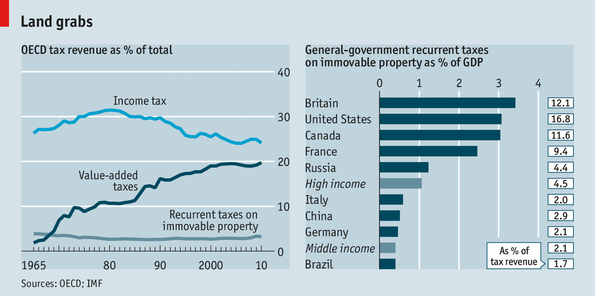
Levying the land: Governments should make more use of property taxes

Levying the land: Governments should make more use of property taxes

Jun 29th 2013 |From the print edition

20130629_fnc884

TAXES on property go back a long way. Ancient civilisations from Greece to China had levies on land. In 11th-century England the Domesday Book, a record of who owned what land, documented William the Conqueror’s tax base. Britain had a window tax in the late 17th century, well before it introduced an income tax. In America local governments have raised money from property taxes since the colonial era; the federal income tax has been in place only since 1913. Read more of this post

Money to be made by forensic accounting; And it can also be a useful tool to hunt down market inefficiency

June 30, 2013 2:00 pm

On Monday: There’s money to be made through forensic accounting

By John Authers

And it can also be a useful tool to hunt down market inefficiency

The words “forensic accounting” conjure up images of detectives on the hunt for corporate malfeasance. By such means were frauds like Enron hunted down. But it is also a way to hunt down something much more prosaic: market inefficiency. And if harnessed correctly, it could prove to be a way to make money. Aggressive accounting and earnings management may be quite legal, but when companies use them, it is a great sign that they are running into trouble, at least relative to their peers and to the expectations for them. Measure aggressive accounting well and there is money to be made. With the second quarter just ended, and a new earnings season about to begin, it is an important point to remember.

Read more of this post

The Fascinating Rise Of Reese’s Peanut Butter Cups

The Fascinating Rise Of Reese’s Peanut Butter Cups

EMILY UPTON, TODAY I FOUND OUT JUN. 30, 2013, 11:13 AM 2,222

images (16)

A popular chocolate cup filled with delicious peanut butter, Reese’s Peanut Butter Cups were created by a man named Harry Burnett (H.B.) Reese.

Reese was born May 24, 1879 in Pennsylvania to a farming family. He married in 1900 and went on to have sixteen children. (Yes, 16!) By 1903, not surprisingly, he was struggling to support his growing family, so took on all manner of jobs from butcher to factory worker.

In 1917, Reese found an advertisement to work on a dairy farm owned by Milton S. Hershey, owner of the Hershey Chocolate Company, in Hershey, Pennsylvania. Read more of this post