Chart of the day: Euro area M3 growth vs Bank lending to euro area private sector
March 29, 2013 Leave a comment

R.E.S.-ilience in Value Creation 《竹经:经商经世离不得立根创新》
March 29, 2013 Leave a comment
Posted by James Altucher on March 28th, 2013 at 9:36 am
I want to put on Google Glasses, stare at the sun until I go blind, and have a Google Hangout with all my friends at the same time while the sun burns my vision away. Everyone will see what I will be seeing (or not seeing. Because of going blind) because of the Google Glasses. I feel like that would make me a master of the universe. My teachers from grade school would be proud. They might rename the school after me. I told my kids, “You’re always complaining about school. If you don’t like school just don’t go. I don’t care at all.” And guess what? They practically spit in my face in rebellion. They didn’t shoot up crack heroin. Or get tattoos. They went to school. HOW DARE THEY! I wasn’t even trying to do any reverse psychology on them. Reverse psychology is for people afraid to say the truth. It was like reverse reverse psychology. My kids can do what they want. What I give them is not freedom but choice. They choose to go to prison. That’s fine. School was like a mental institution for me where I was force fed the following drugs:
1) Lots of facts. At talks I ask people, “When was Charlemagne born?” I have yet to get a response that is correct within 200 years. Research shows that 90% of what we learn in a class we forget after 45 minutes. The reason is: our brain likes to have 2 or more things going for it before it is convinced it has a worthy fact for memory. So, “passion + awe” are two things. But boring facts disappear quickly.
2) Perfectionism. Schools celebrate the A+ and punish the C-. Whenever my daughter tells me she got an A+ I ask her why she wants to take a class that is too easy for her. The C- shows you so much more: What you need to learn. What you might not be interested in. How to deal with imperfection. How to deal with the pride of others. How to deal with insecurity. As some woman tweeted on twitter the other day, @jaltucher is a C-. I have room to improve!
3) Cliques. My best friend Jimmy Biondo punched me in the back at my locker and I fell to the ground and started crying. I think I was 15. In school you have a small group of people to choose from for friendship. This makes for political, spiteful, gossip-filled, often Lord-of-the-Flies-style friendships. Yeah, I’m the ugly kid that got killed in the book. And no, I did not read the book in school. I read the Cliff’s Notes.
) Science and Math. While these are beautiful subjects I often feel that my kids are encouraged to drop their creativity at the door if it involves art or storytelling. Everything is rote, then tested. Then rote again, then tested again. For twenty years. That’s only a tiny part of the brain. Humans are meant to use their entire brain. It’s our entire brain that let’s us DESTROY and RULE the animal kingdom.
5) Work. From 7am to often 10pm, my kids are “working”. They sit in classrooms all day, barely moving, and then they are often working on homework until they fall asleep. They learn to work hard. But…
But as an adult, if you want to succeed, be creative, learn to fail, learn to sell ideas, learn to build momentum around your life, you need to UNLEARN:
HOW TO UNSCHOOL YOURSELF:
A) Play. Playing (however you want to define that word) reduces stress, encourages creativity, increases happiness, is FUN. Nothing wrong with that. Maybe people think they HAVE to be working. Else they are unproductive. They get this reactive stress when they aren’t “at work”. Because we got addicted to working back in our school daze. What should you play at? I don’t know! Do whatever you want. Go to a museum. Or a movie in the middle of the day. Or pee in public places, take pictures of the pee, and make a photo exhibit. Who cares? Homework! – think of five things you can “play” at today.
B) Creativity. Sometimes I’m sick of writing this blog. So I do other stuff. I draw. Or I take photographs of my urine in public places. Or I plan my upcoming run for Congress! (Don’t tell Claudia. She is against it). This makes my brain feel good. I can literally feel the neurons light up. It makes my brain feel loved by me. Every day I try and exercise different parts of my brain. Homework! – What are some ways you can be creative today outside your normal work schedule?
C) Friendship. It turns out we don’t have to be friends with the people immediately around us. That was only a school thing. We can choose to be friends, instead, just with the people who love us and who we love. Like how I’m friends with Oprah. Hi honey! I didn’t learn this for a long time. And this one aspect of my life made me desperately unhappy. Maybe I finally learned it in 2010. I was 42 years old. Some people, thank god, learn it much earlier. But I had to “unschool” myself from all that I learned about friendship in ninth grade.
D) Imperfectionism. A friend of mine once told me she wanted to go to Paris because she’d really be able to paint there. Good fucking luck. Situations are never perfect. We’re never perfect. It’s 20 years later and she hasn’t gone through one color on her watercolor set. Being comfortable with imperfection gives us a lot more opportunities. And helps us love ourselves more. And we don’t get easily ashamed, which translates to deeper honesty and relationships. Perfectionism is a cage that has captured our happiness and won’t let it out. I lost a lot of friends when I stopped pretending to be perfect. I was afraid people would not like and I was right. That’s ok. See “C” above. Finally, all of life is a sculpture chiseled with the knife of imperfection. Realizing that allows us to be kind to the chaos we see everywhere. We’re all going through a hard time just trying to live.
E) Make shit up. Facts are for boring people. I can look up any fact on Google. It doesn’t make me stupid. It makes room in my brain to have fun. I only read the things I’m passionate about. I look up the things I could care less about but maybe need to know for a split-second every now and then. (Charlemagne was born in 742 AD. Thank you Wikipedia!). So just read about stuff you’re interested in. Today I’m reading “New Ideas in Backgammon” so I can crush Dubner the next time I play him. (MEGA-CHAMPION!)
F) Independence. Finally, they never teach this in school. So it’s hard to learn it as an adult. We lose the habit. But once you learn to be creative, to have positive friendships. to have ideas, to be imperfect, you also have to learn how to sell your ideas to people who believe in them. This is the beginnings of independence. This means you graduate life and get the keys to the kingdom. Start unschooling yourself today. Unschooling is not ust for kids. Read more of this post
March 29, 2013 Leave a comment
How Multilatinas Are Taking Over the World
25 MAR 2013 – JONATHAN KANDELL
HERE’S A TEST OF YOUR GLOBAL BUSINESS IQ. Where would you find each of the following: the world’s largest baker, the leading iron miner and the second most valuable airline by market capitalization?
Answer: Latin America. Mexico’s Grupo Bimbo has built the world’s largest bakery products company through a string of acquisitions, Brazil’s Vale is the biggest producer of iron ore, and Latam Airlines Group, a Chilean-controlled company that combines Chile’s LAN and Brazil’s TAM airlines, is the continent’s dominant carrier, with a stock market value of $11.4 billion, second only to Delta Air Lines.
These companies are far from alone. Latin America’s economic renaissance over the past two decades has fostered the emergence of a new generation of corporate champions with regional, and sometimes global, ambitions. Read more of this post
March 29, 2013 Leave a comment
Layoffs trigger panic among Chinese multinational employees
SHANGHAI, March 28 (Xinhua) — Chinese employees of multinationals are finding their jobs no longer secure and enviable as a massive round of layoffs has hit such companies. Read more of this post
March 28, 2013 Leave a comment
This Is The Most Innovative Startup From This Year’s Y-Combinator Class
Megan Rose Dickey | Mar. 27, 2013, 10:41 AM | 3,498 | 2
Silicon Valley’s most prestigious accelerator Y Combinator just hosted its Demo Day for its Winter 2013 class. Even though this class was smaller than its previous batches, the talent was just as good. Out of the 47 startups that presented at YC’s Demo Day, Thalmic Labs really caught our attention. Thalmic Labs positions its MYO armband as the next generation of gesture control, enabling you to control other devices using your movements, and without the need for a camera. Many current gesture control technologies like Microsoft‘s Xbox Kinect, for example, require you to be in front of a camera. It also forces you to use pre-programmed gestures. But with MYO, it can track even the most subtle gestures. The armband works by sensing the electrical activity in your muscles to control your computer, video games, or even a drone. But Thalmic has opened up its API so developers can come up with more ways to use MYO. Already, Thalmic has sold 25,000 MYO devices and brought in $3.7 million in revenue. You can pre-order your own MYO for $149 here.
March 28, 2013 Leave a comment
Here’s Bloomberg Businessweek’s Cover About How Samsung Became The King Of Smartphones
Steve Kovach | 59 minutes ago | 18 |
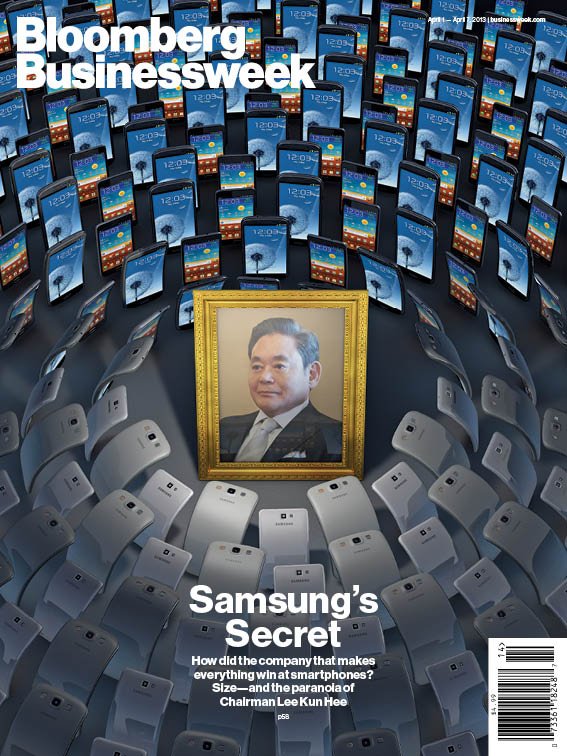
Bloomberg Businessweek’s cover story this week is all about the rise of Samsung. Here’s a sneak peek at the cover art:
How Samsung Became the World’s No. 1 Smartphone Maker
By Sam Grobart on March 28, 2013
I’m in a black Mercedes-Benz (DAI) van with three Samsung Electronics PR people heading toward Yongin, a city about 45 minutes south of Seoul. Yongin is South Korea’s Orlando: a nondescript, fast-growing city known for its tourist attractions, especially Everland Resort, the country’s largest theme park. But the van isn’t going to Everland. We’re headed to a far more profitable theme park: the Samsung Human Resources Development Center, where the theme just happens to be Samsung.


Photograph by Tony Law for Bloomberg BusinessweekSamsung’s Human Resources Development Center


March 28, 2013 Leave a comment
The Brilliant, Unusual Way Media Startup Upworthy Grew To 10.4 Million Monthly Readers In Its First Year
Alyson Shontell | Mar. 27, 2013, 1:44 PM | 2,680 | 4

Eli Pariser, co-founder of Upworthy.
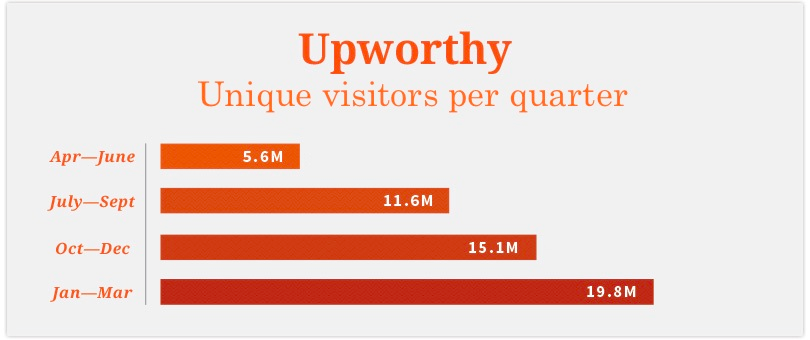
Most media companies focus on covering the latest news. Eli Pariser and his army of bloggers at Upworthy don’t, yet they have grown from no readers last year to 10.4 million last month.
If The New York Times is a designer store with new, original items that keep readers informed, Pariser is running an antique shop, recognizing the value in old gems, and selling them for much more.
Essentially, Upworthy goes dumpster diving in the Internet’s archives, hoping to find gold. They’re looking for any scrap of a moving, visual story they can tell that was, for some reason or another, initially overlooked by readers. They polish it off with a catchy headline, send it out into the Twitterverse and Facebook, and watch the readers flock to the page.
When you’re promoting old stories, there’s not much competition either. News sites compete to be the first to a story, so there’s a lot of overlapping coverage. It’d be hard for another site to stumble upon the same older content Upworthy finds at exactly the same time.
To find the hidden gems, Upworthy’s content curators spend a large portion of the day scouring YouTube and other visual sites. They don’t crank out dozens of stories each; Pariser estimates only 60 pieces of content are created per week. Interest, not timeliness, is what matters when it comes to social content. Read more of this post
March 28, 2013 Leave a comment
Bitcoin Prices Have Gone Utterly Nuclear In The Last Two Days
Joe Weisenthal | Mar. 28, 2013, 5:30 AM | 4,438 | 18
The price of a Bitcoin, the digital money that’s become the new obsession of gold and silver-types, continues its dizzying assent. Here’s a short term chart. Back in February, one Bitcoin was trading at around $20. Today? $95, having had two huge moves over the last two days.

March 28, 2013 Leave a comment
26 Tips On How To Read People
Kim Bhasin and Max Nisen | Mar. 27, 2013, 2:18 PM | 192,193 | 1
Few people are so rigidly controlled that they don’t give clues as to what they’re thinking or feeling. Learning to read these can be a big advantage in business and life.
There’s no single, consistent recipe — and even the best mind readers on the planet are only right 80 percent of the time — but there’s a lot to be learned.
According to UCLA professor Albert Mehrabian, 55 percent of what you convey comes from body language, 38 percent from the tone of your voice, and only 7 percent from what you actually say.
We’ve compiled tips from Psychology Today and elsewhere that will help you stay one step ahead of everyone else.
To start, always get a baseline reading so you can distinguish personal quirks from real tells.
Notice others trying to read your baseline with seemingly innocuous questions like, “How are you today?” Read more of this post
March 28, 2013 Leave a comment
Cao Shiru, the woman behind Zhongnanhai’s Hongqi supermarket
Staff Reporter 2013-03-28

Until its mysterious closure, Hongqi of Chengdu was the only supermarket chain to operate an outlet in Zhongnanhai, the government compound in the heart of Beijing that houses the State Council and the headquarters of the Communist Party.
Despite the setback, the chain’s founder Cao Shiru has proved herself a canny operator in the retail industry, reports the semi-monthly China Entrepreneur.
“The first two characters of my name are pronounced the same as supermarket in Mandarin,” Cao told the magazine, explaining why she has a strong affinity for the retail sector.
Cao’s chain employs over 13,000 workers, and while around 80% of them are female, most of her senior executives are men.
Yu Shi, the company’s deputy general manager, told the magazine that Cao gives her staff the freedom to carry out their plans and backs them strongly if she believes that their ideas are right. Read more of this post
March 28, 2013 Leave a comment
Bubbles and bankruptcy: a British history
We review the Bubbles and Bankruptcy exhibition at the British Museum, which charts four hundred years of British bank collapses and the frenzied asset bubbles that all too often beguiled investors.
UK history – as the British Museum reveals in its “Bubbles and Bankruptcy” exhibition – is crammed with examples of wily banking scams, bailouts and asset bubbles.
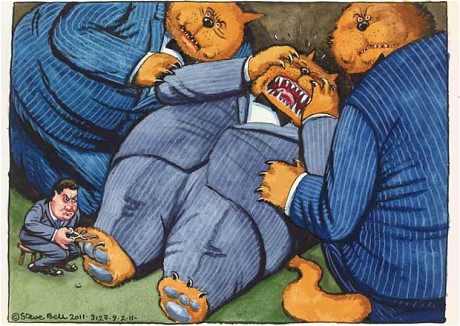
Steve Bell’s ‘Bank Levy’ at the British Museum
By Helia Ebrahimi, Senior City Correspondent
2:47PM GMT 27 Mar 2013
No man is an island. But try telling General Gregor MacGregor that.
He invented one, the Principality of Poyais, which he claimed to rule before selling shares in the South American colony. It turned out to be totally uninhabitable.
He also pre-fixed his name with “Sir”. As you do. His honour, as it turned out, was also fictitious.
Still, in many ways, the general was a prototype investment banker. Not that far removed, perhaps, from those who packaged up sub-prime mortgages known to be worthless before selling them to hapless investors.
In fact, UK history – as the British Museum reveals in its “Bubbles and Bankruptcy” exhibition – is crammed with examples of wily banking scams, bailouts and asset bubbles.
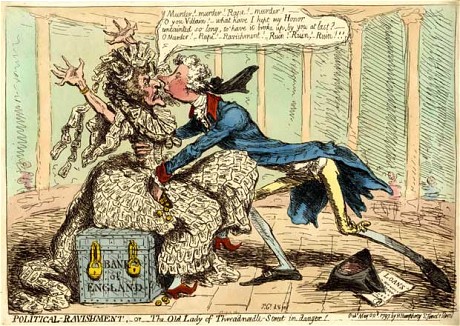
From the South Sea bubble, to tulip speculation, it turns out that naughty bankers have always had a knack of getting rich while others pick up the bill. Not least the Old Lady of Threadneedle Street – aka the Bank of England.
The exhibition takes an amusing look at Northern Rock’s collapse, which is placed alongside a collage of defunct credit cards from HBOS, RBS and Lloyds – now propped up only by taxpayer funds.
March 28, 2013 Leave a comment
Peter Fuhrman is Chairman, Founder & CEO at China First Capital, (中国首创)a leading China-focused specialist international investment bank and advisory firm for private capital markets and M&A transactions.


In the last two years, more than 40 US-listed Chinese companies have announced plans to delist in “take private” deals. About half the deals have a PE firm at the center of things, providing some of the capital and most of the intellectual and strategic firepower. The PE firms argue that the US stock market has badly misunderstood, and so deeply undervalued these Chinese companies. The PE firms confidently boast they are buying into great businesses at fire sale prices.
The PE firm teams up with the company’s owner to buy out public shareholders, with the plan being at some future point to either sell the business or relist it outside the US. At the moment, PE firms are involved in take private deals worth about $5 billion. Some of the bigger names include Focus Media, 7 Days Inn, Simcere Pharmaceutical.
The ranks of “take private” deals fell by one yesterday. PE firm Baring Private Equityannounced it is dropping its plan to take private a Chinese company called Ambow Education Holding listed on the New York Stock Exchange. Baring, which is among the larger Asia-headquartered private equity firms, with over $5 billion under management, first announced its intention to take Ambow private on March 15. Within eleven days, Baring was forced to scrap the whole plan. Read more of this post
March 28, 2013 Leave a comment
Looming property taxes spark owner panic
English.news.cn 2013-03-27
BEIJING, March 27 (Xinhua) — Pre-opening queues have snaked around Chinese property trading centers in the past few days, with those in line vexed by the uncertain roll-out date of stricter market regulations.
They have been joined by Chinese netizens in feverish discussion of the March 1 announcement by central government that homeowners who sell will face income tax as high as 20 percent of the profit they make on the transaction. With no firm timeline set for the imposition of the measure, which is designed to cool the red-hot property sector, many are racing to sell.
Consequently, property agencies throughout the country have been inundated by sellers and buyers in a dilemma over the future heavier taxes.
Prior to the new rules, income tax was 1 percent to 2 percent of sale price.
South China’s Guangdong Province was first to detail its implementation of the measures on Tuesday. Read more of this post
March 28, 2013 Leave a comment
作者:金兮敏 | 2013年03月27日 08:44 | 栏目: 城市景深 原创
3月24日,上海博联部分博友,应邀赴地处浦东外高桥保税区的上海钱万隆调味品有限公司参观。 2008年6月,国务院公布了第二批国家级非物质文化遗产保护名录,”钱万隆酱油酿造技艺”成为中国酱油行业唯一的”国家级非物质文化遗产”的中华老字号品牌。钱万隆”官酱园”以其129年的历史传承,特有的酿造技艺,生产出纯正滋味的高品质酱油。得知天然特晒酱油的抗氧化剂保健作用高出红酒10倍,更感到传统酿造业的大有可为。


March 28, 2013 Leave a comment
Liberate Your Employees and Recharge your Business Model
by Karan Girotra and Serguei Netessine | 1:00 PM March 27, 2013
It finally seems that the uproar over Marissa Meyer’s diktat banning flexible work policies at Yahoo is dying down. While good arguments were made on both sides of the issue, what got lost in the charged debate was the potential for evolving traditional business models through changing the employee-employer relationship.
Our research on identifying replicable templates for business model innovation shows that innovating how a company engages with its workforce is an often overlooked way of increasing business model performance. The basic structure of the firm-employee relationship has not changed much over the last 50 years. Relying on a forecast of organizational needs, firms select the nature and number of employees, who are then assigned some working hours and tasks to do in those hours.
But a few pioneering companies are challenging each aspect of this traditional model and are offering unprecedented opportunities along the way.
Rethinking Who Your Employees Are
Traditional organizations identify a set of individuals as their “employees” before they are fully aware of the employee’s talents and their needs. Read more of this post
March 28, 2013 Leave a comment
A Data Scientist’s Real Job: Storytelling
by Jeff Bladt and Bob Filbin | 2:00 PM March 27, 2013
Every morning at DoSomething.org, our computers greet us with a report containing over 350 million data points tracking our organization’s performance. Our challenge as data scientists is to translate this haystack of information into guidance for staff so they can make smart decisions — whether it’s choosing the right headline for today’s email blast (should we ask our members to “take action now” or “learn more”?) or determining the purpose of our summer volunteer campaign (food donation drive or recycling campaign?).
In short, we’re tasked with transforming data into directives. Good analysis parses numerical outputs into an understanding of the organization. We “humanize” the data by turning raw numbers into a story about our performance. Read more of this post
March 28, 2013 Leave a comment
Why I’m leaving China – opinion
By Marc van der Chijs @CNNMoney March 27, 2013: 10:08 AM ET
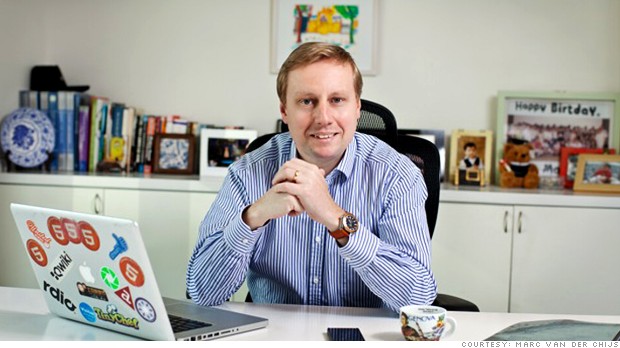
After doing business in China for more than a decade, Marc van der Chijs is moving to Vancouver.
When I first came to China as an expatriate in early 2000 to work for Daimler, I had no plans to stay.
But I fell in love with this country and ended up making China my home for more than 13 years. I stayed for the business opportunities, as well as the entrepreneurial vibe that runs through cities like Shanghai and Beijing.
While living in China I was able to co-found several companies, including online video site Tudou.com, the Asian operations of Dutch online game company Spil Games and online fashion site UnitedStyles.com. I also invested in many Chinese Internet and tech startups and helped them to grow.
However, about two years ago I realized that my love for China was slowly changing, and I first started thinking about moving to a different place.
Over the years, doing business had become more and more difficult for a non-Chinese. Although many areas have opened up for foreign investment, outsiders are not always able to do business on equal terms with Chinese entrepreneurs.
For example, foreigners need more capital to set up a business. Once you have a business up and running, it will be more closely scrutinized than Chinese firms. There are still tons of business opportunities available in China, but I generally felt less welcome in recent years as a foreign entrepreneur.
Much more important than this, however, was the fact that air pollution and food quality were getting worse in my adopted home. Read more of this post
March 28, 2013 Leave a comment
March 27, 2013, 7:17 p.m. ET
Tiny Dolls Get Big Personalities in Hopes of Boosting Sales

The redesigned Little People dolls, on sale this summer, will have distinct personalities. From left to right: artistic Sofie, energetic Eddie, shy Mia, silly Kobe and twirly Tessa.
Little People dolls, a staple of the toddler playroom for more than half a century, have a problem: No one remembers their names.
Their maker, Fisher-Price Inc., is trying to change that. It hopes more memorable names lead to add-on riches like television shows and songs.
The visual changes in the figures—their first in 15 years—might seem subtle. They will be a tad taller (about 2½ inches high), thinner and less babyish looking. The dolls will wear updated clothing and hairstyles. No longer holding pets or playthings or snack food, their arms will be set in more expressive poses.
Most important, says the company, the painted plastic figures will have full-blown, identifiable personalities: Eddie is active and athletic. Mia is the shy, feminine one. Tessa loves to twirl like a ballerina. Read more of this post
March 28, 2013 Leave a comment
March 27, 2013, 8:13 p.m. ET
The Messaging Apps Taking on Facebook, Phone Giants
On a recent Saturday, Johan Dijkland, a 23-year-old student in Emmen, Netherlands, opened a free messaging app called Line on his iPhone. Then he tapped on a virtual sticker of a sleepy panda with a “good night” speech bubble and pressed send to a friend.
With that action, Mr. Dijkland’s text joined the tens of billions of messages that are processed every day from a fast-growing crowd of mobile messaging apps.
These messaging apps—with funny names like WhatsApp, WeChat and KakaoTalk—have become an indispensable form of communication for hundreds of millions of people world-wide.
They are also rankling technology giants from Silicon Valley to Seoul. That is because when users like Mr. Dijkland send messages using Line, his mobile carrier Vodafone Group VOD.LN -0.05% PLC and iPhone maker Apple Inc. AAPL -2.00% don’t directly profit from the interaction. Read more of this post
March 28, 2013 Leave a comment
Updated March 27, 2013, 7:59 p.m. ET
When Apps Attack: Industries Under Pressure
The mobile-apps industry is still in its infancy, but it is already taking on giants.
Apps are cheap to make and easy to distribute, forcing many old-line industries to rethink the way they do business.
With a single click, millions of Americans are comparing prices, hailing taxis and downloading addictive videogames to their smartphones.
“You don’t have to be a huge company with billions of dollars to build a business anymore; you really can be two guys in a basement,” said Jeff Haynie, chief executive of Appcelerator, which licenses software for app developers. “Very traditional models are getting disrupted.”
That trend is set to continue as more consumers switch from simple mobile phones to smartphones that spur app consumption. Last year marked the first time more U.S. mobile phone users had smartphones than simpler feature phones, according to data from comScore Inc.SCOR -0.24%
Here are four industries under pressure because of the rise of apps: Read more of this post
March 28, 2013 Leave a comment
Adapt or Perish: Evidence of CEO Adaptability to Strategic Industry Shocks
Wayne R. Guay University of Pennsylvania – Accounting Department
Daniel J. Taylor University of Pennsylvania – The Wharton School
Jason J. Xiao University of Pennsylvania – The Wharton School
March 13, 2013
Abstract:
Prior turnover literature documents various signals of poor performance that lead a board of directors to terminate the CEO, but does not explore the underlying causes of the CEO’s poor performance. Recognizing that terminated CEOs have often been successful earlier in their tenure, we conjecture that strategic shocks to a firm’s business environment can cause the board to decide that the existing CEO’s skills do not fit with the firm’s current leadership needs. Moreover, prior research on manager ability engenders the question of whether managers are specialists or are instead capable of adapting their “style” to the changing economic conditions. We examine industry-level changes in investing, financing, and operating policies, and their effects on CEO turnover. Our turnover results suggest that CEOs struggle to adapt to a change in industry globalization, investment and marketing efforts. We also find that boards consider the CEO’s performance in response to strategic industry shocks when inferring the CEO’s adaptability, and that the sensitivity of turnover to these shocks varies with activist investors, CEO tenure, and CEO entrenchment.
March 28, 2013 Leave a comment
Updated March 27, 2013, 11:08 a.m. ET
China Tightens Regulations on Wealth Management
By DINNY MCMAHON And AARON BACK
‘Shadow banking’ in China was worth $3.7 trillion in 2012 according to Standard & Poor’s estimates. Qiang Liao of the S&P tells the WSJ’s Jake Lee why these risky investments are being sold across the country.
BEIJING—China moved to rein in wildly popular but opaque investment products that form a key plank of the nation’s shadow-banking system, after the high-profile failure of one product offered a glimpse of the risk they pose to the financial system.
The rules issued Wednesday by China’s banking regulator came as China’s four biggest state-run banks said they had more than 3 trillion yuan ($467 billion) worth of such products outstanding at the end of last year, their fullest disclosure yet of their exposure to the products and a move signaling their own caution toward their proliferation.
They are called wealth-management products, which some Chinese regulators have said are sold with limited oversight or disclosure of what they contain. They are typically short-term investments that banks market as a high-yield alternative to bank deposit rates, which are kept low by the government. About half are invested in low-risk assets such as government and corporate bonds and money-market products, according to research firm Cnbenefit. But many others are backed by everything from loans to developers to accounts receivable to valuables such as gold and jewels. Read more of this post
March 28, 2013 Leave a comment
Published: Thursday March 28, 2013 MYT 8:39:00 AM
BRICS “Big Five” find it hard to run as a herd
DURBAN: At a summit in South Africa on Wednesday, Vladimir Putin likened the BRICS nations – Brazil, Russia, India, China and South Africa – to Africa’s “Big Five” game beasts of trophy hunting lore – the lion, elephant, buffalo, leopard and rhinoceros.
The Russian president’s comparison captures the dilemma of these muscular emerging global powers, which together present a formidable potential economic and political counterweight to the developed West, but individually could hardly be more different.
The question is whether the BRICS five can run as a herd or hunt as a pack on the global stage, transforming their diverse but collective strength into real institutions and coordinating structures to project their voice in the world. Read more of this post
March 28, 2013 Leave a comment
How to build a $37 million online cat empire
March 28, 2013 – 3:30PM

The man who built an online cat empire
I have cats. I like taking photos of them. I love sharing these pictures with my friends. But I don’t have a $37 million company. That’s because I’m not Ben Huh, an entrepreneur whose websites have gained cult-like status around the world. And it all started with a simple website full of cute cats with funny captions.
Of course, no person in their right mind could have predicted that cats would become one of the most popular and most shared personalities on the internet. But Huh tapped into the zeitgeist and he’s laughing all the way to the bank. Huh is CEO of the Cheezburger Network, a business that runs around 50 sites at any one time, all based on humour. Along with the original cat site I Can Has Cheezburger?, the other sites include This is a Photobomb and Totally Looks Like. Read more of this post
March 28, 2013 Leave a comment
Fat-Buster Bacteria Helps in Gastric Surgery, Researchers Find
Bacteria that live in the gut change after gastric-bypass surgery, and may aid in weight loss, according to a Harvard University study.
Researchers gave mice the stomach-shrinking surgery and monitored changes in the gut’s bacterial inhabitants, according to a study in the journal Science Translational Medicine. When bacteria from the mice that got surgery were transferred into mice with no gut germs, those mice also lost weight, about a fifth of what they would have lost with surgery.
Gastric surgery helps people lose weight by shrinking the size of the stomach, making it tougher to absorb calories. Now scientists think it may also adjust gastrointestinal bacteria, contributing to weight loss and raising the possibility for less-drastic obesity treatments, according to the authors. Read more of this post
March 28, 2013 Leave a comment
Gadget Makers Seeking Twitter Fame Flock to Texas
Hardware makers will tussle with application developers for the limelight at the South by Southwest Interactive festival, a conference better known for showcasing startups such as Twitter Inc. focused on software.
“There is more hardware happening at South by Southwest this year than ever before,” Hugh Forrest, the lead organizer of the event, said in an interview. “It’s a new thing, and that newness is always sexy.”
Memoto AB is touting tiny cameras that clip to a shirt, letting users capture a running photo log, while Leap Motion Inc. will try to lure attention to computers that respond to hand motions. MakerBot Industries LLC, meantime, is promoting a three-dimensional printer at the annual gathering of technology tastemakers that gets under way today in Austin, Texas.
Entrepreneurs and investors are growing more interested in gadgets, aided by an increase in websites that make it easier to raise funding and greater access to contract manufacturers that can help build products at a reasonable cost. That’s helping hardware gain ground at a conference, better known as SXSWi, which in previous years gave rise to software sensations Twitter and Foursquare Labs Inc. Read more of this post
March 28, 2013 Leave a comment
Former Trader’s Software Skips Visa to Challenge Google Wallet
Merchants paid an estimated $600 billion last year to let their customers use plastic to shop. Now, some stores are turning to a Swedish company that says it can slash those credit and debit card fees in half.
Those hidden fees to banks and card companies such as Visa Inc. (V) and Mastercard Inc. (MA) eat into profits that could have gone to lower prices for customers, said Seamless Distribution AB (SEAM) Chief Executive Officer Peter Fredell. While other apps let smartphone users pay without wallets, Seamless’s SEQR is the only one that saves merchants money with no investment, he said.
“This is huge, especially when many of these merchants have an operating margin of 1 percent,” Fredell said over lunch from his office overlooking a construction site on the outskirts of Stockholm.
Seamless cut its teeth on the streets of cities such as Accra, Riga and Mumbai, where its software lets mobile users top up their pre-paid cards without a modern banking infrastructure. After 12 years, the company is harnessing the booming use of smartphones to promise savings to merchants because it can route payments directly to and from bank accounts, dodging traditional card-handling fees. Read more of this post
March 28, 2013 Leave a comment
Grooms at $18 Apiece Fuel IPO Hope for Indian Matchmaker: Retail
Indian parents’ anxiety to find their children suitable spouses is a constant in a country that spends $37 billion annually on weddings.
Matrimony.com Pvt., whose website has brokered more than 2 million marriages, is banking on that desire to woo investors for a potential share sale.
The company, whose private equity funders include Bessemer Venture Partners and Canaan Partners, is expanding a wedding empire that includes websites to help parents arrange marriage by caste, complexion (dark to fair) and family values (orthodox to liberal). It is now preparing to ramp up growth by selling products for the less affluent — such as lists of 10 potential suitors for 1,000 rupees ($18).
“Marriages within the community is still very much the norm and I don’t see that changing,” said Chief Executive Officer and founder Murugavel Janakiraman, who met his own wife on the site. “This is a market that will keep growing for a very long time so the demand is strong.” Read more of this post
March 28, 2013 Leave a comment
Drugs for Indian Poor Spark Pfizer Anger at Lost Patents
In trying to get sophisticated medicines to its neediest citizens, India is increasingly pitting its generic-pharmaceutical industry against international drugmakers, threatening their growth in emerging markets.
An Indian regulatory board this month upheld a ruling that allows Natco Pharma Ltd. (NTCPH) to make a low-priced copy of Bayer AG (BAYN)’s Nexavar cancer treatment. The drug is one of at least four that have had their patents weakened, revoked or rejected in India in the past year. The country also has refused a patent for Novartis AG’s (NOVN) Gleevec leukemia medicine, and the Supreme Court will rule April 1 on the company’s appeal of the decision.
Those steps are needed to put modern medicines into the hands of Indians, according to aid groups and doctors. Western drugmakers including New York-based Pfizer Inc. (PFE) say the country, which has a $30 billion drug market that’s growing 13 percent a year, is abusing international law and allowing domestic companies to profit from products discovered at Big Pharma’s expense.
The dispute illustrates how emerging markets are turning out be less lucrative than drugmakers expected. London-based GlaxoSmithKline Plc (GSK) has warned that so-called compulsory licensing of patented products may hurt profit growth. One advocacy group now is pushing stricken Western countries such as Greece to follow India’s lead, raising the prospect of further pressure on drug prices. Read more of this post
March 28, 2013 Leave a comment
Proving Greenspan Wrong Shows Why Rey Became Worthy to Bernanke
Helene Rey made a side trip on her way to the hospital to give birth to her daughter in September 2006: She stopped off at the main office of London Business School, where she teaches economics, to turn in a report on a doctoral defense.
“If I hadn’t, the student couldn’t have graduated,” she said.
Rey’s dedication has led to teaching posts at Harvard University, the University of California at Berkeley, the London School of Economics and Princeton University. The department chairman who hired her there, Ben S. Bernanke, is now chairman of the Federal Reserve. Just yesterday, she became the first woman to win the Yrjo Jahnsson Prize, for a European economist under age 45 whose research is significant to Europe.
It was at Princeton that France-born Rey co-authored a paper showing how the U.S. position at the center of global finance gives it an edge to borrow cheaply and safely in the short term and make high-return, riskier investments. The study addressed concerns about the nation’s ballooning current-account deficit: By 2004, then-Fed Chairman Alan Greenspan was warning that foreigners might be unwilling to keep buying dollars.
The research caught the attention of economists at the Fed and the International Monetary Fund, and spread through academia. Read more of this post

咬定青山不放松,立根原在破岩中。 千磨万击还坚劲,任尔东西南北风。