China to split rail ministry after scandals; China Plans Overhaul of Debt-Laden Railways; China Unveils Government Agency Shake-Up Proposal

China to split rail ministry after scandals
Posted: 10 March 2013 0930 hrs

BEIJING: China will split its scandal-plagued railways ministry in two and bring its administrative functions under the control of the transport ministry, state media said on Sunday.

The plan is to “dismantle” the ministry, the official Xinhua news agency reported, citing a report on institutional reform to be submitted to the National People’s Congress parliament meeting in Beijing later.

The ministry’s commercial functions will be taken over by a new China Railway Corporation, it added.

The railway system has been one of China’s flagship development projects in recent years and the country now boasts the world’s largest high-speed network.

But the expansion — which has cost hundreds of billions of dollars — has seen widespread allegations of corruption and former railways minister Liu Zhijun, who was sacked in 2011, is awaiting trial on graft charges.

In July 2011 a high-speed crash in the eastern city of Wenzhou killed at least 40 people, sparking a torrent of public criticism that authorities compromised safety in their rush to expand the network. Read more of this post

BHP Billiton Plans to Sell 10 Assets After Debt Rises to Record; BHP has gone from holding $200 million in net cash at the end of 2010 to net debt of $30.4 billion at the end of 2012

BHP Billiton Plans to Sell 10 Assets After Debt Rises to Record

BHP Billiton Ltd. (BHP), the world’s largest mining company, is planning to sell about 10 of its assets amid a rise in debt levels after a two-year metals boom driven by Chinese demand stuttered.

The Gregory-Crinum coal mine in Australia’s Queensland state is among the assets being considered for sale, spokeswoman Eleanor Nichols said by phone today. The Australian newspaper first reported that Chief Financial Officer Graham Kerr told equity analysts last week the divestment program was focused on at least 10 BHP assets. The company owns mines, oil and gas wells, and processing plants.

Global mining companies are selling off businesses after slumping metal prices triggered more than $60 billion of writedowns to mineral resources. BHP’s debt has risen to a record $30.4 billion and Chief Executive Officer Marius Kloppers last month joined his counterparts at Rio Tinto Group and Anglo American Plc in stepping down from his role. Read more of this post

Norway: The New Yale? Norway loads up on smaller stocks and so-called value stocks, which trade at lower prices in the short term

Updated March 7, 2013, 10:43 a.m. ET

THE INTELLIGENT INVESTOR

Norway: The New Yale?

Wealthy investors are embracing the Yale model of ‘alternative investments.’ But there may be a better strategy.

By JASON ZWEIG

UNLESS YOU’VE somehow kept your wealth a secret, your financial adviser has probably already urged you to “add alternatives” to your portfolio, or simply “invest like Yale.” But here’s a comeback to use next time this topic comes up: Tell the professional you’ve recently studied the Norway model—which will be true once you’ve finished reading this column.

There’s certainly much to be said for Yale’s investing approach. The university’s $19 billion endowment focuses almost exclusively on alternative assets, such as hedge funds, timber, oil and gas, real estate and private-equity funds that invest in corporate buyouts. It generally shuns stocks and bonds. Yale’s reasoning: As an institution with a perpetual time horizon and extensive resources, it can capitalize on the extra return alternative assets should offer because they can’t be easily traded like stocks and bonds.

Note that this is not a market-timing strategy. Yale did not forecast a poor future for stocks and bonds when its chief investment officer, David Swensen, began investing in alternative assets in 1990. Rather, the university believed its approach made sense because a large endowment was a perfect vehicle for holding and managing illiquid investments. Indeed, the strategy has worked as hoped: From 2000 through 2012, Yale’s endowment returned about 12 percent annually. Read more of this post

Want a longer, happier life? Embrace pessimism, study says

Want a longer, happier life? Embrace pessimism, study says

Sarah Boesveld | 13/02/27 7:46 PM ET
A growing body of research has credited the power of positive thinking for contributing to good health and a longer, happier life. But a new study out of Germany suggests people who are pessimistic about their futures — specifically older people — may find greater life satisfaction down the road than their more optimistic peers.

“The optimists are those who basically close their eyes, shut their eyes and don’t really want to know about the truth” about the inevitable costs of aging and death, he said. “That’s how we interpreted this finding — that basically these things [pessimistic expectations] really help people to be aware that they need to be cautious.”

The longitudinal study, published this month in the American Psychological Association’s journal Psychology and Aging, set out to discover how anticipations about future life satisfaction change over time.

More than two-thirds of older Germans, aged 65 to 96, who thought life would only get worse actually had better health outcomes, said lead study author Frieder R. Lang, a professor at the University of Erlangen-Nuremberg and the German Institute for Economic Research.

“If you really think about the future in five years, understanding that although things are fine right now they might get worse, this seems to have a positive effect on lower disability risks and lower mortality risks,” he said in an interview Wednesday from Germany. Read more of this post

Rolex chief Patrick Heiniger who ran the watchmaker between 1992 and 2008 and designed a crucial restructuring

March 8, 2013 6:38 pm

Patrick Heiniger, watch executive

By James Shotter

©AFP

Even by Switzerland’s exacting standards, Rolex is notoriously discreet. So too was Patrick Heiniger, who ran the watchmaker between 1992 and 2008. One journalist landed an interview with him only after 15 years of trying. Many more never succeeded.

Yet if anything, such elusiveness piqued rather than stilled public interest in the standard-bearer of the Swiss watch industry. And that curiosity was never more intense than on the day in December 2008 when Rolex abruptly announced that Heiniger was leaving “to pursue personal interests”.

With typical coyness, Heiniger, who has died in Monaco from an unspecified illness aged 62, added nothing to the company’s explanation. Many wondered whether a sudden yen for other pursuits really was the full story.

On the same day, Rolex informed the world in a rare statement that it had not lost a fortune with Bernard Madoff, the US fund manager whose Ponzi scheme had been rumbled just two weeks earlier. The group also felt obliged to deny suggestions of collapsing sales, massive overstocking and trying to impose its wares on unwilling dealers, as the escalating financial crisis took its toll on global demand for luxury timepieces.

Whatever the merits of such claims, it is certainly true that in the preceding boom years Heiniger had Rolexfirmly in expansion mode. Having been appointed only the third managing director in Rolex’s history in 1992, five years later he also became chief executive. He spent much of the 1990s overseeing the vertical integration of the watchmaker. That was a crucial strategic move, which helped secure its prized autonomy by giving Rolex control of the manufacturing of all important components.

As well as buying up suppliers, Heiniger dramatically simplified the production process. Twenty sites became three, all in and around Geneva, the city that founder Hans Wilsdorf had made the company’s home 14 years after it came into being in London in 1905. Read more of this post

Reality TV for the Red Planet: A Dutch entrepreneur’s financial plan for a colony on Mars is based on selling the television rights to cover the project every step of the way

March 8, 2013

Reality TV for the Red Planet

By NICOLA CLARK

MARS1-articleLarge

“How many people do you think would want to watch the first humans arrive on Mars?” said Bas Lansdorp, of Mars One.

PARIS — As Wernher von Braun, the rocket scientist, used to say, the most overwhelming obstacle to exploring the cosmos isn’t gravity. It’s the paperwork.

Not to mention the money.

So when Bas Lansdorp began dreaming more than a decade ago about establishing the first permanent human colony on Mars, his primary focus was not on overcoming the technological challenges. It was the business model.

“All the technology we need exists already — or nearly exists,” he said. “I just couldn’t figure out how to finance it.”

Mr. Lansdorp, a 36-year-old Dutch engineer and entrepreneur, does not have the name recognition of Dennis Tito, the American financier and space tourist, who announced a plan last month to send two people on a round-trip Mars flyby in 2018. Nor can Mr. Lansdorp hope to match the deep pockets of Elon Musk, the billionaire founder of SpaceX and Tesla Motors, who has proposed sending as many as 80,000 people to the Red Planet and charging them $500,000 each. Richard Branson, the Virgin entrepreneur, has space aspirations, too.

But Mr. Lansorp is convinced that he has found the perfect plan to raise the $6 billion he says he needs to land an initial crew of four people on the Martian surface by 2023. The entire mission — from the astronauts’ selection and training to their arrival and construction of a permanent settlement — would be broadcast as a worldwide, multiyear reality television show.

“How many people do you think would want to watch the first humans arrive on Mars?” Mr. Lansdorp asked in a recent interview, recalling the more than 600 million viewers who were said to have tuned in to the grainy, black-and-white images of Neil Armstrong’s first steps on the moon in 1969. Read more of this post

Sakura flowers blossom in southwest China’s Guizhou province

Sakura flowers blossom in Guizhou

2013-03-09 02:15:21

U158P5029T2D569580F31DT20130309101521

US professors lose it on CNBC over China real estate

US professors lose it on CNBC over China real estate

  • Staff Reporter

2013-03-09

images-121628_copy1

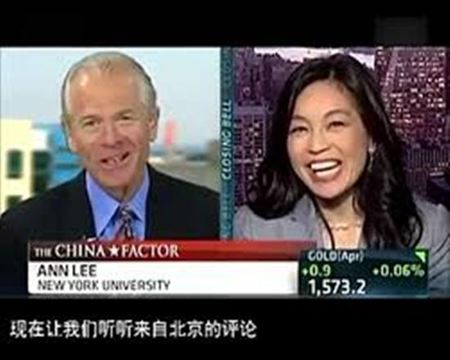
Professors Peter Navarro and Lee Ann show off their letters. (Internet Photo)

What was supposed to be civilized debate turned into an indecipherable cacophony of egos in a live show on CNBC. Peter Navarro, a professor at University of California at Irvine, and Ann Lee, a professor at the New York University, came to an impasse on the topic of the impact of the Chinese housing bubble on the global economy, reports Shanghai-based Xinmin Evening News. China released recently new regulations to curb China’s rising real estate prices, including an increase in down payments and loan rates for buyers of a second piece of property in cities. These policy measures worry investors and generate fears of a bubble building in China’s property market.

CNBC invited Navarro and Lee to share their perspectives over the concern, which kicked off well until Ann Lee started speaking. Before finishing her first sentence, Navarro began and kept up a string of snide comments about her affiliation with Beijing, and continously cut off Ann’s every attempt at an argument. The brawl boiled over when she said, “I don’t think there was a bubble at all. The Chinese government has been trying to slow and cool this part of the economy for years.” Navarro, a seasoned academic at a respectable university, came back with an extraordinary rebuttal in the middle of Ann’s sentence, “This is the most bullshit I have ever heard,” and “shame on you, Ann.” Eventually the hostess Michelle Caruso-Cabrera gave up trying to exact something viewers could understand and cut short the show.

China’s new leaders: Don’t get your hopes up; The only good news coming from the pending leadership changes is the near certainty of the end of China’s one-child policy

China’s new leaders: Don’t get your hopes up

March 8, 2013: 3:11 PM ET

The only good news coming from the pending leadership changes is the near certainty of the end of China’s one-child policy.

By Minxin Pei

FORTUNE — Ever since Xi Jinping, China’s new leader, ascended to the top spot of the ruling Communist Party’s hierarchy last November, he has promised repeatedly to restart China’s long-stalled economic reforms. With the opening of the annual session of China’s rubber-stamp parliament (officially known as the National People’s Congress), Xi and his colleagues finally have a chance to show the Chinese people what kind of reforms they have been thinking about.

Of course, it may be too early to analyze the pronouncements coming out of the congress since its most important business, such as announcing the restructuring of the State Council (the cabinet) and appointments of key economic officials, has not concluded. However, based on the information leaked to the press, it appears that the new leadership will not embark on a bold course of reform. Caution, not risk-taking, will remain the modus operandi of Chinese leadership. Read more of this post

Merkel Tours Berlin Start-Ups: ‘People Pay Money for That?’

03/08/2013 01:43 PM

Merkel Tours Berlin Start-Ups

‘People Pay Money for That?’

By Annett Meiritz

Merkel Visits Berlin Startup Companies

In a show of support for Berlin’s burgeoning Internet start-up scene, German Chancellor Angela Merkel ventured into a strange new world of employee-friendly tech offices on Thursday. Though she showed a lot of interest, Berlin still has a long way to go in supporting the city’s growth as a tech hub.

Two hours into her tour of Berlin’s digital wonderland, a place where business is booming and “feel-good managers” tend to the well-being of their employees, Angela Merkel was finally confronted with a bit of cautious criticism. Sitting across from the German chancellor, California native Holly mentioned that there are “barriers” for young Internet companies like Wooga, the social gaming developer where she works.

Merkel interrupted, asking: “What kind of barriers do you mean?”

Holly told the story of how she is actually a musician who initially came to Berlin on vacation, but stayed because she found the city so appealing. Then she found a job at Wooga, and the bureaucracy horror began. At municipal offices where residents are expected to register, one is “lucky if someone speaks English,” she said, adding that the authorities don’t even provide forms in the global language.

“We don’t want money from you, but we want a more welcoming atmosphere,” said Jens Begemann, one of Wooga’s founders.

The chancellor thought for a moment, then asked: “Have you spoken with the mayor about this?”

Yes, said Begemann. “But everything that you do to help Germany develop a more welcoming culture really helps the industry,” he said. Merkel nodded. Read more of this post

Korea’s Kakao Talk is paying an unexpected price for becoming the nation’s most popular mobile messenger. To the dismay of Kakao, the company that manages the service, its messages are being used as police evidence

2013-03-08

Kakao Talk pays price of popularity

Chat king suffers increased workload

By Cho Mu-hyun

Kakao Talk is paying an unexpected price for becoming the nation’s most popular mobile messenger. To the dismay of Kakao, the company that manages the service, its messages are being used as police evidence.

As mobile Internet services are increasingly being used for social communication, authorities are starting to look into servers for evidence in cases, rather than calling for witnesses, investigating hearsay or examining hard copies of documents. Read more of this post

Meet Memoto, the Lifelogging Camera; Memoto snaps photos automatically at thirty-second intervals

MARCH 8, 2013, 2:47 PM

Meet Memoto, the Lifelogging Camera

By JENNA WORTHAM

08bits-memoto-hpMedium
Memoto snaps photos automatically at thirty-second intervals.

AUSTIN, TEX., — Facebook and Instagram have conditioned people into sharing photos of their most memorable moments — vacations, parties, weddings, meals and outings with friends.

But what about everything else that happens in between?

That’s the content that Memoto, a Swedish start-up, wants to capture with a small, wearable camera that automatically takes photos of the wearer’s surroundings.

The square-shaped device can be clipped onto a collar, a jacket or worn around the neck on a string. It snaps photos at 30-second intervals, and switches off only when it is dark, face-down or placed into a pocket.

“It’s not only the stuff you thought you would want to remember,” like beautiful sunsets, elaborate dinners and rambunctious nights out with friends, said Martin Kallstrom, one of the founders of the company. “Ordinary moments can turn out to be special. But the only way to see that is to capture everything.” Read more of this post

Finnish upstart rival Supercell knocks Angry Birds off its perch

Last updated: March 8, 2013 5:31 pm

Upstart knocks Angry Birds off its perch

By Tim Bradshaw in San Francisco and Robert Cookson in London

Angry Birds has become a familiar sight at the top of Apple’s app-store leaderboard. Rovio’s blockbuster mobile game and its many spin-offs first topped the iPhone’s charts in early 2010 and is now back at number 1 in the US and other countries after a week-long promotional giveaway.

But the apps market has changed radically in the three years since Angry Birds first burst on to the iPhone. While Angry Birds and its 99 cent spin-offs, Bad Piggies andAngry Birds: Star Wars are still getting plenty of downloads, they no longer lead the app pack in generating revenues, ranking towards the bottom of the 100 “top grossing” apps of Apple’s store.

That’s not bad in a marketplace of more than 800,000 apps. But where Angry Birds once was atop the revenue charts now sits Clash of Clans, a free title from Rovio’s Finnish neighbour Supercell.

Over the past year, the “freemium” model has come to dominate mobile games. Players of Clash of Clans can purchase extra “gems” for $5 to $100 at a time, which are exchanged in the game for cannons and towers to defend from plundering barbarians and attack invading goblins. Read more of this post

Will the Austin startup ecosystem ever live up to its promise?

Will the Austin startup ecosystem ever live up to its promise?

BY HAMISH MCKENZIE 

ON MARCH 8, 2013

On paper, it seems obvious that Austin should be included in the “best startup cities in America” list. For starters, the city hogs the tech industry’s attention for a week every year during South By Southwest, now hyped and mocked in equal measure. Then there are the heavy-hitter tech residents. Some of the biggest and most important tech companies have a presence here: Google, Apple, Facebook, Evernote, Cisco, IBM, Dell, AMD, National Instruments, and Texas Instruments, just to name a few. The local economy is booming, the state is business-friendly, and the cost of living is relatively low, compared to the coasts.

But the key words in the graph above are “on paper,” “for a week” and “a presence.” The reality is despite the best intentions and endless buzz, Austin has never lived up to its much talked about potential as a startup hub. Read more of this post

Sci-Fi’s Underground Hit; Authors are snubbing publishers and insisting on keeping e-book rights. How one novelist made more than $1 million before his book hit stores

March 7, 2013, 6:45 p.m. ET

Sci-Fi’s Underground Hit

Authors are snubbing publishers and insisting on keeping e-book rights. How one novelist made more than $1 million before his book hit stores.

By ALEXANDRA ALTER

Hugh Howey’s postapocalyptic thriller “Wool” has sold more than half a million copies and generated more than 5,260 Amazon reviews. Mr. Howey has raked in more than a million dollars in royalties and sold the film rights to “Alien” producer Ridley Scott.

And Simon & Schuster hasn’t even released the book yet.

INSTALLMENT PLAN: Writing ‘Wool’ was ‘almost a compulsion for him,’ Mr. Howey’s wife says.

In a highly unusual deal, Simon & Schuster acquired print publication rights to “Wool” while allowing Mr. Howey to keep the e-book rights himself. Mr. Howey self-published “Wool” as a serial novel in 2011, and took a rare stand by refusing to sell the digital rights. Last year, he turned down multiple seven-figure offers from publishers before reaching a mid-six-figure, print-only deal with Simon & Schuster.

Simon & Schuster has put down six figures for print rights to a post-apocalyptic thriller called “Wool” that it believes could draw the same readers that made “The Hunger Games” trilogy a success. WSJ’s Alexandra Alter reports on Lunch Break. Getty Images.

“I had made seven figures on my own, so it was easy to walk away,” says Mr. Howey, 37, a college dropout who worked as a yacht captain, a roofer and a bookseller before he started self-publishing. “I thought, ‘How are you guys going to sell six times what I’m selling now?’ ”

It’s a sign of how far the balance of power has shifted toward authors in the new digital publishing landscape. Self-published titles made up 25% of the top-selling books on Amazon last year. Four independent authors have sold more than a million Kindle copies of their books, and 23 have sold more than 250,000, according to Amazon.

Publishing houses that once ignored independent authors are now furiously courting them. In the past year, more than 60 independent authors have landed contracts with traditional publishers. Several won seven-figure advances. A handful have negotiated deals that allow them to continue selling e-books on their own, including romance writers Bella Andre and Colleen Hoover, who have each sold more than a million copies of their books. Read more of this post

How much is a piece of content worth?

How much is a piece of content worth?

BY BRYAN GOLDBERG 
ON MARCH 7, 2013

The publishing industry has changed immeasurably in the last decade, and its massive transformation can be summed up in one question… “How much is a piece of content worth?”

This complex question was brought into the national dialogue very recently when noted journalist Nate Thayer wrote a scathing condemnation of an editor for The Atlantic who dared ask him to contribute for free.

Thayer’s frustration has become a rallying cry for many freelance journalists who feel that their work is undervalued. He claims he was once offered $125,000 to write six articles a year. So, when a new editor offered him zero dollars to write, he was quite upset. [Note: an earlier version of this story cited his rate at $500/article, though he has no official market rate].

In fairness, Nate Thayer is an exceptional journalist — he has risked his life to cover Cambodia, and not a lot of people can say that they have risked their lives for anything. If we live in a world where people like Nate can’t exist to cover wars, corruption, etc, then the world will be worse.

But, at the end of the day, publishing is a business. As I’ve said many times, it needs to be treated like one, and so Nate Thayer has a right to understand how digital publishing interacts with revenue. Read more of this post

Why Sogou’s Input Method Search Could Change the Chinese Internet (and More)

Why Sogou’s Input Method Search Could Change the Chinese Internet (and More)

Mar 8, 2013 at 14:00 PM by C. Custer, in Opinion

sogou-search-input-method2

Earlier this week, I wrote about Sogou’s new method of integrating search results into its Chinese-language input method. I also gave the system a test run on my own computer, and came away pretty impressed. In fact, the more I think about it, the more I think this move has the potential to change the way Chinese users search, and maybe even the way they interact with their computers on a more fundamental level. Read more of this post

Currency swings are rising in Malaysia at the world’s fastest pace as concern mounts that the ruling coalition will lose its 55-year grip on power after attracting more foreign capital than any other emerging market except Mexico

Volatility Rises Most in Malaysia as Flows Imperiled: Currencies

Currency swings are rising in Malaysia at the world’s fastest pace as concern mounts that the ruling coalition will lose its 55-year grip on power after attracting more foreign capital than any other emerging market except Mexico.

Three-month implied volatility for the ringgit, a measure of expected exchange-rate moves used to price options, jumped 2.2 percentage points to 7.4 percent in 2013, more than any of the 47 currencies tracked by Bloomberg. The ringgit has lost 1.6 percent this year and reached a five-month low in February as Credit Suisse Group AG and ING Groep NV cut their forecasts.

Polls show support for Prime Minister Najib Razak, who embarked on a $444 billion development plan to build railways and power plants, is the lowest since 2011 ahead of elections due before the end of June. Investors may pull from the local bond market as much as $10 billion, or 24 percent of their total holdings, as opposition leader Anwar Ibrahim pledged to review highway-toll contracts and the granting of tax permits to large companies, according to Credit Suisse. Read more of this post

Even in Canada, wealth influences treatment: study

Even in Canada, wealth influences treatment: study

Thu, Mar 7 2013

By Genevra Pittman

NEW YORK (Reuters Health) – Poorer people have a harder time getting a doctor’s appointment in Canada, a new study suggests – even though the country’s universal health insurance pays doctors the same amount regardless of the type of patient they see.

Researchers who called primary care practices pretending to be a bank employee or on welfare were 80 percent more likely to be offered an appointment when taking on the wealthier persona.

“We expected that we would find the result that we did, which was that there would be preferential treatment,” said Dr. Stephen Hwang, who worked on the study at St. Michael’s Hospital and the University of Toronto.

“As a physician who provides care for people who are marginalized or disadvantaged, they not infrequently tell me that they feel like they’ve been treated poorly by healthcare providers in the past simply because they’re poor,” he told Reuters Health. Read more of this post

Hong Kong Prison Homes Spur Virus Risk Decade After SARS; “Life is hard. I hope that more can be done to level the playing field in this city.”

Hong Kong Prison Homes Spur Virus Risk Decade After SARS

Chan Sung-ming says the coughs and sneezes echoing through the plywood walls of his windowless, 60- square foot Hong Kong apartment get him thinking: is there a bug going around and could it be deadly?

A decade after SARS began a lethal odyssey via Hong Kong, which has the world’s most-densely populated urban areas, Chan says his apartment — one of eight in a space about the size of a squash court — makes him feel more prone to airborne germs.

Even as the city spends HK$1.6 billion ($206 million) a year on a disease-tracking center to prepare for future contagions, a tripling in the price of homes in the past decade have forced its 7.2 million residents closer together. That’s stoking the potential for a rapid rise of bugs like the severe acute respiratory virus that exploded there in early 2003.

“In Hong Kong, we live vertically, not horizontally,” said Sian Griffiths, director of the Chinese University of Hong Kong’s school of public health. “It’s as if we’ve turned a village street on its end. People are so close together here, the risk of transmission is greater.”

Chan’s apartment is smaller than some of the city’s prison cells. The 36-year-old electrician says the cramped living arrangements mean he hears his neighbors’ every cough and bowel movement, and sometimes shares their pathogens too. Read more of this post

PBOC’s Rise to Top a Story of Deft Politics Amid Turmoil; “It’s hard to believe that just three decades ago the PBOC was only a minor institution in the labyrinthine Chinese bureaucracy.”

PBOC’s Rise to Top a Story of Deft Politics Amid Turmoil

As of November 2012, the People’s Bank of China had total assets of $4.8 trillion, more than the European Central Bank or the Federal Reserve. The PBOC now supplies more than half the world’s total liquidity and manages foreign reserves worth almost $3.3 trillion.

Increasingly, the PBOC has become an international lender of last resort, particularly as European politicians try to persuade the Chinese to buy their bonds. No wonder that Zhou Xiaochuan, the bank’s governor, has been dubbed “the world’s central banker,” a man whose statements can move global markets.

It’s hard to believe that just three decades ago the PBOC was only a minor institution in the labyrinthine Chinese bureaucracy. Its ascension is a story of turbulent economic transition, skillful leadership and, above all, deft political strategy. And its most significant challenges may still lie ahead. Read more of this post

10 Worst Corporate Accounting Scandals

accounting-scandals

How Disney Bought Lucasfilm—and Its Plans for ‘Star Wars’

How Disney Bought Lucasfilm—and Its Plans for ‘Star Wars’

By Devin Leonard on March 07, 2013

feature_disney11__01__inline605 (1)feature_disney_605c

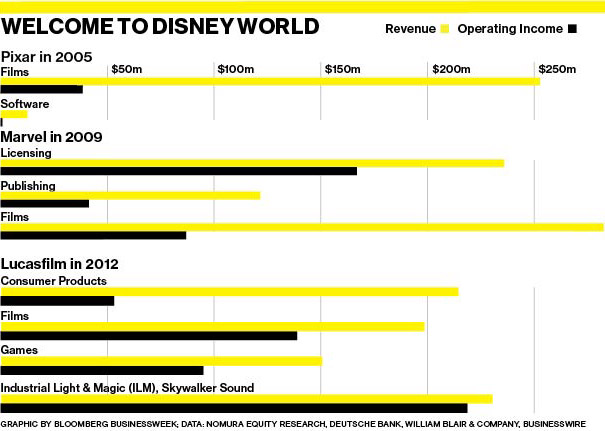
One weekend last October, Robert Iger, chief executive officer of Walt Disney (DIS), sat through all six Star Wars films. He’d seen them before, of course. This time, he took notes. Disney was in secret negotiations to acquire Lucasfilm, the company founded by Star Wars creator George Lucas, and Iger needed to do some due diligence.

The movies reacquainted Iger with Luke Skywalker, the questing Jedi Knight, and his nemesis Darth Vader, the Sith Lord who turns out to be (three-decade-old spoiler alert) his father. Beyond the movies, Iger needed to know Lucasfilm had a stockpile of similarly rich material—aka intellectual property—for more Star Wars installments. As any serious aficionado knows, there were always supposed to be nine. But how would Disney assess the value of an imaginary galaxy? What, for example, was its population? Read more of this post

Everyone wants to talk about the start-up boom in Berlin. But for every success, there are numerous failures, including the award-winning Aka-Aki

03/07/2013 06:03 PM

Aka-Aki

Left Behind by the Berlin Start-Up Boom

By Max Biederbeck

Everyone wants to talk about the start-up boom in Berlin, particularly with Chancellor Angela Merkel visiting promising new firms on Thursday. But for every success, there are numerous failures, including the award-winning Aka-Aki.

Gabriel Yoran had a brilliant idea, but failed nonetheless. Because the entrepreneur wanted to make money, his product could not survive on the market. Today, he is certain of one thing: “Only one in 10 business ideas makes it. Three plod along. The rest immediately disappear forever.”

For a long time it looked like his tech start-up, Aka-Aki, was going to be one of those to make it. It was based on a great idea, was lauded by the media, received the Lead and Webby awards, and was loved by 700,000 users.

“But you can’t trust the hype,” Yoran says today. Everyone wants to talk about projects they find exciting, he says, but that doesn’t mean the business model will bear fruit. That proved to be the bitter truth for Aka-Aki; it no longer has any users at all. In 2012, Yoran and his co-founders dissolved the business.

Young creative minds market their ideas, invent new Apps, or develop the online market in a new way. It is a process that can be fascinating to watch, and it can also be worth a mint to investors. Private equity and venture capital firms are eager to find those projects with promise, and are buying in at earlier stages than ever before. For the start-ups themselves, the cash infusions that result are vital to having a chance at success. Read more of this post

Ansys Aids Innovation With Its Simulation Software; The company that dominates simulation software expects to earn $900 million this year

Ansys Aids Innovation With Its Simulation Software

By Ashlee Vance on March 07, 2013

Jim Shaikh’s first son, Danial, arrived six weeks early, weighing all of 3 pounds and in need of milk every two hours. In the middle of the night, Shaikh would wake up, retrieve breast milk from the fridge, and begin warming the bottle in a pan of hot water on the stove. “Sometimes I would fall back asleep, and everyone upstairs would be screaming at me,” Shaikh says. “Other times I would overheat the milk. I just wasn’t very good at it.”

Shaikh, an engineer who previously helped design cars for BMW (BMW), decided to invent his way out of any paternal inadequacies. He conceived of a bottle to heat milk instantly to a specified temperature and was able to test it without building prototype after prototype. Instead, Shaikh largely brought his product to life digitally, using software from Ansys (ANSS), a Canonsburg (Pa.)-based company that has quietly cornered the market on manufacturing simulation. Ansys’s models showed Shaikh how different plastics would behave when heated up and how varying nipple designs would affect milk flow. “Everything is simulated these days,” says Shaikh.

Since its founding more than 40 years ago, Ansys has become the largest producer of simulation software, which costs thousands to tens of thousands of dollars, depending on the simulation. The company’s staff of more than 2,400, including 600 Ph.D.s, has created algorithms that mirror the laws of physics, allowing Ansys programs to model virtually anything. Ninety-six of the 100 biggest industrial companies, and 40,000 customers in all, use Ansys technology to evaluate product mater-ials and durability. Experienced engineers who once had to produce dozens of mock-ups to arrive at a final product now need a handful at most, saving time and money. Work from computer-aided design (CAD) applications can be fed into the simulation software. Read more of this post

Why Redfin, Zillow, and Trulia Haven’t Killed Off Real Estate Brokers

Why Redfin, Zillow, and Trulia Haven’t Killed Off Real Estate Brokers

By Brad Stone on March 07, 2013

feature_redfin11_buyerschart__605feat_redfin11_agentschart__605

Over the last decade, the Internet has seeped into that bedrock of the U.S. economy: the housing market. A group of growing and mostly profitable websites have sprung up to help guide consumers through what in many cases will be the largest and most nerve-wracking transaction of their lives. Four sites—Redfin and Zillow (Z), based in Seattle, and Trulia (TRLA) and Realtor.com, based in the San Francisco Bay Area—attract 61 million of the 67 million visitors to real estate websites each month in the U.S., according to ComScore (SCOR). They also generate hundreds of millions in revenue and have helped turn buying a house into entertainment—a spectator sport that can be enjoyed without darting surreptitiously into random open houses. Ninety percent of consumers now start their real estate journeys on the Web, according to the National Association of Realtors.

It all looks at first glance like the same kind of electronic marketplace that has eliminated travel agents, decimated classified ads, depressed stock brokers, and taken the swagger out of car dealers, but it hasn’t dented the fortunes of real estate brokers. A majority of buyers and sellers still wind up working with traditional brokers, one on each side of the deal.

Not only have brokers resisted the attack by the Internet’s real estate sites but their fees remain stable. Real Trends, a research firm, reports the average commission paid to the buying and selling brokers was 5.4 percent of the price of a home in 2011, up from 5 percent in 2008. (The seller’s agent collects the commission from the seller and then splits it evenly with the buyer’s agent.) That’s considerably higher than the median rate in markets abroad, where there may only be one agent involved in the transaction, such as the U.K. (a 1 percent to 2 percent fee), Germany (3 percent to 6 percent), Israel (4 percent), and the Netherlands (1.5 percent to 2 percent), according to a 2007 report by the Organisation for Economic Co-operation and Development. “Ten years ago almost no one started their home search online. And yet none of that value has come back to the consumer,” says Glenn Kelman, Redfin’s chief executive officer. Read more of this post

The Japanese art of monetization; An aging games studio called Gungho, which had a hit with Puzzles and Dragons for iOS and Android, and is creeping up on GREE in terms of revenue and market cap, and is actually above Zynga, at $2.3 billion based on only 8 million monthly active users. Gungho did not use social for distribution, the game succeeded just the on power of the app stores and TV ads.

The Japanese art of monetization

BY TOM LIMONGELLO 

ON MARCH 7, 2013

You can learn a lot about your company from usage behavior in Japan. Just like the Japanese language has a system for incorporating foreign words, when Japan latches onto particular Internet services like it did with Yahoo and Twitter, they become so important and widspread that they take on a trajectory all of their own.

In the case of Twitter, for instance, Japan found mass adoption faster than the US did. In fact, it still holds the highest Tweets per second record for New Year’s day. Within a short time of setting up shop at Joi Ito’s Digital Garage, Twitter made Japan its testing ground for new features and monetization strategies.

Japan is not nearly the largest market in Asia, but with 128 million people, 40 million of which live in Tokyo’s metro area, where strong 3G & LTE networks, tons of carrier WiFi & WiMax access and high incomes are pervasive, you can’t find a better place to test the logic of an internet business. Japan, unlike China, does not block the most successful companies from abroad. Rather, Japan’s internet border is porous. As long as the service’s simplicity prevails over the language barrier, usually the best service wins. Read more of this post

India’s Kumbh Mela festival, which attracts the likes of Unilever and Vodafone, generates about $2.8 billion in revenue for businesses

Coke, Unilever, Colgate-Palmolive Seize India’s Biggest Marketing Opportunity

By Adi Narayan on March 07, 2013

news_comp11_kumbhmela_405inline

About 8 percent of India’s population—everyone from billionaire Anil Ambani, brother of India’s richest man, to hardscrabble peasants—has trekked to the Ganges in the past eight weeks, seeking salvation at a religious festival called the Maha Kumbh Mela. Companies including Coca-Cola (KO), Hindustan Unilever (HUVR), and Colgate-Palmolive (CL) have made the same journey in a quest for profits.

Billed as the world’s largest gathering, the Kumbh is expected to draw about 100 million people before its conclusion on March 10. For advertisers, that’s roughly a once-a-decade chance to reach millions of new consumers. “The Kumbh is like an advertising bliss,” says Vipul Salvi, national creative director for OgilvyAction, a unit of Ogilvy & Mather (WPPGY). “It’s some 100 million people in one place, and that never happens anywhere else on the globe.”

The Hindu gathering offers a way to reach shoppers from rural India, where the World Bank estimates about 70 percent of the country’s 1.2 billion people live. Explains Espirito Santo Securities analyst Nitin Mathur: “Here you are reaching the mass end of the consumers directly.” That’s important because for the past two years, per-capita spending by India’s villagers grew faster than that of urban dwellers for the first time in two and a half decades, according to ratings agency Crisil. Rural spending was 12.9 trillion rupees ($235.7 billion) in the two years ended last March 31, compared with 10.4 trillion in urban areas, the Mumbai-based unit of McGraw-Hill Companies (MHP) reported in August. Read more of this post

Thai Bulls Beat Bears Selling Most in Asia as SET Hits 1994 High; Never before have Thai stocks rallied so much at a time when foreign investors were heading for the exit.

Thai Bulls Beat Bears Selling Most in Asia as SET Hits 1994 High

Never before have Thai stocks rallied so much at a time when foreign investors were heading for the exit.

The benchmark SET Index (SET) rose 4.6 percent last month even as international money managers sold a net $583 million of the nation’s shares, the biggest outflow among 10 Asian markets tracked by Bloomberg. The advance, propelled by $611 million of purchases by domestic investors, is the largest for any month when net overseas withdrawals exceeded $500 million. The index fell an average 5.5 percent during such periods since Bloomberg began compiling the data in 1999.

“Local investors are prepared to step in and hunt for bargains,” Petcharat Powattanasatien, who helps oversee about $30 billion as the head of equity investment at Bangkok-based Kasikorn Asset Management Co., said by phone on March 4. Her firm is the nation’s biggest money manager.

Thai citizens are driving equity gains as the nation’s $377 billion economy grows at the fastest pace since at least 1993 and local incomes climb. While Morgan Stanley is advising clients to cut stock holdings after valuations rose to record highs, Aberdeen Asset Management and ING Investment Management are still bullish. The SET index has recovered every time when foreign selling coincided with monthly losses since September 2008, rallying an average 22 percent in the next 12 months, data compiled by Bloomberg show. Read more of this post

BofAML: Leverage Approaches 2007 Levels

BofAML: Leverage Approaches 2007 Levels

Mar 5 2013 | 3:07pm ET

Leverage, as measured by NYSE Margin Debt data, was up 31.6% on the year in January and 10.2% on the month to $364 billion, approaching the July 2007 peak of $381 billion.

Excessive cash draw-down has led to a contrarian sell signal, according to the latest Hedge Fund Monitor from Bank of America Merrill Lynch. Read more of this post