The complex market of property: Not many people know that the biggest property players in Malaysia started off doing something else
December 2, 2013 Leave a comment
Updated: Saturday November 30, 2013 MYT 11:57:08 AM
The complex market of property
BY RISEN JAYASEELAN, YVONNE TAN, AND NG BEI SHAN
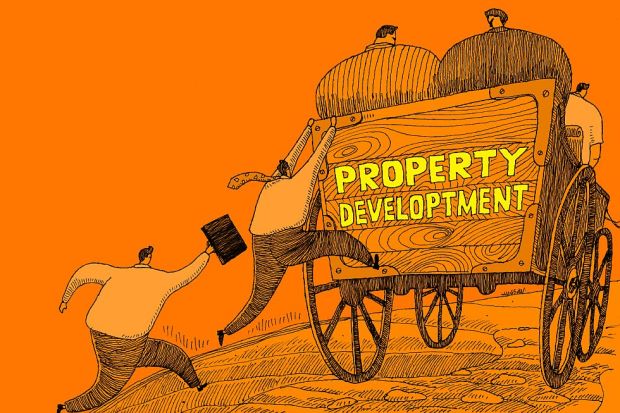
Jumping on the property bandwagon
NOT many people know that the biggest property players in the country started off doing something else. A good example is Mah Sing Group Bhd, the second largest property company in terms of sales, which began as a plastic manufacturer. And S P Setia Bhd’s roots are in the construction industry. Then there was the wave of plantation companies capitalising on their land bank to become property developers. IOI Corp Bhd comes to mind.But while S P Setia, Mah Sing and IOI are known to have been successful in their venture into property, there have been others who failed miserably.
Prior to the 1997 Asian financial crisis, a property craze swept through the local corporate scene.
Many second board listed companies, as they were known then, decided to jump on the bandwagon by venturing into the seemingly lucrative business of property development.
Not only was selling brisk due to demand, but project financing was also easily secured.
One of the major funders for property developers then was Malaysia Building Society Bhd (MBSB).
Then came the financial crisis and MBSB almost went bankrupt, only to be bailed out by the Employees Provident Fund, which explains why the pension fund today owns 70% of MBSB.
The second boarders also suffered massive losses from these property ventures and until today, there are remnants of abandoned projects across the country that are testament to the building frenzy that started at that time.
New landmark: Fitters has completed a project with GDV of RM650mil called the Festival City Mall in Kuala Lumpur.
One example of a company that ventured into property during that period is Bonia Corp Bhd.
The leather goods retailer went into the property business in the late 1990s. However, barely a decade later, it restructured its business divisions again, completing the disposal of all of its non-core property assets.
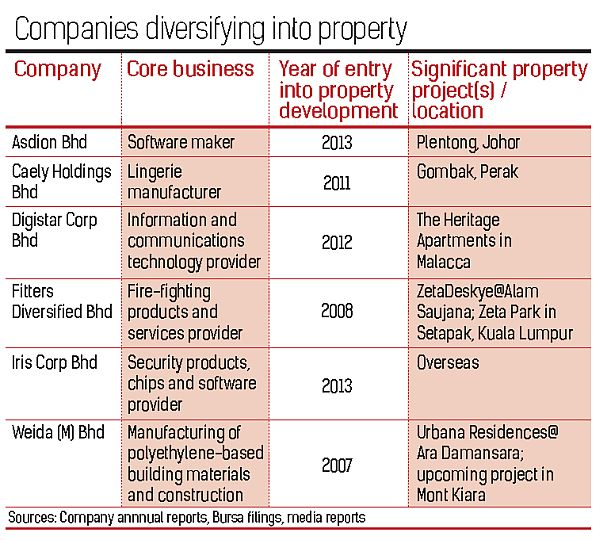
Now a new similar wave is taking place – small companies, driven by easy profits that property development seems to offer, have ventured into the business.
Property cycle
Maybank IB Research analyst Wong Wei Sum tells StarBizWeek that it is an alarming sign as business owners without the core competency in property are jumping on the bandwagon.
“It is a sign that the property cycle is at its peak when too many non-experts jump on the bandwagon,” she says.
She adds that the non-developers could create an oversupply in the market with the wrong products if they did not carry out their studies diligently or execute their projects efficiently. But a market expert seems to think that there is a positive side to this.
Henry Butcher Malaysia president Lim Eng Chongopines that the market should encourage this kind of competition as these small players will be forced to distinguish themselves from other developers.
“There are always certain market sections that have yet to be filled by the big boys as the latter may have a different focus like mass production or big-scale project,” he says.
These companies can always hire consultants and outsource expertise to help them with the development, he adds.
Maybank’s Wong concurs.
“There are exceptions whereby companies with good assets partner with property developers to carry out projects.
“This will create a win-win situation as the landowner would be able to realise the value of the property projects as well,” says Wong.
Lim says that as a growing nation, demand will increase over time and with the stricter regulations imposed by the Government and related authorities, the housing industry should continue to improve over time.
Diversification move
This is one of the tenets Datuk Richard Wong, major shareholders and managing director of Fitters Diversified Bhd. Originally a fire-fighting equipment and services company, it had taken the decision to diversify its income stream in 2008, with property being one of its new divisions and the other being renewable energy.
Fitters has already completed a project with gross development value (GDV) of RM650mil called the Festival City Mall.
Wong says,“Property development can be lucrative if you identify the right location, product mix and sales strategy. We have tasted success with our maiden development project with the achievement of RM650mil GDV”.
He reckons that this sets Fitters’ apart from other newcomers in the sector. “They may not have this track record,” Wong says, adding that “Being niche and selective will ensure that we focus on the quick completion of our projects as well as capping and controlling construction costs.”
Wong agrees that newcomers to property could be facing challenging times, due to increasing raw material prices, the new measures by Bank Negara and the scarcity of labour.
Wong says Fitters strategy has also been to outsource to professionals such as architects and planners and to have a core, competent team to manage this.
Long gestation period
An industry player reckons that some of the newcomers will be badly impacted by potential slow down in the property sector.
“The gestation period for property development is very long and it is capital intensive and it may not be as easy as it seems for people who have not been in the industry.”
He says the nature of the business is cyclical and the point of entry for new comers is crucial. He also points out that buyers may be more selective and opt to buy from reputable developers following the recent cooling measures.
Clearly, factors like land costs will determine the profitability of these niche developers.
In a previous interview with StarBizWeek, Scientex Bhd managing director Lim Peng Jin says as a rule of thumb, land cost should not exceed 10% of GDV and it would not go for expensive land. Scientex, which started as a PVC leather cloth maker, ventured into property, which it now continues to pursue.
As for Weida (M) Bhd, a building materials specialist that ventured into property a few years ago, the new curbs are welcome as they will “ensure the property development industry continues growing at a balanced and sustainable pace,” saysVictor Lee, a director of its property division. “The industry is perpetually going through changes and challenges. The recent rulings introduced by Bank Negarasuch as the abolition of developers interest bearing scheme or DIBS, changes in real property gains tax and loan-to-value ratio are just some of these challenges. Having said that, our management feels that these risks are manageable”.
Lee adds that in Weida’s case, the property sector is a “long-term and viable industry to be in.”
“The country’s macro picture and demographics reveals a largely young population who will continue to fuel the sector.”
He adds that Weida has the right expertise and it picks its landbank carefully, in “prime and mature” locations. But while these new breed of property developers claim to have the right ingredients to succeed in the property game, the jury is still out as to whether all of them will succeed.
Updated: Saturday November 30, 2013 MYT 11:58:52 AM
Mah Sing’s transition from plastic to property
BY YVONNE TAN
PERHAPS a good example of a company that has successfully ventured into property when its core business was something totally different is Mah Sing Group Bhd.
Mah Sing was a major player in the plastics industry, with key clients such as Toyota,Samsung and Panasonic when it got listed in 1992.
However, head honcho Tan Sri Leong Hoy Kum decided to make his foray into property development two years later due to thinning margins in the plastics manufacturing business.
That decision also stems from a personal interest in property investment, he reveals.
Leong found out soon enough that the transition from plastic manufacturing to property development was very challenging and a steep learning curve for the firm.
The main challenge, he says, is to carve a niche in a crowded market place, he tellsStarBizWeek.
“We made a conscious decision to go medium-upper to high-end with our properties and came up with the tagline ‘premier lifestyle developer’ with our mantra being ‘location, quality and branding’. Between 1994 and 2000, Mah Sing completed property projects worth some RM500mil in gross development value (GDV) comprising mainly landed residential projects for the mass market as well as some industrial projects.
The company was redesignated to a property counter in 2000 to reflect its core business, and in that year, it ventured into its maiden lifestyle project – Sri Pulai Perdana in Skudai, Johor Baru.
Its first property project though was in Ulu Yam.
“It was a very practical product, single-storey link homes and it was a confidence booster for me.”
Mah Sing returned to the Klang Valley in 2003 for more lifestyle projects where its Damansara Legenda development project propelled it into the ranks of high-end, “branded” developers.
Damansara Legenda, comprising semi-Ds, bungalows and garden bungalows and situated adjacent to the Tropicana Golf and Country Resort, was completed in 2006, with home prices starting from RM1.5mil each.
The company has 45 property development projects in Greater KL, the Klang Valley,Iskandar Malaysia, Penang and Kota Kinabalu, Sabah.
It is the second largest listed property developer in Malaysia by sales value and it has RM28.38bil in remaining GDV and unbilled sales.
The bulk of the group’s remaining GDV is focused on the central region, with 56% concentrated in the Klang Valley and Greater KL, followed by 26% in Iskandar Malaysia, 12% in Penang island and 6% in Sabah.
Mah Sing chalked up approximately RM2.25bil sales for the first three quarters of this year and is on track to achieving its full year sales target of RM3bil, says Leong.
The need to finetune one’s products according to demand is an extremely important factor in the property industry, he notes.
“We need to be on the ball about what the market wants.
“For example, a few years ago we concentrated mostly on high-end development projects – semi-Ds and bungalows due to the lack of supply – at that time when such homes made up less than 10% of total residential supply.
“Over the past two years we have been concentrating on mass market development, bread and butter products for the middle income class, while maintaining some higher-end products only in selected locations.”
 About bambooinnovator
 Bamboo Innovator