Surgical robots’ awkward adolescence
December 10, 2013 Leave a comment
Surgical robots’ awkward adolescence
December 9, 2013: 1:31 PM ET
Studies call their effectiveness into question; now an FDA recall looms
By Ryan Bradley, senior editor
FORTUNE — It has not been the best year for Intuitive Surgical (ISRG), the maker of the most popular robot in the world for general surgery, the da Vinci. First, a study published in the Journal of the American Medical Association found little added benefit to hysterectomies performed with a robot, and yet the procedure cost on average one-third more when using the $1.5-$2.3 million machine. Then the Food and Drug Administration launched a probe on the company, sending out a survey for doctors that asked what sort of surgeries the robot is least suited for, and questioned the rigor of their training on the da Vinci. Finally, last week, the FDAposted a Class II recall on the machines after Intuitive sent out a warning for customers that the instruments can momentarily stall during procedures. The robots aren’t being pulled from the operating room, but they are undergoing plenty of inspections. Shares of Intuitive have fallen nearly 25% this year.Like any very expensive piece of healthcare technology, surgical robots are market makers. After spending millions on the machine, its component parts, and training for the team in the operating room, a hospital will look for a return on its investment. And, indeed, as I reported earlier this year, many medical centers aggressively advertise robotic surgery, and certain procedures have increased dramatically (prostatectomies in particular, four out of five of which are now performed using a robot). Patients have responded in kind—they travel father to go under the robotic knife, drawn to a futuristic technology and the possibility of a swifter recovery.
The great promise of the da Vinci, and most all robots that assist surgeons, is that this very expensive machine will standardize procedures enough to, eventually, bring down the overall cost of the whole medical “fix.” Perhaps the time in the operating room (the most expensive time in the hospital, by far) is shorter, or because the incisions are smaller the rehab is faster, or the physical toll the procedure takes on the surgeon is lessened, so she can perform more surgeries—or all three. There are other, further out benefits too, like the fact that because the surgeon isn’t standing over the patient, eventually the surgeon won’t need to be in the room, or building, or timezone, at all. Robotic surgery might be one way out of the looming doctor shortage. But that’s getting a bit ahead of ourselves.
For now, Intuitive’s response to safety and training concerns has been to say that their machine has undergone as much study as any other (4,500 peer reviewed articles, by their count), and that where there is surgery, there will always be the risk of complication. “Patients should discuss all treatment options with their physician before decided to have surgery of any kind,” the company’s VP of communications, Angela Wonson, wrote in an email. As for training, it’s not on the company: “Hospital credentialing committees, not Intuitive Surgical, determine the number of cases a surgeon needs to be proctored before his or her first solo case. It is important to remember that the surgeon has already performed surgery in his or her specialty, just with other surgical tools,” Wonson wrote.
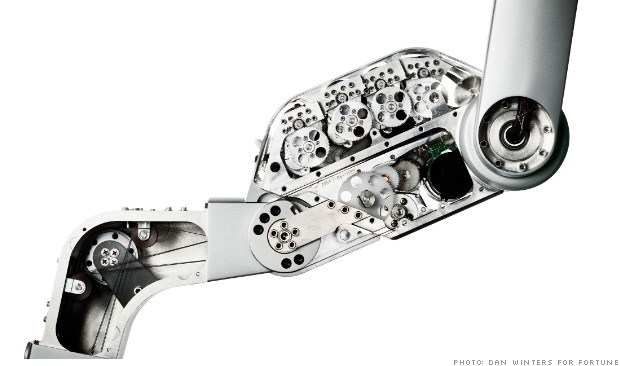
I keep a picture above my desk, similar to the one above—a joint on the arm of an unfinished da Vinci robot. It’s a beautiful photo, but I keep it around because it perfectly represents one of the great questions about robots and their place in the future: when we build machines of such staggeringly complexity to take our place (flying planes, driving cars, cutting and cauterizing the insides of another human) and something goes wrong, who is to blame? The maker of the machine, or the person at the controls, or someone else? Maybe, sometimes, it’s all of us, for being a little too in love with the idea and promise of robots.
 About bambooinnovator
 Bamboo Innovator