Teen Marijuana Use Steady as Kids See Less Risk in Pot

Teen Marijuana Use Steady as Kids See Less Risk in Pot

About 6.5 percent of high school seniors smoked marijuana daily in 2013, compared with 6 percent in 2003, as attitudes toward the drug’s danger relax, according to a U.S. government report. About 40 percent of 12th-graders view regular marijuana use as harmful, a decrease from 44.1 percent last year, according to a Monitoring the Future report from the National Institutes of Health. As more states ease marijuana laws, the change in attitudes may increase future use, the authors said. Read more of this post

Patience is key to life’s endless negotiation

December 17, 2013 3:54 pm

Patience is key to life’s endless negotiation

By Luke Johnson

Executives who rush the process are likely to have a long time to dwell on their mistake

Negotiation plays a central role in life from an early age. Haggles over homework, discussions about sharing an apartment, buying a car or agreeing terms for a job – we must all negotiate all the time. Read more of this post

Five non-business books that will inspire managers

December 18, 2013 4:25 pm

Five non-business books that will inspire managers

By Michael Skapinker

Works on astronomy, politics and plain English that surpass faddish specialist titles

Year-end is the time for a clear-out of the business books I haven’t read and those I never finished. We get sent dozens of business books to review, but I have got through very few over the years. Clayton Christensen’s The Innovator’s Dilemma has stayed with me. Confronting Mistakes: Lessons from the Aviation Industry when Dealing with Errorby Jan Hagen, which I am reading at the moment, may do so too. Read more of this post

PayPal founder Peter Thiel’s nonprofit foundation encourages learning by doing

Why a Nonprofit Backs Dropping Out of School

PayPal Founder’s Foundation Encourages Learning by Doing

LORA KOLODNY

Dec. 18, 2013 10:17 p.m. ET

PayPal Inc. founder Peter Thiel jumped to the investor side after he sold his payment-technology firm to eBay Inc. EBAY +1.05% for $1.5 billion in 2002. He put part of his $55 million windfall into startups—including LinkedIn Corp. LNKD -3.65%Yelp Inc., YELP -1.51% SpaceX and Yammer—that had been formed by PayPal co-founders and employees. He also became Facebook Inc. FB -2.68% ‘s first outside investor, selling $640 million of his shares in the social network’s initial public offering last year. Read more of this post

B-Schools Vie for Startup Crown; M.B.A. Programs Tout On-Campus Incubators, Successes Like Warby Parker—Which School Is Best?

B-Schools Vie for Startup Crown

M.B.A. Programs Tout On-Campus Incubators, Successes Like Warby Parker—Which School Is Best?

MELISSA KORN

Dec. 4, 2013 7:08 p.m. ET

Every elite business school claims it is the ideal place to start a business. But how can students really know which is best? Melissa Korn reports on the News Hub. Photo: Stanford School of Business. So, you want to start a company. Which business school is best? Read more of this post

Robert Downey: A futurist knows; The actor and producer talks to Fortune about the big ideas that have impacted his view on technology and entertainment

Robert Downey: A futurist knows

By Stephanie N. Mehta, Deputy Managing Editor December 19, 2013: 5:00 AM ET

The actor and producer talks to Fortune about the big ideas that have impacted his view on technology and entertainment.

FORTUNE — Robert Downey Jr. has become one of the most powerful players in Hollywood. But the 48-year-old actor admits he’s not much of a networker. “I think about people, and I have a conversation with them in my head,” he says. “But I tend to not reach out.” In an interview about his career and the future of the movie industry, the Iron Man and Sherlock Holmes actor tellsFortune about the real-life discussions (Elon Musk!) that have influenced his thinking about technology, business, and entertainment. Edited portions of the interview will appear in the January 13 issue of Fortune; a lengthier excerpt of the Q&A follows. Read more of this post

To U.C. Berkeley’s long-standing strategy thinker David Teece, companies gain an edge only when they evolve in ways no one else can match

Published: November 11, 2013

The Dynamic Capabilities of David Teece

To U.C. Berkeley’s long-standing strategy thinker, companies gain an edge only when they evolve in ways no one else can match.

by Art Kleiner

Every great company is involved in building great capabilities: gaining competitive advantage from the things it does exceptionally well. In the last few years, the growing recognition of capabilities’ importance in management strategy and business innovation has made David Teece’s work particularly relevant. A professor at the Haas School of Business at the University of California at Berkeley, Teece originated the theory of “dynamic capabilities” to explain how companies fulfill two seemingly contradictory imperatives. They must be both stable enough to continue to deliver value in their own distinctive way and resilient and adaptive enough to shift on a dime when circumstances demand it. Read more of this post

Famous Math Professor Says Zuckerberg’s $3 Million Math Prize Is NOT A Good Idea

Famous Math Professor Says Zuckerberg’s $3 Million Math Prize Is NOT A Good Idea

JULIE BORT

DEC. 16, 2013, 8:32 PM 19,115 24

On Friday, billionaires Mark Zuckerberg and Yuri Milner announced a new $3 million prize for mathematics known as the Breakthrough Prize in Mathematics. This is the third such prize that the Valley’s elite have created. Read more of this post

Amazon Turned a Flaw into Gold with Advanced Problem-Solving

Amazon Turned a Flaw into Gold with Advanced Problem-Solving

by Michael Skok  |   1:00 PM December 5, 2013

“It’s not that I’m so smart, it’s just that I stay with problems longer.”

– Albert Einstein

Several years ago, Amazon was struggling with scaling its e-commerce infrastructure and realizing that many of its internal software projects took too long to implement, a major pain point from a competitive standpoint. Read more of this post

Ad Exec With Cancer, Given ‘Two Weeks To Live,’ Posts Self-Written Obit On The Day Of His Death

Ad Exec With Cancer, Given ‘Two Weeks To Live,’ Posts Self-Written Obit On The Day Of His Death

LAURA STAMPLER AND JIM EDWARDS DEC. 16, 2013, 7:17 PM 108,614 8

Mike Hughes, the former president of The Martin Agency, died today after a long and public battle with cancer. He was 65. Initially diagnosed with lung cancer in the 1990s, Hughes was given “two weeks to live” by his doctors last January. Hughes declined to go quietly. Instead, he began a blog called “Unfinished Thinking” to chronicle his battle. Today, his last post was published. It begins: Read more of this post

10 Things The Greatest Leaders All Have In Common

10 Things The Greatest Leaders All Have In Common

ERIC BARKERBARKING UP THE WRONG TREE
DEC. 16, 2013, 6:11 AM 27,346 6

I’ve posted a lot about effective leaders. Looking back, what patterns do we see?

Know The Power Of Feelings

Leaders who just focus on results don’t do nearly as well as those that also pay attention to relationships.

Via Social: Why Our Brains Are Wired to Connect:

Zenger fund that if employees rated a manager as very high on “focus on results” (that is, one’s ability to get things done effectively), there was only a small (14 percent) chance that the manager would be rated among the top 10 percent of leaders overall. However, if in addition to “focus on results,” employees also rated the manager’s ability to build relationships” very highly, then the likelihood of that person’s being rated as a great leader overall skyrocketed to 72 percent.

Paying attention to employee feelings matters.

What’s the difference between exemplary and good employees? They care.

Via Responsibility at Work: How Leading Professionals Act (or Don’t Act) Responsibly:

What strategies really improve organizations? Research involving 400 people across 130 companies came up with a simple answer:

You must change individual behavior by addressing employee feelings. Read more of this post

Six Investment Errors You Are Making Right Now

Six Investment Errors You Are Making Right Now

By Barry Ritholtz  Dec 13, 2013

(Correct Tudor Jones’s first name in 10th paragraph.)

It is an annual event that comes with the regularity of Thanksgiving and holiday shopping. I am referring to the Black Friday survey conducted every year in a misguided attempt to forecast holiday sales. Read more of this post

How To Use The Media To Sell A Company; Recent stories about a potential sale of Time Warner Cable offer a master class in the subtle semiotics of deal-making. A reader’s guide

How To Use The Media To Sell A Company

Recent stories about a potential sale of Time Warner Cable offer a master class in the subtle semiotics of deal-making. A reader’s guide

posted on December 7, 2013 at 9:15pm EST

Peter LauriaBuzzFeed Staff

“Time Warner Cable’s Next CEO Ready to Sell If Price Is Right,” blares the headlineof a Bloomberg story published Friday morning. The headline isn’t as informative as it sounds, however: A basic operating principle of mergers and acquisitions reporting is that companies aren’t for sale until they are — and they usually are when the price is right. Read more of this post

50 Unfortunate Truths About Investing

50 Unfortunate Truths About Investing

MORGAN HOUSELTHE MOTLEY FOOL
NOV. 27, 2013, 10:04 AM 51,297 36

Sorry, but …

1. Saying “I’ll be greedy when others are fearful” is much easier than actually doing it.

2. The gulf between a great company and a great investment can be extraordinary.

3. Markets go through at least one big pullback every year, and one massive one every decade. Get used to it. It’s just what they do. Read more of this post

Inequality and Good Intentions; A new book says good intentions are a barrier to equality and to progress among the world’s poor

DECEMBER 18, 2013, 12:01 AM

Inequality and Good Intentions

By CASEY B. MULLIGAN

Casey B. Mulligan is an economics professor at the University of Chicago. He is the author of “The Redistribution Recession: How Labor Market Distortions Contracted the Economy.”

A new book says good intentions are a barrier to equality and to progress among the world’s poor. Read more of this post

Nation Branding an Emirate: Lessons from Ras al-Khaimah; Ras al-Khaimah, one of the seven sheikhdoms that constitute the United Arab Emirates, is looking for ways to create its own brand.

Nation Branding an Emirate: Lessons from Ras al-Khaimah

Dec 16, 2013 Arabic Middle East & Africa

Tucked away in the northernmost part of the United Arab Emirates (UAE), Ras al-Khaimah (RAK) has a population of only 231,000. Locals account for just about one-third of this figure, which means that the sheikhdom is run largely by foreign labor and talent. The Emirate doesn’t have any oil resources, so it cannot become a magnet for jobseekers to the level of, say, Saudi Arabia. Some other Emirates have registered themselves on the world stage as unique entities — Dubai, for instance, has become known as a financial center. Now RAK is looking to find differentiators of its own. Read more of this post

Brand Vandals: Reputation wreckers and how to build better defences

December 11, 2013 3:16 pm

‘Brand Vandals’, by Steve Earl and Stephen Waddington

Review by Maija Palmer

Brand Vandals: Reputation wreckers and how to build better defences, by Steve Earl and Stephen Waddington, Bloomsbury, £12.99

This book has the cover of a cheap thriller, and it is written much like one. The blunt language is clearly designed to shock. “Media has become a two-way weapon. Nobody can control it. It’s anarchy,” begins the first chapter, and the book goes on to describe a world where brand reputations are shredded by baying, internet-based mobs impervious to reason and from whom it is impossible to hide. Read more of this post

Why Other Countries Teach Better

December 17, 2013

Why Other Countries Teach Better

By THE EDITORIAL BOARD

Millions of laid-off American factory workers were the first to realize that they were competing against job seekers around the globe with comparable skills but far smaller paychecks. But a similar fate also awaits workers who aspire to high-skilled, high-paying jobs in engineering and technical fields unless this country learns to prepare them to compete for the challenging work that the new global economy requires. Read more of this post

The Philanthropists Who Built Mumbai

The Philanthropists Who Built Mumbai

by Naresh Fernandes | Dec 9, 2013

topimg_23041_jamsetjee_jejeebhoy_statue_600x400

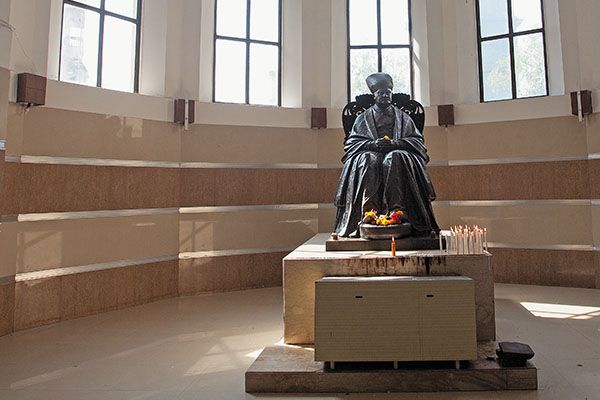
The statue of Jamshetji Jejeebhoy in the hallway of JJ Hospital

Numerous works of public infrastructure in Mumbai were built by the city’s new millionaires of the 19th century

When the Bandra-Worli Sealink was finally opened to traffic on June 30, 2009, the media went into overdrive suggesting that the bridge over the creek separating north and south Mumbai was a symbol of new possibilities. Inaugurated after tens of thousands of residents witnessed a spectacular laser show and fireworks display, the Rs 1,600-crore project was hailed as “another jewel in Mumbai’s crown”, an “engineering marvel”, even “a fairy-tale structure created by the God in heaven”. Ajit Gulabchand, the head of Hindustan Construction Company, which had been contracted to build the bridge, declared that the Sealink was “truly…a monument to human skills, enterprise and determination”.
In 1845, similar excitement had greeted the inauguration of a bridge about a kilometre away from the Sealink. “…An immense concourse of every race and kindred, shade and hue” assembled to watch Bombay’s governor declare open the Mahim Causeway, reported The Bombay Times and Journal of Commerce. Music by military bands and a thundering gun salute rent the air. Like the Sealink, the Mahim Causeway, which is still in use a century-and-a-half later, is a testimony to human skill and determination. More significantly, though, it is a monument to a magnificent, sadly fading Mumbai tradition: Mind-bogglingly munificent support for public works. Funds for the project, which cost Rs 1.6 lakh (the equivalent of £17,000 at the time) had been donated by Lady Avabai Jejeebhoy, wife of the merchant Jamsetjee Jejeebhoy.
Until the Causeway was constructed, travel between Bandra and Mahim involved a boat journey, a trip that was especially precarious during the choppy monsoon. Lady Jejeebhoy was moved to loosen her purse strings after two especially fierce storms in 1841 caused 15 or 20 boats to capsise, claiming several lives. As in the case of the Sealink, the Causeway experienced significant cost overruns. The project was initially estimated to cost Rs 67,000, but Lady Jejeebhoy greeted each revision with generosity. Recounting the donor’s reaction to the escalation, Governor George Arthur said, “Lady Jamsetjee had frequently urged that, as the poorer classes of the community were concerned, it is no more than right and just that the rich should contribute to their wants.”
That radical notion, that the prosperous had a responsibility for the welfare of their less-fortunate neighbours, is what made Mumbai different from other Indian cities in the 19th century. In the rest of the subcontinent, charity was directed mainly towards religious and community activities. But Mumbai’s newly-minted millionaires, many of whom had made their fortunes selling cotton and opium to China, collaborated enthusiastically with the colonial administration to fund infrastructure and institutions for all residents, irrespective of caste or sectarian affiliation. They financed public hospitals and the new university, libraries and schools, drinking-water fountains and animal shelters. This made Mumbai, the urbanist Preeti Chopra has noted, a genuine “joint enterprise”, shaped as much by Indian aspirations as by the imperatives of colonialism.
The most notable of these philanthropists was Jamsetjee Jejeebhoy, a Parsi orphan from Navsari who moved to Mumbai to join his uncle, a bottle seller. Seizing the opportunities offered by the port-city and demonstrating an iron stomach for risk-taking, Bottlewaller—as he sometimes signed his letters—flourished in the China Trade. He eventually formed an alliance with the Scottish trader William Jardine. His acts of charity grew in lockstep with his prosperity. His first public philanthropic gesture came in 1822, when he spent Rs 3,000 to release men who had been jailed for failing to pay their debts.
By 1848, three years after the inauguration of the Mahim Causeway, Jejeebhoy had bequeathed £250,000 on public causes. By the time he died in 1859, he had made bequests to 126 public charities, the most visible of them being the two enormous Mumbai institutions that bear his name: The Sir JJ School of Art and the JJ Hospital. His benevolence is still revered. On his birthday on July 15, dozens of grateful Mumbai residents still offer coconuts and marigold garlands to the black statue of him that presides over a hallway in the JJ Hospital.

The generosity of the Jejeebhoy family was rivalled only by that of the Baghdadi Jewish Sassoon family, whose name also adorns a variety of establishments in Mumbai and Pune. The patriarch David Sassoon arrived in Mumbai in 1832, fleeing religious persecution at home in Baghdad. He began to export cotton to Persia.
He soon expanded into building wharfs and establishing a trade network that covered East Africa, Afghanistan and China. He and his sons also opened cotton textile mills, the engine of Mumbai’s economic growth, and, like the Jejeebhoys, made donations to public projects of all descriptions. These include the David Sassoon Library, the Jacob Sassoon School and the monument that stands at the heart of Mumbai’s business district, Flora Fountain, named for David Sassoon’s daughter-in-law.
David Sassoon
It wasn’t just Jewish and Parsi families who opened their purses. The diversity of the caste and religious groups from which Mumbai’s philanthropists were drawn can best be observed from reading the names on the marble plaques of pyaus—drinking-water fountains and troughs for humans and cattle—that still dot older parts of Mumbai: Indira Sahasrabuddhe, Khimji Mulji Randeria, MV Parulkar, Kessowji Naik, Husseub Karmali, Anand Vital Koli.
After building 40 fountains in Mumbai, one generous city merchant, Cowasji Jehangir “Readymoney”, even donated funds for one to be built in London’s Regents Park. When the structure was completed in 1869, he merited mention in the humour magazine, Punch. It noted that “Parsi money was better far than parsimony.” (His family would go on to fund the Convocation Hall at the Mumbai University, the Cowasji Jehangir Hall that now serves as the National Gallery for Modern Art, and the Jehangir Art Gallery.)
In the 20th century, the Tatas emerged as the city’s—and India’s—most generous business house. Just under 66 percent of the group’s profits go to charity. The Godrejs also fund programmes such as a mangrove reserve, a centre for Scouts, and the World Wide Fund for Nature.
But even as the number of wealthy residents has burgeoned, philanthropy seems to be a fading tradition in the city that once prized it as a prime virtue.
Though Mumbai is now home to nine of the 15 richest Indians and has the world’s seventh-highest concentration of high-net-worth individuals, they now seek ‘public-private partnerships’ that will bolster their profits, instead of viewing charity as a social obligation to the less fortunate. Little wonder, then, that Mumbai’s once-prized bridges between social classes seem to be crumbling.
Naresh Fernandes is a journalist and author. His most recent book is City Adrift: A Short Biography of Bombay
How Metaphors Affect Our Thinking and Behaviour

How Metaphors Affect Our Thinking and Behaviour

Dec 11, 2013

Spike W. S. Lee is an assistant professor of Marketing at the Rotman School of Management explains relation between Metaphors and Thinking

Your research is focused on the notion of metaphors in our thinking. What is the relationship between the way we think and the metaphors we use in everyday life? 

What we are finding is that our minds interact with our bodies in multiple ways, and that mind-body connections are often predicted by the metaphors we use.  My background is in Social Psychology. I’m very interested in how the human mind represents knowledge. For example, how do we understand unobservable, intangible, abstract notions like morality, love or trust? I study how these concepts are represented using bodily states.  For instance, we sometimes talk about morality in terms of ‘clean’ vs. ‘dirty’; or we talk about love as a ‘perfect fit’ between two people. We frequently use body-related metaphors to understand these abstract concepts. Read more of this post

Antarctica may have a new type of ice – diamonds

Antarctica may have a new type of ice – diamonds

11:03am EST

By Environment Correspondent Alister Doyle

OSLO (Reuters) – A type of rock that often bears diamonds has been found in Antarctica for the first time in a hint of mineral riches in the vast, icy continent that is off limits to mining, scientists said on Tuesday.

A 1991 environmental accord banned mining for at least 50 years under the Antarctic Treaty that preserves the continent for scientific research and wildlife, from penguins to seals.

Writing in the journal Nature Communications, an Australian-led team reported East Antarctic deposits of kimberlite, a rare type of rock named after the South African town of Kimberley famed for a late 19th century diamond rush.

“These rocks represent the first reported occurrence of genuine kimberlite in Antarctica,” they wrote of the finds around Mount Meredith in the Prince Charles Mountains.

No diamonds were found during the geological work that is allowed on the continent. Kimberlite, a volcanic rock from deep below the Earth’s surface, has now been discovered on all continents.

Geologists doubted the find could be commercial, largely due to Antarctica’s remoteness, cold and winter darkness. Teal Riley of the British Antarctic Survey said less than 10 percent of deposits of similar kimberlite were economically viable.

“It’s a big leap from here to mining,” he told Reuters. Minerals including platinum, gold, copper, iron and coal have previously been found in Antarctica.

EXTENDED BAN

The Antarctic Treaty is binding only on its 50 signatories but has the backing of major powers, including the United States and China. Many expect the ban on mining to be extended in 2041.

“There is likely to be little opposition to an extension of this prohibition, despite the potential discovery of a new type of Antarctic ‘ice’,” Nature Communications said in a statement.

Another expert said it was unclear.

“We do not know what the Treaty Parties’ views will be on mining after 2041 or what technologies might exist that could make extraction of Antarctic minerals economically viable,” said Kevin Hughes, of the Scientific Committee on Antarctic Research.

Riley said there was a fine line between geological mapping and prospecting with an eye to mining. Nations including Russia, Ukraine and China have been more active in surveying Antarctica in recent years.

The kimberlite deposit is also confirmation of how continents drift. The region of East Antarctica was once part of a continent known as Gondwana connected to what is now Africa and India, which also have kimberlite. BS

Guinness Records Magnate Emerges as Canada’s Richest Man

Guinness Records Magnate Emerges as Canada’s Richest Man

Investor James Pattison, owner of the Guinness Book of World Records, has emerged as Canada’s richest person after new information revealed that David K.R. Thomson, heir to the Thomson media empire, owns a smaller stake in his family’s investment company than previously reported. Pattison’s namesake conglomerate has more than a dozen businesses, including media distribution, grocery stores, outdoor advertising and auto dealerships. He has a fortune of $9.5 billion, according to the Bloomberg Billionaires Index. Read more of this post

What CEOs Say You Need to Get Ahead

What CEOs Say You Need to Get Ahead

Betty Liu is an award-winning journalist and host of Bloomberg Television’s “In the Loop.” Here is an excerpt from her book “Work Smarts,” published by John Wiley & Sons.

I interview people who are at the top of their careers: CEOs, economists, policy makers, entrepreneurs. Inevitably, I began to wonder: How did they get there and what made them successful while others failed? Why can’t we get beyond the “follow your passion” advice and really find out what it takes to forge a career that maximizes all your interests and skills? What holds people back? What gets them ahead? Read more of this post

How to innovate? Google exec explains; The best type of innovation is disruptive innovation. Who better to teach it than a star Google exec who ran the Pentagon’s R&D arm?

How to innovate? Google exec explains

By Patricia Sellers December 17, 2013: 8:51 AM ET

The best type of innovation is disruptive innovation. Who better to teach it than a star Google exec who ran the Pentagon’s R&D arm?

dugan

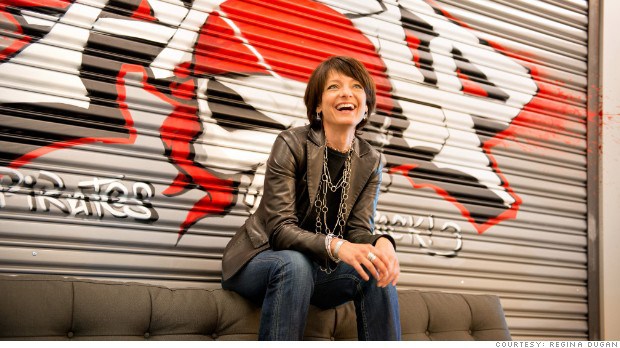
FORTUNE — Disruptive innovation is the kind that unhinges old ways of operating, juices competition and creates new growth. One of the world’s leading experts on the subject is Regina Dugan, Motorola Mobility’s SVP in charge of Advanced Technology and Projects, a skunkworks-inspired unit devoted to delivering breakthrough innovations. Dugan joined Motorola Mobility, part of Google (GOOG), last year after heading the Defense Advanced Research Projects Agency (DARPA), the Pentagon’s R&D unit where scientific inflection points and critical applications–the essence of disruptive innovation, she says–have often intersected. DARPA’s legacy of radical innovation includes RISC computing, the Internet, miniaturized GPS, and those unmanned aerial vehicles popularly known as drones. Read more of this post

The Thought Leader: Examining the life cycle of a new intellectual paragon that has emerged to command our admiration

December 16, 2013

The Thought Leader

By DAVID BROOKS

Little boys and girls in ancient Athens grew up wanting to be philosophers. In Renaissance Florence they dreamed of becoming Humanists. But now a new phrase and a new intellectual paragon has emerged to command our admiration: The Thought Leader.

The Thought Leader is sort of a highflying, good-doing yacht-to-yacht concept peddler. Each year, he gets to speak at the Clinton Global Initiative, where successful people gather to express compassion for those not invited. Month after month, he gets to be a discussion facilitator at think tank dinners where guests talk about what it’s like to live in poverty while the wait staff glides through the room thinking bitter thoughts. Read more of this post

Graham Mackay, Creator of Global Brewer SABMiller, Dies

Graham Mackay, Creator of Global Brewer SABMiller, Dies

Graham Mackay, the executive who built SABMiller (SAB) Plc into the world’s second-biggest beermaker, has died. He was 64. Mackay passed away this morning with his family at his side, the company said today in a statement. The native South African stepped down as chief executive officer following surgery for a brain tumor on April 22, 2013. He resumed his role as non-executive chairman on Sept. 5, 2013 before again stepping back last month. Read more of this post

Mahjong may be HK’s elixir of life

Mahjong may be HK’s elixir of life

Tuesday, December 17, 2013 – 03:00

Li Xueying

The Straits Times

Like a scene out of a Hong Kong triad movie, the mahjong parlour in Temple Street is filled with cigarette smoke, the incessant click-clack of tiles and the grim, hard faces of gamblers. Read more of this post

Got a Light? Olympic Torch Relay Seems Cursed to the Ends of the Earth

December 17, 2013

Got a Light? Olympic Torch Relay Seems Cursed to the Ends of the Earth

By SARAH LYALL

It was bad enough when the Olympic flame went out and had to be relit with a disposable lighter rather than the official backup flame, and even worse when a torchbearer managed somehow to set himself on fire in the Siberian city of Abakan. Read more of this post

Life Coaching is a $2 billion dollar industry with no standard required certification. So what the hell does a life coach really do?

A LOOK INSIDE THE “WILD WEST” OF LIFE COACHING

LIFE COACHING IS A $2 BILLION DOLLAR INDUSTRY WITH NO STANDARD REQUIRED CERTIFICATION. SO WHAT THE HELL DOES A LIFE COACH REALLY DO?

BY DRAKE BAER

“I was stuck,” says BrandAxion president Jeff Danzer. In September, the marketing strategy entrepreneur says he realized that something was amiss: the projects that used to be getting greenlights were forming a traffic jam at his desk. “I started looking for an executive skills coach because I realized I needed some help,” he says. Read more of this post

Two lions in winter: Lee Kuan Yew and Fidel Castro both took office as prime ministers in 1959. The fortunes of S’pore and Cuba then are vastly different now. By Peter A Coclanis

PUBLISHED DECEMBER 14, 2013

Two lions in winter

Lee Kuan Yew and Fidel Castro both took office as prime ministers in 1959. The fortunes of S’pore and Cuba then are vastly different now. By Peter A Coclanis

LEE KUAN YEW: Can legitimately feel great satisfaction with his life’s work. – ST FILE PHOTO

TODAY few people would think of associating, much less equating, Cuba with Singapore. After all, the Republic is one of the wealthiest and most developed countries in the world and Cuba is, well, Cuba – a developing country and one of the few remaining communist states on Earth. The two island nations would seem to have little in common these days and there are few notable connections or ties between them. Read more of this post