A minicar named Hustler? Japan’s brand names raise eyebrows
December 25, 2013 Leave a comment
A minicar named Hustler? Japan’s brand names raise eyebrows
4:03pm EST
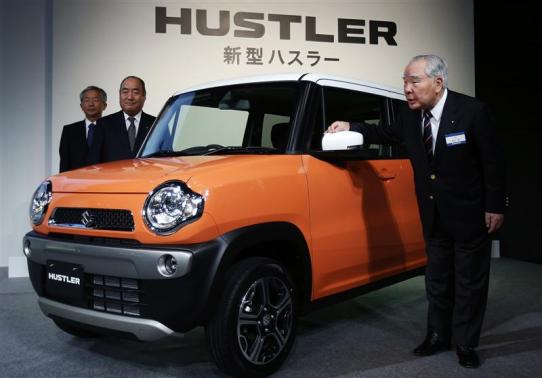
TOKYO (Reuters) – Suzuki Motor Corp had little idea that the name “Hustler” for its new, boxy minicar aimed at outdoorsy Japanese customers might cause mirth among English speakers for its association with an adult magazine – but it’s not alone. Plucking words from foreign dictionaries without checking how they might be received by native speakers appears to be a habit at Japanese companies, which have produced countless products with unintentionally unsavory names.The name Hustler was chosen to conjure the image of agility, as well as invite nostalgia from customers who remembered an off-road motorbike released in 1969 called the Hustler 250, said a Suzuki public relations officer.
Foreign visitors might instead recall the sexually explicit magazine started by porn magnate Larry Flynt as competition to Playboy, or associate the word with obtaining money through illegal activities or vice industries.
The Hustler follows a string of other Japan-made cars to bemuse speakers of foreign languages, such as Daihatsu Motor Co Ltd’s Naked in 2000 and Isuzu Motors Ltd’s 1983 Bighorn.
Spanish speakers were taken aback by Mazda Motor Corp’s Laputa, a derogatory word for sex worker, while Mitsubishi Motors Corp sold its Pajero model as the Montero in Spanish-speaking countries as the former is slang for sexual self-pleasure.
Japanese confectionery often yields a chuckle from foreign tourists, too. A tubular chocolate snack called Collon and an isotonic sports drink named Pocari Sweat, for example, bear unfortunate associations with bodily functions.
While many brand names around the world don’t translate across borders – the Iranian washing powder Barf, which means snow in Persian, or a Swedish chocolate bar called Plopp, for example – Japanese companies often use foreign words for how they sound, with little regard to their original meaning.
This is partly due to foreign words having an exotic ring, much like how Chinese characters are seen by Westerners as poetic or profound choices for tattoos even if the results don’t make much sense to native speakers. But Japanese firms often fail to check if a name ‘travels’ because of historical reasons, marketers say.
“Japan really is an island nation, and was historically closed for a long time. Also, the domestic market is so big that companies can be successful without thinking globally,” said Masamichi Nakamura, executive director at global marketing firm Interbrand’s branch in Tokyo.
But Japan is far from having a patent on unintentionally salacious brand names: websites like Engrish.com revel in strange uses of English across Asia, including neighboring South Korea’s snack maker Lotte Confectionary Co Ltd’s Crunky Ball Nude.
 About bambooinnovator
 Bamboo Innovator