ModCloth CFO: Four Metrics That Mean More Than Money

December 20, 2013, 12:41 AM ET

ModCloth CFO: Four Metrics That Mean More Than Money

By Jeff Shotts

People think the job of a CFO is to obsess over a company’s money matters. Financial reporting, budgets, and compliance are our stock in trade. But across a career at companies like eBayEBAY +2.21% and fashion e-tailer ModCloth, I’ve grown to appreciate the critical importance of a handful of non-financial measures that can be more important indicators of the health of a business than financial metrics. Here are four indicators that power a high return on investment on the time a CFO spends to understand them: Read more of this post

10 ways you’ll probably f**k up your startup

10 ways you’ll probably f**k up your startup

Here I highlight some common early-stage mistakes I come across working closely with startup teams (and how you can avoid them)

Laurence McCahill in Spook Studio

1. No clear vision or purpose

This should be the starting point for any startup founder, but it’s often overlooked. Too often people dive straight into their shiny solution ideas without thinking about why they’re doing what they’re doing or considering the change they want to see in the world. Read more of this post

An Introvert’s Guide to Better Presentations; Improving your public speaking despite hating crowds

An Introvert’s Guide to Better Presentations

Improving your public speaking despite hating crowds

Matt Haughey in What I’m Reading on Medium

I am an introvert and I have always feared public speaking, and despite having given an industry conference presentation every year for the last fourteen years, it’s only gotten marginally easier for me. As I’ve gotten older and learned more about myself, I’ve noticed a few things that have helped me greatly and I wanted to share some of those here. Equip yourself with some knowledge Read more of this post

The Organization of Your Dreams: (1) Difference, (2) Radical honesty, (3) Extra value, (4) Authenticity, (5) Meaning, (6) Simple rules

The Organization of Your Dreams

by Rob Goffee and Gareth Jones  |   1:00 PM December 20, 2013

We have known for about 150 years that people who enjoy their work are more productive.  That is to say high satisfaction is correlated with high performance. And yet many organizations seem to go out of their way to make work alienating, frustrating, and unpleasant.  This is evidenced in the depressingly low rates of employee engagement around the world.  According to a recent AON Hewitt survey, four in 10 workers on average report being disengaged worldwide (three out of 10 in Latin America, four in ten in the U.S., and five in 10 Europe). Read more of this post

Kishore Mahbubani: Many drops can create an ocean of giving

Many drops can create an ocean of giving

The question is: Will you set aside 5 per cent of your Christmas shopping budget for charity?

By Kishore Mahbubani, For The Straits Times

All of us have vivid childhood memories.

One of mine involves walking home happily with my mum after we had picked up a welfare cheque for $45 from the Joo Chiat Road welfare office. If my memory is not playing tricks on me, I distinctly remember that the welfare office was next to the assembly point for the rubbish trucks. Despite this unsavoury location, visits to the welfare office were happy occasions. Read more of this post

Tatcha Founder Victoria Tsai’s Beauty Secrets; The Tatcha product line is inspired by information from a 200-year-old Japanese manuscript detailing beauty practices, though it draws on modern technology as well

Tatcha Founder Victoria Tsai’s Beauty Secrets

The founder of the Japan-inspired brand on her new Smurf-blue balm and the joys of blotting paper

Dec. 20, 2013 1:00 p.m. ET

SKIN SAVVY | Victoria Tsai in San Francisco Annie Tritt for The Wall Street Journal

OD-BA247_VANITY_OZ_20131219153827 BN-AV744_vanity_J_20131219155757

WHEN YOU HEAR that Victoria Tsai based her four-year-old beauty company, Tatcha, on Japanese geisha practices, it’s easy to assume: gimmick. But Ms. Tsai, 35, a Harvard Business School alum and ex-financier, isn’t spinning marketing fiction. In 2009, while in Japan for work, she met a geisha at a beauty store where many of them shop. “She didn’t have any makeup on,” recalled Ms. Tsai. Yet the woman’s skin was flawless. “I asked her what she uses.” The geisha showed her “jars of powders and waxes,” which Ms. Tsai bought and took home to Seattle. After eight weeks of applying the products, her complexion had greatly improved. She returned to Japan to investigate, and launched Tatcha later that year. Read more of this post

The Late, Great American WASP: The old U.S. ruling class had plenty of problems. But are we really better off with a country run by the self-involved, over-schooled products of modern meritocracy

The Late, Great American WASP

The old U.S. ruling class had plenty of problems. But are we really better off with a country run by the self-involved, over-schooled products of modern meritocracy?

JOSEPH EPSTEIN

Dec. 20, 2013 7:44 p.m. ET

RV-AM365C_WASP__G_20131220203116

The U.S. once had an unofficial but nonetheless genuine ruling class, drawn from what came to be known as the WASP establishment. Members of this establishment dominated politics, economics and education, but they do so no longer. The WASPocracy, as I think of it, lost its confidence and, with it, the power and interest to lead. We are now without a ruling class, unless one includes the entity that has come to be known as the meritocracy—presumably an aristocracy of sheer intelligence, men and women trained in the nation’s most prestigious schools. Read more of this post

Up Close and Personal with Robert Swan. the the first man in history to walk to both the North and South Poles

Published: Saturday December 21, 2013 MYT 12:00:00 AM
Updated: Saturday December 21, 2013 MYT 12:53:04 PM

Up Close and Personal with Robert Swan

BY WONG WEI-SHEN

“YOU’RE going to fail” and “You’re going to die” was the reaction Robert Swan OBE often received when he spoke of his dream to walk to the South Pole. Everyone knows the power words possess, in encouraging or discouraging a person. If Swan had listened to them, he probably would have never realised his dream. Read more of this post

The Incredibly Clever Way Thieves Stole 40 Million Credit Cards From 2,000 Target Stores In A ‘Black Friday’ Sting

The Incredibly Clever Way Thieves Stole 40 Million Credit Cards From 2,000 Target Stores In A ‘Black Friday’ Sting

JIM EDWARDS

Forty-million people who used credit or debit cards at Target stores between Thanksgiving and Dec. 15 must now change their PINs or passwords, or get new cards, following a nationwide hack of the retailer’s checkout systems. You may not like the fact that these hackers pulled off such a massive — and massively inconvenient — sting. But you’ve got to admire their ingenuity. Read more of this post

This Guy Makes A Living Drawing Horrible Corporate Logos For $5 Each and Is the World’s Largest Tee-Shirt Maker

This Guy Makes A Living Drawing Horrible Corporate Logos For $5 Each

AARON TAUBE

DEC. 19, 2013, 10:06 AM 47,235 3

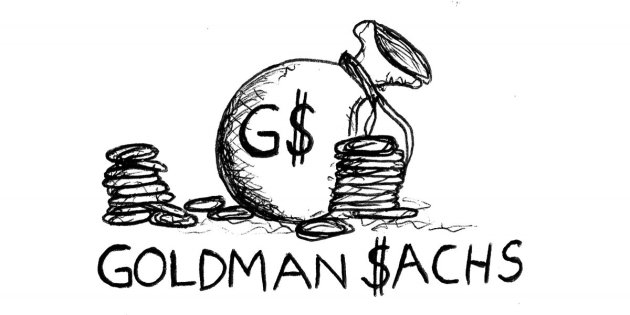
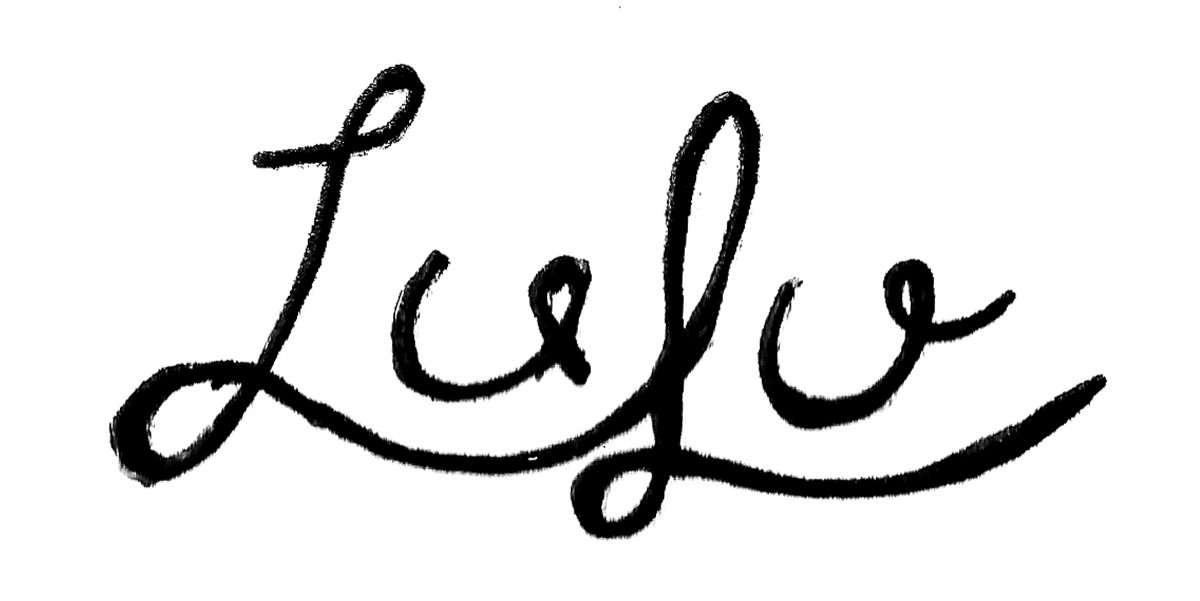
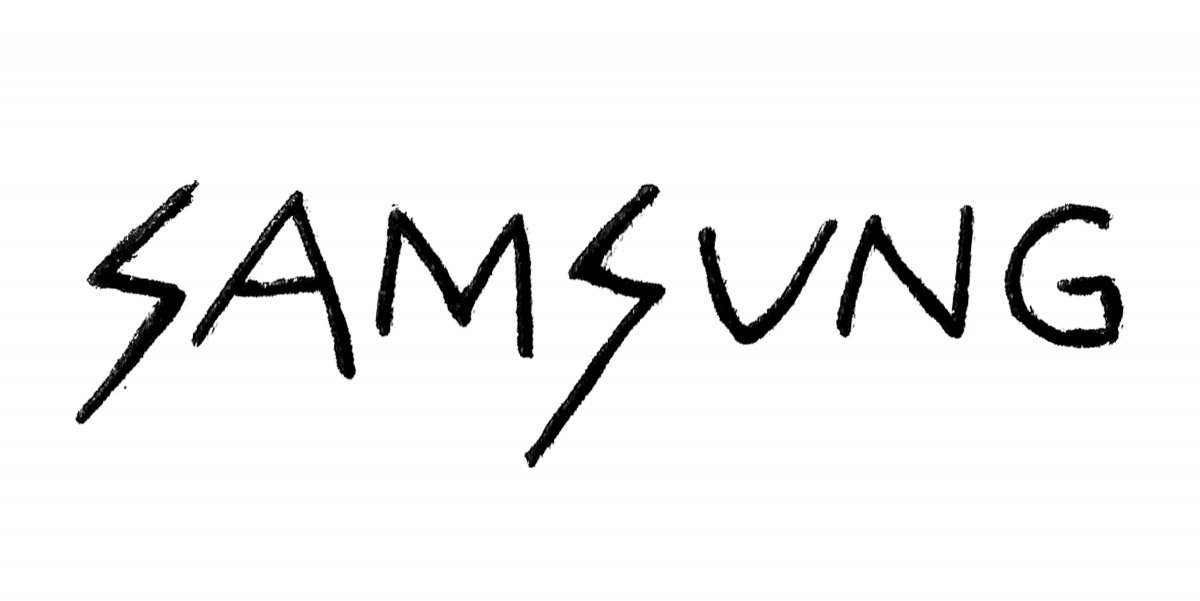
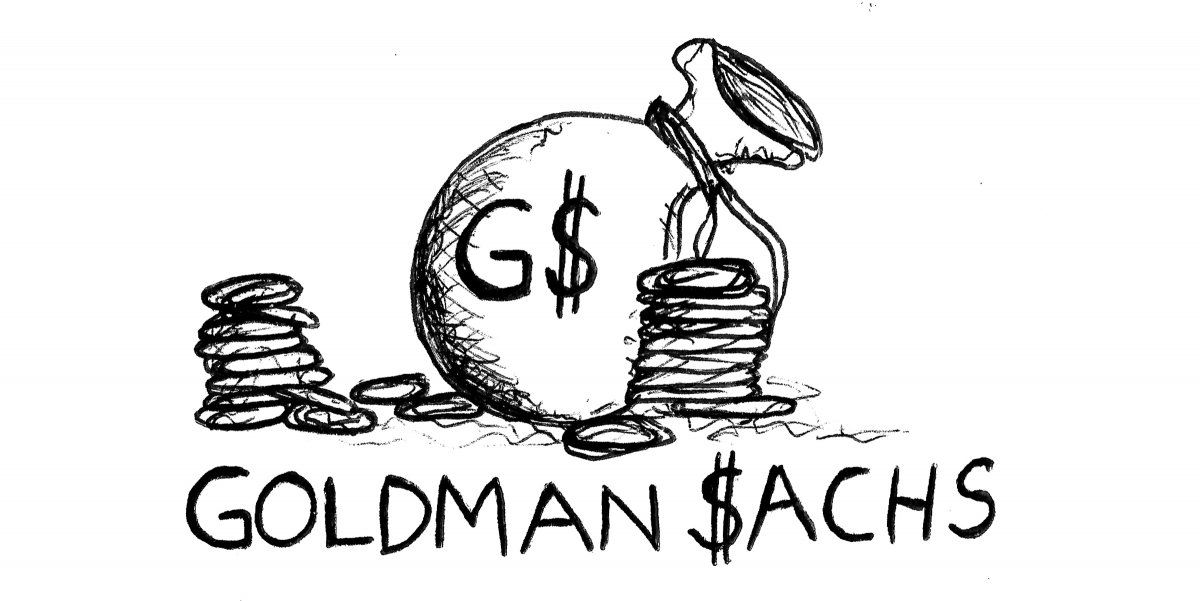
In 2010, a graphic designer based out of California noticed a trend of local companies crowd-sourcing their logo design to anyone who’d draw them something for free. The designer, who goes by the online alias of “krs,” sensed a business opportunity. Instead of giving his work away to companies for free, he would draw the first thing that came into his head, and then sell the design for $5. And thus was born Horrible Logos, a three-year-old business through which krs provides companies with guaranteed awful logos in exchange for beer money. “It spun out of all these companies crowd-sourcing, just getting cheap logos for pretty much nothing,” krs said in an interview with Business Insider. “They would always wind up being sh—y logos. So I figured I’d just scrape the bottom of the barrel and charge $5 and give them an ultra sh—y logo.” Since then, the business has grown to the point where krs says he now receives several hundred orders a month from all over the world, all of which he draws in less than five minutes based mostly on how a company’s name sounds to him when he hears it. “It’s pretty crazy people actually pay for a sh—y logo,” krs said. “I think it’s more people trying to see what I’m going to come up with for their company, so I try to keep it creative.” After seeing his work, we asked krs to draw us up a couple “horrible” versions of our readers’ favorite companies, and krs was nice enough to comply.

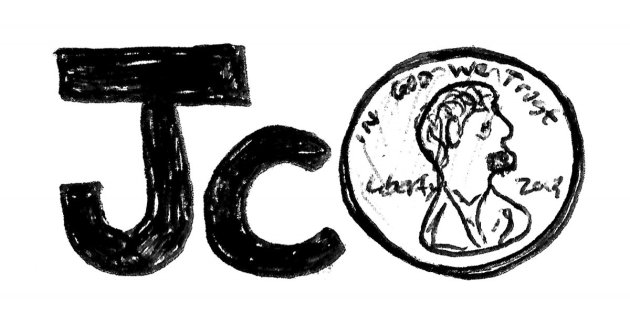
wal-mart jcpenney apple espn google lululemon mcdonalds nfl pepsi samsung jpmorgan victorias-secret goldman-sachs jpg (9) wendys

Ancient Martian Lake May Have Supported Life

December 9, 2013

Ancient Martian Lake May Have Supported Life

By KENNETH CHANG

About 3.5 billion years ago — around the time life is thought to have first arisen on Earth — Mars had a large freshwater lake that might well have been hospitable to life, scientists reported Monday. The lake lay in the same crater where NASA’s Mars rover Curiosity landed last year and has been exploring ever since. It lasted for hundreds or thousands of years, and possibly much longer. Read more of this post

The Man Who Would Teach Machines to Think

The Man Who Would Teach Machines to Think

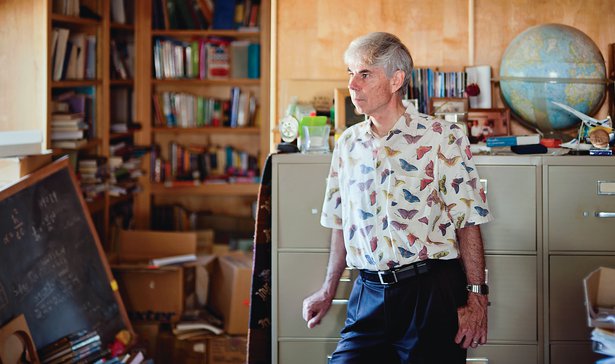
DOUGLAS HOFSTADTER, THE PULITZER PRIZE–WINNING AUTHOR OF GÖDEL, ESCHER, BACH, THINKS WE’VE LOST SIGHT OF WHAT ARTIFICIAL INTELLIGENCE REALLY MEANS. HIS STUBBORN QUEST TO REPLICATE THE HUMAN MIND.

By James Somers

mag-article-large

“It depends on what you mean by artificial intelligence.” Douglas Hofstadter is in a grocery store in Bloomington, Indiana, picking out salad ingredients. “If somebody meant by artificial intelligence the attempt to understand the mind, or to create something human-like, they might say—maybe they wouldn’t go this far—but they might say this is some of the only good work that’s ever been done.” Read more of this post

How To Build A Consumer Internet Unicorn; The 11 ingredients of billion dollar consumer web products

How To Build A Consumer Internet Unicorn

The 11 ingredients of billion dollar consumer web products.

Niko Bonatsos in Question Everything

Aileen Lee and her team recently authored a great blog post about the key characteristics of unicorn IT companies (Unicorn = U.S. based software companies that are valued at over $1 billion by public or private investors). Evan Williams, who co-founded Blogger, Twitter and the venerable Medium,revealed his secret formula for getting rich online as such: “Take a human desire, preferably one that has been around for a really long time… Identify that desire and use modern technology to take out steps.” Building on Aileen’s and Evan’s thoughts (hard acts to follow), I would like to propose a simple framework for the shared characteristics of billion dollar+ consumer web products. The ingredients, if you will. Read more of this post

The Open-Sorcerers: Some magicians are embracing the open-source ethos—but that doesn’t mean spilling every secret.

The Open-Sorcerers: Some magicians are embracing the open-source ethos—but that doesn’t mean spilling every secret.

By Linda Rodriguez McRobbie

Amagician, it is said, never reveals his (or, in very rare cases, her) secrets. Unless he’s involved with open-source magic—in which case he will happily risk running afoul of the Alliance of Magicians. Read more of this post

Let’s Bring The Polymath — and the Dabblers — Back

Let’s Bring The Polymath — and the Dabblers — Back

BY SAMUEL ARBESMAN

12.13.13

I noticed recently that books with the phrase “The Last Man Who Knew Everything” all share in common that their subjects lived during the period close to the Scientific Revolution, roughly between 1550 to 1700. (The examples I own are about Athanasius Kircher, a Jesuit priest born in 1602; Thomas Young, who studied topics such as optics and philology and was born in 1773; and Philadelphia area professor Joseph Leidy, who was born in 1823.) Read more of this post

Thinning the Ph.D. Herd: How to ease the miseries of grad school? Make sure there are fewer grad students.

Thinning the Ph.D. Herd: How to ease the miseries of grad school? Make sure there are fewer grad students.

By Rebecca Schuman

Faculty and graduate students at Johns Hopkins University, an elite privateresearch institution that costs undergrads $61,000 per year, are up in armsabout a new strategic plan that proposes sweeping changes (and cuts) to its Ph.D. programs. Some 275 graduate students, concerned about the viability of their departments, have petitioned the university to reconsider, arguing to Inside Higher Ed that such downsizing could be emulated around the country if it takes effect. But these grad students should be more concerned about their viability after the Ph.D.—which is grim. Johns Hopkins knows this, and is taking drastic but needed measures. I’m all for it, and I’d be delighted, not dismayed, if other universities emulated this strategy. Read more of this post

Is Volatility for Misguided Geeks?

Is Volatility for Misguided Geeks?

Posted DEC 18 2013 by DAVID FOULKE in TURNKEY BEHAVIORAL FINANCEUNCATEGORIZED

Warren Buffett doesn’t like it when people use volatility to measure risk. He succinctly describes his criticism:

We bought The Washington Post Company at a valuation of $80 million back in 1974. If you’d asked any one of 100 analysts how much the company was worth when we were buying it, no one would have argued about the fact that it was worth $400 million. Now, under the whole theory of beta and modern portfolio theory, we would have been doing something riskier buying stock for $40 million than we were buying it for $80 million, even though it’s worth $400 million — because it would have had more volatility. With that, they’ve lost me. Read more of this post

Smart Beta And Tourist Investors

Smart Beta And Tourist Investors

December 16, 2013 By Rick Ferri

Wall Street is always coming up with cunning new marketing techniques to attract tourist investors. These are less-sophisticated individual investors and advisers who are easily wowed by glitzy industry trends, only to abandon them when the strategy falls short of expectations. Read more of this post

Adults Are Increasingly Reading Children’s Books

Adults Are Increasingly Reading Children’s Books

ALEXANDRA ALTER

Dec. 5, 2013 7:40 p.m. ET

R.J. Palacio’s best-selling novel “Wonder” was born in a moment of panic. She was getting milkshakes with her two sons in Brooklyn when she saw a little girl with a severe facial deformity. She rushed her sons away as her three-year-old began to cry. She instantly regretted it, and wished she’d stayed to talk to the girl. That night, she scribbled the first sentence of a novel on a Post-it Note: “My name is Ian. To me, I’m an ordinary kid.” Read more of this post

James Montier on Today’s Investment Fashions; Montier snaps at smart beta and risk parity

James Montier on Today’s Investment Fashions

Montier snaps at smart beta and risk parity.

By John Rekenthaler | 12-11-13 | 02:25 PM | Email Article

(Maxwell) Smart Betas
James Montier of GMO’s asset-allocation team (striking a blow against grade inflation, that appears to be his official title) is among the fund industry’s top writers. He tackles important subjects, glides past the distracting details without oversimplifying, and knows his material. His letters are on my short list. Read more of this post

A Noble Lie: Why it’s OK to sin a little and “market-time”–provided you do it in a contrarian fashion.

A Noble Lie: Why it’s OK to sin a little and “market-time”–provided you do it in a contrarian fashion.

By Samuel Lee | 12-10-13 | 06:00 AM | Email Article

A common nugget of wisdom passed down from on high to the masses is to “buy and hold,” which really means several things: Set fixed allocations to stocks, bonds, and cash; dollar-cost average into the portfolio with periodic purchases; and, above all, stay the course. I tell investors to do these things all the time, too, because on the whole it’s good advice. Read more of this post

Meet Sir William Petty, the man who invented economics

Meet Sir William Petty, the man who invented economics

Dec 21st 2013 | From the print edition

WILLIAM PETTY was an innovation machine. He designed an early form of catamaran, conceived of a mechanical grain planter, proposed attaching engines to boats and patented a “double-writing” instrument (it produced an extra copy of whatever a writer put down on paper). Petty, who died at Christmas in 1687, was also an innovator in the world of theories. By tinkering with data and simple models, this little-known Englishman came up with many of the ideas—how to measure GDP, why the money supply and banks matter, how lasting unemployment affects the economy—that form the bedrock of modern economics. Read more of this post

Scientific publication: A Nobel prize-winner attacks elite journals

Scientific publication: A Nobel prize-winner attacks elite journals

Dec 14th 2013 | From the print edition

BLUNT criticism is an essential part of science, for it is how bad ideas are winnowed from good ones. So when Randy Schekman, one of the 2013 crop of Nobel prize-winners (for physiology or medicine, in his case), decided to criticise the way scientific journals are run, he did not hold back. Read more of this post

Once treated with scorn, randomised control trials are coming of age

Once treated with scorn, randomised control trials are coming of age

Dec 14th 2013 | From the print edition

IT ALL began with a white envelope. Inside, a letter from the provost of the Massachusetts Institute of Technology offered three young economists at MIT $100,000 to spend as they wanted (those were the days). Two of them, Esther Duflo and Abhijit Banerjee, used the money to set up an organisation to run “randomised control trials” (RCTs), an experimental technique a bit like drugs trials, but for economics. To test if, say, boosting teachers’ pay improved educational outcomes, an RCT would take a collection of comparable schools, randomly assign higher wages to some teachers but not others, and see what happens. The organisation, called J-PAL (to give it its full title, the Abdul Latif Jameel Poverty Action Lab), has just celebrated its tenth anniversary. Its methods have transformed development economics. Read more of this post

Glorious revolutions and their discontents

Glorious revolutions and their discontents

Dec 4th 2013, 13:05 by C.R. | LONDON

IN THE past two decades, economists have become increasingly interested in how institutions contribute to economic growth. They are particularly enthused by the view that institutions guaranteeing a “credible commitment” to liberal limits on state action—and repayment of the national debt—caused the industrial revolution to get off the ground in 18th-century England. This may at first appear to be an academic debate of only esoteric interest. But such views have quickly become dominant within economics. And some related conclusions—such as an emphasis on democracy and property rights as necessary prerequisites for sustained economic growth—came to influence the so-called Washington consensus of global economic governance. Read more of this post

Temples of delight: Museums the world over are doing amazingly well, says Fiammetta Rocco. But can they keep the visitors coming?

Temples of delight: Museums the world over are doing amazingly well, says Fiammetta Rocco. But can they keep the visitors coming?

Dec 21st 2013 | From the print edition

20131221_SRC114

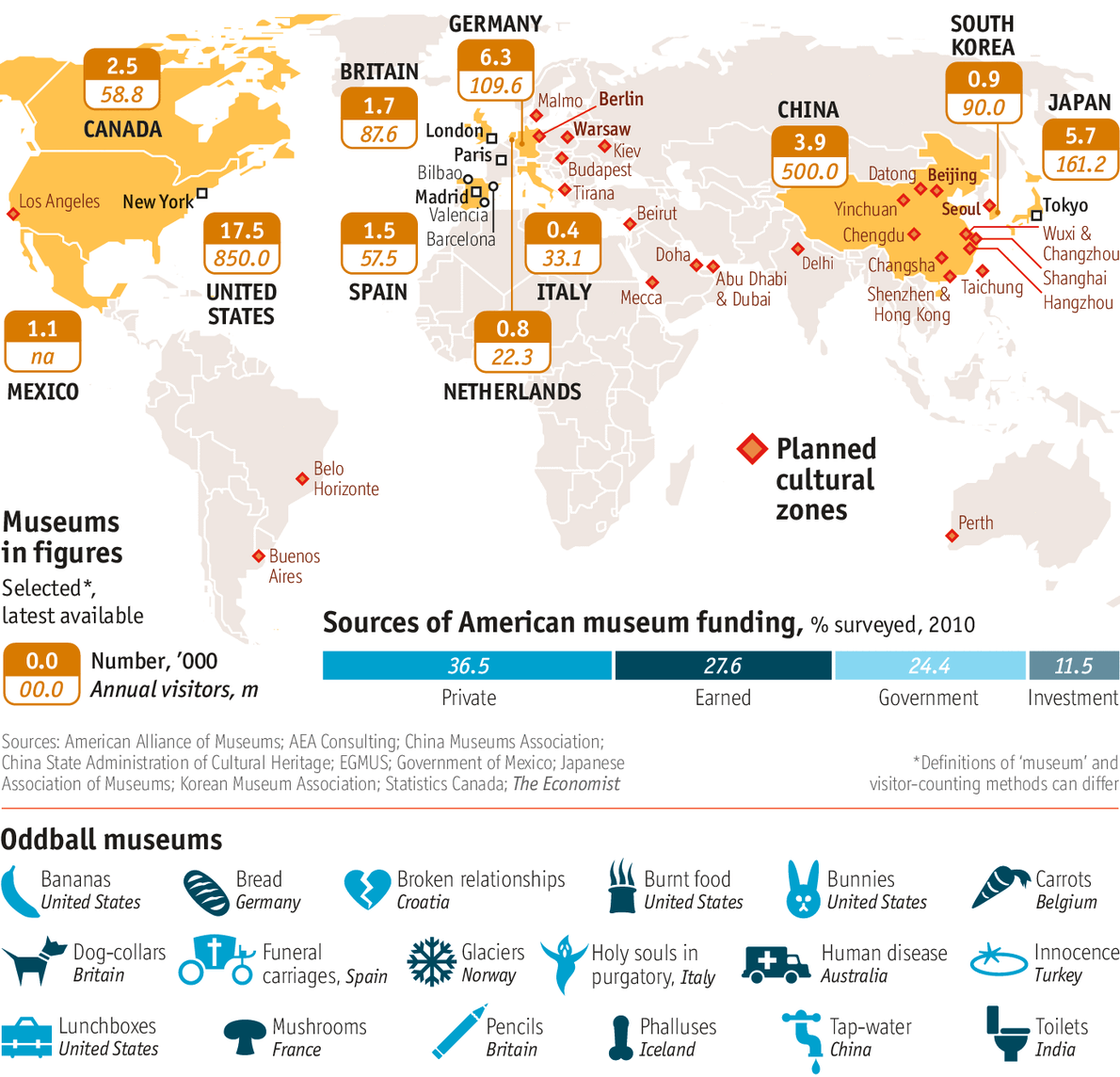
MUSEUMS USED TO stand for something old, dusty, boring and barely relevant to real life. Those kinds of places still exist, but there are far fewer of them, and the more successful ones have changed out of all recognition. The range they cover has broadened spectacularly and now goes well beyond traditional subjects such as art and artefacts, science and history (for a sample of oddball specialities, see chart). One of the biggest draws is contemporary art. Read more of this post

Solina Chau: the woman behind HK tycoon Li Ka-shing

Solina Chau: the woman behind HK tycoon Li Ka-shing

Staff Reporter

2013-12-18

An interview with Hong Kong property tycoon Sir Li Ka-shing by Guangzhou’s Southern Metropolis Daily has inadvertently thrown Solina Chau Hoi-shuen, a partner in Li’s Cheung Kong Group and director of the Li Ka Shing Foundation, into the spotlight. Read more of this post

Champagne was one of the first industries in the modern world that women shaped

Champagne was one of the first industries in the modern world that women shaped

How widows broke the glass ceiling

BY THOMAS ADAMSON

AP

DEC 15, 2013

REIMS, FRANCE – For Champagne to become the tipple it is today — popped at weddings, quaffed in casinos and smashed against ships — a few men had to die: young ones married to clever women. Read more of this post

Being auditor is about serving people’

013-12-20 19:32

‘Being auditor is about serving people’

Ko Dong-hwan
Shim Ho, director general at the Board of Audit and Inspection, firmly believes that auditors are to serve the nation and the people by conducting fair and objective audits. Read more of this post

First Malaysian to head to Harvard since 2010

First Malaysian to head to Harvard since 2010

Saturday, December 21, 2013 – 18:25

The Star/Asia News Network

20131221_eleasha_star

PETALING JAYA – Former St George’s Girls’ School student Eleasha Chew (pic) received the best Christmas present this year when she received an offer from Harvard University in her email. The 19-year-old from Penang ended the “drought” by being the first Malaysian to be accepted into the prestigious institution since 2010. Read more of this post