Narayana Health: Providing World-class Treatment to the Poor

Narayana Health: Providing World-class Treatment to the Poor

by Rohin Dharmakumar | Dec 6, 2013

Narayan Health, founded by leading cardiac surgeon Dr Devi Shetty, could easily be mistaken for just another ‘corporate’ hospital chain. But by ensuring that the poor get equal access to world-class health care, they have proved that they are so much more Read more of this post

Treating Allergies With Pills or Drops Instead of Shots

December 5, 2013

Treating Allergies With Pills or Drops Instead of Shots

By ANDREW POLLACK

Jennifer Maiolo’s allergy is treated with a liquid allergen extract, instead of an injection, as Dr. David P. Skoner watches. Dr. Skoner is excited about the allergen tablets that allergy sufferers can now take, replacing injections and decreasing office visits.

For much of her adult life, Shirley Hickey received two injections a week in an effort to tame severe allergies that caused frequent sore throats and sinus infections. Now she uses a less painful method. “One drop under the tongue every morning, and that’s it,” said Ms. Hickey, 65, who lives in Beaver Falls, Pa. She is free of symptoms and sinus infections from her allergies to ragweed and tree pollens, she said. Read more of this post

Sun Hung Kai Matriarch Transfers Shares to Sons Thomas, Raymond

Sun Hung Kai Matriarch Transfers Shares to Sons Thomas, Raymond

Sun Hung Kai Properties Ltd. (16)’s biggest shareholder, Kwong Siu-hing, transferred part of her holdings in the Hong Kong-based developer to sons and co-chairmen Thomas and Raymond Kwok, according to the family trust. Read more of this post

How Doing What Is Right Helped Build the Indian Financial System

How Doing What Is Right Helped Build the Indian Financial System

by CFA Institute ContributorsDecember 6, 2013

Special Report: How Doing What Is Right Helped Build the Indian Financial System by William Ortel. At the end of the last section, Pradip mentioned the event pictured above: India’s launch of a mars orbiter. This section will trace the construction of an institution that likely helped set the stage for that development by helping Indian companies access credit, and the significant role that anaylytical rigor and ethics had in that institution’s success. The second part of this interview resonated unusually deeply with me, as I hope it will with you. It is a tangible example of how innovation in finance can make life better for a complex, developing country. Read on, and be sure to subscribe to Inside Investing. Read more of this post

Sensex Record Seen on BJP Election Wins as Investors Cheer Modi

Sensex Record Seen on BJP Election Wins as Investors Cheer Modi

India’s benchmark stock index will climb as much as 6 percent to a record by year-end if state election results this weekend confirm gains by the nation’s main opposition party, according to a Bloomberg survey. Read more of this post

Bank of Japan Governor Kuroda $235,000 Salary Highlights Goldman Concern

Kuroda $235,000 Salary Highlights Goldman Concern

Bank of Japan Governor Haruhiko Kuroda’s payslip is 38 percent less than his predecessor’s 15 years ago, underscoring Goldman Sachs Group Inc.’s warning that wages must rise for Abenomics to succeed. The central bank chief’s pay is about 24 million yen ($235,000) for the year ending March 31, down from an inflation-adjusted 39 million yen in fiscal 1998, based on a BOJ statement on Nov. 29. Swaps signal an average inflation rate of 1.2 percent over the coming five years, compared with 2.03 percent in the U.S. and 1.38 percent in the euro zone. Read more of this post

In Japan, no escape from The Eye’s perpetual policing glare

In Japan, no escape from The Eye’s perpetual policing glare

BY DEBITO ARUDOU

DEC 4, 2013

Hey, all you residents heading abroad for the holidays, here’s a little experiment to try on yourself: When you return to Japan, take note of an interesting phenomenon that starts just as you deplane and plug back into Japanese society. You’ll feel a palpable and intractable pressure — a pressure to conform to The Order, that standardized way of doing things in Japan. You can use it to get what you want, or you can defy it and feel the burn of its stare. Read more of this post

Japan’s First Lady Isn’t Shy About Criticizing Policy; Japan’s popular, powerful prime minister, Shinzo Abe, faces little parliamentary opposition. One of his most widely quoted policy critics is his wife, who runs a tiny pub in Tokyo

Japan’s First Lady Isn’t Shy About Criticizing Policy

One of the most widely quoted policy critics of Shinzo Abe, the Prime Minister of Japan, is his wife.

YUKA HAYASHI

Dec. 6, 2013 10:34 p.m. ET

P1-BO276_ABEWIF_DV_20131206174904

TOKYO—After winning two landslide elections over the past year, Japan’s popular, powerful prime minister, Shinzo Abe, faces little parliamentary opposition. One of his most widely quoted policy critics runs a tiny pub named “UZU,” or “Tidal Swirl,” hidden among the back streets of a dowdy Tokyo commercial neighborhood. Read more of this post

As workforce shrinks, Korea struggles to embrace immigration

Updated: Friday December 6, 2013 MYT 8:08:22 AM

As workforce shrinks, korea struggles to embrace immigration

SEOUL: For 61-year old construction worker Chae Chang-geun, an ethnic Korean from China,Seoul is a place to make money but not a place to call home. Chae is one of the 450,000 people from the Korean diaspora born in China, who make up 40 percent of the immigrant workforce in South Korea helping to keep the country’s car plants, shipyards and building companies going. Read more of this post

Koreans Labor Under a Mountain of Debt

Koreans Labor Under a Mountain of Debt

By Christina Larson and Heesu Lee

November 11, 2013

econ_koreagraphic50b_630

Over the past two decades, South Korea has morphed from a country of savers into a nation of spenders and borrowers. Jeong Young Sik, an economist at the Samsung Economic Research Institute in Seoul who tracks household debt, found that Koreans in 1990 saved on average 22.2 percent of their net household incomes; by 2012 that figure had dropped to 3.4 percent. The ratio of household debt to disposable income in 2012 was 160—higher than the ratio of 130 in the U.S. in 2007, before the housing bubble burst. Read more of this post

Bankers Balking at Bitcoin in U.S. as Real-World Obstacles Mount

Bankers Balking at Bitcoin in U.S. as Real-World Obstacles Mount

Bitcoin, the digital money created as an alternative to currencies controlled by nations and banks, is finding that its wider adoption depends on both as governments in China and the U.S. demand enthusiasts play by existing rules. Read more of this post

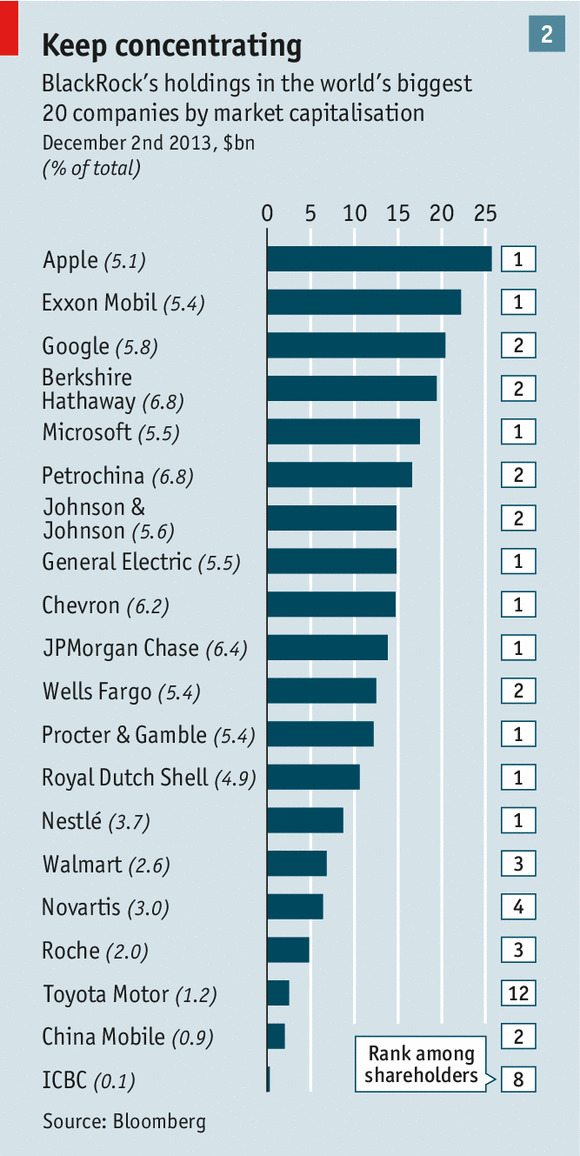
BlackRock, The monolith and the markets: Getting $15 trillion in assets on to a single risk-management system is a huge achievement. Is it also a worrying one?

BlackRock, The monolith and the markets: Getting $15 trillion in assets on to a single risk-management system is a huge achievement. Is it also a worrying one?

Dec 7th 2013 | NEW YORK | From the print edition

20131207_FBC894 20131207_FNC00220131207_FBC893

EAST WENATCHEE, in Washington state, is known for its apples, not for its financial services. But in a data centre nestled between the orchards and hills, a cluster of 6,000 computers oversees the assets of over 170 pension funds, banks, endowments, insurance companies and others. Whirring around the clock, the machines look at what interest-rate changes, or bank collapses, or natural disasters could mean for trillions of dollars of assets. Around the world, 17,000 traders have the computers’ assessments of these risks at their fingertips when they buy or sell assets. Read more of this post

Central Banks Warn of Bitcoin Risks; China, France Issue Stark Reports; Beijing Bars Financial Institutions From Offering Related Services

Central Banks Warn of Bitcoin Risks

China, France Issue Stark Reports; Beijing Bars Financial Institutions From Offering Related Services

ROBIN SIDEL, CHAO DENG and WILLIAM HOROBIN

Dec. 5, 2013 4:15 a.m. ET

MI-CA062_CBITCO_G_20131204183016

While the Chinese government doesn’t officially recognize bitcoin, buyers there are nonetheless helping to fuel a boom in the four-year-old virtual currency. Bobby Lee of BTC China, the country’s largest bitcoin exchange, tells Jake Lee what is fueling the high demand. Read more of this post

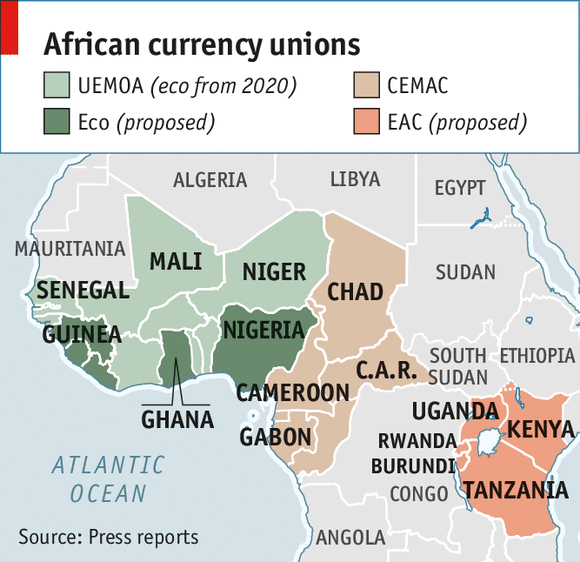
Currency unions in Africa: A continent mulls merging currencies

Currency unions in Africa: A continent mulls merging currencies

Dec 7th 2013 | From the print edition

20131207_FNM941

THE euro crisis has put most people off currency unions. But not in Africa, it seems. In November the leaders of five countries of the East African Community (EAC) agreed to form a monetary union within ten years. A month before West African politicians agreed on a plan to introduce a new shared currency, the eco, over the next few years. It should eventually subsume West Africa’s existing currency bloc—but not its central African cousin. Read more of this post

Exchange-traded fund strategists make hay on industry boom

Exchange-traded fund strategists make hay on industry boom

Wed, Dec 4 2013

By Ashley Lau

NEW YORK, Dec 4 (Reuters) – As the $2.2 trillion exchange-traded fund industry grows at a rapid clip, a group of investment consultants who specialize in creating portfolios of the funds – so-called ETF strategists – are reaping high returns. The group that began as a handful of managers taking interest in the funds during the early 1990s has now grown into an established market, attracting the attention of ETF providers who view the strategists as a key to promoting their ETFs. Read more of this post

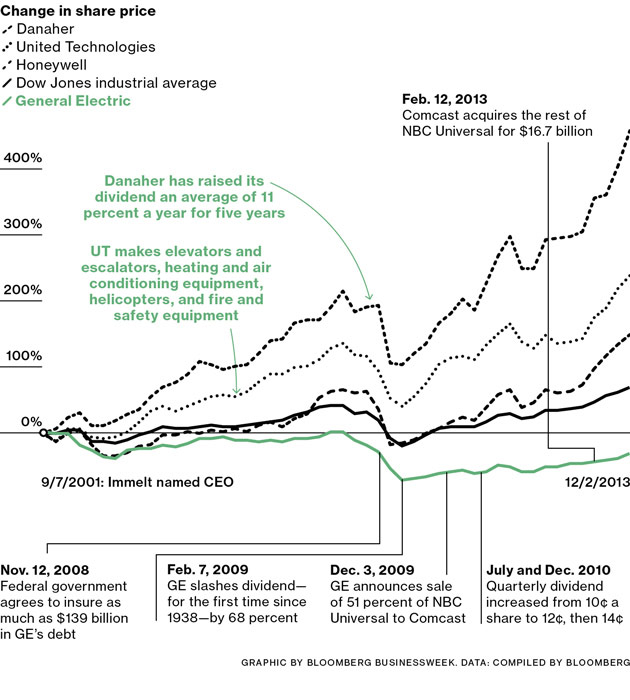
GE’s Lost Decade; Shareholders have seen a total return of zero since Jeff Immelt succeeded Jack Welch

GE’s Lost Decade

By Roben Farzad

December 05, 2013

mf_ge50__01__630inline

Jeffrey Immelt won one of corporate America’s top prizes 12 years ago when he was chosen to succeed industry legend Jack Welch as chief executive officer of General Electric (GE). The glow didn’t last: He assumed his post just four days before Sept. 11. In 2008 the economic crisis sent the stock plunging, as investors worried that financing unit GE Capital would bring down the entire company. Five years later the economy is recovering, and the market is regularly setting new records. While GE shares have quadrupled since their low, they are still 33 percent below their price when Immelt took over. Including dividends, investors have a total return of zero under Immelt’s reign. The Standard & Poor’s 500-stock index has returned 110 percent in that time. Read more of this post

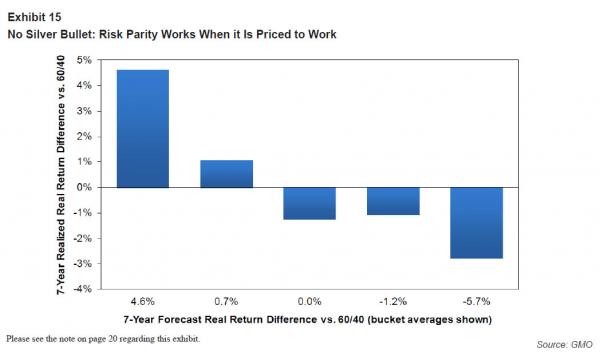
GMO’s James Montier Skewers Bridgewater: Risk Parity = “Snake Oil In New Bottles”

GMO’s James Montier Skewers Bridgewater: Risk Parity = “Snake Oil In New Bottles”

Tyler Durden on 12/05/2013 20:58 -0500

JM 1_0JM 2_0 JM 3_0 JM 4_0 JM 5_0

Nearly a year ago, we penned “Return = Cash + Beta + Alpha“: in which we performed “An Inside Look At The World’s Biggest And Most Successful “Beta” Hedge Fund. The fund in question was Bridgewater, and Bridgewater’s performance was immaculate… until the summer when the sudden and dramatic rise in yields as a result of the Bernanke Taper experiment, blew up Bridgewater’s returns for 2013 and at last check, at the end of June, was down 8% for the year. As further explained in “”Yield Speed Limits” And When Will “Risk Parity” Blow Up Again“, an environment in which rates gap suddenly higher (and in the current kneejerk reaction market all moves are purely in the form of gaps as risk reprices from one quantum to another in milliseconds) is the last thing Ray Dalio’s strategy wants. Be that as it may, and successful as Dalio’s fund may have been until now, tonight James Montier of Jeremy Grantham’s GMO takes none other than Bridgewater to task, in a letter in which among other things, he calls risk parity “just old snake oil in new bottles”, and sums up his view about the strategy behind Bridgewater in the following equation: Read more of this post

Gold Hedging Seen by Barclays Staying Below 1990s ‘Large’ Levels

Gold Hedging Seen by Barclays Staying Below 1990s ‘Large’ Levels

Gold miners probably won’t return to “large-scale” selling of future output seen in the 1990s that added to supply even as the co-chairman of Barrick (ABX) Gold Corp., the top producer, says hedging makes sense, Barclays Plc said. Read more of this post

Bill Gross Says All Asset Markets Artificially Mispriced by Fed

Gross Says All Asset Markets Artificially Mispriced by Fed

Bill Gross, who runs the world’s biggest bond fund at Pacific Investment Management Co., said unprecedented monetary accommodation has lifted prices of stocks and bonds to levels that exceed measures of true value. “All asset prices, whether it be bonds, stocks, alternative assets are basically mispriced, artificially elevated,” Gross said during an interview on Bloomberg Television’s “Market Makers” with Erik Schatzker and Stephanie Ruhle. “And I think the Fed knows that and wants to diminish that effect to the extent that they can. What they are going to do in terms of transition, we think, is simply to reduce quantitative easing to the point that by the end of 2014 they eliminate it, if they can if the economy responds.” Read more of this post

How Fed policy enriches private equity, if not workers

Updated: Friday December 6, 2013 MYT 7:23:59 PM

How Fed policy enriches private equity, if not workers

MACON, Georgia: Sanders Walker had been working for 13 years at a BWAY Corpfactory in Macon, Georgia, when the word came down one September 2011 morning: The company, a maker of plastic and metal containers, was closing the plant. Walker, a quality manager, and about 70 other employees were out of work. Read more of this post

How to bet against the bitcoin megabubble; One reason the virtual currency has been soaring could be that figuring out how to profit from its fall is tough

How to bet against the bitcoin megabubble

By Stephen Gandel, senior editor December 5, 2013: 1:12 PM ET

One reason the virtual currency has been soaring could be that figuring out how to profit from its fall is tough.

FORTUNE — Can you bet on the likely eventual bitcoin crash? You bet. But it’s an expensive trade. And even if you’re right, you won’t walk away with much, if anything. The traditional way you bet against something is to “short it.” But in order to do a short sale you have to borrow a share of stock or bond or whatever you are looking to bet against. And borrowing bitcoins is nearly impossible. There is a company based in Hong Kong in testing phase that seems to offer bitcoin shorting , but I couldn’t find out much about it. Read more of this post

Hugh Hendry Throws In The Bearish Towel: His Full Must-Read Letter

Hugh Hendry Throws In The Bearish Towel: His Full Must-Read Letter

Tyler Durden on 12/06/2013 12:31 -0500
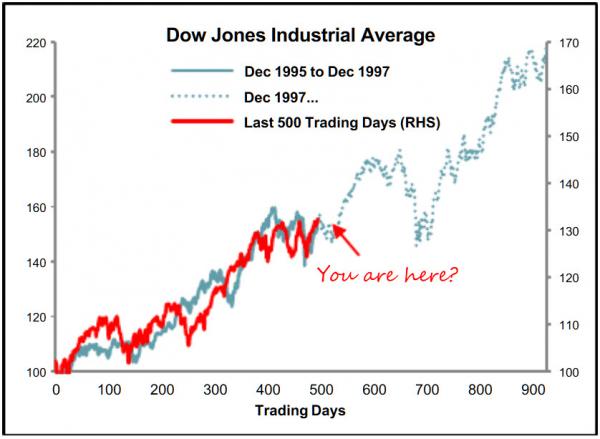
20131205_hendry1_0 20131205_hendry2_0 20131205_hendry3_0 20131205_hendry5_0 20131205_hendry5_0 (1) 20131205_hendry6_0

Via Hugh Hendry’s Eclectica Fund December 2013 Letter to investors,

What if I were to tell you I was turning more bullish? Is that something you might be interested in?

We are macro investors. That means that we are constantly exposed to the shifting sands that the world’s increasingly powerful gaggle of central bankers – and the capital flows they encourage – impose on global financial markets. However we tend to stick to our big (and often bearish) views, something that means our performance comes with hot and cold spells. The most recent one – and it doesn’t take a genius to see this – has been cold. It hasn’t been as bad as it could have been for the simple reason that we make big bets when we are doing well and small bets when we aren’t. We allocate increasing amounts of capital to winning trades and cut losing trades rapidly. We’ve been cutting a lot recently. The good news is that this has minimised our drawdown. The even better news is that our returns have improved lately; it looks as if we are entering a hot spell, and we have begun to re-allocate significantly more risk capital to our endeavours. Read more of this post

In Africa, many want a new Mandela to heal wealth divide

In Africa, many want a new Mandela to heal wealth divide

Saturday, December 7, 2013 – 18:21

Reuters

NAIROBI – Mourning the loss of a man who bridged South Africa’s racial divide, many Africans hope their leaders today will be inspired by Nelson Mandela to heal another rift widening dangerously across the continent: the wealth gap. “We need the next Mandela to fight for the poor,” said Thomas Kozzih, 30, a community worker in Nairobi’s Kibera slum – an expanse of metal shacks butting up against smart new flats that testify to Africa’s new growth that has left many behind. Read more of this post

In the Murky World of Bitcoin, Fraud Is Quicker Than the Law

DECEMBER 5, 2013, 6:58 PM

In the Murky World of Bitcoin, Fraud Is Quicker Than the Law

By NATHANIEL POPPER

The call went out on Twitter: “For insane profits come and join the pump.” It was an invitation to a penny stock-style pump-and-dump scheme — only this one involved Bitcoin, the soaring, slightly scary virtual currency that has beckoned and bewildered people around the world. While such bid ’em up, sell ’em off scams are shut down in the financial markets all the time, this one and other frauds involving digital money have gone unchecked. The reason, in no small part: Government authorities do not agree on which laws apply to Bitcoin — or even on what Bitcoin is. Read more of this post
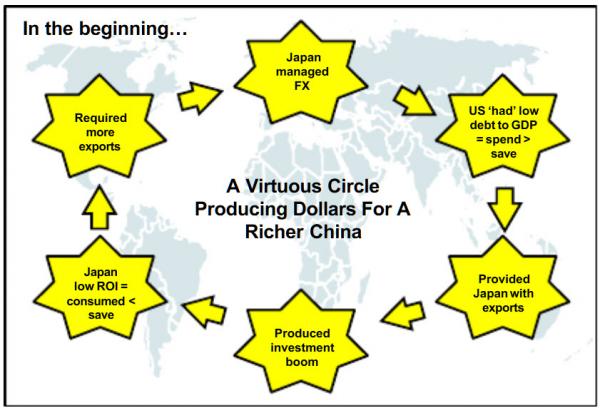
Is BlackRock too big to fail? The largest asset managers should become simpler, smaller and less interconnected

Is BlackRock too big to fail?

December 4, 2013: 12:41 PM ET

The largest asset managers should become simpler, smaller and less interconnected.

By Sheila Bair

FORTUNE — Hark. Do you hear it? That sound of ringing bells coming from the nation’s capital as we enter the holiday season? Is it Salvation Army Santas taking to the street corners? Church campaniles playing “Carol of the Bells?” Or maybe angels getting their wings a la the Christmas classic It’s a Wonderful Life? Read more of this post

“Andrew Carnegie built new plants during recession”; Keynesians Revive a Depression Idea

Last Gasp of the Keynesians

Larry Summers is talking about it. So is Paul Krugman. So are other economists. And everyone else is talking about the folks who are talking about it. The “it” is secular stagnation, which seems to be the New New Thing or the new new normal: a way to describe the persistent state of subpar economic growth plaguing developed nations. Think of it as Japan’s lost decade gone global. Read more of this post

Lively Debate on the Influence of Proxy Advisory Firms

DECEMBER 5, 2013, 8:22 PM

Lively Debate on the Influence of Proxy Advisory Firms

By DAVID GELLES

When corporate shareholders vote on a big decision — be it a merger with another firm or the election of directors — they often take advice from so-called proxy advisory firms, independent groups that conduct analyses of such issues at companies across the country. Read more of this post

Mandela Dies With Rainbow Nation Dream Still Work in Progress

Mandela Dies With Rainbow Nation Dream Still Work in Progress

In his first speech as president, Nelson Mandela spelled out a vision for South Africa free of the racial divisions that had splintered the nation during 46 years of segregationist rule. “We shall build the society in which all South Africans, both black and white, will be able to walk tall, without any fear in their hearts, assured of their inalienable right to human dignity, a rainbow nation at peace with itself and the world,” he said in his inauguration address on May 10, 1994. Read more of this post

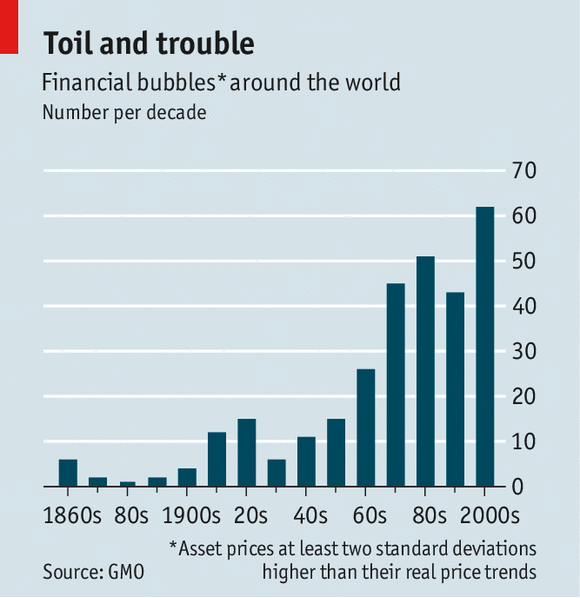
Many investments are becoming expensive. But there is little sign of the mania that accompanies most bubbles

Many investments are becoming expensive. But there is little sign of the mania that accompanies most bubbles

Dec 7th 2013 | From the print edition

20131207_FNC887

TALK of bubbles is in the air again. The Dow Jones Industrial Average has hit an all-time high. A loss-making technology firm (Twitter) has floated its shares on a flood of investor demand. Private-equity groups are buying companies using amounts of debt not seen since 2008. A record price (more than $50m) has just been set for a penthouse in Manhattan. A triptych by Francis Bacon became the most expensive piece of art sold at an auction when Christie’s flogged it for $142.4m last month. Robert Shiller of Yale University, who correctly identified bubbles in tech stocks in the late 1990s and in property in the 2000s, has expressed unease about giddy American share valuations. Read more of this post

Marc Faber: “Financial Crisis Don’t Happen Accidentally, They Are Inevitable”

Marc Faber: “Financial Crisis Don’t Happen Accidentally, They Are Inevitable”

Tyler Durden on 12/06/2013 21:13 -0500

Authored by Marc Faber, originally posted at The Daily Reckoning blog,

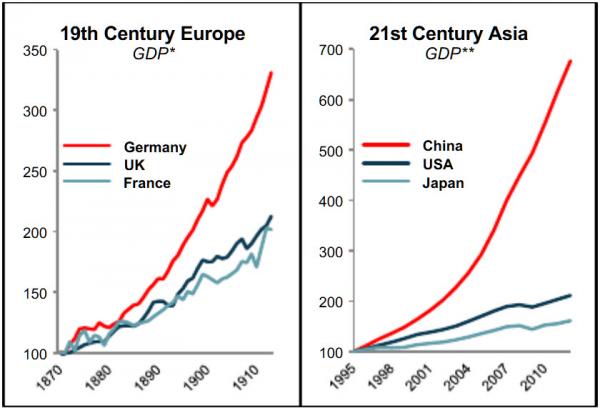
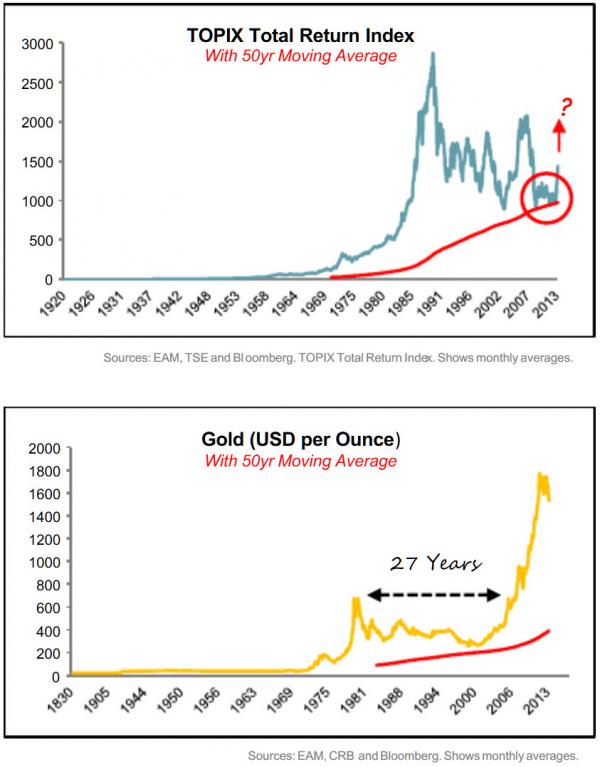
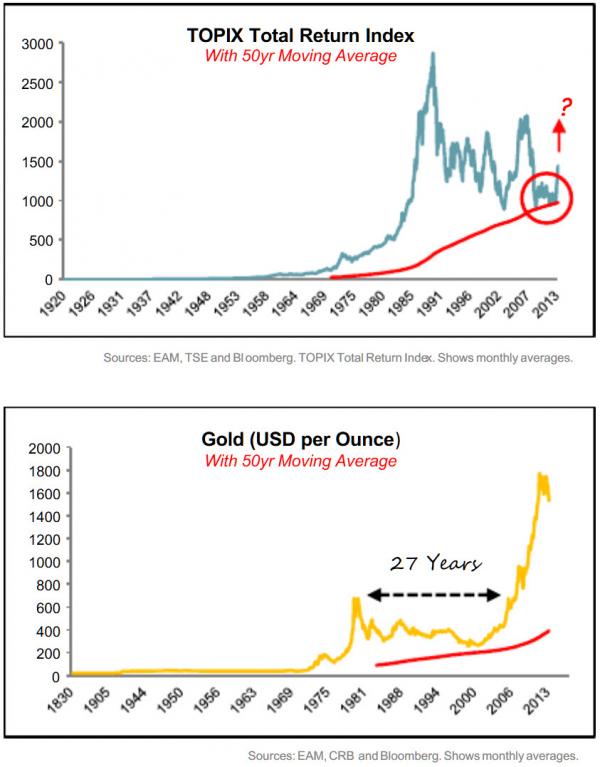
As a distant but interested observer of history and investment markets I am fascinated how major events that arose from longer-term trends are often explained by short-term causes. The First World War is explained as a consequence of the assassination of Archduke Franz Ferdinand, heir to the Austrian-Hungarian throne; the Depression in the 1930s as a result of the tight monetary policies of the Fed; the Second World War as having been caused by Hitler; and the Vietnam War as a result of the communist threat. Read more of this post