Africa’s Richest Man Sees Company Joining Top 100 by 2017

Africa’s Richest Man Sees Company Joining Top 100 by 2017

Africa’s richest man Aliko Dangote said his Dangote Group would join the ranks of the world’s biggest 100 companies within three years as he invests in cement, agriculture and oil refining across the continent.

“We are targeted now to be one of the 100, in terms of ranking, global companies by 2017,” Dangote said yesterday in an interview at the World Economic Forum in Davos, where he is this year’s co-chairman. Lagos, Nigeria-based Dangote’s plan is “to be one of the leaders in terms of all the sectors we’re involved with,” its owner said.

Dangote is investing $16 billion over the next four years in cement, sugar, rice and oil, including the construction of a $9 billion oil refinery in southwest Nigeria. The company is considering the purchase of crude fields in Africa’s biggest oil producer to help supply energy to its petrochemical complex and cement plants, Group Executive Director Devakumar Edwin said in an interview in Lagos last week.

Aliko Dangote has seen his wealth climb $1.2 billion in the month to date, making him the world’s 27th richest person with a net worth estimated at $25.1 billion, according to the Bloomberg Billionaires’ Index.

“I’m going to actually put quite a lot of money in sugar and rice and then oil,” he said. “We invested heavily in Nigeria, but we’re not only looking at Nigeria, we’re looking at the regional market.”

Bad Dream

African policies have transformed the private sector, particularly in agriculture, Dangote said on a WEF panel today.

“If I had had a dream five years ago and you told me that I was going into agriculture, I would totally say no — that it would not only be a mistake, it must have been a bad dream,” he said.

Dangote said he would like to emulate the philanthropy of world’s richest man Bill Gates and said he spent $100 million in 2013 “giving back to society” in the areas of health and education.

To contact the reporters on this story: Matthew G. Miller in Davos, Switzerland at mmiller144@bloomberg.net; Chris Kay in Lagos at ckay5@bloomberg.net

Toxic Pubs: Punch Taverns’ financial engineering has harmed the pub industry

Punch Taverns’ financial engineering has harmed the pub industry
After 14 months of wrangling, Punch still couldn’t come up with an agreed deal with its bondholders
After 14 months of wrangling, and three sets of proposals for restructuring £2.3bn of securitised debt, pub landlord Punch Taverns still couldn’t come up with an agreed deal with its bondholders.
Instead, chairman Stephen Billingham produced a fourth proposal, declared the terms “final”, and told the various bondholders to vote.
If the answer is no among any one of 16 classes of bondholder, he says default and administration will follow.
Depending on your point of view, Billingham is either behaving recklessly in imposing a deadline, or is sensibly calling time on a process that has run for long enough.
Billingham’s gamble is justified. Clearly, he would be in a stronger position if he had been able to announce support from the two main groupings – the Association of British Insurers, representing the senior bondholders, and the hedge funds who dominate the junior varieties.
But, arguably, any attempt to secure a pre-agreement would simply generate yet another round of bickering.
The deep problem is that Punch’s capital structure – designed by over-confident, over-paid and long-departed financial engineers – is a complete mess.
Special clauses on access to the “liquidity facility” (don’t ask) apply on default. That gave the junior bondholders a hook on which to hang their claims for gentler treatment that would normally apply in a restructuring.
The seniors were understandably irate, especially as shareholders will avoid being wiped out entirely, which, by rights, they should be.
In the end, a vote seems a reasonable way to proceed if Billingham is convinced that it is now “economically rational” for all 16 classes to give approval.
If he’s right, Punch Taverns can limp on with a slightly lighter debt burden.
But this grotesque financial experiment, which has done only harm to the pub industry, should never be repeated.

Sri Lanka to sack officer over ‘false’ GDP data row

Sri Lanka to sack officer over ‘false’ GDP data row
Wednesday, January 22, 2014 – 19:21
AFP
COLOMBO – Sri Lanka’s main statistics office Wednesday said a senior official who denounced alleged government pressure to inflate economic growth data would be sacked after he was found guilty of leaking confidential information.
Accounts Director H.S. Wanasinghe faced two separate disciplinary hearings after he complained to the Asian Development Bank (ADB) and an opposition lawmaker that the government was manipulating data.
“We have recommended to the PSC (Public Service Commission) to sack him and it will be done soon,” Census and Statistics chief D.C.A. Gunawardena told reporters in Colombo.
Wanasinghe alleged that he was ordered to increase GDP growth rate for the first quarter of 2013 to 6.0 percent when his calculation showed it was only 5.4 percent.
Sri Lanka’s main opposition last month read out a statement by Wanasinghe narrating how he was under instructions to change national accounts to suit the government, an allegation which the authorities deny.
The anti-corruption watchdog Transparency International (TI) said the senior officer should be treated as a “whistle-blower” and be protected instead of being sacked.
“What we see is a systematic approach of a cover up rather than an investigation into what he has revealed,” TI Sri Lanka chairman J.C. Weliamuna told AFP. “Sacking a senior officer for raising this issue is completely unacceptable.”
Statistics chief Gunawardena denied that he was under pressure to change economic data to suit the government which relies heavily on foreign borrowings.
“It is a funny joke,” he said of the allegations. “People can talk about any rubbish, but the department of Census and Statistics has no political agenda.”
President Mahinda Rajapakse, who is also the finance minister, told parliament in November that he expected the economy to grow 7.5-8.0 percent in calendar 2014, up from a provisional 7.2 percent in 2013 and 6.4 percent in 2012.
The economy recorded 8.0 percent-plus growth for two straight years after the end of Sri Lanka’s decades-long civil war which saw troops crush separatist Tamil Tiger rebels in 2009.
UN human rights chief Navi Pillay said in August last year after a visit to Sri Lanka that the country under Rajapakse “is showing signs of heading in an increasingly authoritarian direction.”

IMF Questions South Korea’s Currency Policy

IMF Questions South Korea’s Currency Policy
IAN TALLEY
Jan. 22, 2014 6:17 p.m. ET
WASHINGTON—The International Monetary Fund on Wednesday questioned South Korea’s currency policy, telling Seoul that it should only intervene in exchange-rate markets to prevent volatility that might damage the economy.
The unusually explicit scrutiny of Korea’s currency policy comes after Bank of Korea’s top official indicated early this year the central bank is ready to intervene in currency markets to curb the won’s strength. It also follows U.S. criticism late last year in which the Treasury Department said it was concerned that Korea had resumed currency intervention and needed to be more transparent about its activities.
“The won should continue to be market determined, with intervention limited to smoothing disorderly market conditions,” the IMF’s executive board said in a statement on the annual review of the country’s economy.
The fund says the won is “moderately undervalued,” accounting for inflation, but the currency is coming under increased appreciation pressure by markets as the emerging market outperforms many of its peers.
Korean officials say their efforts are meant to stabilize markets. But some U.S. economists say Korea wants to keep a lid on the value of the exchange rate to bar exports from becoming too expensive.
Although countries can devalue their currency by buying foreign currency, it comes at the expense of other countries’ exchange rates rising and can fuel trade and political tensions between governments.
To avoid creating friction over currency policies, the IMF said, Korea should be more candid about its exchange rate operations.
IMF directors “considered that increased transparency in interventions would help enhance the credibility of the authorities’ exchange rate policy,” the fund said.
The executive board appeared to be divided, however, about whether the country should continue to build up foreign currency buffers to protect against potential economic crises.
“Some directors considered that the current level of reserves is adequate and does not warrant further accumulation, while a few others, noting the proven benefits of building a strong buffer in past crises, cautioned against prejudging the case,” the board said.

Thomas Dundon is poised to become a subprime billionaire; Subprime-Car-Loan Firm Has Flourished as Other Lenders Have Struggled

Auto Lender’s Drive Reaps a Fortune
Subprime-Car-Loan Firm Has Flourished as Other Lenders Have Struggled
ANDREW R. JOHNSON and TELIS DEMOS
Jan. 22, 2014 7:22 p.m. ET

image001
Thomas Dundon’s 13,556-square-foot Dallas home features eight bedrooms, indoor and outdoor tennis courts, three wet bars, a swimming pool and an indoor slide that goes from the second floor to the first.
Those are only some of the spoils Mr. Dundon, 42 years old, has collected during his journey to the top of the subprime auto-lending business, where lenders make loans to borrowers with blemished credit. In 2012 alone he raked in $85.2 million in total compensation.
Now Mr. Dundon is poised to become a subprime billionaire.
Santander Consumer USA Holdings Inc., the Dallas-based auto-lending and consumer-finance company run by Mr. Dundon, is slated to debut as a publicly traded company Thursday. Owners of the firm, a unit of Spanish lender Banco Santander
SA, SAN.MC -0.82% raised $1.8 billion by selling about 75 million shares, or 22% of its outstanding common stock, at $24 a share. The deal values the company at about $8.3 billion, not including the exercising of stock options.
Mr. Dundon, the chief executive, stands to see his stake valued at $1.2 billion, based on the 13.6% share of the company that he will hold after the initial public offering, including stock options.
“It would not have crossed anyone’s mind that this was possible,” Mr. Dundon said about the company’s success in an interview Wednesday. “I’m not sure if we did it over again that you could replicate the success.”
The windfall is notable in an industry still dogged by the memories of the financial crisis. Subprime mortgages were among the first to go bust when the housing market foundered, erasing billions of dollars in assets for lenders, the Wall Street firms that packaged their loans into securities and the investors who bought them. Subprime mortgage lending activity has shriveled to just a tiny fraction of its peak during the housing boom.
But auto loans are a different breed. Subprime auto loans weren’t hit by the huge losses seen in other lending segments. Industry experts say many borrowers continued to make auto-loan payments before they paid down other types of loans, including mortgages and credit cards, because they rely on their vehicles to get to work.
Mr. Dundon keeps a high profile in sports-crazed Dallas. He attended the wedding of Dallas Cowboys quarterback Tony Romo in 2011, according to local news reports, and has played in golf tournaments with professional golfer Hunter Mahan.
But Mr. Dundon’s friends and acquaintances paint a picture of a self-made entrepreneur who came from humble beginnings. He earned his fortune by remaining intensely focused on achieving the goals he set for himself and his business partners, and by refusing to dwell on setbacks, according to those who know him.

“He’s hyper-focused,” said Mark Molthan, a Dallas real-estate developer who built Mr. Dundon’s home and has known him since high school. “When he knows what he wants…he figures out a way to get it.”
Mr. Dundon attended high school in Plano, near Dallas, and was the president of the Phi Gamma Delta fraternity at Southern Methodist University.
Former fraternity members recall Mr. Dundon’s leadership skills following a fire that destroyed Phi Gamma Delta’s house in 1992. Jon Altschuler, a commercial real-estate executive in Dallas who was in Phi Gamma Delta at the time, said Mr. Dundon led the effort to find replacement housing for the fraternity while continuing to recruit new members. He also was instrumental in marshaling support from the local business community to raise funds to support the fraternity’s operations.
After graduating in 1993 with a degree in economics, Mr. Dundon started a burger restaurant in Fort Worth, Texas, called Izzy’s. The venture lasted less than a year, according to friends. But the experience didn’t seem to faze Mr. Dundon, friends said. He often joked that Izzy’s became “Wasy’s,” they said.
“He just moved on,” said Mr. Altschuler. “He’s never been a down-in-the-dumps kind of guy.”
After the burger joint failed, Mr. Dundon got his start in the auto business, winning a job in the finance department of a Dallas auto dealer. He and some co-workers in 1995 struck out on their own to form an auto-finance company whose rapid success attracted outside investors. Banco Santander in 2006 agreed to buy a 90% stake in the company for $650 million. In 2011, Santander sold part of its stake to private-equity firms Warburg Pincus LLC, Kohlberg Kravis Roberts & Co. and Centerbridge Partners LP, which together owned about 24% of the company before the IPO.
For the first nine months of 2013, the company earned $581.7 million, or $1.69 a share, down from $611.7 million, or $1.72 a share, a year earlier. The company’s net charge-off rate, or loans deemed uncollectable, for the first nine months of 2013 was 4.6%, down from 5.1% a year earlier.
The IPO comes amid a boom in auto lending, which has been a rare bright spot for lenders facing tepid customer demand for other types of credit. Loans to borrowers with weak credit have been particularly strong. Auto-loan originations to subprime borrowers—defined as consumers with scores below 660 on the industry’s FICO measure—totaled $153 billion last year, up from $66 billion in 2009, according to Moody’s Analytics and Equifax.
Other large consumer-finance companies are considering going public, as well. Ally Financial Inc., the former finance arm of General Motors Co., is looking to launch an IPO after the Federal Reserve releases results of its annual “stress tests” of big banks, people familiar with the matter have said. General Electric Co., meanwhile, wants to spin off its consumer-finance arm through an IPO this year, the company has said.
Despite Mr. Dundon’s success, friends say he hasn’t let his ego swell and remains focused on his family. He and his wife, Veruschka, have four children, and they often allow their kids’ sports teams and others to use the athletic facilities on their property, according to Mr. Dundon and his friends.
Mr. Molthan said Mr. Dundon had his estate built with his children in mind.
“It’s definitely a kid’s wonderland,” Mr. Molthan said.

Vietnam’s Stock Surge Encourages IPOs; New Listings in Developing ‘Frontier Market’ Will Enable Foreign Investors to Tap Country’s Growth

Vietnam’s Stock Surge Encourages IPOs
New Listings in Developing ‘Frontier Market’ Will Enable Foreign Investors to Tap Country’s Growth
JAKE MAXWELL WATTS and NGUYEN PHAM MUOI
Updated Jan. 22, 2014 11:57 a.m. ET
Rising share prices are encouraging the government, which owns many companies ranging from the country’s flagship airline to its largest brewery, to privatize by selling shares in Vietnam’s capital markets. Officials recently have signaled that they are proceeding with privatization plans, which has bolstered investors’ optimism about the government’s intent to liberalize some sectors of the economy.
Some bullish investors say the anticipated wave of initial public offerings is a sign that Vietnam is developing as a so-called frontier market and could eventually appeal to a broader range of money managers. Frontier markets are considered among the riskiest places to invest.
Investors are increasingly turning to smaller economies like Vietnam as growth slows in better-traveled emerging markets such as Brazil and India. Vietnam’s government predicts its export-driven economy will grow 5.8% in 2014, according to local media reports, up from 5.4% last year.
But like most frontier markets, Vietnam’s stock market is small. The roughly 300 publicly traded companies on the Hochiminh Stock Exchange have a combined market capitalization of $43.6 billion, smaller than package-delivery company FedEx Corp.FDX +0.11% Many shares are thinly traded or have caps on foreign ownership, so it can be hard for investors to gain a foothold and even more difficult to leave during times of stress.
As more companies list, it will alleviate some of those fears, said Sean Lynch, global investment strategist at Wells Fargo Private Bank, with $170 billion in assets. “The IPOs in Vietnam this year are a positive” because it expands the options for money managers, Mr. Lynch said. “Deeper markets can absorb more investment dollars.”
He said the bank’s most aggressive funds aim to invest 2% of assets in frontier economies and would potentially buy newly floated shares of Vietnam’s garment, automobile and airline companies when they hit the market.
The Hochiminh Stock Exchange’s VN Index is up 9.4% in January and touched a four-year high this week. MSCI Inc.’s index of Vietnamese shares is up more in 2014 than any other country tracked by the company.
Vietnam sets restrictions on foreign-ownership stakes in local firms, and at least 10 of the country’s 30 largest listed companies are already at their limits, according to data from Ho Chi Minh Securities Corp.
The government is starting to loosen some of those rules. It is set to raise the limit on foreign holdings of Vietnamese financial institutions to 20% from 15% starting Feb. 20. It will likely raise the cap on foreign ownership in other sectors to 60% from 49%.
Kevin Snowball, chief executive of PXP Vietnam Asset Management Ltd., which has $140 million in assets under management, said he may invest in some of this year’s IPOs. He is particularly interested in the planned listings of flag carrier Vietnam Airlines Corp. and apparel exporter Vietnam National Textile & Garment Group, or Vinatex.
“There is very little listed in the stock market that gives you access to [Vietnam’s] export story,” Mr. Snowball said.
In this year’s first listing, shares in the Joint Stock Commercial Bank for Investment & Development of Vietnam, or BIDV, will begin trading on Friday. Other companies that have signaled their intention to list include building-materials supplier Viglacera Corp., telecom operator MobiFone and beer maker Saigon Beer Alcohol Beverage Corp., or Sabeco.
“The IPOs are opportunities for foreign investors, who have been waiting for some years for the local market to open further,” said Nguyen Duy Hung, chief executive and chairman of Saigon Securities, a broker and asset manager.
Not everyone is prepared to jump in. Some Vietnam-based funds say the country hasn’t fully tackled a long-standing problem of bad debt, particularly among state-owned enterprises. BIDV held its IPO in December 2011 but delayed trading of its shares amid widespread mistrust of Vietnam’s finance sector.
For some foreign investors, Vietnam isn’t big enough to warrant a look. Small frontier markets, they say, could essentially shut down at times of stress, making it hard to take money out.
“Vietnam’s relatively small equity market…and its lack of liquidity make it an unattractive investment option for us,” said Audrey Kaplan, senior portfolio manager of the $614.5 million Federated InterContinental Fund.
Others see signs that Vietnam is solving its banking-sector problems, while they predict the IPOs will boost the size and stability of the stock market. Analysts say 2014 will be a big test for Vietnam, particularly as soaring U.S. share prices and an improved outlook for most European economies lure investors back to developed markets.
Bad debt in the banking system was 3.8% of the total, down from nearly 8% at the end of 2012, though some independent analysts say it could be considerably higher. In July, Vietnam formed a state-owned bank to take on financial institutions’ bad debt, and the country’s central bank aims to lower the figure to 3% by the end of 2015.
HSBC HSBA.LN -0.74% recently upgraded its outlook for Vietnam to “positive” from “neutral” but warned domestic demand is struggling due to “an overhang of bad debts.”
“Foreign-capital inflows will find good opportunities” in Vietnam, said Giang Trung Kien, chief analyst with FPT Securities. “Economic indicators suggest the Vietnamese economic recovery is likely to continue to improve and stabilize this year.”

Can an Embattled Thailand Find Compromise?

Can an Embattled Thailand Find Compromise?

As with so many seemingly intractable fights, the warring camps that have paralyzed Thailand both say they want the same thing: a cleaner, more legitimate democratic process. It’s time for them to prove it.

The country’s long-running political soap opera has lately taken a darker turn. The ruling Pheu Thai party of Prime Minister Yingluck Shinawatra has vowed to forge ahead with elections on Feb. 2, which the opposition promises to boycott. A 60-day “state of emergency” in Bangkok and surrounding areas has raised the prospect of violence between police and protesters. Under such conditions, a victory at the polls would leave a new Pheu Thai government with a dangerously weak mandate, increasing the likelihood of intervention by the army or the king.

Both sides protest their innocence. Yingluck, the sister of controversial tycoon and former Prime Minister Thaksin Shinawatra, has offered to discuss electoral reforms, but insists they can be enacted only by a new legislature. Her opponents demand that her government be replaced by an unelected group of “wise men” who would carry out reforms over the next 18 months, before overseeing any new vote. It might be easier to sympathize with one side or the other if both had not ignored the recommendations of a multitude of reform commissions while in office over the past decade.

One idea raised recently would be to form a small body — including members of both Pheu Thai and the opposition, as well as third-party figures — to hash out a half-dozen crucial political reforms, such as checks and balances on state power and measures that would reduce corruption and increase fiscal discipline. Although discussions would begin immediately, the commission’s work would continue past the Feb. 2 elections, no matter who wins. Parties would commit in advance to implementing the body’s recommendations — or to calling new elections if the commission judged they were needed.

If the parties are sincere in their claims, they should be looking for just such a middle ground. Even if they’re not, however, some agreed process would at least allow both to climb down from a confrontation that neither can win outright.

Assuming that, as part of such a compromise, the opposition agreed to participate in elections, the Feb. 2 vote could even be postponed for a couple of months to let tempers cool and give candidates time to campaign properly. (Rescheduling the vote would be extremely difficult constitutionally but perhaps not impossible.) The pause would be meant not to circumvent the democratic process — a fair description of the opposition’s current demands — but to bolster the legitimacy of the results.

Yingluck need only look to her embattled counterpart Sheikh Hasina Wajed, prime minister of Bangladesh, to see that winning an uncontested election marred by violence would be no victory at all. To plow ahead, using her draconian new security powers to detain opposition leaders and disperse protesters, would treat only the symptoms of Thailand’s malaise, not the cause.

By the same token, for the opposition to continue to reject any compromise would prove what many suspect — that its main goal is to regain power for Thai elites, who have lost their electoral majority to poorer rural citizens from the populous north. Ordinary Thais and elites alike have plenty of reason to criticize Pheu Thai’s stewardship of the economy. Sooner or later, opposition leaders will have to learn to beat their opponents with better ideas, not by rigging the system.

The alternatives to compromise now are a disputed election or a coup, either of which would keep the conflict going. Vague hints from top generals about the possibility of a military takeover damage Thailand’s economy and further dim its appeal as an investment destination. The country would be better served if both king and army — the two most powerful forces in Thailand – – used that leverage to push the two sides toward the middle ground they seem unable to find on their own.

To contact the Bloomberg View editorial board: view@bloomberg.net.

EB-5 visas, a federal program that allows foreigners to live in the U.S. if they invest in job-creating ventures took in a record number of applications last year

EB-5 Visas for Investors See Record Demand
Program Saw 6,434 Foreigners Apply in the Latest Year
ANGUS LOTEN
Jan. 20, 2014 7:22 p.m. ET
A federal program that allows foreigners to live in the U.S. if they invest in job-creating ventures took in a record number of applications last year.
Known as an EB-5 visa, the program has boomed over the past seven years, as traditional forms of financing dried up for projects ranging from hotels and casinos to wind farms and frozen-yogurt franchises. The minimum investment under the program is $500,000. Companies that have tapped EB-5 investors for cash include Marriott International Inc.MAR +0.75% and Sony Pictures Entertainment Inc.
Last year, 6,434 foreign investors applied for visas under the program, up from 6,040 in 2012, according to data from U.S. Citizenship and Immigration Services, the agency within the Department of Homeland Security that oversees the program. As of Sept. 30, the end of the federal government’s fiscal year, the agency had approved 3,696 investors, most Chinese, and denied 942.
If approved, investors receive a temporary visa for themselves and their families that can be converted into permanent residency—that is, a green card—if the investment is shown to have created at least 10 jobs within two years.
Last year, 6,895 Chinese nationals were issued visas through the program, outpacing all other nationalities by a wide margin, according to State Department data. South Koreans, the next largest group, were issued 364. A single EB-5 application can account for multiple visas for investors’ immediate family.
The 5% rate of growth in the program in 2013 was lower than in recent years, when the number of applications increased by 58%, in 2012, and 94% in 2011.
Launched by Congress in 1990, the program has recently been plagued by allegations of fraud and charges of mismanagement by immigration officials. That has led to increased scrutiny of the program by the immigration agency, which has caused delays in the application process, immigration lawyers say.
To date, the agency estimates the program has raised $8.6 billion and created at least 57,300 jobs since 1990.

Why We Are Lucky To Live In The Era Of Indexing

Why We Are Lucky To Live In The Era Of Indexing
by ElliotTurnerJanuary 22, 2014
Last week we were greeted with writings from two of the best investors and thought-leaders: Howard Marks of Oaktree and Murray Stahl of Horizon Kinetics. The decades of wisdom acquired by both Marks and Stahl now share with us youngens via these readings is a gift we must all take advantage of. I am about to grossly oversimplify the points from both of these greats in order to riff off of it into a point of my own. I give this warning both to preempt any complaints about my simplification, and as a suggestion to do yourself a favor and read what both of these gentlemen have to say before going one sentence further here. If you are kind and/or interest enough to return to this site, once done with those piece, please feel free to do so.
Since I received a link to Marks’ memo first, my evening reading started there and proceeded to Stahl’s piece. This was a fortunate coincidence. Marks lays out the case for the role luck plays in living life and attaining success in financial markets, tracing it to the idea markets are mostly efficient, but for those areas with a “lack of information…and competition.” Meanwhile, Stahl examines what he believes to be one of the single largest sources of market inefficiency today in what he calls “indexation.” After reading both pieces, I couldn’t help but think: “we are lucky to be investors in markets in this era of indexation.” This one thought struck me as the perfect conjunction between the two pieces.
Stahl has used the word “indexation” to explain the phenomenon whereby more assets and managers are investing in indices and ETFs which are designed to “provide portfolio exposure to very specific criteria, such as an asset class, an industry sub-sector, a growth metric, a stock market capitalization band, and so forth.” Over time, Stahl has discovered and invested in several of the inefficiencies resulting from such a phenomenon, including the “owner-operator” whose major stockholder manages the company, spin-offs designed to streamline business operations, etc. I recommend reading Stahl as to why these opportunities arise in today’s market.
Why do I say we are lucky to invest in this era of indexation? Because, as Stahl argues, indexation is an incredible source of market inefficiency. As more and more dollars seek out exposure in the broadest of ways, there is ample opportunity for those of us who seek to “turn over as many rocks as possible” to find the right opportunity. Two of my favorite setups fit this bill, although I never specifically delineated these ideas in writing as an outgrowth of indexation. This is so because both setups existed as long as there have been markets, and are in many respects traceable to behavioral traits of human beings. What has changed is that indexation provides a natural outlet through which these behavioral weaknesses are even more pronounced than in years past. I have named these setups “Guilty by Association” and “I’ve got a Label, but I don’t Subscribe.” While there are similarities between the two, they deserve to be thought about separately.
“Guilty by Association”
When a company is “Guilty by Association” they are treated in the same way as another, more identifiable peer group or index solely by some kind of perceived proximity. These tend to be situations that are more macro in nature, where a broader problem is reflected upon a specific company or sector. Some examples might be helpful.
During the crisis period in Europe, all European stocks were hit with equal force. The market “threw the good out with the bad” so-to-speak. One particular class of opportunities we spent considerable time on (and ultimately made significant investments in) was businesses listed in Europe, with a revenue base that was largely global. In other words, these were companies that traded in Europe, though they did the majority of their business outside of Europe itself. In these situations, there was selling, even from investors not situated in Europe, due to fears about the Eurozone’s viability. Yet, these companies themselves were in a position where if the Euro actually collapsed, they were unlikely to be significantly impacted in a negative way. In other words, they were “Guilty by Association” with the currency in which their shares were priced.
Another example would be the hatred of muni bonds in today’s environment. This entire asset class is hated due to concerns about Detroit’s bankruptcy and Puerto Rico’s solvency woes. Because Detroit and Puerto Rico are municipalities, conventional investment wisdom beholds that municipal bonds in the general sense must therefore be in trouble. This kind of extrapolation is abundant and wrong.
Indexation impacts these areas because people who invest in broad-based ETFs or indices sell their exposure entirely, in order to avoid the perceived fear. In doing so, the selling of the basket forces mechanical selling of all the subsidiary components without consideration for which specific constituents are and are not impacted on a fundamental level by the fear. Thus, the good that gets thrown out with the bad and is “guilty by association.”
“I’ve got a Label, but I don’t Subscribe”
This is the micro twin of “guilty by association.” Since so much money is moving into ETFs, and ETFs are trading with all kinds of sector and niche labels, there is pressure to fit each and every company into some kind of cookie-cutter genre. These labels impact how analysts and investors alike think about specific companies. Stocks get assigned to analysts based on the “sector” they cover, and many investors invest in sectors or companies that are in accordance with a specific mandate. I had been planning a blog post for a while called “Beware of Labels,” but I think all of those points would better fit the context of this post. One of the biggest misnomers in today’s markets is the “technology” label.  Mr. Market today dumbs “technology” down to mean: a) any company that is on the Internet; and/or, b) any company that makes hardware.
In my opinion, there simply is no such thing as an Internet company. There are retail companies who operate on the Internet (and at this point is there a single retail company who doesn’t operate on the Internet?), there are B2B companies who use the Internet to offer their services, there are financial platforms who provide web-based platforms. To ascribe the label “Internet” to one company and not another is merely referential of the fact that some companies are old and some companies are new. And even that is an oversimplification, for there are older Internet companies that are still called as much, despite being more analogous to marketing companies. And yet somehow, all these various, wide-ranging businesses end up with the “Technology” label despite the fact that their differences are far more pronounced and abundant than their similarities.
In a perfect world, we would throw away the technology label and call these companies what they are, whether that be media, retail, etc., but this isn’t a perfect world and that creates opportunities for us investors seeking out inefficiencies. Heck the “Telecommunications” sector is somehow a sub-sector of “Technology” and includes a company as old as AT&T (though I am aware AT&T today was actually one of the Baby Bells who ended up swallowing Mama whole). The biggest impact labeling has is in how analysts model these companies and the types of investors who are drawn to (or pushed away from) different sectors. We all know how popular comparables analysis and that too gets incredibly misleading when similarities and differences are conflated with one another.
An example of this would be my investment experience with Google. Over the past few years, Mr. Market has called Google an “Internet stock” and a “one-trick-pony” at that. To that end, analysts and investors alike oversimplified in comparing Google only to other Internet stocks, and in a perceived battle against Apple, this same community viewed the company as out of its league (See GigaOM
, CBS News and HBR on the “one-trick-pony”). I took a different perspective: Google is more akin to a media company whose advantage lies in the infrastructure and distribution side. Wikipedia describes media as “the storage and transmission channels or tools used to store and deliver information or data.” This certainly seems like an apropos description of Google, and it’s more clearly reflective of who pays Google money at the end of the day–advertisers, much like how we think about “traditional” media. If you think about Google this way, and realize one of the company’s crucial advantages is in how it stores, aggregates, categorizes and distributes information, it’s clear that Google does and can do far more things than “just” search. YouTube is a natural fit in this type of company, more so than just an Internet or search company, and as such, it leverages the advantages of Google’s platform while also leaving open the opportunity for Google to naturally segue into other areas altogether. Within that context, Google looks far less like a one-trick-pony, YouTube’s valuation becomes increasingly important (see my writeup on the importance of YouTube), and the company is in fact more diverse and capable beyond “just” search.
Labeling is a human endeavor; something we do in many disparate fields. One of the most well-known is the biological taxonomy (I think every adult still remembers “King Phillip came over for good spaghetti”), which is an organizational hierarchy. While labels have always been used in stock markets, only now are they actual forces behind the mechanical allocation of capital. This is so due to the proliferation of ETFs and “indexation.” Even in biology, there are blurred lines between different species, etc. This is but one reason why we have seen a great increase in spin-offs: when some companies who are thought of and thus modeled “that” way, have a subsidiary that doesn’t fit the bigger mold, that subsidiary tends to be “underappreciated” by Mr. Market.
Market Inefficiencies
A lot of people, myself included, like ripping on the Efficient Market Hypothesis. This is certainly not without merit; however, as Marks emphatically argues, there is much truth and wisdom in the idea that market participants are in fact really good at incorporating known information into the price of securities. When we look to make investments, we must then do what Marks’ implies in another of his spectacular memos, by asking ourselves “what is the mistake that makes this a mispriced investment opportunity?” With these two examples based on the problems associated with Stahl’s “indexation” we have two areas in the abstract within which we can identify mistakes. To that end, we are lucky to live in this era of indexation for how it exposes the market to repeatedly and mistakenly misvalue companies.

Muddy Waters Turns Up Heat on Auditor PwC of Chinese Firm NQ Mobile

Muddy Waters Turns Up Heat on Auditor of Chinese Firm
By WILLIAM ALDEN
Carson C. Block has already issued a blistering critique of NQ Mobile, a Chinese mobile security company. Now, he is going after NQ Mobile’s auditor.
Mr. Block, the head of the Muddy Waters research firm, has sent a letter to senior executives of PricewaterhouseCoopers, urging the accounting giant to take a closer look at the books of NQ Mobile, which Mr. Block contends are a “massive fraud.”
If the accounting firm is prevented from doing so, then it should consider resigning as NQ Mobile’s auditor, Mr. Block wrote. The letter, dated Jan. 13, has not been previously reported.
“Any PwC partner who believes the value of the PwC brand is worth preserving should take heed of the experience of other firms operating in China,” Mr. Block said in the letter. “Further unqualified opinions for NQ will likely end in embarrassment and litigation against the firm and its partners.”
A spokesman for PricewaterhouseCoopers declined to comment.
The letter — addressed to Dennis M. Nally, the chairman of PricewaterhouseCoopers International; Raymund Chao, the audit and assurance leader in Beijing; and Robert E. Moritz, the chairman and senior partner of the accounting firm — is the latest move in a months-long campaign by Mr. Block, a short-seller known for harsh reports purporting to uncover fraud at Chinese companies.
A previous target of his, a Chinese forestry company called Sino-Forest, filed for bankruptcy less than a year after Mr. Block called it a “multibillion-dollar Ponzi scheme.”
Mr. Block fired his initial salvo against NQ Mobile in October, saying that the majority of its China security revenue in 2012 was “fictitious.” The report, which also raised questions about NQ Mobile’s international revenue, sent the company’s stock price falling by half.
Last month, Muddy Waters offered to pay an auditing firm to review the results of an investigation being conducted by NQ Mobile’s independent board committee.
The Chinese company has denied Mr. Block’s accusations. And it still has some friends on Wall Street. Altimeter Capital Management, a hedge fund based in Boston, said in a regulatory filing on Tuesday that it had increased its stake in NQ Mobile to about 17.3 percent.
Muddy Waters is “very concerned” about PricewaterhouseCoopers’s audit of NQ Mobile’s financial statements for 2013, Mr. Block said in the January letter, which urged the accounting firm to perform “additional tests and procedures in response to clear heightened fraud risk.”
“If NQ Mobile prevents PwC from obtaining sufficient appropriate evidence to evaluate whether illegal acts material to the financial statements have (or are likely to have) occurred, PwC should probably disclaim an opinion on the NQ financial statements,” Mr. Block said in the letter. “If NQ management refuses to accept a modified a PwC report, PwC should resign from the engagement, possibly withdraw its opinions on prior financial statements and warn investors on management’s representations.”
“If PwC is unable to determine whether the acts are illegal because NQ imposes limitations on its work or because PwC is unable to interpret applicable laws, regulations or surrounding facts,” the letter went on, “PwC may have to resign the NQ audit.”

Why every leader should care about digitization and disruptive innovation

Why every leader should care about digitization and disruptive innovation

January 2014

Digitization, automation, and other advances are transforming industries, labor markets, and the global economy. In this interview, MIT’s Andrew McAfee and McKinsey’s James Manyika discuss how executives and policy makers can respond.
The disruptive impact of technology is the topic of a McKinsey-hosted discussion among business leaders, policy makers, and researchers at this year’s meeting of the World Economic Forum, in Davos, Switzerland. In this video, two session participants preview the critical issues that will be discussed, including the impact of digitization and automation on labor markets and how companies can adapt in a world of rapid technological change. What follows is an edited transcript of their remarks.
Interview transcript
Disruption everywhere
James Manyika: The reason disruptive technologies are very important to all leaders—whether they’re CEOs or policy makers—is because, for the first time, we now have technology affecting every single sector of the economy. Every sector, whether it’s retail, financial services, shipping, manufacturing, and even agriculture, now takes inputs and uses technology to drive much of what it does.
Andrew McAfee: By now we’re all familiar with digitized text, digitized audio, and digital video. One of the profoundly interesting and important things going on these days is that lots of other information is being digitized. Our social interactions are being digitized, largely thanks to all the different social networks and social media that we have. The attributes of the physical world are being digitized, thanks to all of these sensors that we have for pressure, temperature, force, stress, strain, you name it. Our whereabouts are being digitized, thanks to GPS systems and smartphones.
James Manyika: We also have other forms of digitization. Physical products and goods continue to be quite physical but are coming wrapped in data. Think about your container on a ship that’s tagged, and it turns out that even the actuarial models for how the tracking of that is valued and insurance contracts are constructed is different whether the thing is tagged and tracked versus not.
Andrew McAfee: If this encroachment really is taking place faster and more broadly than it ever has before, there are a couple of implications. There’s good news and challenging news here. The good news is that the variety and volume and quality of things that we’ll be able to consume will go up, and the prices will go down. The challenge comes from the fact that if this encroachment really is happening quicker, more broadly, and deeper than before, the phenomenon is that technology is going to race ahead, but it could leave a lot of people behind in the capacity of folks who want to offer their labor to the economy. And how we deal with that challenge and what we do about the fact that technology is racing ahead but leaving some people, potentially a lot of them, behind is one of the great challenges for our generation.
The employment challenge
James Manyika: Between the period of 2000 and 2008—2008 because that’s when the recession started, so we have a clean look—the US lost something like 5.8 million jobs in manufacturing. If you look at those jobs that we lost, only at most 20 percent of them were due to what you might call globalization, so offshoring and outsourcing. Whereas the rest of them, which is the majority, 80 percent of them, can be explained by looking at the effects of technology and the other key culprit, which is what happens to demand.
And we know that one of the things that happened in that period between 2000 and 2008 is that the demand growth for the outputs of manufacturing coming out of the US actually fell. So that was one of the big drivers for what then happened to employment. Where you had productivity growth without the demand growth, employment tends to suffer.
Andrew McAfee: There are a couple policy implications that come out pretty quickly. One is that over the longer term, we can’t rely exclusively on economic growth alone to solve all of our employment problems. Now, in the short term, economic growth is absolutely the best way to get the hiring engine kicked in again. The robots, the androids, the artificial intelligence can’t do everyone’s job yet by a long shot. So the right way in the short term to grow employment is to grow the economy. But over the longer term, it honestly feels to me like we might be in a situation where enterprises can grow and thrive and not need nearly as much labor as they’ve needed historically.
James Manyika: Certainly education will help. We know that there’s a big gap between what most economies need and what the educational training systems create to meet those needs.1 But I would argue even that’s not enough. So, while I think it’s comfortable for policy makers—and, in fact, correct—to say, “Let’s focus on innovation and let’s focus on entrepreneurship and let’s solve education,” those are correct, but they may not be complete answers to how we tackle employment.
So think about what Uber and its like and its kin are doing. It’s making it possible for people who have cars to suddenly turn that into a potential income-generating opportunity. Think about what models and businesses like Airbnb are doing where people can then use assets that they have, like their houses or their flats, as ways to generate income. Those are just examples of ways where, if you think about it as an income-generation question as opposed to a full-time employment problem, you expand the possibilities.
Claiming the prize
Andrew McAfee: I foresee a big change coming in the way the very best organizations are making some of their key judgments, forecasts, predictions, decisions. The tough transition is going to be getting the people and the alleged experts out of the way, and teaching them to be a lot more humble and a lot more data driven.
The other very big change that’s coming is the fact that we have access—again via technology, networks, and very powerful devices—to a worldwide body of knowledge and talent and skill. And what we’re learning over and over is the truth of Joy’s Law, named for Bill Joy, one of the founders of Sun Microsystems. He said, “The smartest people work for somebody else.”
What we’re seeing is that when you can articulate the problem you’re working on or the challenge or the thing you want help with, and float it up so that the world’s community of innovators and problem solvers can work on it, you get very good results. You get them quickly and you get them from unexpected quarters. Thinking that all the expertise that you need is in-house or that you know where to go to go get the expertise or the help for the big challenge that you’re working on—that’s a really dangerous assumption.
James Manyika: We know that the Internet has created huge benefits for us as consumers. The amount of things we can now search, find, discover, consume, all of that. But the thing about that is that most of those things are things none of us pay for. And the revenue captured by companies is a fraction of the economic surplus that’s come to us as consumers.
As you look at the list of the technologies that we have in our research, many of those have the same characteristic. So if you look at what’s going to happen to cloud computing and what that’s going to do and what the mobile Internet is going to do, much of that is going to end up in consumer surplus.
Now, I think there’s going to be three interesting claims to the economic potential coming out of these technologies. One is a portion of this is going to go to consumers as things that they pay nothing for or very little for. A portion of this is going to be surplus that will move from one sector to another. And then the third claim is going to be the revenues ultimately captured by any one company. So this creates a very interesting challenge for businesses around business models.
Andrew McAfee: The other advice that I give to people leading enterprises these days is do an experiment, set up a test. It is not terribly expensive these days to engage in open innovation, to use some of these platforms to post a challenge, post a data-science challenge, post an innovation challenge. Watch what happens as a result.
Find a part of your organization that’s led by somebody who’s a little bit more comfortable working with data, who’s got a team of geeks that are part of her team, and do an experiment about becoming more data driven in forecasting, in market analysis, in product design, in human-capital management, in some of these areas. Do an experiment. It’s not going to ruin the company. It’s not going to break the bank. And then learn from it.

Beware the iSmell: 10 Rules for Successful Product Development

Beware the iSmell: 10 Rules for Successful Product Development
Jan 20, 2014 North America
Entrepreneur Dan Cohen is something of a student of failed tech products, and at the top of his list of “dishonorable mentions” is the iSmell. The desktop device was a “personal scent synthesizer” that, when hooked up via a USB port to a computer, would deliver an olfactory experience appropriate to whatever website a user was visiting. While it sounds like a cross between a parody in The Onion and an off-color joke, the iSmell actually existed, however briefly, back in the dot-com glory days of 2001.
In presentations like the one he gave recently at a Wharton Entrepreneurs Workshop conducted at Wharton San Francisco, Cohen uses the iSmell as a humorous cautionary tale about the art and science of product management, especially for what can go wrong when the process goes off the rails.
Product management, said Cohen, is a make-or-break issue for most start-ups; getting the product right is a foundation of future success. But he noted that the process of product development is poorly understood, with young companies often repeating common mistakes that can be easily avoided.
The field does not want for advice; there are plenty of product management how-to guides lining bookshelves, though Cohen said many of them are of dubious value. “There is a lot of literature out there about product management,” he stated. “But be careful about what you read, because you can really go off the deep end.”
Cohen is CEO and co-founder of Accomplio, which helps other companies bring their products to market. Before Accomplio, Cohen was involved with other web start-ups, including mySpoonful, a music site, and Pageflakes, a web page personalization service. At other points in his career, Cohen held senior positions at both Google and Yahoo.
“There is a lot of literature out there about product management. But be careful about what you read, because you can really go off the deep end.”
Much of Cohen’s presentation took the form of listing rules — notably, his 10 rules for success in product development. Among them: Don’t confuse yourself with your customer, since your requirements for a product are probably much more sophisticated than those of the rest of the market. “Remember, it’s not about you,” Cohen warned, stressing the importance of keeping the focus on the customer at all times.
Other rules: Make sure you have the right business model; you don’t want to have an expensive direct sales force for a low-cost product users could easily sign up for online. (That may seem obvious, but Cohen told the story of a web teleconferencing company that violated that very rule and quickly went out of business.) Don’t try to design a product that you don’t have the resources for, either in dollars or expertise, he noted.
And also, don’t equate innovation with value. Just because a product is technically interesting, or does something never previously possible, there is no guarantee of its success in the market. (That was one of the many rules that Cohen said was broken by iSmell.)
And there is a corollary to that rule, Cohen added: Don’t attempt to improve a product simply by adding more features to it, or making it more complex. More often than not, warned Cohen, such steps usually end up making the product worse.
Failed products have other things in common besides not following the rules for success. For example, they will often have a poorly planned user experience, Cohen noted, making the devices difficult to use.
A special danger for start-ups aiming products at the corporate market is to forget that the customer and the user often aren’t the same person, he added. A product that is popular with users might not be as warmly received in the IT departments that are responsible for technology purchase decisions.
The Importance of ‘On-boarding’
Cohen said that the goal for a start-up should be what he called a “minimum viable product,” one that a company can introduce into the marketplace and then build on with successive versions. To do so, he urged entrepreneurs to use what has come to be known as a “lean” approach popularized in such books as The Lean Startup by Eric Ries.
In the case of product development, Cohen noted, that involves taking an “iterative” approach. First, the kernel of the product is developed. It is then tested by having potential users put the item through its paces. The results are then incorporated into revisions of the prototype, with the process repeated until the product is ready for release.
This customer discovery process “involves achieving the right product-solution fit. If you can’t figure this out, then you should give up.”
“It doesn’t need to be a long and drawn out process,” Cohen pointed out. “You don’t need lots of studies.” This customer discovery process, he added, “involves achieving the right product-solution fit. If you can’t figure this out, then you should give up.”
That may sound straightforward, but Cohen said there are a number of potential stumbling blocks. One of them involves testing a product with people who aren’t representative of its actual potential customer base. That might happen when resource-strained start-ups rely on friends and family for testing. Not only might those people not be representative of potential customers, but they also might be unwilling to give the sort of candid feedback an entrepreneur needs, out of a desire to not hurt anyone’s feelings.
Cohen stressed the importance of easy “on-boarding,” which refers to the process by which a user begins to use a product, whether it’s a website or a piece of software. On-boarding, he said, should be easy and intuitive. If a product has a lot of advanced or sophisticated features, designers shouldn’t overwhelm users with them at the beginning, but instead, they should allow them to be discovered gradually as the product gets used.
He suggested a design philosophy of: Keep it simple, with a dagger preferred to a Swiss army knife. “Simplicity can be the biggest feature in and of itself,” he said. “Don’t ruin it.”
No Time Like the Present
One of Cohen’s themes during his talk was that there is no time like the present to create a start-up. The availability of free or low-cost web tools to help with the product development process is one of the main reasons for that being true, said Cohen. In fact, he added, the costs involved with starting a company have declined so much that venture capitalists are beginning to become concerned about what role they will play in the technology industry of the future.
“There really is a tectonic shift underway,” Cohen stated. “Software has become easy and cheap to build.” He added that because the barriers to entry are dropping, the marketplace will likely become increasingly crowded with competitors.
“Apple is a unique and rare case, one that is very hard to duplicate.”
Cohen also discussed some of the growing number of web tools tailored for entrepreneurs.
A product called Lean Canvas, for example, provides a blueprint that lets entrepreneurs see if their overall approach is following lean principles. Balsamiq provides an easy way to create a prototype version of a software product to test it out on users, he said. Other easily available web products that Cohen recommended include Jira, which implements what has come to be called the Agile development methodology, and GitHub, a central repository for the computer code that programmers write in the process of bringing a product to market.
Cohen also noted the popularity of sites such as eLance and oDesk, which allow start-ups to hire highly trained professional help on a per-project basis, often at a fraction of what it would cost to bring on a full-time person. Some sites are highly specialized, such as uTest, which allows for crowd-sourced debugging of software code. There is even a site called FounderDating, where entrepreneurs looking to fill out a start-up team can find potential partners.
According to Cohen, the composition of the ideal start-up team starts with the CEO, who should have a strong background in product management. Also necessary, he added, are founders with extensive know-how in technology and user experience. If not all of those boxes can be checked right away, he noted, members of the founding team may need to serve dual roles on an interim basis until a spot can be filled full-time.
Examples that Cohen gave of companies that did everything right include Mint, which has become popular for personal finance and was acquired by Quicken, and Dropbox, the file sharing site. Cohen admitted to being a huge fan of Dropbox, calling it a “massively successful lean product” and praising the company for not making it more complex as the service became more popular. “I respect those guys a lot,” he said.
While describing the lists of dos and don’ts that entrepreneurs should follow, Cohen also noted the irony of the fact that some of the most successful entrepreneurs have been those who broke all the rules. The paradigmatic example, he said, was Steve Jobs.
Apple, noted Cohen, never did any of the things it was “supposed” to: It didn’t listen to customers, and it introduced finished products all at once, rather than gradually releasing revised versions. But Cohen added that in addition to the presence of Steve Jobs, Apple also had resources that most start-ups lack, like a hefty marketing budget that allowed the company to nearly bury the country in billboards promoting products like the iPod and the iPad.
Said Cohen, “Apple is a unique and rare case, one that is very hard to duplicate.”

What Are the Top Five Risks the World Faces in 2014?

What Are the Top Five Risks the World Faces in 2014?
Jan 17, 2014 Global Focus
Extreme weather events. Climate change. Cyber-attacks. Mounting rates of unemployment and under-employment. Growing income disparities. More than ever before, corporations and governments all around the globe are deeply concerned about enacting strategies that address and mitigate the sorts of occurrences that can cause significant negative impact for countries and industries for as long as ten years.
To address their concerns, the World Economic Forum (WEF), based in Davos, Switzerland, issued its “Global Risks 2014” report this week. Two of the report’s contributors — Howard Kunreuther, Wharton operations and information management professor and co-director of the school’s Risk Management and Decision Processes Center, and Erwann Michel-Kerjan, the center’s managing director — offered Knowledge@Wharton their assessments of the report’s major takeaways and the challenges that lie ahead for global risk managers.
Both Kunreuther and Michel-Kerjan are optimistic that the 2014 edition of the annually published report — titled, “Understanding Systemic Risks in a Changing Global Environment” — will contribute to a steadily growing understanding of global risks. “We have found that, because of a whole series of events that have happened in recent years, corporations are paying much more attention to issues of global risk and recognizing that risk management is something that they have to put on the table,” Kunreuther says. “From that vantage point, this report is something that [executives] have found very useful because it highlights not only what they may be thinking, but also what a [number] of experts around the world are thinking” across various disciplines.
Perhaps not surprisingly, perceptions about what constitutes a major risk have transformed rapidly in recent years. For example, the top five global risks identified in the 2014 Report are entirely different from the top five risks identified by executives, researchers and other experts who were surveyed in 2007, Kunreuther and Michel-Kerjan note. This year, the most likely five risks, ranked in descending order, were income disparity, extreme weather events, unemployment and underemployment, climate change and cyber-attacks. In 2007, the five systemic risks rated most likely were, in descending order, the breakdown of official information infrastructure, followed by chronic disease in developed countries, oil price shock, China’s economic hard landing and, finally, asset price collapse.
This year, the most likely five risks, ranked in descending order, were income disparity, extreme weather events, unemployment and underemployment, climate change and cyber-attacks.
When ranked in terms of their potential impact — rather than likelihood — the five highest-ranked risks for 2014 were also completely different from those identified by respondents in 2007. In 2014, the five most impactful risks were fiscal crises, followed by climate change, water crises, unemployment and under-employment, and critical information infrastructure breakdown. Not one of these five risks was ranked as having the most potential impact in 2007. The 2007 top-five list began with asset price collapse, followed by retrenchment from globalization, interstate and civil wars, pandemics and, finally, oil price shock.
According to Kunreuther, the disparity is “extremely interesting” because “it highlights one of the major challenges one faces as one begins to look at the likelihood and consequences” of various risks. On the likelihood side, there is the “broader challenge of short-term thinking and myopia” whenever a threatening event occurs, he says. At the time such events occur, there may be good reason to believe they will continue to have an impact, such as the prominence of an oil and gas price spike on the lists in 2008 and 2009. “It may be right that attention has to be paid [to these challenging events when they happen], but … over a period of time, as with asset price deflation, that [event] may not emerge as [a major risk] from the point of view of likelihood or even consequences.”
Other kinds of risks that may not always appear in the top-five lists are nevertheless widely recognized as “going to be around for a while” by experts despite their absence, Kunreuther adds. In 2011, climate change was ranked fifth for likelihood and second for impact, but dropped off the list entirely until 2014, when it re-emerged — in part because of the destructive power of Hurricane Sandy. “Climate change is recognized, in general, as a long-term problem, but it did not have a lot of salience in 2007 and 2010” in the absence of dramatic news events, he notes.
Connecting the Dots
The 2014 report also highlights the critical issue of global interdependency. It includes a “Global Risks 2014 Interconnections Map,” which demonstrates that “the numerous and complex interconnections between [risks] can create consequences that are disproportionate and difficult to predict.” The map attempts to connect the dots by identifying and visualizing the underlying patterns between various risks and effects. The goal is to understand the impact of systemic risks in order to mitigate them “by identifying the transmission channels between risks and potential second- and third-order effects.” Importantly, Kunreuther and Michel-Kerjan point out, these interconnections “do not represent direct casualty,” but are likely to represent indirect impact or mitigation trade-offs.
“Risks should not be considered in silos…. Just because you are an environmental [specialist], that doesn’t mean you should be unconcerned about fiscal issues.”–Erwann Michel-Kerjan
The report also distinguishes between the way male and female respondents view various risks. Studies show “that women are more likely to be concerned about environmental issues,” the report notes, while adding that “some argue this reflects a tendency for women to think more [about] the long term than men, and to have a more network-focused rather than linear approach to problem-solving.” Moreover, the report adds, “the younger generation” – identified as aged 30 or below – “is more concerned about the potential impact of global risks, while perceptions of likelihood show no such consistent deviation.” Younger individuals also responded that an oil-price shock, the loss of biodiversity and collapse of the ecosystem, and the occurrence of various natural catastrophes were “more likely” than did those respondents who were over 30 years of age. Younger individuals also considered such events “more impactful” if they were to occur.
For his part, Kunreuther notes that “interdependency and the challenges that we face with interdependency” are a major theme of the 2014 report. For example, he says, “climate change is a global risk – everyone has to pull their weight. [Addressing it] requires the global community to try to take some steps, but [we] also have some real challenges with respect to doing that.”
Michel-Kerjan points out that in the case of systemic risks, such as asset price collapses, “whether it started in the U.S. or in Asia, everyone will be interconnected.” He adds that the 2014 report is hardly the first to stress that “risks should not be considered in silos…. Just because you are an environmental [specialist], that doesn’t mean you should be unconcerned about fiscal issues.” However, he concedes that such behavior requires a significant change in mindset. Numerous other reports have called for people not to “think in silos, but that is hard to do. People love boxes,” he says.
Diverse Strategies
Every corporation has its own set of agendas, depending on what kinds of challenges it faces, notes Kunreuther. “They are going to treat this report differently because they focus on the things that are of concern to them. A company that might be involved in supply chain problems will think about interdependency in a very different way from a company that is more self-sufficient. There are companies associated with issues of carbon emissions, climate change and greenhouse gas reduction, for example, that are taking a leadership role in terms of [what] we should do” to address those risks.
Kunreuther adds that the 2014 report doesn’t “talk about exactly what these companies should be doing [to mitigate risks]…. It is not designed to be prescriptive.” Instead, it provides a high-level list of some of the strategies that companies have been pursuing, “guided by [the] firm’s risk appetite [and] the level of risk an organization is prepared to accept to achieve its objectives, such as profitability and safety goals,” according to the report.
According to the report, income inequality is “most likely to cause serious damage globally in the coming decade.” Kunreuther points out that the problem can’t be isolated: Developed as well as developing economies will need to take steps to deal with issues of income inequality and affordability. Because of the interconnected nature of the potential risks the report highlights, “firms are trying to take a much more forward-looking approach – and to develop long-term strategies for dealing with them, which they had not necessarily been doing five years ago,” Kunreuther says. “And so, we are more optimistic on two levels. First, we are hearing more about firms doing this. Second, we are also recognizing that – from other studies – firms want to be given some benchmarks as to how they could go forward.”

Intel’s Cough Gives Industry Flu

Intel’s Cough Gives Industry Flu
Jim McGregor, Principal, Tirias Research
1/21/2014 03:25 PM EST
As Intel struggles with declining PC sales, soft mobile demand, and increasing competition in servers, it may need to cut costs in many areas — even investment in future process technology. The company is an industry leader in semiconductor manufacturing, and other companies rely on its leadership and investments, so this could impact the rest of the industry.
Semiconductor fabrication is a complex manufacturing process that relies on materials technology, lithography technology, and transistor design. Intel has been a leader in bringing advancements in all three areas to market, and it is continually increasing transistor density and performance. It typically leads other companies by one to two generations in the manufacturing of logic devices, and this leadership has afforded the company a competitive advantage in x86 processors and related products. It is looking to leverage this advantage for foundry services.
However, this competitive advantage is based on the ability to continue to invest in fab capacity and new process technologies, which it spends billions on every year. What happens if Intel’s revenue and margins drop?
The typical remedy is to cut costs. Intel recently said it will delay equipping one of its newest fabs, Fab 42 in Arizona. Another typical remedy is downsizing. Intel said last week that it willreduce its headcount by 5,000. If that’s not enough, other things will need to be cut.
Intel has excess fab capacity, which positions it well for the future, but each new process generation still requires an increased R&D investment. The industry is already struggling to bring EUV lithography technology to market. An investment cutback could further exacerbate problems with that technology.
Similarly, the transition to 450mm wafers has been pushed out past 2020 as some development partners struggle with the economics of the move to a new wafer size. Intel appears unwilling to pay for it all up front. This does not appear to be linked to Intel’s current cost-cutting efforts, but similar moves could be in the future.
As a result, other semiconductor vendors and foundries might be required to pony up more to make up the difference, or semiconductor process advancements might slow down. Changes in financial and market position due to market dynamics are inevitable, but the entire industry must continue to invest if the industry’s economics are to remain the same. So far, it is unclear if Intel will be forced to cut process R&D. If it does, who will make up the difference?

Biotech IPOs: What Entrepreneurs Can Learn from a Banner Year

Biotech IPOs: What Entrepreneurs Can Learn from a Banner Year
Jan 22, 2014 Health Economics North America
The data is in, and there is no question that 2013 was the most active year for biotechnology initial public offerings since 2000. During the 12 months ended in December, 38 biotech companies debuted on Wall Street, all but two of which were listed on the Nasdaq exchange, according to FactSet, a Norwalk, Conn.-based provider of financial analytics. The performance of the biotech class of 2013 was rather impressive: As a group, the shares of the newly public companies rose 43% through the end of the year.
Is it a biotech bubble? Or will investors continue to pour money into this exciting but still quite young industry? And what can managers of biotech companies learn about raising capital from the experiences of those who ventured onto the public markets last year? All important questions, to be sure — but challenging to answer in this industry, where disappointments are more common than successes, and the time between an idea for a new medicine and an actual product can be as long as 20 years.
“There’s a huge amount of real uncertainty about the likely performance of some of these companies — scientific uncertainty about whether drugs will pan out in [late-stage] trials and market uncertainty as to how the products will be accepted,” says Patricia Danzon, Wharton professor of health care management. “There have been past booms that have ended up being bubbles, but with these early-stage companies, we may not know until the drugs succeed or fail on the market.”
“There’s a huge amount of real uncertainty about the likely performance of some of these companies.” –Patricia Danzon
Danzon notes that one of the most surprising aspects of this biotech boom was that it came at a time when mergers and acquisitions in the life sciences industry — the other popular exit strategy for private investors in small companies — have been rather stagnant. Indeed, the volume of M&A deals in the third quarter of 2013 increased 10% over the previous quarter, but was down by the same amount as compared to the same quarter a year ago, according to a report released in November by PricewaterhouseCoopers.
“It seemed as if, on the one hand, big pharma was looking at these companies and choosing not to acquire, while public investors were willing to acquire them,” Danzon says. “That might suggest that public investors were being overly optimistic.”
Danzon adds that she wouldn’t be surprised if more biotech companies jump through the open IPO window in the coming months, because a public offering can be a much more attractive proposition than an acquisition, particularly in life sciences. “Given the high risks and the significant number of failures that have occurred, pharma tends to acquire now with a lot of payment contingencies,” such as valuations that are tied to the acquired company hitting certain research milestones, she says. “One can see this from the standpoint of the smaller companies. If the IPO window is open, they may choose to go that route rather than accept acquisition offers that have contingencies. The IPO is money you get now. For the investors, it’s probably a better exit.”
The Influence of M&A
Some biotech industry watchers are betting that the resurgence of biotech IPOs will actually re-awaken the appetite for M&A, says Stephen Sammut, a senior fellow in the health care management department at Wharton and a lecturer in the Wharton entrepreneurship program. That’s because publicly held companies are often more attractive bait for potential acquirers than are private biotech firms.
“Most of the biotech acquisitions occur after the companies have gone public,” says Sammut, who is also a partner at Burrill & Co., a San Francisco-based life sciences venture capital firm. “There are two principal reasons for that. The first is that, in most instances, companies don’t become targets for acquisition until their products are much further along in clinical development. The proceeds of the public offering may well allow a company to bring its products to [later stages] of clinical development and therefore be much more attractive to a multinational company for acquisition. The other factor is that it does give acquirers some comfort to know that they’re buying a company that has undergone the scrubbing process of an initial public offering and [Securities and Exchange Commission] filings for some period of time. That translates to risk mitigation on clinical development. They’re more than happy to pay a premium for such companies.”
What’s more, pharma companies are facing increasing pressure to produce growth, which has been hard to come by in recent years due to the loss of patent protection on such blockbuster drugs as Pfizer’s cholesterol pill Lipitor. That’s why many large companies are looking to smaller, more innovative biotech firms to fill their pipelines. Even large companies that are not yet facing patent expirations are showing a willingness to shell out huge sums for smaller innovators. For example, last summer, Amgen upped its offer to buy cancer drug maker Onyx Pharmaceuticals from $9.3 billion to $9.7 billion. Such deals — along with generally healthy balance sheets and access to capital among life sciences companies — prompted PricewaterhouseCoopers to predict that M&A will increase in the coming quarters.
Sammut expects that the appetite for biotech IPOs will also persist, even though there was a slight slowdown toward the end of the year: Only seven biotech firms went public in the fourth quarter, as compared to 15 in the second quarter. The factors driving this boom are quite different than they were in 2000, he says, and current conditions portend a continued enthusiasm for biotech.
“What happened in 2000 was there was an overflow phenomenon from the tech boom on the one hand and the tech burst on the other.” –Stephen Sammut
“What happened in 2000 was there was an overflow phenomenon from the tech boom on the one hand and the tech burst on the other. There was an overabundance of capital looking for opportunities,” Sammut says. “As 2000 wore on and the tech stocks were in free-fall, there was still capital searching for good opportunities, and it buoyed the IPO market.”
The 2000 biotech boom also coincided with the mapping of the human genome — a milestone that investors mistakenly assumed would lead to an immediate revolution in drug development. “That has not materialized,” Sammut notes.
Now, however, he points out, there are strong signs that the genomic revolution may be starting. In 2012, the FDA approved 39 novel drugs — the highest approval rate in 16 years. The agency green-lit another 27 in 2013. “A large proportion of those drugs were products of the biotechnology industry. That, I think, sounded a wake-up call,” according to Sammut. “Are we at last seeing the fruits of nearly 40 years of investing in biotechnology? We’re at least seeing the front end of that.”
The performance of the Nasdaq Biotechnology Index reflected some of the industry’s recent accomplishments, and likely encouraged managers of privately held companies to jump into the IPO market. The index had a 66% return in 2013 — its best performance in at least 10 years, says David Krein, managing director and head of index research at Nasdaq, adding that in 2012, the biotech index rose 32%. “The big run of IPOs was backloaded in the second half, but it really came after a two-plus year run on biotech stocks generally,” he notes.
Biotech also outperformed the health care industry as a whole. “The health care sector itself was up 42%. So even within health care, biotech was a leader,” Krein says. The Nasdaq US Benchmark Index — which reflects the broader market — was up about 33%, he adds.
Some of the new biotech offerings performed so well last year that they were added to the Nasdaq Biotech Index, including Epizyme, Agios Pharmaceuticals and Chimerix. Because the index serves as the basis for the iShares Nasdaq Biotechnology Index Fund, which is an exchange traded fund (ETF), any company added to it automatically gains access to a whole new group of individual investors. “The ETF market has become in aggregate quite significant in investor portfolios, so these index changes actually result in meaningful capital flows,” Krein says.
Weighing the Pros and Cons of the IPO
The ability to exploit favorable market conditions and gain access to new investors is one of the major advantages of going public, states Wharton finance professor Luke Taylor. But that alone should not drive the decision to go public, he adds. There are, in fact, at least as many cons to the IPO as there are pros, Taylor notes.
“As soon as a company gets enough good news, it should go public.” –Luke Taylor
“The cons are increased disclosure. You may not want your competitors seeing all your performance information,” he says. “If you’re public, you’re under a lot of pressure to produce short-term results, possibly at the expense of long-term results. There’s a lock-up period of roughly six months when the founders and VCs cannot sell their shares. And you do lose some control.”
Taylor has done research looking at all the factors that surround the decision about whether to go public. The bottom line: Entrepreneurs should ride the news cycle. “As soon as a company gets enough good news, it should go public,” Taylor says. Once a company has enough good news, he adds, the so-called diversification benefit of going public — the ability for the founder and other investors to take their money out of one company and spread it around — outweighs the benefits of staying private. The capital raised also gives the company the ability to accelerate clinical trials of lead drugs, and to take other projects off the back burner, he notes.
Biotech companies that went public in 2013 witnessed the effects of both good and bad news. Acceleron Pharma, for example, rose 164% from its September IPO through the end of the year, according to FactSet. Much of the gain came in December, when the company announced that it had advanced its anemia drug into mid-stage trials, prompting a $7 million milestone payment from its biotech partner, Celgene. On the other end of the stock-performance spectrum was Prosensa Holdings, which dropped 64% from its June debut. It didn’t help that shortly after the IPO, Prosensa announced that its experimental drug to treat Duchenne muscular dystrophy failed in a late-stage clinical trial.
One of the most important lessons the biotech industry will take away from the boom of 2013 will come from observing how the CEOs of the newly public companies manage their capital over the long run, Danzon says. “One of the facts about biotech is that oftentimes, the companies that do succeed have a strategy that is quite different from [what they intended initially],” she notes. “It’s as much betting on management as it is on the actual drugs. If the original strategy fails, there’s always the question

The Promise – and Challenge – of Integrating IT into the Auto Industry

The Promise – and Challenge – of Integrating IT into the Auto Industry
Jan 22, 2014 Asia-Pacific Europe North America
If Nissan Motors has its way, there will be no auto accidents involving the Japanese company’s vehicles by the year 2050. At Toyota Motors, a similar initiative has the eventual goal of achieving “zero casualties from traffic accidents.” In the years ahead, those companies – along with other major automakers in Asia, North America and Europe — will be rolling out more and more vehicles that promise to do no harm to the environment – because they are battery-powered – or little or no harm to their occupants and pedestrians because they are loaded with safety features developed in the disruptive world of digital high-technology.
What are some of these technologies, and how are they being introduced into the tightly integrated systems of the automotive sector? What fundamental challenges are involved in achieving a smooth process of integration? These questions, critical for the future of the automotive sector, were discussed recently at the Mack Institute Fall Conference 2013, whose theme was: “When Disruptive Technologies Meet Integrated Systems: Who Captures the Value?”
‘Less Integrated, More Modular”
The automobile is about to undergo its first fundamental change in dominant design since the late 1920s, according to John Paul MacDuffie, director of the Mack Institute’s Program on Vehicle and Mobility Innovation (PVMI) and a Wharton management professor, as he led off the conference. While the automotive sector is “quite tightly” integrated, more and more technologies are arriving from the high-tech sector, which is structured in a different way.
The automobile is about to undergo its first fundamental change in dominant design since the late 1920s.
Automotive product architecture, industry structure, and supplier and dealer relationships are all still highly integrated, he noted, despite increased “deverticalization” in product design and assembly (i.e., greater reliance on partnerships involving the outsourcing of design and assembly.) But IT and digital industries are “less integrated, more modular, more disaggregated” and “less dependent on one overarching system integrator,” added MacDuffie, noting that with the introduction of disruptive digital innovations, “the auto industry will have ever more in common with emerging industries” such as information and communications technologies.
Each disruptive change in technology faces the challenge of dealing with the automotive sector’s tightly integrated systems, said MacDuffie. Thus, electric motors and batteries need to be integrated into vehicle steering, braking, suspension, safety and HVAC (heating, ventilation and air conditioning) systems in order to meet regulatory requirements and customer expectations. When it comes to marketing, Internet sales made directly from manufacturers are illegal in all 50 states due to franchise laws, so vehicle dealers will remain central in the sales process. But the infrastructure for fueling vehicles is quite distinctive and varied: While well established for such fuels as gasoline and diesel, the infrastructure is quite limited for other fuels such as ethanol and biodiesel, and “virtually non-existent” for the newest energy sources – such as the recharging of lithium ion batteries and compressed natural gas (CNG), noted MacDuffie.
Exactly what kinds of IT-based innovations are automotive companies integrating into their latest product lines? In a panel discussion entitled, “When Clockspeeds Collide: Integrating IT into New Vehicles,” Takeshi Yamaguchi, vice-president, Nissan Technical Center North America, said that Nissan has directed its innovation efforts toward two sorts of products: first, environmentally focused innovations that will lower – or totally eliminate – vehicle emissions; and second, innovations aimed at improving the safety of passengers as well as pedestrians and others who are at risk. Looking beyond the battery powered Nissan Leaf, powered entirely by electricity, Yamaguchi surveyed the line-up of Nissan’s “safety shield” innovations, including sensor rear end; lane departure prevention; direct adoptive steering; active engine brake and zero-gravity seats.
In recent years, such innovations have been gradually rolled out in such vehicles as the Infiniti Q50 and the Altima, which are not electric vehicles. For example, Nissan rolled out lane departure prevention in 2007; blind spot prevention in 2009; back-up collision intervention in 2012, and forward collision avoidance assist in 2013. (At Toyota, similar recent roll-outs include such innovations as rear-end collision; pedestrian accident avoidance assist; night view detection system with pedestrian detection function, and lane departure prevention. At VW, safety innovations include park assist, remote control parking, trailer assist, construction site assistant, blind spot monitor and the pre-crash occupant protection system.)
Takeshi Mitamura, general manager, mobility and service laboratory, Nissan Research Center, added that Nissan researchers are focusing on three distinct aspects of “intelligence” in each of these products. First, recognition – by electronic tools of other vehicles, drivers and obstacles along the road; second, judgment – automated analysis of the data collected by these electronic instruments; and, third, action – automated, rapid-fire responses that minimize or eliminate the risks identified by those electronic tools.
The logical, ultimate upshot of these efforts is the autonomous, driver-less vehicle. Last August, Nissan demonstrated prototypes of such a vehicle in a closed environment in central Tokyo alongside similar battery-driven prototypes developed by Toyota and Honda. The demonstrations attracted a great deal of attention, in part because of the presence of Japanese Prime Minister Shinzo Abe.
How much will consumers be willing to pay for trouble-free, hands-off vehicles, or for safer vehicles that still require someone to sit in the driver’s seat?
A major component of such vehicles is a high-speed camera that can process images at speeds up to 100 times faster than the brain of any human driver. “Everything can be seen in slow motion,” Mitamura said. The “action” functions involved in these prototypes are known at Nissan as “autonomous lane change; autonomous highway exit; autonomous stop at stop sign; autonomous car parking; autonomous remote parking” and so forth. The key goal, said Mitamura, is “how we can replace the human driver” by integrating each of these separate innovations into the vehicle seamlessly.
In this brave new world of driverless cars, information collected by such cameras, laser scanners and other electronic devices will “identify multiple objects in a complex, rapidly changing environment” and take action “to avoid accidents faster than a driver could,” Mitamura said. These vehicle prototypes not only incorporated advanced microchips throughout each chassis, but integrated such data-gathering tools with cloud-based data that reflected “collective intelligence about customer data, design data and manufacturing data,” Mitamura noted, without providing additional details.
For all that, Mitamura cautioned against getting overly excited about the prototypes revealed at that public demonstration. The Nissan vehicle “is still a very initial prototype,” he said, adding that there exists a substantial “mismatch” between the clock speeds of automotive assembly firms, “which have long development times,” and the clock speeds of information technology firms, which can test and approve new ideas and products much more quickly.
“IT clock speeds change fast, but the IT in a vehicle stays on the market for 10 years after it is launched,” said Mitamura. While advances in computer simulation tools have reduced the time it takes for auto designers to develop new models, it can still take years for a new vehicle to move from the drawing board to showroom, far longer than it takes to develop a new info-tech product or upgrade an old PC with new software. “The complex integration of multi-domain components” in the production of such vehicles, he added, has created a new challenge, or new vehicles would likely be brought to market even more quickly than they are currently.
Another thorny issue concerns how to measure the value that these innovations add to new vehicles. How much will consumers be willing to pay for the promise of trouble-free, hands-off vehicles, or for safer vehicles that, nevertheless, still require someone to sit in the driver’s seat? Mitamura noted that there are two ways to measure value: Objective value is something that can be measured by technology and performance specifications. “It can be measured precisely,” such as in the case of acceleration rate or fuel economy. Subjective value, however, cannot be measured; for example, “driving pleasure or ride comfort are subjective values…. How can we supply these different values at the same time?”
Various kinds of drivers are likely to have different perceptions about how much value they derive from autonomous (self-driven) vehicles – or from more conventional drive-yourself vehicles that are nevertheless laden with electronic safety features. Are male drivers more – or less – likely than female drivers to purchase a self-driving vehicle or one with all sorts of electronic safety gadgets? In response to this question, Yamaguchi said that “almost every male driver thinks that an autonomous car would be good for his wife,” but not necessarily for himself.
There are also legal issues to be considered. In the event that a self-driven vehicle malfunctions as a result of the failure of an innovative electronic component, will the human being who sits in its driver seat be held responsible for the damage that results – despite the fact that he or she did not actually drive the vehicle? Or will the liability fall on the manufacturer who claimed that the vehicle could safely drive itself? Yamaguchi noted that “we will still design the car based on the concept of human liability.”
The Road to Zero Accidents
In 1995, Nissan set a target of reducing the number of fatalities and serious injuries involving Nissan vehicles to half of the 1995 level by 2015, not just in Japan, but also in the United States and the United Kingdom. This target has already been reached ahead of schedule. By 2020, said Yamaguchi, the firm hopes to reduce these fatality and injury numbers by an additional 50%, and to “virtually zero” sometime later in this century.
Nevertheless, Yamaguchi identifies four kinds of challenges for the long-term sustainability of Nissan’s new technologies: continued road congestion; the danger of traffic accidents; energy prices and global warming. Nissan’s approach, he noted, is to focus on electrification, on the one hand, and on building electronic intelligence into all of its vehicles — not just those that are battery powered.

The Art of Strategic Renewal; What does it take to transform an organization before a crisis hits? The key often lies in strategic renewal – a set of practices that can guide leaders into a new era of innovation by building strategy, experimentation

The Art of Strategic Renewal
Magazine: Winter 2014Research Highlight
December 19, 2013  Reading Time: 9 min
Andy Binns, J. Bruce Harreld, Charles O’Reilly III and Michael L. Tushman
In recent years, we have seen well-established companies such as Kodak, Blockbuster, Nokia and BlackBerry pushed to the brink by smart competitors and changes in their industries. In each case, there were opportunities to act before a crisis engulfed the organization. At Kodak, for example, CEO George Fisher attempted to move the company into the digital era in the 1990s. However, he was unable to change course quickly enough. Fisher had an opportunity; his successor had a crisis.
What can leaders do before the depth and scope of their companies’ crises come into focus? How can they initiate major transformations proactively? As researchers and managers who have been involved in numerous corporate transformations in recent years, we have learned that applying standard formulae to corporate transformations is, at best, ineffective and, at worst, dangerous. What’s needed is a new approach that enables executives to transform organizations proactively without resorting to fear.
Is Strategic Renewal Right for You?
Strategic renewal is neither an event nor a detailed program. Rather, it’s a set of practices that can guide leaders into a new era of innovation. Because strategic renewal involves making changes ahead of a crisis, the efforts can be extremely difficult to initiate, fund and lead; many companies, including Xerox, Kodak and Firestone, attempted but failed to move ahead of their respective crises. The role of senior management is to build strategy, experimentation and execution into the day-to-day fabric of the organization. Here are four tests for deciding whether your company is ripe for strategic renewal:
1. Your profits are dominated by maturing businesses in which you see limited opportunities for growth.
Nothing breeds complacency like success, and the right time to be paranoid is when you are at the top of your game. In 2007, Nokia was the number one mobile handset manufacturer, and BlackBerry was the “killer app” for mobile email. Now, Nokia’s handset business has been sold off to Microsoft, and BlackBerry is struggling for survival. Executives at both companies were seduced by their success into thinking they had time to react. Although they saw their respective threats as serious, they made the mistake of assuming that the threats were all part of normal competition rather than an existential danger. Both companies didn’t grasp, in time, that the smartphone introduced a fundamentally new capability to the market and thus represented a different type of competitor.
2. There is a direct threat to your core source of profits.
Regional newspapers in the United States have seen their profits dry up as classified advertising has largely left print media and moved online. We have passed the point where incremental innovation (for example, better printing techniques) will matter; local listings can be posted on Craigslist for free. New digital business models have put the profits of incumbents at risk. Whether the threat is digital technology, emerging markets reshaping economics, foreign competition or breakthroughs in genetic medicine, if it has the potential to redistribute profits, beware.
3. The opportunity (or threat) is outside your core markets.
One thing that made the introduction of the iPhone and Android difficult for Nokia to anticipate is that they both came from players that had not previously been involved in the mobile phone industry. Nokia executives had been bracing for incursions from Ericsson, Samsung and Motorola, not Apple and Google. They were focused on the industry as it was, and they didn’t anticipate the extent to which the newcomers would break the rules. Dramatic change is often driven from the outside, challenging the very basis of an industry and stimulating an immune response from the incumbent.
4. New ways of making money are a threat to your core capabilities.
Nintendo’s introduction of the Wii video game console in 2006 was a masterstroke of innovation that enabled it to regain market leadership. It opened up a whole new market for computer gaming by introducing a simpler interface that made it possible for parents (and grandparents) to play alongside their children without having to memorize a list of arcane commands. However, the next wave of innovation may be more problematic, as it will put one of Nintendo’s fundamental rules about only producing software for its own consoles to the test. Popular Nintendo games like Super Mario Brothers and Donkey Kong operate exclusively on Nintendo devices. But the overall market is changing. Starting in 2011, consumers began moving from game consoles to smartphones and tablets in droves. So far, Nintendo has refused to make its games for other platforms. If the company maintains this position, it could miss the next wave, a decision that would put the company’s entire future at risk.
advertisement
The Strategic Renewal Playbook
Though strategic renewals are often more difficult to pull off than corporate turnarounds, they can result in positive outcomes if they are initiated early enough. IBM’s experience is instructive. In 1999, IBM concluded that while it was once again a stabile business following a near-death experience five years earlier, it had lost its ability to innovate, something dozens of new competitors (including Cisco and Akamai) didn’t hesitate to seize upon.
Yet over the past 14 years, IBM has become a new company. It has successfully moved away from hardware and software and refocused itself around consulting, analytics and industry-specific solutions. Based on this experience (one of the authors of this article, Bruce Harreld, reported to IBM CEO Sam Palmisano from 2001 to 2008) and our work with other organizations including Ciba Vision, Analog Devices and Ball Corporation, we have developed a set of principles for strategic renewal that we believe can be applied to other organizations aiming to renew themselvesahead of market disruption.
1. Select growth aspirations that connect with people emotionally.
Renewal needs to be tied to a growth aspiration that connects to the company’s sense of identity — what motivates employees to come to work every day. For example, at Nissan Motor Co., when the company’s future was on the line, CEO Carlos Ghosn established the goal to “renew Nissan.” This provided a rallying cry that encouraged dispirited employees to get behind the turnaround effort.
Without a crisis, the emotional energy needs to come from somewhere else. A goal that anticipates success and speaks to the core identity of employees can be more compelling than fear of loss. For example, compare how Ciba Vision, a global contact lens manufacturer, framed its program for strategic renewal in the eye-care solutions business around “healthy eyes for life” with how one British manufacturer defined its goals around 5/10/2010: 5% revenue growth and 10% profit growth by 2010. While that mantra had a catchy ring, the only person it inspired was the CEO. Not only did the company miss its numbers, it suffered a major contract loss, whereupon the stock plunged, in part because of the relentless focus on short-term results.
2. Treat strategy as a dialogue as opposed to a ritualistic, document-based planning process.
Turning an aspiration into reality requires going beyond highly formatted planning processes and having tough, fact-based conversations. In this spirit, some companies are looking beyond PowerPoint presentations in an effort to find new ways of engaging managers in their strategy process. A European-based publishing company we worked with, for example, created a set of posters that displayed market data, competitor analysis and benchmarking information as a way to spark a dialogue. During a strategy meeting, the senior team was invited to discuss the data during a “gallery walk.” At Nedbank Group, a bank holding company in South Africa, CEO Ingrid Johnson, who had been frustrated by the pace of change as she sought to capture mid-market customers, discovered that one way to gain traction for an ambitious transformation following a major management overhaul was to conduct what she called “pause and reflect” sessions. These sessions provided a safe space for the leaders to explore her expectations for them and start to make connections to their daily priorities.
3. Use experiments to explore future possibilities.
Strategic dialogues can help organizations grow new businesses through experimentation. Experimentation practices — adapted in many cases from the venture-capital world — create opportunities for established businesses to explore the future. For example, the Cisneros Group, a Spanish-language media company with operations across the United States and Latin America, decided in 2010 to expand its presence in digital media. However, since it wasn’t clear what the best business model would be, management initiated several pilots. The goal was to identify a viable value proposition, then invest in the ventures that showed promise. One of the new businesses was Adsmovil, a service that helps companies target Hispanic audiences on their mobile devices. The service was so effective that it was retained by the Obama campaign in 2012 to target Hispanic voters.
4. Engage a leadership community in the work of renewal.
Strategic renewal must be rooted in the senior team’s collective commitment to a transformation agenda. However, successful strategic renewals also need to be broadly based so they can engage managers one or two levels down in the organization. Creating leadership communities around the renewal project allows leaders to learn about the future by doing and win over potential resisters. IBM, for example, found that earmarking resources for experimentation, while continuing to hold operating units to tight cost disciplines, led to resentment, even resistance. Instead, the company’s “Strategic Leadership Forums” brought together groups of up to 100 executives to work on how to make new ventures successful. Rather than forcing people to help in the new ventures, the forums helped to build a social network of leaders who would decide to advocate for the new projects on their own.
At Cisneros, managers were wary of entering technology businesses, which were very different from the core of broadcasting. So the company assembled teams from across the organization to explore ideas for new ventures. Each team focused on a different idea and was asked to follow a specific evaluation process. “We needed these teams to go beyond managing the day-to-day and reconceive of the future of the firm by actually showing us what we needed to do,” says the CEO, Adriana Cisneros.
5. Apply execution disciplines to the effort.
Management needs to bring as much focused execution to strategic renewals as it brings to other projects that are vital to business performance. Here we disagree with other experts who have argued that this effort can be assigned to enthusiastic volunteers, who pursue it in addition to their day-to-day responsibilities. Although the idea of volunteer efforts is certainly appealing (if for no other reason than its cost), our research and experience suggest that a company’s strategic renewal shouldn’t have to compete with the pressures of day-to-day. Rather, it requires a full-fledged commitment and the necessary funding and resources.
The experience of Cisco speaks directly to this concern. Realizing the imperative to create new revenue streams as its router business matured, Cisco launched a new initiative in 2007 that was designed to get multiple levels of executives involved in identifying and investing in new business opportunities. But the approach, which was dubbed “boards and councils,” was weak on accountability, and the effort was later dismantled. Strategic renewal can’t be viewed as a night job; it is core to the work of leaders, who must be able to keep the tension between short- and long-term priorities in balance.
Strategic renewal takes guile. After all, the corporate immune response is extremely powerful: Leaders find it much easier to resist change than to embrace it. Strategic renewal acknowledges this: It is about “both, and” rather than “either, or.” The practices we propose can enable senior leaders to build a bridge to the future without burning the bridges from the past.

Dow Jones CEO’s abrupt exit throws strategy into doubt

Dow Jones CEO’s abrupt exit throws strategy into doubt
6:20am EST
By Jennifer Saba
NEW YORK (Reuters) – News Corp said Lex Fenwick was leaving as chief executive of Dow Jones, less than two years after taking the helm, an abrupt departure that calls into question the future of its news wires and other products aimed at financial institutions.
Rupert Murdoch’s News Corp, which owns Dow Jones, did not explain the departure but said it was reviewing the one-size-fits-all strategy Fenwick had put in place for its news wires and other products. The bundled product offering that resulted, known as DJX, alienated some of the banks, hedge funds and retail brokers that were its main customers because of its rigid pricing structure.
“We’re reviewing the institutional strategy of Dow Jones with an eye towards changes that will deliver even more value to its customers,” News Corp Chief Executive Robert Thomson said in a statement on Tuesday.
News Corp said that William Lewis will take over as interim CEO. Lewis worked at News Corp’s British newspaper unit and the Financial Times.
Fenwick, 54, was appointed CEO of Dow Jones – publisher of The Wall Street Journal – in February 2012 after more than two decades at Bloomberg LP and did not immediately respond to a request seeking comment.
He was seen by some as a controversial leader, known for his hard-charging style and expletive-laced outbursts, who was tasked with overhauling Dow Jones’ institutional business. Following his arrival, a significant number of senior executives left the company.
People familiar with Dow Jones said that Fenwick staked Dow Jones’ turnaround on a product that was supposed to challenge Bloomberg as one of the dominant suppliers of financial news and data. Known as DJX, it essentially pulled all of Dow Jones offerings like news database Factiva and the real-time news wires on a single platform for one price.
It was a risky move: customers were used to cherry-picking from Dow Jones’ lineup of products and negotiating on price – a matter where Fenwick was unbending, taking a page from his former employer, where refusing to discount has paid off.
Thomson was quoted in the statement as saying the media company was “planning improvements to DJX” and said greater flexibility in its product offerings was likely in the near term.
DJX was launched last year and had yet to gain traction in the marketplace. During News Corp’s past earnings reports, the company had flagged weakness at Dow Jones’ institutional division. Several financial customers expressed concern last year over plans for DJX – especially its higher cost, according to people familiar with the matter.
Like Bloomberg, Thomson Reuters competes with Dow Jones in providing news and financial data to banks and other financial institutions.
Known for his purple suits and taste for modern art, Fenwick imposed his flashy style on the more button-down atmosphere of Dow Jones. He tore down office walls to create an open floor plan, installed a low-hanging crystal chandelier, and provided pricey espresso machines that one person familiar with the matter said cost about $30,000.
Rob Copeland, a reporter at the Wall Street Journal quipped on Twitter after the news was announced: “.@newscorp CEO confirms: @WSJsnackbar coffee machines sticking around.”
Fenwick spent most of his career at Bloomberg, where he was known as a master salesman who rose to the top ranks to lead the financial news and data company. He was CEO of Bloomberg LP until 2008, when he was demoted to lead Bloomberg Ventures.
It is unclear if Lewis will eventually get the top job at Dow Jones where a search is underway. Some people familiar with the matter predict that Lewis will remain in the role. At a meeting where Thomson introduced Lewis to the newsroom, Thomson never used the word interim.
Lewis was recruited to lead News Corp’s management and standards committee in the wake of the phone hacking scandal from 2011 to 2012. He was named chief creative officer of News Corp last year when the company split from its cable TV and movie properties now under 21st Century Fox.

Davos bosses tread warily in rocky emerging markets; MNCs are becoming more picky about emerging market investments as slowing growth in upstart economies and a recovery in the West takes the shine off a previous sure-fire strategic bet

Davos bosses tread warily in rocky emerging markets
7:59pm EST
By Ben Hirschler
DAVOS, Switzerland (Reuters) – Multinational companies are becoming more picky about emerging market investments as slowing growth in upstart economies and a recovery in the West takes the shine off a previous sure-fire strategic bet.
Executives in Davos said they remained committed to tapping into rising middle classes from Shanghai to Lagos, but some are pulling back and redeploying resources in particularly difficult, low-margin regions.
“It was a gold rush. Now the gold rush is over,” said Jeff Joerres, chief executive of staffing company Manpower Group (MAN.N: Quote, Profile, Research, Stock Buzz), whose clients include many top international firms.
“In the past, regardless of industry and regardless of product, you just ran to those emerging markets because there was an arbitrage opportunity. Now there’s a much more sanguine decision-making process.”
The new mood follows a marked shift in the balance between the world’s main engines of economic growth that will see developed economies, led by the United States, regaining their role as the central driver of global output in 2014.
Emerging markets will still grow at a faster clip than developed markets this year but the difference in growth rates will be the lowest since 2002.
The World Bank last week raised its forecast for global growth for the first time in three years, to 3.2 percent in 2014 from 2.4 percent in 2013. But it cut forecasts for developing countries to 5.3 percent for 2014, from 5.6 percent predicted in June.
MIDLIFE CRISIS?
The balance between emerging and developed economies is a central topic at this week’s World Economic Forum annual meeting in the Swiss Alps, as highlighted by a session on Thursday entitled “BRICS in Midlife Crisis?”
Growth rates for Brazil, Russia, India and China are half their pre-financial crisis levels – and companies are taking a hard look at alternatives beyond the “big four”.
The Middle East and Indonesia were highlighted as hot-spots for online growth by Yahoo (YHOO.O: Quote,Profile, Research, Stock Buzz) CEO Marissa Mayer, while Marriott International (MAR.O: Quote, Profile,Research, Stock Buzz) boss Arne Sorenson said his group was opening a new hotel in Rwanda.
However, a top executive at a U.S. tech company, who did not want to be identified, said his firm was having an especially tough time in Brazil, with big uncertainties also in Russia, leading the company to look at deploying resources elsewhere.
In fact 60 percent of firms now expect to shift investment away from the BRICs towards other more rapidly growing markets, according to an Accenture survey of more than 1,000 executives.
“It’s getting tougher and more competitive and some companies will find that they haven’t got the right strategy in certain places,” said Mark Spelman, Accenture’s strategy head.
“There may be some that will pull out, but we will continue to see more investment at the same time.”
From autos to soap to whisky, multinational companies have been increasing their exposure to emerging markets dramatically in recent years.
Europe’s top 505 companies generated a third of their sales in emerging markets in 2013, or 2.8 times more than in 1997, according to Morgan Stanley. But the curve from here is set to flatten.
“You should expect that line to go sideways for a while, but I don’t think it will fall materially,” said Morgan Stanley strategist Graham Secker.
“Companies will perhaps focus a bit more on opportunities in developed markets – for example, a European chemical company might want to relocate some assets in the U.S. to take advantage of low energy costs.”
MEGA-CITIES
In a few cases, companies are heading for the exit or scrapping certain product lines in some emerging markets.
Cosmetics maker Revlon (REV.N: Quote, Profile, Research, Stock Buzz) said at the end of December it would leave China, where sales have been falling, and French rival L’Oreal (OREP.PA: Quote, Profile, Research,Stock Buzz) has stopped selling its Garnier beauty products in the country.
In India, too, difficult market conditions have prompted frustrated foreign companies in sectors ranging from telecoms to retail to curb their ambitions.
The majority of firms, however, view current weakness in emerging markets as a strategic hazard that will not seriously derail planning assumptions based on solid long-term demographics.
“Since emerging markets are developing day by day, sometimes they may go down and sometimes they may go up. We should not be so much influenced by short-term trends or phenomena,” said Toshiba (6502.T:Quote, Profile, Research, Stock Buzz) chairman Atsutoshi Nishida.
Consumer goods giant Unilever (ULVR.L: Quote, Profile, Research, Stock Buzz) (UNc.AS: Quote, Profile,Research, Stock Buzz), which now generates well over half its sales in emerging markets, also says it not going to be deflected by tough times in Brazil, India and Indonesia.
That approach makes sound sense in the eyes of Martin Sorrell, head of advertising agency WPP (WPP.L:Quote, Profile, Research, Stock Buzz), who is a long-term bull of emerging markets.
“Having emerging markets exposure was an advantage with analysts and financial markets a year ago and now it’s a disadvantage, which is ludicrous. Whatever happens, these markets are the future,” he said.
Indeed, a glance at the world’s biggest cities suggests international companies ignore the mega-trend towards developing nations at their peril.
Only one of the world’s 10 biggest conurbations now lies in North America or Europe, according to consultancy Demographia – and New York’s position at No.8 looks precarious given the far faster pace of growth of cities in Asia and Africa.

Berkshire faces U.S. scrutiny on systemic risk: Bloomberg

Berkshire faces U.S. scrutiny on systemic risk: Bloomberg
6:41pm EST
(Reuters) – The U.S. risk council is looking to determine whether Warren Buffett’s Berkshire Hathaway Inc (BRKa.N: Quote, Profile, Research, Stock Buzz) could be systemically important, a tag that would subject it to stricter regulatory oversight, Bloomberg reported, citing two people familiar with the matter.
The U.S. Financial Stability Oversight Council’s (FSOC) study of Berkshire may not mean the panel is inclined to designate the Omaha, Nebraska-based company, Bloomberg said. (link.reuters.com/guh36v)
Berkshire was not immediately available to comment, while the U.S. Treasury declined to comment.
The council, led by Treasury Secretary Jacob Lew, is evaluating which non-bank financial companies could threaten financial stability if they were to fail, Bloomberg reported.
The council in July designated insurer American International Group (AIG.N: Quote, Profile, Research, Stock Buzz), GE Capital (GE.N: Quote, Profile, Research, Stock Buzz) and Prudential Financial Inc (PRU.N: Quote,Profile, Research, Stock Buzz) as systemically risky, thus bringing them under stricter regulatory oversight.
The risk council, which includes the heads of other financial regulatory agencies, is a relatively new federal body that is testing its powers under the 2010 Dodd-Frank financial reform law.
After a number of non-bank firms struggled during the 2007-2009 financial crisis, Dodd-Frank gave the regulatory council the power to identify potentially risky non-bank firms and regulate them more like banks.

Ayer Rajah could be Singapore’s Silicon Vallery

Thursday, Jan 23, 2014
Grace Chng
The Straits Times
FINALLY, Singapore will have its own hub for start-up companies that thrive from the buzz and shared advice of having like-minded outfits around them.
It could eventually become the Republic’s own Silicon Valley.
The likely move to formalise this centre is one of eight recommendations of the Entrepreneurship Review Committee (EnRC) to foster entrepreneurship here. The recommendations were released last week.
In recent years, excitement over start-ups here has increased. Seed funding, primarily from the Government, has led to many start-ups being founded.
Last year, about 20 start-ups were acquired by various corporations – the ultimate acid test of business success. The largest was the sale of online video streaming portal Viki to Japanese e-commerce giant Rakuten for a reported US$200 million (S$318 million).
A hub for start-ups will help build on this success. Not only is the start-up hub proposal timely, but it should also be anchored by Block 71, amid lush greenery in the Ayer Rajah industrial estate.
Block 71 has already become an unofficial start-up hub, as it is home to more than 100 start-ups, from chapati maker Zimplistic and online travel portal Flocations, to incubators such as NUS Enterprise and tech accelerator Joyful Frog Digital Incubator.
Not a week goes by without a talk, hackathon or an event being held there.
People who want to know about start-ups in Singapore naturally converge at Block 71.
I am privy to discussions on the start-up hub as I am a member of the EnRC.
Suffice to say that the Government is firm on developing the area into Singapore’s Silicon Valley, home to the world’s largest start-ups, venture capital firms and angel investors.
The Ayer Rajah Valley – a name I, not the government agencies, coined – ought to be the start-up hub. It is ready-made, thanks to Block 71.
Having a place to call home is good. But issues still remain.
A quick peek into history: Block 71, a former flatted factory owned by JTC Corporation, began as a special scheme three years ago under the Media Development Authority (MDA) to offer lower rental rates to interactive digital media and gaming start-ups. It also offered space to start-up incubators and venture capitalists.
MDA has 58 tenants including incubators in the five floors it manages. JTC runs the other two floors, also occupied by start-ups.
A few months ago, fears emerged that the precious start-up community in Block 71 would be destroyed when rumours surfaced that the MDA would not renew their three-year leases ending in March this year.
With a long list of start-ups waiting to rent space at Block 71, MDA wanted to turn some tenants out so that others may enjoy the preferential rental rates.
But the MDA delivered a surprise hongbao to its 58 start-up tenants. It informed them last week that their leases will be extended for a year.
A great move from MDA. But what next?
Block 71 will continue to have a scheme of special rental rates for new start-ups.
But who gets to stay and who will get the axe? Will the venture capitalists funding the start-ups have a say? Or will this be the job of bureaucrats?
These issues need settling.
One day, hopefully not too far in the future, Singapore’s own Apple and Google will emerge from the Ayer Rajah Valley.

China Auditors Barred for Six Months for Not Aiding SEC Probes

China Auditors Barred for Six Months for Not Aiding SEC Probes

Chinese affiliates of the four largest accounting firms were barred for six months from leading audits for U.S.-listed companies after failing to comply with Securities and Exchange Commission orders for documents at the heart of a series of accounting fraud probes.

The auditors’ “actions involved the flouting of the commission’s regulatory authority, which may not be as egregious as, say, accounting fraud, but is still egregious enough that it weighs against leniency,” U.S. Administrative Law Judge Cameron Elliot wrote in a decision posted today on the SEC’s website. The firms were also censured.

The firms receiving the bans are Deloitte Touche Tohmatsu CPA Ltd., Ernst & Young Hua Ming LLP, KPMG Huazhen and PricewaterhouseCoopers Zhong Tian CPAs Ltd. BDO China Dahua Co., Ltd. — now called Dahua CPA — was only censured since it had already withdrawn from the U.S. market.

The SEC filed an action against the auditors in 2012 after struggling for years to obtain information for dozens of accounting fraud probes at China-based companies. After an agreement between the two countries allowed some information to be shared, the accounting firms argued, unsuccessfully, that the SEC was getting what it needed and that the case jeopardized the listings of hundreds of Chinese companies trading in the U.S.

Dahua’s lawyer Deborah Meshulam declined to comment. Phone calls and e-mails to the other firms were not immediately answered.

The auditors are caught between U.S. law, which requires them to turn over all documents requested by regulators, and Chinese law, which prohibits transferring data to foreign parties that might contain state secrets. While the May accord between the two countries opened the door for some cooperation, it didn’t allow for inspections, a key requirement for audit firms doing work for U.S.-listed companies.

“To the extent Respondents found themselves between a rock and a hard place, it is because they wanted to be there,” the judge wrote. “A good faith effort to obey the law means a good faith effort to obey all law, not just the law that one wishes to follow.”

To contact the reporter on this story: Alan Katz in Washington at akatz5@bloomberg.net

Argentine Default-Era Chaos Relived as Blackouts Follow Looting

Argentine Default-Era Chaos Relived as Blackouts Follow Looting

For Dominga Kanaza, it wasn’t just the soaring inflation or the weeklong blackouts or even the looting that frayed her nerves.

It was all of them combined.

At one point last month, the 37-year-old shop owner refused to open the metal shutters protecting her corner grocery in downtown Buenos Aires more than a few inches — just enough to sell soda to passersby on a sweltering summer day.

“It was scary,” said Kanaza as she yelled out prices to customers while sipping on mate, Argentina’s caffeine-rich herbal drink. The looting that began in neighboring Cordoba province when police officers left streets unguarded to strike for higher pay had spread to the outskirts of Buenos Aires, sparking panic in Kanaza’s neighborhood. The chaos, she said, was like nothing she had seen since the rioting that followed the South American nation’s record $95 billion default in 2001.

Thirteen years after that collapse, President Cristina Fernandez de Kirchner is running out of time to avert another crisis. The policy mix that Fernandez and her late husband and predecessor, Nestor Kirchner, used to usher in 7 percent average annual growth over the past decade — higher government spending financed by printing money — is unraveling.

Inflation soared to 28 percent last year, according to opposition lawmaker Patricia Bullrich, who divulges monthly estimates for economists cowed into silence by Fernandez’s crackdown on price reports that clash with official figures. By the government’s count, inflation was less than 11 percent.

Peso Tumble

The peso sank 3.5 percent to a record low of 7.14 per dollar yesterday, according to Banco de la Nacion Argentina, and has plunged more than 25 percent in the past 12 months. That’s its worst selloff since the devaluation that followed the default. Currencies from only three countries in the world have fallen more: war-torn Syria, Iran and Venezuela.

Power outages like the one that sunk Kanaza’s shop into darkness are becoming more frequent, deepening the economic slump, after the nation’s grid atrophied under a decade of government-set electricity price controls. The International Monetary Fund, which censured Argentina last year for misreporting inflation, predicts economic growth will slow to 2.8 percent this year, about half the 5.1 percent average across developing nations.

Fernandez’s biggest financial problem is the loss of foreign reserves. They’ve tumbled 44 percent in the past three years to $29.5 billion as prices on the country’s soy and wheat exports slumped and Argentines circumvented currency controls created to keep dollars onshore. The government sought to stiffen those restrictions again yesterday, limiting people to two online purchases a year from overseas providers.

Default Concern

For a country that remains locked out of international debt markets as it haggles with billionaire hedge fund manager Paul Singer over lawsuits stemming from the default, the reserves are its main source of dollars to pay holders of $30 billion of bonds who accepted restructuring terms. When other foreign-currency obligations are included, the amount owed swells to $50 billion.

Investors are bracing for the possibility of another default. The country’s average dollar bond yield of 12 percent is the highest among major developing nations after Venezuela. Trading in swap contracts that insure bonds shows investors see a 79 percent probability of a halt in payments over the next five years, a reflection in part of concern that Singer’s demand of full repayment on the securities he kept from the 2001 default will disrupt debt servicing.

New Cabinet

“We’re seeing some sort of day of reckoning,” said Diego Ferro, co-chief investment officer in New York at Greylock Capital Management, which has been investing in the country’s debt since the 1990s. “The adjustment will have to happen if Argentina doesn’t want to hit a wall before 2015.”

Fernandez, 60, has overhauled her cabinet and reworked some policies in a bid to stem the capital flight. In her first day back on the job in November following surgery to remove a blood clot near her brain, she replaced the economy minister, cabinet chief, agriculture minister and central bank president. A day later, Guillermo Moreno, the trade secretary who played the strongman enforcing price controls, was gone.

The new cabinet pledged to work with the IMF to improve data, began talks to settle $6.5 billion of overdue debt with Paris Club creditor nations and unveiled plans to compensate Spain’s Repsol SA for the seizure of its local oil unit in 2012. Bonds advanced, driving yields on the country’s benchmark securities to a one-year low of 11.07 percent on Nov. 29.

Patagonia Getaway

Ferro doubts the measures are enough. Bolder steps, such as reaching a deal with Singer to regain access to overseas markets and lifting currency controls, are needed to regain investor confidence, he said. The bond rally began to falter in early December. By mid-month, all the gains had been erased.

An Economy Ministry spokeswoman didn’t return telephone calls seeking comment on the government’s financing plans.

Fernandez is giving no indication of what her next move is. After re-appearing following the five-week absence for surgery, she vanished again, spending much of December holed up in her 5,600-square-foot (520 square meters) brick villa in Patagonia. She went another five weeks without making a public appearance before unveiling a new student aid program before supporters in the presidential palace last night.

And that’s perhaps what angers Argentines like Miguel Llanes the most. While the looting spread across the country from Cordoba and the blackouts dragged on day after day in the capital city, Fernandez was nowhere to be seen. Llanes, unable to open his curtain shop in downtown Buenos Aires for over a week, vented by joining protesters who were burning tires and garbage in the streets.

“Where was the president?” he shouts.

And then he raises a question that holders of $50 billion of Argentine bonds are dying to know.

“How long will this last? They’ve spent all the money.”

To contact the reporters on this story: Charlie Devereux in London at cdevereux3@bloomberg.net; Camila Russo in Buenos Aires at crusso15@bloomberg.net

Rajan Rate Revamp Hinges on Curbing India Fiscal Spending Sprees

Rajan Rate Revamp Hinges on Curbing India Fiscal Spending Sprees

For India central bank Governor Raghuram Rajan to more than halve Asia’s highest inflation rate, he’ll face his biggest challenge yet: Convincing the country’s politicians to spend less money.

A Reserve Bank of India panel proposed adopting a 4 percent consumer-price-inflation target by 2016 as part of an overhaul that would also establish an independent monetary policy committee. The moves, which signal elevated interest rates, would require lawmakers to curb spending and change the statute that governs the RBI.

“If the government doesn’t commit itself to cutting down the deficit, then the monetary policy framework can’t do much,” said Rupa Rege Nitsure, an economist at Bank of Baroda in Mumbai and a member of the panel appointed by Rajan that made the proposals. “It critically hinges on the government cutting down wasteful expenditure.”

Rajan’s bid to lower consumer prices exceeding 9 percent in Asia’s third-biggest economy risks stalling without backing from the party that wins elections due by May. Prime Minister Manmohan Singh’s government has struggled to contain spending and a plunge in the rupee, which has stoked the cost of everything from onions to energy.

“Given the inclination of the political establishment for fiscal profligacy by way of huge welfare spending, the monetary policy framework might face hurdles,” said Arun Singh, an economist at Dun & Bradstreet Information Services India Pvt. in Mumbai. “What is now needed is for the government to come forward and say whether it’s ready to do the right thing.”

Price Surge

Consumer prices rose 9.87 percent in December from a year earlier, the fastest pace in a basket of 17 Asia-Pacific economies tracked by Bloomberg. The gauge has averaged 9.88 percent since it was created in 2011 as supply bottlenecks in everything from food to fuel stoke price rises.

The RBI currently uses wholesale-price inflation as the main cost-of-living measure to guide policy. The index, which conflates retail and producer prices and fails to reflect services, is more than six decades old.

Wholesale price inflation was 6.16 percent in December, the lowest in five months. It has averaged 6.65 percent in data compiled by Bloomberg going back to April 2005.

RBI rate policy should aim to reduce CPI to 8 percent within one year and 6 percent by 2016, at which point the 4 percent target would be adopted, the committee led by RBI Deputy Governor Urjit Patel said. The target should be at the center of a plus-or-minus 2 percentage point band, and there should be a rolling two-year horizon for meeting it, the panel said.

Premature

Arvind Mayaram, India’s Economic Affairs secretary, told ET Now television yesterday that it was premature to consider using CPI as a policy anchor due to structural issues and difficulties in curbing food inflation.

Finance Minister Palaniappan Chidambaram, who is attending the World Economic Forum meetings, said in Davos yesterday that he hadn’t seen the RBI report proposing a 4 percent CPI target. He said that a WPI target of 4 percent would be “reasonable.”

“We will never, never again allow our fiscal consolidation to weaken,” Chidambaram said in Davos. “That is priority number one.”

The minister reiterated on Jan. 15 that he will achieve his target of narrowing the fiscal deficit to a six-year low of 4.8 percent of gross domestic product this financial year. The shortfall in the eight months through November reached 94 percent of the full-year target of 5.4 trillion rupees ($87 billion).

Rural Wages

Singh said earlier this month that his government could have done better at controlling price rises. He more than doubled the guaranteed support prices for wheat and rice to boost the wages of Indian farmers, started a program to employ one adult in every poor rural household, and enacted a law that will provide cheaper food to about two-thirds of the country’s 1.2 billion people.

The RBI panel said the Indian government should reduce its budget deficit to 3 percent of GDP by March 2017, and commit to eliminating administered prices, wages and interest rates.

Those conditions might be “difficult to meet,” Standard Chartered Plc said in a note. “The pace of fiscal deficit consolidation and the move away from administered prices are political decisions over which the RBI has little control.”

Inflation-targeting regimes fall short of responding to asset price bubbles and often cannot respond appropriately to supply shocks, according to Deutsche Bank AG.

‘Out-Of-Fashion Club’

“India seems poised to join this out-of-fashion club,” Taimur Baig and Kaushik Das, Deutsche Bank economists in Singapore and Mumbai, wrote in a research report. “The road to inflation targeting is going to be long and hard, well beyond the 24 months envisaged in this well-intentioned report.”

Rajan surprised economists last month by holding the benchmark repurchase rate at 7.75 percent instead of adding to increases totaling 50 basis points since taking over the RBI. He will leave the rate unchanged at the next meeting on Jan. 28, according to all 18 economists in a Bloomberg News survey.

The rupee, which has fallen about 13 percent in the past year, strengthened 0.1 percent to 61.83 per dollar in Mumbai yesterday. The S&P BSE Sensex (SENSEX) gained 0.4 percent, while the yield on the 10-year bond rose to 8.61 percent from 8.55 percent on Jan. 21.

RBI Independence

The 1934 Reserve Bank of India Act says the federal government may give direction to the central bank on what it considers the public interest. The provision has never been used and doesn’t mention monetary policy, according to Chakravarthy Rangarajan, a former RBI governor who is chairman of Singh’s Economic Advisory Council.

“The Reserve Bank of India has taken decisions which it considers appropriate,” he said in an Oct. 9 interview. “Obviously the matter is discussed with the government, but I do not doubt the ability or independence of the central bank.”

Four previous reports have called for an independent monetary policy committee to set interest rates, the RBI panel said. That includes one in 2002 by former governor Y.V. Reddy suggesting legislative changes to the RBI Act.

Both inflation targeting and the establishment of a monetary policy committee require legal changes, according to Dhirendra Swarup, former expenditure secretary and member of a government panel set up to reform financial sector regulations. The RBI panel proposed a committee made of the governor, two other central bank officials and two outsiders to make decisions.

Sustainable Growth

Both the ruling Congress party and main opposition Bharatiya Janata Party would benefit from more responsible spending, Brinda Jagirdar, a former chief economist at State Bank of India, said in a telephone interview.

India’s economy grew 8.5 percent on average from 2009 to 2011, compared with 9.7 percent for China during that period, according to International Monetary Fund data. Gross domestic product in India expanded 5 percent last year, the slowest rate since 2003, and will probably grow at that pace in the fiscal year ending March 31, according to central bank estimates.

“A large fiscal deficit is the result of government spending, which in turn takes money away from the private sector and crimps investment,” she said. “So I don’t see any new government having a quarrel with the report’s logic. It in fact will help them form policy for sustainable economic growth.”

To contact the reporters on this story: Unni Krishnan in New Delhi at ukrishnan2@bloomberg.net; Kartik Goyal in Mumbai at kgoyal@bloomberg.net

Canada Loses Haven Status as Dollar Doesn’t Spark Exports

Canada Loses Haven Status as Dollar Doesn’t Spark Exports

Canada was the envy of developed economies following the global recession, boasting the world’s soundest banks and a robust housing market that helped push its currency above parity with the U.S. Those days are gone.

The dollar plunged to a four-year low yesterday and returns on Canada’s benchmark stock index were less than half of U.S. equities last year, underscoring an economy beset by the slowest rebound in exports since World War II. Consumers are tapped out with record household debt and governments are more focused on erasing budget deficits than providing stimulus.

With the outlook for other major economies improving and “the lack of job growth and economic growth here in Canada, comparatively I think we’re going to be sub-par for a little while at least,” said Brad Bardua, chief financial officer of Avigilon Corp. (AVO), the Vancouver-based maker of digital surveillance systems.

The recovery is so sluggish that Bank of Canada Governor Stephen Poloz may move as early as today to signal easier monetary policy while the Federal Reserve takes steps to taper stimulus, according to Gluskin Sheff & Associates Chief Economist David Rosenberg in Toronto and Sebastien Galy, senior forex strategist at Societe Generale SA in New York.

The International Monetary Fund yesterday forecast Canada’s economy would expand 2.2 percent this year, trailing both the U.S. and U.K. among Group of Seven countries. In 2009, Canada was the leader of the G-7 pack.

Missing Improvement

“The improvement in Canada hasn’t really been there since we started from a higher level,” said Malcolm J. Jones, a portfolio manager at Adroit Investment Management Ltd. in Edmonton, Alberta, who oversees about C$500 million ($456 million) of fixed-income securities.

The world’s 11th-largest economy, which relies on exports for about 30 percent of output, is struggling to build momentum for shipments abroad even as the dollar falls and the U.S. economy gathers steam. While the U.S. takes in about 75 percent of Canada’s exports, energy shipments have declined since 2011 as U.S. supplies have grown. Exports of metals have also fallen while auto and parts shipments are little changed over the past year.

“Fundamentally, Canada is a trees and rocks economy,” said David Garofalo, chief executive officer of Toronto-based HudBay Minerals Inc. by phone. “The weakness in the Canadian dollar reflects a softening of the commodities space.”

The Canadian dollar dropped beyond C$1.10 per U.S. dollar yesterday for the first time since 2009. At that time, the country was emerging from recession, buoyed by banks that remained solvent through the credit crisis and consumer that were ready to spend. The currency remains stronger than it was at any point from 1976 to 2006 — as it averaged 1.2870 per U.S. dollar during that period.

Stagnant Exports

Exports have been stagnant for more than two years, with shipments 19 percent below where they would be if the recovery followed the average of the last four economic cycles, according to Statistics Canada data compiled by Bloomberg.

“The big gap between our exports and the U.S. economy is the result of lost market share,” said Krishen Rangasamy, senior economist at National Bank Financial in Montreal. “That is the legacy of 10 years of the loonie appreciating,” he said, using the nickname for the Canadian dollar.

Canada’s benchmark Standard & Poor’s/TSX Composite Index has risen 9.1 percent over the past year, trailing the 24 percent gain for the Standard & Poor’s 500 Index, the third straight year of underperformance. Canadian government bonds due in five years or less yield more than U.S. Treasuries, with longer-dated U.S. debt carrying higher yields.

Canada’s manufacturing base has shrunk, meaning a weaker currency will provide less of a spark that it would have in the past.

Job Losses

Bombardier Inc. (BBD/B) said yesterday it was cutting 1,700 jobs in its aerospace division, or about 6 percent of the work force. The Montreal-based company is working to produce its new CSeries regional jet, a plane whose debut has been pushed back four times.

In December, Battle Creek, Michigan-based Kellogg Co. (K) closed a plant in London, Ontario, firing 500 workers who had produced Corn Flakes and All-Bran cereal. Weeks earlier, HJ Heinz Co., the ketchup-maker owned by Warren Buffett’s Berkshire Hathaway Inc. and 3G Capital, closed its plant in Leamington, Ontario, cutting 740 jobs.

“The tomatoes are going to go to the plants that have the low production costs,” Buffett said in November at an event in Detroit. “It’s really a question of having an unprofitable plant and concentrating production in a more profitable plant.” Heinz is based in Pittsburgh.

BlackBerry Cuts

Waterloo, Ontario-based BlackBerry Ltd. (BBRY) cut 4,500 jobs and wrote down $960 million of inventory in September. The smartphone maker, whose devices were once known as CrackBerrys for their addictive nature, now holds less than 3 percent of the global smartphone market.

Canada added a net 102,000 jobs last year, a 0.6 percent increase that was the slowest since 2009, Statistics Canada reported this month.

Stimulus options are limited. Canadian consumers, who took advantage of low interest rates and led the recovery by buying houses and cars, now face record levels of debt as a share of income. By contrast, U.S. debt burdens have been declining since a peak in 2007.

Governments, both federal and provincial, are paring deficits. While opposition lawmakers called for stimulus after the latest employment report, Finance Minister Jim Flaherty, who may introduce a new fiscal plan as early as next month, has ruled out major spending initiatives as the government seeks to return to surplus by the year beginning April 2015.

Short-Sighted Analysts

Prime Minister Stephen Harper said in an interview last week that analysts focusing on the sliding currency and weak jobs reports are being short-sighted.

The Canadian government has been “pleasantly surprised” by the strength of the Canadian economy since the end of the global recession, in the absence of similar growth for the country’s largest trading partner, Harper said.

“The strength of the American economy is a big deal,” Harper said Jan. 16. “For us to have better results we need to see the American economy expand.”

Economists are counting on the weaker loonie to boost exports and revive the economy. The Canadian dollar has dropped 10 percent in the past three months and foreign investors cut purchases of the country’s bonds last year, showing the country’s status as a haven is over.

Foreign investors bought a net C$36.9 billion of Canadian bonds through November last year, Statistics Canada reported last week, down 47 percent from C$69.8 billion in the same period of 2012.

Currency ‘Give-Back’

The currency’s drop “is a give-back to some degree,” said Andrew Gretzinger, fixed income portfolio manager with Manulife Asset Management in Toronto, which oversees C$16 billion in assets. “Canada had done better during the crisis.”

Canada’s superlative economic performance following the global recession made the economy a magnet for foreign investment and helped Mark Carney, then Bank of Canada governor, land a new job running the Bank of England.

“Canada is boring, it’s our trademark,” said Adroit Management’s Jones. “All of the exciting money is rushing out of Canada.”

Governor Poloz, who spurred the currency’s plunge by dropping a bias in October to raise interest rates, projects the weakness will help exports recover after the country recorded 23 straight monthly trade deficits.

Rate Announcement

Poloz will update the central bank’s economic forecasts and make an interest rate announcement at 10 a.m. in Ottawa today. While all 21 economists surveyed by Bloomberg forecast he’ll keep the main interest rate at 1 percent, investors will be looking to see if he introduces a bias to lower rates in the accompanying statement.

None of the 17 economists surveyed by Bloomberg News last week predicted the central bank would introduce an easing bias today.

Exports and investment have been disappointing and inflation has been “lower than we can explain,” Poloz said in a Dec. 18 interview in Ottawa.

To date, Poloz has pleaded for patience. The drop in the Canadian dollar is more reflective of the U.S. rebound, he said, and that will turn into more exports and spending.

“As we get a bottom in this through stronger exports from the stronger U.S. economy we are going to see, I think, the manufacturing sector recovering,” Poloz said. “That’s just the nature of how it works.”

Other commodity-linked currencies have been sliding against the U.S. dollar. The Australian dollar is down 8.7 percent in the past three months, while the South African rand is off 9.1 percent.

The depreciation is a boon for Avigilon, Bardua said. “It makes certain aspects of our business a little more costly but that’s overshot by the revenue side.”

To contact the reporter on this story: Greg Quinn in Ottawa at gquinn1@bloomberg.net
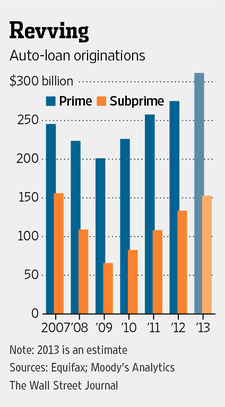
Nokia Investors Nearing Reward as Microsoft Proceeds Loom

Nokia Investors Nearing Reward as Microsoft Proceeds Loom

As Nokia Oyj (NOK1V) nears the completion of the $7.4 billion sale of its handset unit to Microsoft Corp. (MSFT), investors may find out as early as this week how much of the proceeds — if any — will be theirs.

The Finnish company may return as much as 3 billion euros ($4.1 billion) to shareholders, pledging some of it as soon as tomorrow in the form a regular annual dividend, Deutsche Bank AG predicts. Nordea Bank AB estimates the payout could reach 3.7 billion euros, with Nokia probably announcing it in the second quarter. Nokia hasn’t guaranteed any payment.

Chairman Risto Siilasmaa, evaluating candidates to succeed Stephen Elop as chief executive officer, needs to balance shareholder demand for cash rewards with the company’s growth ambitions. Too generous a payout would risk leaving Nokia with insufficient funds for investments and takeovers as it builds a future without the mobile-phone business that made it famous.

“What’s required to run the business should be left in, and the excess must be distributed to shareholders,” said Markus Larsson, who helps manage about 800 million euros, including Nokia shares, at Fondita Fund Management Co. in Helsinki. “It’s reasonable that the balance sheet wouldn’t be left overflowing with cash.”

The Espoo, Finland-based manufacturer is set to gain 5.44 billion euros of cash from the divestment of the money-losing phone division it expects to complete this quarter. That would boost the company’s net cash to 6.4 billion euros, Deutsche Bank analyst Kai Korschelt estimates.

Straining Cash

Nokia is scheduled to report earnings tomorrow. The company has said it will give any cash it doesn’t need to investors, without being more specific. James Etheridge, a Nokia spokesman, declined to comment before tomorrow’s release.

Even as analysts estimate Nokia lost 465 million euros in 2013, Korschelt predicts that it will reinstate a regular annual dividend of 20 cents a share. That would cost the company about 750 million euros. Nokia scrapped the regular payout last year, leaving investors with no dividend for the first time in at least 143 years. Fondita’s Larsson also predicts a regular dividend of 20 cents. DNB Markets projects 30 cents and Swedbank AB 10 cents.

Shares of Nokia rose 0.9 percent to 5.84 euros at 11:19 a.m. in Helsinki.

By reinstating a regular dividend, Nokia would risk straining its cash should something go awry with the Microsoft deal. The company, whose debt is ranked junk by the the three main rating companies, had net cash of 2.4 billion euros at the end of September. It has 2.55 billion euros of debt due this year, according to data compiled by Bloomberg.

Stability Needed

Microsoft and Nokia announced the handset deal in September and have won approval from the European Union. They are still waiting for clearance from countries including China.

Dividend payments could also hurt Nokia’s target to bring its credit rating back to investment grade, something a robust cash balance would help with.

Moody’s Investors Service cut Nokia’s debt to B1, four levels below investment grade, in August. After the Microsoft deal, Moody’s said it could lift the rating “if Nokia’s strategic review leads to a stable business profile, and the group extends its track record of positive operating performance” and manages a conservative capital structure.

To minimize risks, Nokia may delay any payouts to shareholders until after the Microsoft deal is completed, said Sami Sarkamies, an analyst at Nordea in Helsinki. That would mean no regular dividend, he said. Instead, Nokia could pay a special dividend of as much as 1 euro a share, or 3.7 billion euros in total, most likely in the second quarter, he said.

Loeb’s Stake

Mika Heikkilae, who helps manage about 2.7 billion euros at Helsinki-based Taaleritehdas Oyj, said investors would probably settle for less.

“I’d see 50 cents in total,” he said. “This would probably satisfy shareholders.”

Fondita’s Larsson and Deutsche’s Korschelt also predict more payouts to investors, in addition to a regular dividend, once the handset-unit sale is done. Nokia may want to keep 2 billion euros on hand and earmark 2 billion euros to 3 billion euros for acquisitions, allowing it to give a total 2 billion euros to 3 billion euros to investors, Korschelt estimates.

In October, activist Daniel Loeb’s Third Point LLC disclosed a stake in Nokia and predicted the company is likely to pay a special dividend or do a stock buyback after the Microsoft deal. Loeb also expressed confidence in Nokia’s remaining businesses.

Next CEO

When the Microsoft deal closes, Nokia will mainly become a manufacturer vying with Ericsson AB (ERICB) and Huawei Technologies Co. in selling network gear such as base stations and antennas to carriers. It also has a digital-maps business and an advanced-technologies unit that licenses Nokia patents.

A robust balance sheet would help Nokia’s next CEO engineer a revival for those businesses. Revenue at the network-equipment unit fell 26 percent in the third quarter, in part because of pulling out of less-profitable service contracts. Sales at the maps business slumped 20 percent and Nokia’s income from licensing patents had an annual run rate of about 500 million euros in the third quarter.

Rajeev Suri, head of Nokia’s network-equipment unit, is among applicants for the CEO job, people familiar with the matter told Bloomberg News this month. Chief Financial Officer Timo Ihamuotila has also been considered, said one of the people.

“A new CEO and strategy doesn’t guarantee success,” said Louis Landeman, an analyst at Danske Bank A/S in Stockholm. “We’ll see how they take on rivals and manage their cash level. Whoever the new boss is, the person will have a full plate.”

To contact the reporters on this story: Adam Ewing in Stockholm at aewing5@bloomberg.net; Kasper Viita in Helsinki at kviita1@bloomberg.net

Israeli Ultra-Orthodox Do the Math in Bid to Enter Workforce

Israeli Ultra-Orthodox Find Path to Work Uses Secular Education

When Shimon Shur, an 18-year-old Israeli from an ultra-Orthodox Jewish home, decided he wanted to work rather than spend his days immersed in religious studies, he first had to learn to multiply and divide.

His education at that point, grounded in his community’s tradition, consisted almost solely of learning Jewish texts such as the Talmud. He knew virtually no English and barely any math. All he knew, he said, is that such a life wasn’t for him.

“I started from zero,” said Shur, wearing a black skullcap, white shirt and black pants as he spoke at a Jerusalem institute that combines religious study with academic classes. “I didn’t know arithmetic, multiplication tables, division. I didn’t know the order of the English alphabet, not even ABCD. I hardly knew what the letters looked like.”

Pushing men such as Shur into the workforce is one of the Israeli government’s top priorities, to ease their drag on the economy. The group, called haredim for a Hebrew expression meaning “trembling before God,” are projected to grow to 18 percent of the population by 2030, from 11 percent in 2010.

Because their community values full-time study above any paid occupation and rejects Israel’s obligatory military service, many of its men remain outside mainstream Israeli society. About 46 percent of working-age men in the community were employed in 2011, the most recent year available, compared with 78 percent for all Israeli adult males.

Income comes from government stipends, charity and, in many cases, a working wife. Unlike men, haredi women are educated in such work-oriented fields as teaching and software engineering after they get 12 years of religious and secular education.

Bank of Israel Governor Karnit Flug expressed concern about the relatively low workforce participation of haredi men, and Israeli Arab women. In her first speech after the cabinet approved her appointment, she said “changes in employment patterns” were necessary to allow continued economic growth.

Growth Reduction

“This is a strategic threat for the Israeli economy and for Israeli society — one that we must not ignore,” Flug said on Oct. 29.

A year before, then-Bank of Israel Governor Stanley Fischer, whom President Barack Obama has nominated as vice-chairman of the Federal Reserve, also called attention to the trend in a group whose birthrate is 6.5 children per family, versus three per family for all Israelis.

“I very much respect the ultra-Orthodox population, but I must say a continued increase in the share of the population which does not participate in the workforce cannot continue forever, and so has to stop,” Fischer said in a Jan. 2, 2012, speech.

Ending Subsidies

The opportunity to overcome entrenched political opposition to getting more haredi men into the labor force arose after elections a year ago. Prime Minister Benjamin Netanyahu was able to form a government without two ultra-Orthodox parties, Shas and United Torah Judaism, that had been part of almost every ruling coalition for the past 30 years.

Taking their place was new political faction Yesh Atid, which had campaigned against military service exemptions and subsidies for the haredim.

Yesh Atid chairman and new Finance Minister Yair Lapid proposed a bill last year to reduce the number of military exemptions for ultra-Orthodox students in religious schools to a maximum of 1,800. The remainder would be subject to the draft after a certain age; now all are exempt while in yeshiva, or religious schools.

Concurrently, those already over the age of 22 would get a permanent draft exemption, freeing up about 28,000 haredi men to start working. The bill passed its first reading in July and is under discussion in parliament.

Child Allowances

Facing budgetary pressures, the government last year also cut child allowances that had helped support many large families in the community, increasing the economic incentive for haredi men to start making a livelihood.

With unemployment at 5.5 percent, a 30-year low, Lapid says he’s confident the economy will be able to absorb the new workers, even if many lack the math skills and English that are taught to all Israelis in schools outside the ultra-Orthodox educational system.

The Economy Ministry has earmarked 500 million shekels ($143 million) over the next five years for programs to give haredi men the needed skills.

Included are programs to offer vocational training, job placement services and employment counseling. The first “one-stop” job center is operating in Bnei Brak, the largest haredi-majority city in Israel and one of the country’s poorest communities. A second is set to open in Jerusalem in March and another half-dozen are planned across the country this year.

Resume Preparation

On one recent morning, several men gathered around a large conference table in a classroom at the center, watching a Power Point presentation on preparing job resumes. Instructor Dudi Stern advised them against using an e-mail address and home phone number instead of their names — a practice some follow because they can’t even write their names in English.

The government is also helping support a pilot program combining religious studies with English, math and computer training for students from yeshiva. Shur has been there for one month and has made progress, though he is still finding it difficult.

“The challenge is to break through all the obstacles: in English, learning a new language; and in math, developing the logic that you didn’t have until now,” said Shur. “It doesn’t matter how talented someone is, math is a different way of thinking.”

In addition to the academic demands, the young men have lost their “framework” — the yeshiva, said Rabbi Karmi Gross, who runs the center. Many are rejected by their families and community, he said. His program provides religious as well as emotional support to encourage success.

Kosher Requirements

Shur, who said he wants to go into white-collar work, found that one of the hardest parts of his decision was explaining it to his family. They expected him to attend yeshiva.

“It was a difficult process, telling my parents, destroying their dream for me,” he said.

Even with the new vocational tools, cultural impediments may discourage some employers from hiring haredi men. Companies may have to take into account kosher dietary laws in cafeterias and requests for time set aside for daily prayers, as well as traditions of modesty that discourage associating with any members of the opposite sex outside their families.

One company that was successful in integrating such workers is Jerusalem’s NDS Technologies Israel Ltd., which develops software for digital and pay-television systems. It was acquired in 2012 by Cisco Systems Inc. (CSCO) The company provides haredi workers with strict glatt-kosher eating spaces and accommodates requests for same-sex work areas.

Technology Needs

“The high-tech industry needs more workers, so it’s a win-win for us and for Israel,” said Zika Abzuk, a business development manager for the company. “There’s work to be done on both sides of the equation to overcome prejudices and fear from both haredim and employers.”

Technology companies, where software developers often work in small teams easily segregated if necessary, can provide a good environment for haredim, said Gershon Porush, a projects manager at Cisco who himself emerged from that background a quarter-century ago.

Based on his own experience, Porush co-authored a report submitted to the government in July laying out a detailed plan for developing a central authority to oversee and expand on educational and training programs for the ultra-Orthodox.

Analytic Capabilities

The report argues that despite cultural obstacles, haredi men who have spent years engaged in intensive communal study of Jewish texts are particularly suited for such work, “since they excel in learning ability, analytic capabilities developed in cooperation, and teamwork.”

Those obstacles haven’t disappeared, said Maor Israel, 19, who studies in the same program as Shur.

“A lot of guys I learned with at yeshiva say ‘Good for you, I would like to do the same but it’s hard for me,” he said. “They are afraid of the reaction from their family, friends and yeshiva heads.”

To contact the reporters on this story: Calev Ben-David in Jerusalem at cbendavid@bloomberg.net; Alisa Odenheimer in Jerusalem at aodenheimer@bloomberg.net

Can Apple and Amazon Make TV Better?

Can Apple and Amazon Make TV Better?

It’s hardly a surprise that many people are excited by the prospect of Apple Inc. and Amazon.com Inc. selling television programming over the Web. But these tech aces may not do much better than the hated cable companies.

In the popular mind, the folks who make and sell the pipes that let us watch TV and surf the Internet are evil monopolists that gouge consumers. Service would improve if only there were more competition.

Investors see something else: mounting costs, high capital expenditures and low profit margins. Cable companies must pay the networks if they want to carry live events and popular programs, even if the networks already broadcast their content freely over government-owned airwaves. Hit shows and sports ensure that the networks always have leverage to extract higher rates. They — not the owners of the cable lines — look more like the real monopolists.

Just consider how CBS Corp. held Time Warner Cable Inc. over a barrel a few months ago. This power imbalance explains why Time Warner Inc. spun off Time Warner Cable, with its lower profit margins, back in 2009. It also explains why Comcast Corp. was so keen on buying NBC Universal, a content producer, from General Electric Co.

There’s no good reason to think Apple and Amazon would do any better. Consider Netflix Inc., the current leader in streaming television and films over the Internet. Whenever its contracts with the networks and Hollywood studios come up for renewal, it has to choose between paying much higher fees and ditching a significant chunk of its content. Netflix has responded by spending hundreds of millions of dollars on original television series and movies. It’s more attractive for it to invest in new material rather than pay for content produced by others. Amazon, which also has a streaming service, has also decided to invest in original content. Hulu, another streaming service, doesn’t have these problems because it is owned by the big networks.

Perhaps the company with the best chance of making money on Internet television is Verizon Communications Inc., which is already in the telecommunication business. Over the past few months, it has bought companies that give it the technology to stream existing content directly into your television through a Web connection. These may well be defensive acquisitions to remove a challenge to its cable business. A likelier explanation is that it wants to distribute programs to parts of the country where its FiOS cable service isn’t available.

According to data compiled by Bloomberg Industries, Verizon had only about one-seventh as many paying cable television subscribers as Comcast and Time Warner put together. Verizon would love to sell more subscriptions to cable television content without having to actually install more physical cable. If the prices were right, customers might choose to get Web access from one of Verizon’s competitors while paying Verizon to stream television content over the Internet. The benefit to consumers would come from increased competition among existing cable businesses, not glitzy tech companies.

Of course, Verizon’s strategy won’t be successful if it can’t win customers with lower prices. That, in turn, depends on the fees for programming charged by the networks. No wonder Bloomberg News reports that Verizon “has been asking media companies if a streaming service would require new contracts for shows.”

Whatever the answer, Verizon’s recent acquisitions were probably wise. The cost was only a few hundred million dollars, a fraction of a percent of Verizon’s $135 billion market value. It’s best to think of them as cheap options that pay off if Verizon can get a good deal on the fees it pays to carry content.

(Matthew C. Klein is a writer for Bloomberg View. Follow him on Twitter.)

With Asia Conquered, Golf Looks to Latin America

With Asia Conquered, Golf Looks to Latin America

Globalization is a focus not just for the business elite gathered this week in Davos but also for professional golf.

The Masters Tournament, the U.S. Golf Association and the R&A have teamed up to bring a golf tournament to Argentina as part of “an initiative for the development of the game in Latin America.” The Latin America Amateur Championship will be Jan. 15-18, 2015, at Pilar Golf Club in Buenos Aires, giving 120 of the region’s top amateurs a chance to earn a spot in the Masters.

Recent years have seen golf’s growth mirror economic development in emerging markets. Leader boards at major tournaments are speckled with players from Europe, Asia and Australia (with some alarmist articles spouting concern at the foreign threat to American dominance in the sport). In 2009, the Masters and the R&A established the Asia-Pacific Amateur Championship, whose winner also has the chance to play at Augusta. The culmination of the sport’s globalization will occur in 2016, when golf will be included in the Summer Olympics in Rio de Janeiro.

Expansion to Latin America also demonstrates a cultural shift in golf, a sport traditionally associated with wealth and nobility and whose cost, space and equipment requirements are generally too great for poorer populations. The late Hugo Chavez criticized golf as “a bourgeois sport,” as his loyalists tried to close golf courses in Venezuela. The emergence of players such as Argentina’s Angel Cabrera and Colombia’s Camilo Villegas on the PGA Tour has gone a long way to reshape golf’s image.

Of course, there are still challenges to growing a sport in a part of the world defined by poverty and corruption. Look no further than the mess leading up to this year’s World Cup, as Brazil struggles to meet budgets and construction deadlines for a sport that already has an enormous following in the region. But with many beautiful golf courses in place and the backing of the sport’s major governing bodies, Latin America looks to be the new frontier in golf’s push to go global.

(Kavitha A. Davidson is a Bloomberg View columnist who writes about sports. Follow her on Twitter at @kavithadavidson.)

A formula for spotting tycoons is a holy grail; Business leaders share many characteristics but defy attempts to be categorised

January 21, 2014 3:10 pm

A formula for spotting tycoons is a holy grail

By Luke Johnson

Business leaders share many characteristics but defy attempts to be categorised

Whenever I am on a public panel, I am asked one question more than any other: what is the magic that creates an outstanding entrepreneur? This week Gallup unveiled some of the findings from new research into this question. It has spent a decade on the project, called the Entrepreneurial StrengthsFinder, andinterviewed more than 5,000 people. While the full results will be published this year, it says it has identified 10 key innate traits that highly successful entrepreneurs possess and labelled them like this: business focus, confidence, creative thinker, delegator, determination, independent, knowledge-seeker, promoter, relationship-builder and risk-taker. Read more of this post