What Will AAPL’s Profit Margins Be? Just Ask Foxconn… And Discover A Stunning Development In China-US Wage Parity

What Will AAPL’s Profit Margins Be? Just Ask Foxconn… And Discover A Stunning Development In China-US Wage Parity

Tyler Durden on 01/27/2014 15:23 -0500

In just over an hour Apple will report earnings which are expected to be a sole silver lining among the otherwise dreary retail landscape of the fourth quarter. However, those curious for an advance glimpse of what AAPL’s margins may be are advised to look no further than its chief supplier – Taiwanese mega contract manufacturer FoxConn, with over 1.2 million employees on the mainland. The reason Foxconn may be of interest is that as Reuters reports, as a result of soaring wages on the mainland, and in its ongoing strategy to keep worker compensation as razor thin as possible, the fabricator is now actively looking to expand outside of China. Among the places considered? Indonesia of course. And, drumroll, the United States! In other words, from the perspective of Foxconn, US labor now has greater wage competitiveness than China.

From Reuters:

Beset by rising costs and labour unrest in China, Chairman Terry Gou told employees on Sunday that Foxconn is considering diversifying away from its manufacturing heartland. The world’s largest contract maker of electronic goods has little choice if it’s to protect margins and stay ahead of peers who have adapted the Foxconn playbook into their own success stories.

“The U.S. is a must-go market,” said Gou, speaking at the group’s annual party on Sunday to mark the end of the Chinese year. Many customers and partners have asked Foxconn to open shop in the U.S., Gou said, with an eye on advanced manufacturing much closer to their home base.

At the same time, Indonesia will be a top priority this year as a potential production base with attractive costs and skills. That would tie in with Foxconn’s deal to design and market phones in the country with BlackBerry Ltd as the Canadian company seeks to reverse its decline in the smartphone business.

“Foxconn has no choice but to do it,” said Danny Lee, a fund manager of Mega Financial Holding’s fund unit. “China is no longer a manufacturing hub for companies worldwide, especially so for the PC industry.”

In the U.S., Foxconn businesses like flagship unit Hon Hai Precision Industry Co Ltd, Foxconn Technology Co Ltd and FIH Mobile could take advantage of geographical proximity to open up new deals with partners like Apple as they develop new gadgets.

“I think they’re looking more closely at the U.S. in order to move closer to some of their biggest clients. Obama is also really pushing to return manufacturing to America and boost employment opportunities,” said Kuo Ming-Chi, an analyst at Taipei-based KGI Securities.

This is indeed a stunning development: recall that we asked, rhetorically, back in May 2011 “With China Forecast To Reach Wage Parity With The US In Five Years, Is A New Manufacturing Golden Age Coming To The US?” Or some time in early 2016. Well, nearly 3 years later, we get the first proof that wage parity may indeed be coming, and much faster than previously expected.

Is the Fed to thank for this imminent manufacturing renaissance? Recall what we said in 2011:

the more the Fed exports inflation, paradoxically the faster the US manufacturing job base would see a long overdue renaissance.Which certainly means that the Fed will never stop with its monetary easing stimulus until such time as labor costs in the two countries, on whatever subjective metric is dominant, finally hit parity. The only question, as noted above, is what will China do in the interim as it realizes the Fed has put it in check – will China focus on developing its middle class, with an outcome being the mirror image of the current Nash equilibrium, in which the Chinese middle class would buy from the US, or will China defect before the “export country” to “consumer class” transition is complete and everything falls apart.

It is quite possible that while China was napping, the Fed’s exporting of wage inflation just succeeded to get the US to relative wage parity with China – something most considered impossible as recently as 5 years ago. However, if indeed true, this means that the Chinese response will only have more urgency now that it suddenly may find itself competing with workers from places such as the US.

In the meantime, if Foxconn’s margins have indeed collapsed as the above would seem to suggest, watch as they pass through these rising labor costs to its marquee clients. Like Apple. For the answer if this indeed happened, we will know in just about an hour.


Why Some Flu Viruses May Be More Contagious Some Viruses Can Survive on the Fingertips Longer Than Others

Why Some Flu Viruses May Be More Contagious

Some Viruses Can Survive on the Fingertips Longer Than Others

ANN LUKITS

Jan. 27, 2014 6:53 p.m. ET

Not all flu viruses are the same. Some are hardy survivors.

Some influenza viruses can survive and remain infectious on the fingertips for at least 30 minutes, long enough to transmit the flu to oneself or others, says a study in the January issue of Clinical Microbiology and Infection.

Flu is transmitted from person to person mainly by inhaling tiny virus particles that are released into the air when infected individuals cough and sneeze. Direct contact with contaminated fingers is considered an equally important method of transmission. Researchers sought to find out if the type or size of the flu virus affects its survival.

Experiments in Geneva involved two common influenza viruses: H3N2 and H1N1, the virus that triggered a global flu pandemic in 2009. Both viruses are included in the 2013-14 flu vaccine and are causing most of the world’s current flu illnesses, according to a recent World Health Organization bulletin.

Six volunteers with experience handling laboratory viruses were recruited. In separate experiments, droplets of H3N2 and H1N1 mixed with respiratory secretions from infected patients were deposited on three fingertips of each volunteer. The subjects’ fingers were undisturbed and kept at room temperature before testing for the presence of viral particles at various intervals. Particles were classed as “survived” if they were capable of propagating in laboratory cell cultures.

Both flu viruses were infectious on all 18 fingers after one minute. At three minutes, H3N2 was infectious on six fingers while H1N1 remained infectious on 15. At five minutes, H3N2 and H1N1 were infectious on five and eight fingers, respectively. H1N1 remained infectious on five fingers after 15 minutes compared with four fingers contaminated with the H3N2 virus. After 30 minutes, the number of infectious fingers dropped to two for each virus.

Larger droplets of H3N2 and H1N1 were found to contain a higher concentration of viral particles and remained infectious longer than smaller droplets with fewer particles. But smearing flu droplets over the fingertip reduced their infectiousness compared with untouched droplets, the study found.

H1N1 appeared to be hardier than H3N2, the researchers said.

The researchers noted that the study involved only a small number of subjects and viruses.


The world’s biggest salmon farmer, Norway’s Marine Harvest, is looking to rally U.S. investors around the aquaculture sector’s role in meeting a substantial portion of the world’s growing need for food

Marine Harvest Seeks to Garner Interest From U.S. Investors

Company Seeking Organic Growth Together With Mergers, Acquisitions

KJETIL MALKENES HOVLAND

Jan. 27, 2014 8:22 a.m. ET

OSLO—The world’s biggest salmon farmer, Norway’s Marine HarvestMHG.OS -1.06% is looking to rally U.S. investors around the aquaculture sector’s role in meeting a substantial portion of the world’s growing need for food through increased fish production.

Marine Harvest will be listed on the New York Stock Exchange Tuesday, joining U.S.-listed protein companies that may be more familiar to American investors, including Tyson Foods Inc. TSN -0.35% and Sanderson Farms Inc. SAFM -1.86% It will be the first listing abroad by one of the many companies in Norway’s booming aquaculture industry.

“There are many U.S.-listed protein companies. We want to be the first one based on protein from the ocean,” Marine Harvest Chief Executive Alf-Helge Aarskog said. He noted that some of the key land-based protein farmers are priced higher than Marine Harvest.

Marine Harvest isn’t seeking to raise new funds through the listing of American Depository Receipts on the Big Board. It’s looking instead to attract more interest—including broadening its appeal to institutional investors who have previously been limited in their ability to invest. “We want to grow even faster,” Mr. Aarskog said, adding that his company would like to couple organic growth with mergers and acquisitions and farm species in addition to salmon.

Food producers are among a number of agricultural-related companies benefiting from a predicted rise in demand for food. Farmed fish, representing only 9% of the global fish production for human consumption in 1980, are now responsible for 47% of the stock, according to the United Nations’ Food and Agriculture Organization.

The Oslo-based farming giant, which produces more salmon than any other company in the world, has a market capitalization of 31.1 billion Norwegian kroner ($5.1 billion). Marine Harvest has been expanding from fish farming into fodder production via acquisitions, and it has established facilities in Asia while also constructing a new fodder plant in Norway.

The company, forged from a merger in 2006 with Pan Fish ASA and Fjord Seafood ASA, is 27% owned by Geveran Trading Co., an entity controlled by shipping magnate John Fredriksen.

Norway’s fish-farming industry has seen rapid growth over the past 40 years, becoming the second-largest fish exporter after China as of the beginning of this decade. And times have been good for the industry’s key players. Mr. Aarskog said that “2013 was a good year for salmon prices.” While production volumes remain steady, “demand is growing,” with more people eating sushi and smoked salmon.

The rise of fish farming comes amid concerns about overfishing in the world’s oceans. Captured-fish volume has stabilized at around 90 million tons annually, while the output of farmed fish has expanded by 60 million tons, or 12 times its volume in the three decades ending in 2010, the U.N.’s FAO said.

Growth has come with concerns. Fish farmers, including Marine Harvest, face threats that include disease, fish escape, tighter regulations and the need to use lower-protein vegetable fodder as global overfishing limits access to higher-protein feedstock. Major investments are also needed to fight parasites, Mr. Aarskog said.


Gandhi Fails to Impress in TV Interview Debut

January 27, 2014, 11:39 PM

Gandhi Fails to Impress in TV Interview Debut

NIHARIKA MANDHANA

In the first extended television interview of his political career on Monday night, Rahul Gandhi probably didn’t win many converts.

Fielding sharp questions from TV anchor Arnab Goswami, Mr. Gandhi, who is now leading the electoral charge of India’s ruling Congress party, offered nary a sound bite. He avoided passionate responses and wasn’t goaded into attacking his main adversary, opposition leader Narendra Modi of the Bharatiya Janata Party.

Instead, Mr. Gandhi struck a wonky tone, articulating what he said was a long-term agenda to revamp his own party and India’s political system, which he called closed and predatory, doing too little to help the hundreds of millions of poor in the world’s second-most-populous country.

Mr. Gandhi, the fourth generation scion of the Nehru Gandhi family, said he disliked the widespread prevalence of dynastic politics in India. On his own position of privilege, Mr. Gandhi said he hadn’t chosen to be born in India’s most politically powerful family, but was now faced with a choice, he said, between walking away and sticking around to drive change.

Mr. Gandhi brushed aside as “superficial” questions about recent corruption scandals or how he would lead his party to victory in the forthcoming general elections, which are due by May. He said repeatedly his party would win the elections, but added that he wasn’t afraid of defeat.

“What I was scared of,I lost,” he said, referring to the assassinations of his grandmother Indira Gandhi and his father Rajiv Gandhi. “I’m not scared of anything,”

Mr. Gandhi said he would remain single-minded in his effort to change Indian politics. He repeatedly emphasized the need to transform the way candidates are picked to fight elections, the concentration of political power in a few hands and barriers to the empowerment of women.

“He laid out a 20 year plan to change politics, but didn’t quite spell out how he would do it or what his party would do in the interim,” said Ashok Malik, a Delhi-based political analyst.

When asked specific questions, Mr. Gandhi sought to draw the conversation back to what he saw as the fundamental questions. Mr. Gandhi complained that he hadn’t been asked about “how we will build this country or how we will empower our youngsters.”

Siddharth Varadarajan, an analyst, said in a televised interview that Mr. Gandhi had failed to turn his call for change into a concrete plan addressing real political questions.

“He is unwilling to engage the politics today,” Mr. Varadarajan said.

Mr. Gandhi didn’t offer his opinion of Narendra Modi, the opposition Bharatiya Janata Party’s prime ministerial candidate. He accused Mr. Modi’s government of “abetting and pushing” deadly riots in Gujarat in 2002, but didn’t offer specifics.

On several questions on a series of corruption allegations involving his party’s governments and leaders in the last decade, Mr. Malik said he seemed out of his depth.

“But then, when you’re going to be asked about 10 years of a government’s time in office and 60 years of your party’s work, you can’t be entirely prepared,” Mr. Malik said


Indian Investors Lose Faith; Country’s Retail Stockholders Are Dumping Shares After Years of Nursing Losses

Indian Investors Lose Faith

Country’s Retail Stockholders Are Dumping Shares After Years of Nursing Losses

SHEFALI ANAND

Jan. 27, 2014 6:11 p.m. ET

MUMBAI—India’s blue-chip stocks have held up relatively well in the recent emerging-market selloff. But that is little consolation to the country’s retail investors, who are dumping shares after years of nursing losses.

Many individual investors in the world’s second-most-populous country have grown disillusioned with paltry returns on shares of small and midsize companies. Although these companies account for the vast majority of the stocks listed on the Bombay Stock Exchange, they have fallen behind the 30-share benchmark Sensex index since the 2008 financial crisis. Many of these firms have struggled to grow amid a sharp slowdown in India, and some are struggling to repay debt taken on when India’s economy was booming in the mid-2000s.

Individual investors in India in the past have been a key driver of the country’s stocks, and the absence of many of these investors from the latest run-up raises questions about the prospect of further meaningful gains and exposes the market’s vulnerability to fleet-footed global investors.

The Sensex hit a fresh record Thursday, the same day the MSCI Emerging Markets Index slid on weak Chinese economic data. India’s blue-chip index is down 3.1% since then, compared with a 4.6% decline in the MSCI.

India’s broader S&P BSE 500 index in recent days has trailed the Sensex and is 15% below its record set in January 2008. Another index that reflects share-price performance of medium-size companies remains 38% below its 2008 record.

From the start of September through Friday, Indian mutual funds, a proxy for the behavior of individual investors, unloaded $1.6 billion of shares, representing an acceleration of selling from earlier in the year, according to data from the Securities and Exchange Board of India.

In the same period, foreign institutional investors poured about $9 billion into Indian stocks, according to the regulator. This represents a pickup in buying by global fund managers, many of whom are betting the growth outlook for India’s downtrodden economy will brighten if federal elections in the spring usher in reform-minded lawmakers.

Analysts and strategists attribute the rise in Indian shares in past months partly to these foreign inflows.

But many retail investors aren’t convinced that the gains will stick. India’s economy is forecast to rise 4.8% in the year ending March 31 by trade association Federation of Indian Chambers of Commerce and Industry. That would be the worst showing since 2003.

Phiroj Uttaray, a 34-year-old engineer in the eastern state of Orissa, first invested in stocks in 2005. Mr. Uttaray bought mostly smaller companies, such as wind-turbine maker Suzlon Energy Ltd. 532667.BY +2.15% and engineering firm and property developer Hindustan Construction Co. 500185.BY +1.73% Both companies are wrestling with heavy debt burdens, which have crimped profits. In the span of a year, shares of Suzlon Energy rose almost 50%, closing at a record 2,273 rupees ($36.23) on the National Stock Exchange in early January 2008. Wednesday, the stock closed at 10.25 rupees.

Mr. Uttaray has seen the value of his portfolio of shares fall more than 85% since 2008, and lately has been paring his holdings. “I’ve lost faith,” he says.

image001-3

Out of the 500 companies in the S&P BSE 500 index, 30 companies have attracted two-thirds of foreign-investor inflows since 2012 through Sept. 30, 2013, according to estimates by BNP Paribas Securities India. Some, but not all, of the 30 companies are components of the Sensex.

These companies, such as HDFC Bank Ltd. 500180.BY +0.07% , software firm Tata Consultancy Services Ltd. 532540.BY +0.30% , and cigarette maker ITC Ltd.500875.BY -1.11% , remain a draw for foreign investors because they are perceived to be better-managed and have less exposure to the unpredictable nature of India’s politics and domestic economy.

Anjun Zhou, managing director and head of Multi-Asset Research at Mellon Capital Management Corp., which oversees $350 billion of assets, expects Indian shares to benefit from a faster pace of growth boosted by a rise in exports. The money manager holds Indian shares, mostly blue chips.

But Ms. Zhou says domestic investors’ flagging participation in India’s stock market could discourage global investors from boosting their own exposure. “We do monitor what domestic investors are doing, and we try to understand the reason behind their caution,” she says.

Not all domestic investors are staying away. Mumbai banker Raj Sen, 39, says his portfolio of individual stocks has lost value since 2011, but he has since turned to buying stock mutual funds instead to capture a larger swath of the market. He believes stocks will rise over the longer term as increasing consumption by India’s one-billion-plus population drives economic growth.

“Opportunity is still there,” Mr. Sen says.

Still, many of India’s retail investors are waiting for the right moment to sell.

Mansukhlal Mehta, 73, has been investing his retirement savings in stocks since 2000. He says the value of his stock investments has been halved in the past five years, and he expects more tough times ahead.

“I feel that things are not going to go that well,” says Mr. Mehta. Small investors and their brokers, he says, “are all crying, every day.”


Trading on Abenomics

Trading on Abenomics

Japan needs to stop worrying and learn to love imports.

Jan. 27, 2014 11:58 a.m. ET

News that Japan in 2013 notched its biggest trade deficit since 1985 is shaking a country long accustomed to being a big-time exporter. Much of the angst is overdone. But there are some important lessons in the data for Prime Minister Shinzo Abe as his economic revival program enters its second year.

The merchandise trade deficit for the year came to 2.4% of GDP, despite some decline in December. Exports started to pick up a bit as anemic recoveries in Europe and the U.S. grind on and trade ties with China rebuild after political tensions over territorial disputes. The key point is that the eye-grabbing headline numbers are mainly an artifact of Mr. Abe’s weak-yen policy. This helps explain the increase in exports and imports, although not in the way many suppose.

Conventional wisdom holds that a weaker yen allows Japan Inc. to boost export volumes by cutting its foreign-currency prices and gobbling up market share abroad. Yet Japanese companies have instead booked higher yen-denominated profits on a falling volume of exports. Note that while exports in 2013 fell 1.5% compared to 2012 when measured in units shipped, measured by value they increased 9.5%. The weak yen also boosted the value of imports, which increased some 15% when measured by yen-denominated value but grew only 0.4% in volume.

That is not to downplay the significance of the yen-denominated trade deficit. The quantity of yen Japanese are earning and spending matters, not least to the Japanese themselves. But understanding the monetary aspect of the trade data explains why Mr. Abe’s monetary policies won’t fix the economy, and what he should be doing instead.

On the corporate side, companies have enjoyed a weak-yen windfall over the past eight months, and the central bank’s Tankan survey suggests managers are starting to believe the yen may remain around its current level for the longer term rather than rebounding to its pre-Abe strength. That would normally encourage companies to invest in new capacity.

But managers also recognize that manufacturing is an increasingly dicey proposition in Japan. Costs remain high, and in the case of imported inputs are rising thanks to yen weakness. An aging population coupled with strong popular resistance to immigration suggest manufacturing labor will be ever-harder to come by.

This helps explain why, while corporate investment has picked up somewhat in recent months, companies are holding back and are reluctant to commit themselves to wage hikes. Despite more generous one-time bonuses, nominal wages are more or less stagnant.

That means real wages are falling, thanks to the inflation Mr. Abe’s monetary policy is starting to create, as evidenced by the run-up in import values. Households also face a three-percentage-point hike in the consumption tax come April. Little wonder that consumer confidence has fallen significantly after an initial bout of enthusiasm when Mr. Abe launched his revival plan.

The trade deficit by itself isn’t worrying. An aging society such as Japan’s inevitably will import more than it produces, while exporting capital to earn returns that allow it to pay for its imports. But the growing gap between Abenomics and reality is a problem.

The weak yen was supposed to stimulate exports, which was supposed to stimulate corporate investment and wage growth, which was supposed to stimulate domestic consumption. That chain hasn’t materialized. Instead, companies are earning more today but still worry about their future amid weak export volumes, while households are saddled with inflation fears.

Mr. Abe might instead try “leaning in” when it comes to the trade deficit. His most important proposal to date would do precisely that: If Japan signs on to a Trans-Pacific Partnership multilateral trade deal, it will open the economy to an unprecedented amount of imports. The new competition will stimulate more of the corporate investment Japan needs in long-sheltered and highly inefficient domestic-facing service industries.

This might be a tough sell for a public long accustomed to thinking of Japan first and foremost as a high-tech factory for the world, and for investors with a similar mindset. But the recent run of trade deficits is a reminder that change will come to Japan one way or another. Mr. Abe’s real challenge is to align economic policies to reality before reality strikes back.


Enough is enough, Silicon Valley must end its elitism and arrogance

Enough is enough, Silicon Valley must end its elitism and arrogance

By Vivek Wadhwa, Updated: January 27 at 10:59 am

When computers were just for nerds and large corporations, Silicon Valley’s elite could get away with arrogance, insularity and sexism. They were building products for people that looked just like them.  The child geniuses inspired so much awe that their frat-boy behavior was a topic of amusement.

Now technology is everywhere.  It is being used by everyone. Grandma downloads apps and communicates with junior over Facebook. Women are dominating social media and African Americans are becoming Twitter’s fastest-growing demographic group.

The public is investing billions of dollars in tech companies and expects professionalism, maturity, and corporate social responsibility.  It is losing its tolerance for elitism and arrogance.

Note what just happened when Silicon Valley luminary Tom Perkins wrote to the Wall Street Journal to complain of public criticism of the Bay Area elite and his ex-wife Danielle Steel. He said “Writing from the epicenter of progressive thought, San Francisco, I would call attention to the parallels of fascist Nazi Germany to its war on its ‘one percent,’ namely its Jews, to the progressive war on the American one percent, namely the ‘rich.’”

There was such an outpouring of anger on social media over the comparison to the Nazi genocide that the venture capital firm Perkins founded, Kleiner Perkins Caufield & Byersdisavowed its association with him. Tech blogs and newspapers lashed out. Silicon Valley heavyweights such as Marc Andreessen and Marc Benioff expressed their disapproval. It is a rare thing in Silicon Valley for any venture capitalist or CEO to speak up against a tech luminary — no matter how much out of line he may be. So this was a surprise.

The Perkins controversy is the tip of the iceberg. Kleiner Perkins is itself embroiled in a sexual-harassment scandal that it chose to litigate rather than settle. When Twitter filed for an IPO with an all-male board, the New York Times slammed it for being an old boys’ club. Rather than admitting that his company may have erred, Twitter CEO Dick Costolo chose to lash out publicly against a critic—me—for expressing outrage in the article. A few weeks later, Twitter gave in to the growing backlash and announced a woman director. There was no apology or humility, however.

In most industries, discriminating on the basis of gender, race, or age would be considered illegal. Yet in the tech industry, venture capitalists routinely show off about their “pattern recognition” capabilities. They say they can recognize a successful entrepreneur, engineer, or business executive when they see one. The pattern always resembles Mark Zuckerberg, Bill Gates, Jeff Bezos, or them: a nerdy male. Women, blacks, and Latinos are at a disadvantage as are older entrepreneurs. VCs openly admit that they only fund young entrepreneurs and claim that older people can’t innovate.

It isn’t just venture capitalists who are insensitive to federal employment-discrimination laws. Most tech companies refuse to release gender, race, or age data. They claim this information is a trade secret. Whatever data are available reveal a strong bias towards young males.

In his letter to Wall Street Journal, Tom Perkins complained of the outraged public reaction to Google buses carrying technology workers and to rising real-estate prices. But these are genuine grievances. Long-time residents of San Francisco are being displaced because of skyrocketing rents. Bus stops are being clogged with fleets of luxury buses. The tech industry is taking advantage of the investment that taxpayers made in public infrastructure, the Internet, and education—without giving much back or even acknowledging its debts to society.

Silicon Valley’s tech companies are also disconnected from the communities in which they live. They remain aloof about the problems that the poor face. Very few help set up soup kitchens, build houses for the homeless, or provide scholarships for disadvantaged children. Tech moguls such as Peter Thiel go as far as admonishing the value of higher education itself—and paying children $100,000 to drop out of college. Most startups focus on building senseless social media-type apps or solving the problems of the rich—and that is what venture capitalists typically fund.

Silicon Valley has an important role to play in solving the world’s problems.  It is the epicenter of innovation. Most technologists I know have a social conscience and want to do whatever they can to make the world a better place. Yet the power brokers—most venture capitalists, super-rich angel investors, and CEOs consistently show a disregard for social causes. They display a high level of arrogance, demand tax cuts for themselves, and have a don’t-care attitude. As demonstrated by the Perkins letter, this sends the wrong message to the world and holds Silicon Valley back.

It is time for the Silicon Valley elite to smell the coffee and realize that the world has changed—and that they must too. It is time for tech entrepreneurs to focus on solving big problems and giving back to the world.


Some Thais Want Their Political Rivals to Stop Playing the Royal Card

Some Thais Want Their Political Rivals to Stop Playing the Royal Card

JAMES HOOKWAY

Jan. 27, 2014 7:40 p.m. ET

PATHUM THANI, Thailand—For decades, Thais have looked to King Bhumibol Adulyadej to referee political disputes. But with the king now 86 years old, some people here say it’s time to sort out their own problems.

Elevated to almost divine status with the help of the military during the Cold War, King Bhumibol has interceded during flashpoints over the years. Sometimes he has sided with street protesters demanding more democracy and accountability; at others, he has endorsed autocratic military rulers.

Unlike some other Asian royal houses that have faded into the background or, in Nepal’s case, been abolished, Thailand’s monarchy is still part and parcel of everyday life here, despite not having any formal power.

The royal anthem is played before sporting events and before films in movie theaters, while Thai TV news summarizes the family’s activities each day at 8 p.m. Thailand’s lèse-majesté laws penalize criticism of the royal family with prison terms of up to 15 years.

But as King Bhumibol enters the twilight of his long reign, the political divides here in Southeast Asia’s linchpin economy are widening as protesters, many of them invoking the name of the king, try to check the growing power of the country’s elected leaders. And some supporters of the populist government say it is time to stop using the king’s name for political leverage.

“We’re not really supposed to talk about these things in Thailand,” says Wutthipong Kotchathammakhun, a leader of a pro-government “Red Shirt” splinter group here, just north of Bangkok. “But we want people to understand how the establishment is using ‘the sky’ to grab power for itself,” he says, using a common term to refer to the royal family.

The king himself has remained silent on the monthslong standoff playing out on the streets of Bangkok.

The clash represents an almost existential struggle to determine what kind of country Thailand should be in the 21st century. On one side are Thailand’s traditional power bases in the military and technocratic political parties, and in the rival camp are supporters of populist politicians backed by billionaire businessman Thaksin Shinawatra.

In recent weeks, tens of thousands of mostly urban, middle-class protesters have massed on the streets of Bangkok, led by Suthep Thaugsuban, a brawny, 64-year-old political deal maker who has reinvented himself as the leader of what he calls “the people’s revolution.” The crowds are calling for Mr. Thaksin’s younger sister, Prime Minister Yingluck Shinawatra

, to quit and allow an unelected council to take over and shape Thailand’s democracy to a form more to their liking.

Ms. Yingluck has said she won’t resign and plans to press ahead with new elections set for Sunday, which she is widely expected to win and which the opposition has vowed to boycott.

The protesters aren’t coy about invoking the name of King Bhumibol. During frequent parades around Bangkok’s busy business district, many wear yellow head bands declaring “I Love the King.” Some of their placards accuse Mr. Thaksin, who was overthrown as prime minister in 2006 and now lives abroad, of plotting to usurp the king’s powers—a charge Mr. Thaksin has consistently denied, and which the king hasn’t publicly commented on.

The Thai army also has a strong and visible attachment to the monarchy.

But the more the demonstrators play the royal card—by making lèse-majesté allegations or simply waving royalist placards—the more they risk undermining the institution in the eyes of millions of Thais who have repeatedly voted for the Shinawatras.

“Everything the royalists do is working against the long-term interests of the monarchy,” says David Streckfuss, a Thailand-based scholar and author. “The lèse-majesté laws, trying to secure the positions: any of it, really, is bad for the monarchy.”

Mr. Wutthipong, a rapid-fire talk-show host on a community radio station, leads one of the most visible groups that sprang up to demand the return of democracy after the 2006 coup.

Better known by his nickname, Koh-Tee, he has a yen for donning a beret a la Argentine revolutionary Che Guevara and has constructed a makeshift open-air stage in Pathum Thani. Here, he and his followers complain about Mr. Suthep’s persistent invocation of the king, who has remained silent on the most recent political conflict.

“The royalists don’t want an election. They know they will lose, so they try to seize power any way they can,” Mr. Wutthipong, 49 years old, says, handing out Buddhist amulets to protect security guards at the rear of the stage. He has been questioned by police and released without charge in connection to clashes with Mr. Suthep’s supporters in Pathum Thani.

Other Red Shirt leaders such as Nattawut Saikeua have warned of a mass uprising if the military seizes power again.

Mr. Suthep says he is arguing only for an interim government to pursue his contentious reform plans before elections are held, and aims to prevent the Feb. 2 vote from going ahead. One protester was killed in clashes with Red Shirts Sunday after Mr. Suthep’s supporters tried to stop advance voting, adding to the nine people who already have lost their lives in political violence in recent months.

Scientific Thinking in Business

Scientific Thinking in Business

More than technology, businesses need the scientific method.

By Duncan J. Watts on January 22, 2014

Scientific thinking can help businesses torn between data and gut instincts.

Throughout history, innovations in instrumentation—the microscope, the telescope, and the cyclotron—have repeatedly revolutionized science by improving scientists’ ability to measure the natural world. Now, with human behavior increasingly reliant on digital platforms like the Web and mobile apps, technology is effectively “instrumenting” the social world as well. The resulting deluge of data has revolutionary implications not only for social science but also for business decision making.

As enthusiasm for “big data” grows, skeptics warn that overreliance on data has pitfalls. Data may be biased and is almost always incomplete. It can lead decision makers to ignore information that is harder to obtain, or make them feel more certain than they should. The risk is that in managing what we have measured, we miss what really matters—as Vietnam-era Secretary of Defense Robert McNamara did in relying too much on his infamous body count, and as bankers did prior to the 2007–2009 financial crisis in relying too much on flawedquantitative models

.

Many of the most consequential decisions offer only one opportunity to succeed.

The skeptics are right that uncritical reliance on data alone can be problematic. But so is overreliance on intuition or ideology. For every Robert McNamara, there is a Ron Johnson, the CEO whose disastrous tenure as the head of JC Penney was characterized by his dismissing data and evidence in favor of instincts. For every flawed statistical model, there is a flawed ideology whose inflexibility leads to disastrous results.

So if data is unreliable and so is intuition, what is a responsible decision maker supposed to do? While there is no correct answer to this question—the world is too complicated for any one recipe to apply—I believe that leaders across a wide range of contexts could benefit from a scientific mind-set toward decision making.

A scientific mind-set takes as its inspiration the scientific method, which at its core is a recipe for learning about the world in a systematic, replicable way: start with some general question based on your experience; form a hypothesis that would resolve the puzzle and that also generates a testable prediction; gather data to test your prediction; and finally, evaluate your hypothesis relative to competing hypotheses.

The scientific method is largely responsible for the astonishing increase in our understanding of the natural world over the past few centuries. Yet it has been slow to enter the worlds of politics, business, policy, and marketing, where our prodigious intuition for human behavior can always generate explanations for why people do what they do or how to make them do something different. Because these explanations are so plausible, our natural tendency is to want to act on them without further ado. But if we have learned one thing from science, it is that the most plausible explanation is not necessarily correct. Adopting a scientific approach to decision making requires us to test our hypotheses with data.

While data is essential for scientific decision making, theory, intuition, and imagination remain important as well—to generate hypotheses in the first place, to devise creative tests of the hypotheses that we have, and to interpret the data that we collect. Data and theory, in other words, are the yin and yang of the scientific method—theory frames the right questions, while data answers the questions that have been asked. Emphasizing either at the expense of the other can lead to serious mistakes.

Also important is experimentation, which doesn’t mean “trying new things” or “being creative” but quite specifically the use of controlled experiments to tease out causal effects. In business, most of what we observe is correlation—we do X and Y happens—but often what we want to know is whether or not X caused Y. How many additional units of your new product did your advertising campaign cause consumers to buy? Will expanded health insurance coverage cause medical costs to increase or decline? Simply observing the outcome of a particular choice does not answer causal questions like these: we need to observe the difference between choices.

Replicating the conditions of a controlled experiment is often difficult or impossible in business or policy settings, but increasingly it is being done in “field experiments,” where treatments are randomly assigned to different individuals or communities. For example, MIT’s Poverty Action Lab has conducted over 400 field experiments to better understand aid delivery, while economists have used such experiments to measure the impact of online advertising.

Although field experiments are not an invention of the Internet era—randomized trials have been the gold standard of medical research for decades—digital technology has made them far easier to implement. Thus, as companies like Facebook, Google, Microsoft, and Amazon increasingly reap performance benefits from data science and experimentation, scientific decision making will become more pervasive.

Nevertheless, there are limits to how scientific decision makers can be. Unlike scientists, who have the luxury of withholding judgment until sufficient evidence has accumulated, policy makers or business leaders generally have to act in a state of partial ignorance. Strategic calls have to be made, policies implemented, reward or blame assigned. No matter how rigorously one tries to base one’s decisions on evidence, some guesswork will be required.

Exacerbating this problem is that many of the most consequential decisions offer only one opportunity to succeed. One cannot go to war with half of Iraq and not the other just to see which policy works out better. Likewise, one cannot reorganize the company in several different ways and then choose the best. The result is that we may never know which good plans failed and which bad plans worked.

Even here, though, the scientific method is instructive, not for eliciting answers but rather for highlighting the limits of what can be known. We can’t help asking why Apple became so successful, or what caused the last financial crisis, or why “Gangnam Style” was the most viral video of all time. Nor can we stop ourselves from coming up with plausible answers. But in cases where we cannot test our hypothesis many times, the scientific method teaches us not to infer too much from any one outcome. Sometimes the only true answer is that we just do not know.

Some people find this conclusion depressing, but a scientific mind should always remain skeptical of what it knows. Be skeptical of data by all means, but also be skeptical of plausible explanations, conventional wisdom, inspiring ideologies, compelling anecdotes, and most of all your own intuition. The result should be neither total paralysis nor a slavish adherence to data, nor should it in any way exclude creativity or imagination. Rather, it should lead us to a more rational, evidence-based world.

Duncan Watts is a principal researcher at Microsoft Research and author ofEverything Is Obvious: How Common Sense Fails Us.

In Praise of Depth; “We don’t need more bits and bytes of information. What we need instead is more wisdom, insight, understanding and discernment – less quantity, higher quality; less breadth and more depth.”

JANUARY 17, 2014, 12:41 PM  12 Comments

In Praise of Depth

By TONY SCHWARTZ

Many years ago, I realized that New Year’s resolutions don’t work. This year, instead, I created a ritual. A resolution is a hope and a prayer. A ritual is a highly specific behavior done at a precise time, so that it becomes automatic over time.

My ritual is to read 25 pages each day of a book that advances my knowledge in the work I do, and 25 pages a day of a literary classic. The first I’m doing at lunchtime, and the second as soon as I get home from work.

When I returned to my office after New Year’s Day, I had a community meeting with my co-workers so we could reconnect. One of the questions each of us answered was the personal challenge we intended to take on in the new year. Before I said anything, four people on our team mentioned their desire to read more this year, and more substantively.

I’m craving more depth in my life, and so are they. My strong suspicion is that it’s because we’re drowning in so much trivia — a tsunami of texts and tweets, instant messages and Gchat; Facebook posts and bookmarked websites we mindlessly cruise; and multiple Google searches to get answers to the endless, often useless questions that happen to pop into our overcrowded minds.

The hunger we’re all feeling is for instant gratification. It’s not unlike the siren call of a fragrant chocolate chip cookie — or, for that matter, the allure of any drug that promises a frisson of pleasure.

But the dopamine squirts we get from these drugs are short-lived. They mostly prompt a craving for more — a compulsion to match the initial buzz by upping the ante in the face of diminishing returns. What we chase through our digital devices is instant connection and information. What we get is no more nutritious or enduringly satisfying than a sugary dessert.

We don’t need more bits and bytes of information, or more frequent updates about each other’s modest daily accomplishments. What we need instead is more wisdom, insight, understanding and discernment — less quantity, higher quality; less breadth and more depth.

I have a Twitter account, because I’ve reluctantly accepted that it’s part of marketing a modern business. But I don’t tweet very often, I rarely read other tweets and I’ve never read one that stayed with me for more than a moment. Nearly the same is true of my relationship to Facebook. I do succumb to both, but they mostly leave me feeling empty and distracted. I often wonder if the costs are worth the benefits.

The reality is that we each have limited working memories, meaning we can only retain a certain amount of new information in our minds at any given time. If we’re forever flooding the brain with new facts, other information necessarily gets crowded out before it’s been retained in our long-term memory. If you selectively reduce what you’re taking in, then you can hold on to more of what you really want to remember.

Over the holidays, I couldn’t resist seeing “The Wolf of Wall Street” — precisely because it sounded so seductively over the top. Within 30 minutes, I felt saturated by its pointless, numbing excess. Even so (and embarrassingly), it took me 90 minutes — half the movie – to finally get up and leave. I avoided “12 Years a Slave” for weeks because I knew it would be difficult and disturbing to watch. But once I was there, I found it utterly mesmerizing. The movie has stayed with me for weeks, and I feel deepened and enriched by it.

One of the most frequent complaints I hear at all levels in companies is about priorities. The tyranny of the urgent crowds out the work in our lives that requires more time and reflection, but has the potential to generate more long-term value. Relentless demands make it impossible for many of us to stop what we’re doing long enough to decide what most deserves our attention.

Going deeper does mean forgoing immediate gratification more often, taking time to reflect and making more conscious choices. It also requires the capacity to focus in a more absorbed and sustained way, which takes practice and commitment in a world of infinite distractions.

I’ve got nothing against simple pleasures. I love chocolate. I still watch “Grey’s Anatomy.” I read celebrity profiles in magazines. I’m just arguing against them as a steady diet and in favor of doing the more important and valuable work first, and the trivial stuff later.

Taking on a long and challenging book may not provide the instant pleasure I derive from scarfing down a big bowl of Ben and Jerry’s Heath Bar Crunch ice cream. But it does make me feel instantly better about myself. And once I’m reading Dickens, or Faulkner, or the history of psychoanalysis, the experience is more nourishing and lasting than most of what I do, most of the time.


Daniel Kahneman’s Favorite Approach For Making Better Decisions

Daniel Kahneman’s Favorite Approach For Making Better Decisions

January 23, 2014 by Shane Parrish

Bob Sutton’s new book, Scaling Up Excellence: Getting to More Without Settling for Less, contains an interesting section towards the end on looking back from the future, which talks about “a mind trick that goads and guides people to act on what they know and, in turn, amplifies their odds of success.”

We build on Nobel winner Daniel Kahneman’s favorite approach for making better decisions. This may sound weird, but it’s a form of imaginary time travel.

It’s called the premortem. And, while it may be Kahneman’s favorite, he didn’t come up with it. A fellow by the name of Gary Klein invented the premortem technique.

A premortem works something like this. When you’re on the verge of making a decision, not just any decision but a big decision, you call a meeting. At the meeting you ask each member of your team to imagine that it’s a year later.

Split them into two groups. Have one group imagine that the effort was an unmitigated disaster. Have the other pretend it was a roaring success. Ask each member to work independently and generate reasons, or better yet, write a story, about why the success or failure occurred. Instruct them to be as detailed as possible, and, as Klein emphasizes, to identify causes that they wouldn’t usually mention “for fear of being impolite.” Next, have each person in the “failure” group read their list or story aloud, and record and collate the reasons. Repeat this process with the “success” group. Finally use the reasons from both groups to strengthen your … plan. If you uncover overwhelming and impassible roadblocks, then go back to the drawing board.

Premortems encourage people to use “prospective hindsight,” or, more accurately, to talk in “future perfect tense.” Instead of thinking, “we will devote the next six months to implementing a new HR software initiative,” for example, we travel to the future and think “we have devoted six months to implementing a new HR software package.”

You imagine that a concrete success or failure has occurred and look “back from the future” to tell a story about the causes.

Pretending that a success or failure has already occurred—and looking back and inventing the details of why it happened—seems almost absurdly simple. Yet renowned scholars including Kahneman, Klein, and Karl Weick supply compelling logic and evidence that this approach generates better decisions, predictions, and plans. Their work suggests several reasons why. …

1. This approach helps people overcome blind spots.

As … upcoming events become more distant, people develop more grandiose and vague plans and overlook the nitty-gritty daily details required to achieve their long-term goals.

2. This approach helps people bridge short-term and long-term thinking

Weick argues that this shift is effective, in part, because it is far easier to imagine the detailed causes of a single outcome than to imagine multiple outcomes and try to explain why each may have occurred. Beyond that, analyzing a single event as if it has already occurred rather than pretending it might occur makes it seem more concrete and likely to actually happen, which motivates people to devote more attention to explaining it.

3. Looking back dampens excessive optimism.

As Kahneman and other researchers show, most people overestimate the chances that good things will happen to them and underestimate the odds that they will face failures, delays, and setbacks. Kahneman adds that “in general, organizations really don’t like pessimists” and that when naysayers raise risks and drawbacks, they are viewed as “almost disloyal.”

Max Bazerman, a Harvard professor, believes that we’re less prone to irrational optimism when we predict the fate of projects that are not our own. For example, when it comes to friends’ home renovation projects, most people estimate the costs will run 25 to 50 percent over budget. When it comes to our projects however, they will be “completed on time and near the project costs.”

4. A premortem challenges the illusion of consensus.
Most times not everyone on a team agrees with the course of action. Even when you have enough cognitive diversity in the room, people still keep their mouths shut because people in power tend to reward people who agree with them while punishing those who have the courage to speak up with a dissenting view.

The resulting corrosive conformity is evident when people don’t raise private doubts, known risks, and inconvenient facts. In contrast, as Klein explains, a premortem can create a competition where members feel accountable for raising obstacles that others haven’t. “The whole dynamic changes from trying to avoid anything that might disrupt harmony to trying to surface potential problems.”


An FBI Agent Reveals 5 Steps To Gaining Anyone’s Trust

An FBI Agent Reveals 5 Steps To Gaining Anyone’s Trust

January 20, 2014 by Shane Parrish

I had an opportunity to ask Robin Dreeke a few questions. Robin is in charge of the Federal Bureau of Investigation’s elite Counterintelligence Behavioral Analysis Program and the author of It’s Not All About Me.

Robin combines science and years of work in the field to offer practical tips to build rapport and establish trust. In this brief interview he discusses building relationships, how to approach someone you don’t know and ask for a favor, and the keys to establishing trust.

A lot of people are interested in strengthening and furthering relationships. How can people do this?

This is the most important aspect of everything we do in life. I’m going to give some light science behind each of my answers but to me it just explains the subjective simple explanations behind naturally great trusting relationships.

Both anecdotal (evidence) as well as science supports the fact that the greatest happiness is found in positive social interactions and relationships. The simplest answer to this is to “make it all about them.” Our brain rewards us chemically when we are able to talk and share our own views, priorities, and goals with others… long term, short term, etc. Our brain also rewards us when we are unconditionally accepted for who we are as a human being without judgement.

Both of these concepts are genetically coded in each of us (to varying degrees) because of our ancient survival instincts (ego-centrism) as well as our need to belong to groups or a tribe (tribal mentality for survival and resources). When you put these simple concepts together the answer is simple to understand, but oftentimes difficult to execute…. Speak in terms of the other person’s interests and priorities and then validate them, their choices, and who they are non-judgmentally. Some people do this naturally, for the rest of us you can build this skill and it eventually becomes second nature.

Trust is a foundation to most situations in life. How can we develop trust? What are the keys?

I can only answer from my own background and experience because trust is a very difficult thing to measure and define and each individual’s definition can vary and our brain takes in much more than verbal information when determining trust. For me and what I teach I start with what I said in question one. Trust first starts with a relationship where the other person’s brain is rewarding them for the engagement with you by doing what I outlined above.

Part two of my trust process is to understand the other person’s goals and keeping their goals and priorities on the top of my list of goals and priorities. By making the other person’s goals and priorities yours, trust will develop. Over time (some people faster than others) a need to reciprocate the kindness and relationship will build. In other words, trust is built faster and stronger when there is no personal agenda.

What’s the best way to approach someone you don’t know and ask them for a favor?

Using sympathy and seeking help is always the best. If you can wrap the help / favor you are looking for around a priority and interest of the individual you are engaging, the odds of success increase. Add social proof (i.e., others around you helping already or signed a petition etc.) and you increase it even more. Again, focus on how you can ask a favor while getting their brain to reward them for doing so.

What are some strategies to build rapport while giving a talk, presentation, or interview?

Ego Suspension / self-deprecating humor… Make it all about them! How is the information you are chatting about going to benefit them? Talk about the great strengths and skills they each have already and that all you hope to do is to have them understand their strengths even better and be able to pass them on to others more effectively if they want to. Validate every question and opinion non-judgmentally. If you don’t happen to agree, simply ask “that’s a fascinating / insightful/ thoughtful opinion… would you mind helping me understand how you came up with it?” Again, their brain will reward them on multiple levels for this.

I suspect you spend a lot of time trying to figure out if people are manipulating you or the situation? Can you talk about this? How can you tell when people are attempting to manipulate you?

I’ll start by saying I don’t like the word manipulate. The word tends to objectify people and removes the human being from the equation. When people feel they are objects, trust will not be built. I tend to not think of anyone trying to manipulate me but at times a very self-serving agenda becomes evident. This is what manipulation generally is…. a self-serving agenda where the other person feels used with no reciprocity. When I notice that there may be an overabundance of a self-serving agenda (manipulation) I don’t judge the person negatively. I try to explore two areas in order to understand them better. (go back to my first answers here… this process begins to build a relationship and trust :)) I try to understand what their objective is and why that is their objective. What are they trying to achieve, etc. I will also attempt to understand why they felt a certain way of communicating with me would be effective for them in the situation. I tend to ask questions to help them think about how they might be more successful in their objectives using other methods… such as I outlined above. In other words, help them achieve whatever objective with me they had…. because wasn’t that their goal after all? 🙂 See… keep it always coming back to them.

If you had to give a crash course in building a relationship with someone, what are the top 5 things people need to do? What carries the bulk of the freight so-to-speak?

1) Learn… about their priorities, goals, and objectives.
2) Place… theirs ahead of yours
3) Allow them to talk…. suspend your own need to talk.
4) Seek their thoughts and opinions.
5) Ego suspension!!! Validate them unconditionally and non-judgmentally for who they are as a human being.

If you haven’t already, check out Robin’s Ten Techniques for Building Quick Rapport With Anyone.

Why nations fail?

2014-01-27 17:12

Why nations fail?

Nam Sang-so
“Everything flows, nothing stands still. There is nothing permanent except change. Change is the only constant.” These are the abstract quotes of Greek philosopher Heraclitus, who is known for his doctrine of change being central to the universe.
The world after the 16th century was dominated by European nations. Spain and Portugal in their ocean-cruising eras shared the world but soon they had to concede the hegemony to the sailors of England and Holland and dropped out of the race.
Why, because they remained unchanged.
England, which had first succeeded in the Industrial Revolution and obtained the most industrial power in the 18th and 19th centuries, now stands behind the late starters of Germany and the United States because the country refused to change.
The most notable case of a rise and fall may be that of China. Until the mid-15th century, the country was a technically and culturally advanced nation. Under the Ming Dynasty, China enjoyed a golden age, developing one of the strongest navies in the world along with a rich and prosperous economy.
In the early 20th century, however, China went downhill and was considered an underdeveloped country. Since World War II, however, China has undergone major changes and advanced economically and practically, thus antagonizing the United States thanks to Deng Xiaoping’s reform into a market economy.
Why are some nations rich and others poor, divided by wealth and poverty? Is it culture, or the geography? The answer is “no,” according to James Robinson the author of “Why Nations Fail.” None of these factors is either definitive or destiny.
Otherwise, how can we explain why Botswana has become one of the fastest-growing countries in the world, while other African nations, such as Zimbabwe, the Congo and Sierra Leone are mired in poverty and violence? Robinson conclusively shows that it is manmade political and economic institutions that underlie economic success.
Korea, to take just one of the most fascinating examples, is a remarkably homogeneous nation, yet the people of North Korea are among the poorest on Earth while their brothers and sisters in South Korea are among the richest. The South forged a society that created incentives, rewarded innovation and allowed everyone to participate in economic opportunities. The country kept changing to adapt to the changing world. Sadly, the people of the North have endured decades of famine and political repression, with no end in sight because the country’s leadership does not want to change.
Every living thing has a limited lifecycle. In order to thrive in a changing environment, the living matter relies on the basics of survival of the fittest. The next generation must be somewhat different from the current one by inserting heterogeneous genes into it. Pure blood alone cannot meet the demands of a transforming environment.
So it’s clear, as Heraclitus said in 535 B.C., that diversity or multiculturalism is the answer to survival. China’s rise and fall impresses upon us that a nation’s fate won’t be determined by its economic or technical power alone. The country had lacked variations and yet it seems to still refuse to diversify the people.
South Korea, very fortunately, long ago abandoned any effort to remain a homogeneous nation and welcomes immigrants, following in the footsteps of the U.S. ― the strongest nation not because of its economic or military powers, but its power of diversity.  America won’t fail; nor will South Korea.
The writer is a retired architect. His email address issangsonam@gmail.com

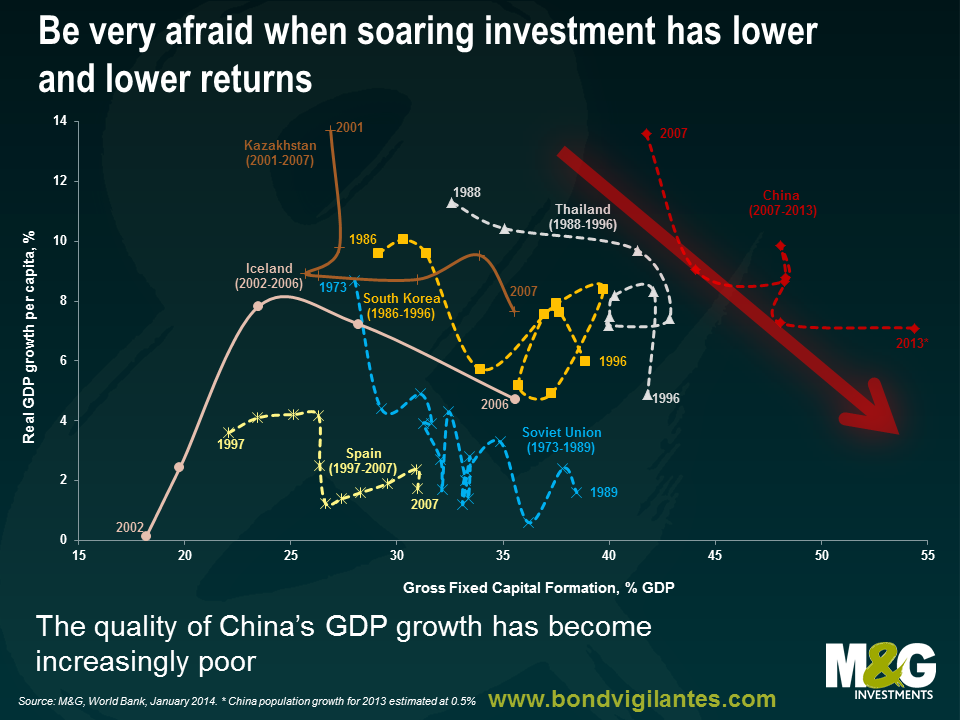
China’s investment/GDP ratio soars to a totally unsustainable 54.4%. Be afraid.

China’s investment/GDP ratio soars to a totally unsustainable 54.4%. Be afraid.

Posted on 24 January 2014 by Mike Riddell

image001-1

Once upon a time, Western opinion leaders found themselves both impressed and frightened by the extraordinary growth rates achieved by a set of Eastern economies. Although those economies were still substantially poorer and smaller than those of the West, the speed with which they had transformed themselves from peasant societies into industrial powerhouses, their continuing ability to achieve growth rates several times higher than the advanced nations, and their increasing ability to challenge or even surpass American and European technology in certain areas seemed to call into question the dominance not only of Western power but of Western ideology. The leaders of those nations did not share our faith in free markets of unlimited civil liberties. They asserted with increasing self-confidence that their system was superior: societies that accepted strong, even authoritarian governments and were willing to limit individual liberties in the interest of the common good, take charge of their economies, and sacrifice short-run consumer interests for the sake of long-run growth would eventually outperform the increasingly chaotic societies of the West. And a growing minority of Western intellectuals agreed.

The gap between Western and Eastern economic performance eventually became a political issue. The Democrats recaptured the White House under the leadership of a young, energetic new president who pledged to “get the country moving again” – a pledge that, to him and his closest advisers, meant accelerating America’s economic growth to meet the Eastern challenge.

The passage is the opening to the highly readable and hugely influential 1994 paper The Myth of Asia’s Miracle. The period referenced is the early 1960s, the dynamic president was John F. Kennedy (read Bill Clinton), and the rapidly growing Eastern economies were the Soviet Union and its satellite nations (read East Asia). Author Paul Krugman took on the prevalent East Asian euphoria by drawing disturbing parallels between the unsustainable way that the Asian Tigers were managing to generate supersonic growth, and how the recently obsolete Soviet Union had also once achieved seemingly miraculous growth rates. Krugman’s paper gained widespread attention at the time (even more so post the 1997 Asian crisis), and succeeded in refocusing attention on the concept of productivity. It mattered not what the growth rate was, but how it was achieved.

To explain this and briefly summarise, consider what actually drives economic growth. Growth accounting shows that GDP per capita growth comes from two main sources; inputs and efficiency. The ‘inputs’ can be split into labour (e.g. growth in employment) and capital (e.g. the accumulation of physical capital stock such as machines and buildings). But long term, sustained per capita economic growth tends to come not from increases in the ‘inputs’, but from increases in efficiency, of which the main driver is technological progress. Nobel Laureate Robert Solow showed in his seminal 1956 paper that technological progress had accounted for 80% of US per capita growth between 1909 and 1949, although more recent studies have suggested a still substantial figure of more like 45-55% thereafter.

Krugman pointed to previous research showing that the Soviet Union’s rapid growth had not been due to efficiency gains. Indeed, the USSR was considerably less efficient than the US, and showed no signs of closing the gap. Soviet growth had been solely due to the ‘inputs’, and input-driven growth has diminishing returns (e.g. there is a finite number of workers you can educate). The USSR’s growth was largely ‘built on perspiration rather than inspiration’.

In a similar way, the Asian Tigers’ rapid growth was due to an ability to mobilise resources. There was no great improvement in efficiency, and no ‘miracle’ – it could be fully explained by the employed share of the population rocketing, education improving dramatically, and an enormous investment in physical capital (in Singapore, investment as a share of output jumped from 11% to more than 40% at its peak). But these were one time changes; they weren’t repeatable.

Fast forward to 21st century China.

There is a perception that China’s rocketing growth rate has always been reliant on heavy investment, but that’s not the case. Investment, or capital formation, has of course been an important driver, but the ‘pre 2008’ China did achieve rapid productivity gains thanks to the rise of the private sector and technological catch-up as the economy slowly began to open its borders.

In the chart below, I’ve looked at how much the world’s biggest economies have invested as a percentage of their GDP, and compared this to the countries’ GDP per capita growth rates. Countries with higher investment rates tend to have higher GDP growth rates and vice versa, which is intuitive and supports the discussion above. Since the 1990s, most (but not all) emerging/developing countries have been positioned towards the top right hand side with higher investment and higher growth rates, and the more advanced economies have typically been towards the bottom left with lower investment and lower growth rates. In one extreme you have China, where investment has averaged over 40% of GDP, and the GDP per capita growth has averaged a phenomenal 9.5%. The fact that China’s growth rate is well above the trend line in the chart is indicative of the productivity gains that China has achieved over the period as a whole on average. The country with the weakest investment rate is the UK.

Post 2008’ China looks a different animal. Productivity and efficiency seems to be plummeting, where GDP growth is becoming dangerously reliant on the ‘inputs’, namely soaring investment. We’ve all heard about how China’s leaders desire a more sustainable growth model, featuring a rebalancing of China’s economy away from investment and export dependence and towards one that is more reliant on domestic demand and consumer spending (e.g. see the 12th 5 year plan covering 2011-2015 or the Third Plennum). In practice, what we’ve instead consistently seen is an inability or unwillingness to meaningfully reform, where any dip in economic growth has been met with yet another wave of state-sponsored overinvestment. (Jim recently blogged about economist Michael Pettis’ expectation that China long term growth could fall to 3-4%, a view with which I have a lot of sympathy. Please see also If China’s economy rebalances and growth slows, as it really must, then who’s screwed? for an additional analysis of the implications of China’s economic slowdown).

It was widely reported earlier this week that China’s 2013 GDP growth rate fell to a 13 year low of 7.7%, a slowdown that seems to have continued into 2014 with the release of weak PMI manufacturing reading yesterday. But much more alarming is how the makeup of China’s growth has changed: last year investment leapt from 48% of China’s GDP to over 54%, the biggest surge in the ratio since 1993.

The chart below puts China’s problems into perspective. As already demonstrated, there is a strong correlation between different countries’ investment rates and GDP growth rate. There also tends to be a reasonable correlation over time between an individual country’s investment rate and its GDP growth rate (Japan’s experience from 1971-2011 is a good example, as shown previously on this blog). Over time, therefore, a country should be broadly travelling between the bottom left and top right of the chart, with the precise location determined by the country’s economic model, its stage of development and location in the business cycle.

It should be a concern if a country experiences a surge in its investment rate over a number of years, but has little or no accompanying improvement in its GDP growth rate, i.e. the historical time series would appear as a horizontal line in the chart below. This suggests that the investment surge is not productive, and if accompanied by a credit bubble (as is often the case), then the banking sector is at risk (e.g. Ireland and Croatia followed this pattern pre 2008, Indonesia pre 1997).

But it’s more concerning still if there is an investment surge accompanied by a GDP growth rate that is falling. This is where China finds itself, as shown by the red arrow.

Part of China’s growth rate decline is likely to be explained by declining labour productivity – the Conference Board, a think tank, has estimated that labour productivity growth slowed from 8.8% in 2011 to 7.4% in 2012 and 7.1% in 2013. Maybe this is due to rural-urban migration slowing to a trickle, meaning fewer workers are shifting from low productivity agriculture to higher productivity manufacturing, i.e. China is approaching or has arrived at the Lewis Turning Point (see more on this under China – much weaker long term growth prospects from page 4 of our July 2012 Panoramic).

However the most likely explanation for China’s surging investment being coupled with a weaker growth rate is that China is experiencing a major decline in capital efficiency. Countries that have made the rare move from the top left of the chart towards the bottom right include the Soviet Union (1973-1989), Spain (1997-2007), South Korea (1986-1996), Thailand (1988-1996) and Iceland (2004-2006). Needless to say, these investment bubbles didn’t end well. In the face of a labour productivity slowdown, China is trying to hit unsustainably high GDP growth rates by generating bigger and bigger credit and investment bubbles. And as the IMF succinctly put it in its Global Financial Stability Report from October 2013, ‘containing the risks to China’s financial system is as important as it is challenging’. China’s economy is becoming progressively unhinged, and it’s hard to see how it won’t end badly.

This entry was posted in Countriesmacro and politics and tagged emergingmacro & politics byMike Riddell

. Bookmark the permalink.

Mobile Karaoke App Changba Adds Live Broadcast, Closer to YY Music’s Business Model

Mobile Karaoke App Changba Adds Live Broadcast, Closer to YY Music’s Business Model

By Tracey Xiang on January 26, 2014

Changba, the most popular mobile Karaoke app in China, added a live-singing feature for users to have friends to sing together, just like in a room of a brick-and-mortar Karaoke club.

Unlike in the offline world that only invited friends can join in a Karaoke party, all the singing parties on Changba are open to every user. Named ‘Karaoke show in private rooms’, the channel in Changba shows all the singing parties. Any user is allowed to open a room and rooms can be searched by room numbers.

In each room, you can choose to sing songs or just listen to others’ singing and buy virtual gifts to singers you like. Participants in a room can leave comments or chat with each other or invite other users to join in.

The live-singing feature is almost the same with the model of YY Music, 9158, 6.cn and a handful of others. An investor of such a service once told me that fans feel more encouraged to buy virtual gifts to singers during live shows. The revenue growth of YY Inc. has been driven by the live singing show business. So far Changba is the only one of those above-mentioned that started and has been focusing on mobile. YY Music moved slower on mobile, but the company said in late 2013 that they found it easier to make money on mobile than previously thought.

Prior to this live broadcast feature, Changba users needed to record singing first and save on the platform. Their audiences can buy them virtual gifts when listening to the recorded songs. Changba began monetization one year ago through virtual gift sales and planned to make money from potential advertisers.

Other revenue sources include mobile gaming, premium service subscriptions and emoticon sales. Changba announced 100 million registered users in October last year with 30 million being monthly active.


Uber, the hot start-up whose software allows anyone with a smartphone to get a cab ride, is suddenly facing trouble about its business practices, including liability in accidents.

Rough Patch for Uber Service’s Challenge to Taxis

By DAVID STREITFELDJAN. 26, 2014

Uber, the mobile phone ride-hailing service, now operates in 26 countries. But as the San Francisco firm expands, it faces questions about its business practices, including liability in accidents.

SAN FRANCISCO — It’s Travis Kalanick versus the world, and recently the world seems to be winning.

Mr. Kalanick, who is brash and aggressive even by the standards of Silicon Valley, created Uber four years ago to blow up the traditional taxi business. In more than 60 cities, from San Francisco to Berlin, it is doing just that.

Anyone with a smartphone can use Uber’s software to get a ride. No more standing on the corner in the rain, trying desperately to conjure up something that is not there. For that achievement, Uber is valued at $4 billion.

Suddenly, however, Mr. Kalanick is a bit besieged. Uber is being sued by its drivers, who say it is stealing their tips. Competitors are pressing it from all sides. Celebrity riders likeSalman Rushdie

and Jessica Seinfeld have had gripes too, usually about pricing.

Much worse, there have been questions about the quality of the drivers, made more urgent after one here in San Francisco hit an immigrant family in a crosswalk on New Year’s Eve, killing a 6-year-old. Her death has provoked the first wrongful-death lawsuit against Uber, which is expected to be filed on Monday.

Uber and its abundance of imitators represent a new stage for technology companies. These businesses directly insert themselves into the physical world, arranging on-demand transportation, meals or even clean laundry in exchange for a sweet commission. Unlike Facebook or Twitter, which thrive in the safe confines of cyberspace, these start-ups live on the streets.

That is a much messier place. Regulators, courts and city halls are struggling to define Uber. Is it a taxi company or a technology platform? Are the drivers, who often use their own vehicles, employees, as some are arguing in court, or “partners” — that is, freelancers — as Uber maintains?

Uber compares itself to the auction site eBay, connecting a buyer and seller but not liable for what happens between them. Regulating Uber, the company told the California Public Utilities Commission, would stifle innovation.

The commission, which oversees limousine companies, called Uber’s arguments “creative” but decided in September that it was a transportation company after all, subject to regulation. Uber is appealing. A spokesman for Uber said the company’s system of asking passengers for feedback meant Uber was self-regulating.

The issue is pressing because, as the company rapidly expands and Uber drivers flood the streets, the possibility of accidents increases. Who is responsible when something goes wrong?

The Uber driver who hit 6-year-old Sofia Liu and injured her mother and brother was arrested on suspicion of vehicular manslaughter.

“We have deactivated his Uber account,” Uber said in a statement. But the company pointedly said the driver, Syed Muzaffar, did not have a passenger in his Honda Pilot at the time of the accident, and thus the accident had nothing to do with Uber.

Mr. Muzaffar’s lawyer said that was false and self-serving. “He was working for Uber,” said the lawyer, Graham Archer. “He was waiting for a fare.”

In a testy interview at Uber’s offices here, Mr. Kalanick declined to discuss the accident except in the most general terms.

“We work our butts off to go above and beyond what is expected even by the regulators, including insurance, background checks,” he said. “And so it always comes back to, did Uber do something wrong?”

Some say the answer is yes.

The San Francisco Cab Drivers Association, which is losing drivers to Uber, prominently offered condolences to Sofia’s family on its website.

“Uber may be the next Amazon, but Amazon doesn’t have the same potential capability to leave a trail of bodies in the street,” Trevor Johnson, a director of the association and a driver himself, wrote in an email.

Sofia was buried Thursday. Christopher Dolan, a personal injury lawyer representing the Liu family, spoke at the service with a message from the girl’s father, Ang Jiang Liu: “I intend to get justice for my daughter and hold Uber accountable.”

Uber by its very nature distracts its drivers, the lawyer said in an interview.

“Cabdrivers who are looking for fares are scanning the streets,” he said. “Uber drivers looking for fares are looking at their phones.”

Uber’s safety and reliability was also called into question after a driver and a passenger here got into a verbal and physical altercation late one night in November. The police were called, but no arrests were made.

The tech website PandoDaily reported that the driver, Daveea Whitmire, had a history of clashes with the law, including a misdemeanor for resisting a public officer last spring. In October, his probation officer recommended revoking his probation. Mr. Whitmire, who had good reviews from his Uber passengers, could not be reached for comment.

Mr. Kalanick declined to comment about this episode, and shortly afterward, ended the interview. Last week, Uber told drivers here that they had to undergo new background checks.

Drivers who use their own cars are in an uncertain insurance position, said Kara Cross, general counsel for the Personal Insurance Federation of California. Many personal insurance policies do not cover commercial activity. Even the insurance that the California commission is requiring Uber to carry — a $1 million per accident liability policy — would take effect only if the Uber driver were legally at fault.

“If another driver is liable, the passenger would have to rely on that other driver’s insurance, assuming there is any,” Ms. Cross said.

Peter Ashlock drove a cab in San Francisco for 10 years in the 1970s and early ’80s, bringing home about $500 a week. For a few years, he even got health insurance. Two years ago he started driving for Uber. After gas and the company’s commission — usually 20 percent — he makes about $1,000 a week. Factor in inflation, and he has lost ground.

“I have freedom and flexibility now,” said Mr. Ashlock, 65. “If I want to take a vacation I just take it. But there’s no union. There’s no community of drivers. And the only people getting rich are the investors and the executives.”

David Krane, who last summer led a $258 million investment in Uber by Google Ventures, was full of admiration for Mr. Kalanick and what he called his “superpowers,” including his attention to detail.

“I know very few chief executives that on New Year’s Day would answer 100 customer service inquiries in public,” Mr. Krane said.

Those inquiries, on Twitter, were often about surge pricing, the much-discussed Uber feature that increases prices by multiples of three, four or more times normal on holidays, or during bad weather or rush hour. Surge pricing, Uber says, gets more vehicles on the road, but many riders do not seem to understand it.

Mr. Kalanick, 37, was his usual combative self on New Year’s in response to complaints about surge pricing. “2 confirmations and typing in surge price.. should ppl not take responsibility for their actions when drunk?” he posted on Twitter.

Drivers filed suit against Uber in August, saying the company told riders that the tip was included in the fare but that it was never remitted to the driver. Uber says there is no merit to the case, but a San Francisco judge ruled last month that it could go forward.

More drivers are constantly being solicited. Last week, Uber apologized for ordering a hundred cars from a New York competitor and then canceling. Uber’s goal was to get the drivers’ numbers and persuade them to work for Uber. “Too aggressive,” the company conceded.


JANUARY 27, 2014, 7:00 AM  6 Comments

Uber and a Child’s Death

By DAVID STREITFELD

image001-2Sofia Liu, 6, was was struck and killed by a car in San Francisco on New Year’s Eve. Christopher Dolan, a lawyer for the Liu family who provided the image, is expected to file suit against the driver of the vehicle and Uber.

Travis Kalanick, chief executive of the on-demand transportation service Uber, originally used “The Fountainhead” as his Twitter icon. It was viewed by many as a proclamation: Ayn Rand’s novel is beloved by Silicon Valley’s regulation-is-useless crowd, and Uber is in too much of a hurry to want anyone slowing it down with questions about safety and responsibility.

Uber is a big success. It and the apartment rental site Airbnb have successfully popularized the notion of the sharing economy, where the driver who picks you up at the airport and the fellow who rents you a room for the night are in business for themselves. The sharing economy will bring more income to some, and probably cause unemployment for others. The upheaval in the larger economy could be considerable.

Taxes and regulation are the two big issues. The question of how much Uber should be regulated and by whom is under discussion in all sorts of ways, asmy article

on Monday in The Times indicates. But the fate of its first wrongful-death lawsuit might be central.

The suit, set to be filed on Monday, seeks damages against Uber in the death of Sofia Liu, 6, on New Year’s Eve in San Francisco. Sofia was hit by an Uber driver who was waiting for a fare. Her mother and brother were injured.

Uber asserts that Uber drivers without fares are not Uber cars. The suit, filed by Chris Dolan, a San Francisco lawyer, directly challenges this effort by the company to detach itself from its own users. It says Uber needs the vehicles to be logged into the Uber app — that’s the only way potential riders know there is a car in the vicinity. So even when there is no fare in the car, the drivers are in essence on the clock, working for Uber.

When drivers accept a call, furthermore, they need to interface with the app. The suit goes on to note that under California law, it is illegal to use a “wireless telephone” while driving unless it is specifically configured to be hands-free — which the app is not. In essence, the suit argues that Uber was negligent in the “development, implementation and use of the app” so as to cause the driver to be distracted and inattentive.

Mr. Kalanick, in an interview, refused to discuss the case or even to confirm that the driver, Syed Muzaffar, had been carrying passengers earlier that evening. Mr. Muzaffar, who cooperated with the police after the accident, had been driving for Uber about a month, his lawyer said. It was a full-time job, using his own car, to support four kids. In the new sharing economy, he takes the fall.

Mr. Dolan, according to his website, has a fistful of awards: Statewide Trial Lawyer of the Year by the Consumer Attorneys of California, Trial Lawyer of the Year by the San Francisco Trial Lawyers Association and California Lawyer Attorney of the Year award.

“Uber’s claims that they are not responsible for injuries caused by Uber drivers who are logged on to the system but not carrying a fare flies in the face of hundreds of years of law,” he said. “New technology does not eliminate well-established legal principles.”

As for Mr. Kalanick, he recently ditched Ms. Rand as his Twitter icon for the considerably more pro-government figure of Alexander Hamilton.

“People think I’m a crazy libertarian,” he said. “I’m a little crazy, but I’m not a libertarian.”

As Internet TV Grows Popular, Regulator Mulls Show of Force

01.24.2014 16:55

As Internet TV Grows Popular, Regulator Mulls Show of Force

People like the idea of getting programs and movies from the Net, but the media watchdog is not as amused

By staff reporter Qin Min

(Beijing) – Chinese companies have been busily tapping the potential of the Internet protocol television (IPTV) business over past year. More than 20 new Internet TV screens and streaming boxes have been launched by various companies.

At the end of 2013, Tencent Holdings rushed to launch its IPTV product, Weixin TV, in partnership with Internet video content provider iCNTV and manufacturer Skyworth. Earlier in the year, e-commerce giant Alibaba Group released a set-top streaming box developed with content provider Wasu Digital TV Media Group Co., and Baidu Inc also released its IPTV and streaming box based on its video subsidiary iQIYI.

Internet companies have shown they are ambitious about exploring the growing market, one that also involves appliance manufacturers, telecom operators and broadcasting companies. However, behind the excitement are some uncertainties because regulators are mulling gradually tightening controls.

A Free-for-All

In mid-December, the State Administration of Press, Publication, Radio, Film and Television, the country’s media watchdog, held a symposium on IPTV oversight with representatives from various industry players.

“The meeting lasted an afternoon,” one attendee said. “The essence was strengthening oversight of the IPTV market.”

The implication, the meeting participant said, was that authorities thought IPTV services had crossed the line.

A broadcast industry source said that the IPTV market is too disorderly, with all sorts of content, including foreign programs, available. The industry, at least in the eyes of some, has circumvented regulation on content and the media regulator is considering updating its polices.

IPTV service is subject to a policy set out in 2011 in the so-called Document 181. The policy separated IPTV service operations into two parts: the integrated broadcasting platform and the content service platform.

The former is responsible for program integration and broadcast control, and the latter is responsible for program content review and copyright management. The idea was to put IPTV service in a manageable environment separate from ordinary Internet activity.

To date, seven institutions have obtained integrated broadcast licenses, and 10 have obtained content service licenses. Document 181 stipulates that all IPTV content should be placed on content service platforms and then broadcast through the integrated broadcast platforms. But most IPTV products have breached this provision, carrying programs directly from the Net.

“This made broadcast regulators unhappy,” the industry source said. “They’re bound to strengthen oversight.”

About 10 million streaming boxes were sold in 2013, the source said, and less than 20 percent of them had partnered with licensed parties. Meanwhile, about 26 million IPTV sets were sold, most of which use content platforms run by manufacturers. Many of the products allow users to download a variety of applications and content directly from the Internet.

This sort of free-for-all indeed seems to be spurring the media regulator to act, but “right now, in what form, when and how the policy will be introduced has not been decided,” an official at the watchdog said.

A source close to regulators said the rules would focus on cracking down on unauthorized streaming boxes, misconduct at online video aggregation websites, and the connection between IPTV producers and licensed parties. He expects they will be introduced in early February.

“Previously (the watchdog) was only responsible for oversight of content,” an executive at a video website said. “This time people are saying they want to manage everything from software to hardware, so much that they don’t rule out enforcing the law in conjunction with other ministries and commissions.

“It hopes to reference radio and television broadcasting management approaches to regulate IPTV.”

The Debate

Many online video companies are nervous about the possibility of intensified oversight, and argue that if it is too strict it will not be conducive to the development of the industry. The main question, it seems, is whether IPTV service should be supervised according to Internet or television.

A source in the industry said computers, mobile phones and televisions are simply different broadcast channels, and standards should be unified.

“Think about it. The same group of people can watch content on a computer or mobile phone during the day, but at night they can’t watch it on television,” the source said. “Isn’t that funny?”

Zhuo Yue, president of Wasu’s Internet business unit, says the IPTV industry is still in its early stages. Document 181 has been misread at times, he said, and many companies have crossed the line with out-of-control content. If control and guidance of the industry are not stepped up in the early stages, uncivilized growth of the entire industry will be the likely result, leading to price wars, illegal services of inferior quality and excessive competition. From this perspective, tighter regulation is understandable, Zhuo said.

Liu Miao, president of online video site and IPTV producer Letv’s government affairs department, said that that the industry is on the verge of breaking out and may impact many traditional industries. He, too, argues that the time is ripe for clearer rules.

Zhang Zejing, an analyst at Hong Yuan Securities, put it another way:

“Fundamentally speaking, licenses represent profit.”

The problem is authorities awarded licenses to seven state broadcasting institutions, but many of these agencies have, in effect, “rented out” the licenses to private companies, established joint ventures or signed contractual joint operations under which they do not have to pay for costs but can get substantial income.

“The capital threshold for independent operators of integrated broadcast control platforms is high,” Zhang said. “Estimated investment is a billion yuan to cover 2 million beta users.

A manufacturer of IPTV hardware suggested that the regulator should encourage private companies and market liberalization, going so far as to say: “They should launch a pilot program for private companies to operate content services platforms.”

Many industry sources also say private companies with copyrights, funds and operating capabilities deserve the confidence of regulators and they should be allowed to operate content platforms.

Despite the calls for more industry liberalization, ideology presents a tricky “red line” – no pun intended – in a country where the Communist Party insists on having the final say on what is acceptable in media and art. However, amid the rise of the IPTV business, regulation has proved thorny. The story, it seems, is to be continued.


E-Investing Spurs Banks to Raise Interest Rates for Deposits

01.24.2014 16:45

E-Investing Spurs Banks to Raise Interest Rates for Deposits

As investors empty their accounts in favor of Net funds like Yu E Bao, many big financial institutions have begun ‘to mount an all-out counterattack’

By staff reporters Zhang Yuzhe and Liu Zhuozhe

(Beijing) – Many big banks in the country have moved to offer the highest possible interest rates for deposits despite the central bank’s advice they not do this.

The lenders had to act because they were losing customers fast to the emerging league of high-yield money market funds offered by Internet companies such as Alibaba Group and Tencent Holdings, an executive at a large bank said.

The benchmark annual interest rates on three-month to five-year term deposits range from 2.6 to 4.75 percent. Banks are allowed to raise them by up to 10 percent, but most large ones set theirs lower than the limit. Most of the money market funds, meanwhile, carry yields higher than 5 percent and offer convenient, free withdrawals.

Bank deposits have been siphoned off into investment funds, including Alibaba’s Yu E Bao, which last year rose in value by an average of 3 million yuan every minute. In less than seven months, it has grown into the country’s largest public fund, with more than 250 billion yuan in investment as of January 15.

“The pressure of the deposits shifting was enormous,” the executive said, “We have no choice but to mount an all-out counterattack.”

The central bank advised the Big Four banks and the Bank of Communications not to increase their deposit interest rates. This advice came in the form of “window guidance,” where the regulator tells banks what to do but the requirements are often not mandatory.

The headquarters of China Construction Bank has delegated the authority to offer maximum interest rates to as low as branches on the city level, a source with knowledge of the matter said. The notice did not set any threshold on the size savings accounts must be to enjoy the higher interest rates, meaning that branch officials can make that decision, too.

Bank of Communications recently raised its interest rates to the ceiling for term deposit accounts with at least 30,000 yuan. Bank of China has done the same, raising interest rates for one-, three- and five-year term deposits of at least 50,000, 100,000 and 200,000 yuan, respectively, to 10 percent above their benchmark interest rate.

Bankers say they are frustrated with Yu E Bao and the like because the funds they sucked away are reinvested into banks in the form of interbank deposits.

“Technically the money is still in the bank, but now here comes Yu E Bao, which does not do anything but shifts money around and forces banks to abruptly raise the cost of deposits from 0.35 percent (for demand deposits) to 7 percent,” a banker said.

The current set of benchmark interest rates has been in effect since July 2012. Since Yu E Bao was launched in June, many small and medium-sized banks have also raised their deposit interest rates to the ceiling.


Vietnam’s Ex-Banker Gets Life Over $230m Fraud Case

Vietnam’s Ex-Banker Gets Life Over $230m Fraud Case

By Agence France-Presse

 on 6:34 pm January 27, 2014.
image003-3

Huynh Thi Huyen Nhu, 37, is led out of the courtroom at a local People’s Court House in Ho Chi Minh City on Jan. 27, 2014. (AFP PhotoVietnam News Agency)

Hanoi. A Vietnamese court Monday sentenced a former banker to life in prison for a fraud involving more than $230 million, one of the communist country’s largest-ever such cases.

Huynh Thi Huyen Nhu, 37, was convicted alongside 22 other defendants who were given sentences of up to 20 years in prison after a three-week trial ended Monday, a clerk at the People’s Court in the southern metropolis of Ho Chi Minh City told AFP.

Nhu raised some $231 million in loans from individuals, companies and other banks when she worked for the state-run Vietnam Joint Stock Commercial Bank for Industry and Trade (Vietinbank).

She claimed to be raising funds on the bank’s behalf, the Tuoi Tre newspaper reported.

Nhu forged some 200 documents and hired other people to counterfeit the official stamps of Vietinbank and other companies in order to obtain the loans, the report said.

The court ordered Nhu to return all the money she had stolen, it added.

Nhu had racked up debts by making a series of disastrous investments in real estate and then “turned to swindling” in order to repay her debts, it said.

The judge dismissed her lawyer’s argument that former employer Vietinbank should take responsibility and compensate clients for their losses, VNExpress reported.

“(Nhu) was the gang leader who took all responsibilities and Vietinbank knew nothing about her fraudulent acts,” the report said.

Vietnam is one of the world’s most corrupt nations, according to watchdogs.

Corruption, mismanagement and inefficiency at state-run companies — a pillar of the communist country’s economy — are seen as fueling longstanding economic woes.

The country’s leaders have pledged to tackle corruption amid rising public anger, leading to a recent series of high-profile trials of former officials and bankers for corruption, fraud and embezzlement.

In November a former banker and his business associate at a large state bank were sentenced to death for embezzling $25 million.

Two former top executives at scandal-hit national shipping company Vinalines were sentenced to death in December for embezzlement as the group almost collapsed under some $3 billion of debt.


China Trust “Bailout” To “Unidentified Buyer” Distorts Market As “Risks Are Snowballing”

China Trust “Bailout” To “Unidentified Buyer” Distorts Market As “Risks Are Snowballing”

Tyler Durden on 01/27/2014 10:35 -0500

In a 2-line statement, offering very few details, ICBC’s China Credit Trust Co. said it reached an agreement to restructure the CEG#1 that ha sbeen at the heart of the default concerns in recent weeks. The agreement includes a potential investment in the 3 billion-yuan ($496 million) product but didn’t identify the source of funds, or confirm whether investors would get all of their money back. The media is very excited about this entirely provisional statement and we note, as Bloomberg reports, investors in the trust product must authorize China Credit Trust to handle the transaction if they want to recoup their principal which will involve the sale of investors’ rights in the trust at face value (though no mention of accrued interest). As BofAML notes, however, “the underlying problem is a corporate sector insolvency issue…  there may be many more products threatening to default over time,” and while this ‘scare’ may have raised investors’ angst, S&P warns “a bailout of the trust product [leaves] Chinese authorities with a growing problem of moral hazard,” and they have missed an opportunity  for “instilling market discipline.”

1) ICBC issues a 2 line statement on a CEG#1 restructuring – no details and no comments from anyone involved

China Credit Trust Co. said it reached an agreement to restructure a high-yield product that sparked concern over the health of the nation’s $1.67 trillion trust industry…

Beijing-based China Credit Trust’s two-line statement on its website didn’t identify the source of funds, or say whether investors would get all of their money back.

2) Investors claim they “could” be able to sell their rights to the CEG#1 trust to an “unidentified buyer” at par (though receive no accrued interest as far as is clear)

Industrial and Commercial Bank of China Ltd. told investors of a China Credit Trust product facing possible default about an offer in which they can receive back their full principal, according to an investor with direct knowledge of the offer.

Rights in the 3 billion-yuan ($496 million) product issued by China Credit Trust Co. can be sold to unidentified buyers at a price equal to the value of the principal invested, according to one investor who cited an offer presented by ICBC and asked to be identified only by his surname Chen.

China Credit Trust earlier said it reached an agreement for a potential investment and asked clients of ICBC, China’s biggest bank, to contact  their financial advisers.

3) “A default was bound to lead to systemic risks that China is unable to cope with, so in that sense a bailout is a positive step to stabilize the market,”

As one analyst noted, the PBOC is running scared…

“It indicates the government still won’t tolerate any ultimate default and retail investors will continue to be compensated in similar cases.”

4) This confirms S&P’s recent warning that “A bailout of the trust product would leave Chinese authorities with a growing problem of moral hazard,” and an opportunity for “instilling market discipline” will have been missed.

…said Xu Gao, the Beijing-based chief economist at Everbright Securities Co. Still, implicit guarantees distort the market and “delaying the first default means risks are snowballing,” he said.

5) of course, China may have shown its moral hazard hand on this occasion but as BofAML warns, “We suspect that, at a certain point, the involved parties will be either unwilling or unable to bail them out [again], which may trigger a credit crunch…The underlying problem is a corporate sector insolvency issue…  there may be many more products threatening to default over time.”

There are plenty more trust products facing maturity/default in the short-term…

image001

The most volatile part of the system is the financial market and the weakest link of the financial market is shadow banking. Within the shadow banking sector, we believe that the trust market faces the biggest default risk because credit quality here is among the lowest. The stability of the shadow banking sector is based on public confidence and any meaningful default will chip away some of the confidence. We suspect that trust defaults by private borrowers may work on public sentiment gradually while any LGFV trust default may immediately trigger significant market volatility. 2Q & 3Q this year will be another peak trust maturing period.


China’s Default That Wasn’t

AARON BACK

Jan. 27, 2014 9:26 a.m. ET

Those who hoped a high-profile default would deliver a needed shock of moral hazard into China’s financial system will be disappointed. The question is whether investors are getting the message anyway.

Like clockwork, a mysterious third party has sprung to the rescue, allowing China Credit Trust to repay the principle on high-yield investment products tied to a struggling coal miner. Savers will miss some interest payments and get a lower effective yield, but otherwise escape unharmed. So does the reputation of Industrial and Commercial Bank of China601398.SH -1.18% the country’s largest commercial lender, which sold the trust products to clients.

In a $9.4 trillion economy, a nearly $500 million set of trust products appears too big to fail.

The hand of the state seems to be at work. Officials in the miner’s home province were actively involved in coming up with a solution, The Wall Street Journal reported. The bailout involves the third-party investor taking an equity stake in the coal company, which came only after the company suddenly gained approval to restart a closed mine.

In China, this kind of result is typical. More than 20 trust products valued at a total of more than $3.9 billion have run into payment issues since 2012, according to UBS economist Wang Tao. In around half of these cases, investors were paid back by trusts or third-party guarantors, while others have been caught up in lengthy legal processes.

There are signs that the publicity around the case may help educate investors on risks in the system. ICBC Chairman Jiang Jianqing said on CNBC he hoped such a learning process was taking place. So should ICBC shareholders. If pressured by customers or the government to take such products onto its balance sheet, the bank would see a substantial erosion of capital ratios.

According to Nomura economist Zhiwei Zhang, sales of trust products in January are down nearly 70% from December and 50% from a year earlier as investors shrink from risk. This will intensify credit stress, making it harder for trusts to roll over short-term loans to stressed borrowers. Expect more such episodes.

This is all part of the difficult process to allow genuine failures in the Chinese financial system, ostensibly what the Communist Party leadership meant when it said markets should play a “decisive role” in the economy. For the past several months, new awareness of risk has showed up in financial prices, with yields on interbank loans and government bonds rising and becoming more volatile.

Like many times before, an unknown hero rode to the rescue in this credit drama. But at least some Chinese investors may be slowly waking up to the fact that there aren’t enough white knights to save everyone.


Shadow Lender Strives to Avert Loss

China Credit Trust Co. Appears to Have Found a Way to Pay Back Investors

LINGLING WEI

Updated Jan. 27, 2014 4:04 a.m. ET

BEIJING—China avoided a potentially destabilizing hit to its creaky financial system after a major shadow lender arranged a bailout for buyers of an investment product that was on the verge of going bust.

Analysts said the fact that investors will avoid a financial hit—and that it remains unclear who will pay the tab—risks sending a message that reckless investing and lending can continue with impunity, analysts said. That, they said, could ultimately damage the financial system.

China Credit Trust Co. told investors on Monday that it will restructure the loan behind a 3 billion yuan ($496 million) high-yielding investment product that is scheduled to come due on Jan. 31. Under the restructuring, the roughly 700 investors in the product would get their principal back but not the last of three interest payments, according to two investors who have been notified of the payment plan.

China Credit said it made the move by swapping the debt for equity in the borrower, a struggling coal-mining company. The equity was then purchased by an investor it didn’t name. China Credit officials confirmed the payment plan, as well as its notice to investors, but declined to comment further.

The move could help calm near-term market jitters over what are known as trust products, a pillar of China’s non-bank shadow-banking system. Had China Credit missed the Jan. 31 payment, the trust product would have become the first to result in significant losses for investors and could have shaken confidence in China’s financial system.

But the restructuring leaves unanswered long-term questions about China’s financial health, analysts say. “The underlying issue is that there is too much debt in the system that has gone to wasteful projects,” says David Cui, China strategist at Bank of America Merrill Lynch.

“At a certain point, the involved parties will be either unwilling or unable to bail out [troubled investors or borrowers], which may trigger a credit crunch,” Mr. Cui says.

Lending by shadow bankers—an assortment of trust companies, insurers, leasing firms and other informal lenders—rose 43% last year from 2012, to 5.165 trillion yuan, data from China’s central bank show, becoming a major factor in China’s rising debt levels.

The shadow banks raise funds by offering yields far higher than are available from ordinary bank deposits, lending to borrowers considered too risky for traditional banks, such as heavily indebted local governments, property developers, coal producers and other companies in sectors burdened by overcapacity.

Some traditional banks in China sell investment products on behalf of these informal lenders as a way to offer higher yields to customers. China’s largest bank by assets,Industrial & Commercial Bank of China Ltd. 601398.SH -1.18% , sold the China Credit Trust product to investors but has said repeatedly it isn’t responsible for the risk.

Economists and analysts worry that China’s shadow bankers are introducing risks into its financial system by backing projects that may never pay off and failing to disclose fully what they are asking investors to fund. They say that because banks sometimes sell problem loans to such lenders, but then have to provide credit to the purchasers, the shadow system appears to give banks a way to get rid of problem loans, but doesn’t really do so.

“Chinese banks have already accumulated high credit risks on their balance sheets. But distorted growth in shadow banking could lead to further unintended buildup of credit risks that banks may not fully appreciate,” says Liao Qiang, an analyst at Standard & Poor’s. “Certain parts of the shadow-banking sector, notably trust companies, may prove to be the weak link of China’s financial system.”

China’s economic slowdown could expose more such problems. Government data show that the pace of factory production slowed in December and a purchasing managers’ index indicated that the manufacturing sector had begun to contract in January. China’s economy expanded by 7.7% in 2013, faster than other major economies but well below the double-digit gains of the past 30 years.

Government officials worry that a hit to investors will lead to highly publicized protests and could undermine faith in the overall financial system. In the case of the product sold by China Credit, local government officials have played an active role in putting together the restructuring plan, according to people with direct knowledge of the matter.

China Credit, which is about 33% owned by state-controlled People’s Insurance Company (Group) of China Ltd., sold the product, called “Credit Equals Gold No. 1”, in 2011 through ICBC. It offers annualized returns of between 9% and 11%.

The trust firm then lent the funds to an obscure coal-mine operator in northern China’s Shanxi province, called Zhenfu Energy Group. The company is owned by Wang Pingyan, a farmer turned entrepreneur. As coal prices plunged and some of his mines were forced to shut down due to accidents and local protests, Mr. Wang found himself short of cash to pay off creditors. Mr. Wang, who has been detained by authorities in connection with his financing activities, couldn’t be reached for comment. A representative for his company declined to comment.

China Credit warned investors earlier this month that it might not be able to repay them when the product matures at the end of the month. Last week, China Credit disclosed that the coal company had received key government permission to reopen a mine and that another coal project has won support from local authorities and the community, according to a document reviewed by The Wall Street Journal. Obtaining licenses will permit the mines to start operating and generate revenues.

Replay of energetic deal-making seen for drugmakers in 2014

Replay of energetic deal-making seen for drugmakers in 2014

Sun, Jan 26 2014

By Deena Beasley and Ransdell Pierson

(Reuters) – The torrid pace of deals in the pharmaceutical and biotechnology sectors through 2013 is not expected to let up this year, thanks to new technologies to address unmet medical needs.

Between 2011 and 2016, patents in developed markets will expire on brand-name drugs that would otherwise have generated sales of $127 billion, according to data firm IMS Health. To replace some of the lost revenue, larger drugmakers are looking to bring in new products, often in areas of significant scientific advancement such as treatments for cancer, rare diseases and drugs designed to turn off the activity of rogue genes. Much of the breakthrough science is coming from biotechnology, meaning drugs derived from living cells.

There were 10 major M&A deals involving publicly traded biotech companies last year, led by Amgen Inc’s $10 billion buyout of Onyx Pharmaceuticals. That was up from nine the previous year and six in 2011, according to JP Morgan.

“I think deal making this year will be even better because there was a lot of validation last year,” said Joseph Gulfo, chief executive officer at Breakthrough Medical Innovations LLC, a consulting company to drug and medical device companies. “The new discoveries and data have sparked a tremendous amount of interest from the bigger companies.”

Rather than the mega-mergers typically done to achieve big cost savings through layoffs and factory closings, most drugmakers are aiming for deals that increase sales. Many of them detailed their strategies this month at the annual JP Morgan Healthcare Conferenceare.

Those strategies included acquisitions of smaller companies as well as risk-sharing through product licensing and drug development partnerships.

AbbVie Inc, maker of top-selling arthritis drug Humira, is interested in a “gradual buildup” of its pipeline of experimental drugs, having forged a dozen collaborations with other drugmakers in the past three years, most involving drugs in mid-stage trials, said Chief Financial Officer Bill Chase.

“We don’t have the need to go out and do a big deal. Large synergy deals are not overly attractive,” he said.

HIGH VALUATIONS

With the 65 percent run-up in the Nasdaq Biotechnology Index last year, valuations of companies have gotten so high that licensing and partnership deals are becoming a more popular way to share financial risk.

“Biotech companies realize that developing a drug these days is economically and mathematically different than 20 years ago,” said James Sabry, global head of partnering at Roche unit Genentech. “Most don’t have that level of sophistication. Partnering with a pharma company is the only way to create long-term value.”

Companies like Amgen and Roche performed well last year and don’t really need to acquire new assets, beyond companion diagnostics to complement their products, said Anne O’Riordan, global managing director of Accenture Life Sciences.

According to Accenture’s analysis, drugmakers that rank in the mid-tier in terms of growth prospects from new drugs and geographic expansion would include GlaxoSmithKline, Novartis and Sanofi.

A third clump of companies have relatively weak late-stage drug development pipelines and are still in the midst of dealing with expiring patents on top-selling drugs.

But most still have high profit margins and generate robust cash flows. “A lot of them can afford to buy something,” O’Riordan said.

AstraZeneca, which recently paid $4 billion to buy Bristol-Myers Squibb’s share of the two companies’ diabetes joint venture, probably falls into that third camp, O’Riordan said.

Israel-based drugmaker Teva Pharmaceutical Industries, recently named turnaround specialist Erez Vigodman as its CEO and agreed to buy NuPathe Inc to expand its portfolio of medicines to treat conditions affecting the central nervous system.

Israel Makov, chairman of Biolight Israeli Life Sciences Investments Ltd, and a former CEO of Teva, said he believes deal flow among healthcare companies will be just as robust in 2014 as last year: “Why? Because there is a lot of money in the system and few places to invest it.”

He predicted “more and more Big Pharma buying biotech because the problem with Big Pharma is the pipeline, and biotech can provide them the pipeline. Its even more expensive to develop a drug on your own and fail.”

Companies like Teva, Merck & Co, Eli Lilly and Pfizer are avidly on the lookout for deals to supplement the flow of drugs from their own laboratories.

Eli Lilly CEO John Lechleiter said his company is “very active in the animal health space; we’re gonna be buyers not sellers there.”

He also said Lilly will look for ways to bolster its existing strengths in therapeutic areas such as neuroscience, diabetes, oncology, autoimmune diseases, or to widen its geographic presence.

“Growth is a challenge … we have to take risk,” Merck CEO Kenneth Frazier said in comments at the conference, while noting that the company still needs to build shareholder value and protect its capital.

Roger Perlmutter, head of research at Merck, said there are no longer many undervalued late-stage pharmaceutical product candidates. “There are earlier-stage products and we intend to exploit that opportunity,” he said.


Europe treads softly in challenging big banks’ power

Europe treads softly in challenging big banks’ power

4:13am EST

By John O‘Donnell and Huw Jones

BRUSSELS/LONDON (Reuters) – Europe will consider how to challenge the dominance of its big banks this week, but any new rules to isolate risky trading will take years to begin and there will be no attempt to split off market betting from deposit taking.

In a blueprint expected on Wednesday, the European Commission will outline how trading by banks can be walled off from customers’ cash, but the debate among countries, many of whom are skeptical of the need to change, starts only in 2015.

After the collapse of Wall Street’s Lehman Brothers in 2008, world leaders pledged to tackle banks that were ‘too big to fail’ to shield taxpayers.

Yet in the more than six years of crisis that toppled banks in Europe and sucked in countries from Greece to Spain, little progress has been made, and the size of banks such as Germany’s Deutsche Bank (DBKGn.DE:QuoteProfileResearchStock Buzz) or France’s BNP Paribas (BNPP.PA: QuoteProfileResearchStock Buzz) remains Europe’s Achilles heel in the event of another crash.

Their vast scale is also blamed for fuelling risky trading and growth in the multi-trillion dollar derivatives market.

The proposed new rules, which are still many years off, signal that European policymakers have largely backed down in the face of banking resistance.

On Wednesday, the European Commission is set to outline its proposals for a new law, including a ban on trading by banks using their own funds and separating other types of trading from the ‘safe’ side of banking – taking deposits.

If agreement is reached, which is also in doubt, the rules would only take effect in 2017, some two years after similar action in the United States.

BUCKLE UNDER PRESSURE

The fact that it has taken so long to even broach the issue signals that, except in crisis, the political will is lacking.

“The pressure has been so high from the banks that the Commission’s proposal will be very limited. It won’t change anything,” said Monique Goyens, director general of consumer group Beuc, who was a member of an advisory group on the issue led by Finnish central bank governor Erkki Liikanen.

“The ‘too big to fail’ that we wanted to address is not going to be addressed if this does not have more teeth.”

Liikanen recommended mandatory separation of banks’ ‘proprietary’ trading with their own funds and other market betting into a separate legal entity. It would have its own capital to cushion risks but would remain within the bank.

On this count, the EU draft law is set to go further, and, like the Volcker Rule in the United States, ban banks from engaging in such trading, which has shriveled in any case.

The U.S. rule, however, applies to all banks, while in the EU it will only apply to lenders above a certain size, taking in the top 30 or so banks.

In the EU draft, other types of trading, such as derivatives, should be put in a separate division, as Liikanen suggested. The United States has a similar set-up, known as the “push out rule”, forcing some commodity, derivatives and equity trades to be walled off.

Crucially, however, the EU law stops short of physically breaking up big banks into retail and wholesale units, a step critics say is needed to remove the too-big-to-fail threat.

Germany and France, which are determined to shield their flagship lenders from any such shake-up, have repeatedly attacked the plans, privately warning Brussels last week not to overstep the mark.

Deutsche Bank, one of Europe’s largest banks, has total assets of more than 1.6 trillion euros – two thirds the size of Germany’s economy – and lends to the country’s top companies.

France has resisted interference in the structure of its big banks, including BNP Paribas and Credit Agricole (CAGR.PA: QuoteProfileResearchStock Buzz). Paris sees these ‘national champions’ as critical in financing their economy as well as a bulwark against foreign investors making inroads into its financial system.

France and Germany want the European Commission to soften the separation rules for non-proprietary trading to avoid crimping the flow of credit. They also do not want to ban proprietary trading.

‘NUCLEAR’ THREAT

Britain will also oppose any law from Brussels that would crimp its ability to decide how to deal with its biggest banks. It wants the retail arms of banks to hold more capital, with some risky trading kept within the wholesale arm.

The result is a patchwork of different reforms globally.

In Europe, with elections to the European Parliament in May and a changeover of the EU Commission’s top officials later in the year, nothing will happen for now.

“This proposal serves only as food for discussion and will have to be presented to the newly elected European Parliament,” said one EU official.

Germany and France’s line of argument closely follows that of industry, which claims that regulatory interference could damage their ability to lend to the economy. But Thierry Philipponnat, a former investment banker who leads Finance Watch, which campaigns for tighter regulation, challenged this.

“European banks lent only 28 percent of their balance sheets to households and corporations, with the remaining going into financial markets and, in particular, derivatives,” he said, pointing to an 80 percent surge in the size of the banking system during the decade to 2011.

“The paradox is that if you are big, you get implicit state support because you are too big to fail. And so you grow even bigger with risky activity that makes the entire system more fragile.”

Even banking lobbyists privately concede that big banks pose a risk. “We’ve done the equivalent of closing a few coal-powered power stations but created a number of nuclear reactors,” said one. “If they go belly up, God help us.”


China and Taiwan officials set a date for talks next month, the United Daily News reported today, paving the way for the first official government-to-government meetings since a civil war six decades ago

First Chinese-Taiwan Government Meeting Set, Daily Reports

China and Taiwan officials set a date for talks next month, the United Daily News reported today, paving the way for the first official government-to-government meetings since a civil war six decades ago.

The head of Taiwan’s Mainland Affairs Council, Wang Yu-chi, will meet with the head of China’s Taiwan Affairs Office, Zhang Zhijun, on Feb. 16 in the mainland city of Nanjing, the Taipei-based newspaper reported, citing an unidentified person. Nanjing was China’s capital before the civil war forced Chiang Kai-shek’s Kuomintang Party to flee to Taiwan in 1949, ceding power to Mao Zedong’s Communists. Taiwan and the mainland have been governed separately since then, with the island’s constitution retaining the Republic of China’s name and territorial claims.

“The meeting is a considerable breakthrough because this is the first time that two government officials are going to meet in their formal capacities, representing a certain level of mutual recognition,” said Joseph Cheng, a political science professor at the City University of Hong Kong.

President Ma Ying-Jeou, speaking on an official visit to Honduras, said the meeting is an “inevitable” step in cross-strait relations, the Central News Agency reported yesterday.

A Nanjing meeting would be the latest sign of reconciliation in a relationship that saw the mainland fire missiles into the stretch of water between them in 1996 before Taiwan’s first democratic presidential election. Ma’s presidency, which began in 2008, ushered in warmer ties as he moved away from the independence-leaning policies of his predecessor, Chen Shui-bian.

Counterparts Meeting

Wang, Taiwan’s Mainland Affairs Council minister, declined to comment when contacted by telephone today. He is scheduled to give an annual media briefing tomorrow ahead of the Lunar New Year. The ruling Kuomintang Party said earlier in December that Wang was planning to meet his China counterpart in February.

Asked about the report today, Chinese Foreign Ministry spokesman Qin Gang referred questions to the Taiwan Affairs Office. Three calls to the office today rang unanswered.

At the Nanjing meetings, Wang and Zhang of China’s Taiwan Affairs Office will discuss topics including the establishment of cross-strait representative offices, access for each side’s news media, and cross-strait economic restructuring, according to United Daily News.

Bali Interaction

Wang and Zhang “interacted” in October at the Asia-Pacific Economic Cooperation summit in Bali, Indonesia, and addressed one another by their formal titles, according to the Taipei Times. Chinese President Xi Jinping said at the summit that China and Taiwan should avoid passing on their political impasse from one generation to the next.

The meeting would be a departure from previous practice of contact through non-governmental organizations. In 1993, Taiwan’s Straits Exchange Foundation and China’s Association for Relations Across the Taiwan Straits held the first public meeting since 1949. Other non-government representatives, such as then-Chairman of the Nationalist party, Lien Chan, and former Taiwan Vice President Vincent Siew, have met with Chinese presidents.

“The meeting could replace the SEF and ARATS white gloves,” said Ting Jen-fang, professor of politics at Taiwan’s National Cheng Kung University, said Jan. 20. “This is a step toward recognizing each other’s government and its legitimacy, which hasn’t happened in the past.”

Closer Ties

Separately today, Taiwan’s Investment Commission said it approved “in principle” applications by seven companies to invest $263.6 million in petrochemical production in China. Approval depends on the companies enhancing research and development in Taiwan and shipping products back to the island, the commission said on its website.

The Communist Party and the Kuomintang have never reached a formal peace agreement ending their conflict. China, which considers Taiwan part of its territory, has said it will take the island by force if necessary. Taiwan’s Ministry of National Defense said in an October report that China could mount a successful invasion of Taiwan by 2020.

“Beijing certainly is eager for this kind of meeting because Beijing hopes to have some kind of political dialog leading to formal peace agreement,” said Cheng of the City University of Hong Kong.

To contact the reporters on this story: Chinmei Sung in Taipei at csung4@bloomberg.net; Adela Lin in Taipei atalin95@bloomberg.net

Tesla Completes L.A.-to-New York Electric Model S Drive Chargers

Tesla Completes L.A.-to-New York Electric Model S Drive Chargers

Tesla Motors Inc. (TSLA)’s Elon Musk said the electric-car maker has expanded its U.S. network of rapid chargers to let owners of battery-powered Model S sedans drive their cars from coast to coast for the first time.

Musk, Tesla’s chief executive officer and co-founder, said last year the company would set up “Superchargers” in most major U.S. and Canadian cities to permit long-distance trips solely on electricity provided at no charge. The carmaker has more than 70 stations in North America, according to Tesla’s website.

“Tesla Supercharger network now energized from New York to LA, both coast + Texas!” Musk said in a Twitter post today. “Approx 80% of US population covered.”

Tesla, seeking to be the world’s leading maker of all-electric autos, needs the broader network of charging stations to address the limited driving range and long charge times of battery cars. Without the stations, Tesla drivers are limited by the estimated 265-mile (426-kilometer) range of a Model S battery, which can take as long as 9 hours to repower.

Musk has said the chargers, which the company says are the fastest available, are installed near major highway interchanges on properties close to restaurants, cafés or shopping to allow drivers to take breaks while their vehicle are repowered.

The Superchargers, currently compatible only with the Model S, provide 170 miles of range in a 30-minute charge, according to the company. The cheapest version of the Fremont, California-built car enabled to work with the Superchargers costs $73,070, according to Tesla’s website.

Two teams of Tesla drivers will try to set U.S. cross-country electric vehicle speed records using the chargers, departing Jan. 31 from Los Angeles and arriving in New York by Feb. 2, said Musk, 42. He also plans a “LA-NY family road trip over Spring Break,” using the system, he said on Twitter.

The company named for inventor Nikola Tesla more than quadrupled in value in 2013. Tesla fell 3.8 percent to $174.60 at the close Jan. 24 in New York.

To contact the reporter on this story: Alan Ohnsman in Los Angeles at aohnsman@bloomberg.net

Gandhi Aide Sees Toilets Helping Congress to Surprise India Win

Gandhi Aide Sees Toilets Helping Congress to Surprise India Win

India’s ruling Congress party may promise voters legal rights to basic facilities like toilets, drinking water and housing in a bid to surprise pollsters and win a third term in elections due by May, a senior leader said.

Meeting needs of the “common man” will propel Congress to victory in a nation where more than half of 1.2 billion people don’t have a toilet in their homes, according to Digvijay Singh, a party executive helping to devise campaign strategy. Opinion polls show Congress set for its worst-ever performance, with the main opposition Bharatiya Janata Party winning the most seats.

“We proved you wrong in 2004, we proved you wrong in 2009 and we will prove you wrong in 2014 also,” Singh, a member of the party’s top decision-making body helmed by Sonia Gandhi and her son Rahul Gandhi, said in a Jan. 24 interview at his New Delhi home. “We have done extremely well, but failed in taking credit.”

Prime Minister Manmohan Singh’s party is banking on rural support and alliances with regional parties to extend its decade-long rule of Asia’s third-largest economy. It has boosted rural wages with higher guaranteed crop prices and employment programs even as Asia’s fastest inflation and the slowest economic growth in a decade erodes support in urban areas.

Digvijay Singh, a confidante of Rahul Gandhi who isn’t related to the prime minister, didn’t say who would provide the toilets, drinking water and housing — all promises he said would probably be included in the party’s campaign manifesto to be released next month. Congress has passed legal mandates for people to get subsidized food, free education and greater access to information.

‘Too Late’

“Whatever policies or programs Congress party announces now won’t succeed as it is too late,” said Sanjay Kumar, a New Delhi-based analyst at the Centre for the Study of Developing Societies. “The BJP has already taken the momentum.”

Standard & Poor’s has warned India’s credit rating may be cut to junk unless the general election leads to a government capable of reviving economic growth that slowed to 5 percent in the last fiscal year. The government will meet its budget deficit target of 4.8 percent of gross domestic product in the financial year ending March 31, the narrowest in six years, Finance Minister Palaniappan Chidambaram said in a Jan. 23 interview.

India’s rupee, which has fallen about 14 percent against the dollar in the past year, completed its worst week since August on concern regional economic weakness and the prospect of further U.S. stimulus cuts will spur fund outflows. The current account deficit will narrow to about $56 billion this fiscal year from a record $88 billion, Reserve Bank of India Governor Raghuram Rajan said in November.

Defecate Outdoors

More than half of India’s people defecate outdoors, compared with 4 percent in China and 7 percent in both Brazil and Bangladesh, according to the United Nations’ Children Fund. Only a quarter of Indian homes have drinking water on the premises, it said. About 1.8 million Indians have no homes, while 65 million people live in slums, census data shows.

Digvijay Singh, 66, said Congress has reduced poverty in India, home to the most poor people on earth. Food output climbed to a record high in the year ending June 2012 as increased literacy, rural roads and mobile-phone connections boosted productivity.

“Investors must realize you cannot keep this country’s growth if you keep this country poor,” Singh said. “They must understand that public spending in poverty alleviation, public spending in health and education, has brought poor people into the middle class.”

Poverty Falls

India has seen the number of rural people living on less than 816 rupees ($13) per month — the official poverty line — fall by about a third during Singh’s tenure to 217 million people in March 2012, according to the Planning Commission. Rural wages after inflation rose 6.8 percent per year on average in the five years through March 2012 after falling in the previous five years, a Ministry of Agriculture report showed.

At the same time, consumer prices have stayed elevated, accelerating 9.87 percent in December. Rajan will leave the benchmark repurchase rate unchanged at 7.75 percent tomorrow, according to 36 of 39 economists in a Bloomberg News survey. Three predict a quarter-point move to 8 percent.

The BJP is set to win 188 seats in the 545-member lower house, surpassing the 182 seats it won in 1999, according to a C-Voter poll for India Today published on Jan. 23. Congress may get as few as 91 seats versus 210 now, dropping to its lowest on record, the poll said, without providing a margin of error. A separate survey on Jan. 24 showed the BJP winning as many as 210 seats, with a maximum of 108 for Congress.

Common Man

Congress has sought to appeal to the “common man,” known as aam aadmi in Hindi, in the past two elections. Last month, an upstart party called Aam Aadmi trounced Congress in the Delhi state election to form the government and is winning new supporters daily, further clouding the outcome for an election in which no party is forecast to win a majority.

BJP prime minister candidate Narendra Modi has “no substance,” Singh said, while Rahul Gandhi is “extremely decisive, forthright and has a vision for the country.” The Congress party earlier this month declined to make Gandhi its formal prime minister candidate, a move Modi saw as a signal the party would lose the election.

Singh said Congress is in talks with potential coalition partners in Bihar and Uttar Pradesh, two key states where the BJP seeks to pick up ground. Picking up allies in those states could help Congress deny the BJP a victory, according to Satish Misra, a political analyst at the Observer Research Foundation, a New Delhi-based policy group.

“We are aggressively going to campaign on our accomplishments,” Singh said. “No other government has ever given so much power to the common man.”

To contact the reporters on this story: Bibhudatta Pradhan in New Delhi at bpradhan@bloomberg.net; Abhijit Roy Chowdhury in New Delhi at achowdhury11@bloomberg.net

A Wonderfully Simple Heuristic to Recognize Charlatans

A Wonderfully Simple Heuristic to Recognize Charlatans

January 22, 2014 by Shane Parrish

“For the Arab scholar and religious leader Ali Bin Abi-Taleb (no relation), keeping one’s distance from an ignorant person is equivalent to keeping company with a wise man.”

The idea of inversion isn’t new.

While we can learn a lot from what successful people do in the mornings, as Nassim Taleb points out, we can learn a lot from what failed people do before breakfast too.

.@farnamstreet You get more info from “What failed People Do Before Breakfast” than “What the Most Successful People Do Before Breakfast”

— Nassim N. Taleb (@nntaleb) January 21, 2014

Inversion is actually one of the most powerful mental models in our arsenal. Not only does inversion help us innovate but it also helps us deal with uncertainty.

“It is in the nature of things,” says Charlie Munger, “that many hard problems are best solved when they are addressed backward.”

Sometimes we can’t articulate what we want. Sometimes we don’t know. Sometimes there is so much uncertainty that the best approach is to attempt to avoid certain outcomes rather than attempt to guide towards the ones we desire. In short, we don’t always know what we want but we know what we don’t want.

Avoiding stupidity is often easier than seeking brilliance.

The “apophatic,” writes Nassim Taleb in Antifragile, “focuses on what cannot be said directly in words, from the greek apophasis (saying no, or mentioning without meaning).”

The method began as an avoidance of direct description, leading to a focus on negative description, what is called in Latin via negativa, the negative way, after theological traditions, particularly in the Eastern Orthodox Church. Via negativa does not try to express what God is— leave that to the primitive brand of contemporary thinkers and philosophasters with scientistic tendencies. It just lists what God is not and proceeds by the process of elimination.

Statues are carved by subtraction.

Michelangelo was asked by the pope about the secret of his genius, particularly how he carved the statue of David, largely considered the masterpiece of all masterpieces. His answer was: “It’s simple. I just remove everything that is not David.”

Where Is the Charlatan?

Recall that the interventionista focuses on positive action—doing. Just like positive definitions, we saw that acts of commission are respected and glorified by our primitive minds and lead to, say, naive government interventions that end in disaster, followed by generalized complaints about naive government interventions, as these, it is now accepted, end in disaster, followed by more naive government interventions. Acts of omission, not doing something, are not considered acts and do not appear to be part of one’s mission.

I have used all my life a wonderfully simple heuristic: charlatans are recognizable in that they will give you positive advice, and only positive advice, exploiting our gullibility and sucker-proneness for recipes that hit you in a flash as just obvious, then evaporate later as you forget them. Just look at the “how to” books with, in their title, “Ten Steps for—” (fill in: enrichment, weight loss, making friends, innovation, getting elected, building muscles, finding a husband, running an orphanage, etc.).

We learn the most from the negative.

[I]n practice it is the negative that’s used by the pros, those selected by evolution: chess grandmasters usually win by not losing; people become rich by not going bust (particularly when others do); religions are mostly about interdicts; the learning of life is about what to avoid. You reduce most of your personal risks of accident thanks to a small number of measures.

Skill doesn’t always win.

In anything requiring a combination of skill and luck the most skillful don’t always win. That’s one of the key messages of Michael Mauboussin’s book The Success Equation: Untangling Skill and Luck in Business, Sports, and Investing. This is hard for us to swallow because we intuitively feel that if you are successful you have skill for the same reasons that if the outcome is good we think you made a good decision. We can’t predict whether a person who has skills will succeed but Taleb argues that we can “pretty much predict” that a person without skills will eventually have their luck run out.

Subtractive Knowledge
Taleb argues that the greatest “and most robust contribution to knowledge consists in removing what we think is wrong—subtractive epistemology.” He continues that “we know a lot more about what is wrong than what is right.” What does not work, that is negative knowledge, is more robust than positive knowledge. This is because it’s a lot easier for something we know to fail than it is for something we know that isn’t so to succeed.

There is a whole book on the half-life of what we consider to be ‘knowledge or fact’ called The Half-Life of Facts. Basically, because of our partial understanding of the world, which is constantly evolving, we believe things that are not true. That’s not the only reason that we believe things that are not true but it’s a big one.

The thing is we’re not so smart. If I’ve only seen white swans, saying “all swans are white” may be accurate given my limited view of the world but we can never be sure that there are no black swans until we’ve seen everything.

Or as Taleb puts it: “since one small observation can disprove a statement, while millions can hardly confirm it, disconfirmation is more rigorous than confirmation.”

Most people attribute this philosophical argument to Karl Popper but Taleb dug up some evidence that it goes back to the “skeptical-empirical” medical schools of the post classical era in the Eastern Mediterranean.

Being antifragile isn’t about what you do, but rather what you avoid. Avoid fragility. Avoid stupidity. Don’t be the sucker. …

11 Rules for Critical Thinking

11 Rules for Critical Thinking

January 24, 2014 by Shane Parrish

A fantastic list of 11 rules from some of history’s greatest minds. These are Prospero’s Precepts and they are found in AKA Shakespeare: A Scientific Approach to the Authorship Question:

All beliefs in whatever realm are theories at some level. (Stephen Schneider)

Do not condemn the judgment of another because it differs from your own. You may both be wrong. (Dandemis)

Read not to contradict and confute; nor to believe and take for granted; nor to find talk and discourse; but to weigh and consider. (Francis Bacon)

Never fall in love with your hypothesis. (Peter Medawar)

It is a capital mistake to theorize before one has data. Insensibly one begins to twist facts to suit theories instead of theories to suit facts. (Arthur Conan Doyle)

A theory should not attempt to explain all the facts, because some of the facts are wrong. (Francis Crick)

The thing that doesn’t fit is the thing that is most interesting. (Richard Feynman)

To kill an error is as good a service as, and sometimes even better than, the establishing of a new truth or fact. (Charles Darwin)

It ain’t what you don’t know that gets you into trouble. It’s what you know for sure that just ain’t so. (Mark Twain)

Ignorance is preferable to error; and he is less remote from the truth who believes nothing, than he who believes what is wrong. (Thomas Jefferson)

All truth passes through three stages. First, it is ridiculed, second, it is violently opposed, and third, it is accepted as self-evident. (Arthur Schopenhauer)


Scaling Up Excellence: Getting to More Without Settling for Less

Scaling Up Excellence: Getting to More Without Settling for Less Hardcover

by Robert I. Sutton  (Author) , Huggy Rao

(Author)

In Scaling Up Excellence, bestselling author Robert Sutton and Stanford colleague Huggy Rao tackle a challenge that determines every organization’s success: scaling up farther, faster, and more effectively as a program or an organization creates a larger footprint.  Sutton and Rao have devoted much of the last decade to uncovering what it takes to build and uncover pockets of exemplary performance,  to help spread them, and to keep recharging organizations with ever better work practices.  Drawing on inside accounts and case studies and academic research from a wealth of industries – including start-ups, pharmaceuticals, airlines, retail, financial services, high-tech, education, non-profits, government, and healthcare — Sutton and Rao identify the key scaling challenges that confront every organization.  They tackle the difficult trade-offs that organizations must make between “Buddhism” versus “Catholicism” — whether to encourage individualized approaches tailored to local needs or to replicate the same practices and customs as an organization or program expands.  They reveal how the best leaders and teams develop, spread, and instill the right mindsets in their people — rather than ruining or watering down the very things that have fueled successful growth in the past.  They unpack the principles that help to cascade excellence throughout an organization, as well as show how to eliminate destructive beliefs and behaviors that will hold them back.
Scaling Up Excellence is the first major business book devoted to this universal and vexing challenge.  It  is destined to become the standard bearer in the field. Read more of this post

Writing Is Thinking

Writing Is Thinking

by SALLY KERRIGAN January 14, 2014Published in CommunityWriting • 20 Comments

Writing is intimidating. There’s this expectation of artful precision, mercurial grammatical rules, and the weird angst that comes with writing for other people. You start with a tidy nugget of an idea, but as you try to string it into language, it feels more like you’re pulling out your own intestines.

But you’re not a writer, so this isn’t your problem, right? Well, the thing is, writing is not some mystic art. It’s a practical skill—particularly since most of our online communication is text-based to begin with. When you write about your work, it makes all of us smarter for the effort, including you—because it forces you to go beyond the polite cocktail-party line you use to describe what you do and really think about the impact your work has.

Done well, it means you’re contributing signal, instead of noise.

No one’s born with this skill, though. We hear routinely from people who say they’d love to write for A List Apart or start blogging, but don’t know where to start. They feel unfocused and overwhelmed by the task. If this is beginning to sound like you, read on—because I’m going to walk you through how writing works, and how you can get better at it.

BUT WRITING SUCKS.

I mean, yeah. But I’m not asking you to write pages of flourishing prose in one sitting. (Hint: nobody does that, anyway. I’ll get to that.) I’m asking that you start with thinking. I suspect, if you’re a reader, you’re already a thinker—which means you’re halfway there. Really. Because writing—that first leap into taking your idea and making it a Thing People Read—isn’t really about wording. It’s about thinking. And if you can tell the difference between an article that knows what it’s about and one that exists purely to sell ad space, then you’re pretty good at that already.

Think about the things you had to look up on the internet just to figure out how to do your current job. Or maybe those things aren’t even on the internet—you learned from direct experience. You should write that stuff down, because when you connect your ideas into a written piece, you give voice and direction to something that otherwise just rattles around in the form of entrenched habits and beliefs—a resigned “that’s just the way we’ve always done it around here.”

Choosing the words to describe your work means you’re doing it on purpose. You’re going on the record as someone who thinks about why they do what they do, and understands how each decision affects the results. And developing this knack for critical thinking will also make you better at what you do.

Starting with something messy

Thinking: check. Now you just need to start putting your ideas on paper. Try not to reread until you absolutely have to, preferably on a different day altogether. Just think about what you’re trying to say, and jot the main ideas down. If you’re not sure how to finish a sentence, abandon it halfway through. If you want to write extensively about one particular idea but your mind’s moving too quickly to flesh it all out, paraphrase for now and move on to the next big point.

When the words aren’t forthcoming, stick to paraphrasing. That’s all outlining really is: paraphrasing what you’d actually like to write about. Worst-case scenario here is that you’ll end up with a lot of open questions you’d like to answer. “More research needed” is an open door, not a reason to stop writing.

If you’re anything like me, the end result of this first step is going to look a little like an outline interspersed with rants and probably a few side notes about errands you realized you need to run this afternoon. It is laughably far from something you’d share with anyone.

In other words, it’s a rough draft.

With this, you have formally started writing. It doesn’t look pretty, does it? And it won’t until the very end. But this is an essential part of the process. Have a look at what you’ve got. You may have to cut through a lot of the ranting (and certainly the grocery list) to get to it, but somewhere in there is the heart of your idea, the takeaway that you want your readers to have. Find it.

Coming to your point

Imagine you’re showing a neighbor around your house before you go on vacation. Even if you spend an hour yakking about lasagna recipes, or the weather, or the latest gossip about your other neighbors, you’ll probably sum up the key points: the houseplants are here, the gas and water shutoff are there, and the cat food is under the sink.

Your rough draft is the yakking. You want to get to the cat food: your thesis. By the time your neighbor shows up and you’re out of cell phone range, the week-old gossip will be a lot less important than the cat food. Start with your main takeaway idea, and state it as clearly as you can in the early part of your draft. This is what you hope your readers will remember, and it’s what will organize and guide the rest of your piece.

For example, take this very article. I hope you’re enjoying the read so far, but the reason it’s really appearing here in A List Apart is not because I’m so terribly witty and insightful. It’s because I want to strip away the magic of good writing and explain the actual, learnable, non-mystical work that goes into it. I want you to come away from it thinking, “If writing is really mostly about thinking rather than wording, I could totally give this writing thing a try.” That’s the cat food.

I started outlining with this in mind, using very literal and awkward phrasing like, “Writing is a teachable/learnable skill that people should learn about more.” The good phrasing comes later, but you can see the glimmer of an idea there.

BUT I DON’T REALLY HAVE AN ARGUMENT. I JUST HAVE THIS ANECDOTE TO SHARE.

Most how-to documentation is just formalized anecdote. This is how we learn. Here is the thesis statement for nearly all training documentation out there: “This is what’s worked so far to attain this particular goal and will probably work for you, too.” That’s an argument! It’s hidden underneath just about all the advice that’s out there (including this article): “Here’s what worked for me when I wanted to accomplish [task].” It’s definitely worth writing down—consider how many Google searches are typically answered by precisely this kind of information.

Personal anecdote is hugely helpful, especially in a fast-changing field like web design and development. To turn your piece from a meandering narrative into something more substantial, though, here are a few things to think about.

First of all, why did this excerpt from your experience stand out to you, personally? Was this the moment something clicked for you regarding your work?

Secondly, why do you think things turned out the way they did? Were you surprised? Do you do things differently now as a result? When you spell this out, it’s the difference between journaling for yourself and writing for an audience.

Finally, is this something others in your line of work are prone to miss? Is it a rookie error, or something more like an industry-wide oversight? If you’ve tried to search online for similar opinions, do you get a lot of misinformation? Or is the good information simply not in a place where others in your field are likely to see it?

Supporting your readers

As an editor, I usually come in around this phase. This is also the point where you’re no longer writing for yourself and are instead truly writing for an audience. You may have had a loose theme you wanted to explore in your first draft, but at this point, we need to start thinking about your readers. Thanks to your rough draft, you’ve got a better idea of the central point of your article. Maybe there are even a few readers out there who will read that pithy summary and immediately agree with you.

But most people will need more explanation, or even some convincing, to come around to your point of view. This is where your supporting arguments come in.

The phrase “supporting arguments” probably recalls a few five-paragraph-essay-fueled nightmares for you, and I won’t pretend it isn’t a pain to dig back into your draft’s structure to work out strong organization. But supporting your main point isn’t something you do just for the invisible essay-graders out there. You do it for your readers—the ones who live outside your own brain and don’t benefit from shared neural connections.

A supporting argument, in short, adds weight and legitimacy to your main point by showing how it applies in related situations. Go back to your main takeaway statement, and imagine that a skeptical reader replies with, “Why?” Why is that claim true? Why does it matter? Or, better yet, “What does that do for me?” Sometimes you’ll need to show hard data. Other times, just fleshing out a good example will help your readers follow along. (The latter is the approach I’ve taken.) You don’t need to intimidate people with your brilliance here; it’s really more of a conversation than a debate.

How many supporting arguments are enough? Basically, you want to get to the point where the unaddressed “Why?” questions from your imagined skeptics are outside the scope of your topic. (“Why should I write?” Because it’s good for your work. “Why is it good for my work?” Because it helps you work more purposefully. “Why should I work more purposefully?” …Maybe talk to your boss or your therapist about that last one.)

NO THANKS, HAVING READERS SOUNDS HARSH AND SCARY.

It’s easy to see these “why” questions and imagine some kind of antagonistic mob. Most readers aren’t in this mode, though; more often, they’re simply distracted, and need reminders of what you were just saying—imagine someone with half an eye on a football game or one hand on an unruly toddler.

You want to be a friend to your readers here, in the sense that you want to respect their time and attention. Except in rare literary circles, there’s no good reason to make your readers work hard just to understand what you’re trying to say. Each supporting argument or illustrative example you include needs to connect clearly back to your main point; the whole thing is moot if your readers trail off before getting to the cat food.

Sometimes when I begin outlining, I make these cognitive ties overly literal so that it’s easier for me to keep track of where my own brain is going (e.g., “Explain why a clear organizational structure makes it easier for readers to keep their attention on your writing”), and later I’ll flesh out the language and section transitions to feel a little more natural (e.g., this section).

This is an ongoing part of the process, too. Once you start showing other people your drafts, a good question to ask at every stage is, “Did you get lost anywhere?” This is one of the few questions people are likely to answer honestly, since they’ll often believe “getting lost” is something that reflects on their reading comprehension and not your written organization. (Think again!)

And if someone does get lost? That doesn’t mean your argument is a lost cause; it probably just needs more coaxing out of the coils of your brain.

Getting to “good” writing

At this point you have the structure of a solid essay. In the editing world, this is pretty far along the path to publication; most of what remains here are line edits to improve word choice and sentence structure.

This is also where, unfortunately, word nerds get a little intimidating with their fervor. (Disclaimer: I am one of these people. Don’t take it personally. We live for these things.) This isn’t likely to be the stage that will break your essay. You’ve already put in the hard work by establishing the structure.

At this point, you’ll clarify meaning in meandering phrases, or perhaps reorder paragraphs to keep the narrative momentum running smoothly. It is decidedly different work from the writing you did earlier—sometimes more satisfying (it feels wonderful to get a sentence to really sing), but also with more hang-ups (instead of breezing along, now’s the moment when you really do have to make sure your grammatical tenses are all lined up). Here at ALA, we’re pretty rigorous about this stage, and generally get right into the article with our authors. Every publication has its own style, though; many newspaper editors are even more hands-on in the interest of maintaining a consistent voice, while a less formal blog might give each contributor a lot of room to allow individual personality to shine through.

Even when you’re not writing for a publication with its own editorial staff, this is a good point in the process to bring in as many fresh readers as you can. They’ll trip up on all those oddly phrased sentences, repeated words, or misspellings you’ve skimmed past countless times. And at the end of the day, if a typo slips through, or the grammar isn’t quite perfect, it doesn’t make you less of a communicator—which is really what this whole exercise was about.

I’ve encountered a number of people with good ideas who happen to hate the process of writing. I get it—even for people who write regularly, it can be a frustrating process. (By the time this makes it through copyediting and onto the site, you will be reading the ninth version of this article.)

But the payoff is so, so worth it. Wherever you are on your professional path, whether you have years of experience or a fresh outlook to share, writing your ideas down gives you a particular new ownership over what you do. It examines all the “whys” of the job, turning entrenched habits into intentional actions. It equips you with the communication skills to sell yourself and your work to bosses and clients.

This is what crafting purposefulness looks like. We need more of it on the web, just as you need it in your life. Not just wording, but thinking. Not just noise, but signal. Put your ideas out there. We’d love to hear them.
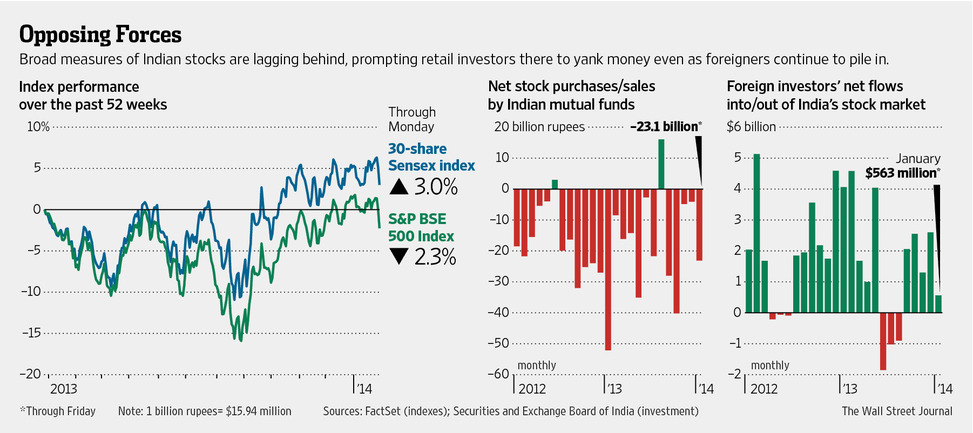
The Stoic Art of Living: Inner Resilience and Outer Results Paperback

The Stoic Art of Living: Inner Resilience and Outer Results Paperback

by Tom Morris (Author)

image003-2

Tom Morris’s exuberant seminars and presentations to business leaders have taken the commanding heights of corporate America by storm and his books on philosophy for businesspeople have sold millions. Dr. Morris shows how the ideas of Stoic Philosophy – which emphasizes goals like gaining command of one’s passions and achieving indifference to pain and distress – are completely up-to-date in their relevance to the practical issues people confront in the 21st century.
Divided into three sections Dr. Morris sympathetically relates the life and intellectual achievements of the three leading Stoics: the slave Epictetus, the lawyer Seneca, and the Roman emperor Marcus Aurelius. From the bottom of society, to the upwardly mobile middle, and all the way to the top, these thinkers saw life deeply.

Editorial Reviews

Review

“Dr. Morris returns philosophy’s focus from abstractions to the everyday problems of how to live life.” — Star News, August 15, 2004

About the Author

Tom Morris is the former Notre Dame philosophy professor whose classes became a campus legend and whose nationwide speaking engagements have electrified the audiences of corporate America. Continuing in his mission to bring philosophical wisdom into the trenches of everyday life, he shows how ideas of Stoic Philosophy – which emphasizes goals like gaining command of one’s passions and achieving indifference to pain and distress – are completely up to date in their relevance to the practical issues people confront in the 21st century.