Albemarle & Bond: a business you’d struggle to pawn; Breakneck expansion and the fall in the gold price have done for the high-street pawnbroker that has wiped out its shareholders
April 7, 2014 Leave a comment
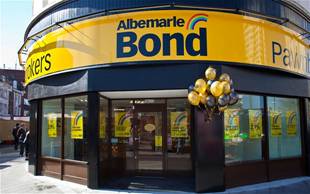
Albemarle & Bond: a business you’d struggle to pawn
Breakneck expansion and the fall in the gold price have done for the high-street pawnbroker that has wiped out its shareholders
By Alistair Osborne, Business Editor
8:35PM GMT 24 Mar 2014
So, what do you call something that you’d struggle to pawn? Albemarle & Bond, as it turns out.
It’s such a cruel business, pawnbroking. Log on to the company’s website and up pops the proud boast: “For nearly 30 years, we’ve been helping our customers get the cash they need, when they need it.” If only the cash-strapped A&B could have managed the same trick for itself.
That it couldn’t has been painfully clear for some time – and long before yesterday’s coup de grace. Was the writing on the wall last November, you wonder, when the pawnbroker started melting down its stocks of gold jewellery to meet commitments to the banks it owes £51m – Barclays and Lloyds Banking Group?
Or in December, when its five non-executive directors resigned en masse in a single day, as A&B formally put the company up for sale? Or in January, when those sales talks were called off?
Arguably, the events leading to yesterday’s shareholder wipe-out go back further than that: to two quick profits warnings and September’s botched £35m rights issue, when its biggest investor – US rival EZCorp – backed out of plans to underwrite what was then a deeply-discounted 50p-a-share cash-call.
Who can blame the near-30pc shareholder? Perhaps the temptation to let the business fall over and potentially pick it up much cheaper was too hard to resist.
Whatever, with administration – bar a miracle – now looming, there’s no quibbling that A&B has proved a spectacular corporate combustion. Just two and a half years ago the shares, suspended yesterday at 6.65p, hit a 401p high, valuing the group at more than £220m. Today, they’re worthless.
That it has come to this is mainly due to two things: the sort of breakneck store opening programmes that often wreck high-street businesses; and the plunge in the gold price with which A&B’s fortunes are so inextricably linked.
For a while, pawnbrokers seemed to be one of the winners from 2008’s financial meltdown. The falling markets triggered a flight to safety-first gold. And, with the banks refusing to lend, new businesses – pawnbrokers, payday loan merchants – sprung up to fill the gap.
Back in February 2012, A&B’s former chief executive Barry Stevenson was keen to stress the service the group was providing to the wider economy.
“We see painters, decorators, shopkeepers as well as white van men,” he said, noting how business had grown “dramatically”.
“Typically, if they’re on a job and, say, their exhaust goes, they come to us for the money to fix it.”
How many traded in the wedding ring for a new exhaust is a moot point. But, at the same time, a burgeoning retail market was emerging to capitalise on the soaring gold price. Punters pawned or sold their jewellery and, all the time gold was going gangbusters, A&B had what might have looked a gilt-edged business model – it would lend, say, two-thirds of an item’s worth, charge some tasty interest and know that the collateral it kept was rising in value.
It was the model that gave A&B, which started off as a single shop in Bristol, the confidence to open more than 25 stores a year. Pretty soon, the estate had doubled in size to today’s 188 stores. It wasn’t the only business expanding either. As A&B points out itself, the number of non-standard lending and pawnbroking outlets on the UK high street rocketed from 800 in 2008 to 2,144 in 2013.
But then the gold price collapsed. Two months before the peak in A&B shares, gold reached its own high of $1921 an ounce in September 2011. Today, it trades at just over $1300.
With the fall, A&B’s business model unravelled. Customers continued to take out six-month loans – but the collateral the group held against them was plunging in value. Not only that. As the gold price fell, punters naturally traded much less of the stuff – indeed, they also had less to trade having sold out when the gold price was booming. And all that was exacerbated by A&B’s debt-fuelled expansion, bringing with it both onerous leases and gold stocks worth less by the week.
By last April, a profits warning did for Stevenson – an exit marked by analysts at Shore Capital with a note entitled “Pawn of the Dead”, a reference to the 2004 zombie comedy flick Shaun of the Dead.
Further profits warnings followed. Last year’s profits collapsed from £21.4m to £4.9m, with A&B warning that this year had begun with five months of losses.
Now, with a failed fundraising and sale process behind it, chairman Greville Nicholls has admitted that the banks have refused to “support the management turnaround plan” just days before A&B’s covenant waiver expires next Monday.
That’s tough on Nicholls, who’s been at the group since 1992, and A&B’s 1,000 staff. But even they would not lend money against their currently bombed-out firm.
 About bambooinnovator
 Bamboo Innovator