‘Culture creation’ often easier than it looks; the concept of “bunkazukuri,” or “culture creation”
April 7, 2014 Leave a comment
‘Culture creation’ often easier than it looks
STAFF WRITER
MAR 23, 2014
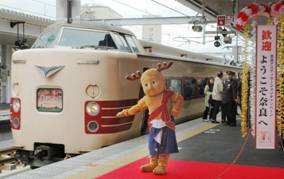
Nara’s Sento-kun mascot welcomes visitors to the city at JR Nara Station in April 2010. | KYODO
For all the official rhetoric about the need for Kansai’s prefectures to set themselves apart from each other, let alone from the rest of the country, the local bureaucracies too often have a herd mentality when it comes to planning and promoting tourism campaigns.
One formula for success, as Kansai officialdom defines it (i.e. continued funding for ever-bigger local tourism budgets), begins with the concept of “bunkazukuri,” or “culture creation.”
Ideally, the targeted culture is pegged to local characteristics or ideas that can be turned into reasons to visit. But how do you grab the attention of jaded tourists once the bureaucrats, politicians and corporate types decide what constitutes profitable local culture?
A cute mascot always helps. Sometimes, the mascot comes to life after ideas are publicly solicited and approved. Other times, the mayor’s nephew or the daughter of the local head of the chamber of commerce is quietly commissioned to produce one for a closed-door committee.
But whoever does the work must meet three criteria.
First, and most importantly, the mascot must be cute and positive. No students of the Dada school need apply.
Second, a mascot must have a connection to the area’s local image as held by the nation or the world. How obvious that connection should be to those unfamiliar with its history is the subject of much debate.
Nara’s Sento-kun, a Buddhalike boy wearing deer antlers to symbolize Nara as the home of Todaiji Temple and the wild deer in Nara Park, was fairly straightforward. But Hyogo Prefecture’s Haba-tan, a baby phoenix mascot, requires immediately remembering that Kobe had an earthquake in January 1995 and recovered from it — like a phoenix.
Finally, the mascot must be marketable. Tourists will be expected not only to associate it with the town or locale visited, but also to stock up on all manner of goods featuring it. Call it the Hello Kitty tourism promotion plan.
One might argue that the energy and tax money that go into creating a mascot that can sell officially sanctioned Kansai culture might be better spent on things that actually benefit tourists or have something to do with real culture. But that presumes local officials can — and want — to view tourists as something other than a new revenue stream to be tapped.
 About bambooinnovator
 Bamboo Innovator