Advances That Regrow Babies’ Hearts; Pediatric surgeons are developing a new strategy to tackle one of cardiology’s most challenging congenital defects

July 22, 2013, 7:30 p.m. ET

Advances That Regrow Babies’ Hearts

Surgeons develop a new strategy to tackle one of cardiology’s most challenging congenital defects.

RON WINSLOW

Pediatric surgeons are developing a new strategy to tackle one of cardiology’s most challenging congenital defects: babies born with only one heart ventricle. The doctors are enlisting the body’s own regenerative powers in an effort to grow the missing ventricle or strengthen the remaining one. At Boston Children’s Hospital, doctors are beginning to see the fruits of a 10-year effort to use biology instead of new technology to help children born with the condition, called hypoplastic left heart syndrome, grow a second ventricle. Among 34 patients treated so far, 13 are now living with two working ventricles, according to Sitaram Emani, the surgeon heading the effort. Read more of this post


Drug Research in China Falls Under a Cloud

July 22, 2013

Drug Research in China Falls Under a Cloud

By KATIE THOMAS

Executives at the British drug maker GlaxoSmithKline were warned nearly two years ago about critical problems with the way the company conducted research at its drug development center in China, exposing it to potential financial risk and regulatory action, an internal audit found.

The confidential document from November 2011, obtained by The New York Times, suggests that Glaxo’s problems may go beyond the sales practices that are currently at the center of a bribery and corruption scandal in China. They may extend to its Shanghai research and development center, which develops neurology drugs for Glaxo. Read more of this post

Fast Time and the Aging Mind; Is it possible that learning new things might slow our internal sense of time?

July 20, 2013

Fast Time and the Aging Mind

By RICHARD A. FRIEDMAN

AH, the languorous days of endless summer! Who among us doesn’t remember those days and wonder wistfully where they’ve gone? Why does time seem to speed up as we age? Even the summer solstice — the longest, sunniest day of the year — seems to have passed in a flash. No less than the great William James opined on the matter, thinking that the apparent speed of time’s passage was a result of adults’ experiencing fewer memorable events: “Each passing year converts some of this experience into automatic routine which we hardly note at all, the days and the weeks smooth themselves out in recollection to contentless units, and the years grow hollow and collapse.”

Don’t despair. I am happy to tell you that the apparent velocity of time is a big fat cognitive illusion and happy to say there may be a way to slow the velocity of our later lives. Read more of this post

Are You Overpaying for Your Parents’ Care? Overseeing home health care for loved ones can be as big a drain on families’ resources as paying for institutional care.

July 19, 2013, 6:21 p.m. ET

Are You Overpaying for Your Parents’ Care?

Overseeing home health care for loved ones can be as big a drain on families’ resources as paying for institutional care. Here are some overlooked ways to trim the bill.

KELLY GREENE

BF-AF380_20WIws_G_20130719182419BF-AF379_20pare_G_20130719161203

A child’s work is never done—especially when it comes to caring for an elderly parent. Time isn’t the only cost. Families often spend a small fortune even before their loved ones check into a long-term-care facility. Making matters worse, adult children juggling jobs, caregiving and their own kids often miss ways to mitigate costs, from tax breaks to hiring home caregivers on their own. All told, needless expenditures can add up to thousands of dollars a year. Read more of this post

More Pain Doctors Require Patients to Take Urine Tests; Behind New Rules Is a Fear of Lawsuits Tied to Overdose Deaths

Updated July 19, 2013, 7:27 p.m. ET

More Pain Doctors Require Patients to Take Urine Tests

Behind New Rules Is a Fear of Lawsuits Tied to Overdose Deaths

TIMOTHY W. MARTIN

NA-BX325A_PILLT_G_20130719183012

For decades, William Piechal trusted patients who said they were taking their pain medications as prescribed. Now, he is asking them to prove it. The Fayetteville, Ark., physician is one of a growing number of pain doctors across the country requiring patients to submit urine samples to demonstrate they are taking pain medications such as oxycodone as directed. Individuals also are being asked to sign written agreements promising they won’t sell their drugs on the side and will seek prescription painkillers only from Dr. Piechal’s clinic while under his care. If they refuse, he said, he won’t provide them with a prescription. Read more of this post

A newly discovered pandoravirus is 1,000 times the size of the flu virus and has nearly 200 times as many genes. And giant viruses turn out to be everywhere.

July 18, 2013

Changing View on Viruses: Not So Small After All

By CARL ZIMMER

There was a time not that long ago when it was easy to tell the difference between viruses and the rest of life. Most obviously, viruses were tiny and genetically simple. The influenza virus, for example, measures about 100 nanometers across, and has just13 genes.

Those two standards, it’s now clear, belong in the trash. Over the past decade, scientists have discovered a vast menagerie of viruses that are far bigger, and which carry enormous arsenals of genes. French researchers are now reporting the discovery of the biggest virus yet. The pandoravirus, as they’ve dubbed it, is 1,000 times bigger than the flu virus by volume and has nearly 200 times as many genes — 2,556 all told. Read more of this post

Pot-Based Diabetes Drug Maker GW Sees Slowing of Illness

Pot-Based Diabetes Drug Maker GW Sees Slowing of Illness

The marijuana plant contains at least 60 different chemical compounds, only one of which gets a smoker high. GW Pharmaceuticals Plc (GWP) says one of the other 59 shows promise in treating Type 2 diabetes.

In a mid-stage study, an experimental drug, currently known by its candidate name GWP42004, helped improve the pancreas’s ability to produce insulin and led to a drop in blood sugar levels between meals, among other findings, according to the London-based company. GW plans to publish the results of that trial this year. Read more of this post

Prozac World: These Are The Most Stressed Out Countries

Prozac World: These Are The Most Stressed Out Countries

Tyler Durden on 07/17/2013 21:23 -0400

20130717_stress_0

While anti-depressant use is surging in Sweden (up 1000% since 1980), bursting in Britain (up 495% since 1991), and up an astounding 400% since 1994 in the USA (with 1 in 10 on some kind of ‘prozac’), it is the poor-old Nigerians that should really be complaining. Based on seven variables,Bloomberg has scored 74 nations around the world for their “stressed-out” factor and finds the USA to be 54th (so stop whining and suck it up), Norway the least stressed-out of all and El Salvador and South Africa at the top with Nigeria (with the roiling Egyptians ranking 15th). Bloomberg ranked countries based on the stressfulness of their living environments. Read more of this post

‘Intelligent’ surgical knife can sniff out cancer tissue

‘Intelligent’ surgical knife can sniff out cancer tissue

2:24pm EDT

By Ben Hirschler

LONDON (Reuters) – Scientists have created an “intelligent” surgical knife that can detect in seconds whether tissue being cut is cancerous, promising more effective and accurate surgery in future. The device, built by researchers at London’s Imperial College, could allow doctors to cut back on additional operations to remove further pieces of cancerous tumors. The technology, effectively merging an electrosurgical knife that cuts through tissue using heat with a mass spectrometer for chemical analysis, has also been shown to be able to distinguish beef from horsemeat. Read more of this post

Down Syndrome’s Extra Chromosome Silenced in Lab Cells

Down Syndrome’s Extra Chromosome Silenced in Lab Cells

Scientists silenced the extra copy of a chromosome that causes Down syndrome in laboratory stem cells, offering the first evidence that it may be possible to correct the genes responsible for the disorder.

The findings, published today in the journal Nature, offer new cell models for developing potential treatments, researchers said. The models, aided by gene-manipulating technology from Sangamo Biosciences Inc. (SGMO), may help researchers discover drug targets for other ill health effects that come with the syndrome, including heart disease, hearing difficulties, and weakened muscles. Read more of this post

Memory Lapse Shown as Early Warning for Alzheimer’s

Memory Lapse Shown as Early Warning for Alzheimer’s

Doctors who tell their aging patients not to fret about memory lapses may be doing them a disservice, according to new studies that suggest they may be the earliest discernible signs of Alzheimer’s disease.

The condition, dubbed subjective cognitive decline, is one of the hottest new areas in dementia research. Five reports presented at the Alzheimer’s Association meeting in Boston found healthy people who say their thinking is growing cloudy may already have changes in their brains and are twice as probable to be subsequently diagnosed with a cognitive disorder. Read more of this post

Dementia’s Signs May Come Early; Doctors are starting to pay more attention to patients who say they are experiencing cognitive problems but do not yet show a measurable decline

July 17, 2013

Dementia’s Signs May Come Early

By PAM BELLUCK

The man complained of memory problems but seemed perfectly normal. No specialist he visited detected any decline.

“He insisted that things were changing, but he aced all of our tests,” said Rebecca Amariglio, a neuropsychologist at Brigham and Women’s Hospital in Boston. But about seven years later, he began showing symptoms of dementia. Dr. Amariglio now believes he had recognized a cognitive change so subtle “he was the only one who could identify it.” Read more of this post

Robert Taub back in Israel to combat snoring; The Omrix founder can’t resist Israel’s medical technologies as shown by sleep apnea prevention company Nyxoah; Taub is known for founding biological glue company Omrix and selling it to Johnson & Johnson in 2008 for $483 million

Robert Taub back in Israel to combat snoring

The Omrix founder can’t resist Israel’s medical technologies as shown by sleep apnea prevention company Nyxoah.

17 July 13 15:18, Gali Weinreb

About two years ago, at the height of the State of Israel’s trial against Omrix and its founder Robert Taub, he said that he would not establish any more companies in Israel. He founded Nyxoah, his new baby, in Belgium and even moved the company’s CEO Dr. Adi Mashiach there. Later Taub registered an Israeli subsidiary of Nyxoah in Tel Aviv. The trial is expected to go to mediation and now Taub reveals that while the company is registered in Belgium, half of its employees are in Israel. “The biotech and medtech sector in Israel is still very attractive. As in the past, I very much admire the entrepreneurship of Israeli companies and Israeli scientists,” he said. Read more of this post

Partial skull removal, used to relieve life-threatening pressure in the brain after a traumatic injury or severe stroke, raises questions about quantity versus quality of life

July 16, 2013

Skull Surgery Offers Perils and Potential

By KATIE HAFNER

16SKUL1-articleLarge

Dr. Geoffrey T. Manley of San Francisco General Hospital held a cranial prosthesis to be fitted in a patient who suffered traumatic brain injury after falling from a window.

SAN FRANCISCO — Following the crash of Asiana Airlines Flight 214 here, one of the first victims rushed to San Francisco General Hospital and Trauma Center was a teenage girl, unconscious and gravely injured. Her brain was quickly swelling, with nowhere to go but through the small opening at the base of her skull. Such an event, known as “herniation,” crushes the brainstem and can be rapidly fatal. Unable to reduce the swelling with medications, neurosurgeons decided to remove a large portion of the girl’s skull. Once they had done so, her brain bulged through the opening. The operation relieved the pressure and saved her brain, but it was not enough to save her life. The girl, whose parents asked that she not be named to protect her privacy, died of the other injuries she sustained in the crash. Read more of this post

Slapping, shoving tied to kids’ future health problems

Slapping, shoving tied to kids’ future health problems

12:17am EDT

By Genevra Pittman

NEW YORK (Reuters Health) – Children who are punished through pushing, shoving and slapping are more likely to be obese and have other health problems when they grow up, a new study suggests. “This is one study that adds to a growing area of research that all has consistent findings that physical punishment is associated with negative mental and now physical (health) outcomes,” said Tracie Afifi, who led the study at the University of Manitoba in Winnipeg, Canada. Read more of this post

U.S. Blood Supply Threatened as Donors Face Iron Losses

U.S. Blood Supply Threatened as Donors Face Iron Losses

Dennis Gastineau started giving blood regularly when he was in medical school in the 1970s. The $25 he received bought almost enough groceries for a week. Now, it just seems like the right thing to do.

It may also be bad for his health. Gastineau, who happens to be a hematologist, is among the 2.4 million donors who risk silent damage as a result of frequent giving. U.S. government research published last year found this group iron-deficient, which can lead to fatigue, compromised mental function and eventually anemia. Now, iron levels are being examined as part of an $87.2 million study the U.S. is funding on blood donation and transfusion safety. Read more of this post

Scientists find how ‘obesity gene’ makes people fat

Scientists find how ‘obesity gene’ makes people fat

2:49pm EDT

By Ben Hirschler

LONDON (Reuters) – Scientists have unraveled how a gene long associated with obesity makes people fat by triggering increased hunger, opening up potential new ways to fight a growing global health problem. A common variation in the FTO gene affects one in six of the population, making them 70 percent more likely to become obese – but until now experts did not know why. Using a series of tests, a British-led research team said they had found that people with the variation not only had higher levels of the “hunger hormone” ghrelin in their blood but also increased sensitivity to the chemical in their brains. Read more of this post

Four Drugmakers Face China Probes as Glaxo Woes Widen; GSK is test case in China’s rules laboratory

Four Drugmakers Face China Probes as Glaxo Woes Widen

GSK

China is investigating at least four multinational drugmakers as it widens its probe of GlaxoSmithKline Plc (GSK), according to a lawyer in Hong Kong whose firm advises companies on cross-border anti-corruption.

The investigations point to an increased targeting of the pharmaceutical industry in corruption probes as the world’s most populous country faces rising health-care costs and seeks to lower drug prices. While the drugmakers are being examined by local regulators, the results may draw added questions from officials in Beijing and scrutiny by the U.S. government under the Foreign Corrupt Practices Act. Read more of this post

Covidien’s Wide-Moat Device Business Positioned Well for Long-Term Growth

Covidien’s Wide-Moat Device Business Positioned Well for Long-Term Growth

By Alex Morozov, CFA | 07-12-13 | 06:00 AM | Email Article

With the spin-off of the no-moat pharmaceutical segment,  Covidien‘s (COV)business is largely composed of products that garner strong competitive positioning in the marketplace. The company’s device business has wide-moat attributes because of its strong intellectual property and significant switching costs, which imply high barriers to entry. Given Covidien’s focus on products that deliver value to patients, providers, and payers, it is well positioned to prosper as more provisions of the U.S. Affordable Care Act take effect, while many of its peers will face significant regulatory and reimbursement pressures. The company’s growth prospects are healthy, buoyed by a particularly productive pipeline. As a result, we continue to believe the firm deserves a valuation premium compared with some of its medical technology peers. Read more of this post

New rehab device to give stroke patients feedback; The system is expected to cost $2,000 to $3,000 per unit. The first prototypes should be available later this year.

New rehab device to give stroke patients feedback

health_johnson_lu

Friday, Jul 12, 2013
The Straits Times
By Jonathan Kwok

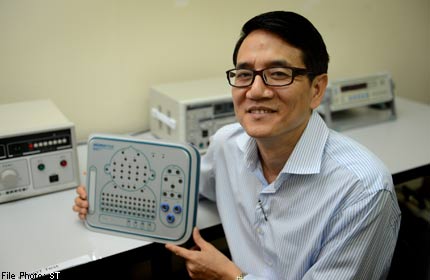
SINGAPORE – Recovering from a debilitating stroke can be a tough and challenging process, with patients needing to spend countless hours re-learning basic motor skills.

Traditionally, occupational therapists have helped the patient with his exercises, but with Singapore’s manpower crunch there is an increasing need to automate this process. That is where NeuroStyle comes in. The local start-up is developing a promising product to help patients with their rehabilitation at home. Read more of this post

Robots on the Brain: The merging of human surgical experience with machines and computerized technologies is driving neurosurgical advancement

Robots on the Brain

09 July 2013

Garnette Sutherland is Professor of Neurosurgery in the Department of Clinical Neurosciences at the University of Calgary, Canada.

CALGARY – When Harvey Cushing and William Bovie introduced electrocautery (which uses a high-frequency current to seal blood vessels or make incisions) in 1926, their innovation transformed neurosurgery. Given the precision required to operate on an organ as delicate as the brain, the convergence of mechanical technologies with the art of surgery catalyzed progress in the field. Read more of this post

Rare Mutation Ignites Race for Cholesterol Drug

July 9, 2013

Rare Mutation Ignites Race for Cholesterol Drug

By GINA KOLATA

jpHEART-1-articleLarge

LARGE SCALE Amgen is preparing three sites, including a 75-acre plant in Rhode Island, to make a cholesterol drug if production is approved.

She was a 32-year-old aerobics instructor from a Dallas suburb — healthy, college educated, with two young children. Nothing out of the ordinary, except one thing. Her cholesterol was astoundingly low. Her low-density lipoprotein, or LDL, the form that promotes heart disease, was 14, a level unheard-of in healthy adults whose normal level is over 100. The reason was a rare gene mutation she had inherited from both her mother and her father. Only one other person, a young, healthy Zimbabwean woman whose LDL cholesterol was 15, has ever been found with the same double dose of the mutation. The discovery of the mutation and of the two women with their dazzlingly low LDL levels has set off one of the greatest medical chases ever. It is a fevered race among three pharmaceutical companies, Amgen, Pfizer and Sanofi, to test and win approval for a drug that mimics the effects of the mutation, drives LDL levels to new lows and prevents heart attacks. All three companies have drugs in clinical trials and report that their results, so far, are exciting. Read more of this post

New Therapies to Help Stroke Survivors Recover Language Years After Injury

July 8, 2013, 7:00 p.m. ET

New Therapies to Help Stroke Survivors Recover Language Years After Injury

Nearly 20% of stroke victims are under 55, compared with fewer than 13% in the early 1990s, according to a 2012 study

LAURA LANDRO

An estimated two million Americans who have suffered a stroke or other brain injury have the condition known as aphasia. Evidence continues to emerge showing that the brain is able to recover even many years following injury. Laura Landro joins Lunch Break to discuss. Photo: Rehabilitation Institute of Chicago. Eunice Bustillo faced a long recovery following a stroke at age 40. After a week in the hospital and a month at a rehabilitation center, she continued to have trouble with vision and motor functions. Even more difficult for Ms. Bustillo, the owner of a consulting business and the mother of a son who was 3 at the time, was overcoming aphasia, a language disorder that is a common aftereffect of stroke. Aphasia impairs the ability to process and understand language, including speaking, reading and writing, while leaving intelligence unaffected. Recovery can require intensive therapy including hours of practice to repair and reorganize damaged language functions in the brain. Read more of this post

A baby boy born in Pennsylvania in June is the first birth following embryo screening using the latest gene sequencing technology designed to increase the success rate of in-vitro fertilization and reduce miscarriages

First Baby Born After Embryo Gene Sequencing to Cut Miscarriages

A baby boy born in Pennsylvania in June is the first birth following embryo screening using the latest gene sequencing technology designed to increase the success rate of in-vitro fertilization and reduce miscarriages.

Gene sequencing of embryos can identify chromosomal defects that can result in the failure of embryos to adhere to the lining of the mother’s womb, which is necessary for the fetus to receive oxygen and nutrients. Researchers at Oxford University used the technology to select healthy embryos about five days after fertilization by two couples undergoing IVF, which resulted in successful pregnancies. The study will be presented today at the European Society of Human Reproduction and Embryology’s annual meeting in London. Read more of this post

Herbal stroke medicine NeuroAid marketed by Singapore-based Moleac no better than dummy pill in a large, three-month clinical trial

Herbal stroke remedy no better than dummy pill

Fri, Jul 5 2013

By Kerry Grens

NEW YORK (Reuters Health) – A Chinese herbal remedy marketed to improve stroke recovery failed to exceed the benefits of a placebo in a large, three-month clinical trial. “There’s no evidence of efficacy,” said Dr. James Brorson, medical director of the University of Chicago Stroke Center, who was not involved in the study. Still, the researchers are not completely discouraged by the results. “Yes, we had hoped for a larger effect, but the results of the trial suggest that this may be the case for certain groups of patients,” said Dr. Christopher Chen, the report’s lead author and a professor at the National University of Singapore. Chen’s research was supported in part by Moleac, the company that markets the herbal medicine, called NeuroAiD. NeuroAiD is a blend of extracts from plants, leeches, beetles, scorpions and antelope horn. Read more of this post

India’s poor ‘duped’ into clinical drug trials; Many desperate and poor people are unwittingly taking part in clinical trials for drugs by pharmaceutical companies that outsource the work to unregulated research organizations

India’s poor ‘duped’ into clinical drug trials

Many desperate and poor people are unwittingly taking part in clinical trials for drugs by Indian and multinational pharmaceutical companies that outsource the work to unregulated research organisations. -Reuters
Abhaya Srivastava
Sun, Jul 07, 2013
Reuters

NEW DELHI – Niranjan Lal Pathak couldn’t believe his luck initially. When a doctor at a hospital in central India offered the factory watchman free treatment for a heart complaint, he jumped at the chance. It was five years ago and the family of the 72-year-old says he didn’t realise that the Maharaja Yashwantrao Hospital in the city of Indore was about to enroll him in a trial of an untested drug. “We were told that our uncle will be treated under a special project,” his nephew Alok Pathak told AFP over the phone from Indore, the largest city of Madhya Pradesh state. “The doctor said we wouldn’t have to spend a penny. There was only one condition placed before us – that we should not approach local chemists if we ever ran out of his medicines but go straight to the doctor,” he said. Read more of this post

Unique Characteristics in Dental and Veterinary Distributor Markets Support Wide Economic Moats

Unique Characteristics in Dental and Veterinary Distributor Markets Support Wide Economic Moats

By Michael Waterhouse | 07-05-13 | 06:00 AM | Email Article

We have upgraded  Henry Schein (HSIC) and  Patterson Companies (PDCO) to wide-moat companies thanks to their strong competitive advantages in the dental and veterinary distribution markets. As critical intermediaries between a highly fragmented base of customers and suppliers that depend on their scale and customer services, Schein and Patterson possess competitive advantages that support a long time frame of attractive returns on capital, in our view. We also think the high out-of-pocket dental and vet markets will sustain consistent midsingle-digit growth over the long term. Both stocks are trading close to our fair value estimates of $99 and $39 for Schein and Patterson, respectively, and while valuations don’t currently suggest attractive entry points for either firm, we think investors should keep these names on their watch lists. Read more of this post

China drug audit gives pharmaceutical groups the chills

July 4, 2013 8:20 pm

China drug audit gives pharmaceutical groups the chills

By Andrew Jack in London

After the gold rush of the past decade, the latest move this week by the Chinese authorities to probe the medicines sector has sent a chill wind through the multinational pharmaceutical groups expanding in the country. The National Development and Reform Commission in Beijing has signalled that it is examining pricing by 60 companies, including the domestic affiliates of half a dozen international groups such as Astellasof Japan, Merck of the US and GlaxoSmithKline in the UK.

Read more of this post

A Disease Without a Cure Spreads Quietly in the West; Valley fever has been labeled “a silent epidemic,” with over 20,000 cases reported each year, but each case is different, and doctors have yet to find a cure

July 4, 2013

A Disease Without a Cure Spreads Quietly in the West

By PATRICIA LEIGH BROWN

BAKERSFIELD, Calif. — In 36 years with the Los Angeles police, Sgt. Irwin Klorman faced many dangerous situations, including one routine call that ended with Uzi fire and a bullet-riddled body sprawled on the living room floor.

But his most life-threatening encounter has been with coccidioidomycosis, or valley fever, for which he is being treated here. Coccidioidomycosis, known as “cocci,” is an insidious airborne fungal disease in which microscopic spores in the soil take flight on the wind or even a mild breeze to lodge in the moist habitat of the lungs and, in the most extreme instances, spread to the bones, the skin, the eyes or, in Mr. Klorman’s case, the brain. Read more of this post

Scientists Fabricate Rudimentary Human Livers

July 3, 2013

Scientists Fabricate Rudimentary Human Livers

By GINA KOLATA

04liver-popup

Researchers from Japan used human stem cells to create “liver buds,” rudimentary livers that, when transplanted into mice, grew and functioned

Researchers in Japan have used human stem cells to create tiny human livers like those that arise early in fetal life. When the scientists transplanted the rudimentary livers into mice, the little organs grew, made human liver proteins, and metabolized drugs as human livers do. Read more of this post