Stem-cell therapies: Prometheus unbound; Researchers have yet to realise the old dream of regenerating organs. But they are getting closer

Stem-cell therapies: Prometheus unbound; Researchers have yet to realise the old dream of regenerating organs. But they are getting closer

Jul 6th 2013 |From the print edition

PROMETHEUS, a Titan bound to a rock by Zeus, endured the daily torture of an eagle feasting on his liver, only to have the organ regrow each night. Compared with this spectacle, a video on the website of Nature this week seems decidedly dull. It shows a collection of pink dots consolidating into a darker central glob.

But something titanic is indeed happening. The pink dots are stem cells, and the video shows the development of a liver bud, something which can go on to look and act like a liver. Takanori Takebe and Hideki Taniguchi of Yokohama City University, in Japan, who made the video, have created working human-liver tissue. Read more of this post
Novo’s Scale Advantages and Drug Lineup Broaden Its Wide Moat

Novo’s Scale Advantages and Drug Lineup Broaden Its Wide Moat

By Lauren Migliore, CFA | 07-03-13 | 06:00 AM | Email Article

 Novo Nordisk (NVO) has been consistently at the forefront of diabetes care, and we expect favorable industry dynamics and the firm’s formidable research and development and diabetes-focused commercialization infrastructure to continue to drive strong returns on shareholder capital.

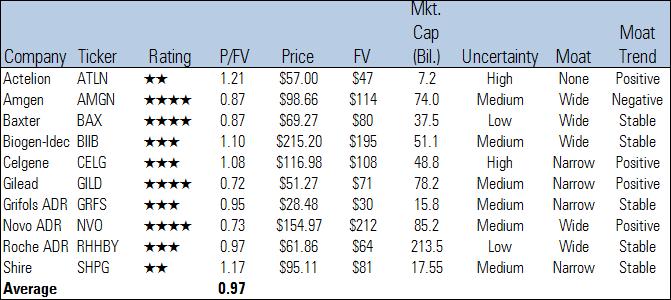
We expect growth to come from increased market penetration in diabetes care and stable growth in biopharmaceuticals. Once-daily Victoza continues to outperform once-weekly Bydureon in the GLP-1 market thanks to the competing drug’s inability to prove noninferiority in trials, and we expect Victoza to break the $2 billion mark in annual sales this year. Novo’s next-generation products, Tresiba and Ryzodeg, will help the company defend its leading insulin franchise, though we expect that a complete response letter will delay U.S. launch by two to three years. This regulatory setback, along with recent safety concerns for the incretin class–of which Victoza is a member–has caused shares to underperform, and Novo is now trading at one of the steepest discounts to fair value (over 20%) in the large-cap biotech space (see the following table). However, we think these issues have little long-term impact on the company’s value, and instead present investors with the rare opportunity to own this high-quality name at an attractive price.

Comparables Within the Biotechnology Industry
1678

Source: Morningstar Read more of this post

Painkiller Abuse Spurs Search for a Safer Opioid Therapy

Painkiller Abuse Spurs Search for a Safer Opioid Therapy

Backed by a U.S. campaign to slow abuse of prescription painkillers, drugmakers are devising new forms of the medicines that don’t lead to misuse and new products that treat dependency in a bid to change the face of a $9.4 billion market.

Orexo AB (ORX) is awaiting a July 6 U.S. ruling on a drug that blocks opiate receptors in the nervous system, potentially lessening addict dependence. Nektar Therapeutics (NKTR) on June 19 announced positive study results on an experimental medicine designed to enter the brain slowly, reducing the euphoria that can lead to addiction. And in April, the U.S. barred copies of the original form of OxyContin after Purdue Pharma LP proved its crush-resistant version made the therapy less valuable to addicts on the street. Read more of this post

Dialysis stocks hit by proposed U.S. reimbursement cuts

Dialysis stocks hit by proposed U.S. reimbursement cuts

11:30am EDT

By Zeba Siddiqui and Ludwig Burger

(Reuters) – A proposal to slash reimbursements to kidney dialysis centers in the United States drove down shares of Fresenius Medical Care AG and Davita Healthcare Partners Inc, two of the world’s leading providers of dialysis services.

The proposed 9.4 percent cut in Medicare reimbursements to dialysis centers, announced by the Centers for Medicare & Medicaid Services (CMS) on Monday, was described by JP Morgan as “worse than even our most pessimistic scenario had envisioned”. Read more of this post

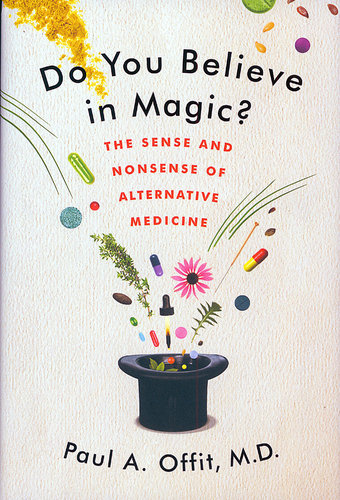
Debunking Alternative Medicines: Of 51,000 supplements on the market, Dr. Offit finds only a few have proven benefits, with the popularity of the rest a testament to the power of self-delusion and the powerful placebo effect

July 1, 2013

Mind Over Matter: Debunking Alternative Medicines

By ABIGAIL ZUGER, M.D.

02SCIB-popup

When Dr. Paul A. Offit published “Autism’s False Prophets” in 2008, he elected to skip the usual round of book signings. His defense of childhood vaccinations so enraged some people who consider them a cause of autism that he was getting credible death threats.

Others might have chosen to flee the public arena after that, but not Dr. Offit, the chief of infectious diseases at Children’s Hospital of Philadelphia, whose appetite for the good fight seems only to have grown. Over the last decade he has become a leading debunker of mass misconceptions surrounding infections and vaccines, and now he is taking on the entire field of alternative medicine, from acupuncture to vitamins. Read more of this post

New Approach to Depression: Transcranial magnetic stimulation, which uses magnetic pulses to stimulate parts of the brain connected to mood, has helped some patients with severe depression

JULY 1, 2013, 5:20 PM

New Approach to Depression

By RONI CARYN RABIN

02CONS_SPAN-tmagArticle

Martha Rhodes experienced her first bout of depression at 13. By her late 50s, she had taken just about every antidepressant there is, including Zoloft, Lexapro and Paxil — which did the trick for many years, but had side effects — then Effexor, Lamictal, Seroquel and Abilify.

After a suicide attempt in 2009, she tried something radically different: transcranial magnetic stimulation, or TMS, a treatment in which magnetic pulses are used to stimulate parts of the brain believed to be involved in mood regulation. Unlike electroconvulsive or shock therapy, which is also used to treat stubborn depression, TMS does not generally produce seizures. Read more of this post

How Biotechs Got Hot; Sizzling IPO Market Reflects Upswing in Drug Approvals Amid R&D Successes

July 1, 2013, 6:01 p.m. ET

How Biotechs Got Hot

Sizzling IPO Market Reflects Upswing in Drug Approvals Amid R&D Successes

JONATHAN D. ROCKOFF and TELIS DEMOS

MK-CE417A_BIOIP_G_20130701165104

Biotechnology companies are enjoying their best run with initial public offerings in a decade, amid an upswing in new drug approvals, strong performance by some already public biotech firms and legal changes last year that make it easier for companies to gauge investor interest in a potential IPO.

Through the first half of 2013 there have been 16 U.S.-listed biotech IPOs, raising $1.1 billion in proceeds, according to Renaissance Capital LLC, a Greenwich, Conn.-based provider of IPO research and investment products, making this year, at the midpoint, already the best for biotech IPO fundraising since 2004. Read more of this post

To Avoid Root Canals, Teeth That Replace Themselves; Stem-Cell Research Makes Progress in Quest to Avoid the Dreaded Drill

July 1, 2013, 7:14 p.m. ET

To Avoid Root Canals, Teeth That Replace Themselves

Stem-Cell Research Makes Progress in Quest to Avoid the Dreaded Drill

SHIRLEY S. WANG

PJ-BP169_LAB_G_20130701183324

Advances in treating tooth decay may one day lead to an ability to restore tooth tissue – and to avoid root canals, according to scientists. Shirley Wang and Baylor College of Dentistry Professor of Biomedical Sciences Dr. Rena D’Souza join Lunch Break with details. Photo: Getty Images.

Could the days of the root canal, for decades the symbol of the most excruciating kind of minor surgery, finally be numbered?

Scientists have made advances in treating tooth decay that they hope will let them restore tooth tissue—and avoid the painful dental procedure. Several recent studies have demonstrated in animals that procedures involving tooth stem cells appear to regrow the critical, living tooth tissue known as pulp. Read more of this post

The long-term-care insurance industry now is shrinking, premiums are soaring and there is no fix in sight

Updated July 1, 2013, 11:03 p.m. ET

Long-Term-Care Insurance Leaves Customers Groping

KELLY GREENE and LESLIE SCISM

P1-BM143_LONGTE_G_20130701171209

Rob and Katherine Deane thought they were being responsible by buying insurance policies to provide for care in their later years. Instead, the Michigan couple are encountering a growing gap in health-care coverage that the government overhaul will do nothing to fix.

The Deanes say they got hit last year with rate increases on both of their long-term-care policies, insurance plans that pay for nursing homes or in-home care. Manulife Financial Corp.’s MFC.T +0.42% John Hancock unit told Mrs. Deane that the premium on her 10-year-old policy would jump 77% to $6,406 a year. Her husband’s insurer, Unum GroupUNM +1.26% increased his premium by 25%. Read more of this post

Onyx has been transformed from a struggling biotech company to a $10 billion acquisition target in just a few years, the result of gambles made by its hard-charging chief executive, N. Anthony Coles who sued his company’s partner and agreed to pay more than $800 million for an unproven drug startup

July 1, 2013, 7:36 p.m. ET

How Onyx Transformed Itself Into a Target

JOSEPH WALKER

Onyx Pharmaceuticals Inc. ONXX +51.27% has been transformed from a struggling biotech company to a $10 billion acquisition target in just a few years, the result of gambles made by its hard-charging chief executive, N. Anthony Coles, who sued his company’s partner and agreed to pay more than $800 million for an unproven drug startup.

Now, Onyx is seen as a possible prize for large drug companies seeking a cancer drug with attractive business prospects. Onyx last week rejected an acquisition proposal from Amgen Inc. AMGN -1.19% News of the rejection and courting by other suitors sent Onyx stock surging 51% Monday to $131.33 a share, giving it a market value of $9.55 billion. Read more of this post

High profile Australian-listed Phosphagenics chief executive Esra Orgu has been suspended from her duties after the discover of “irregular transactions” in relation to the company’s accounting records

Phosphagenics chief suspended from duties

July 1, 2013 – 2:52PM

Eli Greenblat

art-613082620-620x349

Phosphagenics chief executive Esra Ogru. Photo: Arsineh Houspian

High profile Phosphagenics chief executive Esra Orgu has been suspended from her duties after the discover of “irregular transactions” in relation to the company’s accounting records. Phosphagenics made the announcement to the Australian Securities Exchange this morning after entering a trading halt on Friday. In the release the company, which is developing a portfolio of cosmetics for the international beauty industry, said it believed the amount of money unaccounted for was material.

Read more of this post

Can Caresses Protect the Brain from Stroke? Neurons cut off by a stroke may have the inherent ability to reroute blood flow and save themselves

June 26, 2013

Can Caresses Protect the Brain from Stroke? [Preview]

Neurons cut off by a stroke may have the inherent ability to reroute blood flow and save themselves

By Stephani Sutherland

Saved by Caresses

Stroke research has been stymied for many years by the complexity of the brain’s response and promising but failed therapies. An accidental discovery in lab rats revealed that stimulating their senses, by wiggling a whisker or playing a loud noise, activated the neurons cut off by the stroke and rerouted the blood supply to nourish them. Treatments based on this approach are a long way off for people, but experts are hopeful that touching a stroke victim’s hands and face could have a similar beneficial effect. Read more of this post

Melatonin: A ‘Magic’ Sleeping Pill for Children? Pediatricians worry as parents increasingly use melatonin to deal with nighttime restlessness

June 28, 2013, 6:23 p.m. ET

Melatonin: A ‘Magic’ Sleeping Pill for Children?

Pediatricians worry as parents increasingly use melatonin to deal with nighttime restlessness

JENNIFER BREHENY WALLACE

My son, who had always been a champion sleeper, was hit with insomnia the fall of his kindergarten year. A new school, a more rigorous academic schedule and the challenge of making new friends kept him up long after I had fallen asleep. He woke up exhausted and arrived home from school sullen and withdrawn. Over the next few months we tried everything to get him to sleep—no TV, warm baths, massage, warm milk.

Our pediatrician finally suggested that I give my son a melatonin supplement to help reset his sleep cycle. Try it for seven days, he said, but it may take longer. That night, with just 1 milligram of melatonin, my son fell asleep within 20 minutes—and woke up the next morning well rested, at last. It worked just as well the second night. Read more of this post

Fish-Oil Pills Lure Drugmakers Even as Benefits Unproven

Fish-Oil Pills Lure Drugmakers Even as Benefits Unproven

Fish oil has been touted as useful for everything from growing hair to treating clinical depression. Now drug makers are stepping up their promotion of its benefits for treating heart disease.

AstraZeneca Plc (AZN), Amarin Corp. (AMRN) and GlaxoSmithKline Plc (GSK) are betting the market for prescription fish-oil pills will follow the success of cholesterol-lowering drugs including Lipitor, once the world’s best-selling medicine with revenue of $13 billion a year. Read more of this post

India Warns It Is Running Out of TB Drug

Updated June 27, 2013, 9:22 p.m. ET

India Warns It Is Running Out of TB Drug

SHREYA SHAH and BETSY MCKAY

MUMBAI—India faces a potential shortage of a critical medication for drug-resistant tuberculosis that could deepen an already acute drug- shortfall-problem in the country with the highest burden of the deadly contagious disease.

Tuberculosis officials in several Indian states said this week that their stocks of kanamycin, an injectable antibiotic commonly used to treat drug-resistant TB, are running low, and an Indian government official acknowledged that the country has only a three-month supply left. Read more of this post

Trivitron and the Impending Rise of Medical Technology

Trivitron and the Impending Rise of Medical Technology

by Seema Singh | Jun 27, 2013

topimg_21919_gsk_velu_trivitron_600x400

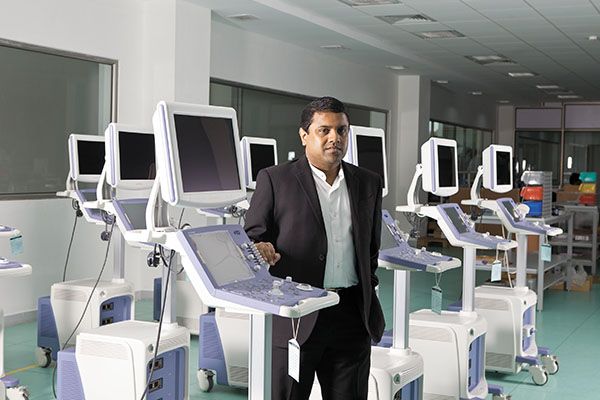
GSK Velu, founder and managing director of Trivitron, is one of the boldest entrepreneurs in health care

With four businesses to boot, why GSK Velu is placing his highest bet on medical technology

Gomathy SK Velu, one of the boldest entrepreneurs in health care, is fidgety on the sofa. In the residential lane of Abhiramapuram in Chennai, Trivitron’s office is quiet; the staff would arrive after 9.30 am. Inside the boardroom, impressive with stacked awards and citations, Velu finally settles after a short question-answer session. Then he is on a roll. Still, over the course of the two-hour conversation in which he gives a graphic flashback of the industry, the restless streak is evident. Perhaps this is what characterises a serial entrepreneur, a “compulsive risk-taker”. At 45, he has four businesses to boot and Velu doesn’t rule out additions.  Read more of this post

Wearable Devices Nudge You to Health; Tracker devices like Fitbit and Up keep you aware of your inactivity and lack of sleep, and motivate you to put your life onto a healthier track

June 26, 2013

Wearable Devices Nudge You to Health

By DAVID POGUE

You’ve heard of the Quantified Self movement? It’s the rise of watches, clips and bracelets that monitor your physical activity, sleep and other biological functions. The idea is that continual numerical awareness of your lifestyle works to motivate you: to park farther away, to get off the subway one stop sooner, to take more stairs. You study the graphs, you crunch the numbers, you live a longer, healthier life. (And you try to avoid being a crashing bore at parties.)

The most popular such gizmo — or at least the most heavily marketed — has been Jawbone’s stylish, rubberized, shower-proof Up band ($130). For about a week on a battery charge, it quietly measures your movement, whether you are awake or asleep, and displays the results on your iPhone or Android phone. Read more of this post

Vomiting Bug Vaccine Seen as Shot in the Arm for Cruises

Vomiting Bug Vaccine Seen as Shot in the Arm for Cruises

As a new strain of stomach flu leaves a trail of stomach-clenching illness from Sydney to San Diego, scientists are moving closer to thwarting it for good.

Early stage human studies on a vaccine against norovirus, the top source of gastroenteritis in the U.S., are set to finish this year. That would make work on the vaccine, developed by Takeda Pharmaceutical Co. (4502), the farthest along of several immunization candidates. A course of shots may confer lifelong protection against 95 percent of strains, said Rajeev Venkkaya, who heads the Japanese drugmaker’s vaccines unit. Read more of this post

A new sleep drug by Merck will affect a different part of the brain than a generation of older medicines which depresses brain activity with hopes for fewer side effects

Updated June 25, 2013, 5:21 a.m. ET

New Entry in the Quest for a Perfect Sleep Drug

By CHRISTOPHER WEAVER

DreamlandDrugs0621

A new sleep drug by Merck & Co. is expected to gain U.S. approval in the coming months, even as its main competitor is coming under growing scrutiny by regulators and doctors for sometimes-dangerous side effects. The new drug, known as suvorexant, will affect a different part of the brain than a generation of older medicines such as zolpidem, known as Ambien, which depresses brain activity. The hope is that suvorexant will cause fewer side effects than its older counterparts.

Read more of this post

Clinic of the Future: Aiming for Faster Depression Relief

June 24, 2013, 7:28 p.m. ET

Clinic of the Future: Aiming for Faster Depression Relief

By ANDREA PETERSEN

In a room full of researchers and neuroscientists, Greg J. Siegle pointed to an image of a patient’s brain scan and tried to think up a better treatment for her depression.

“In every other medical specialty in the world you say, ‘I feel like I’m about to die,’ they do a test,” said Dr. Siegle, director of the Program in Cognitive Affective Neuroscience at the University of Pittsburgh School of Medicine. “In psychiatry, where’s the test?” Read more of this post

Singapore, Malaysia face economic hit from prolonged smog

Singapore, Malaysia face economic hit from prolonged smog

Monday, Jun 24, 2013

Reuters

SINGAPORE – Singapore and Malaysia could face a bigger economic impact than from their worst air pollution crisis 16 years ago if slash-and-burn fires in Indonesia continue to rage in the coming weeks, turning off tourists and raising business costs.

Restaurants, tourist attractions and some other businesses are already feeling the pain as haze envelopes the Southeast Asian neighbours, from Singapore’s upscale shopping districts to Malaysia’s popular beach resorts. Read more of this post

Southeast Asia could have to brace for more forest fires and clouds of smoke in the years to come if climate change takes hold, a World Bank expert suggests

June 22, 2013, 4:08 PM

Could Climate Change Worsen Southeast Asia’s Forest Fires?

Top of Form

By Eric Bellman

Southeast Asia could have to brace for more forest fires and clouds of smoke if climate change takes hold, a World Bank expert suggests. As temperatures climb, some parts of Southeast Asia will likely flood with rising sea levels while others face drought and heat waves. Drier jungles and peatlands in Indonesia, Malaysia, Thailand and elsewhere could trigger more fires and spread more choking smoke across the region in the years to come. Read more of this post

Understanding Alzheimer’s disease: The search for a treatment for dementia continues

Understanding Alzheimer’s disease: The search for a treatment for dementia continues

Jun 22nd 2013 |From the print edition

20130622_STP001_0

ALZHEIMER’S disease wrecks lives. And as people live longer, it will wreck more with every passing year. It also wrecks budgets. In America in 2010, the cost of treating those with dementia was $109 billion. That exceeds the cost of treating those with heart disease or with cancer. The RAND Corporation, a Californian think-tank, reckons this cost will more than double by 2040. A treatment for Alzheimer’s is therefore needed for fiscal as well as humanitarian reasons. Read more of this post

Coronavirus Mystifies Scientists Seeing SARS-Like Spread

Coronavirus Mystifies Scientists Seeing SARS-Like Spread

Hofuf, a run-down desert oasis town in eastern Saudi Arabia, is home to some of the world’s richest oil fields. It’s also the source of a more worrisome export: a deadly coronavirus.

The city is at the epicenter of an outbreak of a previously unknown virus that has killed 38 people in the Middle East and Europe, recently prompting Margaret Chan, the World Health Organization’s director general, to call it her “greatest concern.” Read more of this post

Cancer-Resistant Naked Mole Rats Make Tumor Blocking Chemicals

Cancer-Resistant Naked Mole Rats Make Tumor Blocking Chemicals

Cancer resistance seen in naked mole rats, hairless African rodents that live 30 years or more, may come from a sugar that keeps cells from clumping into tumors, scientists studying the animals say.

The naked mole rat lives about 10 times longer than mice. And unlike mice, 95 percent of whom die of cancer, the mole rat is impervious to the disease, spurring interest from scientists looking for hints on potential treatments for humans. Read more of this post

Some Autistic Children Don’t Find Pleasure in Voices because of a physical disconnect between the brain regions involved in speaking and those linked to rewards

Some Autistic Children Don’t Find Pleasure in Voices

Children with autism spectrum disorder may not perceive human voices as pleasurable because of a physical disconnect between the brain regions involved in speaking and those linked to rewards, a study suggests.

Brain imaging determined that the connections between the two brain regions were stronger in children who don’t have the disorder than in those diagnosed with it, said Daniel Abrams, the lead author. That’s important because communication problems are key diagnostic criteria for autism.

One in 50 U.S. children are diagnosed with autism or a related disorder, according to the Centers for Disease Control and Prevention. The majority have difficulty using language effectively, including being unable to grasp nuances of speech such as rhythm and tone, according to the National Institutes of Health. The newest research, published in the Proceedings of the National Academy of Sciences, is the first to suggest why. Read more of this post

Forget Lab Rats: Testing Asthma Drugs on a Microchip that could provide a better read on how a drug will work

Updated June 17, 2013, 7:02 p.m. ET

Forget Lab Rats: Testing Asthma Drugs on a Microchip

By JONATHAN D. ROCKOFF

MK-CE070_ORGANC_G_20130617152312MK-CE076B_ORGAN_G_20130617182408

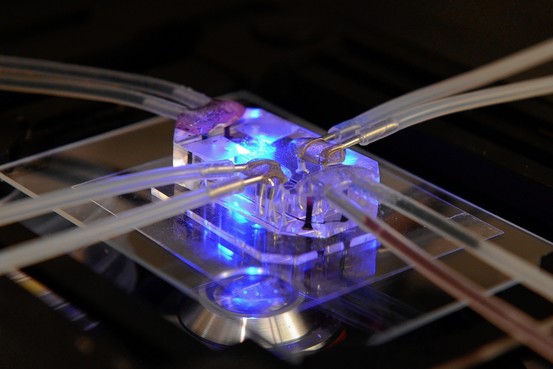
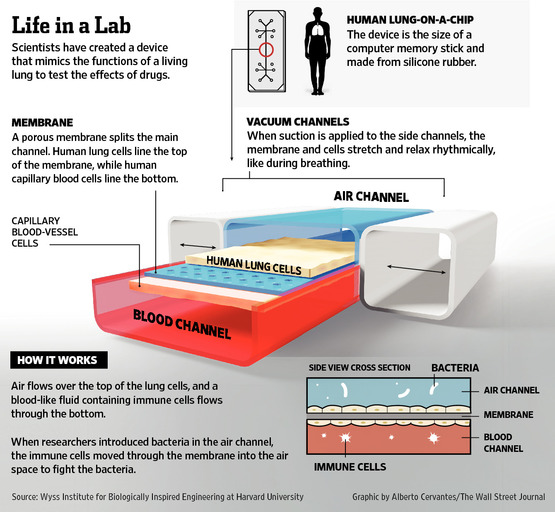
A chip engineered to replicate a human lung.

Forget lab rats. Some researchers are now testing medicines on a silicon chip that could provide a better read on how a drug will work.

These scientists are building “organs on a chip,” spooling together the important cells that make up, say, a lung, and then mimicking the key functions of the organ. Then researchers test to see what kind of impact a potential drug has on this lung-like system, created on a chip that is only a few inches long.

Companies are starting to tinker with this new technology, mostly for internal decision-making, since health regulators haven’t yet authorized their use in decisions about whether a compound can enter human testing. Read more of this post

Researchers from the Navy, the NASA and academia are studying causes and potential treatments of motion sickness, hoping to formulate better products for situations that range from the extreme to the mundane

June 17, 2013, 7:00 p.m. ET

New Views of Motion Sickness

Travel-Related Nausea Puzzles Scientists Amid Search for a Better Remedy; Ginger Root or a Nasal Spray?

By SUMATHI REDDY

It’s the medical nuisance that stumps everyone from NASA to the Navy: how to combat motion sickness. Sumathi Reddy looks at the latest research into why it happens, and what to do to keep it at bay.

Researchers from the Navy, the National Aeronautics and Space Administration and academia are studying causes and potential treatments of motion sickness, hoping to formulate better products for situations that range from the extreme (space!) to the mundane (road trip to Grandma’s, anyone?). Read more of this post

Asia’s low fertility trap opens opportunities in IVF market

Asia’s low fertility trap opens opportunities in IVF market

Thursday, Jun 13, 2013
Reuters

A looming crisis in Asia as women delay giving birth, leading to low fertility rates that have dire implications for economic growth, is opening huge opportunities for the fast-growing in-vitro fertilization (IVF) industry.

The successful debut of Australia’s Virtus Health Ltd, which this week became the first IVF specialist to list on a stock exchange, is the latest sign that investors are eager to back fertility companies that have plans to expand into Asia’s vast developing markets.

“The market is going to grow massively, there’s no doubt, particularly in India and China we’ve seen huge growth,” said Robert Norman, fertility expert and president of Aspire, an Asia-Pacific industry lobby group. Read more of this post

The Bleak New World of Prenatal Genetics; The emerging market of fetal testing could transform the idea of what’s normal

June 12, 2013, 7:06 p.m. ET

The Bleak New World of Prenatal Genetics

The emerging market of fetal testing could transform the idea of what’s normal.

By MARCY DARNOVSKY AND ALEXANDRA MINNA STERN

OB-XV182_darnov_DV_20130612163733

Four million American women are expecting a child this year, and many of them will encounter something entirely new in human pregnancy. Based on a simple blood draw at an initial prenatal visit, they’ll be able to learn key genetic information about the fetus they’re carrying—and face potentially wrenching decisions about what to do.

These noninvasive prenatal tests, called NIPTs, work by using a sample of cell-free fetal DNA circulating in the mother’s blood to detect chromosomal conditions. The tests’ most frequent target is trisomy 21, the genetic variation that causes Down syndrome in approximately one in every 700 births in the U.S.

Bioethicists, genetic counselors and advocates for disability rights have nervously anticipated the commercial rollout of these tests. Even—or perhaps especially—those who firmly support reproductive rights know that NIPTs have profound implications. Read more of this post