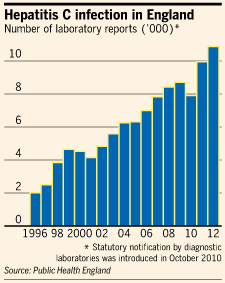
Hepatitis C: Treated – at a price; New drugs that could potentially eliminate the disease are a boost for the industry

January 27, 2014 8:23 pm

Hepatitis C: Treated – at a price

By Andrew Jack

New drugs that could potentially eliminate the disease are a boost for the industry

Gemma Peppe lived with hepatitis C for two decades before she – and the teenage son she inadvertently infected at birth – received a first round of painful and ineffective treatment designed to stave off the risk of liver disease. “The side effects were dreadful,” she recalls. “You feel like you have flu, you become terribly angry and mentally unstable. My son stopped going to school and our house was like a bloodbath.”

Since 2012, both of their lives have been transformed after switching to an alternative experimental medicine that offered quicker, simpler and more effective treatment to them – and soon potentially to millions of other patients around the world.

Ms Peppe is working again in Britain and her son, after four years out of education, has resumed studying and won a university place to study mathematics. “It’s incredible. I thought I would die before my pension but now I feel like I’ve shed 15 years,” she says.

The launch in recent weeks of sofosbuvir

, the first of a series of new drugs for hepatitis C virus (HCV) set for regulatory approval, raises the prospect of curing and potentially eliminating a disease that levies a heavy global burden.

The new medicines will also provide a substantial financial boost to pharmaceutical companies after a fallow period in which there have been few significant “blockbuster” drugs, such as the cholesterol-lowering statins of the 1990s. Analysts say HCV medicines will generate billions of dollars in annual revenues, making them among the most lucrative of a new crop of drugs.

“This is a watershed moment for hepatitis C with newly available, highly effective, easy to administer therapies,” says Prof David Goldberg, an epidemiologist at Health Protection Scotland.

Yet in one of many parallels between HCV and HIV, sofosbuvir has sparked controversy over its high price. Gilead, the California company that produces sofosbuvir, known by the brand name Sovaldi, is charging $84,000 for the 12-week course of treatment in the US. Many patients will struggle to afford it in its home market. In poorer countries, still fewer are likely to gain access.

Hepatitis C in figures

● About 150m people are infected with the virus

● More than 350,000 people die each year from hepatitis C-related liver diseases

● The body fights off the virus in about 25 per cent of cases

● The market for hepatitis C treatments is forecast to hit$15.5bn by 2022

As Médecins Sans Frontières, the medical charity, argued before a discussion on the topic at the World Health Organisation: “New oral treatments set to become available in coming months will revolutionise hepatitis C treatment . . . However, for government programmes to be able to scale up and address the true burden of the epidemic, [they] must be affordable.”

HCV infects an estimated 170m people globally. Like HIV, it can be transmitted sexually, via blood transfusion, from syringes shared by drug users, and from mothers to their children.

HCV appears more resilient, however, surviving more easily on inadequately sterilised surgical instruments and tattooing equipment. The UK National Health Service says it may be transferred via shared toothbrushes, razors or rolled banknotes used by those snorting cocaine.

There is no vaccine to prevent either HIV or HCV, and both typically take a number of years before symptoms develop. They are often long left undiagnosed, rendering eventual treatment more difficult and costly and increasing the risk of their inadvertent spread to others.

Without treatment HIV leaves the body at risk from opportunistic infections and almost inevitably death. By contrast, the body fights off HCV in about 25 per cent of cases. In the UK and other countries, HCV now kills more people than HIV.

Over 20 years or more, HCV causes liver disease. It is ultimately responsible for the majority of cirrhosis and liver cancer cases. Many of those infected may unwittingly consume large volumes of alcohol, intensifying and accelerating the effects of the disease on the liver.

Treatment is arduous. Patients require a year of regular injections of interferon and swallowing the pill ribavirin, which cause severe side effects. At best, only half of patients who complete their therapy are cured.

image001

“The treatments are quite toxic,” says Barry Bernstein, head of antiviral development programmes at AbbVie, another drug company gearing up to launch new treatments. “Many patients decline them because they are so burdensome. People having injections on Friday night may spend the weekend in bed with flu-like symptoms and cannot then work.”

That explains the excitement surrounding the next generation of treatments. The parallels between the two viruses mean that the billions of dollars invested by universities and companies in developing HIV drugs over the past 30 years have helped understanding of how to tackle HCV.

Many of the researchers, such as Mr Bernstein, have worked on both diseases. So have more than a dozen drug companies: alongside AbbVie and Gilead, other large pharmaceutical producers in the field include Bristol-Myers Squibb, Merck, Roche,Johnson & Johnson and GlaxoSmithKline.

Some of the drugs they are studying – such as protease inhibitors designed to stop the viruses replicating – are closely related chemically to HIV equivalents. Researchers treating HIV discovered the need to attack the virus simultaneously with different types of medicines, ideally combined in a single pill. They are now applying the same principle to HCV.

“There were corollaries from HIV,” says John McHutchison, senior vice-president for liver disease therapeutics at Gilead. “The viruses are very similar, with a very high turnover and rate of replication. There is a highly reproducible cell culture system to test for molecules.”

Clinical trials and regulatory scrutiny are still required before many of the HCV drugs win approval, and their use without the need for interferon and ribavirin becomes possible. Not all are equally effective against different strains, nor for patients with other medical complications.

But the positive results in patients such as Ms Peppe and her son (who used AbbVie’s experimental compound) have increased interest.

They have also helped spur investments by drug companies.

“There’s a lot of hope associated with these drugs,” says Ueli Fankhauser, head of global product strategy at Roche. “The race is coming to the market and will result in tremendous benefit to the patient with the chances of being cured at 90-95 per cent.”

image002

Vertex, the first company with an important recent breakthrough in hepatitis C, saw a surge in its valuation with the launch of Incivek in 2011. It generated sales of $1.6bn within its first 12 months on the market. A still stronger signal of the scientific and commercial potential of new treatments came when Gilead surprised the markets by paying $11.2bn for Pharmasset in 2012. That gave it control of the then still experimental drug Sovaldi.

In a research note last week, Barclays Capital forecast that Gilead would generate $416m in the first quarter this year alone from sales of the drug. “The highly anticipated and closely watched launch of Sovaldi has so far performed up to, if not above, expectations,” it said.

Others forecast that Sovaldi will overtake Incivek as the most rapid drug launch in the industry, generating $2.5bn this year. EvaluatePharma, a consultancy, judged the drug to be “easily the industry’s most valuable pipeline product”, estimating its annual sales would reach $7.4bn by 2018. Datamonitor, a market research specialist, says the market for all HCV treatments will total $15.5bn by 2022.

. . .

Yet Gilead’s strategy has also sparked criticism over the speed of progress and the affordability of its treatments – critiques likely to develop for its peers, too. It reflects another parallel between HCV with HIV: patient activists.

For many years, HIV patients were in the vanguard of medical campaigning, using sit-ins, demonstrations and political lobbying to accelerate funding, research and availability of treatment. HCV has never had a high political profile.

But many, including those with both viruses, are now reapplying their energies from HIV to its cousin.

Critics argue that Gilead delayed the launch of life-changing combination HCV therapy by refusing to test Sovaldi in combination with Bristol-Myers Squibb’s compound daclatasvir, despite results showing that the two drugs together generate high cure rates. Instead, Gilead combined Sovaldi with ledipasvir, its own experimental combination treatment, which had been further behind in the race to win regulatory approval.

The company has also priced Sovaldi expensively, arguing that its speed and efficacy justifies a premium over existing HCV therapies – not to mention the need to recover its development costs and the $11bn purchase price of Pharmasset.

Andrew Hill, a researcher at Liverpool University, argues that the new HCV drugs could be manufactured for just $100 to $200 for a course of treatment, and that high volume sales would offset lower prices.

“The question is whether you treat a very small number with low volumes and high margin, and have the epidemic carrying on for decades; or you treat many more with the chance to eradicate the disease,” he says.

image003

“Given the overall size of the epidemic, even if prices were cut tenfold, the companies would still make a profit,” he says. He points out that in the UK alone, treating everyone with the disease at the current pricetag would cost £13bn, more than the annual NHS bill for all drugs.

Successful activism to extend access to antiretroviral drugs for HIV to poorer countries has encouraged advocates to do the same for HCV. Indian groups launched a legal challenge to Gilead’s Sovaldi patent application, seeking to allow generic companies to make it at lower cost.

“Once people see you can make a real difference with oral therapies, it spreads through the community very fast,” says Leena Menghaney of MSF. “The movement is being led by people who are not scared of demonstrating or going to jail. They are willing to do everything to get treatment.”

John Milligan, Gilead’s chief operating officer, points out that Sovaldi offers time and cost savings over existing HCV treatments – particularly when taking into account the savings from reduced liver disease.

But he also pledges to examine ways to make the drug available more cheaply in lower income countries, as Gilead did for its widely used HIV treatments. Unlike the latter disease, he points out that there are no donors to help support the costs.

HCV shares another characteristic with HIV: the need for prevention. The number of new infections remains high because of inadequate diagnoses, as well as poor blood and infection control standards.

With the new generation of drugs now becoming available, the pressures on governments to buy them – and companies to make them available affordably – are set to grow.

Charles Gore, head of the World Hepatitis Alliance, an umbrella organisation of patient groups, cautions: “It’s HIV all over again. Can we not make the same mistakes but instead learn from painful lessons? Or will companies wait for activists to set fire to their stands at scientific conferences?”

——————————————-

The good deed that led to disaster in Egypt

Alan Fenwick went to work in Egypt in 1988 to help tackle bilharzia, a parasitic worm disease that can cause severe liver damage. He discovered a country struggling with the legacy of past efforts to address the first problem, which had in turn made the burden of the second much heavier.

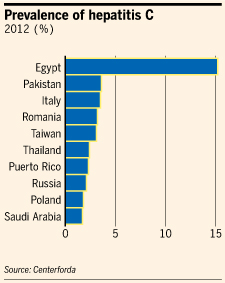
Today, the result is that Egypt has a far higher prevalence of hepatitis C than anywhere in the world: an estimated 15 per cent of the population aged 15-59 years old has been infected with the virus, imposing enormous costs on the health system. Nearly 200,000 people have HCV.

The problem began during the 1950s when a programme was launched to treat and prevent schistosomiasis (bilharzia), which infected people exposed to the Nile’s stagnant floodwaters. The good intentions had dreadful consequences.

The approach was to provide “mass drug administration” of tartar emetic, a poison injected into humans to kill the worms or prevent them spreading around the body. To do so, health workers unaware of the risks of infection used the same poorly sterilised glass syringes on multiple patients.

“The drug had to be given daily for 14 consecutive days,” recalls Prof Fenwick. “That’s an awful lot of cross needle work. They didn’t even know hepatitis C existed at the time, but when one person had it, they spread it.”

It was only in the 1990s that blood tests were developed for the virus and identified what Tom Strickland, a researcher at Imperial College in London, has described as Egypt’s “occult” hepatitis C epidemic. By then it had far overtaken bilharzia as the main cause of liver disease. The two conditions together make treatment still more complex.

The old injectable treatment has now long been replaced with the far safer pill praziquantel, in a control programme for bilharzia still overseen by experts including Prof Fenwick. Yet the underlying infection of hepatitis C has continued to rise and illness and death is projected to double over the next 20 years.

While such mass injection programmes no longer exist, Egypt still has low-quality infection control, permitting transmission through blood products, surgical and dental operations. Anecdotally, there are also examples of children scavenging hospital waste dumps for discarded syringes, which they sell for reuse.

Why Some Flu Viruses May Be More Contagious Some Viruses Can Survive on the Fingertips Longer Than Others

Why Some Flu Viruses May Be More Contagious

Some Viruses Can Survive on the Fingertips Longer Than Others

ANN LUKITS

Jan. 27, 2014 6:53 p.m. ET

Not all flu viruses are the same. Some are hardy survivors.

Some influenza viruses can survive and remain infectious on the fingertips for at least 30 minutes, long enough to transmit the flu to oneself or others, says a study in the January issue of Clinical Microbiology and Infection.

Flu is transmitted from person to person mainly by inhaling tiny virus particles that are released into the air when infected individuals cough and sneeze. Direct contact with contaminated fingers is considered an equally important method of transmission. Researchers sought to find out if the type or size of the flu virus affects its survival.

Experiments in Geneva involved two common influenza viruses: H3N2 and H1N1, the virus that triggered a global flu pandemic in 2009. Both viruses are included in the 2013-14 flu vaccine and are causing most of the world’s current flu illnesses, according to a recent World Health Organization bulletin.

Six volunteers with experience handling laboratory viruses were recruited. In separate experiments, droplets of H3N2 and H1N1 mixed with respiratory secretions from infected patients were deposited on three fingertips of each volunteer. The subjects’ fingers were undisturbed and kept at room temperature before testing for the presence of viral particles at various intervals. Particles were classed as “survived” if they were capable of propagating in laboratory cell cultures.

Both flu viruses were infectious on all 18 fingers after one minute. At three minutes, H3N2 was infectious on six fingers while H1N1 remained infectious on 15. At five minutes, H3N2 and H1N1 were infectious on five and eight fingers, respectively. H1N1 remained infectious on five fingers after 15 minutes compared with four fingers contaminated with the H3N2 virus. After 30 minutes, the number of infectious fingers dropped to two for each virus.

Larger droplets of H3N2 and H1N1 were found to contain a higher concentration of viral particles and remained infectious longer than smaller droplets with fewer particles. But smearing flu droplets over the fingertip reduced their infectiousness compared with untouched droplets, the study found.

H1N1 appeared to be hardier than H3N2, the researchers said.

The researchers noted that the study involved only a small number of subjects and viruses.


Replay of energetic deal-making seen for drugmakers in 2014

Replay of energetic deal-making seen for drugmakers in 2014

Sun, Jan 26 2014

By Deena Beasley and Ransdell Pierson

(Reuters) – The torrid pace of deals in the pharmaceutical and biotechnology sectors through 2013 is not expected to let up this year, thanks to new technologies to address unmet medical needs.

Between 2011 and 2016, patents in developed markets will expire on brand-name drugs that would otherwise have generated sales of $127 billion, according to data firm IMS Health. To replace some of the lost revenue, larger drugmakers are looking to bring in new products, often in areas of significant scientific advancement such as treatments for cancer, rare diseases and drugs designed to turn off the activity of rogue genes. Much of the breakthrough science is coming from biotechnology, meaning drugs derived from living cells.

There were 10 major M&A deals involving publicly traded biotech companies last year, led by Amgen Inc’s $10 billion buyout of Onyx Pharmaceuticals. That was up from nine the previous year and six in 2011, according to JP Morgan.

“I think deal making this year will be even better because there was a lot of validation last year,” said Joseph Gulfo, chief executive officer at Breakthrough Medical Innovations LLC, a consulting company to drug and medical device companies. “The new discoveries and data have sparked a tremendous amount of interest from the bigger companies.”

Rather than the mega-mergers typically done to achieve big cost savings through layoffs and factory closings, most drugmakers are aiming for deals that increase sales. Many of them detailed their strategies this month at the annual JP Morgan Healthcare Conferenceare.

Those strategies included acquisitions of smaller companies as well as risk-sharing through product licensing and drug development partnerships.

AbbVie Inc, maker of top-selling arthritis drug Humira, is interested in a “gradual buildup” of its pipeline of experimental drugs, having forged a dozen collaborations with other drugmakers in the past three years, most involving drugs in mid-stage trials, said Chief Financial Officer Bill Chase.

“We don’t have the need to go out and do a big deal. Large synergy deals are not overly attractive,” he said.

HIGH VALUATIONS

With the 65 percent run-up in the Nasdaq Biotechnology Index last year, valuations of companies have gotten so high that licensing and partnership deals are becoming a more popular way to share financial risk.

“Biotech companies realize that developing a drug these days is economically and mathematically different than 20 years ago,” said James Sabry, global head of partnering at Roche unit Genentech. “Most don’t have that level of sophistication. Partnering with a pharma company is the only way to create long-term value.”

Companies like Amgen and Roche performed well last year and don’t really need to acquire new assets, beyond companion diagnostics to complement their products, said Anne O’Riordan, global managing director of Accenture Life Sciences.

According to Accenture’s analysis, drugmakers that rank in the mid-tier in terms of growth prospects from new drugs and geographic expansion would include GlaxoSmithKline, Novartis and Sanofi.

A third clump of companies have relatively weak late-stage drug development pipelines and are still in the midst of dealing with expiring patents on top-selling drugs.

But most still have high profit margins and generate robust cash flows. “A lot of them can afford to buy something,” O’Riordan said.

AstraZeneca, which recently paid $4 billion to buy Bristol-Myers Squibb’s share of the two companies’ diabetes joint venture, probably falls into that third camp, O’Riordan said.

Israel-based drugmaker Teva Pharmaceutical Industries, recently named turnaround specialist Erez Vigodman as its CEO and agreed to buy NuPathe Inc to expand its portfolio of medicines to treat conditions affecting the central nervous system.

Israel Makov, chairman of Biolight Israeli Life Sciences Investments Ltd, and a former CEO of Teva, said he believes deal flow among healthcare companies will be just as robust in 2014 as last year: “Why? Because there is a lot of money in the system and few places to invest it.”

He predicted “more and more Big Pharma buying biotech because the problem with Big Pharma is the pipeline, and biotech can provide them the pipeline. Its even more expensive to develop a drug on your own and fail.”

Companies like Teva, Merck & Co, Eli Lilly and Pfizer are avidly on the lookout for deals to supplement the flow of drugs from their own laboratories.

Eli Lilly CEO John Lechleiter said his company is “very active in the animal health space; we’re gonna be buyers not sellers there.”

He also said Lilly will look for ways to bolster its existing strengths in therapeutic areas such as neuroscience, diabetes, oncology, autoimmune diseases, or to widen its geographic presence.

“Growth is a challenge … we have to take risk,” Merck CEO Kenneth Frazier said in comments at the conference, while noting that the company still needs to build shareholder value and protect its capital.

Roger Perlmutter, head of research at Merck, said there are no longer many undervalued late-stage pharmaceutical product candidates. “There are earlier-stage products and we intend to exploit that opportunity,” he said.


Malaria eradication: Cure all? A novel approach, using drugs instead of insecticides, may make it easier to eliminate malaria. But it is not without controversy

Malaria eradication: Cure all? A novel approach, using drugs instead of insecticides, may make it easier to eliminate malaria. But it is not without controversy

Jan 25th 2014 | Grande Comore | From the print edition

WHAT if it were possible to get rid of malaria? Not just bring it under control, but wipe it from the face of the Earth, saving 660,000 lives a year, stopping hitherto endless suffering, and abolishing a barrier to economic development reckoned by the World Bank to cost Africa $12 billion a year in lost production and opportunity? It is an alluring prize, and one that Li Guoqiao, of Guangzhou University of Chinese Medicine, thinks within reach.

Dr Li is one of the researchers who turned a Chinese herbal treatment for the disease into artemisinin, one of the most effective antimalarial drugs yet invented. Now he is supervising experiments in the Comoros, using a combination drug therapy based on artemisinin, to see if malaria can be eradicated from that island country. If it works, he hopes to move on to somewhere on the African mainland, and attempt to repeat the process there.

The current approach to dealing with malaria is to control the mosquitoes (one of which is pictured above) that spread it—either by killing them with chemical insecticides or by draining the bodies of stagnant water that their larvae live in. That has worked in many places. In Europe, for example, malaria once existed as far north as Murmansk, in Russia. Now it is rare-to-non-existent. But it was never the plague in Europe that it is in Africa, and on that continent mosquito-control programmes may need a helping hand.

Dr Li’s approach is to attack not the mosquito, but the disease-causing parasite itself. This parasite’s life cycle alternates between its insect host (the mosquito) and its vertebrate one (human beings). Crucially, as far as is known, humans are its only vertebrate host. Deny it them and it will, perforce, wither away—an approach that worked for the smallpox virus, which had a similarly picky appetite. In the case of smallpox, a vaccine was used to make humans hostile territory for the pathogen. Since there is no vaccine against malaria, Dr Li is instead using drugs.

A combined assault

The drugs in question are artemisinin and a second antimalarial called piperaquine—a combination made and sold under the brand name “Artequick” by Artepharm, a firm based in Guangdong which Dr Li helped found. Adding piperaquine to the mix reduces the risk of a strain of parasite resistant to artemisinin evolving, because the chance that an individual parasite will be immune to both forms of attack is negligible. (A similar approach is employed in the combination therapies used to treat HIV infection.)

To deny the parasites their human hosts long enough to exterminate them in a given area, the researchers administer three doses of Artequick, spaced a month apart. To add extra power, the first dose is accompanied by a third drug, primaquine. Dr Li and his colleagues call this approach Fast Elimination of Malaria through Source Eradication, or FEMSE.

And it works—almost. The Comoros has three islands: Moheli, Anjouan and Grande Comore. Before the experiment started, more than 90% of the inhabitants of some villages on these islands had malaria. Song Jianping, Dr Li’s lieutenant in the Comoros, blitzed Moheli with Artequick in 2007. The number of cases there fell by 95%, though reinfection from other islands caused a small subsequent rebound. In 2012 he did the same thing on Anjouan. There, the number of cases fell by 97%. In October 2013 the campaign moved to Grande Comore, the most populous island. When the process is complete there, nearly all of the 700,000 Comorans will have taken part in FEMSE.

Ninety-five percent, or even 97%, is not eradication. But it is an enormous improvement and creates a position from which eradication can be contemplated. To do that, though, means keeping an effective surveillance programme permanently in being so that those who become infected can be treated quickly, to stop them spreading the parasite.

That is especially important, in the view of Yao Kassankogno, the World Health Organisation’s representative in the Comoros, because eradicating malaria will stop people building up immunity to the disease as children. Almost everyone in a place like the Comoros gets infected as a child, and the immune systems of those who survive thus learn to combat the disease, meaning that for many people subsequent bouts are not much worse than catching a cold. If malaria did return after a longish period of absence, Dr Kassankogno fears it could wreak havoc.

Whether FEMSE, or something similar, could be made to work on the African mainland—or anywhere else that is not an isolated island—will also depend on this sort of long-term monitoring, for in that case leakage from the outside would mean even 100% local eradication would not be enough to eliminate the parasites. In the case of the Comoros, not everyone is convinced sufficient surveillance is happening. Dr Kassankogno says the government’s current surveillance for the disease is weak. Dr Song, however, says that his team has trained more than 200 Comorans to monitor rates of malaria, with a view to detecting and preventing its return.

Safe and sound?

A more immediate concern is the safety of the drugs. Artemisinin and piperaquine are pretty safe, but primaquine ruptures red blood cells in people with a deficiency of an enzyme called G6PD. That can kill. And a lot of Africans—in particular, 15% of Comorans—are G6PD-deficient.

Andrea Bosman, the head of the diagnosis, treatment and vaccines unit of the global malaria programme at the World Health Organisation, is critical of the experiment’s approach to looking for side-effects. He says neither the scientists running it nor the Comoran government have been monitoring side-effects from the drugs in a systematic way. That, in Dr Bosman’s view, not only risks harming participating Comorans, it is also a missed opportunity to learn lessons from the project that would be of help to other countries in the fight against malaria.

Dr Song does not, however, believe side-effects will be a problem, because the dose he uses is so low. He also says he has seen no evidence of side-effects, though one hospital in Grande Comore said that the number of patients it treated doubled in the week after the drug-administration programme began, with people reporting nausea, fever, stomach and back pain, headaches and chills. These are symptoms of red-blood-cell rupture, but some are also common side-effects of artemisinin, so would be expected anyway.

Four deaths that occurred shortly after people took the drugs have been reported. There is no evidence that these were any more than coincidence, but family members seem reluctant to talk about them with journalists. Fouad Mhadji, the country’s health minister, shows no similar reluctance. He says the four in question died of natural causes: “One of them had the problem of cancer. One had the problem of hepatitis B. The flu was not only in the Comoros. It was also in the region of the Indian Ocean.”

There is also the question of informed consent to the drugs. Smallpox vaccination permanently protected the person being vaccinated. There was thus an individual as well as a collective benefit to offset any possible side-effects. Prophylactic drug treatment protects only for as long as the drugs stay in the body—which is a few weeks (and explains the need for three rounds of treatment). Dr Song’s results suggest the benefit is real. But it is a collective benefit. That changes the moral calculus. On the one hand, there is the risk of healthy people being harmed by side-effects. On the other, there is the risk of their free-riding, by taking the collective benefits while not taking the drugs themselves.

To avoid such free-riding, a lot of official encouragement to participate has happened—encouragement some people regard as tipping over into pressure and propaganda. In a public meeting in Niumadzaha, a village in the south of Grande Comore, for example, the chief doctor of the local health centre shouted through a megaphone: “This drug is safe and effective. You are not being used as guinea pigs. The WHO would not allow this administration to happen if you were being used as guinea pigs.”

Certainly, there is a lot riding on the project. Dr Mhadji says FEMSE will save the Comoros $11m a year in direct and indirect costs (for comparison, its annual health-care budget is $7.6m), as well as preserving many lives that would otherwise have been lost and saving survivors from the brain damage malaria can cause. The eradication of malaria will also, he hopes, make the Comoros more attractive as a destination for tourists.

Others hope to profit, too. Artepharm has high expectations of Artequick and is using the drug’s success in the Comoros in its marketing campaigns in South America, South-East Asia and Africa. Moreover, the arm of the Chinese government that administers that country’s foreign aid, and is thus helping pay for the project, is the Ministry of Commerce—for Chinese largesse is more explicitly tied to the promotion of the country’s business than is aid from most Western countries.

Not that the West is a disinterested party, for Western firms, too, manufacture artemisinin-based malaria therapies. On that point Dr Mhadji has strong views. He dismisses criticism of the experiment as fuelled by competition between Western and Chinese pharmaceutical companies.

As Nick White, a malaria researcher at Oxford University’s School of Tropical Medicine who has been working for years on eradicating malaria, says, “This research is radical. It is controversial. It is led by a very famous Chinese physician and investigator. There are lots of very serious questions here and a lot of unknowns.” Or, as Oscar Wilde more succinctly put it, “The truth is rarely pure and never simple.”


Nanoparticles cause cancer cells to die and stop spreading

Nanoparticles cause cancer cells to die and stop spreading

BY AKSHAT RATHI 
ON JANUARY 23, 2014

More than nine in ten cancer-related deaths occur because of metastasis, the spread of cancer cells from a primary tumour to other parts of the body. While primary tumours can often be treated with radiation or surgery, the spread of cancer throughout the body limits treatment options. This, however, can change if work done by Michael King and his colleagues at Cornell University, delivers on its promises, because he has developed a way of hunting and killing metastatic cancer cells.

When diagnosed with cancer, the best news can be that the tumour is small and restricted to one area. Many treatments, including non-selective ones such as radiation therapy, can be used to get rid of such tumours. But if a tumour remains untreated for too long, it starts to spread. It may do so by invading nearby, healthy tissue or by entering the bloodstream. At that point, a doctor’s job becomes much more difficult.

Cancer is the unrestricted growth of normal cells, which occurs because mutations in normal cell cause it to bypass a key mechanism called apoptosis (or programmed cell death) that the body uses to clear old cells. However, since the 1990s, researchers have been studying a protein called TRAIL, which on binding to the cell can reactivate apoptosis. But so far, using TRAIL as a treatment of metastatic cancer hasn’t worked, because cancer cells suppress TRAIL receptors.

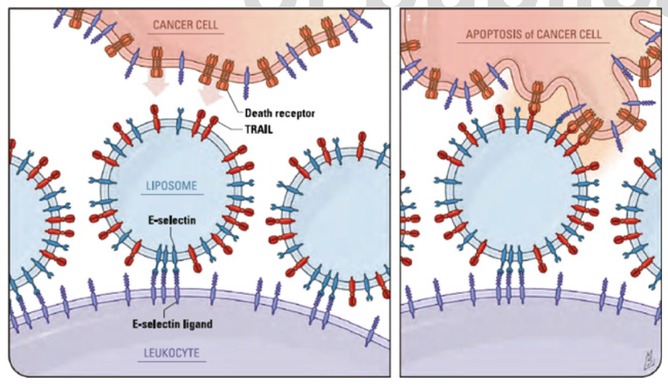
When attempting to develop a treatment for metastases, King faced two problems: targeting moving cancer cells and ensuring cell death could be activated once they were located. To handle both issues, he built fat-based nanoparticles that were one thousand times smaller than a human hair and attached two proteins to them. One is E-selectin, which selectively binds to white blood cells, and the other is TRAIL.

He chose to stick the nanoparticles to white blood cells because it would keep the body from excreting them easily. This means the nanoparticles, made from fat molecules, remain in the blood longer, and thus have a greater chance of bumping into freely moving cancer cells.

There is an added advantage. Red blood cells tend to travel in the centre of a blood vessel and white blood cells stick to the edges. This is because red blood cells are lower density and can be easily deformed to slide around obstacles. Cancer cells Have a similar density to white blood cells and remain close to the walls, too. As a result, these nanoparticles are more likely to bump into cancer cells and bind their TRAIL receptors.

image001

Leukocytes are WBCs and liposomes are nanoparticles. King/PNAS

King, with help from Chris Schaffer, also at Cornell University, tested these nanoparticles in mice. They first injected healthy mice with cancer cells, and then after a 30-minute delay injected the nanoparticles. These treated mice developed far fewer cancers, compared to a control group that did not receive the nanoparticles.

“Previous attempts have not succeeded, probably because they couldn’t get the response that was needed to reactivate apoptosis. With multiple TRAIL molecules attached on the nanoparticle, we are able to achieve this,” Schaffer said. The work has been published in the Proceedings of the National Academy of Sciences.

While these are exciting results, the research is at an early stage. Schaffer said that the next step would be to test mice that already have a primary tumour.

“While this is an exciting and novel strategy,” according to Sue Eccles, professor of experimental cancer therapeutics at London’s Institute of Cancer Research, “it would be important to show that cancer cells already resident in distant organs (the usual clinical reality) could be accessed and destroyed by this approach. Preventing cancer cells from getting out of the blood in the first place may only have limited clinical utility.”

But there is hope for cancers that spend a lot of time in blood circulation, such as blood, bone marrow and lymph nodes cancers. As Schaffer said, any attempt to control spreading of cancer is bound to help. It remains one of the most exciting areas of research and future cancer treatment.


Investors Offer Hospitals a Market Injection; Public hospitals in China’s cities are attracting investors willing to confront ‘Himalayan’ challenges

01.23.2014 17:24

Investors Offer Hospitals a Market Injection

Public hospitals in China’s cities are attracting investors willing to confront ‘Himalayan’ challenges

By staff reporters Yu Ning, He Chunmei, Li Xuena, Zhou Qun, Li Yan, Luo Jieqi and Ren Bo

(Beijing) — Sick patients waiting in long lines at China’s public hospitals have at least one advantage over the local government officials who run these overcrowded facilities.

Seeing a doctor, eventually, is pretty much assured for patients with patience. But for all their hard work a public hospital’s government managers may never see a profit: Simply breaking even after paying the bills is usually as good as it gets.

Which is one reason why local governments and the nation’s health care industry players have been carefully reviewing guidelines issued in October by the State Council, China’s cabinet, designed to encourage fresh investment in the nation’s more than 10,000 public hospitals.

The guidelines complement previous policy directives introduced by Beijing in recent years that encouraged a more market-oriented approach to managing the big, mainly urban hospital networks at the heart of the nation’s health care system.

“This policy is very attractive,” said Wei Xin, CEO of Sinocapistar Investment Holding Group Co. Ltd., a privately owned investment firm. “Private investors will soon carve up the public hospitals pie that’s being offered.”

Indeed, Wei said his firm is launching a special fund for investors interested in putting money into public hospital takeover projects. Others potential hospital investors include pharmaceutical companies, venture capital firms and even foreign investors.

The central government’s initiative has already spurred success stories as well as failures. Both outcomes have been experienced by the state-owned drug company China Resources Pharmaceutical Group Ltd. (CRP), for example, which first set its investment sights on hospitals in Yunnan, a province in the southwest, and Guangdong, in the south, in 2010. CRP is a subsidiary of the state conglomerate China Resources Group.

In the Yunnan capital of Kunming, CRP paid the city government 700 million yuan for a 66 percent stake in Kunming Children’s Hospital, the city’s main pediatrics facility and one of eight public hospitals in town.

On the failure side, the company in 2013 was forced to abandon a year-long effort to buy Gaozhou City Hospital, a public facility in the Guangdong city of the same name. The deal fell through because of what officials called resistance from special interests at the hospital.

A subtext to CRP’s tale of two city hospitals is that local governments, the traditional owner-operators of these bustling health centers, have the power to make or break an investor’s plan. Indeed, some say local governments stand as the biggest barriers to the kind of public hospital reform advocated by the central government.

Powerful city governments are particularly formidable. For that reason, the health sector does not expect outside investors to try vying for big public hospitals in big cities, such as Beijing and Shanghai, anytime soon.

However, smaller cities and communities with hospitals that are struggling financially are expected to welcome new investors. Some already have: In addition to Kunming Children’s, hospitals have gotten new owners in the cities of Wuhan, in the central province of Hubei, and Xuzhou, in coastal Jiangsu.

Willing investors can be found because buying a major or a controlling stake in a public hospital, which can include valuable medical staffers and urban real estate, is seen as a cost-effective way to break into the business. Public hospitals, although rarely profitable, are usually well-equipped and staffed by skilled doctors. Thus, buying a hospital is considered more investment-effective than trying to build a new hospital from scratch.

Himalayan Challenge

How did CRP successfully scale the local government barrier in Kunming? By winning support from the highest echelons, said company CEO Zhang Haipeng.

“It was only possible because the mayor led and the (Communist) Party secretary advocated the project,” Zhang said. “Investing in public hospitals is like climbing the Himalayas.”

CRP, whose parent started out as a trade mediator between Hong Kong and the mainland, has close ties with government agencies nationwide. This political network gave it a head start in its bid for the Kunming hospital.

In the course of negotiations with CRP, Zhang explained, Kunming’s then- arty secretary, Qiu He, agreed to let outside investors buy shares in up to three public hospitals, including Kunming Children’s.

For a local government official, Zhang said, Qiu’s outlook was especially progressive because he was willing to let CRP, as a new investor, acquire a majority stake and manage the hospital.

A CRP investment team had been looking for exactly that kind of opportunity. But while researching potential investment targets across the country, Zhang said, the team generally found government officials reluctant to allow private management of a local hospital.


Novartis CEO Joseph Jimenez: Rethinking Pharmaceutical Business Models

JOSEPH JIMENEZ

Joseph Jimenez is CEO of Novartis.

JAN 23, 2014

Rethinking Pharmaceutical Business Models

ZURICH – The world’s health needs are changing dramatically. Demographic trends, shifting patterns of disease, and strained public funding are placing new burdens on health-care systems. For developed and developing countries alike, the new demands cannot be met if health care continues to operate in the same way. What is required are new business models that spread risks, take a broader view of health, and address the needs of the world’s poorest people.

Demographic changes will present significant challenges for countries’ long-term health planning. By 2050, the number of people worldwide who are 60 or older will exceed the number of children under 15. Moreover, an additional three billion people will join the global middle class over the next two decades, altering the types of health issues that countries will face, and the way health care is financed.

At the same time, non-communicable diseases, such as cancer, heart disease, and diabetes, are rising, while previously deadly conditions, such as HIV/AIDS, are now more treatable and have been deemed chronic diseases.

Keeping up with these changes would be difficult in the best of times. But a stagnant global economy is straining health-care budgets to the breaking point. Governments, insurers, and other health-care payers are becoming ever more concerned about getting value for money. In response, pharmaceutical companies and policymakers are looking for innovative ways to reduce these pressures, not just by developing new drugs, but also by rethinking how the industry operates.

My company, for one, has tested three business models that have shown encouraging results. One involves risk sharing, in which the user pays for the drug only if his treatment turns out to be successful. If it is not, the pharmaceutical company refunds the cost. We have used risk-sharing programs in Germany, where we cooperate with two major payers on the pricing for Aclasta, an osteoporosis treatment. If a patient suffers a bone fracture after treatment (signifying that the drug has not worked), Novartis repays the cost.

The payer benefits from this system, because risk sharing minimizes the cost of failure. The pharmaceutical firm gains as well, because the effective guarantee underpins public confidence in its products.

The risk-sharing model has limitations, though. Some payers find that the system is too complex, especially when trying to define a successful outcome, and that they must wait too long for refunds. Nevertheless, risk sharing is a good starting point from which to develop a fairer and more efficient business model – and one that can be refined or simplified over time.

A second business model brings patients, payers, and health-care professionals together to provide an integrated program to complement treatment for a specific illness. In Brazil, for example, our Vale Mais Saúde program uses this approach to treat chronic obstructive pulmonary disease (COPD), a potentially fatal lung condition forecast to be the world’s third biggest killer by 2030.

In addition to providing Onbrez Breezhaler, a daily treatment to improve lung function in COPD patients, the program provides a comprehensive treatment package covering all symptoms. Patients can receive discounted flu vaccines, nicotine replacement therapies, help in enrolling in pulmonary rehabilitation sessions, and health information sent to their homes. These interventions alleviate symptoms, prevent other illnesses from exacerbating them, and help patients continue their normal daily activities.

But it is in the poorest countries with the least developed health-care systems and weakest infrastructure that new business models are needed the most. In the past, corporate philanthropy has gone some way to help, but such an approach is neither sustainable nor scalable. If companies are to make a significant difference, they must find ways to work with existing health-care systems over the long term.

One way to do this is through social ventures. For example, our Arogya Parivar (or “Healthy Family”) program reaches millions of India’s poorest citizens. It is organized around four principles: awareness, acceptability, availability, and adaptability.

Arogya Parivar raises general public awareness of health issues by training educators to teach disease prevention and treatment in villages, helping some 2.5 million rural inhabitants in 2012 alone. The program reaches more than 45,000 local doctors through a network of 90 medical distributors, ensuring that medicines are available in 28,000 of India’s remotest pharmacies. To ensure affordability, especially to those on a daily wage, we sell smaller, over-the-counter doses. The program is also flexible, adapting medicines, packaging, and training according to the different health and cultural needs of India’s diverse communities.

These three examples demonstrate that, with innovative thinking, we can meet the world’s changing health needs. Pharmaceutical companies are doing what they can – but they need help. Most important, governments, payers, and physicians must come together to test, support, and roll out the best and most cost-effective ideas. Only then can we improve the health of all people, rich and poor alike, regardless of where they live.

How Much Do Medical Devices Cost? Doctors Have No Idea; Some device makers don’t allow hospitals to disclose what they paid, driving up spending by insurers and Medicare

How Much Do Medical Devices Cost? Doctors Have No Idea

By John Tozzi January 23, 2014

Healthcare1

Imagine taking your car to a mechanic who has no clue how much a battery or muffler costs—and has no way of finding out. Substitute “artificial hip” for “battery” and “doctor” for “mechanic” and you get a pretty good picture of the convoluted market for medical implants. Asked to estimate the cost of common devices such as replacement knees or spinal screws, physicians at seven major academic hospitals in the U.S. were wrong 81 percent of the time, according to a January study published in the journalHealth Affairs. The survey of 503 orthopedists at institutions including Harvard, Stanford, and the Mayo Clinic considered doctors’ answers correct if they came within 20 percent of what their hospital paid suppliers. The worst guesses ranged from a small fraction of the actual price to more than 50 times what the hospital paid.

The doctors did so poorly in part because many medical device manufacturers require hospital purchasing departments to keep prices confidential, allowing sellers to charge some institutions more than others for the same products. “Widespread dissemination of device prices is not an option at many institutions,” note the authors of the study, which didn’t disclose what hospitals included in the survey paid. Prices “often varied considerably across institutions.”

Total spending on medical devices in the U.S. reached about $150 billion in 2010, or roughly a nickel of every health-care dollar, according to the Advanced Medical Technology Association (AdvaMed), the industry’s trade group. The device is often the most expensive part of an orthopedic procedure, and the bill is ultimately paid by either private insurers or Medicare and Medicaid. On average, hospitals paid suppliers $5,842 for an artificial hip in 2012, according to Orthopedic Network News; a replacement knee averaged $5,104. Stan Mendenhall, the publication’s editor, says that depending on their ability to negotiate with manufacturers, hospitals can pay anywhere from $2,000 to $16,000 for artificial hips and knees. A 2012 study by the U.S. Government Accountability Office also found wide variation in prices. “Some hospitals have substantially less bargaining power with the small group of companies that manufacture particular [implantable medical devices] and consequently face challenges in obtaining more favorable prices,” the GAO wrote.

Martin Makary, a surgeon at Johns Hopkins Hospital (which was not part of the Health Affairs survey), points to the example of surgical mesh, which depending on the type ranges in price from $75 to $10,000. Because doctors never see the insurance bill and often aren’t privy to how much various options cost, they have little incentive to choose a less expensive mesh from one company that may work as well as a costlier one from another. “We don’t know what the patients end up getting charged for it and if there is an up-charge,” Makary wrote in an e-mail.

A 2007 Senate bill would have required device makers to report their average prices to regulators and the public, but medical device makers successfully lobbied against it. “It’s a market that’s working extraordinarily well,” says David Nexon, AdvaMed’s senior executive vice president. He points to research, funded by the lobbying group, showing that spending on medical devices has remained at about 6 percent of total U.S. health-care costs since the early 1990s and that prices for major implants such as knees and hips have fallen since 2007.

In 2009 the Cleveland Clinic began using its clout to buck the system, enlisting surgeons on its staff to help contain costs by sharing prices with them and limiting the menu of devices they can choose from. Spinal implants that once came from 10 different companies have been narrowed to two, says Simrit Sandhu, who’s in charge of the clinic’s supply chain. Cleveland has kept some contracts with suppliers of expensive devices, but surgeons must justify using them instead of more economical options. Over the past four years, Sandhu says, the program has saved the hospital system $190 million. Last year, Cleveland Clinic formed a company called Excelerate Strategic Health Sourcing to help other hospitals copy its system.

Getting physicians to embrace such changes is easier in hospitals where doctors are salaried employees. John O’Brien, former president of UMass Memorial Health Care, says the Massachusetts hospital system encouraged its doctors to choose devices from a short list of suppliers, enabling the hospital to negotiate better prices.

That’s a harder sell with independent surgeons, who pick where they want to perform operations and can avoid hospitals that try to limit which devices they can use. “They don’t particularly care about the cost. They don’t know what the cost is,” says O’Brien, now a professor at Clark University in Worcester, Mass. For that reason, hospitals competing to attract surgeons to perform joint replacements and other lucrative procedures will continue stocking their preferred devices, even if less expensive ones would suffice. As O’Brien puts it, “You don’t want them to go across town.”

The bottom line: Some device makers don’t allow hospitals to disclose what they paid, driving up spending by insurers and Medicare.


Hospital Chain Said to Scheme to Inflate Bills

Hospital Chain Said to Scheme to Inflate Bills

By JULIE CRESWELL and REED ABELSONJAN. 23, 2014

Every day the scorecards went up, where they could be seen by all of the hospital’s emergency room doctors.

Physicians hitting the target to admit at least half of the patients over 65 years old who entered the emergency department were color-coded green. The names of doctors who were close were yellow. Failing physicians were red.

The scorecards, according to one whistle-blower lawsuit, were just one of the many ways that Health Management Associates, a for-profit hospital chain based in Naples, Fla., kept tabs on an internal strategy that regulators and others say was intended to increase admissions, regardless of whether a patient needed hospital care, and pressure the doctors who worked at the hospital.

This month, the Justice Department said it had joined eight separate whistle-blower lawsuits against H.M.A. in six states. The lawsuits describe a wide-ranging strategy that is said to have relied on a mix of sophisticated software systems, financial incentives and threats in an attempt to inflate the company’s payments from Medicare and Medicaid by admitting patients like an infant whose temperature was a normal 98.7 degrees for a “fever.”

The accusations reach all the way to the former chief executive’s office, whom many of the whistle-blowers point to as driving the strategy.

For H.M.A., the timing could not be worse. Shareholders recently approved the planned$7.6 billion acquisition of the company by Community Health Systems, which will create the nation’s second-largest for-profit hospital chain by revenue, with more than 200 facilities. The deal is expected to be completed by the end of the month.

While the lawsuits against H.M.A. provide a stark look at the pressure being put on doctors and hospital executives to emphasize profits over their patients, similar accusations are being raised at other hospital and medical groups as health care in the United States undergoes sweeping changes.

Federal regulators have multiple investigations into questionable hospital admissions, procedures and billings at many hospital systems, including the country’s largest, HCA. Community Health Systems, the Franklin, Tenn., company from which H.M.A. hired its former chief executive in 2008, faces similar accusations that it inappropriately increased admissions. Community is in discussions with federal regulators over a settlement regarding some of the accusations.

The practice of medicine is moving more rapidly than ever from decision-making by individual doctors toward control by corporate interests. The transformation is being fueled by the emergence of large hospital systems that include groups of physicians employed by hospitals and others, and new technologies that closely monitor care. While the new medicine offers significant benefits, like better coordination of a patient’s treatment and measurements of quality, critics say the same technology, size and power can be used against physicians who do not meet the measures established by companies trying to maximize profits.

“It’s not a doctor in there watching those statistics — it’s the finance people,” said Janet Goldstein, a lawyer representing whistle-blowers in one of the suits, of a type known as qui tam litigation, against H.M.A.

What’s more, like their Wall Street bank counterparts, the mega-hospital systems, with billions of dollars in revenue, are more challenging to regulate, according to experts.

Still, when H.M.A. announced the Justice Department’s involvement in the lawsuits, investors and analysts shrugged, and the stocks for both companies involved in the merger barely budged.

Sheryl R. Skolnick, who follows health care for CRT Capital, recently wrote in a note to investors, “Investors seem to think that D.O.J. investigations, qui tam suits and allegations of serious Medicare fraud are simply a cost of doing business.” Many settlements run only into the tens of millions of dollars. That’s a corporate slap on the wrist for companies whose stocks typically soar when executives push the profit envelope. Only if the penalty is at least $500 million, Ms. Skolnick said, are corporations likely to find the cost a deterrent.

H.M.A. also faces shareholder lawsuits and a federal securities investigation. A former executive was indicted late last year on an obstruction charge related to these investigations.

The company said it could not comment on pending litigation, but was cooperating with the Justice Department investigation. In a statement, the company defended the quality of its medical care. “H.M.A. associates and physicians who practice at our facilities are focused on providing the highest-quality patient care in all of our hospitals,” it said.

The architect of the strategy to raise admissions, according to several of the lawsuits, brought by an array of physicians, individual hospital administrators and compliance officers, was the company’s former chief executive, Gary D. Newsome.

“Gary vigorously denies the allegations,” according to an email from his lawyer, Barry Sabin of Latham & Watkins.

Mr. Newsome joined H.M.A. in September 2008 from a high-ranking post at Community Health. He left H.M.A. last summer to head a religious mission in Uruguay. His compensation in the three years before his departure totaled $22 million.

Shortly after joining H.M.A., Mr. Newsome traveled to North Carolina to meet with local hospital officials. He informed them he was putting in place new protocols, using customized software, meant to “drive admissions” at hospitals, according to allegations in a federal suit filed by Michael Cowling, a former division vice president and chief executive of an H.M.A.-owned hospital in Mooresville, N.C.

To reach admission goals, administrators were directed to monitor on a daily basis the percentage of patients being admitted, using a customized software program called Pro-Med. The progress of the physicians in meeting their goals was updated daily on the scorecards.

When Mr. Cowling confronted Mr. Newsome with physician concerns that the new protocols were clinically inappropriate and would result in unnecessary tests and admissions, and said that his doctors “won’t do it,” Mr. Newsome responded: “Do it anyway,” according to the lawsuit.

RECENT COMMENTS

Zola

 15 minutes ago

Our health care system obviously requires two key reforms. First, doctors and their staff must alone make decisions about what care to…

Temperence Hill

 16 minutes ago

I keep forgetting, so please remind me:Why is it that stealing billions from the government seldom results in a criminal prosecution, but…

SS

 16 minutes ago

The effects of “soft call” admissions extend beyond the financial implications of insurance fraud. As a midwife, my practice centers around…

SEE ALL COMMENTS


WRITE A COMMENT

As a result, according to a former physician who cited multiple examples, patients who did not need inpatient treatment often were admitted, which allowed the hospital to bill Medicare and Medicaid more for the care.

In Georgia, a baby whose temperature was 98.7 degrees was admitted to the hospital with “fever,” according to a lawsuit filed in federal court by Dr. Craig Brummer, a former medical director of emergency departments at two H.M.A. hospitals.

In one case, an 18-year-old Medicaid patient with a right-knee laceration was admitted, though he could have been treated and discharged, Dr. Brummer said in his lawsuit.

Executives who raised questions about H.M.A.’s policies and procedures were often fired.

When Jacqueline Meyer, a regional administrator for EmCare, a company that provided emergency room physicians to a number of H.M.A. hospitals, refused to follow H.M.A.’s directives and fire doctors who admitted fewer patients than H.M.A. wanted, she was fired, according to the lawsuit she filed with Mr. Cowling. The Justice Department has not yet decided whether to join her lawsuit against EmCare, which declined to comment.

Likewise, shortly after Ralph D. Williams, an accountant with 30 years’ experience in hospital management, was hired as the chief financial officer for an H.M.A. hospital in Monroe, Ga., he asked an outside consulting firm to review the hospital’s inpatient admission rate.

When Mr. Williams showed the report, which confirmed a higher admission rate, to a higher-level division executive, he was told to “burn it.” Mr. Williams was soon fired, according to a qui tam lawsuit Mr. Williams filed in federal court in Georgia.

The last year has been particularly tumultuous for H.M.A., starting with the announced departure of Mr. Newsome, a battle for control of the board with Glenview Capital Management, the hedge fund founded by Lawrence M. Robbins, and the announcement of the acquisition by Community Health Systems.

120COMMENTS

The merger — and the fact that Glenview controlled big blocks of stock in both H.M.A. and Community Health — recently drew fire from some critics who questioned whether shareholders knew enough about the whistle-blower lawsuits before they voted on the merger.

H.M.A. has disclosed in regulatory filings dating back almost two years that it was the subject of investigations by attorneys general in numerous states. But the shareholder vote on the merger started before the Justice Department joined the multiple lawsuits and the company disclosed that fact.

“I find it incredibly troubling that a few days after voting had started on the merger that the company announced that the Justice Department was joining a bunch of these suits,” said Randi Weingarten, the president of the American Federation of Teachers. The union represents nurses at some of the company’s hospitals, but also trustees of teacher pension funds that own shares.
 

What’s in Your Fish Oil Supplements? Millions of Americans take fish oil supplements to promote heart and vascular health. But a new analysis suggests that some consumers may not always get what they are paying for

JANUARY 22, 2014, 12:19 PM  25 Comments
What’s in Your Fish Oil Supplements?
By ANAHAD O’CONNOR
Millions of Americans take fish oil supplements to promote heart and vascular health. But a new analysis suggests that some consumers may not always get what they are paying for.
The new research, carried out by a testing company called LabDoor, analyzed 30 top-selling fish oil supplements for levels of omega-3 fatty acids, a group of compounds with anti-inflammatory effects. It found that six of those products contained levels of omega-3s that were, on average, 30 percent less than stated on their labels.
The research found more problems when it looked specifically at levels of two particular omega-3s that are promoted for brain and heart health: docosahexaenoic acid (DHA) and eicosapentaenoic acid (EPA). Tests showed that at least a dozen products contained DHA levels that were, on average, 14 percent less than listed on their packaging.
According to the Nutrition Business Journal, fish oil products generated about $1.2 billion in sales in the United States last year, making them among the most popular dietary supplements on the market. But like most supplements, they are largely unregulated. Companies do not have to register their products with the Food and Drug Administration or provide proof that the capsules and liquids they sell contain the ingredients on their labels and the doses advertised.
Researchers and health officials say that mislabeling is a frequent problem in the supplement industry.
A number of studies suggest that regular fish consumption is protective against heart disease, and some research suggests it may lower the risk of Alzheimer’s disease and other chronic conditions as well. The American Heart Association recommends that Americans eat two servings a week of fatty fish rich in omega-3 fatty acids, and it points to studies showing that fish oil supplements help reduce the rate of cardiac events in people with cardiovascular disease.
Omega-3s are also essential for brain and nervous system health, said Dr. Joseph C. Maroon, a neurosurgeon at the University of Pittsburgh Medical Center and the author of “Fish Oil: The Natural Anti-Inflammatory.” Eating fatty fish high in omega-3s and low in mercury and other contaminants, like sardines and wild salmon, is ideal, he said, but fish oil supplements can be an alternative.
“I think it’s one of the most important supplements people can take,” said Dr. Maroon, who is also chair of the medical advisory board for GNC, the nation’s largest specialty retailer of dietary supplements. “The omega-3 fatty acids are essential for so many functions in the body.”
But research on fish oil has not been conclusive. A large meta-analysis of high quality clinical trials published in 2012 found that purified fish oil supplements did not appear to help people with a history of heart disease, though some experts questioned whether the patients studied had been taking the pills long enough to see an effect. Other research has raised questions about whether high levels of omega-3s may raise the risk of prostate cancer.
In the current analysis, researchers carried out detailed tests to assess the supplements’ omega-3 content, their levels of mercury, and the extent to which they showed any signs of rancidity or deterioration. Samples of each product were either purchased online on sites like Amazon or bought off the shelves in stores and tested immediately.
Then they were ranked according to quality and value. Among the companies whose supplements ranked highly were Nordic Naturals, Axis Labs and Nature Made. LabDoor, which is funded in part by the investor Mark Cuban and by Rock Health, a nonprofit digital health incubator, posted its full list of rankings and results on its website.
The company found that several of the products it tested compared favorably to Lovaza, the prescription fish oil marketed by GlaxoSmithKline that can cost hundreds of dollars for a one-month supply. Lovaza is a prescription drug held to strict regulations, so it is subjected to regular quality control tests. But some of the products analyzed by LabDoor contained similar or greater levels of omega-3s at a fraction of the cost.
The analysis showed, however, that mislabeling was not uncommon, affecting at least a third of the supplements tested. One of the  products had only half the amount of DHA advertised, for example, and another contained only two thirds, said Neil Thanedar, the chief executive of LabDoor. There were also several products that did not mention DHA content on their labels at all.
As for heavy metals, the study found that all of the products tested contained only very low levels of mercury, ranging from one to six parts per billion per serving. That range is far below the upper safety limit of 100 parts per billion set by the Global Organization for EPA and DHA Omega-3s, or GOED, an industry trade group.
The data provide a good starting point for people considering taking a fish oil supplement, said Philip Gregory, the editor in chief of Natural Medicines Comprehensive Database, which evaluates evidence on dietary supplements. But much of the recent evidence on the supplements has been negative, he said, and it is not clear that most people gain anything from taking them.
“It may be that for people with heart disease who are already well treated with statins or high blood pressure medication, fish oil supplements may not offer any additional benefit,” he said. “Similarly, for those who already consume fish in their diet, adding a supplement probably doesn’t offer additional benefit.”
Another caveat applies to the testing itself. Dr. Gregory said that the new research provides “a snapshot in time,” which may not be a reliable indicator of the overall quality of a line of supplements. Dr. Gregory recommends that consumers check with the USP Dietary Supplement Verification program, a nonprofit group that does regular spot checks on certain supplements and provides a seal to the ones that meet its requirements. Products that carry the seal are widely considered high quality. But the program is voluntary, and as a result many supplement makers do not take part in it.

Why Pain Hurts More For Some People

Why Pain Hurts More For Some People

BAHAR GHOLIPOURLIVESCIENCE
JAN. 21, 2014, 7:37 PM 1,753 1

Some people feel pain more intensely than others, and new research suggests differences in pain sensitivity may be related to differences in brain structure. In a new study, the researchers asked 116 healthy people to rate the intensity of their pain when a small spot of skin on their arm or leg was heated to 120 degrees Fahrenheit. A few days after pain-sensitivity testing, participants had their brains scanned in an MRI machine. Read more of this post

Cash for Kidneys: The Case for a Market for Organs

Cash for Kidneys: The Case for a Market for Organs

There is a clear remedy for the growing shortage of organ donors, say Gary S. Becker and Julio J. Elias

GARY S. BECKER and JULIO J. ELIAS

Jan. 17, 2014 6:45 p.m. ET

BN-BD668_ORGANP_G_20140117173848

In 2012, 95,000 American men, women and children were on the waiting list for new kidneys, the most commonly transplanted organ. Yet only about 16,500 kidney transplant operations were performed that year. Taking into account the number of people who die while waiting for a transplant, this implies an average wait of 4.5 years for a kidney transplant in the U.S. Read more of this post

Rise in Bird Flu Cases in China Stokes Worry Before Peak Travel Time; S Korea confirms outbreak of bird flu

Rise in Bird Flu Cases in China Stokes Worry Before Peak Travel Time

By KEITH BRADSHERJAN. 17, 2014

HONG KONG — China is disclosing a steadily growing number of cases ofH7N9 bird flu, including four more cases announced on Friday, reviving concerns among health experts that the disease may be spreading and could pose a further threat as the world’s largest annual human migration begins ahead of Chinese New Year.

Mainland China has confirmed 14 cases this week alone, including the four announced on Friday, and seven on Thursday. Read more of this post

Baby Birth Costs Vary 10-Fold in Hospitals, Study Finds

Baby Birth Costs Vary 10-Fold in Hospitals, Study Finds

The cost of giving birth at a hospital can vary by tens of thousands of dollars, a price range that is “largely random” and unexplainable by market factors, a California study found. Read more of this post

As Parents Age, Asian-Americans Struggle to Obey a Cultural Code; Asian-Americans are struggling to abide by a strong tradition in which they are commonly expected to care for their parents at home, but few institutions are prepared to help.

As Parents Age, Asian-Americans Struggle to Obey a Cultural Code

By TANZINA VEGAJAN. 14, 2014

SOUDERTON, Pa. — Two thick blankets wrapped in a cloth tie lay near a pillow on the red leather sofa in Phuong Lu’s living room. Doanh Nguyen, Ms. Lu’s 81-year-old mother, had prepared the blankets for a trip she wanted to take. “She’s ready to go to Vietnam,” Ms. Lu said. Read more of this post

Searching Genes to Avoid Medical Side Effects; Can patients’ DNA warn doctors against prescribing antidepressants, other drugs?

Searching Genes to Avoid Medical Side Effects

Can patients’ DNA warn doctors against prescribing antidepressants, other drugs?

SHIRLEY S. WANG 

Jan. 13, 2014 7:09 p.m. ET

Scientists searching for a way to prevent patients from taking medications that may cause dangerous physical or behavioral responses are turning increasingly to those patients’ DNA. Shirley Wang has details on the News Hub. Photo: AP.

Scientists searching for a way to avoid prescribing medications to patients that may cause dangerous physical or behavioral responses are turning increasingly to those patients’ DNA. Read more of this post

Custom-Fit Treatments for Prostate Cancer

Custom-Fit Treatments for Prostate Cancer

Disease fight takes a page out of the breast-cancer approach

RON WINSLOW

Jan. 13, 2014 7:12 p.m. ET

In a bid to improve treatment for men with high-risk prostate cancer, some researchers want to take a page from the playbook for breast cancer. Medical scientists are working to develop strategies for treating prostate tumors that are tailored to individual patients, as is currently done for many women with breast cancer. Fresh advances in the understanding of prostate cancer suggest that some men with a high-risk form of the disease might benefit from more aggressive treatment.

The average age of prostate cancer diagnosis. The chance of having it rises rapidly after age 50. Men will die of prostate cancer, the second leading cause of cancer death for American men, behind lung cancer. Read more of this post

A Busy Doctor’s Right Hand, Ever Ready to Type; Scribes have entered the scene in clinics and operating rooms, liberating physicians from the constant note-taking that modern electronic health records systems demand

A Busy Doctor’s Right Hand, Ever Ready to Type

By KATIE HAFNERJAN. 12, 2014

DALLAS — Amid the controlled chaos that defines an average afternoon in an urban emergency department, Dr. Marian Bednar, an emergency room physician at Texas Health Presbyterian Hospital Dallas, entered the exam room of an older woman who had fallen while walking her dog. Like any doctor, she asked questions, conducted an exam and gave a diagnosis — in this case, a fractured hand — while also doing something many physicians in today’s computerized world are no longer free to do: She gave the patient her full attention. Read more of this post

Indonesia’s Universal Healthcare — Will it Work?

Indonesia’s Universal Healthcare — Will it Work?

By IRIN on 3:06 pm January 14, 2014.

The rollout of universal health coverage in Indonesia has been greeted with public enthusiasm, but health experts warn that inadequate funding could undermine the quality of care. Read more of this post

Patients Can Do More to Control Chronic Conditions; In the absence of cures, people can learn how to slow kidney disease, diabetes and other ills

Patients Can Do More to Control Chronic Conditions

In the absence of cures, people can learn how to slow kidney disease, diabetes and other ills

LAURA LANDRO

Updated Jan. 12, 2014 4:47 p.m. ET

By the time Gail Rae -Garwood was diagnosed with chronic kidney disease at age 60, it was already too late for prevention, and there is no cure. But Ms. Rae-Garwood decided she could do something else to preserve her quality of life: slow the progression of the disease. Read more of this post

Calpers CIO Dear Is Taking Leave to Continue Health Treatments

Calpers CIO Dear Is Taking Leave to Continue Health Treatments

Joseph Dear, chief investment officer of California Public Employees’ Retirement System, the largest U.S. public pension plan, is taking leave to continue personal health treatments. Read more of this post

Alzheimer’s takes unbearable toll on families

2014-01-10 18:42

Alzheimer’s takes unbearable toll on families

Government urged to take measures to lighten burden
By Kim Da-ye
In 2012, Kim Joo-hee became pregnant while taking care of her 60-year-old mother suffering from dementia and Parkinson’s disease. Kim had to wash and feed her mother. After giving birth to her baby, she struggled to take care of her mom. Read more of this post

Diabetes and insulin: better way than injection for diabetics to administer insulin

Diabetes and insulin: better way than injection for diabetics to administer insulin

Jan 11th 2014 | From the print edition

FACED with death, most people will do almost anything to stay alive. That is why many millions around the world either stick needles in themselves at frequent intervals to inject a hormone called insulin, or wear a device called an insulin pump that does the same thing automatically through a catheter that penetrates their skin. A body’s failure to make insulin, which regulates how cells burn glucose, their primary fuel, causes the symptoms doctors call type-1 diabetes. Until the discovery of insulin, in the 1920s, this form of diabetes was a death sentence. Read more of this post

M&A Boom Seen in 2014 as Drug Hunt Spurs Biotech Deals

M&A Boom Seen in 2014 as Drug Hunt Spurs Biotech Deals

Health-care companies with deep pockets and shallow product pipelines are poised for a busy year of acquisitions, with biotechnology firms likely to be among the most prominent targets even as they trade at record highs. Read more of this post

Teva’s Cloudy Future; CEO Search, Growing Competition are Among the Drug Maker’s Challenges

Teva’s Cloudy Future

CEO Search, Growing Competition are Among the Drug Maker’s Challenges

HELEN THOMAS

Jan. 7, 2014 5:45 a.m. ET

If the darkest hour is just before dawn, Teva Pharmaceutical TEVA.TV +1.14% investors may be comforted at the lack of visibility around the Israeli generic-drugs maker. Enlightenment, however, still looks some way off. Read more of this post

Web, videoconference insomnia therapies show promise

Web, videoconference insomnia therapies show promise

Fri, Jan 10 2014

By Andrew M. Seaman

NEW YORK (Reuters Health) – Insomnia treatment that’s delivered through a Web-based program or videoconference may help people feel less tired during the day, according to a small study from Canada. Read more of this post

Medtronic Nerve-Burning Failure Stymies Industry Progress

Medtronic Nerve-Burning Failure Stymies Industry Progress

The failure of Medtronic Inc. (MDT)’s nerve-burning device to treat high blood pressure in a clinical trial deals a blow to more than 60 companies pursuing similar technology. Read more of this post

Retail Chains Aim to Open Up India’s Dental Care Market

Retail Chains Aim to Open Up India’s Dental Care Market

Jan 03, 2014

The average dentist in India operates out of a stand-alone clinic. The sector is a largely unorganized part of the country’s health care market. The businesses are literally mom-and-pop shops; dentists tend to marry other dentists and operate as a team. The charges are low: A tooth extraction often costs less than US$5. Oral health care is generally not covered by medical insurance, so there has been little incentive to corporatize. Read more of this post

Korea’s Dementia Crisis

January 8, 2014, 5:21 PM

Korea’s Dementia Crisis

JAEYEON WOO

South Korea’s population is aging rapidly.

The tragic deaths this week of the father and grandparents of Lee Teuk, leader of K-pop boy band Super Junior, are raising calls for South Korea’s government to do more to lighten the burden for dementia patient’s families. Read more of this post

Bedroom-Invading Smartphones Jumble Body’s Sleep Rhythms

Bedroom-Invading Smartphones Jumble Body’s Sleep Rhythms

Having trouble sleeping? Check for a glow, inches from the pillow.

Using a smartphone, tablet or laptop at bedtime may be staving off sleep, according to Harvard Medical School scientists, who have found specific wavelengths of light can suppress the slumber-inducing hormone melatonin in the brain. Read more of this post