Why we invested in LinkedIn nine years ago; An early LinkedIn investor looks back at his firm’s original decision

Why we invested in LinkedIn nine years ago

October 15, 2013: 12:50 PM ET

An early LinkedIn investor looks back at his firm’s original decision.

By David Sze

FORTUNE — The best early-stage venture capital investments appear obvious in retrospect, however very few of them are actually obvious when you make them. In fact, we reviewed our process at Greylock and discovered that the best investments are non-obvious enough that they result in a mixed vote by our partnership. Such was the case with LinkedIn (LNKD) nine years ago. Read more of this post

Lee Hae-jin, the head of No. 1 Internet portal operator NAVER Corp., saw his stake value hover above 1 trillion won ($939.4 million) on the back of its messenger service LINE

2013-10-16 11:25

NAVER CEO’s stake value surpasses W1 tril.

Lee Hae-jin, the head of No. 1 Internet portal operator NAVER Corp., saw his stake value hover above 1 trillion won ($939.4 million) on the back of its messenger service LINE, data showed Wednesday. The combined value of Lee’s shares came to 1.04 trillion won Tuesday after shares of NAVER, formerly known as NHN, surged 8.97 percent from the previous trading session, according to the data by market researcher Chaebul.com. Market watchers said the increase is attributable to the growing profits from its messenger service LINE, which held some 260 million worldwide users as of Oct. 1, with the figure expected to reach 300 million at end-October. Read more of this post

More Firms Abandon ‘Happy Meal’ Convertible Bond Financing Plan; companies that used the structure overwhelmingly experienced a significant stock-price decline within a short time afterward

More Firms Abandon ‘Happy Meal’ Financing Plan

Seaspan Is Latest to Back Away From Unusual Borrowing Method

MICHAEL ROTHFELD

Oct. 15, 2013 6:23 p.m. ET

More companies are shunning an unusual borrowing plan known as a “Happy Meal,” which has left some investors queasy. In the latest move, shipping company Seaspan Corp. SSW -0.84% last week abandoned a $125 million bond plan three days after its stock price plunged following the Oct. 7 announcement of the deal. In a statement, the Hong Kong-based company said the financing, which included a common stock offering and a convertible bond commonly known as a Happy Meal, “would not be in the best interests of our shareholders.” Read more of this post

Real-Estate Pioneer Loses Its Touch: Vornado Loses $250 Million on Investment in J.C. Penney; Vornado grew from a small, New Jersey strip-center owner to a giant in real estate partly through its strategy of buying big stakes in retailers to get a piece of their valuable holdings of malls, stores and parking lots

Real-Estate Pioneer Loses Its Touch

Vornado Loses $250 Million on Investment in J.C. Penney

ROBBIE WHELAN

Updated Oct. 15, 2013 7:38 p.m. ET

MI-BZ085_VORNAD_G_20131015182704

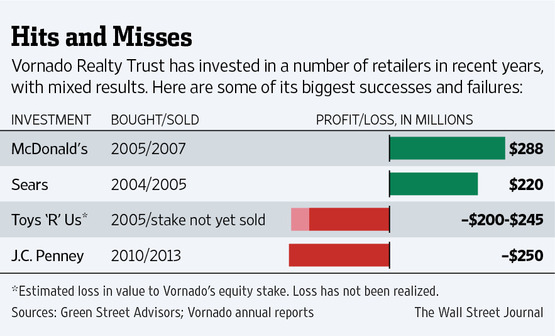
Vornado Realty Trust VNO -0.72% grew from a small, New Jersey strip-center owner to a giant in real estate partly through its strategy of buying big stakes in retailers to get a piece of their valuable holdings of malls, stores and parking lots. But you would never know it from how the company fared in its latest retail deal, a failed investment in J.C. Penney Co. JCP -8.89% Late last month, Vornado sold its remaining 6% stake in Penney for $13 a share, slightly more than half what it paid for the shares three years ago. The company’s total loss on the deal was $250 million, or 40% of its initial investment, according to Green Street Advisors Inc. Read more of this post

Can Asia Produce a Precision Castparts (PCP), a 1,000X Compounder? (Bamboo Innovator Insight)

The following article is extracted from the Bamboo Innovator Insight weekly column blog related to the context and thought leadership behind the stock idea generation process of Asian wide-moat businesses that are featured in the monthly entitled The Moat Report Asia. Fellow value investors get to go behind the scene to learn thought-provoking timely insights on key macro and industry trends in Asia, as well as benefit from the occasional discussion of potential red flags, misgovernance or fraud-detection trails ahead of time to enhance the critical-thinking skill about the myriad pitfalls of investing in Asia at the microstructure- and firm-level.

Asia PCPDear Friends and All,

Can Asia produce a Precision Castparts Corp (PCP)? PCP grew from a small metal casting workshop to become one of the best compounders in American capital history, up over 1,700x in three decades plus to a global giant with a market cap of $34.7 billion. In other words, an initial investment of $100,000 compounds to over $170 million.

This is one of the questions that I asked rhetorically in our recent Members’ Forum dialogue with one of our thoughtful Institutional Subscribers, who come from various continents spanning from North America, the Nordic, Europe and Asia, including professional value investors with over $20 billion in asset under management. This is not a trivial question since the median market cap of Asian companies is below $100 million, which is PCP’s market value before 1980. Even Buffett’s Berkshire Hathaway was attracted to the wide moat of PCP and initiated the purchase of 1.248 million shares in 3Q2012, a stake subsequently increased to 1.977 million shares that’s now worth over $450 million in its latest 13F filing; the astute capital allocators also overcome this major psychological barrier faced by many value investors: buying a stock that has already gone up multiple-folds. It is common for value investors to run screens for “cyclically cheap” stocks trading at 52-weeks low or 3-5 years low and “overlook” stocks like PCP or Fastenal who are long-term industry consolidators with their business models overcoming short-term cyclicality.

In the Forum, our institutional subscriber was initially asking about how the net cash position of a steel and aluminum stockist-cum-fabricator family business listed in Southeast Asia can be nearly two-third of its market cap which is below $100 million. The stock appears cheap, trading at a price-to-book of 0.68x. So a natural counter question: Could the high net cash be misleading and the stock is a value trap? How about tunneling opportunities of the cash via related party transactions? Is the listed company a front to act as a loan guarantor for its unlisted companies in the business group so that the high net cash mask the massive hidden off-balance-sheet debt at the group level? All these are prevalent situations in Asia that value investors using quant screens neglect to investigate, especially when share prices and volume of the illiquid stocks are manipulated.

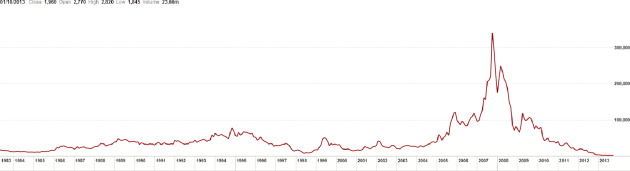
And what similarities do PCP and the below chart of a Northeast Asian-listed stock, a family business which has 25% domestic market share in a relatively stable-demand product and run by the Seul family for 58 years, appear to have in common? What are the important differences that resulted in PCP becoming a resilient Bamboo Innovator but not the Asian company below?

Taihan Electric Wire Co. Ltd. (001440.KS) – Stock Price Performance, 1983-2013
BII_Oct2013_841

The Moat Report Asia Members’ Forum has been getting penetrating quality dialogues from our existing institutional subscribers from North America, the Nordic, Europe and Asia. Questions range from:

  • The nuances of internal dealings in Asia, including the case discussion of the recent deal in which HK billionaire’s Lee Shau-kee Henderson Land acquiring Towngas or Hong Kong & China Gas (3 HK) from his family holdings, seemingly déjà vu from the early Oct 2007 transaction when the market peak.
  • The case of F&N Singapore spinning out its property unit FCL Trust and getting “free” special dividend-in-specie and the potential risk in asset swap restructuring to deleverage the hidden debt in the entire Group balance sheet.
  • Discussion of the wise and thoughtful 107-year-old Irving Kahn’s investment into a US-listed but Hong Kong-based electronics company with development property project in Shenzhen’s Qianhai zone and the possible corporate governance risks that could be underestimated or overlooked, as well as their history of listing some assets in HK in 2004.. This is also a case study of “buy one get one free” in John’s highly-acclaimed book The Manual of Ideas in which the “free” property is lumped together with the (eroding) core business to make the combined entity look cheap and undervalued. What are the potential areas that value investors need to watch out for when adapting the SOTP (sum-of-the-parts) method in Asia?
  • And many more intriguing questions.

Do find out more in how you can benefit from authentic and candid on-the-ground insights that sell-side analysts and brokers, with their inherent conflict-of-interests, inevitable focus on conventional stock coverage and different clientele priorities, are unwilling or unable to share. Think of this as pressing the Bloomberg “Help Help” button to navigate the Asian capital jungle. Institutional subscribers also get access to the Bamboo Innovator Index of 200+ companies and Watchlist of 500+ companies in Asia and the Database has eliminated companies with a higher probability of accounting frauds and  misgovernance as well as the alluring value traps.
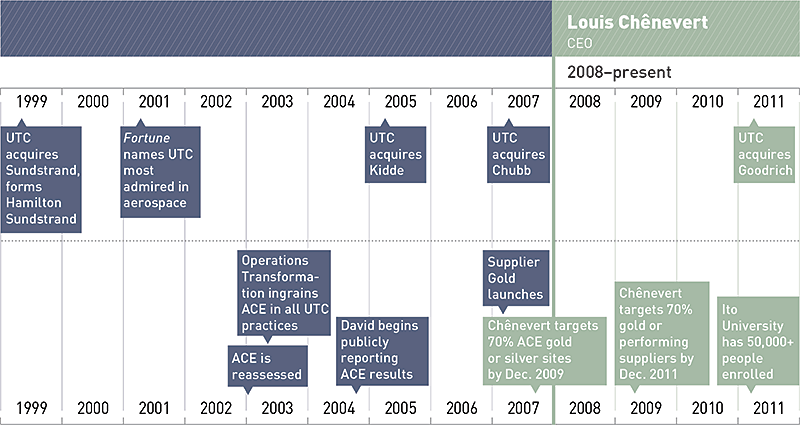
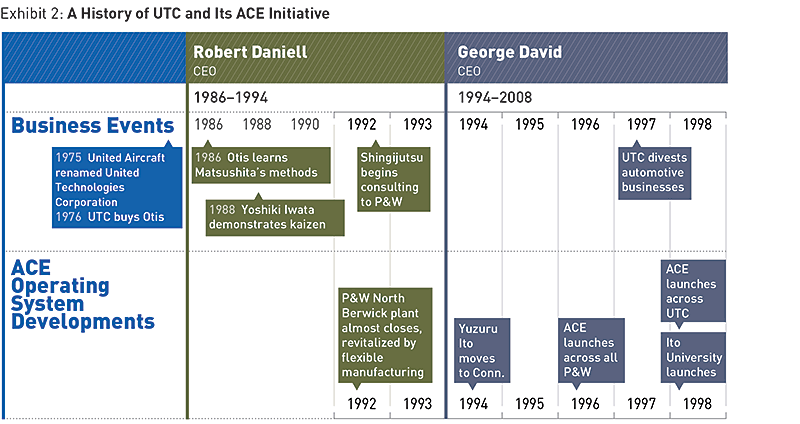
An Uncommonly Cohesive Conglomerate: How United Technologies Corporation—owner of Pratt & Whitney, Otis Elevator, and a wide range of other businesses—became one of the major corporate success stories of the past two decades.

Published: August 27, 2013

An Uncommonly Cohesive Conglomerate

How United Technologies Corporation—owner of Pratt & Whitney, Otis Elevator, and a wide range of other businesses—became one of the major corporate success stories of the past two decades.See also The Story of UTCʼs Success—In Pictures.

by George L. Roth

00209_ex01 00209_ex02bb 00209_ex02ab

Right from the start, the service call was unusual. In a business-to-business manufacturing company like Otis Elevator—or its corporate parent, the United Technologies Corporation (UTC)—field engineers are supposed to be heroes. They swoop in when there’s a technical problem too complex for anyone else to solve. But when two of Otis’s best field engineers were dispatched from their U.S. headquarters near Hartford, Conn., to Osaka, Japan, to fix a pair of malfunctioning elevators at Matsushita Electric, they weren’t brought to the problem site. Instead, they were ushered into a conference room where their customers, Matsushita’s corporate leadership, sat stone-faced around a table. Read more of this post

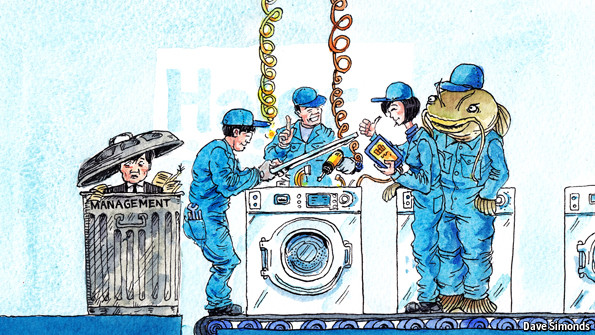
Haier and higher: The radical boss of Haier wants to transform the world’s biggest appliance-maker into a nimble internet-age firm

Haier and higher: The radical boss of Haier wants to transform the world’s biggest appliance-maker into a nimble internet-age firm

Oct 12th 2013 | QINGDAO |From the print edition

20131012_WBD001_1

“NO URINATION or defecation in the working area.” That admonition was among 13 rules that managers felt necessary to post on the walls of a shambolic fridge factory in Qingdao in the early 1980s. After several senior managers failed to turn it around, in 1984 the municipal government of the Chinese city appointed a young employee, Zhang Ruimin, as the firm’s boss. The gamble worked. Since then a lousy local firm has turned into the world’s biggest appliance-maker. Read more of this post

Tadamitsu Matsui, the man behind Muji’s turnaround; Employees can raise any problems they encounter, come up with solutions and tweak their copy of Mujigram. These updates are synced across all stores.

Simply Muji

st_muji_0

Sunday, Oct 13, 2013

Natasha Ann Zachariah

The Straits Times

Lifestyle brand Muji might not put its name or logo on any of its products, but it is happy to shout about their quality. During an interview with Life!, Mr Tadamitsu Matsui, chairman of Japanese retail company Ryohin Keikaku, Muji’s parent company, emphasises no fewer than 10 times that Muji is synonymous not just with minimalist design, but also well-made products. The 64-year-old, who was in town last week for the opening of the seventh Muji store here in 313@Somerset, is not just paying lip service. When he took over as president and representative director of Ryohin Keikaku in 2001, Muji was in a steep decline. It had chalked up a deficit of 3.8 billion yen the year before and was closing stores worldwide. Its stock price plunged to just one-sixth of its original price. Read more of this post

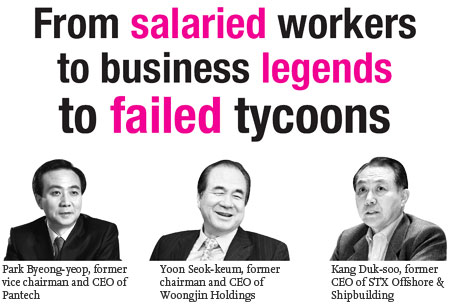
From salaried workers to business legends to failed tycoons: Were they too arrogant or is Korea no place for self-made entrepreneurs?

2013-10-13 14:01

From salaried workers to business legends to failed tycoons

Were they too arrogant or is Korea no place for self-made entrepreneurs?

131013_a01_from01
By Kim Da-ye
The chief executive officers who recently stepped down from the large conglomerates or corporations they had built on their own share a common background — they started their careers as salaried employees. These failed tycoons include Yoon Seok-keum of Woongjin Group, Kang Duk-soo of the shipbuilding-focused STX Group and Park Byeong-yeop of handset maker Pantech. Yoon was formerly an ace salesman at Encyclopedia Britannica. Kang’s first job was at SsangYong Cement, whose key affiliate he later acquired. Park spent his mid-late 20s at Maxon Electronics as a salesman. Read more of this post

Chaebol failures spark rise in bad loans

October 13, 2013 11:07 am

Chaebol failures spark rise in bad loans

By Song Jung-a in Seoul

A string of bankruptcies in South Korea has prompted concerns that the country, already saddled with high levels of household debt, now faces the added challenge of dealing with a similar problem within its companies. The spike in failures among second-tier chaebol, particularly in cyclically weak sectors such as construction, shipping and shipbuilding, partly reflects the domestic nature of their business: for every Samsung Electronics selling sleek smartphones and snappy tablets across the world, there are many more Korean companies reliant almost wholly on the sluggish home market. Read more of this post

A turmoil surrounding Tong Yang Group and Hyosung Group is turning the spotlight on separating industrial and financial capital and tightening evaluation to screen out disqualified large shareholders

Calls growing for tightened efforts to separate industrial, financial capital

Lee Jin-myung, Chung Seok-woo

2013.10.14 14:48:33

A turmoil surrounding Tong Yang Group and Hyosung Group is turning the spotlight on separating industrial and financial capital and tightening evaluation to screen out disqualified large shareholders. There is a growing call for stepping up efforts to separate industrial and financial capital in the wake of allegations regarding Tong Yang Group and Hyosung Group, which are accused of engaging in financial fraud and other illegal methods to secure money for its financially squeezed affiliates.  Read more of this post

CEOs to Face Berkshire-Loyalty Test; Some investors and analysts are beginning to think about whether Berkshire Hathaway will remain such a desirable place to work for senior executives after Warren Buffett turns over the reins

CEOs to Face Berkshire-Loyalty Test

ANUPREETA DAS

Oct. 13, 2013 8:32 p.m. ET

When Cathy Baron Tamraz , chief executive of Business Wire Inc., first read about Warren Buffett’s management style, she wrote to the billionaire investor and asked him to buy her company. And why not? As she said at the time, Mr. Buffett is renowned for his hands-off approach, which in turn generates loyalty—and stability—in the dozens of individual companies that make up Berkshire Hathaway Inc. BRKB +0.84% Berkshire bought Business Wire in 2006 and still owns it today. Ms. Baron Tamraz, who declined to comment, remains at the head of the company. Read more of this post

Where Jim Rogers Is Investing Now

SATURDAY, OCTOBER 12, 2013

Where Jim Rogers Is Investing Now

“I cannot invest the way I want the world to be; I have to invest the way the world is.” — Jim Rogers

By KOPIN TAN | MORE ARTICLES BY AUTHOR

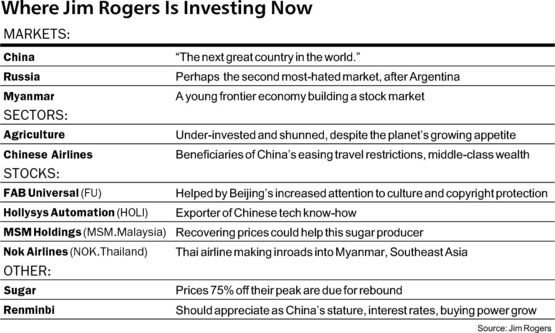
An interview with investor and author Jim Rogers in Singapore. Why he likes agriculture and Chinese airlines, is concerned about currency turmoil and thinks young Americans should learn a foreign language.

ON-BC397_QA1014_G_20131012014641

Stepping off a 19-hour flight to visit Jim Rogers in Singapore is a daunting proposition. First, you must locate his home, nestled in a particularly private, verdant nook nuzzling the 183-acre Singapore Botanic Gardens. Next, his remarkably poised nine-year-old daughter—the blond-haired, blue-eyed Hilton Augusta Parker Rogers, or Happy Rogers to her friends—quizzes you in flawless Mandarin to see if your language skills are up to snuff. Then, Rogers invites you to exercise with him while chatting about the markets. Rogers, who will turn 71 this week, has always been a multitasker. The co-founder (with George Soros) of the Quantum Fund famously retired at 37 to travel the world, and is today a venerable investor, author of six books, and doting dad. Convinced of Asia’s ascendance but put off by China’s pollution, he moved his family from New York to Singapore seven years ago so his two young daughters can grow up speaking Mandarin. Today, Oriental antiques jostle Barbie dollhouses for pride of place in his spacious home. He takes his daughters to school on a bicycle, even though a gleaming Mercedes with an 8888 license plate—eight being the most auspicious number to the Chinese since it sounds like the word for “prosper”—sits in the driveway. What follows is our very sweaty conversation—me from the equatorial humidity, Rogers from pedaling a recumbent stationary bike on the patio, a laptop dripping stock quotes propped on his handlebars. A tantalizing pool beckons from 10 feet away, but he did not once slow down. Read more of this post

When the Rising Stock Price Hides Trouble

October 12, 2013

When the Stock Price Hides Trouble

By GRETCHEN MORGENSON

gret-graphic-popup-v2

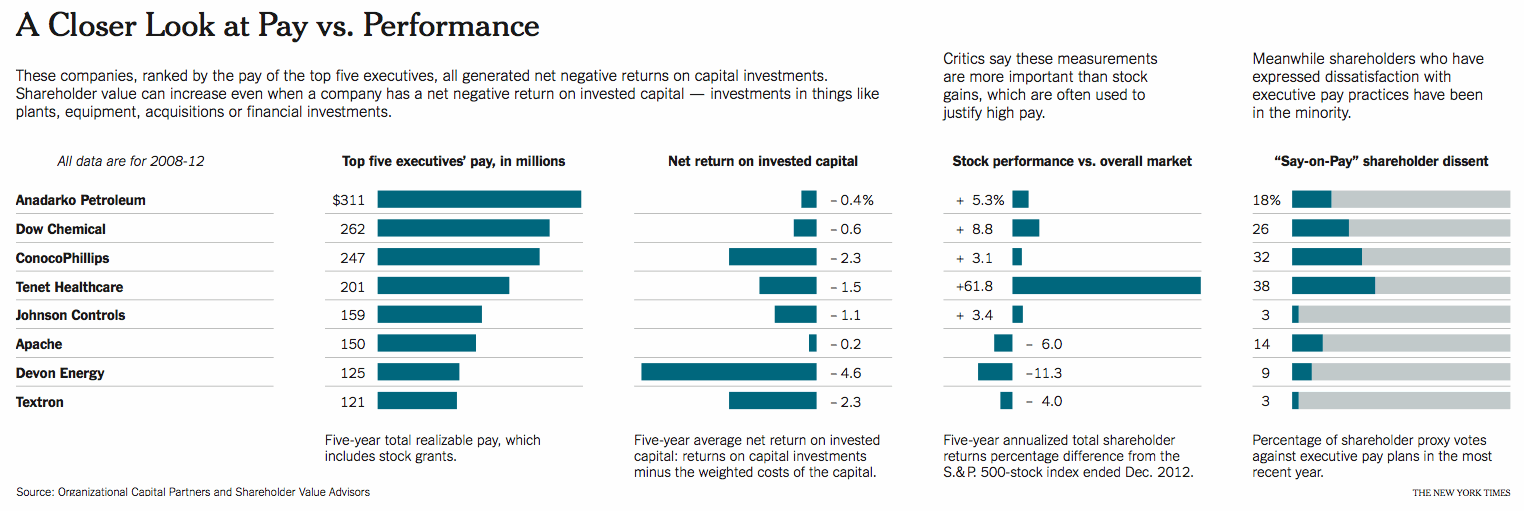
WHEN a company receives criticism about its executive pay practices, a typical defense is to cite a rising stock price as justification of its pay. If total shareholder return is up, the theory goes, stockholders have no right to complain about what might otherwise look like outsize pay at their companies. While this pay posture is understandable, it raises a question: Should a rising stock price inoculate top executives from criticism over their pay? To more and more experts in corporate finance and pay issues, the answer is no. Aswath Damodaran, a professor of finance at the Stern School of Business at New York University, is among those who think that too many companies rely too heavily on the performance of their shares when computing executive compensation. “I’m a great believer in markets, but sometimes we need more attention paid to what did this management do to the value of the company and less to what did this management do to the price of the stock,” he said. “I would like to see compensation systems where managers are rewarded based on what kind of projects they are working on and how big their returns on invested capital are.” Read more of this post

Malaysian play in Singapore gone awry

Updated: Saturday October 12, 2013 MYT 7:15:31 AM

Malaysian play in Singapore gone awry

BY RISEN JAYASEELAN AND TEE LIN SAY

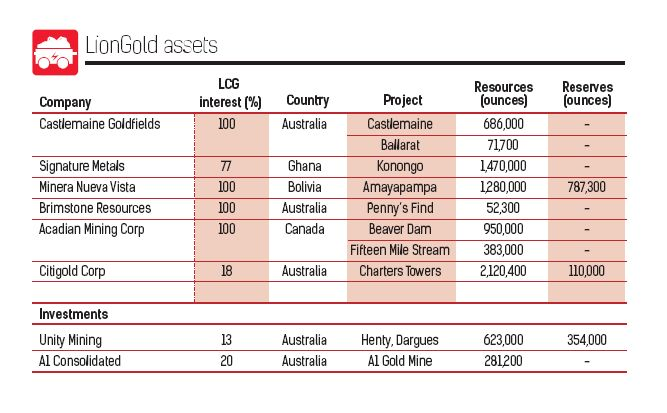
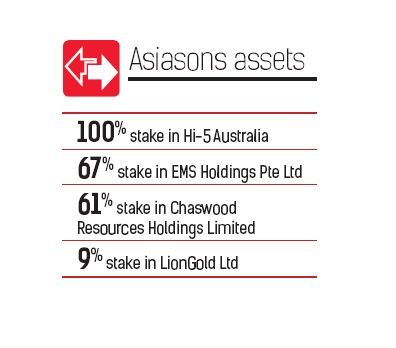
malaysianlink121013 bluemontassets121013 liongoldassets121013 asiasonsassets121013

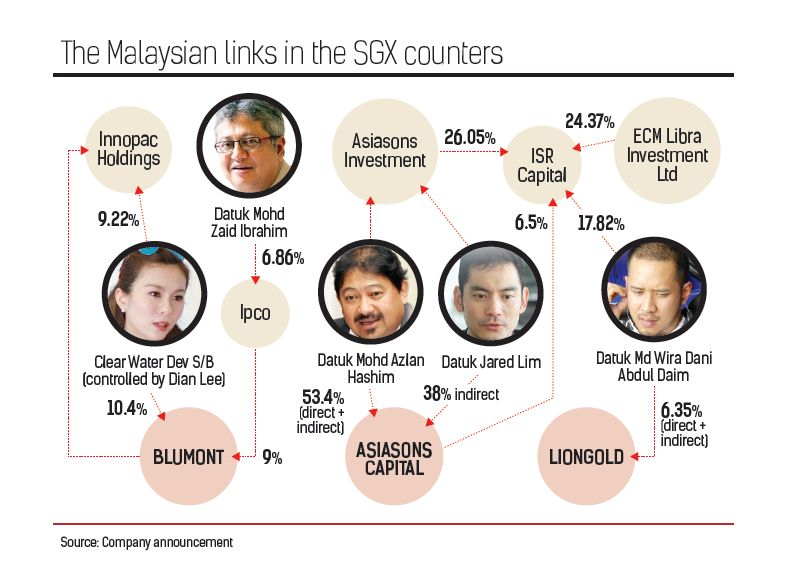
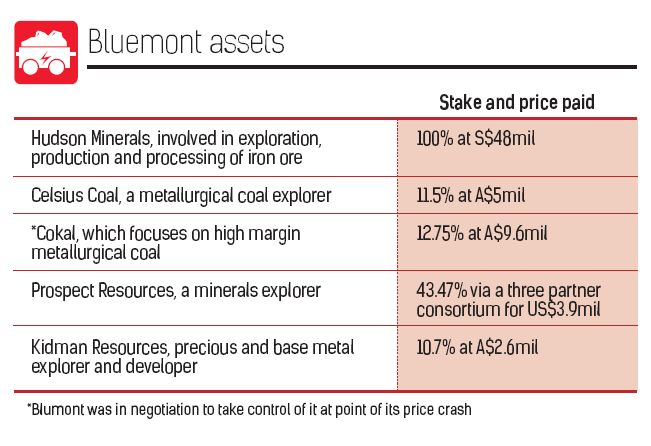
WHAT a mess. The fallout stemming from the massive sell-off of Blumont Group Ltd,Asiasons Capital Ltd and LionGold Corp Ltd is rocking the foundation of these companies and raising questions. With such battered share prices and with the billions having been wiped out from their market capitalisation, the model of using their highly liquid SGX-quoted shares, as currency for takeovers, is in jeopardy. Then there’s the stigma to deal with: will bankers, business partners and vendors of assets be as open to deal with them as before? Read more of this post

Troubled Korean companies misuse CPs (commercial paper); Companies facing cash shortage problems issue bills until the moment they go bankrupt or seek court receivership. This damage is then passed on to investors

2013-10-11 16:27

Troubled companies misuse CPs

Experts call for more release of firms’ financial information
By Kim Rahn

When several large companies collapsed from liquidity shortage in recent years, it also caused a collapse of retail investors who purchased their corporate bills. While the recent court receivership of Tongyang Group is likely to inflict losses on more than 12,000 such bill buyers, analysts say that the corporate bill system is misused by cash-strapped companies amid loopholes in the regulations. Read more of this post

Business shifts and RTOs cause concern; “It’s better if the authorities can do adequate due diligence beforehand.”

Business shifts and RTOs cause concern

Friday, Oct 11, 2013

Reuters

Reverse takeovers and shifting business strategies involving firms on Singapore’s stock market have come under the spotlight in the wake of the recent collapse in share prices of three companies listed on South-east Asia’s biggest bourse. One of the companies, Blumont Group, lost as much as $6.2 billion in market value in the past week. Prior to that, it had surged as much as 12-fold this year, making it Singapore’s top performer. The company, which listed in mid-2000, has shifted its focus between investment (most recently in mining companies), property development and sterilised-food and medicine packaging. Read more of this post

“Fee-sucking, evergreen income.” That’s how Bill Michaels describes the financial industry’s reliance on asset allocation.

Updated October 10, 2013, 10:35 a.m. ET

Vonnegut: Wealth Management’s New Dinosaurs

Investors don’t need us to diversify. ETFs are easy to buy, easy to use, and easy to understand

NORB VONNEGUT

“Fee-sucking, evergreen income.” That’s how Bill Michaels describes our industry’s reliance on asset allocation. The problem, he says, is that it doesn’t make money for clients. But here’s what “diwussification”–his play on diversification–does for advisers: It minimizes risk, locks in annuity revenues, and frees them “to go play golf.” Mr. Michaels, now retired, was the kind of risk-loving stockbroker that has all but disappeared from financial services. During the 1990s, through options and a staggering margin balance, he built a 1,150,000-share position in Dell. It paid off big-time. Read more of this post

Tongyang Group probed for stock manipulation; FSS officials said hidden assets of the family will be used to compensate retail investors who sustained a huge loss from the purchase of corporate bonds and bills issued by the group

2013-10-10 17:35

Tongyang Group probed for stock manipulation

By Kim Tae-jong
The financial authorities are now investigating Tongyang Group for alleged stock price manipulation. But it is unknown whether the family that owns the group was also involved in fraudulent stock trading. “The special investigative department is now looking into the alleged stock manipulation case involving Tongyang’s affiliates,” an official from the Financial Supervisory Service (FSS) said. Read more of this post

Sound the retweet: When investors make irrational decisions

Sound the retweet: When investors make irrational decisions

Oct 12th 2013 |From the print edition

20131012_FND001_0

FOR want of a letter, a fortune was lost. Shares in Tweeter, a bankrupt electronics retailer, briefly soared 1,800% on October 4th because some investors mistook its ticker symbol TWTRQ for TWTR, the shorthand chosen by Twitter ahead of the microblogging service’s planned stockmarket flotation. Trading was halted after the regulator stepped in. But those who bought at the peak price will be regretting their foolishness. Read more of this post

Quah Poh Keat likely Public Bank’s future MD and CEO, succeeding Tan Sri Teh Hong Piow

Updated: Friday October 11, 2013 MYT 9:13:23 AM

Quah likely Public Bank’s future MD and CEO

BY JAGDEV SINGH SIDHU

ban

PETALING JAYA: Public Bank Bhd looks to have settled one aspect of its succession planning when it recently appointed Quah Poh Keat (pic) as deputy chief executive officer II. The appointment of Quah, a former independent director of the bank, suggests he could be a leading candidate to succeed managing director and chief executive officer Tan Sri Tay Ah Lek when he retires. Read more of this post

Grave digger to gold digger: Singapore business shifts feed governance worries

Grave digger to gold digger: Singapore business shifts feed governance worries

3:36am EDT

By Anshuman Daga

SINGAPORE, Oct 10 (Reuters) – A funeral parlour switches into gold mining; a steel trader turns into a property developer; and a food packaging firm ventures into resources. Reverse takeovers and shifting corporate business strategies on Singapore’s stock market have come under the spotlight in the wake of a recent collapse in the share prices of three companies listed on Southeast Asia’s biggest bourse. One of the companies, Blumont Group Ltd, lost as much as S$6.2 billion ($4.96 billion) in market value in the past week. Prior to that, Blumont had surged as much as 12-fold this year, making it Singapore’s top performer. The company, which listed in mid-2000, has shifted its focus between investment – most recently in mining companies – property development and sterilised food and medicine packaging. The changes in business operations and the use of reverse takeovers – where a private firm buys a public company usually to bypass an often lengthy listing process – and its impact on the broader market risk undermining the credibility of one of Asia’s biggest financial and regulation centres. Read more of this post

Tongyang chief, wife on travel ban for alleged fraud and breach of trust

Tongyang chief, wife on travel ban

Oct 10,2013

TY

A woman cries at a rally protesting the financial regulator’s lax oversight of the Tongyang Group’s sales of commercial paper and bonds yesterday at the Financial Supervisory Service in Yeouido, western Seoul.

Prosecutors Tuesday prohibited Tongyang Group Chairman Hyun Jae-hyun and Tongyang Securities CEO Chung Jin-seok from leaving the country, a day after the Citizens’ Coalition of Economic Justice, a civic group, filed a complaint against them for alleged fraud and breach of trust. Hyun’s wife, group vice chairwoman Lee Hae-kyung, and Tongyang Networks CEO Kim Chul are also forbidden from going overseas. Hyun and Lee, daughter of group founder Lee Yang-koo, as well as senior executives at the group, are suspected of selling high-risk bonds to individual investors until just before the financial collapse of five affiliates that filed for court receivership last week.  Read more of this post

FX Concepts Closing Asset-Management Business; Firm Was Once World’s Largest Currency-Focused Fund Manager

Updated October 9, 2013, 7:14 p.m. ET

FX Concepts Closing Asset-Management Business

Firm Was Once World’s Largest Currency-Focused Fund Manager

GREGORY ZUCKERMAN, IRA IOSEBASHVILI And NICOLE HONG

MI-BY982_FXCLOS_NS_20131009180303

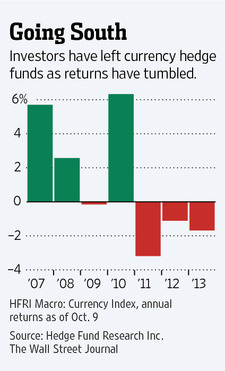
The investor retreat from the once-lucrative currency-trading arena passed a milestone Wednesday with the closure of a firm that once was the largest of its sort, FX Concepts. The New York firm, whose assets under management shriveled to $660 million last month, from $14 billion at the dawn of the financial crisis, will close its asset-management business over the next few weeks and return money to investors, the company said in a statement. Read more of this post

Oakmark International’s David Herro Sells IRE, Buys Samsung and WPP; Up 41% for fiscal year ended Sep 2013

David Herro Sells IRE, Buys Samsung and WPP; Up 41% in 2013

by ValueWalk StaffOctober 8, 2013

David Herro from The Oakmark International Fund Q3 letter to shareholders (see Herro comments’s in Oakmark Select Global Fund).

The Oakmark International Fund returned 41% for the fiscal year ended September 30, 2013, comparing favorably to the MSCI World ex U.S. Index, which returned 21%. For the most recent quarter the Fund outperformed the MSCI World ex U.S. Index, returning 13% versus 11%. The Fund has returned an average of 11% per year since its inception in September 1992, outperforming the MSCI World ex U.S. Index, which has averaged 7% per year over the same period. Read more of this post

After 58 years, the Seul family is relinquishing management rights of their company, Taihan Electric Wire, Korea’s second-largest cable maker behind LS Cable with nearly 25 percent of market share

Seul family ends its management

Founder’s grandson resigns as president of Taihan Electric Wire

BY JOO KYUNG-DON [kjoo@joongang.co.kr]

Oct 09,2013

After 58 years, the Seul family is relinquishing management rights of their company, Taihan Electric Wire, after President Seul Yoon-suk, who is the grandson of company founder Seul Kyung-dong, stepped down Monday.  Taihan said Seul decided he might be a barrier to normalization of the cash-strapped company and left after discussions with creditors to protect employees and shareholders’ profits.

Read more of this post

Korean firms reeling from aggressive M&As

013-10-08 15:29

Firms reeling from aggressive M&As

Tongyang, Woongin, STX struggle to stay afloat on huge debts
By Kim Rahn
Growth is a priority for every business, but growing too fast can spell disaster for a company. Three Korean firms are currently experiencing this problem, after a series of mergers and acquisitions (M&As) brought them more harm than good.
Woongjin, STX and Tongyang, all went down in the last one year. Through M&As, the three groups grew but the tactics used for growth eventually caused them to collapse.
Samsung Economic Research Institute (SERI) economist Kim Sung-pyo says it is natural for a company to look for new growth opportunities. “But it would have been better if they focused on sectors with which they were familiar and in which they could take advantage of their existing knowhow,” he said. Read more of this post

South Korea’s Celltrion CEO to Be Probed in Stocks Trading Case

South Korea’s Celltrion CEO to Be Probed in Stocks Trading Case

South Korea’s financial regulator plans to ask prosecutors to investigate the chief executive officer of Celltrion Inc. over alleged stock price manipulation, the drug manufacturer said today. The Financial Services Commission is asking prosecutors to probe the actions of Celltrion’s largest shareholder, the company said in an e-mailed statement. Celltrion disagrees with the FSC’s decision and plans to cooperate with prosecutors, the company said. Celltrion’s largest shareholder is CEO Seo Jung Jin, spokesman Kim Joon Seok confirmed by phone. Read more of this post

How Investors Lose 89 Percent of Gains from Futures Funds

How Investors Lose 89 Percent of Gains from Futures Funds

The pitch was enticing. At a time when the Standard & Poor’s 500 Index had suffered a decline of 41 percent in the previous three years, Morgan Stanley (MS) was offering its clients the possibility of some relief. In a prospectus, the New York securities firm invited its customers to put their money into a little-known area of alternative investing called managed futures. “If you’ve never diversified your portfolio beyond stocks and bonds, you should know about the powerful argument for managed futures,” the bank wrote. “Managed futures may potentially profit at times when traditional markets are experiencing losses.” Read more of this post

Six Other Jerks Whose Stocks Julian Robertson Wouldn’t Buy

Six Other Jerks Whose Stocks Julian Robertson Wouldn’t Buy

Julian Robertson, the hedge fund billionaire, told CNBC that he sold all of his Apple holdings after discovering that Steve Jobs was a “really awful” person through Walter Isaacson’s biography. According to Robertson, this is because mean people can’t build enduringly successful companies. Here are some other business founders whose companies Robertson probably wouldn’t want to own:

1. Henry Clay Frick, United States Steel Corp.

Frick was called one of the “worst American CEOs of all time” by Portfolio magazine. One reason was that his vigorous response to the Homestead Strike of 1892 led to the deaths of 16 people. On the other hand, the company he helped found — U.S. Steel — remains the country’s largest producer, as well as the namesake of the Pittsburgh Steelers, despite the contraction of the American steel industry over the past 30 years. Read more of this post