Prominent US astronomers are boycotting a NASA meeting next month on exoplanets because Chinese scientists have been banned from attending

Ban on Chinese sparks scientists’ boycott of NASA meeting

October 10, 2013

nw-wd-space-20131009212603270852-620x349

The final frontier: China’s first female astronaut Liu Yang leaves the re-entry capsule of a Shenzhou-9 spacecraft in Inner Mongolia in June last year. Photo: Xinhua

Prominent US astronomers are boycotting a NASA meeting next month on exoplanets because Chinese scientists have been banned from attending, experts say. The restriction is based on a law passed in 2011 and signed by President Barack Obama that prevents NASA funds from being used to collaborate with China or host Chinese visitors at US space agency facilities. Among those leading the boycott are Debra Fischer, an astronomy professor at Yale University, and Geoff Marcy, an astronomy professor at the University of California, Berkeley. ”In good conscience, I cannot attend a meeting that discriminates in this way. The meeting is about planets located trillions of miles away, with no national security implications,” Professor Marcy wrote in an email to the organisers. Read more of this post

Jack Dorsey was 29 and unemployed … then he built Twitter

Jack Dorsey was 29 and unemployed … then he built Twitter

October 10, 2013 – 12:14PM

Will Oremus

Jack Dorsey: Turned down for a job at a shoe store shortly before Twitter. Photo: Flickr/Jack Dorsey

The New York Times has published an excerpt from tech reporter Nick Bilton’s forthcomingbook about the early days of Twitter. Those in search of juicy anecdotes and a Zuckerbergian anti-hero figure in the Twitter origin myth will not be disappointed. I won’t keep you in suspense: it’s Jack Dorsey. In the course of Bilton’s excerpt, Dorsey goes from a shiftless New York University drop-out with a nose ring to a backstabbing climber to a disastrous manager to being forced out of Twitter and considering a job at rival Facebook to … well, just read the thing. But what stuck out to me about Dorsey, amid the parallels to Steve Jobs and Mark Zuckerberg, was that his is a more quintessential Silicon Valley rags-to-riches story than either of theirs. And it’s a quintessentially millennial story at that. Jobs was out of Reed College just a couple of years before founding Apple at age 21. Zuckerberg founded Facebook from a Harvard dorm room at age 19. Dorsey, on the other hand “was a 29-year-old New York University drop-out who sometimes wore a T-shirt with his phone number on the front and a nose ring”, writes Bilton. “After a three-month stint writing code for an Alcatraz boat-tour outfit, he was living in a tiny San Francisco apartment. He had recently been turned down for a job at Camper, the shoe store.” Then Evan Williams, the Blogger co-founder and then chief executive of Odeo, the start-up that would become Twitter, walked into the coffee shop where Dorsey was blaring punk rock on his laptop headphones. “Dorsey, who was shy after battling a speech impediment as a child, was reluctant to introduce himself personally. Instead, he opened his resume on his computer, deleted any signs of his desire to work for Camper shoes, found Williams’ email address online and sent a message to see if Odeo was hiring. Williams, whose investment in Odeo had turned him into the company’s CEO, soon called him in for an interview. He and [co-founder Noah] Glass, both college drop-outs themselves, preferred rabble-rousers to Stanford grad students and Dorsey, with his nose ring and dishevelled hair, seemed like a perfect fit.” Dorsey was hired, worked with Glass to develop Twitter, brutally betrayed Glass, and eventually remade himself as the dashing public face of the hottest social-media start-up since Facebook. He’s now Twitter’s chairman and the CEO of Square, the mobile-payments company. When he tweets that he’s in New York, Michael Bloomberg tweets “Welcome back!” Good thing he didn’t get that gig at Camper shoes.

Behind the Best Innovations: Obvious, Annoying Problems; Like Square and Uber, Nest Seeks to Reinvent the Mundane

October 9, 2013, 2:39 p.m. ET

Behind the Best Innovations: Obvious, Annoying Problems

Like Square and Uber, Nest Seeks to Reinvent the Mundane

FARHAD MANJOO

MK-CG933_HIGHDE_D_20131009191941 MK-CG932_HIGHDE_D_20131009191820

The Nest Learning Thermostat programs itself and automatically saves energy when you’re away. Nest’s ‘smart’ smoke detector

Two years ago, Nest, a start-up founded by a group of ex-Apple AAPL +1.17%engineers and designers, unveiled a “smart” home thermostat. Folks in the tech industry responded with a familiar, collective two-step. First, puzzlement: A thermostat? Who buys thermostats? And then, when they got a chance to see the Nest in action, there was respectful envy: A thermostat! Of course! There had been Internet-connected thermostats before Nest’s version, just as there had been digital music players before the iPod. But like Apple Inc.’s music player, the Nest thermostat was so much more clever than anything else on the market that it seemed a reinvention of the entire industry. Read more of this post

The workday secrets of the world’s most productive philosophers

THE WORKDAY SECRETS OF THE WORLD’S MOST PRODUCTIVE PHILOSOPHERS

BY: DRAKE BAER

Haters gonna hate, thinkers gonna think, philosophers gonna philosophize. But how does one philosophize? Would someone whose thoughts would later shape the world shape their days differently than you and I? As Josh Jones notes at Open Culture, the answer is “not really”–aside for some serious devotions to long, lonesome walks. As we’ll see below, the irregularly outsize output of Friedrich Nietzsche, Karl Marx, and Immanuel Kant was marked by exceedingly regular days. As the literary saying goes: “Be regular and orderly in your life so that you may be violent and original in your work.” So let us get to the orders. Read more of this post

Ben Horowitz: Cash Flow and Destiny; “Until you generate cash, you must heed investors even when they are wrong. When you generate cash, you can respond to silly requests from the capital markets the way Kanye would”

10.08.13 // Cash Flow and Destiny

Ben Horowitz

Wait ’til I get my money right
Then you can’t tell me nothing, right?
—Kanye West, “Can’t Tell Me Nothing”

If you are an entrepreneur, you have probably heard some crusty old CEO or investor say something like “cash is king.” You probably read the Twitter S-1 and thought to yourself: “What the hell are those old guys talking about?” Twitter is still burning cash six years after founding and they, not cash, seem to be king. In a situation such as this, I usually just say to myself: “That’s the problem with wisdom, you can get it, but you cannot share it.” But this particular nugget is so fundamentally important that I will attempt to represent the old guys in this imaginary conversation. I was a founder/CEO during the period when cash seemed more like a serf than a king in 1999 and 2000. It was the era of “go big or go home.” Investors loved anything Internet and could not care less about profits. I grew my company and I grew it fast. In less than nine months after founding, I booked a $27 million quarter. I was going big and definitely not going home. Then the dot com crash happened and investors changed their collective minds. Investors hated anything Internet and wouldn’t fund anything that couldn’t fund itself. Read more of this post

Ben Horowitz: Why Founders Fail: The Product CEO Paradox

08.12.13 // Why Founders Fail: The Product CEO Paradox

Ben Horowitz

If I knew what I knew in the past
I would have been blacked out on your a**
—Kanye West, Black Skinhead

Because I am a prominent advocate for founders running their own companies, whenever a founder fails to scale or gets replaced by a professional CEO, people send me lots of emails. What happened, Ben? I thought founders were supposed to better? Are you going to update your “Why We Prefer Founding CEOs” post? In response to all of these emails: No, I am not going to rewrite that post, but I will write this post. There are three main reasons why founders fail to run the companies they created:

The founder doesn’t really want to be CEO  Not every inventor wants to run a company and if you don’t really want to be CEO, your chances for success will be exceptionally low. The CEO skill set is incredibly difficult to master, so without a strong desire to do so the founder will fail. If you are a Founder who doesn’t want to be CEO, that’s fine, but you should figure that out early and save yourself and everyone else a lot of pain. Read more of this post

Disasters, Rebuilding and Leadership – Tough Lessons from Japan and the U.S.

Disasters, Rebuilding and Leadership – Tough Lessons from Japan and the U.S.

Oct 03, 2013

On March 11, 2011, deep below the surface of the Pacific Ocean, enormous seismic forces reached a tipping point. At 2:46 p.m., one of the earth’s tectonic plates suddenly shifted, thrusting violently underneath another. The North American plate was pushed upward with such force that the movement generated a massive tsunami. It took the wall of moving water 51 minutes to reach the coast of Japan, some 45 miles away. In some places, the tsunami towered more than 125 feet above the ground when it hit. Thankfully, the height of the wave was far less where it came ashore near the Fukushima Daiichi nuclear power plant — “only” 50 feet high. Still, the nuclear disaster caused by the earthquake and tsunami has been rated by the International Atomic Energy Agency as equal in severity to the 1986 accident at Chernobyl, the worst nuclear disaster on record. The complex catastrophe — earthquake, tsunami and nuclear meltdown — killed close to 20,000 people, displaced hundreds of thousands more and contaminated a large swathe of beautiful countryside for decades or longer. More than two years later, Japan is still struggling to recover and prevent even more devastation. On May 24, 2013, the Initiative for Global Environmental Leadership (IGEL) sponsored a panel at the Wharton Global Forum in Tokyo to consider the leadership lessons generated by the Fukushima disaster, and to look at its impact on Japan’s energy policy and the resettlement of afflicted areas. Read more of this post

Hallmarks of Successful Growth Companies

Hallmarks of Successful Growth Companies

In collaboration with GE Capital, Jun 05, 2013

Being an entrepreneur is difficult. Yet some start-up and growth-stage companies do more than survive — they thrive. Experts from Wharton and GE Capital reveal that business success often doesn’t depend on stunning innovations but instead on common-sense business practices such as embracing change and choosing the right partners and board members.

Disney will stop issuing stock certificates, delivering shares only in electronic form in a blow to would-be collectors of the documents featuring drawings of Bambi and Mickey Mouse

Disney Stops Issuing Stock Certificates in Blow to Fans

Walt Disney Co. will stop issuing stock certificates on Oct. 16, delivering shares only in electronic form in a blow to would-be collectors of the documents featuring drawings of Bambi and Mickey Mouse. When investors transfer shares, they will be reissued without certificates, Disney said today in a regulatory filing. That will shrink the supply for websites pitching the items as a way to interest children in investing. Read more of this post

NASA Keeps Chinese Away From Aliens; Chinese nationals carry the burden of their country’s weak commitment to intellectual-property protection and strong commitment to espionage

NASA Keeps Chinese Away From Aliens

If Martians landed on National Aeronautics and Space Administration property, Chinese nationals wouldn’t be part of the welcoming committee.

That’s one potential — if far-fetched — consequence of federal legislation and a March moratorium that bans people from China and a handful of other nations from being granted new access to NASA facilities. NASA Administrator Charles Bolden’s rationale for the moratorium was to protect the U.S. and its space technology from spies. This came in the wake of espionage allegations at a NASA facility that turned out to be false. (The downloaded secrets were actually, ahem, downloaded porn.)

An actual consequence of the U.S.’s actions is that Chinese students and researchers will not be allowed to attend a November conference on alien worlds at NASA’s Ames Research Center in Mountain View, California. As a result, several prominent researchers are boycotting the conference. Read more of this post

Cash-Challenged CERN Lifted by Nobel Hunts for BRIC Funds; ““It took us 50 years to complete our description of the visible world. It’s high time to go into the dark universe. To open that window would be just great.”

CERN Hunts Missing Universe After Higgs Boson Pioneers Win Nobel

The Geneva research center that made the most important find in particle physics in half a century, helping explain how the visible universe holds together, is tapping developing nations to help fund its follow-up act. CERN’s observation of a Higgs boson last year led to a Nobel Prize in Physics yesterday for Peter Higgs and Francois Englert for their theoretical work predicting the particle’s existence. CERN is now considering new multibillion-dollar projects that may prove that other dimensions exist and track what happened after the Big Bang formed our universe. Read more of this post

New York Set to Reach Climate Point-of-No-Return in 2047

New York Set to Reach Climate Point-of-No-Return in 2047

Temperatures in New York are increasing, and after 2047 they won’t return to the historical average of the past one and half centuries, according to a study today in the journal Nature. “Climate departure,” when the average temperature for each year is expected to exceed historical averages from 1860 through 2005, will occur in Jakarta and Lagos in 2029, Beijing in 2046 and London in 2056, according to the study. New York will match the global departure 34 years from now and tropical areas will get there sooner. Read more of this post

No more working at home for Hewlett-Packard employees

No more working at home for Hewlett-Packard employees

Interview with Nancy Koehn

Marketplace for Wednesday, October 9, 2013

Will Yahoo inspire your boss to ban telecommuting? In the early days of the digital revolution, the idea that anyone could workanywhere was enough to entice workers everywhere to request telecommuting options. But when Yahoo CEO Marissa Mayer announced a ban on working from home in February, it ruffled feathers in the corporate world. Critics slammed the decision saying it was inflexible, hurting long commuters and working mothers, among others. Now Hewlett-Packard CEO Meg Whitman is following in a similar fashion. Although she hasn’t put into place a outright ban, she announced that she wants everyone to work at the office saying, “During this critical turnaround period, HP needs all hands on deck.” Nancy Koehn, who teaches at the Harvard Business School, says there’s a strong case for the flexibility to be able to work from home. Read more of this post

The Miracle of Growth and ‘The Great Escape’

The Miracle of Growth and ‘The Great Escape’

In “The Great Escape: Health, Wealth and the Origins of Inequality,” Angus Deaton sets out to tell a familiar story — that of the long arc of global economic advance — in a fresh way. The author is an economics professor at Princeton University, a renowned development economist and an exceptionally gifted teacher. Even those familiar with his accomplishments might be surprised by how brilliantly his book succeeds. Read more of this post

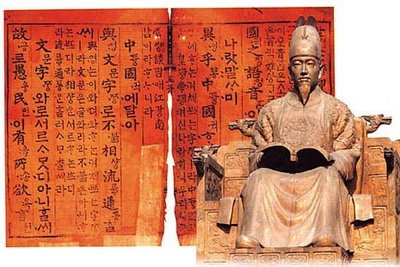
On Oct 9th South Koreans celebrate the 567th birthday of Hangul, the country’s native writing system, with a day off work. South Korea is the only country in the world to celebrate its writing system.

How was Hangul invented?

Oct 8th 2013, 23:50 by S.C.S.

hunmin-chongum

ON OCTOBER 9th South Koreans celebrate the 567th birthday of Hangul, the country’s native writing system, with a day off work. South Korea is the only country in the world to celebrate its writing system. The public holiday, originally introduced in 1945, has been reintroduced this year after being discontinued in 1991 at the request of employers. The day commemorates the introduction of the new script in the mid-15th century, making Hangul one of the youngest alphabets in the world. It is unusual for at least two more reasons: rather than evolving from pictographs or imitating other writing systems, the Korean script was invented from scratch for the Korean language. And, though it is a phonemic alphabet, it is written in groups of syllables rather than linearly. How was Hangul created? Read more of this post

This ‘Death Watch’ Tells You When You’re Going To Die — Down To The Last Second

This ‘Death Watch’ Tells You When You’re Going To Die — Down To The Last Second

JIM EDWARDS OCT. 8, 2013, 1:45 PM 6,164 6

tikkercarousel3 fredrik-coltin

The Tikker “death watch.” It’s certainly one of the more unusual ideas for a smart watch, but we doubt it will supersede the Pebble: Tikker is a digital watch that tells you when you’re going to die. It counts down your lifespan, to the last second, so you know how long you have left. The intent behind Tikker is to remind you that time is precious, and thus not to be wasted on negativity. It also tells the time. Here’s how it “knows” how long you have left: The wearer simply fills out a questionnaire, deducts his/her current age from the results, and TIKKER is ready to start the countdown. The company founder, Fredrik Colting, is trying to raise $25,000 on Kickstarter to fund full-scale production. It’s certainly cool-looking:8n43O

The New Science of Who Sits Where at Work; Companies Try to Boost Productivity by Micromanaging Seating Arrangements

October 8, 2013, 5:07 p.m. ET

The New Science of Who Sits Where at Work

Companies Try to Boost Productivity by Micromanaging Seating Arrangements

RACHEL FEINTZEIG

Office workers are being treated to a new game: musical chairs. By shifting employees from desk to desk every few months, scattering those who do the same types of jobs and rethinking which departments to place side by side, companies say they can increase productivity and collaboration. Proponents say such experiments not only come with a low price tag, but they can help a company’s bottom line, even if they leave a few disgruntled workers in their wake. Read more of this post

Retailer Brooks Brothers to open steakhouse

Retailer Brooks Brothers to open steakhouse

By Steve Cuozzo

October 7, 2013 | 5:18pm

Brooks Brothers, the “Makers and Merchants” of fine American suits and ties since 1818, is turning its talents on another Yankee Doodle favorite — steak. The legendary apparel emporium plans to launch a huge steakhouse, branded “Makers and Merchants,” at 11 E. 44th St., around the corner from its flagship store at 346 Madison Ave., sources told The Post. The beefery will take over the three levels that Brooks Brothers took over from J. Press in 2008 and used for several years for its women’s line. The 15,000 square-foot space is now vacant, although Brooks’ awnings still hang over tall sidewalk windows. Read more of this post

Early setbacks fuel drive of Lopez family who owns the Philippines’ biggest television broadcaster and its largest private power distributor

September 22, 2013 12:55 pm

Early setbacks fuel Lopez family drive

By Roel Landingin

Lopez2 Lopez

Oscar Lopez, the younger brother of Eugenio ‘Geny’ Lopez Jr, serves as chairman emeritus of the publicly listed Lopez Holdings Corp. The 83-year-old’s group faces challenges as it seeks to diversify away from the core utilities business; Manuel Lopez, also a younger brother of ‘Geny’, is chairman of Lopez Holdings. The 71-year-old says the group is well-positioned for the inevitable generational shift, because it selects senior managers solely on merit. ‘I myself started at the bottom,’ he says. Eugenio ‘Gabby’ Lopez III, the son of ‘Geny’, is chairman of ABS-CBN Broadcasting. He holds an MBA from Harvard University and as vice-chairman of Lopez Holdings is next in line to run the overall group behind his uncle Manuel; President Ferdinand Marcos imprisoned ‘Geny’ in 1972 on a trumped-up murder charge in an effort to force the Lopez patriarch to give up control of Meralco. The electricity tycoon escaped from prison, however, and returned to the Philippines in 1986 after Marcos was overthrown and rebuilt the family empire.

Not many tycoons have had their life story turned into an action movie. Eugenio Lopez Jr, the late head of the family that owns the Philippines’ biggest television broadcaster and its largest private power distributor, is one of the few exceptions. “Geny”, as he was known, was imprisoned by Philippine president Ferdinand Marcos in 1972 when he was 44 years old on a trumped-up murder charge. The move was aimed at forcing his father to give up control of Manila Electric Co, then and still the country’s biggest electricity distributor. With another political prisoner, Geny staged a daring escape from an army detention facility in 1977, fleeing to a private airstrip outside Manila, where a waiting plane whisked them out of the country. Geny returned to the Philippines in 1986 shortly after Marcos was overthrown. Together with younger brothers Oscar and Manuel, he rebuilt the family’s business empire, large parts of which were taken over by the Marcos regime. His arrest and escape became the basis for a feature film released in 1995. The family patriarch Eugenio Lopez Sr was one of the Philippines’ most successful businessmen in the period after the second world war. Read more of this post

The best advice can come from anywhere; The trick is to decide which counsel is worth heeding and which is not

October 8, 2013 3:52 pm

The best advice can come from anywhere

By Luke Johnson

The trick is to decide which counsel is worth heeding and which is not

Ican never decide if the business advice industry is actually useful or packed with purveyors of overpriced claptrap. Part of my dilemma is that through articles such as this and my books and speeches, I am a very small part of the circus. Moreover, I am constantly paying for guidance from all sorts of experts – lawyers, accountants, IT specialists, insurance, property and suchlike. So surely I must believe in its value . . .

Of course its worth depends greatly on who is dishing out the words of wisdom. Decisive counsel from a brilliant mind is to be prized. But all too often, one would do better to follow JRR Tolkien’s words from The Hobbit: “Go not to the elves for advice, for they will say both yes and no.” Read more of this post

Time for tea in America: Arsen Avakian, co-founder of Argo, is on a mission to convert the coffee-drinking masses

October 8, 2013 3:56 pm

Time for tea in America

By Neil Munshi

©Pascal Perich

A new leaf: Arsen Avakian in an Argo teashop

At a table outside a café in Chicago’s Connors Park, Arsen Avakian is sipping cups of tea and providing a commentary on the different flavours like an oenophile at a vineyard. The manager of this branch of the Argo chain of tea shops Mr Avakian’s co-founded has just brought him a tray of samples – including Pumpkin Chai, Iced Maté Latté, White Tea Acai Squeeze and Hibiscus Apple Chiller. The entrepreneur has an effusive line for each. Mr Avakian says the Earl Grey Vanilla Crème is “Nilgiri black tea blended with bergamot orange peels to give you a very unique take on the traditional Earl Grey”. He also mentions some of the 14 countries from which Argo sources tea leaves for its 40-plus “signature drinks”. Read more of this post

Singapore Girl is facing a bumpy ride; Competition between low-cost carriers has driven down fares

October 8, 2013 5:25 pm

Singapore Girl is facing a bumpy ride

By Jeremy Grant

Competition between low-cost carriers has driven down fares

Singapore Girl is flying into turbulence.

For years the advertising icon of Singapore Airlines – a stewardess dressed in a sarong designed by a Parisian couturier – has projected an image of unimpeachable reliability and graceful Asian hospitality. That has helped to create one of the most recognisable and trusted brands in the global airline business. It has also helped to underpin one of its most financially successful. Singapore Airlines (SIA) has never in its 28 years as a listed company recorded a loss in any full financial year – a feat virtually unheard of in an industry that has bled red ink ever since commercial jet flight began in the 1950s. But the winds of change are blowing in the Asian airline industry as low-cost carriers such as AirAsia, owned by Malaysian entrepreneur Tony Fernandes, have steadily eaten away at the market share of established carriers such as SIA and Cathay Pacific. Read more of this post

Wang Yannan: Daughter of the revolution takes on China art market

October 8, 2013 8:17 am

Wang Yannan: Daughter of the revolution takes on China art market

By Demetri Sevastopulo in Hong Kong

When Wang Yannan was growing up during the Cultural Revolution in China, the daughter of former Chinese leader Zhao Ziyang never imagined that one day she would run the fourth-largest auction house in the world. Speaking in Hong Kong where China Guardian over the weekend sold HK$510m (US$66m) in Chinese art and ceramics, Ms Wang recalls how a family friend whose husband had been jailed struggled to destroy paintings to prevent more problems with the Red Guards.

Read more of this post

China sacks official over lavish, three-day wedding

China sacks official over lavish, three-day wedding

6:48am EDT

BEIJING (Reuters) – China sacked an official for “extravagant waste” after he spent an estimated 1.6 million yuan ($260,000) on a lavish, three-day wedding for his son, state media said on Tuesday, the latest move in a crackdown on profligate lifestyles and graft. Ma Linxiang, a deputy village chief from the Beijing suburb of Qingheying, hosted the estimated 250-table wedding at a convention center that was part of the main 2008 Beijing Olympics venue during the week-long National Day holiday last week, newspapers reported. Read more of this post

Six Other Jerks Whose Stocks Julian Robertson Wouldn’t Buy

Six Other Jerks Whose Stocks Julian Robertson Wouldn’t Buy

Julian Robertson, the hedge fund billionaire, told CNBC that he sold all of his Apple holdings after discovering that Steve Jobs was a “really awful” person through Walter Isaacson’s biography. According to Robertson, this is because mean people can’t build enduringly successful companies. Here are some other business founders whose companies Robertson probably wouldn’t want to own:

1. Henry Clay Frick, United States Steel Corp.

Frick was called one of the “worst American CEOs of all time” by Portfolio magazine. One reason was that his vigorous response to the Homestead Strike of 1892 led to the deaths of 16 people. On the other hand, the company he helped found — U.S. Steel — remains the country’s largest producer, as well as the namesake of the Pittsburgh Steelers, despite the contraction of the American steel industry over the past 30 years. Read more of this post

Singapore: Parents upset over PSLE book-burning ‘celebration’

Parents upset over PSLE book-burning ‘celebration’

burnbooks_int

Tuesday, October 8, 2013 – 12:37

Edvantage

SINGAPORE – A photo showing parents and their kids celebrating the end of the Primary School Leaving Examinations (PSLE) by burning their textbooks has triggered an intense debate online. A reader notified the Shin Min Daily News to the photo circulating on Facebook. According to the reader, the book-burning celebration happened after the exams ended last Wednesday. The photo shows a group of 10 adults and children gathered around a raging fire contained in a metal bin. Torn pages and pieces of paper could be seen strewn around the area. Read more of this post

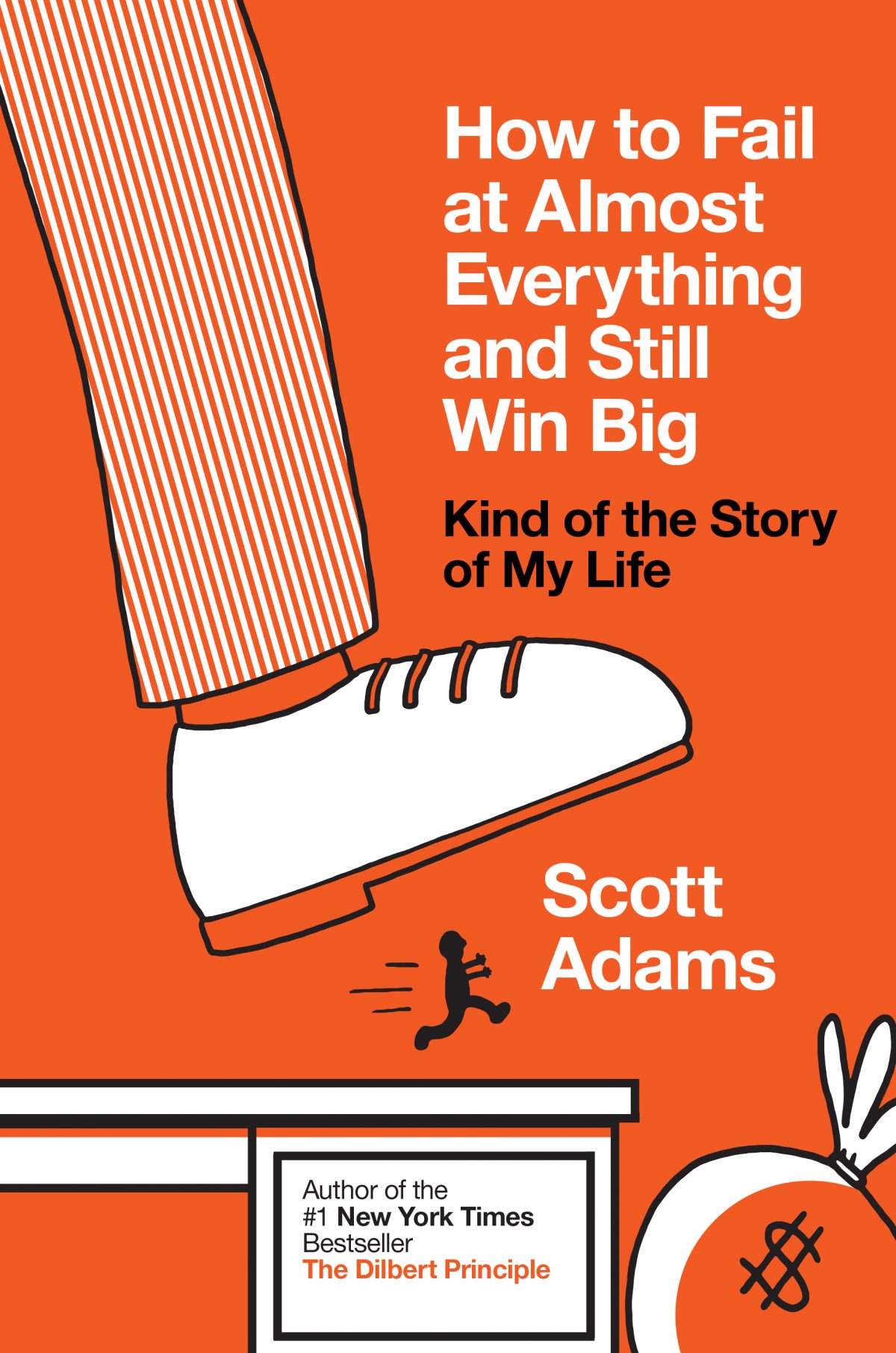
Dilbert’s creator Scott Adams: How to Fail at Almost Everything and Still Win Big: Kind of the Story of My Life; Everything you want out of life is in that bubbling vat of failure. The trick is to get the good stuff out.

How to Fail at Almost Everything and Still Win Big: Kind of the Story of My Life Hardcover

by Scott Adams  (Author)

how to fail... jacket

Everything you want out of life is in that bubbling vat of failure. The trick is to get the good stuff out.
Scott Adams has likely failed at more things than anyone you’ve ever met or anyone you’ve even heard of. So how did he go from hapless office worker and serial failure to the creator of Dilbert, one of the world’s most famous syndicated comic strips, in just a few years? In How to Fail at Almost Everything and Still Win Big, Adams shares the strategy he has used since he was a teen to invite failure in, embrace it, then pick its pocket. No career guide can offer advice that works for everyone. As Adams explains, your best bet is to study the ways of others who made it big and try to glean some tricks and strategies that make sense for you. Adams pulls back the covers on his own unusual life and shares how he turned one failure after another into something good and lasting. Adams reveals that he’s failed at just about everything he’s tried, including his corporate career, his inventions, his investments, and his two restaurants. But there’s a lot to learn from his personal story, and a lot of humor along the way. Adams discovered some unlikely truths that helped to propel him forward. For instance:

• Goals are for losers. Systems are for winners.

• “Passion” is bull. What you need is personal energy.

• A combination of mediocre skills can make you surprisingly valuable.

• You can manage your odds in a way that makes you look lucky to others.

Adams hopes you can laugh at his failures while discovering some unique and helpful ideas on your own path to personal victory. As he writes:

“This is a story of one person’s unlikely success within the context of scores of embarrassing failures. Was my eventual success primarily a result of talent, luck, hard work, or an accidental just-right balance of each? All I know for sure is that I pursued a conscious strategy of managing my opportunities in a way that would make it easier for luck to find me.” Read more of this post

‘Passion Is BS’ And Other Life Advice From Dilbert Creator Scott Adams

‘Passion Is BS’ And Other Life Advice From Dilbert Creator Scott Adams

JENNA GOUDREAU OCT. 7, 2013, 2:27 PM 3,959 3

Despite being a world-famous cartoonist and best-selling author, Scott Adams maintains that he’s failed at just about everything he’s ever tried. But the trick is, only one thing has to work. The creator of Dilbert, the first syndicated comic that focused on the workplace, details his unlikely path to success in an upcoming book “How to Fail at Almost Everything and Still Win Big.” In it, he describes his stalled corporate career, a string of failed business ventures, and his first rejections as a cartoonist. But through those failures, he discovered what it takes to eventually find success. (Hint: It isnot passion.) Adams sat down with Business Insider to discuss his new book and the best advice he ever got. The following has been edited for length and clarity.

Business Insider: You seem to think it’s possible to fail your way to success. How does that work?

Scott Adams: You can’t control luck directly, but you can move from a game with bad odds to a game with good odds. The world is like a reverse casino. In a casino, if you gamble long enough, you’re certainly going to lose. But in the real world, where the only thing you’re gambling is, say, your time or your embarrassment, then the more stuff you do, the more you give luck a chance to find you. If you do one thing and stop, you didn’t give luck a chance to find you. You only need one thing to work. Read more of this post

Common nonsense: Commoditised best practice and why we’re getting ‘the basics’ of business wrong

James Thomson Editor

Common nonsense: Commoditised best practice and why we’re getting ‘the basics’ of business wrong

Published 08 October 2013 07:48, Updated 08 October 2013 13:24

12caeb32-2f91-11e3-b690-9cc324ec45e6_Dr Jules Goddard--646x363

Dr Jules Goddard says many of the practices of “managerialism” date back to 19th-century efforts to get farm workers producing in factories. How many times have you heard a leader – of a business or a sporting team – talk about doing “the basics” right. But what if the way we define “the basics” is all wrong? That’s the question raised by Dr Jules Goddard, a fellow of London Business School who recently visited the Australian Graduate School of Management as its Unilever Distinguished Scholar. Goddard is the co-author of a book calledUncommon Sense, Common Nonsense, which questions whether some of the tenets of Business 101 – such as cost-efficiency, operational excellence and competitive benchmarking – promote a sort of herd thinking that does not make for great leaders or great businesses. He provides the example of the idea of “best practice” which can be heard in boardrooms of all shapes and sizes. As he points out, the idea itself is a little silly. “Every firm in an industry defines best practice in an industry in the same way. But markets do not reward commodities.” Read more of this post

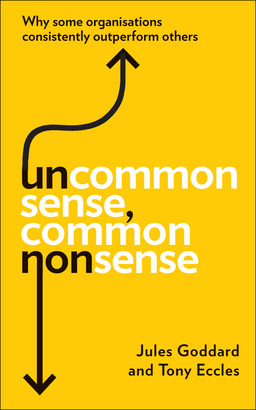
Uncommon Sense, Common Nonsense: Why some organisations consistently outperform others

Uncommon Sense, Common Nonsense: Why some organisations consistently outperform others [Kindle Edition]

Jules Goddard (Author), Tony Eccles (Author)

419f33c2-2f15-11e3-814b-138ad8fa7301_Jules Goddard Uncommon Sense, Common Nonsense

Publication Date: May 3, 2012

This is a book for managers who know that their organisations are stuck in a mindset that thrives on fashionable business theories that are no more than folk wisdom, and whose so-called strategies that are little more than banal wish lists.It puts forward the notion that the application of uncommon sense – thinking or acting differently from other organisations in a way that makes unusual sense – is the secret to competitive success. For those who want to succeed and stand out from the herd this book is a beacon of uncommon sense and a timely antidote to managerial humbug. Read more of this post