Students Learn Better From Professors Outside Tenure System

September 11, 2013, 1:31 PM

Students Learn Better From Professors Outside Tenure System

By Khadeeja Safdar

Tenured professors at higher education institutions are certainly given more prestige than other lecturers. But are they better teachers? In a new working paper published by theNational Bureau of Economic Research, researchers David N. Figlio,Morton O. Schapiro and Kevin B. Soter find quite the opposite — that is, tenured professors or those on their way to tenure don’t enhance student learning as much as lecturers outside the tenure system. Read more of this post

Shanghai violin maker uses ‘secret formula’ to produce quality instrument

Shanghai violin maker uses ‘secret formula’ to produce quality instrument

Staff Reporter

2013-09-12

淩震華-161528_copy1

Ling Zhenhua adjusts the strings on one of his violins. (Internet Photo)

Although painting violins is a dying art, it has not stopped 59-year-old Chinese violin maker Ling Zhenhua producing top-quality instruments. Ling’s weapon is his own “secret paint formula,” which he refuses to disclose, reports the Shanghai-based Oriental Morning Post. At his workshop in Shanghai’s suburban Qingpu district, Ling shuts himself off from the outside world while making paint for his violins. It normally takes him one to two months to make one pot of paint and takes the craftsman six months to produce a complete violin. Ling said that a good violin needs to be coated with at least 30 layers. Read more of this post

Why Marks & Spencer has just 24 minutes to save itself; Marc Bolland has 24 minutes to save Marks & Spencer. That is the amount of time the average customer spends in the 129-year-old retailer’s stores

Why Marks & Spencer has just 24 minutes to save itself

Marc Bolland has 24 minutes to save Marks & Spencer. That is the amount of time the average customer spends in the 129-year-old retailer’s stores, according to new research the company has conducted.

The M&S Leading Ladies ad – many of the ‘chosen’ women model the retailer’s latest range of coats

By Graham Ruddick

6:03PM BST 10 Sep 2013

It is therefore the time that under-pressure M&S and its chief executive Mr Bolland has to persuade female shoppers to buy clothing from its new autumn and winter womenswear collection. The new range has received much attention during the summer months, including positive reviews of the clothing and the new marketing campaign titled “Britain’s Leading Ladies”, which is headed by Oscar-winning actress Dame Helen Mirren and Olympic gold medal boxer Nicola Adams. Read more of this post

Campari’s repositioning of its Aperol brand

September 9, 2013 6:19 pm

Campari’s repositioning of its Aperol brand

By Paolo Aversa

The story

In recent years, Italians have steadily reduced their spending on meals in restaurants, with a corresponding decrease in drinking spirits with their food. In addition, increasingly health-conscious Europeans were drinking less alcohol and doing so on fewer occasions. They were also interested in buying high-quality products generally.

The challenge

What sounds like good news for health indicators represented a threat to spirits producers, including Italy’s Gruppo Campari, one of the world’s leading makers of premium spirits. In 2005, 47 per cent of its sales were in Italy and 19 per cent were in Europe overall. Read more of this post

Why the world’s third largest grocery conglomerate couldn’t make it in the US

Why the world’s third largest grocery conglomerate couldn’t make it in the US

By Lily Kuo @lilkuo 11 hours ago

Tesco’s attempt to sell groceries to Americans has been an ignominious flop. Six years and £1.8 billion, or over $2 billion in losses after it opened its Fresh and Easy chain of stores in the US, the British firm yesterday said that it’s selling most of its US outlets to a company run by billionaire Ronald Burkle for zero dollars, and even lending him $126 million for his trouble. Read more of this post

If you’re jōzu and you know it, hold your ground

If you’re jōzu and you know it, hold your ground

BY DEBITO ARUDOU

SEP 9, 2013

It’s been a long, hot summer, so time for a lighter topic for JBC:

A non-Japanese (NJ) friend in Tokyo recently had an interesting experience while out drinking with coworkers. (For the record — and I only say this because how you look profoundly affects how you are treated in Japan — he is a youngish Caucasian-looking male.)

His Japanese literacy is high (which is why he was hired in the first place), but his speaking ability, thanks to watching anime in America from childhood, is even higher — so high, in fact, that his colleagues asked him whether he was part-Japanese! Read more of this post

Somber U.S. ceremonies mark 12th anniversary of September 11 attacks

Somber U.S. ceremonies mark 12th anniversary of September 11 attacks

12:31pm EDT

By Victoria Cavaliere and Mark Felsenthal

NEW YORK/WASHINGTON (Reuters) – Bagpipes, bells and a reading of the names of the nearly 3,000 people killed when hijacked jetliners crashed into the World Trade Center, the Pentagon and a Pennsylvania field marked the 12th anniversary of the September 11 attacks in 2001. More than a thousand people gathered Wednesday on a hot and hazy morning at the National September 11 Memorial plaza in Manhattan, for the annual reading of victims’ names from both the 1993 and 2001 attacks on the World Trade Center. Read more of this post

Societies thrive on the efforts of usurpers; Market leaders can always be forced to improve or even be ousted by small outsiders’ ingenuity

September 10, 2013 3:51 pm

Societies thrive on the efforts of usurpers

By Luke Johnson

Market leaders can always be forced to improve or even be ousted by small outsiders’ ingenuity

Superior innovation and service are two ways in which start-ups can gain advantage over bigger competitors. I was reminded of this last week when I served as a judge in the EY Entrepreneur of the Year awards. We debated the qualities of almost 50 finalists to decide who would be the champion in the British awards (for which the Financial Times is the media partner), and saw how focus and a different approach can pay off in business. Read more of this post

For most of human history everyone was an entrepreneur

For most of human history everyone was an entrepreneur

BY FRANCISCO DAO 
ON SEPTEMBER 10, 2013

There’s a narrative in the tech industry of the entrepreneur as a hero that has always made me a bit uncomfortable. As an entrepreneur myself, I certainly respect the risks that entrepreneurs take, but the grandiose self talk is a little out of control. Recently, it occurred to me that not only is entrepreneurship not a sign of exceptionalism, but it’s actually our natural way of working. Read more of this post

Is your business a mayfly, a turtle or a chameleon?

IS YOUR BUSINESS A MAYFLY, A TURTLE OR A CHAMELEON?

ARTICLE | 10 SEPTEMBER, 2013 09:26 AM | BY JEREMY HAZLEHURST

So, farewell then, Nokia. Well, not quite. But the absorption of the Finnish mobile phone giant by Microsoft was a big moment in the story of its decline. It is probably a matter of time before the name is history. Apparently there was a lot of hand-wringing and soul-searching in Finland about the deal, but the writing has evidently been on the wall ever since the infamous “burning platform” email by its CEO Stephen Elop, the former Microsoft man who will now go back to his old employer, taking Nokia with him. But is it really sad or bad that Nokia has died? The tech revolution has seen many next big things come and go. Blackberry might soon vanish, and Taiwanese handset maker HTC seems to have already enjoyed its moment in the sun. MySpace is forgotten. Kodak will be soon. Creative destruction is rife elsewhere, too. Numerous high-street mainstays have been wiped out in recent years. Ditto Detroit. The world is changing quickly.

Mayfly businesses
Some hard-nosed capitalists argue that firms have a sell-by date and that we shouldn’t mourn their death. That’s just the market being the market. This argument says that businesses are like mayflies, which flourish for a short time, then die. That’s life. Read more of this post

Laser-Focused CEOs Multiply With Promises From IPads to Macaroni; The phrase “laser-focused” appeared in more than 240 transcripts of earnings calls and investor events

Laser-Focused CEOs Multiply With Promises From IPads to Macaroni

Liam McGee has a special way to emphasize his commitment to creating value at the 203-year-old company he runs, Hartford Financial Services Group Inc. (HIG)

“Our team is laser-focused on execution,” he said on a March 2012 conference call, laying out plans to divest units and halt some annuity sales. It was one of at least six events in the past two years when McGee used the language of technology to describe the insurer’s ability to aim its attention. He’s not alone. From children’s book publishers to organic-food purveyors, chief executive officers are increasingly beaming light on their targets. The phrase “laser-focused” appeared in more than 240 transcripts of earnings calls and investor events compiled by Bloomberg this year, a pace that eclipses the 287 in all of 2012. Read more of this post

Actually, It’s Better If Some VCs Hate Your Idea (According To Greylock’s Hoffman And Sze)

Actually, It’s Better If Some VCs Hate Your Idea (According To Greylock’s Hoffman And Sze)

ANTHONY HA

posted 8 hours ago

In addition to announcing a new $1 billion fund, while onstage today at Disrupt SF, Reid Hoffman and David Sze of Greylock Partners talked about how they actually choose the startups they back. In fact, Sze said the firm conducted a study of partners’ voting patterns and decided to change the process by which it decides on investments. He didn’t go into too many details about those changes, but apparently the team observed that when everyone thought backing a company was a bad idea, it was indeed a bad idea. More surprisingly, if all the partners loved the startup, “the returns turned out to be very mediocre.” The problem, Sze suggested, is that those ideas are probably “too easy.” Read more of this post

Starved for scoops, many don’t bother to check the veracity of revenue and profitability numbers for non-public and pre-IPO entities before printing them

Financial Secrets Revealed! (Just Don’t Ask Where They Came From)

Francine McKenna

Using tools instead of tools using me. Journalist/Speaker/CPA. Encantada de todo de America Latina. Two-time Loeb Award finalist

Starved for scoops, many don’t bother to check the veracity of revenue and profitability numbers for non-public and pre-IPO entities before printing them

I’m noticing more numbers no one checked reported as “breaking news” or adding spice to puff pieces with potentially hidden insider agendas. Maybe some journalists are intoxicated by access to the non-public numbers some would pay a lot to know for sure. Maybe it’s just too hard. Worst case scenario journalists can be used as cogs in the equity market pump and dump machine. Read more of this post

Adoptive parents swap unwanted kids on the Internet

Adoptive parents swap unwanted kids on the Internet

Quita Puchalla says she entered a ‘nightmare’ life when she was sent to Illinois by her adopted family in Wisconsin. The process is called ‘re-homing’ and lets parents experiencing buyer’s remorse to ship an adopted child to another family. Authorities say interstate transfers violate a seldom-enforced law.

REUTERS

MONDAY, SEPTEMBER 9, 2013, 10:14 AM

KIEL, Wisconsin – Todd and Melissa Puchalla struggled for more than two years to raise Quita, the troubled teenager they’d adopted from Liberia. When they decided to give her up, they found new parents to take her in less than two days – by posting an ad on the Internet. Nicole and Calvin Eason, an Illinois couple in their 30s, saw the ad and a picture of the smiling 16-year-old. They were eager to take Quita, even though the ad warned that she had been diagnosed with severe health and behavioral problems. In emails, Nicole Eason assured Melissa Puchalla that she could handle the girl. Read more of this post

Don’t Reengineer. Reimagine. Reimagining your business means creating many of the conditions of a startup—the sense of freedom, flexibility, and creativity—but at the scale and with the discipline of a large enterprise

Published: May 28, 2013 / Summer 2013 / Issue 71

Don’t Reengineer. Reimagine.

To realize the digital potential of your business, bring the dynamics of a startup to scale.

by Jeff Schumacher, Simon MacGibbon, and Sean Collins

What does it mean to become digital? Companies in all industries are building online businesses, enabling new customer experiences, experimenting with “big data,” and seeking advantage in a digitally enabled business environment. They have tried reengineering their practices; they have set up new technological platforms for customer engagement and back-office efficiency. But these efforts have not yet had the impact that they should. Instead of reengineering, they need reimagining. They need to conceive of their business freshly, in line with the capabilities that digital and business technologies can give them, connecting to customers in ways that have not been possible before.

Reimagining your business means creating many of the conditions of a startup—the sense of freedom, flexibility, and creativity—but at the scale and with the discipline of a large enterprise. You bring together cross-functional teams who can ideate, bring to life, and execute a truly digital user experience. You take a customer-centric approach to everything your company does—including innovation, user experience (UX) design, marketing, promotions, sales, operations, and customer service. You convey a distinctive brand identity and emotional connection that’s present in storefronts, websites, smartphones, connected devices such as high-tech fitness wristbands—and forms of interaction still being conceived. You use big data and analytics in all their forms to deploy insights from customers in real time, designing and marketing products and services that respond instantly after sensing and analyzing what people do online (and off). Reimagining your business also means continually measuring and testing the impact of these products and services, and learning from the results. Read more of this post

Hidden for a century, ‘fake’ is actually a Van Gogh

Hidden for a century, ‘fake’ is actually a Van Gogh

10:49pm EDT

A painting titled "Sunset at Montmajour" is seen in this handout photo received from The Van Gogh Museum in Amsterdam

AMSTERDAM (Reuters) – A French landscape painting stored in an attic and kept from public view for a century because it was considered a fake is the work of Dutch master Vincent Van Gogh, a museum said on Monday citing new research. “Sunset at Montmajour”, which shows twisted holly oaks and a distant ruin bathed in the light of the setting sun, was painted in 1888 when Van Gogh was living in Arles, in the south of France. The work, owned by a private collector, will go on show at the Van Gogh Museum in Amsterdam later this month for a year. Museum director Axel Rueger described the discovery of a new work by Van Gogh as “a once in a lifetime experience” as the painting was unveiled at a press conference on Monday. Read more of this post

Learn Willpower With a Sniff and a Nibble; How researchers are helping overweight kids train their brains to resist temptation

September 9, 2013, 7:18 p.m. ET

Overweight Kids Learn Willpower With a Sniff and a Nibble

How researchers are helping overweight kids train their brains to resist temptation

BONNIE ROCHMAN

A recent research program is testing an intriguing hypothesis: Can overweight children be taught to eat less by putting their favorite dishes right in front of them?

Kerri Boutelle, a professor of psychiatry and pediatrics at University of California, San Diego’s School of Medicine, calls her willpower-enhancing technique “cue exposure.” The aim is to train the brain of overweight and obese children to reduce the desire to eat when they’re not actually hungry. And since many impulses to eat come from triggers in our environment, such as getting an urge to snack while watching TV, interrupting such automatic responses can help children cut down on mindless eating. Read more of this post

Tennis lessons on winning–in business and life

Tennis lessons on winning–in business and life

By Patricia Sellers September 9, 2013: 11:09 AM ET

Serena Wiliams’ US Open victory reminds us that winning–in sports or business or life–comes down to a few rules. Tennis legend Billie Jean King sums up how to win.

“Pressure is a privilege. Champions adjust.” Watching Serena Williams score her fifth US Open women’s singles title last evening, I couldn’t stop thinking of Billie Jean King’s advice on winning. During the first two sets of Sunday’s nearly three-hour thriller vs. Victoria Azarenka, Williams could hardly get out of her own way, committing double faults and unforced errors as nasty wind gusts visibly rattled her. How does a champion adjust—and pull out the victory? Here’s wisdom that King, who won the women’s singles title at the US Open four times 40 years ago, shared in an interview that I did with her in June at Fortune‘s Most Powerful Women conference in London. King’s advice is as applicable to business–and life–as it is to tennis: Read more of this post

McKinsey Clients Shrugged at Scandals, Ignored Greed

McKinsey Clients Shrugged at Scandals, Ignored Greed

McKinsey & Co., the global fix-it firm for companies and governments, labored in Tanzania in the late 1960s and charged fees so high that they merited a line item in the country’s budget, according to “The Firm: The Story of McKinsey and Its Secret Influence on American Business.” Hard-core capitalists might consider McKinsey’s big bills and say hooray for the free market. Demand a price the market will bear and all that. Astonishingly, author Duff McDonald considers this and other dazzling examples of McKinsey’s greed and concludes that “in large part” the firm’s people aren’t motivated by money. They aren’t? McDonald, a contributing editor at Fortune and the New York Observer, has put together an instructive history of McKinsey, but on key points he leaves us scratching our heads. He says it’s an “open question” whether McKinsey has transformed the way businesses are managed, but a page later allows that McKinsey “has certainly made the world a more efficient, rational and objective place.” Nearly 200 pages into the book he wonders about McKinsey’s boast of having smart guys who can fix any client problem even as the firm suffers high-visibility failures, such as its ill-fated advice on the restructuring of General Motors Co. (GM) in the 1980s. “Is it a con?” he asks. The maddening answer: “Maybe.” Read more of this post

New life in the idea of the big company; Companies are still bent on increasing their size – for good reason

September 9, 2013 4:55 pm

New life in the idea of the big company

By Andrew Hill

Companies are still bent on increasing their size – for good reason

The life and career of Ronald Coase, whodied last week aged 102, spanned the century in which modern management developed. That is appropriate, because Coase contributed immeasurably to our understanding of the potential and limits of the basic management unit that is the modern company. Even so, a few thinkers are taking a chisel to the solid foundations he laid. Author John Hagel has blogged that it is time to reassess Coase’s view of the corporate world and come up with “a new rationale . . . to drive institutional success”. In “The Nature of the Firm”, the 1937 paper that helped earn Coase his Nobel Memorial Prize in Economics, he sought to penetrate the corporate “black box” and define why companies are needed. In brief, it is because by co-ordinating activity internally, they avoid the high transaction costs that would apply if everybody did business directly with one another in the “perfect” market beloved of “blackboard economists”. Read more of this post

Build it like Rockefeller; “Most small businesses are job replacements at best. They’re doing nothing to move the needle of the economy.”

Build it like Rockefeller

September 9, 2013

Adam Courtenay

Businesses can learn a lot from ‘history’s greatest entrepreneur’. If entrepreneurs around the world could claim a guru it might well be the man they call “the growth guy”, the founder of the US-based Entrepreneurs’ Organisation, Verne Harnish. Harnish is the chief executive of Gazelles Inc, an education and coaching company in the US which specialises in educating entrepreneurs on how to grow their businesses and how to manage the difficulties of growth. Harnish represents something you’re unlikely to find in Australia: an SME evangelist who champions the right of mid-cap companies to grow sans bureaucracy in a laissez faire economy with few constraints.  He will be preaching his growth strategy – and the pitfalls of hyper growth – across Australia over the next two weeks. Harnish says he doesn’t represent the little company and he is definitely not interested in corporate behemoths – his mandate is the fast-growing “gazelles”. Australians like to think of small business as the backbone of the economy, but not Harnish. “Most small businesses are job replacements at best,” he says. “They’re doing nothing to move the needle of the economy.”  Read more of this post

Garbage Gift: Hong Kong Threw Away 2 Million Mooncakes

September 10, 2013, 8:00 AM

Garbage Gift: Hong Kong Threw Away 2 Million Mooncakes

It’s mooncake season again in China—that time of year that leaves stomachs, landfills and environmentalists groaning. Last year, in Hong Kong alone, residents threw out nearly two million moon cakes, according to a survey conducted by local environmental group Green Power, and similar figures are likely this year. Read more of this post

Six Principles for Developing Humility as a Leader: Know what you don’t know. Embrace and promote a spirit of service. Listen, even (no, especially) to the weird ideas. Be passionately curious. Never underestimate the competition.

Six Principles for Developing Humility as a Leader

by John Dame and Jeffrey Gedmin  |  11:00 AM September 9, 2013

Whether we’re looking at business or politics, sports or entertainment, it’s clear we live in an era of self-celebration. Fame is equated with success, and being self-referential has become the norm. As a result we are encouraged to pump ourselves full of alarming self-confidence. Bluster and the alpha instinct, contends Tomas Chamorro-Premuzic, professor of business psychology, often get mistaken for ability and effectiveness (at least for a while). It may well be why so many (incompetent) men rise ahead of women to leadership positions, as Chamorro-Premuzic argued in arecent HBR post. Yes, we have scores of books, articles, and studies that warn us of the perils of hubris. The word comes from the Greek and means extreme pride and arrogance, generally indicating a loss of connection to reality brought about when those in power vastly overestimate their capabilities. And yes, many of us have also seen evidence that its opposite, humility, inspires loyalty, helps to build and sustain cohesive, productive team work, and decreases staff turnover. Jim Collins had a lot to say about CEOs he saw demonstrating modesty and leading quietly, not charismatically, in his 2001 bestseller Good to Great. Yet the attribute of humility seems to be neglected in leadership development programs. And to the extent it is considered by managers rising through the ranks, it is often misunderstood. How can we change this?  Read more of this post

Hello darkness, my old friend. I’ve come to talk with you again. Because a vision softly creeping. Left its seeds while I was sleeping. And the vision that was planted in my brain. Still remains. Within the sound of silence

《Sound Of Silence》 (Originally by Simon & Garfunkel)

Hello darkness, my old friend
I’ve come to talk with you again
Because a vision softly creeping
Left its seeds while I was sleeping
And the vision that was planted in my brain
Still remains
Within the sound of silence

In restless dreams I walked alone
Narrow streets of cobblestone
‘Neath the halo of a street lamp
I turned my collar to the cold and damp
When my eyes were stabbed by the flash of a neon light
That split the night
And touched the sound of silence  Read more of this post

Eighteen years after her death, Taiwanese pop diva Teresa Teng, one of Asia’s most-loved performers, made a surprise return to the stage in Taipei over the weekend with the help of California-based multimedia company Digital Domain 3.0 Inc

September 9, 2013, 10:44 AM

Deceased Taiwan Pop Star Makes Virtual Stage Comeback

By Jenny Hsu

OB-YV066_Teresa_G_20130908024444

Taiwan pop star Jay Chou, right, performs on stage with a digital rendering of late pop diva Teresa Teng in Taipei on Friday.

Eighteen years after her death, Taiwanese pop diva Teresa Teng, one of Asia’s most-loved performers, made a surprise return to the stage in Taipei over the weekend with the help of California-based multimedia company Digital Domain 3.0 Inc. The life-size digital image of Ms. Teng, dressed in a signature slim-fitting cheongsam, thrilled the audience of 15,000 on Friday night, when she ascended from beneath the stage to sing three duets with Mandopop star Jay Chou at his concert in Taipei. Mr. Chou and the virtual Ms. Teng performed one of her biggest hits, “What You Have to Say,” in addition to two of Mr. Chou’s songs, “Red Tavern” and “Thousand Miles Away.”

Read more of this post

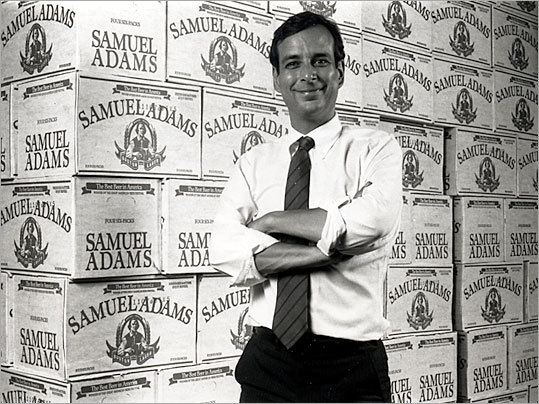
Sam Adams Creator Becomes Billionaire as Craft Beer Rises; Through a combination of in-person proselytizing and folksy TV ads, Koch created widespread awareness

Sam Adams Creator Becomes Billionaire as Craft Beer Rises

Jim-Koch.First-Cases__1271271325_1883

Armed with a family recipe and a flair for marketing, C. James “Jim” Koch popularized craft beer in the U.S. and turned Boston Beer Co. into the second-largest American-owned brewery. It also made him a billionaire, as frothy sales of his flagship Samuel Adams brand helped Boston Beer shares double in the past year and reach a record high Friday. Craft beer such as Sam Adams has been a bright spot in an otherwise stale U.S. beer market. Total American beer sales fell 2 percent in the first half of 2013, according to data compiled by Bloomberg, while the craft brew segment grew 15 percent. Boston Beer’s sales increased more than 17 percent during the period. Read more of this post

Scientists studying solar radiation management as a way to cool planet

Scientists studying solar radiation management as a way to cool planet

By Lenny Bernstein, Monday, September 9, 6:54 AM

The 1991 eruption of Mount Pinatubo, a volcano in the Philippines, blasted enough fine particles and sulfur dioxide gas into the atmosphere to envelop the Earth in a high-altitude cloud for the better part of two months. When scientists checked in 1992, they determined that the cloud had deflected enough sunlight to cool the planet by about 1 degree. Now, with the planet warming inexorably and the threat of long-term climate change looming, some experts are wondering whether the time may one day come when humans want to deliberately attempt such “solar radiation management.” The idea is being investigated by, among others, the National Academy of Sciences, which is conducting research funded by the CIA, NASA and the National Oceanic and Atmospheric Administration. The academy has invited experts to discuss the idea Tuesday. Read more of this post

Loving What You Do Is A Privilege. Grind on, my friend.

Loving What You Do Is A Privilege

DAN WALDSCHMIDTEDGY CONVERSATIONS SEP. 8, 2013, 8:50 PM 1,089 5

Sometimes you just have to gut it out. Stick it out. Fight it out. Stay out of the way of disaster.

It’s sexy to talk about “loving your job” and “pursuing your passion”But in-between your idea to get started and the finish line is pain and sweat and tears.

Not love. Not joy. Not fun. Just hard damn work. (And a lot of it)

You have to grit it out.

Grind it out. Work on days when you’re sick-and-tired and tired and sick.

You have to put in effort even though no one else believes in you. Even though you’re not sure you believe in what you’re doing.

Your boss might be an idiot. Your coworkers might be short sighted, passive aggressive punks. Your clients might abuse you. Your prospects might lie to you. The world could be crumbling down around you.

And yet, if you are going to be awesome, you just need to grind on.

You don’t love the pain. You don’t enjoy the sweat that gets in your eyes. You aren’t passionate about getting emotionally kicked-in-the-gut each day.

But, you do what needs to be done. And that’s what makes you awesome.

Loving what you do is a privilege. It is an honor. It is a reward for grinding out progress in the darkest of days.

Unless your passion in life is to “fool around”, you’ll never love everything about what you have to do in order to be successful.

But that’s okay, because if you grind it out for long enough you’ll love the place you’ve arrived at.

Grind on, my friend.

Cutting Through the Noise: More than two dozen of the country’s top value investors weigh in on key elements of the research and decision-making process

SATURDAY, SEPTEMBER 7, 2013

Cutting Through the Noise

By JOHN HEINS AND WHITNEY TILSON | MORE ARTICLES BY AUTHOR

More than two dozen of the country’s top value investors weigh in on key elements of the research and decision-making process.

Professional investors are an exceedingly competitive lot—unsurprising, given that their chosen field is one where the score delineating winners and losers can be tallied at every market close. But as results-driven as investors tend to be, the best money managers put equal emphasis on the process they follow for conducting research and making portfolio decisions. They have a clear understanding of the most important questions they want answered and how best to answer them. Of course, their methods of discovery can vary widely. Some investors put great emphasis on having macro views that inform their decisions, while others firmly reject that approach. Some consider time spent with management critical to their research process, while others consider it a waste of time. Some see industry specialization among analysts as a benefit; others see it as a detriment. But nearly all successful fundamental investors see their research and decision-making process as a primary source of competitive advantage, and should be able to explain in detail why that’s so. Read more of this post

Higher education is in an expensive muddle with too many useless degrees; The Great Stagnation of American Education

Higher education is in an expensive muddle with too many useless degrees

A long summer break has allowed me to reflect on some issues which, although extremely important, I somehow seem to miss in the hubbub of events and financial news.

I think there is too much higher education. Roughly 50pc of youngsters now go to university to get a degree. In my day, the proportion was more like 5pc. (The policemen are getting younger too.) Now doubtless 5pc was too low but I am pretty sure that 50pc is too high. Photo: Alamy

By Roger Bootle

7:37PM BST 08 Sep 2013

I have found myself reflecting on higher education. This isn’t just idle speculation. Education is an important part of modern economies and has a major bearing on how they perform. This is an area in which Britain both excels and does appallingly badly – in different parts, of course. I realise that what I have to say may tread on a few toes, because I am no professional expert in the field. Still, I do have some basis for comment. Many moons ago, I taught economics at various levels. I now consume large amounts of the output of the educational establishment, in the shape of applicants for jobs at my company. Above all, I am the parent of teenage children and, like so many other parents, am anxious about their prospects. Read more of this post