Origin of heavy metals like gold: Bling Began With Golden Bang in Space, Scientists Find

Bling Began With Golden Bang in Space, Scientists Find

Those who look to the heavens and wish for gold may have the right idea, just the wrong timing. A new scientific look at how elements heavier than iron are formed in the universe suggests that much of the gold on earth may have floated in space for billions of years after being spat out in the collision of two neutron stars. It arrived on earth millions of years ago in meteor showers, researchers said. The origin of heavy metals like gold has long been a scientific mystery, said Don Lamb, an astronomer at the University of Chicago. Now, astronomers at Harvard University have analyzed a gamma ray burst thought to be from a rare neutron star collision and found it helped seed the universe with heavy metals, including enough gold to create a pile that would have about 10 times more mass than the earth’s moon. Read more of this post

“Communication is not communication, it is changing consumers’ perception, changing consumers’ attitudes, and to lift up a brand’s image and make sure that the consumer understand the core value of the brand”

Understanding consumers crucial to success: ad man

NEERACHA MALISAK-LEMIRE,
CHANPOLYDET MER
THE NATION September 2, 2013 1:00 am

UTILISATION OF THE media and understanding consumers’ behaviour will be necessary components for competitiveness in the Asean Economic Community (AEC), an advertising expert says. To be successful in business, many aspects are required. However, in the final outcome, marketing and advertising play a dominant role. This rule applies everywhere in the world, including Thailand, said Dr Wilert Puriwat, chief consultant for Spa-Hakuhodo Advertising Co. Read more of this post

American work life: Can’t we do better? The workers who have emerged from the rough economy are more weary and skeptical than before the financial crisis

American work life: Can’t we do better?

August 30, 2013: 5:00 AM ET

The workers who have emerged from the rough economy are more weary and skeptical than before the financial crisis.

By Katherine Reynolds Lewis

FORTUNE — When looking over the past year’s data points and news developments on American workers, the question comes to mind: “Can’t we do better than this?” Across the income spectrum, there’s a sense of an unmet promise in the current economic recovery. The situation has dramatically improved from the depths of the Great Recession, when unemployment peaked at 10% in October 2009. It was at 7.4% in July. Economic growth has picked up to an annual rate of 2.5%, and job openings are starting to materialize. Read more of this post

An episode of Germany’s top crime show recently highlighted a secretive business: helping clients create and maintain lies. Now one such agency is struggling to keep up with the demand

08/30/2013 04:52 PM

Selling Lies

Alibi Agencies Help Create Double Lives

By Barbara Hardinghaus

An episode of Germany’s top crime show recently highlighted a secretive business: helping clients create and maintain lies. Now one such agency is struggling to keep up with the demand.

For his best clients, Patrick Ulmer says he goes out and arranges the lie personally. In one instance, he got into his car and drove south to Cologne, where he rang the doorbell at an apartment. The door opened to reveal his client. The client’s clothing was scattered around the apartment. His cologne and even the cloths he used to clean his glasses were there. The refrigerator contained his favorite foods, from chocolate pudding to melons. All the signs suggested that this was where the client lived. Read more of this post

Skewering dictators: Laugh them out of power; Political cartoons in the Arab world are getting punchier

Skewering dictators: Laugh them out of power; Political cartoons in the Arab world are getting punchier

Aug 31st 2013 | BEIRUT |From the print edition

20130831_IRP003_0 pic1_doaa_eladl

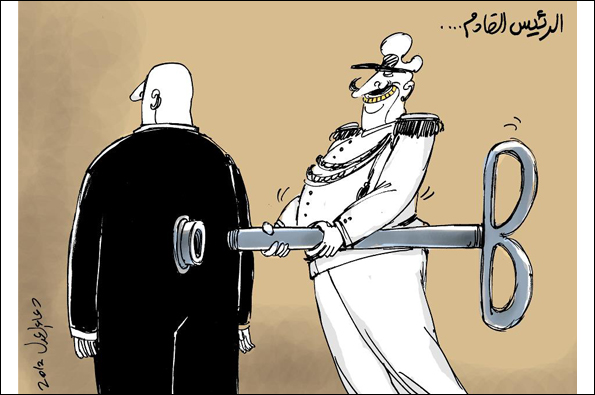
This sketch by Doaa Eladl, a prominent female Egyptian, is relevant again today since it refers to the military’s strong influence over the country’s politics. The caption (top right) says “The next president”.

IN MANY Middle Eastern states, cartoons are powerful weapons of subversion. In the past the men who drew them were often coy in the face of censorship: a mocking depiction of a king on a jewelled throne holding his nose as he surveyed his citizens might be acceptable, but not more obviously humiliating depictions of the monarch. Better to focus on foreign themes like America’s support for Israel. Yet Arab cartoonists have been getting more daring. In Egypt they spent a year sending up their embattled president, Muhammad Morsi, before he was ousted. Syrian opposition newspapers show President Bashar Assad bathed in blood. Read more of this post

The mental cost of money worries; Thrift requires mental effort, itself a scarce resource, and resesarchers set out to investigate whether their preoccupation with money leaves the poor with less mental bandwidth for other tasks

August 28, 2013 5:15 pm

The mental cost of money worries

By Mark Vandevelde

Poor people are disproportionately likely to make bad decisions, such as taking out loans they cannot repay, eating unhealthily and dropping out of class. It is sometimes said that such people are authors of their own misfortune. Send­hil Mullainathan, a Harvard economist, and Eldar Shafir, a Princeton psychologist, have a different view. They argue that lousy decisions are an effect of poverty as well as a cause. The mindset that produces them, they say, is triggered by scarcity of all kinds – warping the decisions of busy professionals who are short of time, lonely hearts who want for social contact and dieters who must ration their calories, as well as the poor. Read more of this post

Slowing the work treadmill; To aid creativity and achieve more, try doing less, HBS professor says

Slowing the work treadmill

To aid creativity and achieve more, try doing less, HBS professor says

August 27, 2013 | Editor’s Pick Popular

By Chuck Leddy, Harvard Correspondent

Teresa Amabile compares much of work life to running on a treadmill. People constantly try to keep up with the demands of meetings, email, interruptions, deadlines, and the never-ending need to be more productive and creative. Yet on many days they seem to make no progress at all, especially in creative endeavors. “Many companies are running much too lean right now in terms of the number of employees,” said Amabile, the Edsel Bryant Ford Professor of Business Administration and a director of research at Harvard Business School. So the treadmill speeds up, compelling time-strapped employees to do ever more with less. Read more of this post

Michael Lewis on Writing, Money, and the Necessary Self-Delusion of Creativity; Lewis remained disinterested in money as a motive – in fact, he recognized the trap of the hedonic treadmill and got out before it was too late

Michael Lewis on Writing, Money, and the Necessary Self-Delusion of Creativity

“When you’re trying to create a career as a writer, a little delusional thinking goes a long way.”

The question of why writers write holds especial mesmerism, both as a piece of psychological voyeurism and as a beacon of self-conscious hope that if we got a glimpse of the innermost drivers of greats, maybe, just maybe, we might be able to replicate the workings of genius in our own work. So why do great writers write? George Orwell itemized four universal motives. Joan Didion saw it as access to her own mind. For David Foster Wallace, it was about fun. Joy Williams found in it a gateway from the darkness to the light. For Charles Bukowski, it sprang from the soul like a rocket. Italo Calvino found in writing the comfort of belonging to a collective enterprise.

In Why We Write: 20 Acclaimed Authors on How and Why They Do What They Do (public library) – which also gave us invaluable wisdom from Susan Orlean, Mary Karr and Isabel Allende, and which was among the 10 best books on writing from my recent collaboration with the New York Public LibraryMichael Lewis, one of today’s finest nonfiction masters, shares his singular lore. Read more of this post

The Art of Thought: Graham Wallas on the Four Stages of Creativity, 1926; How to master the beautiful osmosis of conscious and unconscious, voluntary and involuntary, deliberate and serendipitous

The Art of Thought: Graham Wallas on the Four Stages of Creativity, 1926

How to master the beautiful osmosis of conscious and unconscious, voluntary and involuntary, deliberate and serendipitous.

In 1926, thirteen years before James Webb Young’s Technique for Producing Ideas and more than three decades before Arthur Koestler’s seminal “bisociation” theory of how creativity works, English social psychologist and London School of Economics co-founder Graham Wallas, sixty-eight at the time, penned The Art of Thought – an insightful theory outlining the four stages of the creative process, based both on his own empirical observations and on the accounts of famous inventors and polymaths. Though, sadly, the book is long out of print, with surviving copies sold for a fortune and available in a few public libraries, the gist of Wallas’s model has been preserved in a chapter of the 1976 treasure The Creativity Question (public library) – an invaluable selection of meditations on and approaches to creativity by some of history’s greatest minds, compiled by psychiatrist Albert Rothenberg and philosopher Carl R. Hausman, reminiscent of the 1942 gem An Anatomy of Inspiration. Wallas outlines four stages of the creative process – preparation, incubation, illumination, and verification – dancing in a delicate osmosis of conscious and unconscious work. These phases, which literary legend Michael Cowley would come to parallel in his 1958 model of the four stages of writing, go as follows: Read more of this post

Charlie Munger: Lessons From an Investing Giant

Aug 30, 2013

THE INTELLIGENT INVESTOR

Charlie Munger: Lessons From an Investing Giant

By Jason Zweig

BF-AF687_INVEST_G_20130830161038

One of the least appreciated virtues in investing is courage. Filings with the Securities and Exchange Commission in March and again this month show the extraordinary gumption of Charlie Munger, Warren Buffett’s business partner and vice chairman of Berkshire Hathaway. Mr. Munger, who will turn 90 years old next Jan. 1, is a model for individual investors who wonder how they can possibly beat the professionals at their own game. The pros have more information than you, and their trading machines are faster. But you still have an edge over them—so long as you play a different game by your own, more sensible rules. You can be patient; the pros can’t. You don’t have to be part of the herd; they do. Above all, you can be brave; they almost never are. What makes Mr. Munger a model for individual investors? In the first quarter of 2009, during the most desperate days of the financial crisis, Mr. Munger took 71% of the cash at Daily Journal, a small publishing company he chairs, and poured it into the bank stocks that so many other investors were fleeing. By March 31, 2009, his bet already had gained 60%. With other purchases he made later, Mr. Munger invested $49.7 million into stocks and bonds that today are worth $128.4 million, according to financial statements Daily Journal filed on Aug. 20. Read more of this post

From humble beginnings in a father’s living room, Ng Cheong Choon’s Rainbow Loom, a kit to make bracelets out of rubber bands, has skyrocketed in popularity; 600 retailers carry Rainbow Loom, and just over one million units have been sold at a retail price of $15-17

August 31, 2013

Rainbow Loom’s Success, From 2,000 Pounds of Rubber Bands

By CLAIRE MARTIN

01-PROTO-JP3-articleLarge

Cheong Choon Ng, above, designed Rainbow Loom, a suddenly popular crafts kit that turns rubber bands into bracelets. The key to selling the kits, it turned out, was educating buyers about how to use them.

LAST weekend in Fair Harbor, N.Y., on Fire Island, a few dozen children gathered on the boardwalk for the local tradition of selling lemonade, baked goods and painted seashells to passers-by at sunset. Among the children was Julia Colen, a 12-year-old vacationer from New Jersey, who in addition to hawking cupcakes and drinks was presiding over a stand overflowing with brightly colored bracelets. Julia and a friend had made the jewelry out of tiny rubber bands, using a crafts kit called Rainbow Loom. “We had a lot, at least 100,” Julia estimated of their inventory, which they priced at $1 to $2 apiece. Sales were impressive that night — “we made like $68,” she said. Read more of this post

What Amazing Leaders Do Differently

What Amazing Leaders Do Differently

Shane Snow

191509e 1e839d5 1396a75

In my work as a startup founder over the last few years, I’ve been fortunate enough to find myself surrounded by some incredible young leaders, be mentored by a few wise executives, and spend time with rockstar leadership thinkers like Jack Canfield and Sir Freeman Dyson. It’s been humbling, but awesome. As I’ve attempted to step into the role of leader myself (along with my two fantastic cofounders), and fumbled repeatedly along the way, I’ve come to appreciate great leaders who make what turns out to be a very hard thing look easy. Amazing leaders often do things counter-intuitively. Here are seven patterns I’ve observed in the best leaders in my life, despite the natural pressure for powerful people to do otherwise:

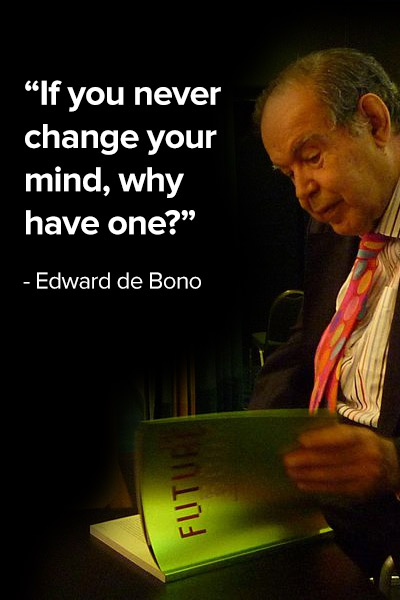
They change their minds.

One of the most courageous things a leader can do is admit when he or she is wrong, and admit it often. Tim Cook, CEO of Apple, said that the late Apple founder Steve Jobs was a notorious, but deliberate, flip-flopper. “I saw it daily,” Cook said in an interview with AllThingsD. “This is a gift, because things do change, and it takes courage to change. It takes courage to say, ‘I was wrong.’” Read more of this post

The Seven Deadly Sins of Investing; Financial crisis be damned—investors are still making the same mistakes the always have

August 30, 2013, 5:58 p.m. ET

The Seven Deadly Sins of Investing

Financial crisis be damned—investors are still making the same mistakes the always have.

KIRSTEN GRIND

It has been nearly five years since the depths of the U.S. financial crisis, and investors have learned a lot since then. Or have they? Despite the downturn that left many investors reeling from losses on everything from real estate to the stock market, when it comes to investor behavior—those hard-wired instincts that drive us all—little has changed, say psychologists and financial advisers. Investors still make the kinds of mistakes that have gotten them in trouble for decades. They are wooed by the hottest new trend, they want to follow the crowd—consequences be damned—and they just can’t seem to pay enough attention to important details, such as the steep annual fees charged by many mutual funds. Read more of this post

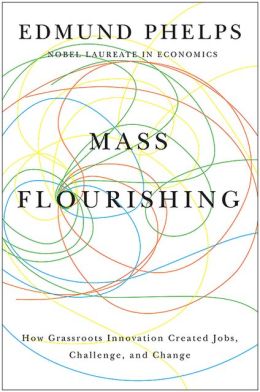
Mass Flourishing: How Grassroots Innovation Created Jobs, Challenge, and Change

Mass Flourishing: How Grassroots Innovation Created Jobs, Challenge, and Change Hardcover

by Edmund S. Phelps (Author)
9780691158983_p0_v1_s260x420

In this book, Nobel Prize-winning economist Edmund Phelps draws on a lifetime of thinking to make a sweeping new argument about what makes nations prosper–and why the sources of that prosperity are under threat today. Why did prosperity explode in some nations between the 1820s and 1960s, creating not just unprecedented material wealth but “flourishing”–meaningful work, self-expression, and personal growth for more people than ever before? Phelps makes the case that the wellspring of this flourishing was modern values such as the desire to create, explore, and meet challenges. These values fueled the grassroots dynamism that was necessary for widespread, indigenous innovation. Most innovation wasn’t driven by a few isolated visionaries like Henry Ford; rather, it was driven by millions of people empowered to think of, develop, and market innumerable new products and processes, and improvements to existing ones. Mass flourishing–a combination of material well-being and the “good life” in a broader sense–was created by this mass innovation.

Yet indigenous innovation and flourishing weakened decades ago. In America, evidence indicates that innovation and job satisfaction have decreased since the late 1960s, while postwar Europe has never recaptured its former dynamism. The reason, Phelps argues, is that the modern values underlying the modern economy are under threat by a resurgence of traditional, corporatist values that put the community and state over the individual. The ultimate fate of modern values is now the most pressing question for the West: will Western nations recommit themselves to modernity, grassroots dynamism, indigenous innovation, and widespread personal fulfillment, or will we go on with a narrowed innovation that limits flourishing to a few?

A book of immense practical and intellectual importance, Mass Flourishing is essential reading for anyone who cares about the sources of prosperity and the future of the West. Read more of this post

When Work Is Challenging, Economies Thrive

When Work Is Challenging, Economies Thrive

by Justin Fox  |  12:30 PM August 30, 2013

“In economics, consumption is the sole end of production,” the late, great Swedish economist, politician, and social commentator Gunnar Myrdal wrote in 1930. “This is a stock phrase of all the textbooks since Adam Smith: Man works in order to live.” Myrdal, though, didn’t think that was right: [T]here are many people who live in order to work, who consume in order to produce, if we like to use those terms. Most people who are reasonably well off derive more satisfaction in their capacity as producers than as consumers. Indeed, many would define the social ideal as a state in which as many people as possible can live in this way. Read more of this post

Astronomers say they may have solved a cosmic mystery: why gravitational monsters known as black holes are inept at swallowing their prey

August 29, 2013, 10:25 p.m. ET

Scientists Shed New Light on Black Holes

GAUTAM NAIK

NA-BX859_BLACKH_G_20130829173919

A composite image of the region around the black hole at the center ofthe Milky Way, with X-ray emissions shown in the inset.

Astronomers say they may have solved a cosmic mystery: why gravitational monsters known as black holes are inept at swallowing their prey. A black hole can form in space when a large star dies and its matter gets crunched into a much smaller volume. The resulting gravitational pull is so great that even light can’t escape. Given this power, one theory was that black holes indiscriminately consumed everything that passed within their reach. However, scientists recently observed that this scenario isn’t always the case—and they now believe they understand why. Read more of this post

Hulbert on Investing: Beyond the Superstar CEO; Companies with a strong corporate culture are a much better indicator of long-term success

August 30, 2013, 6:10 p.m. ET

Hulbert on Investing: Beyond the Superstar CEO

Companies with a strong corporate culture are a much better indicator of long-term success.

MARK HULBERT

The chief executive Microsoft MSFT -0.45% chooses to succeed Steve Ballmer will most likely fail to transform the company into the cutting-edge high-tech player so many on Wall Street say they want. That is because Microsoft is under enormous pressure to follow a CEO search process that is “irrational,” according to Rakesh Khurana, a professor of leadership development at Harvard Business School. Most companies that have been in Microsoft’s current position—a one-time industry leader whose future prospects appear to be fading—searched for a new CEO “with as much star power as possible,” he said in an interview, in order to restore shareholder confidence and boost its stock price. Read more of this post

Mini-brains raise big hopes and fears

August 30, 2013 6:43 pm

Mini-brains raise big hopes and fears

Synthetic neuroscience will soon face serious ethical issues

The science-fiction prospect of a living, thinking “brain in a dish” took a small but significant step toward reality this week. Researchers have grown a mini-brainfrom human stem cells in a Vienna biotechnology lab. This pea-sized “cerebral organoid” has the characteristics of a nine-week-old embryo’s brain, with active neurons. While it is far from demonstrating anything like conscious thought or sentience, and its creators are interested in understanding neurological disease rather than artificial intelligence, the mini-brain is an unexpected achievement that could soon be taken further – raising profound ethical issues. Read more of this post

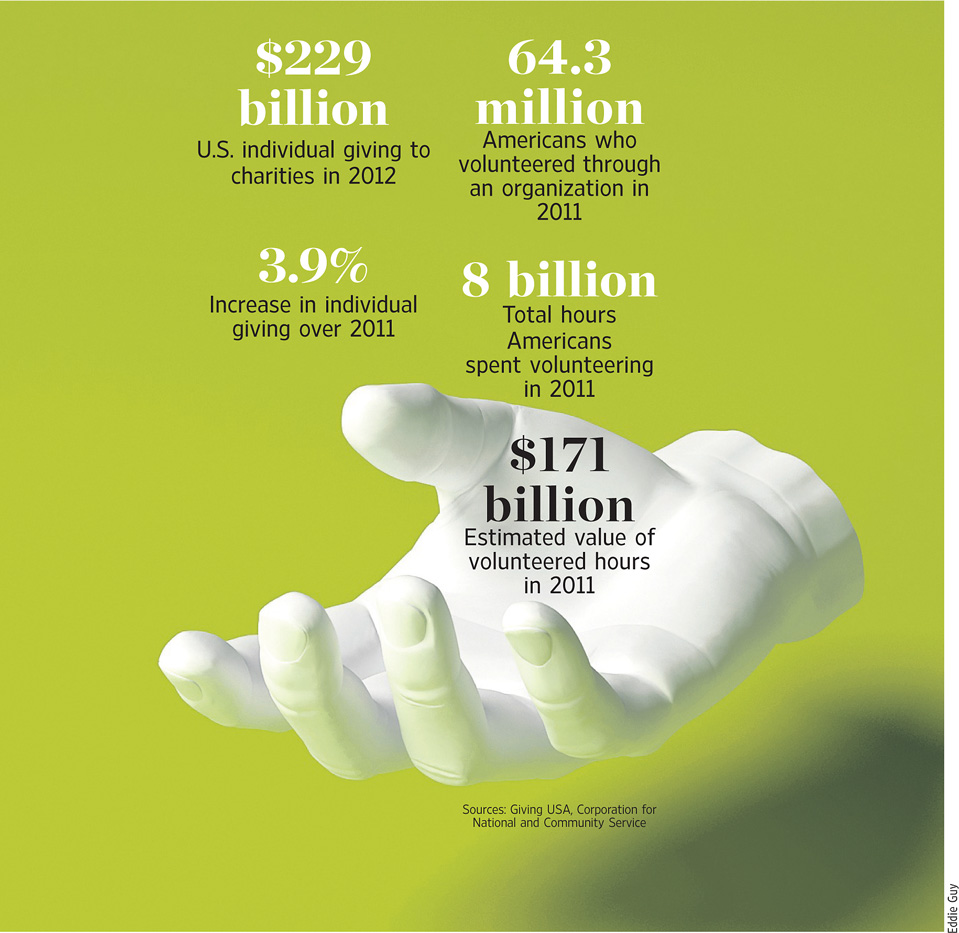
Contrary to conventional wisdom that humans are essentially selfish, scientists are finding that the brain is built for generosity

August 30, 2013, 6:34 p.m. ET

Hard-Wired for Giving

Contrary to conventional wisdom that humans are essentially selfish, scientists are finding that the brain is built for generosity

ELIZABETH SVOBODA

OB-YT030_2GIVIN_G_20130830235102

New research shows that not only do humans have a generosity gene, but there’s a biological basis for why giving feels good. Author Elizabeth Svoboda explains.

The Darwinian principle of “survival of the fittest” echoes what many people believe about life: To get ahead, you need to look out for No. 1. A cursory read of evolutionary doctrine suggests that the selfish individuals able to outcompete others for the best mates and the most resources are most likely to pass their genes on to the next generation. Then there is classical economic theory, which holds that given the choice, we will often opt for a personal benefit over a personal loss, even if that loss involves a benefit to someone else. The philosopher and economist John Stuart Mill championed the self-centered theory in the mid-1800s, describing man as a creature that “does that by which he may obtain the greatest amount of necessaries, conveniences and luxuries, with the smallest quantity of labor and physical self-denial.” Read more of this post

The Man Who Invented Modern Probability; Mathematics: Chance encounters in the life of Andrei Kolmogorov

The Man Who Invented Modern Probability

Mathematics: Chance encounters in the life of Andrei Kolmogorov.

BY SLAVA GEROVITCH ILLUSTRATION BY LINCOLN AGNEW

If two statisticians were to lose each other in an infinite forest, the first thing they would do is get drunk. That way, they would walk more or less randomly, which would give them the best chance of finding each other. However, the statisticians should stay sober if they want to pick mushrooms. Stumbling around drunk and without purpose would reduce the area of exploration, and make it more likely that the seekers would return to the same spot, where the mushrooms are already gone. Read more of this post

The psychology of scarcity: Days late, dollars short; Those with too little have a lot on their mind

Aug 31st 2013 |From the print edition

Scarcity-Why-having-too-litt

Scarcity: Why Having Too Little Means So Much. By Sendhil Mullainathan and Eldar Shafir. Times Books; 288 pages; $28. Allen Lane; £20. Buy from Amazon.com,Amazon.co.uk

THE authors of this book both study people for a living—often people who lack money. They may be vegetable sellers in Chennai, India, who borrow money at dawn and repay with exorbitant interest at dusk. Or they may be ill-paid office managers, like Shawn from Cleveland, Ohio, who lives from pay cheque to pay cheque, always finding that there is “more month than money”. Read more of this post

The chief of Cognizant says an organization’s culture is passed along via its rituals, heroes and legends.

August 31, 2013

Francisco D’Souza of Cognizant, on Finding Company Heroes

By ADAM BRYANT

This interview with Francisco D’Souza, chief executive of the information technology company Cognizant, was conducted and condensed by Adam Bryant.

Q. What were some early lessons for you?

A. I was very fortunate in my upbringing. My father was a diplomat, and so, until I was 18, we traveled to a new country every three years. After finishing high school in the Caribbean, I wound up in Hong Kong when I was 18. We realized that there were few universities that taught in English, and so I went to one in Macau that focused on working professionals. I went to school at night and on weekends. My days were free, and I got a job as a bank teller. It was a small bank, and they still used a punch-card system. I had taught myself as a teenager how to program. I went to the branch manager and told him he ought to consider new technology. He said: “Fine. Help me figure it out.” We bought a computer. We wrote the software, and I wound up supervising a couple of people when I was 19. Read more of this post

Best way to deal with copycats? Don’t

Best way to deal with copycats? Don’t

BY ERIN GRIFFITH 
ON AUGUST 30, 2013

Warby Parker has worked really hard to build up its brand. Like, really, really hard. A-B testing the difference between “collegiate” and “preppy” hard. It has paid off — Warby Parker has a strong brand, and naturally, others in the world want to capitalize on it. The company has dealt numerous copycats as it has grown from a tiny e-commerce operation out of Blumenthal’s apartment to a company with 16 physical retail stores locations and 150 employees. At one point, Bluefly launched an eyewear vertical which even stole images of Warby Parker’s products. “Copycats suck,” co-CEO Neil Blumental said at PandoMonthly New York last night. He couldn’t help from ranting about the most notorious copycatters, the Samwer brothers, and their cloning vehicle, Rocket Internet. Read more of this post

A new species of shark that “walks” along the seabed using its fins as tiny legs has been discovered in eastern Indonesia called the bamboo shark

‘Walking’ Shark Discovered in Indonesia

By Agence France-Presse on 6:10 pm August 30, 2013.
A new species of shark that “walks” along the seabed using its fins as tiny legs has been discovered in eastern Indonesia, an environmental group said Friday. The brown and white bamboo shark pushes itself along the ocean floor as it forages for small fish and crustaceans at night, said Conservation International, whose scientists were involved in its discovery. The shark, which grows to a maximum length of just 80 centimeters is harmless to humans, was discovered off Halmahera, one of the Maluku Islands that lie west of New Guinea. Bamboo sharks, also known as longtail carpet sharks, are relatively small compared to their larger cousins, with the largest adult reaching only about 120 centimeters in length. They have unusually long tails that are bigger than the rest of their bodies and are found in tropical waters around Indonesia, Australia and Papua New Guinea. Conservation International said the discovery of the shark, which was first disclosed in the International Journal of Ichthyology, “should help draw diver interest to this mega-diverse but largely undiscovered region.” Ketut Sarjana Putra, Indonesia country director for the group, said the Hemiscyllium halmahera shark could “serve as an excellent ambassador to call public attention to the fact that most sharks are harmless to humans and are worthy of our conservation attention”. Conservation International, whose scientists discovered the shark along with colleagues from the Western Australian Museum, added it came at a time when Indonesia was increasing its efforts to protect shark and ray species.

Man Isn’t Alone; Apes Also Suffer Midlife Crises

August 30, 2013, 7:38 p.m. ET

Man Isn’t Alone; Apes Also Suffer Midlife Crises

ROBERT M. SAPOLSKY

The petroleum industry is still absorbing the recent, surprising resignation of Peter Voser, CEO of Royal Dutch Shell. Mr. Voser had been riding high with many successes during his stewardship of the petroleum giant. Yet, at the peak of his game at age 54, he resigned, wanting a “lifestyle change,” and to spend more time with his family. If this constitutes a midlife crisis for Mr. Voser, he appears to have dealt with it with a steady hand. But there is no shortage of people, amid their own midlife crises, going off the rails in ways both small—sudden obsessive exercising, immersion in bungee jumping, the imprudent hair transplant—and large—affairs, crackpot investments, substance abuse, or starting a “cultural revolution” in the company. Read more of this post

How Snacking Became Respectable; Before they became standard fare in American life, snacks drew suspicion and even scorn

August 30, 2013, 7:54 p.m. ET

How Snacking Became Respectable

Before they became standard fare in American life, snacks drew suspicion and even scorn

ABIGAIL CARROLL

As parents take their kids back-to-school shopping this year, it isn’t just new jeans and notebooks that will be checked off the list, but also booty for the pantry: snacks to help bridge the gap between the end of the school day and dinner. When it comes to American eating, snacking is ubiquitous—at home, at work, everywhere. But snacking wasn’t always such a regular or accepted part of the American eating routine. Snack foods once drew suspicion and even scorn—that is, before they were redeemed. Read more of this post

Only A Few People In History Have Dared To Use Sarin Gas

Only A Few People In History Have Dared To Use Sarin Gas

BRIAN JONES AUG. 30, 2013, 10:42 AM 8,534 11

The attack reportedly occurred Aug. 21. Last week, pictures and amateur videos trickled into the Western media depicting residents of a Syrian suburb twitching and struggling to breathe. Their pupils were constricted. They were confused. And then there were the dead, who showed no external injuries. Noah Shachtman with Foreign Policy wrote that upon seeing the images, weapons experts and U.S. intelligence officials had little doubt what weapon wreaked that havoc. They thought it was Sarin. Developed in Nazi Germany in 1938 by a team of German scientists seeking a tougher pesticide, Sarin works as an “off-switch” for the body’s glands and muscles. Most victims die because they are no longer able to breathe, according to the Centers for Disease Control and Prevention, which calls Sarin “the most volatile of the nerve agents.” It kills within seconds. Even the Nazis, however, chose not to use deadly sarin gas or other chemical weapons during WWII.

Read more of this post

The history of chemical weapons: The shadow of Ypres; How a whole class of weaponry came to be seen as indecent

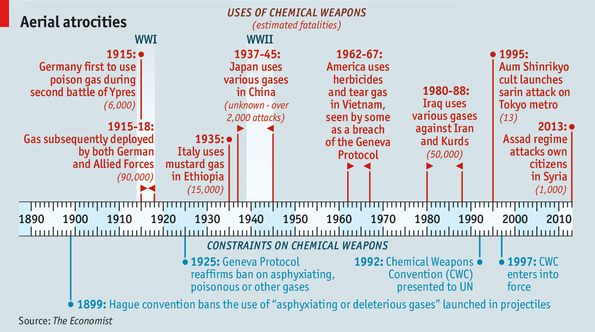
The history of chemical weapons: The shadow of Ypres; How a whole class of weaponry came to be seen as indecent

Aug 31st 2013 |From the print edition

20130831_FBC947

“CLEARLY,” wrote an exasperated Winston Churchill in the summer of 1944, “I cannot make head against the parsons and the warriors at the same time.” Through most of that July the British prime minister had been asking his military chiefs to reconsider the question of using poison gas against Germany, telling them he wanted “cold-blooded calculation” rather than moralistic arguments about the unique iniquity of chemical weapons. The joint chiefs unanimously came down against the idea. Churchill grumpily acquiesced. Read more of this post

150 tonnes of pork ribs made from diseased pigs sold in Shenzhen

150 tonnes of pork ribs made from diseased pigs sold in Shenzhen

Staff Reporter

2013-09-01

C316X0450H_2013資料照片_N22F_2013資料照片_N71_copy1

An inspector checking pork on a truck in Shanghai. (File photo/Xinhua)

Although the Chinese government has implemented measures to prevent pork made from diseased pigs from entering the market, police in southern China’s Guangdong province busted a factory that sold over 150 tonnes of pork ribs made from diseased pigs to stores in Shenzhen city, according to our Chinese-language sister newspaper Want Daily. Read more of this post

Innovation: Kite Mosquito Patch renders a person invisible to mosquitoes for up to 48 hours

Innovation: Kite Mosquito Patch

By Olga Kharif August 29, 2013

Innovators: Michelle Brown, Anandasankar Ray
Ages: 41, 39
Brown is chief scientist and Ray co-founder of Riverside (Calif.)-based Olfactor Laboratories.
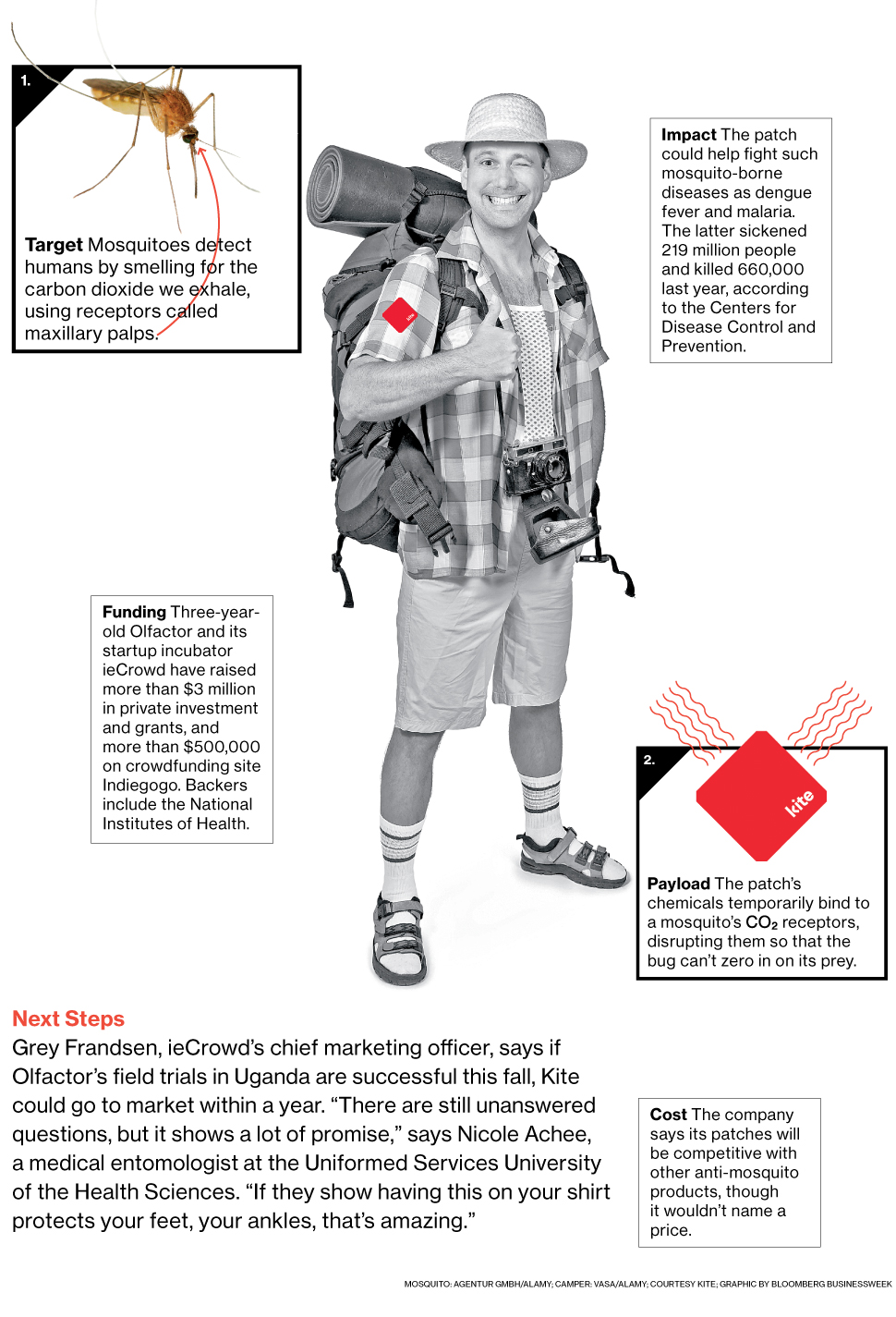
Form and function: Kite Mosquito Patch, a nontoxic 1.5-inch-square sticker, renders a person invisible to mosquitoes for up to 48 hours.

tech_innovator36_970