The right kind of resilience: The Aberdeen Asset Management chief has an outsider’s determination

August 11, 2013 1:58 pm

The right kind of resilience

By David Oakley

Dressing down: Martin Gilbert was once accused by UK MPs of acting like a ‘sophisticated snake oil salesman’

Martin Gilbert nearly quit just over 10 years ago. Surrounded by government ministers, civil servants and journalists, he was publicly dressed down by one of Britain’s most senior politicians, accused of acting like a “sophisticated snake oil salesman” at a parliamentary hearing into one of the City of London’s biggest financial scandals. He remembers that summer day in 2002 as if it was yesterday, he says, a grim expression spreading across his face. “It was undoubtedly the most difficult moment for me,” he says. “There was nothing else ever that has rivalled it in any degree, and I hope nothing does in the future.” His career as head and co-founder of Aberdeen Asset Management looked like it was about to end in disgrace amid the ruins of the split capital investment trust (or split caps) scandal, when a number of the company’s investment trusts folded and wiped millions of pounds off its share price. Read more of this post

The US president is weaker than you think; Joseph Nye’s ranking of American leaders finds that a low-key approach is most successful

August 11, 2013 6:34 pm

The US president is weaker than you think

Review by Edward Luce

Joseph Nye’s ranking of American leaders finds that a low-key approach is most successful

Presidential Leadership and the Creation of the American Era, by Joseph Nye, Princeton RRP£19.95/$27.95

Having failed to convince the US of the need to prepare for war with Adolf Hitler’s Germany, Franklin Roosevelt quipped: “It is a terrible thing to look over your shoulder when you are trying to lead – and to find no one there.” The US presidency sounds far more powerful than it usually is. Scholars, journalists and presidents routinely exaggerate its potency. In spite of his many wiles, FDR failed to cure America of its isolationism. It was Imperial Japan’s attack on Pearl Harbor in December 1941 that eventually snapped it out of its reverie. Read more of this post

Averting a mid-life crisis

Averting a mid-life crisis

In two years’ time, Singapore will be 50 years old. We have progressed far as a country but we seem to be trapped in a mid-life crisis. I say this because, according to some surveys, Singaporeans are amongst the world’s wealthiest but are also the most pessimistic.

BY GOH CHOK TONG –

5 HOURS 36 MIN AGO

In two years’ time, Singapore will be 50 years old. We have progressed far as a country but we seem to be trapped in a mid-life crisis. I say this because, according to some surveys, Singaporeans are amongst the world’s wealthiest but are also the most pessimistic. We are now at an inflexion point of our development as a society. I dare say that Prime Minister Lee Hsien Loong and his Cabinet are having a tougher time governing Singapore than Mr Lee Kuan Yew and I had. And it is not going to get easier. Read more of this post

Norway PM turns secret cabbie in election drive

Norway PM turns secret cabbie in election drive

jens-w-620x349

3:30pm EDT

OSLO (Reuters) – Norway’s prime minister worked secretly as a taxi driver in central Oslo for a day in June, leaving his passengers wondering whether their elected leader had quit the day job. Wearing a taxi driver’s uniform and sunglasses, Jens Stoltenberg drove passengers around the streets of the Norwegian capital for several hours, confirming his identity only after his passengers realized who he was. The stunt, dreamed up by an ad agency as part of Stoltenberg’s campaign for re-election, was filmed on hidden cameras. A video of the event was published on Sunday by daily newspaper VG and on the PM’s Facebook page. Stoltenberg told the newspaper he had wanted to hear people’s honest views on politics. “If there is one place where people say what they really mean about most things, it is in a taxi. Right from the gut,” he told VG. Read more of this post

Singapore’s cabby donates liver to stranger after reading Facebook appeal

Cabby donates liver to stranger after reading Facebook appeal

rbliver

Sunday, August 11, 2013 – 09:10

Radha Basu, The Straits Times

Mr Tong Ming Ming, 34, was on a tea break during reservist training in early March when an SMS and a Facebook post by his secondary school friend Regina Lim caught his eye.

Transcript from RazorTV:

Liver donor, Mr Tong Ming Ming, 34:

I’m a taxi driver. I used to be a police officer for 10 years. I decided to drive a taxi because I needed the free time. I need to juggle between earning a decent income and also to do my volunteer work. So what I do, when I have the time, is to pick and send amputees to Tan Tock Seng Hospital. I would send and pick retirees to and from church, and I also organise meet-ups, as I mentor a group of boys who are ex-probationers. When I cover my (taxi) rental and my petrol, I would go and do my volunteer work. Read more of this post

Of changing seasons and challenges in life; The seasons of spring, summer, autumn and winter also reflect the seasons of life

Updated: Sunday August 11, 2013 MYT 7:18:12 AM

Of changing seasons and challenges in life

BY SOO EWE JIN

The seasons of spring, summer, autumn and winter also reflect the seasons of life.

I FIND it quite amusing when department stores here have spring or winter sales. Having just come back from Sydney where winter sales are common as the season comes to an end, I do wonder how we can relate to such seasonal sales when it is hot and wet the whole year through. But weather aside, all of us do go through the seasons of life. And I have been thinking much about this lately. I am reminded that I have passed the halftime stage of life. And as I head into the second half, it is important that I rejuvenate body, mind and soul to take on the challenges that will come my way. The seasons of spring, summer, autumn and winter also reflect the seasons of life. Read more of this post

How the Great Depression Spawned Literary Masterworks

How the Great Depression Spawned Literary Masterworks

The Great Depression was one of the most desperate periods in U.S. history, and one of the most important in American literature.

When the stock market crashed in October 1929 and the hectic prosperity of the 1920s gave way to mass unemployment, the crisis energized American writers. After a decade in which the literary experiments of the Modernists — Ernest Hemingway, F. Scott Fitzgerald, T.S. Eliot — dominated the scene, a new wave of writers began to look to politics and economics for inspiration. At a time when the Communist Party was presenting itself as the strongest force for progress, these writers saw capitalist America as a dying society in need of revolutionary changes. Never before or since have so many of America’s best writers focused on the lives of the poor and the working class or written with such a furious sense of political engagement. In 2008, the U.S. suffered the most severe economic crisis since 1929. This was followed by a deep recession characterized by high unemployment, financial instability and government deadlock — an echo of the problems that plagued the country during the Depression, though in much less virulent form. Read more of this post

Bursting the Neuro-Utopian Bubble; Pyschosocial problems cannot simply be solved in the neuroscientist’s lab

AUGUST 11, 2013, 9:31 PM

Bursting the Neuro-Utopian Bubble

By BENJAMIN Y. FONG

During my graduate studies in the Department of Religion at Columbia, I spent countless hours in the Burke Library of Union Theological Seminary, where I had a spectacular, cater-corner view of the construction and unveiling of the Northwest Corner Building, Columbia’s new interdisciplinary science building. Although the 14-story steel and aluminum tower was designed to complement the brick and limestone gothic tower of Union, its dominating presence on the corner of Broadway and 120th serves as a heavy-handed reminder of where we are heading. Walking from Union toward Columbia’s main campus through its doors, I often felt, passing through the overwhelmingly aseptic marble lobby, as if the building was meant to cleanse northwesterly intruders who have not been intimidated by the facade. Read more of this post

Inventor Greg Lambrecht uses the Coravin wine preservation device to serve rare, expensive Italian wines by the glass

Wine Loving Inventor Solves Red or White By Glass Battle

ii1nvaPurvdo iORcxnYQCqKM imRydKIhE7y4

Inventor Greg Lambrecht, founder of medical device company Intrinsic Therapeutics, Inc., after showing off his Coravin wine preservation system at Del Posto. The restaurant’s wine director, Jeff Porter, has been using the device to serve rare, expensive Italian wines by the glass since last November. A cartridge of Argon gas, used to keep wine fresh within the Coravin wine preservation device. A hollow needle is pushed into the cork, then a button releases argon gas into the wine. Coravin of white Burgundy 2010 Alex Gambal Meursault Clos du Cromin. The Coravin is an ingenious wine preservation system that allows you to access wine without pulling the cork and keeps the wine inside the bottle fresh for years. Photographer: Elin McCoy/Bloomberg

Hankering for a taste of 1979 Il Colle Brunello di Montalcino with your dry-aged steak? At New York’s Del Posto restaurant, a three-ounce pour is $169, six ounces, $338. The by-the-glass list includes hard-to-obtain 2000 Giacomo Conterno Barolo Monfortino for $100 and $200, and last month, rare Italian stunner 2002 Masseto. All this is thanks to a new wine preservation device, the Coravin 1000. “It’s a wine populist’s dream, giving more people access to the world’s great wines,” says Del Posto wine director Jeff Porter. He’s been offering them “alla Coravin” since last November. The ingenious $299 device went on public sale two weeks ago. Though most new wine gadgets bring out my inner skeptic, this one will revolutionize how we drink wine at restaurants — and at home. One of my pet peeves has always been the boring selection of wines at most restaurants offered by the glass. Usually it includes only current vintages, yet they frequently taste dull, cooked and lifeless, signs they’re oxidized from being open too long. Once you pull a cork, contact with air causes the wine to start deteriorating. The Coravin prevents that by allowing you to access the wine without actually pulling the cork. Really. Read more of this post

Freedom of Expression: Indians are Becoming Increasingly Intolerant; Instead of nurturing the spirit of debate, we have become aggressive, bigoted and abusive

Freedom of Expression: Indians are Becoming Increasingly Intolerant

by Salil Tripathi | Aug 12, 2013

Instead of nurturing the spirit of debate, we have become aggressive, bigoted and abusive

In 1999, the BJP-led National Democratic Alliance honoured the scholar, economist, and philosopher Amartya Sen with India’s highest honour, the Bharat Ratna, a year after his Nobel Prize. One of Sen’s more interesting books is The Argumentative Indian (2006), celebrating our propensity to challenge views we disagree with. Indians argue with one another, he says, and from those dynamic encounters new ideas synthesising different viewpoints emerge, making unity in diversity possible in this complicated nation.
In July this year, in response to a question from a journalist, Sen said he would not support Narendra Modi, Gujarat’s chief minister, to be India’s Prime Minister; he believes Modi fails the secularism test, which he sees as a necessary precondition to govern a country as diverse as India. Read more of this post

Orchid entrepreneur Koh Keng Hoe makes failure a blooming success, mastering the full cycle of orchid growing through trial and error.

He makes failure a blooming success

Sunday, Aug 11, 2013

Judith Tan, The New Paper

20130809_Kohkenghoe_tnp

SINGAPORE – Life had thrown Mr Koh Keng Hoe lemons and instead of wallowing, he grew orchids. He has gone from an unemployed man in his 20s with a bleak future to one of the top growers worldwide. The Kovan boy, whose nursery did not even have a proper road, is now living in a bungalow in Dunearn Road. But back in 1954, life was tough as he had just been sacked from his job in The Straits Times after taking part in a Singapore Printing Employees’ Union strike. “I only had that one skill, nothing else,” he said of his $160-a-month job as a linotype operator. So he sold his BSA motorcycle for $100 to buy a Vanda merrillii, a red jungle orchid with a distinctive scent, from a Simon Road grower. “I had no money. I had to ride a bicycle there,” he said. “I knew nothing (then) about growing orchids. I was told that they grow well on coconut husks. People throw out the husks, making that a zero investment for me,” he added. Mr Koh applied whatever little knowledge of vegetable farming he had and his plants blossomed. That was the start of his six-decade love affair with the flower. He even mastered the full cycle of orchid growing – from cultivation and pollination, to the preparation and perfecting of nurturing seedlings – through trial and error. Read more of this post

“At its best, the sensation of writing is that of any unmerited grace. It is handed to you, but only if you look for it. You search, you break your heart, your back, your brain, and then — and only then — it is handed to you.”

Annie Dillard on Writing

“At its best, the sensation of writing is that of any unmerited grace. It is handed to you, but only if you look for it. You search, you break your heart, your back, your brain, and then — and only then — it is handed to you.”

What does it really mean to write? Why do writers labor at it, and why are readers so mesmerized by it?

From Annie Dillard’s timelessly wonderful The Writing Life (public library) – which also gave us her vital reminder that presence rather than productivity is the key to living richly and her meditation on what a stunt pilot teaches us about creativity and the meaning of life – comes her infinitely resonant insight on the magic and materiality of writing, a fine addition to famous writers’ collected wisdom on the craft. Read more of this post

Cronies and capitols: Businesspeople have become too influential in government

Cronies and capitols: Businesspeople have become too influential in government

Aug 10th 2013 |From the print edition

20130810_WBD000_1

IN 1994 many Italians voted for Silvio Berlusconi in the hope that he could use his skills as a businessman to revive a sclerotic economy. He had built a property-and-media empire out of thin air. He had reinvigorated one of the country’s great football clubs, AC Milan. Surely he would do a better job of running the country than the old guard of corrupt politicians and introverted bureaucrats? Well, si monumentum requiris, circumspice. Mr Berlusconi was prime minister of Italy for eight of the ten years between 2001 and 2011. During that time Italy’s GDP per head fell by 4%, its debt-to-GDP ratio rose from 109% to 120%, taxes rose from 41.2% of GDP to 43.4%, and its productivity stagnated. Rather than using his business skills to revive the Italian economy, Mr Berlusconi used his political skills to protect his business interests. The great seducer is an extreme example. And with luck Italy’s long Berlusconi-themed nightmare is drawing to a close. But the problem at the heart of Mr Berlusconi’s Italy—the commingling of power and business—is a growing worry around the world. In “Can Capitalism Survive?” (1947) Joseph Schumpeter argued that the answer to that question was probably “no”. The great battle of the 20th century was between the state and business. And the state was likely to win because the thinkers and bureaucrats at its service were better at occupying the moral and intellectual high ground. “A genius in the business office may be, and often is, utterly unable outside of it to say boo to a goose—both in the drawing room and on the platform,” he said. Times have changed. Most politicians now believe that businesses are better than bureaucracies at generating growth. Prime ministers and finance ministers flock to Davos not to lay down the law to businesspeople but to court their favours. Businesspeople have learned not just to say boo to a goose but to put a ring through its beak. Today the problem is often the very opposite of the one that Schumpeter imagined: not the marginalisation of business but its excessive influence.

Read more of this post

Why Founders Fail: The Product CEO Paradox

Why Founders Fail: The Product CEO Paradox

BEN HOROWITZ

posted 12 hours ago

Editor’s note: Ben Horowitz is co-founder and partner ofAndreessen Horowitz. He was co-founder and CEO of Opsware (formerly Loudcloud), which was acquired by HP, and ran several product divisions at Netscape. He serves on the board of companies such as Capriza, Foursquare, Jawbone, Lytro, Magnet, NationBuilder, Okta, Rap Genius, SnapLogic, and Tidemark. Follow him on his blog and on Twitter@bhorowitz.

If I knew what I knew in the past
I would have been blacked out on your a** —Kanye West, Black Skinhead

Because I am a prominent advocate for founders running their own companies, whenever a founder fails to scale or gets replaced by a professional CEO, people send me lots of emails. What happened, Ben? I thought founders were supposed to be better? Are you going to update your “Why We Prefer Founding CEOs” post? In response to all of these emails: No, I am not going to rewrite that post, but I will write this post. There are three main reasons why founders fail to run the companies they created:

The founder doesn’t really want to be CEO. Not every inventor wants to run a company and if you don’t really want to be CEO, your chances for success will be exceptionally low. The CEO skill set is incredibly difficult to master, so without a strong desire to do so the founder will fail. If you are a founder who doesn’t want to be CEO, that’s fine, but you should figure that out early and save yourself and everyone else a lot of pain.

The board panics. Sometimes the founder does want to be CEO, but the board sees her making mistakes, panics and replaces her prematurely. This is tragic, but common.

The Product CEO Paradox. Many founders run smack into the Product CEO Paradox, which I explain below. Read more of this post

Christians, Muslims and Jesus: How two global monotheisms view the same prophet

Christians, Muslims and Jesus: How two global monotheisms view the same prophet

Aug 10th 2013 |From the print edition

Christians, Muslims and Jesus. By Mona Siddiqui. Yale University Press; 285 pages; $32.50 and £20. Buy from Amazon.comAmazon.co.uk

RELIGION is a tricky subject for scholarship. Even the most professional academic is bound to have personal feelings about the faith under scrutiny. Some see this as cause for concern. Indeed Reza Aslan, one of America’s best-known writers on religion, recently came under fire for his new book about Jesus (“Zealot”, reviewed in the July 27th issue of The Economist). Because he is a Muslim who once embraced Christianity and then dropped it, Lauren Green of Fox News accused him of writing with a “clear bias”. No, Mr Aslan replied, he was writing as a scholar. His response was articulate and dignified, and the interview has helped sell quite a few books, but it will hardly sway those who believe Mr Aslan is writing with a Muslim agenda. Read more of this post

The perils of sitting down: Real science lies behind the fad for standing up at work

The perils of sitting down: Real science lies behind the fad for standing up at work

Aug 10th 2013 |From the print edition

20130810_STP001_0

WINSTON CHURCHILL knew it. Ernest Hemingway knew it. Leonardo da Vinci knew it. Every trendy office from Silicon Valley to Scandinavia now knows it too: there is virtue in working standing up. And not merely standing. The trendiest offices of all have treadmill desks, which encourage people to walk while working. It sounds like a fad. But it does have a basis in science. Sloth is rampant in the rich world. A typical car-driving, television-watching cubicle slave would have to walk an extra 19km a day to match the physical-activity levels of the few remaining people who still live as hunter-gatherers. Though all organisms tend to conserve energy when possible, evidence is building up that doing it to the extent most Westerners do is bad for you—so bad that it can kill you. Read more of this post

Commercialising neuroscience: Cognitive training may be a moneyspinner despite scientists’ doubts

Commercialising neuroscience: Cognitive training may be a moneyspinner despite scientists’ doubts

Aug 10th 2013 | NEW YORK |From the print edition

“OUR primary goal is for our users to see us as a gym, where they can work out and keep mentally fit,” says Michael Scanlon, the co-founder and chief scientist of Lumos Labs. For $14.95 a month, subscribers to the firm’s Lumosity website get to play a selection of online games designed to improve their cognitive performance. There are around 40 exercises available, including “speed match”, in which players click if an image matches a previous one; “memory matrix”, which requires remembering which squares on a matrix were shaded; and “raindrops”, which involves solving arithmetic problems before the raindrops containing them hit the ground. The puzzles are varied, according to how well users perform, to ensure they are given a suitably challenging brain-training session each day.

Read more of this post

Crazy Rich: Power, Scandal and Tragedy Inside the Johnson & Johnson Dynasty

The Johnson & Johnson dynasty: A headache-inducing biography of the Johnson family

Aug 10th 2013 |From the print edition
16044969

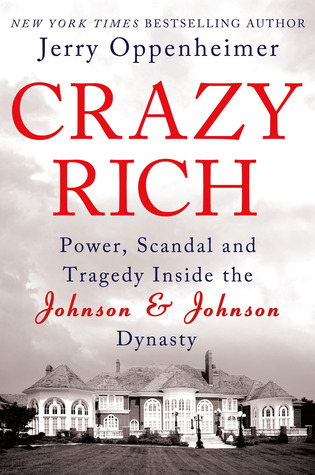
Crazy Rich: Power, Scandal and Tragedy Inside the Johnson & Johnson Dynasty. By Jerry Oppenheimer. St Martin’s Press; 496 pages; $27.99 and £18.99.Buy from Amazon.comAmazon.co.uk

“CRAZY RICH” ought to be good. It has a bestselling author, Jerry Oppenheimer. It has a fascinating subject, the family that founded Johnson & Johnson, the company that invented Band-Aids and now peddles everything from painkillers to antipsychotics. The Johnson scions include drug addicts, a sculptor and the owner of the New York Jets football team. Yet somehow this book is unreadable. The problem is hardly the raw material. Robert Wood Johnson, the son of a poor Pennsylvania farmer, founded Johnson & Johnson with his brothers in 1886. After his death in 1910, his brother James led the company’s expansion during the first world war, creating the plasters and gauze used by soldiers at the front. Robert Wood Johnson’s son, named after his father, may have been the company’s most forceful leader. He steered it through the Depression and oversaw its initial public offering in 1944. He served in the army for a few months during the second world war and called himself “General Johnson” for the rest of his life. His son Bobby (Robert Wood Johnson III), was the firm’s president for just four years before the General helped oust him in 1965. They were the last Johnsons to be in the family business. The book’s many other characters include Evangeline, the General’s sister. She had three husbands and, if Mr Oppenheimer is to be believed, a lesbian lover. There is the strange case of J. Seward Johnson junior, whose wife shot an investigator hired to track her. There is Keith Johnson, who parked his BMW on a beach, dropped acid and then watched the tide carry away his car. The most delectable titbits involve Robert Wood “Woody” Johnson IV, who owns the Jets and was a leading supporter of Mitt Romney, the Republican presidential candidate last year. His public persona has been rather staid. Mr Oppenheimer paints him as a dolt. He earned poor marks at the University of Arizona, hardly a bastion of academic rigour. When drunk once, he fell off a bridge and severely injured his back. As a young man in Florida, he courted a business partner by supposedly saying, “My dad told me that I have to learn business from somebody who made their own money without inheriting it, and preferably he should be a Jew.” All this should make for juicy reading. But “Crazy Rich” is all guilt and no pleasure. The sources for this “unauthorised biography” are patchy. Mr Oppenheimer’s long sentences are packed with clichés. The narration ranges from sloppy to preposterous. Must he compare the Johnsons to a Greek tragedy twice in two pages, or to the Kennedys even more frequently? When Woody Johnson’s daughter criticised a family member in a tabloid, Mr Oppenheimer opines that she “was now considered a tabloid terrorist, and her act of vengeance their own personal 9/11”. The Johnsons have had many sad stories, including drug overdoses and fatal accidents, not to mention ugly fights over inheritance. One might think this would inspire sympathy, or at least greater interest in its subjects. Yet “Crazy Rich” arouses few feelings other than the desire for it to end. Best then not to start it in the first place.

Crazy Rich: Power, Scandal, and Tragedy Inside the Johnson & Johnson Dynasty Hardcover

by Jerry Oppenheimer  (Author)

From the founders of the international health-care behemoth Johnson & Johnson in the late 1800s to the contemporary Johnsons of today, such as billionaire New York Jets owner Robert Wood “Woody” Johnson IV, all is revealed in this scrupulously researched, unauthorized biography by New York Times bestselling author Jerry Oppenheimer. Often compared to the Kennedy clan because of the tragedies and scandals that had befallen both wealthy and powerful families, Crazy Rich, based on scores of exclusive, candid, on-the-record interviews, reveals how the  dynasty’s vast fortune was both intoxicating and toxic through the generations of a family that gave the world Band-Aids and Baby Oil. At the same time, they’ve been termed perhaps the most dysfunctional family in the fortune 500. Oppenheimer is the author of biographies of the Kennedys, the Clintons, the Hiltons and Martha Stewart, among other American icons. Read more of this post


140-Year-Old Business Advice That Still Holds Up Today; Some work has inherent value. If you are involved with a business that produces something for the benefit of the community or society at large, you are adding something positive to the world. In return, your compensation may not be spectacular, but if you can make a living and save for the future, you’ll likely feel better about your life than if you’re involved in an occupation that takes something away from the world.

140-Year-Old Business Advice That Still Holds Up Today

LUKE LANDESCONSUMERISM COMMENTARY AUG. 9, 2013, 4:55 PM 2,098 2

There may be only about six stories in personal finance, but those stories seem to endure the passing of time. Good storytellers can breathe new life into the same old financial advice, and great communicators can introduce world-weary concepts to those who might need to hear them for the first time. While looking for information about a town in upstate New York, I came across a gazetteer written in 1871 for Saratoga County. It’s a booklet, digitized for aiding online research, containing a business directory of several towns within that county. Like a telephone directory, the book contains names and addresses of residents, although unlike a telephone directory, there are no phone numbers. The book is more than just a directory, though. The gazetteer offers historical accounts of the towns covered as well as general information a household in 1871 might need, such as a guide to the decimal system of measures, “recipes” for home remedies for common ailments, and of course, advertisements. (See one such advertisement, for pills “to prevent female irregularities,” reproduced here.) And particularly interesting was a section titled, “How to Succeed in Business.” Several pages in the book are dedicated to help readers make good decisions with their labors, their interpersonal relationships, and the management of their money. There’s nothing particularly special about this. Financial self-help guides and business advice have been published for longer than this country has been in existence, but I enjoyed this discovery and thought it would be worth sharing. Here are some excerpts, first on being an upright citizen in business. Read more of this post

The Gorilla Lurking Where We Can’t See It; A study of radiologists shows that when we pay careful attention to one thing we become literally blind to others—even startling ones like gorillas

August 9, 2013, 8:34 p.m. ET

The Gorilla Lurking Where We Can’t See It

ALISON GOPNIK

Imagine that you are a radiologist searching through slides of lung tissue for abnormalities. On one slide, right next to a suspicious nodule, there is the image of a large, threatening gorilla. What would you do? Write to the American Medical Association? Check yourself into the schizophrenia clinic next door? Track down the practical joker among the lab technicians? In fact, you probably wouldn’t do anything. That is because, although you were staring right at the gorilla, you probably wouldn’t have seen it. That startling fact shows just how little we understand about consciousness. Read more of this post

Are Startups Too Busy to be Creative?

Are Startups Too Busy to be Creative?

Aug 7, 2013 · 700 views

Alex Mayyasi. 

xlarge

When a fan asked Ernest Hemingway how to start writing a novel, he recommended cleaning the fridge.  It was not an insult. It alluded to the weird way that our best ideas seem to pop into our head unbidden when we engage in a mindless task.  In an opinion piece for the New York Times, essayist and cartoonist Tim Kreider once described what he calls “The Busy Trap.” Differentiating between people busy with multiple minimum wage jobs and those who self-impose busyness by taking on ever more responsibilities and activities, he questions what it means when people exclaim “I’m so busy!” Read more of this post

All the Presidents’ Vacation Reading; Can a modern president hope to read as much as Adams, Lincoln and Truman did?

August 9, 2013, 8:48 p.m. ET

All the Presidents’ Vacation Reading

Can a modern president hope to read as much as Adams, Lincoln and Truman did?

TEVI TROY

This month, for a fourth summer, President Barack Obama will vacation on Martha’s Vineyard. What will he read during his down time? That, too, has become something of a summer ritual. On his two most recent trips, Mr. Obama has made a pilgrimage to the Bunch of Grapes bookstore to pick up some books, the names of which, inevitably, find their way into the media, where they are dissected and debated by his allies and critics alike. Mr. Obama’s summer choices have included Daniel Woodrell’s “The Bayou Trilogy” and Ward Just’s “Rodin’s Debutante” in 2011 and Jonathan Franzen’s “Freedom” in 2010. For authors, the presidential imprimatur provides priceless publicity. “Freedom,” in particular, caught a wave. At the time of Mr. Obama’s visit to Martha’s Vineyard in 2010, the novel had yet to be officially released, but Mr. Obama obtained an early copy from the store, adding to the book’s cachet and, as Politico’s Karin Tanabe wrote, setting the “Web atwitter.” The book shot up the best-seller lists. Only Oprah, it seems, provides a bigger sales bump. Read more of this post

The wit and wisdom of Isaiah Berlin; How the cold war shaped the great philosopher’s thinking – and tested his integrity

August 9, 2013 7:06 pm

The wit and wisdom of Isaiah Berlin

By Duncan Kelly

How the cold war shaped Isaiah Berlin’s thought – and tested his integrity

Building: Letters 1960-1975, by Isaiah Berlin, edited by Henry Hardy and Mark Pottle, Chatto RRP£40/Random House UK RRP$59.95, 704 pages

Isaac and Isaiah: The Covert Punishment of a Cold War Heretic, by David Caute, Yale £25/$35, 336 pages

A Mind and its Time: The Development of Isaiah Berlin’s Political Thought, by Joshua Cherniss, OUP £60/$110, 288 pages

By the 1960s Isaiah Berlin was assured in his fame, a shining star in an unusually cosmopolitan academic and cultural firmament. His professorship at All Souls in Oxford, where he held the chair in social and political theory, was only one, rather small component of his life. Berlin was globally connected, particularly in Washington, where he had worked in the British embassy during the war, and he would reap rewards from his numerous networks in the decades that followed. Friends in the Ford Foundation secured him the funding, matched by the British businessman Leonard Wolfson, for the construction of a new graduate college in Oxford in 1965, which he served as the first president. Wolfson College is a tremendous legacy and a fitting monument to a life whose achievements were recognised across continents. In Building, a new and weighty volume of letters written between 1960 and 1975, all of Berlin’s characteristic gifts are on display – as well as some of his darker moments. Already, he was looking back, drawing the threads of his intellectual preoccupations together. Writing in 1969 (after turning 60) to the painter Dorothea Head, he laments the aimless “dashing about” of the day’s secure and prosperous youth, and reflects on the pressures faced by his own generation. “We feared something: war, economic collapse, totalitarianism. But ennui is worse.” Read more of this post

Starbucks chief Howard Schultz steps into JC Penney fight, saying hedge fund manager Bill Ackman is a “destroyer of companies”; “Bill Ackman has blood on his hands for being the one who brought Ron Johnson in”

Last updated: August 9, 2013 8:19 pm

Starbucks chief steps into JC Penney fight

By Barney Jopson and Dan McCrum in New York

Howard Schultz, chief executive of Starbucks, has accused the hedge fund manager Bill Ackman of being a “destroyer of companies” as he stepped into a fight between the investor and the struggling retailer JC Penney. Mr Schultz, one of America’s best-known businessmen, spoke out after Mr Ackman, a JC Penney board member, wrote a letter urging fellow directors to find a new chief executive quickly and released it to the media. “I thought it was disgusting,” Mr Schultz told the Financial Times, accusing Mr Ackman of bypassing established governance procedures. “When I saw what happened [on Thursday] . . . I’m distraught.” Read more of this post

Simplify Your Tech Life,Thoreau-Style; Even an avowed naturalist would have a hard time totally unplugging today. Here’s how to take refuge from banal Facebook posts and incessant phone alerts without retreating to a tiny cabin in the woods

August 9, 2013, 5:49 p.m. ET

Simplify Your Tech Life,Thoreau-Style

Even an avowed naturalist would have a hard time totally unplugging today. Here’s how to take refuge from banal Facebook posts and incessant phone alerts without retreating to a tiny cabin in the woods

MICHAEL HSU

YOU MAY NEVER HAVE READ“Walden,” but you’re probably familiar with the premise: a guy with an ax builds a cabin in the woods and lives there for two years to tune out the inessential and discover himself. When Henry David Thoreau began his grand experiment, in 1845, he was about to turn 28—the age of a typical Instagram user today. Thoreau lived with his parents right before his move. During his sojourn, he returned home to do laundry.

“In proportion as he simplifies his life, the laws of the universe will appear less complex, and solitude will not be solitude, nor poverty poverty, nor weakness weakness.”

—Henry David Thoreau, 1854 Read more of this post

NYC parents hire toddler training experts at $450 an hour in battle for elite school places where four-year-olds must attend a playgroup where they are tested by teachers for academic ability and their social and emotional IQ

August 8, 2013 5:07 pm

The serious side of child’s play

By Emma Jacobs

Bribing toddlers can be counter-productive, according to Vanessa. Instead, the 28-year-old coaches her young charges how to play together – for $450 an hour. After all, play dates are no trivial matter. They can decide a child’s future. Vanessa, who declines to give her last name, is one of a new breed of play date experts that help children prepare for admission to New York’s elite kindergartens. As part of the admission process to these schools that charge up to $40,000 a year, four-year-olds must attend a playgroup where they are tested by teachers for academic ability and their social and emotional IQ. Read more of this post

Paul Graham: How to Convince Investors

How to Convince Investors
Paul Graham
August 2013
(This is one of a pair of essays on fundraising. The next one, on fundraising tactics, is coming soon.)
When people hurt themselves lifting heavy things, it’s usually because they try to lift with their back. The right way to lift heavy things is to let your legs do the work. Inexperienced founders make the same mistake when trying to convince investors. They try to convince with their pitch. Most would be better off if they let their startup do the work—if they started by understanding why their startup is worth investing in, then simply explained this well to investors. Investors are looking for startups that will be very successful. But that test is not as simple as it sounds. In startups, as in a lot of other domains, the distribution of outcomes follows a power law, but in startups the curve is startlingly steep. The big successes are so big they dwarf the rest. And since there are only a handful each year (the conventional wisdom is 15), investors treat “big success” as if it were binary. Most are interested in you if you seem like you have a chance, however small, of being one of the 15 big successes, and otherwise not. [1]
(There are a handful of angels who’d be interested in a company with a high probability of being moderately successful. But angel investors like big successes too.)
How do you seem like you’ll be one of the big successes? You need three things: formidable founders, a promising market, and (usually) some evidence of success so far. Read more of this post

Smart Leaders Have Protégés

Smart Leaders Have Protégés

by Sylvia Ann Hewlett  |   9:00 AM August 9, 2013

Just how important protégés are to a powerful person was made clear to me by this question, told to me by a Fortune 100 CEO. When choosing his direct reports, he asks: “How many blazing talents have you developed over the years and put in top positions across the company, so that if I asked you to pull off a deal that involved liaising across seven geographies and five functions, you’d have the bench strength — the people who ‘owe you one’ — to get it done?” Read more of this post

Lee Kuan Yew: 1Malaysia campaign may be unrealistic

Lee Kuan Yew: 1Malaysia campaign may be unrealistic

Saturday, August 10, 2013 – 15:31

Isabelle Lai

The Star/Asia News Network

20130810_LKY

PETALING JAYA – Malaysians hoping that Barisan Nasional’s 1Malaysia concept can usher in a new era for race relations may be unrealistic, but those counting on the Opposition to do the same are not very much less so, said Lee Kuan Yew. The former Singapore Prime Minister said that Datuk Seri Najib Tun Razak’s 1Malaysia campaign, launched in 2008 to win back support from Chinese and Indian voters, had not lived up to the excitement it created. Read more of this post

Richard Branson Explains The Most Important Thing Every Good Boss Should Do

Richard Branson Explains The Most Important Thing Every Good Boss Should Do

JULIE BORT AUG. 9, 2013, 8:57 PM 3,749

Earlier this week, Richard Branson and Elon Musk, two of the world’s most daring and successful entrepreneurs, offered advice via a Google Hangout. That was cool, but Richard Branson, founder and chairman of Virgin Group, has been offering fantastic advice to business people for years. We just found this YouTube of him from 2011 where he explains the most important thing every manager should do: praise people. He then tells an amazing story of how he almost went instantly bankrupt when his bank manager came to his house and called all his loans. Moral of the story is don’t be afraid to change banks (and it’s good to have wealthy friends). But it also underscores that in order to succeed, you have to live with the risk of failure because no matter how  successful you are, failure is always a possibility.