Top 20 Female Artists Fetch $1.8 Billion; American painter Mitchell Leads with $239.8 Million; Yayoi Kusama, an eccentric Japanese octogenarian known for psychedelic colors and polka dots, tallied $127.7 million in auction revenue

Top 20 Female Artists Fetch $1.8 Billion; Mitchell Leads

images (33)YayoiKusama

American painter Joan Mitchell is the best-selling female artist of all time by auction revenue. Works by Mitchell (1925-1992), the second-generation Abstract Expressionist, fetched $239.8 million in sales from 1985 through May 31, 2013, according to figures compiled by Bloomberg from Artnet (ART) database. The report lists 20 top-selling women artists. A second report includes the 20 biggest earners among living female artists. During the tracking period, 646 artworks by Mitchell sold at auction, including a 1960 canvas that fetched a record $9.3 million in 2011. While auction prices have increased in recent years, they trail those of men. Andy Warhol, the market leader in 2012, tallied $380.3 million in auction sales during that year alone. “When you are walking into a serious collector’s home, it’s more common to see a Joan Mitchell painting than it was five, six years ago,” said Suzanne Gyorgy, global head of art advisory and finance at Citi Private Bank. Combined, the top 20 women artists sold $1.8 billion of art. Second on the list is Mary Cassatt (1844-1926), an American Impressionist whose 1,098 works at auction brought $136.5 million.

Kusama’s Polka Dots

Third is Yayoi Kusama, an eccentric Japanese octogenarian known for psychedelic colors and polka dots, tallied $127.7 million in auction revenue. Read more of this post

CGI-Logica Merger Makes Founder Serge Godin a Billionaire; CGI spent more than $6 billion in the past decade on acquisitions to take on IBM

CGI-Logica Merger Makes Founder Serge Godin a Billionaire

Michael Roach; Serge Godin;

CGI Group Inc. (CJ5A) founder Serge Godin said the “stars were aligned” when he capitalized on a strong Canadian dollar and depressed European economy to buy Logica Plc for $2.6 billion last year. That constellation has spurred a surge in shares of CGI and made Godin a billionaire. CGI, an information-services company based in Montreal, has jumped 53 percent this year on the Toronto Stock Exchange, lifting its market value to C$10.9 billion ($10.5 billion). Godin owns 31.9 million shares, according to the company, valued at more that $1 billion. “The timing of the deal when European assets were depressed and Canadian dollar was strong has worked very well,” said Steven Li, an analyst at Raymond James Ltd. “They still have to execute but so far so good, especially given the most recent quarter.” Read more of this post

Hiroshima Marks Anniversary of US Atomic Bombing

Hiroshima Marks Anniversary of US Atomic Bombing

By Toru Yamanaka on 10:06 am August 6, 2013.

People pray for the victims of the 1945 atomic bombing, in the Peace Memorial Park in Hiroshima

People pray for the victims of the 1945 atomic bombing, in the Peace Memorial Park in Hiroshima August 6, 2013, on the 68th anniversary of the world’s first atomic bombing on the city. (Reuters Photo/Kyodo)

Hiroshima. Tens of thousands were due to gather at a peace memorial park in Hiroshima on Tuesday to mark the 68th anniversary of the US atomic bombing of the Japanese city. Ageing survivors, relatives, government officials and foreign delegates were to observe a moment of silence at 8:15 a.m., the time of the detonation which turned the city into a nuclear inferno. An American B-29 bomber named Enola Gay dropped an atomic bomb on August 6, 1945, in one of the final chapters of World War II. It killed an estimated 140,000 by December that year. Three days later, the port city of Nagasaki was also bombed. The Allied powers have long argued that the twin attacks brought a quick end to the war by speeding up Japan’s surrender, preventing millions more casualties from a land invasion planned for later in the year. Read more of this post

Some Tech Firms Ask: Who Needs Managers? Among Smaller Companies, Disdain for Hierarchy Collides With Need for Oversight

August 6, 2013, 7:35 p.m. ET

Some Tech Firms Ask: Who Needs Managers?

Among Smaller Companies, Disdain for Hierarchy Collides With Need for Oversight

RACHEL EMMA SILVERMAN

MIDMAN

Sonya Green, left, who helps lead GitHub’s customer-support team, says the staff doesn’t need her to sign off if it wants to change a procedure.

This spring the Chicago software firm 37signals took a big step: It appointed a manager. The promotion wasn’t an entirely welcome one for Jason Zimdars, the veteran designer who was selected for the job. Rather than manage coworkers, he says, “I like to code and design and make things.” Disdain for management sometimes seems as common as free snacks among tech startups and other small or young companies founded without layers of supervisors, fancy titles or a corporate ladder to climb. Leaders of these companies, including 37signals, say they are trying to balance the desire to free workers to create and the need for a decision maker to ensure projects run smoothly. Management has traditionally been a worker’s best way to get ahead and increase earnings, but at startups, where speed and autonomy are prized above all else, managers are often dismissed as archaic, or worse, dead weight. Read more of this post

The Innovation Mindset in Action: 3M Corporation

The Innovation Mindset in Action: 3M Corporation

by Vijay Govindarajan and Srikanth Srinivas  |  12:00 PM August 6, 2013

In three recent blog posts we looked at the innovation mindset in individuals, profiling game changersJerry Buss

Peter Jackson, and Shantha Ragunathan. These three innovators share common qualities, which we call the innovation mindset, a robust framework which can be applied at the micro (individual) as well as macro (organizational) levels: they see and act on opportunities, use“and” thinking to resolve tough dilemmas and break through compromises, and employ theirresourcefulness to power through obstacles. Innovators maintain a laser focus on outcomes, avoid getting caught in the activity trap, and proactively “expand the pie” to make an impact. Regardless of where they start, innovators and innovative companies persist till they successfully change the game. Read more of this post

Warren Buffett Has A Whopping 9,000% Gain On His Washington Post Investment

Warren Buffett Has A Whopping 9,000% Gain On His Washington Post Investment

ROB WILE AUG. 5, 2013, 5:24 PM 5,951 2

warren-buffett-43

Berkshire Hathaway Chairman Warren Buffett reacts at a newspaper throwing competition before the company’s annual meeting in Omaha, May 4, 2013.

Amazon.com CEO Jeff Bezos just spent $250 million purchasing  The Washington Post. You may recall that Warren Buffett’s Berkshire Hathaway is the largest and among the longest-tenured shareholders in the Washington Post Company, which owns the paper along with a bunch of other stuff including test prep firm Kaplan. (Buffett also served 25 years on the Post’s board, having spent part of his youth in DC.) So, what gains has he seen on the investment? Buffett started accumulating shares in 1973.  As of 2004, he owned 1.7 million shares at a cost basis of $11 million, according to 24/7 Wall Street. According to Berkshire Hathaway’s most recent 13-F, he owns the same amount of shares today. That position was valued at $772 million at the end of Q1. However, the stock has been on a tear, up 55% since the beginning of the year. In after-hours trading, Washington Post Company is at $598, which values Buffett’s 1.7 million shares at $1.01 billion. Assuming the $11 million cost basis holds, that’s a whopping 9,080% return. Wow. Meanwhile, the stock is up about 1.5% after hours Monday.

Being Great At Math Is More Important Than Ever

Being Great At Math Is More Important Than Ever

GREG SATELLDIGITAL TONTO AUG. 5, 2013, 2:38 PM 2,265 1

When media first started going digital, journalists feared that they would be judged by the numbers, rather than on the mastery of their craft.  To a large extent, that actually happened, but it wasn’t so bad after all.  Most were able to adjust. So there was no small amount of irony surrounding the recent high profile negotiations between ESPN and The New York Times over the services of Nate Silver. The stakes were enormous, as Mr. Silver accounted for as much as 20% of the Grey Lady’s web traffic. Math, it seems, has become more than a means to evaluate, but journalism itself.  Whereas before, a reporter’s main tools were sources and shoe leather, now algorithms are on the job too.  Most of all, Nate Silver is a sign of the zeitgeist.  In this new age of big data, math is no longer an ancillary activity, but plays a central role in helping organizations compete. Read more of this post

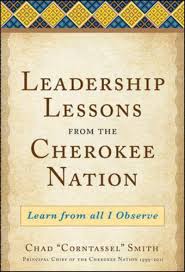
Leadership Lessons from the Cherokee Nation: Learn from All I Observe

Leadership Lessons from the Cherokee Nation: Learn from All I Observe [Hardcover]

Chad “Corntassel” Smith (Author)

images (31)

Publication Date: February 19, 2013

“If you want to be successful, it is this simple. Know what you are doing, love what you are doing. And believe in what you are doing.” — Will Rogers

When Chad Smith became Principal Chief, the Cherokee Nation was a chaotic and dysfunctional entity. By the end of his tenure, 12 years later, the Nation had grown its assets from $150 million to $1.2 billion, increased business profits 2,000 percent, created 6,000 jobs, and dramatically advanced its education, language, and cultural preservation programs.

How could one team influence such vast positive change?

The Cherokee Nation’s dramatic transformation was the result of Smith’s principle-based leadership approach and his unique “Point A to Point B model”–the simple but profound idea that the more you focus on the final goal, the more you will accomplish . . . and the more you will learn along the way. In other words, “look at the end rather than getting caught up in tanglefoot.”

In Leadership Lessons from the Cherokee Nation, Smith combines Cherokee wisdom handed down from generation to generation with a smart leadership approach that takes today’s very real issues into consideration. He explains why this leadership approach works and how you can apply it to your own organization, whether business, government, or nonprofit. Learn all the lessons that drive powerful leadership, including how to:

Be a lifelong learner

Solve problems with creativity and innovation

Recruit and develop strong leaders

Delegate wisely

Act with integrity and dignity

Don’t be distracted from your objective

Lead by example

More than a simple how-to leadership guide, Leadership Lessons from the Cherokee Nation offers a holistic approach to the subject–how to become a powerful leader inside and direct your energy outward to accomplish any goal you set your mind to. Read more of this post

Seeing Narcissists Everywhere; A psychology professor has tapped into a rich vein of popular concern, concluding that people in recent decades have grown more self-centered and entitled. But is it true?

August 5, 2013

Seeing Narcissists Everywhere

By DOUGLAS QUENQUA

From the triumph of Botox to the rise of social networking and soccer teams that give every kid a trophy, Jean M. Twenge is constantly on the lookout for signs of a narcissism crisis in America. Sometimes it gets personal. “I got a onesie as a gift that I gave away on principle,” said Dr. Twenge, 41, a professor of psychology at San Diego State University and a mother of three girls under 7, in an interview at a diner on the West Side of Manhattan. “It said, ‘One of a Kind,’ ” she said, poking at a fruit salad. “That actually isn’t so bad, because it’s true of any baby. But it’s just not something I want to emphasize.” Read more of this post

Hidden Billionaire Bob Piccinini Found With Grocery Chain Fortune in California by exploiting local zoning laws to thwart bigger competitors and acquiring hundreds of low-performing stores from adversaries. “He’s a wheeler dealer. He’s more interested in the deal than he is in running grocery stores.”

Hidden Billionaire Found With Food Fortune in California

images

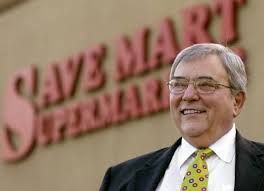
The H Street Save Mart grocery store in downtown Modesto, California, is a throwback to a time before supermarkets enticed shoppers with sushi bars and wine tastings. Here, bare florescent lights reflect off scuffed linoleum floors and a Greek chicken wrap is marred by bits of cartilage. To get into the bathroom, shoppers have to seek out a clerk for a key. This store and 225 similar locations operated by Modesto-based Save Mart Supermarkets have made Bob Piccinini, the company’s 71-year-old majority owner, a billionaire. Since securing control of the company from his family in a 1985 leveraged buyout, Piccinini has expanded Save Mart by exploiting local zoning laws to thwart bigger competitors and acquiring hundreds of low-performing stores from adversaries. Read more of this post

Former Arm chief Warren East taking up his first directorship at Dyson; “Dyson is a bit like Arm really. They’re two UK companies that compete on a global scale, representing British engineering and design – and being good at it.”

August 5, 2013 12:02 am

Former Arm chief Warren East joins Dyson

By Andy Sharman

Warren East is taking up his first directorship at a UK company since stepping down as chief executive of chipmaker Arm Holdings, by joining the board of Dyson, the innovative consumer goods company. Mr East, who left Arm last month, has been appointed non-executive director at the Wiltshire-based maker of high-tech vacuum cleaners, hand dryers and fans as it seeks to expand in Asia and Latin America. “Dyson is a bit like Arm really,” the 51-year-old said. “They’re two UK companies that compete on a global scale, representing British engineering and design – and being good at it.” Read more of this post

What It’s Like Being a Middle Manager Today; Pushed to Do More With Less, Today’s Midlevel Managers Try to Get By

Updated August 5, 2013, 8:04 p.m. ET

What It’s Like Being a Middle Manager Today

Pushed to Do More With Less, Today’s Midlevel Managers Try to Get By; Loving the Work, but Uncertain Rewards

MELISSA KORN

Middle managers at a range of companies across the country speak about the rewards, frustrations and challenges of life in the middle.

The parking lot at Fair Isaac Corp. FICO +0.89% in San Rafael, Calif., is empty when Michelle Davis pulls in at 6 a.m. For the next 8-½ hours, the 36-year-old analytics director will shuttle through nearly back-to-back meetings at FICO, a company best known for calculating consumer credit scores. At 2:30 p.m., the mother of three will leave work to pick up her children from summer camp. Technically, she’s off the clock, but she’ll keep an eye on her BlackBerry long into the night. Welcome to middle management circa 2013. Fourteen years into her career at FICO, Ms. Davis is sandwiched somewhere between senior leadership and the front lines, overseeing three direct reports along with three other subordinates. Her job affords her the freedom to run projects and pitch new ideas, but it’s not without constraints. Like her midlevel peers in retail, technology and other industries, she has many duties but little authority, people to please both above and below, and days when her schedule is just barely under her control, filled with meetings or consumed with sudden crises. Read more of this post

Ramadan is a month for Muslims to retrain, re-educate and rejuvenate their souls, minds and manners and ‘graduate’ as better persons.

Updated: Tuesday August 6, 2013 MYT 7:55:10 AM

A virtuous, spiritual journey

BY DR WAN AZHAR WAN AHMAD

Ramadan is a month for Muslims to retrain, re-educate and rejuvenate their souls, minds and manners and ‘graduate’ as better persons.

THE month of Ramadan holds immense importance for Muslims. Highly venerated in Islam, it is distinguished from other months of the Islamic calendar by a number of characteristics, privileges and virtues. Fasting is made compulsory throughout Ramadan on all Muslims who have attained the age of puberty and of sound mind. While fasting, Muslims are not only prohibited from eating or drinking anything from dawn till dusk, but are also required to observe some other added prohibitions, in words and actions, which are otherwise allowed without much restriction outside the sacred month. Ramadan is a month for Muslims to retrain, re-educate, rejuvenate – in greater intensity – their souls, minds and manners. A good external manifestation of one’s behaviour reflects a refined internal condition of one’s heart and soul. Read more of this post

Japan’s Fake Food is Real Deal for Tourists; Iwasaki, a leading plastic food maker, has an army of craftspeople who hand paint the molds, which sell for as much as $100 each, or restaurants can lease a fake hamburger set for $6 a month

Japan’s Fake Food is Real Deal for Tourists

By Kyoko Hasegawa on 3:35 pm August 5, 2013.

FOOD-LIFESTYLE-499357-01-02_preview-1024x856

Food samples made of plastic are displayed at a plastic food maker’s shop in Tokyo on May 28, 2013. (AFP Photo/Kazuhiro Nogi)

Tokyo. Alberto Pellegrini doesn’t speak or read Japanese, a deficit that threatened to leave the Italian tourist starving in a nation famous for its gastronomic delights. Fortunately for the hungry honeymooner, restaurants across this food-obsessed nation — where English menus range from sparse to non-existent — often display their wares in the form of intricately-made plastic replicas. The sight of a giant hotdog slathered in condiments doesn’t faze the average Japanese restaurant goer, and these fake food parades are often so similar to the real thing that they almost dare potential customers to take a bite. Read more of this post

61-year-old hidden billionaire Rick Cohen has transformed C&S into the world’s largest grocery wholesaler since taking the helm of the business in 1989, making money in an industry bedeviled by small profit margins and mismanagement

There’s a reason why Richard B. Cohen escapes attention.

C&S Lester1

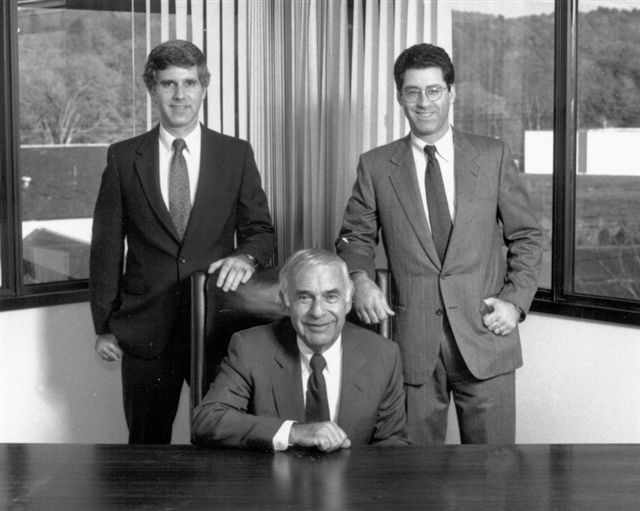
Lester Cohen and his sons, including Rick Cohen (right), who joined C&S in 1974.

The chairman of C&S Wholesale Grocers Inc. works out of a nondescript office park once slated to house a county jail in Keene, New Hampshire, a leafy mountain hamlet 90 miles northwest of Boston. The truckers who deliver goods from the company’s 54 distribution centers drive unmarked tractor-trailers. Cohen’s last interview was published a decade ago. Even the Keene Chamber of Commerce overlooked C&S as one of the town’s largest employers. “We’re the biggest company no one has ever heard of,” Bryan T. Granger, a company spokesman, said by phone. The 61-year-old — who goes by “Rick” — has transformed C&S into the world’s largest grocery wholesaler since taking the helm of the business in 1989, making him one of the 100 richest people in the world and the wealthiest man in New England after Connecticut hedge-fund manager Raymond T. Dalio, according to the Bloomberg Billionaires Index. The company had sales of $21.7 billion in 2012, distributing more than 95,000 products to 4,000 supermarkets from Maine to Hawaii. Cohen is the business’ sole owner, Granger said. He has a net worth of $11.2 billion, according to the Bloomberg index, and has never appeared on an international wealth ranking — a status one associate said suits him just fine. “I tried to put our name on the trucks and he didn’t want any part of it,” said Edward Albertian, 58, a former C&S president and now chief executive officer of Citysports, a 22-store Boston-based retailer owned by Highland Capital Partners LP. “He wanted to continue to be stealth and operate in this little, dinky Keene, New Hampshire, marketplace.” Read more of this post

Dyson’s chief is not standing in the eponymous inventor’s shadow

August 4, 2013 2:53 pm

Enough limelight for both bosses

By Andy Sharman

images (28)article-2100152-11B3AD95000005DC-328_468x405Dyson070912_2331798bjames-dyson1

The ‘other’ of invention: Max Conze with a Dyson cordless vacuum cleaner

Aplain white room in a warehouse in rural Wiltshire. Futuristic vacuum cleaners and bladeless fans are stood on plinths. Empty shelves line the wall. And a 6ft 2in former German army lieutenant is pirouetting around the room, vacuuming up detritus. It’s a fantastical scenario worthy of the mind of Sir James Dyson, the inspiredinventor, eponymous overlord and chief engineer of the UK manufacturing group behind bagless vacuum cleaners, towel-less hand dryers and bladeless fans. However, the star of today’s show is not Sir James, but Max Conze, the Dyson chief executive who is demonstrating the company’s latest innovation – the curiously named Dyson Hard, a cordless vacuum-mop hybrid. “If you work for Dyson,” he says, “you have to have fun with vacuum cleaners.” Read more of this post

Beyond Blame: Would we better off in a world without blame?

Beyond Blame: Would we better off in a world without blame?

Barbara H. Fried

Friday, June 28, 2013

In an article published shortly before his death, the political scientist James Q. Wilson took on the large question of free will and moral responsibility:  Does the fact that biology determines more of our thinking and conduct than we had previously imagined undermine the notion of free will? And does this possibility in turn undermine, if not entirely destroy, our ability to hold people accountable for their actions? Wilson’s answer was an unequivocal no. He has lots of company, which should come as a surprise given what scientific research into the determinants of human behavior has told us over the past four decades. Most of that research, as Wilson says, points to the same conclusion: our worldviews, aspirations, temperaments, conduct, and achievements—everything we conventionally think of as “us”—are in significant part determined by accidents of biology and circumstance. The study of the brain is in its infancy; as it advances, the evidence for determinism will surely grow. One might have expected those developments to temper enthusiasm for blame mongering. Instead, the same four decades have been boom years for blame.  Read more of this post

Life in a Toxic Country

August 3, 2013

Life in a Toxic Country

By EDWARD WONG

04COVER-articleLarge

A baby being given nebulizer therapy at Beijing Children’s Hospital.

BEIJING — I RECENTLY found myself hauling a bag filled with 12 boxes of milk powder and a cardboard container with two sets of air filters through San Francisco International Airport. I was heading to my home in Beijing at the end of a work trip, bringing back what have become two of the most sought-after items among parents here, and which were desperately needed in my own household. China is the world’s second largest economy, but the enormous costs of its growth are becoming apparent. Residents of its boom cities and a growing number of rural regions question the safety of the air they breathe, the water they drink and the food they eat. It is as if they were living in the Chinese equivalent of the Chernobyl or Fukushima nuclear disaster areas. Read more of this post

Inferior composite wood used for 188,000 sleepers of Singapore’s MRT train which can hardly withstand the crushing weight of trains and result in train derailment

Was inferior composite wood used for MRT sleepers?

August 5th, 2013 |  Author: Editorial

25881842e

On 14 May 2013, ST reported that SMRT and LTA will accelerate a programme to replace timber sleepers on the ageing North-South and East-West lines to improve the resilience of the rail network in Singapore (‘LTA, SMRT to accelerate sleeper replacement on North-South and East-West lines‘). It said that SMRT aims to replace all 188,000 timber sleepers on the North-South Line by 2015, and on the East-West Line by 2016. On Saturday (3 Aug), SPH’s bilingual news and entertainment portal (www.omy.sg) published an interesting article [Link] claiming the timber sleepers have been discovered to be made of sub-standard wood. The article claims to have heard from an insider in the wood industry. It seems that some company has bought or otherwise acquired the old MRT timber sleepers (i.e. the timber sleepers that are to be gradually replaced by 2015 in the case of the North-South Line and 2016 in the case of the East-West Line). The company wants to cut these timber sleepers into smaller pieces to manufacture other products. As the sleepers used for the Malaysian railway line can last for decades with no decay, the company quite fairly assumed the sleepers used for our MRT network to be of similar quality. However the company was shocked when it cut the sleepers. They found that they are not made of hard wood at all. They are in fact made of composite wood. Furthermore, the wood has decayed. Apparently the company is not so much concerned about the loss of their investment in the “timber” sleepers as they are that such inferior wood has been used as sleepers for Singapore’s rail network. The lousy sleepers made of composite wood can hardly withstand the crushing weight of trains. If enough sleepers disintegrated, the rail would sink. That would split the track and signals would be interrupted. Train derailment might result. Maintenance staff replacing the wooden sleepers on the train tracks near Clementi MRT station. Rail operator SMRT and rail authority LTA will accelerate a programme to replace so-called timber sleepers on the ageing North-South and East-West lines to improve the resilience of the rail network. (ST Photo)

The article posed a number of questions to LTA:

1. Does the Govt know about this? Is it the reason SMRT and LTA want to change the sleepers?

2. Who purchased the inferior sleepers?

3. Was this the cause of the intermittent signal interruption problems in the MRT network in the past?

4. Was the slowing of our trains due to the realisation that the tracks are lined with inferior sleepers?

5. Is it a misunderstanding? In other words, are there in fact no problems at all with the sleepers? Read more of this post

The Finances of Serious Illness; For people facing a grim diagnosis, finances are often the last thing they want to talk about. But they shouldn’t be

August 4, 2013, 4:55 p.m. ET

FUNDAMENTALS OF INVESTING

The Finances of Serious Illness

For people facing a grim diagnosis, finances are often the last thing they want to talk about. But they shouldn’t be.

LISA WARD

It’s the news no one wants to hear: a diagnosis of a dire, possibly fatal, disease. As questions about life and death naturally overshadow everything else, financial planners and advisers say, it’s common for people in this situation to let their finances fall to the wayside. Nevertheless, they say, coming up with a financial plan, which may involve making changes to your investment portfolio, is crucial to achieving the best possible outcome for patients and their families. Here are some pointers from advisers on how to handle the financial impact of a serious illness. Read more of this post

Monogamy’s Boost to Human Evolution; Fossil records suggest that by sticking around and protecting and feeding their offspring, early men paved the way for the growth of the human brain

August 2, 2013

Monogamy’s Boost to Human Evolution

By CARL ZIMMER

“Monogamy is a problem,” said Dieter Lukas of the University of Cambridge in a telephone news conference this week. As Dr. Lukas explained to reporters, he and other biologists consider monogamy an evolutionary puzzle. In 9 percent of all mammal species, males and females will share a common territory for more than one breeding season, and in some cases bond for life. This is a problem — a scientific one — because male mammals could theoretically have more offspring by giving up on monogamy and mating with lots of females. In a new study, Dr. Lukas and his colleague Tim Clutton-Brock suggest that monogamy evolves when females spread out, making it hard for a male to travel around and fend off competing males. Read more of this post

How to Teach Your Children About Investing; Have them invest in companies they understand

August 1, 2013, 10:42 a.m. ET

How to Teach Your Children About Investing

Money pros tell how they introduced financial concepts to their own kids

APARNA NARAYANAN

Financial advisers spend lots of time explaining investing principles like diversification, compounding and dollar-cost averaging to clients. But how do they explain these investing fundamentals to a more personal audience—their kids, and at what ages? When money matters become part of the dinner-table conversation, raising investment-savvy kids can be as simple and painless as filing a 1040EZ. Here are some tips from financial professionals to parents on how to teach their children about investing. Read more of this post

Stop ‘Branding’ and Improve English’s Reputation

Stop ‘Branding’ and Improve English’s Reputation

By Alex Marshall  Aug 2, 2013

In 16th-century England, Thomas Gresham formulated what is now known as Gresham’s law, which stipulates that bad money drives out good. Paper money tends to circulate more freely than silver, and silver more freely than gold, because people hoard whatever type of money is seen as best. It’s why we spend those torn dollar bills first. I have no problem with this. It might even be a good thing, because it expands the money supply and credit. But I do have a problem when a similar dynamic takes over language, as bad, bureaucratic, bulky and bothersome words drive out simple, short, clear and good ones. Read more of this post

Meaning Is Healthier Than Happiness

Meaning Is Healthier Than Happiness

By Emily Esfahani Smith, AUG 1 2013, The Atlantic

happybuddahmain

For at least the last decade, the happiness craze has been building. In the last three months alone, over 1,000 books on happiness were released on Amazon, including Happy MoneyHappy-People-Pills For All, and, for those just starting out, Happiness for Beginners. One of the consistent claims of books like these is that happiness is associated with all sorts of good life outcomes, including — most promisingly — good health. Many studies have noted the connectionbetween a happy mind and a healthy body — the happier you are, the better health outcomes we seem to have. In a meta-analysis (overview) of 150 studies on this topic, researchers put it like this: “Inductions of well-being lead to healthy functioning, and inductions of ill-being lead to compromised health.”

But a new study, just published in the Proceedings of the National Academy of Sciences (PNAS) challenges the rosy picture. Happiness may not be as good for the body as researchers thought. It might even be bad. Of course, it’s important to first define happiness. A few months ago, I wrote a piece called “There’s More to Life Than Being Happy” about a psychology study that dug into what happiness really means to people. It specifically explored the difference between a meaningful life and a happy life. Read more of this post

Three Differences Between Managers and Leaders: Counting value vs Creating value; Leading people vs Managing work

Three Differences Between Managers and Leaders

by Vineet Nayar  |  10:01 AM August 2, 2013

A young manager accosted me the other day. “I’ve been reading all about leadership, have implemented several ideas, and think I’m doing a good job at leading my team. How will I know when I’ve crossed over from being a manager to a leader?” he wanted to know. I didn’t have a ready answer and it’s a complicated issue, so we decided to talk the next day. I thought long and hard, and came up with three tests that will help you decide if you’ve made the shift from managing people to leading them.

Counting value vs Creating value. You’re probably counting value, not adding it, if you’re managing people. Only managers count value; some even reduce value by disabling those who add value. If a diamond cutter is asked to report every 15 minutes how many stones he has cut, by distracting him, his boss is subtracting value. By contrast, leaders focuses on creating value, saying: “I’d like you to handle A while I deal with B.” He or she generates value over and above that which the team creates, and is as much a value-creator as his or her followers are. Leading by example and leading by enabling people are the hallmarks of action-based leadership. Read more of this post

South Korea’s students rank among the best in the world, and its top teachers can make a fortune. Can the U.S. learn from this academic superpower?

August 2, 2013, 7:05 p.m. ET

The $4 Million Teacher

South Korea’s students rank among the best in the world, and its top teachers can make a fortune. Can the U.S. learn from this academic superpower?

AMANDA RIPLEY

RV-AL211_TEACHE_DV_20130802162509

Kim Ki-Hoon, who teaches in a private after-school academy, earns most of his money from students who watch his lectures online. ‘The harder I work, the moreImake,’ he says. ‘I like that.’

Kim Ki-hoon earns $4 million a year in South Korea, where he is known as a rock-star teacher—a combination of words not typically heard in the rest of the world. Mr. Kim has been teaching for over 20 years, all of them in the country’s private, after-school tutoring academies, known as hagwons. Unlike most teachers across the globe, he is paid according to the demand for his skills—and he is in high demand. Mr. Kim works about 60 hours a week teaching English, although he spends only three of those hours giving lectures. His classes are recorded on video, and the Internet has turned them into commodities, available for purchase online at the rate of $4 an hour. He spends most of his week responding to students’ online requests for help, developing lesson plans and writing accompanying textbooks and workbooks (some 200 to date). “The harder I work, the more I make,” he says matter of factly. “I like that.” Read more of this post

4 Things That Keep Employees Loyal (Hint: It’s Not Money Or Perks): The opportunity to do great work. A decent, non-toxic manager. Decent people. Remember them?

4 Things That Keep Employees Loyal (Hint: It’s Not Money Or Perks)

LES MCKEOWNINC. AUG. 1, 2013, 11:52 AM 3,287 2

You can ditch the esoteric interview questions; skip the outlandish benefits and uber-hip working conditions; and forget building an awesome brand. When it comes to hiring– and more importantly, keeping– great employees, not even paying well above market compensation guarantees success. In a recent survey of companies with the highest amount of employee turnover, guess which trailblazing exemplars of world-class employee-centricity came in second and fourth, respectively? None other than Google and Amazon. All of which just goes to show, as the Beatles once said, money can’t buy you love. If resource-rich employers like Wynn Resorts and Berkshire Hathaway Inc. (#6 and #18 on the list of companies with the least loyal employees) can’t build loyalty in their workforce, what chance does the average, resource-constrained, small- and medium-sized business have? Well, the truth is, quite a lot. Despite the fact that most small business founder/owners feel that they are in a David and Goliath-like battle for talent with mega-employers, the reality is that great employees are all looking for an environment that any business, large or small can provide. Here are the four key ways to ensure that, so long as you’re paying at or near market compensation, your employees will remain engaged and loyal, irrespective of the size of your business: Read more of this post

Collaboration: How Leaders Avoid the Traps, Build Common Ground, and Reap Big Results

Collaboration: How Leaders Avoid the Traps, Build Common Ground, and Reap Big Results [Hardcover]

Morten Hansen (Author)

collaboration-how-leaders-avoid-traps-create-unity-reap-morten-hansen-hardcover-cover-art

Publication Date: April 14, 2009

In Collaboration, author Morten Hansen takes aim at what many leaders inherently know: in today’s competitive environment, companywide collaboration is an imperative for successful strategy execution, yet the sought-after synergies are rarely, if ever, realized. In fact, most cross-unit collaborative efforts end up wasting time, money, and resources. How can managers avoid the costly traps of collaboration and instead start getting the results they need?
In this book, Hansen shows managers how to get collaboration right through “disciplined collaboration”– a practical framework and set of tools managers can use to:
· Assess when–and when not–to pursue collaboration across units to achieve goals
· Identify and overcome the four barriers to collaboration
· Get people to buy into the larger picture, even when they own only a small piece of it
· Be a “T-Shaped Manager,” collaborating across divisions while still working deeply in your own unit
· Create networks across the organization that are not large, but nimble and effective
Based on the author’s long-running research, in-depth case studies, and company interviews, Collaboration delivers practical advice and tools to help your organization collaborate–for real results. Read more of this post

The Innovation Mindset in Action: an illiterate woman from Tamil Nadu, India. Her story is at once heartbreaking and inspiring, showing that game changers can come from all walks of life, all over the world

The Innovation Mindset in Action: Shantha Ragunathan

by Vijay Govindarajan and Srikanth Srinivas  |   9:00 AM August 1, 2013

This January, we met Shantha Ragunathan, an illiterate woman from Kodapattinam, a remote village in Tamil Nadu, India. Her story is at once heartbreaking and inspiring, showing that game changers can come from all walks of life, all over the world. At six, Shantha lost her parents. By her twenties, she was stuck in a seemingly dark pit without a glimmer of hope: with two children and little financial support from her husband, she could not afford even one square meal a day. Although she was poor in resources, she possessed the innovation mindset shared by many game changers: they see and act on opportunities, use “and” thinkingto resolve tough dilemmas and break through compromises, and employ their resourcefulness to power through obstacles. Innovators maintain a laser focus on outcomes, avoid getting caught in theactivity trap, and proactively “expand the pie” to make an impact. Regardless of where they start, innovators persist till they successfully change the game. Read more of this post

Apprenticeship Good for Ben Franklin Closes Skills Gap

Apprenticeship Good for Ben Franklin Closes Skills Gap

Toby Wofford learned his way around United Tool and Mold Inc. maintaining machines his last two years of high school in Easley, South Carolina. Now he’s graduating to an advanced apprenticeship program that includes free classes at a nearby technical college. The United Tool apprenticeship is one of more than 500 such programs added in South Carolina since 2008. They range from certified nursing assistants in senior-care facilities to pharmacy technicians at CVS Caremark Corp. (CVS) These federally registered programs are part of an effort by states to adapt such on-the-job training to close a skills gap in technical jobs. “It’s the best of both worlds,” 18-year-old Wofford said in an interview at the shop, which makes and repairs molds for plastic parts such as auto-fuel tanks. “You get the on-hand experience, but you also need the knowledge of education from college.” The apprentice system, which helped founding fathers Benjamin Franklin become a printer and John Hancock learn silversmithing, faded in the U.S. during the next 200 years until it was concentrated primarily in construction trades, said Joseph Fuller, a senior lecturer at Harvard Business School in Boston who is studying work-training programs. Read more of this post