Beers Of The World

Beers Of The World [MAPS]

MEGAN WILLETT JUL. 16, 2013, 3:46 PM 6,867 10

Who needs a flag when your country can be represented by its most popular brand of beer instead? At least, that’s what the geniuses at PureTravel.com thought when they put together this “World Beer Map” that features over 80 lager beers from around the world. Not all the choices are without controversy, however — we’re guessing a few German beer-ophiles won’t be too pleased that Germany is represented by Oettinger, an infamous low-budget beer.

largebeermap Read more of this post

Is being an entrepreneur really a viable option? It is essentially cultural dogma that the only viable option is to go to college, get good grades, and become a doctor, lawyer, or some other respectable professional

Is being an entrepreneur really a viable option?

BY FRANCISCO DAO 
ON JULY 16, 2013

Following last week’s post about the importance of establishing entrepreneurship as a self fulfillingcultural norm, several people asked me what I thought was the key to jump starting this process. As I thought about the belief system of entrepreneurs vs. non-entrepreneurs, I remembered a conversation I had with an old roommate that perfectly captured the difference. In 2000, I was starting a new company and trying to raise some angel money. One Saturday afternoon, my roommate “Joe” asked me what I had planned for the day and I told him I had to work on my business plan. He said to me, “I don’t understand. Why do you work on this stuff? It’s not like you get anything out of it.” For Joe, launching a business was simply not a viable possibility. In his mind, I may as well have told him I was training to be the quarterback of the 49ers or some other unattainable pipe dream. More than anything, the belief that starting a company is a viable option is what separates entrepreneurs from non-entrepreneurs. Most people simply aren’t taught to think this way and don’t have accessible role models to show them the possibilities. It is essentially cultural dogma that the only viable option is to go to college, get good grades, and become a doctor, lawyer, or some other respectable professional. How many of you have had to explain to your parents why you were leaving your viable career in order to pursue what they viewed as the nonviable path of entrepreneurship? More than a few, I’m sure. Read more of this post
True Story: How to Combine Story and Action to Transform Your Business

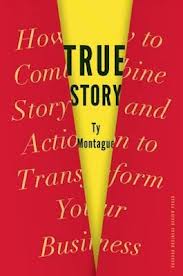
True Story: How to Combine Story and Action to Transform Your Business [Hardcover]

Ty Montague (Author)

images (21)

Publication Date: July 16, 2013

Is your company a storyteller—or a storydoer?
The old way to market a business was storytelling. But in today’s world, simply communicating your brand’s story in the hope that customers will listen is no longer enough. Instead, your authentic brand must be evident in every action the organization undertakes.
Today’s most successful businesses are storydoers.
These companies create products and services that, from the very beginning, are manifestations of an authentic and meaningful story—one told primarily through action, not advertising. In True Story, creative executive Ty Montague argues that any business, regardless of size or industry, can embrace the principles of storydoing. Indeed, our best-run companies—from small start-ups to global conglomerates—organize around a coherent narrative that is then broadcast through every action they take (from product design to customer service to marketing). Montague shows why storydoing firms are nimble, more adaptive to change, and more efficiently run businesses.
Montague is a founder of the growth consultancy co:collective and the former president and CCO of J. Walter Thompson, the largest advertising agency in North America. He brings his depth of creative business experience to the book and provides a clear framework and proven process for bringing you and your customers together in the creation of your brand story.
Montague introduces five critical elements—what he calls the “the four truths and the action map”—that are the foundation of storydoing:
• the participants (your customers, partners, and employees)
• the protagonist (your company today)
• the stage (the world around your business)
• the quest (your driving ambition and contribution to the world)
• your action map (the actions that will make your story real for participants)
The book is filled with examples of how forward-thinking organizations—including Red Bull, Shaklee, Grind, TOMS Shoes, and News Corporation—are effectively using storydoing to transform their organizations and drive extraordinary results. Read more of this post

Good Companies Are Storytellers. Great Companies Are Storydoers; The story is about a larger ambition to make the world or people’s lives better

Good Companies Are Storytellers. Great Companies Are Storydoers

by Ty Montague  |   1:00 PM July 16, 2013

storydoing-6-thumb-200x399-4480 storydoing-5-thumb-200x312-4473

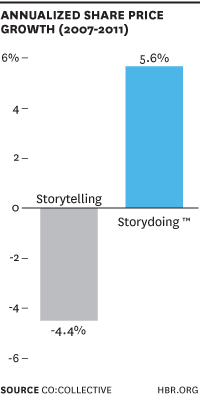
Discussions about story and storytelling are pretty fashionable in marketing circles. I have ambivalent feelings about this. On the one hand, as a lifelong advocate for the power of story in business, I find this very encouraging. For all companies, having a story and knowing that story are crucial steps to achieving success. On the other hand, I’m worried that too many marketers think that telling their story through advertising is enough. It’s not. In fact, those that think this way do so at their own risk because there is a new kind of company on the rise that uses story in a more powerful way — and they run more efficient and profitable businesses as a result. In my new book, True Story: How to Combine Story and Action to Transform Your Business, I call these new companies storydoing companies because they advance their narrative through action, not communication. Storydoing companies — Red Bull, TOMS shoes, Warby Parker, and Tory Burch, for example — emphasize the creation of compelling and useful experiences — new products, new services, and new tools that advance their narrative by lighting up the medium of people. What I mean by this is that when people encounter a storydoing company they often want to tell all their friends about it. Storydoing companies create fierce loyalty and evangelism in their customers. Their stories are told primarily via word of mouth, and are amplified by social media tools. So how do you know a storydoing company when you see one? These are the primary characteristics:

  1. They have a story
  2. The story is about a larger ambition to make the world or people’s lives better
  3. The story is understood and cared about by senior leadership outside of marketing
  4. That story is being used to drive tangible action throughout the company: product development, HR policies, compensation, etc.
  5. These actions add back up to a cohesive whole
  6. Customers and partners are motivated to engage with the story and are actively using it to advance their own stories Read more of this post

Self-Published Book Success Stories; How Writers Used Free Tools to Get Their Books Noticed

July 16, 2013, 6:50 p.m. ET

Self-Published Book Success Stories

How Writers Used Free Tools to Get Their Books Noticed

HEIDI MITCHELL

PJ-BP397_SELFPU_DV_20130716162253

Ms. Ware realized she wanted to write a book after blogging about her eight years working as a palliative caregiver.

The popular saying that everyone has a book in them has never been truer, as the much-heralded rise of self-publishing—and companies dedicated to editing, printing and promoting books—has put the power to publish at people’s fingertips. The cost of producing a paperback has gone from thousands of dollars—from editing and jacket design to printing, distribution and warehousing—to free on Amazon.comInc.’s AMZN +0.10% CreateSpace and the popular independent e-book distributor Smashwords. Readers don’t miss a traditional publishing house, says Ann McIndoo, who runs an author-coaching business. “The author or the topic or the brand drives the sale. When you go to the bookstore, you want Stephen King or a book on How To Knit. It doesn’t matter who published it.” Here are several authors and their different strategies for self-publishing their books. Read more of this post

Blogger Completely Dismantles Malcolm Gladwell Theory Connecting Korean Culture To Plane Crashes

Blogger Completely Dismantles Malcolm Gladwell Theory Connecting Korean Culture To Plane Crashes

MAX NISEN JUL. 16, 2013, 11:47 AM 5,697 17

Malcolm Gladwell is one of the most famous popular science writers in the world. That doesn’t mean he gets everything right.The recent Asiana plane crash dredged up a prime example, a blog post at Ask A Korean argues. One of the chapters from “Outliers,” his third book, is called “The Ethnic Theory of Plane Crashes,” and connects pilots’ national origin to crashes. Once, in an interview, Gladwell claimed that culture of origin is “the single most important variable” in determining if a plane crashes. The chapter heavily focuses on Korean culture, and the 1997 crash of a Korean Air flight. Gladwell argues that it was caused in part by the respect for hierarchy inherent in Korean culture, and the indirect nature of the Korean language.  Read more of this post
Is the Singapore soil fertile for creativity?

Is the Singapore soil fertile for creativity?

Singapore’s drive for productivity has focused attention on a key component to boosting organisational performance — innovation. While companies espouse the importance of innovation, the truth of the matter is that many companies have, consciously or unconsciously, put up barriers to innovation.

4 HOURS 43 MIN AGO

Singapore’s drive for productivity has focused attention on a key component to boosting organisational performance — innovation. While companies espouse the importance of innovation, the truth of the matter is that many companies have, consciously or unconsciously, put up barriers to innovation. Barriers to innovation could exist within the structure of the organisation, the mindset of its leaders and managers or within the culture itself. The starting point for any company that wishes to foster innovation and creativity should be to recognise these barriers. Read more of this post

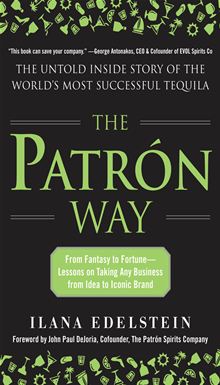
The Patrón Way: From Fantasy to Fortune—Lessons on Taking Any Business From Idea to Iconic Brand; How a billion-dollar business ascended from a forgotten dusty agave field in central Mexico

How to sell cheap stuff expensively

Jul 13th 2013 |From the print edition

Patron

The Patrón Way: From Fantasy to Fortune—Lessons on Taking Any Business From Idea to Iconic Brand. By Ilana Edelstein. McGraw-Hill; 220 pages; $25 and £16.99. Buy from Amazon.comAmazon.co.uk

OUTSIDE Mexico (and especially in America) tequila too often fuels vomity student parties and spring-break shooting sessions. But recently various brands have tried to market the drink as a more sophisticated tipple. Among them is Patrón, whose individually numbered bottles sell for between $45 and $500. Though its name is evocative of old Mexico, the brand was started in 1989 by a pair of gringos: John Paul DeJoria and the late Martin Crowley. Now, Ilana Edelstein, Crowley’s former partner, has written an account of the brand’s rise. In Jalisco, Mexico’s prime agave country, Crowley chanced upon a distillery whose tequila knocked his socks off. Ms Edelstein admits that neither she nor Crowley, who was recovering from bankruptcy, knew anything about the drinks business—indeed, when it came to tequila she “couldn’t be anywhere near the stuff without heaving”. But they copied the perfume industry and promptly designed some swanky packaging. The celebrity contacts of Mr DeJoria, who had made a fortune in the hair-care business, helped to get the bottle seen at the right parties in Los Angeles. Though it is still rather looked down on in Mexico (it was not sold there at all until relatively recently), Patrón has become the second-best selling brand in America, partly thanks to its following among high-rolling hip-hop stars. It is also growing fast in the Far East. Ms Edelstein’s account is short on business wisdom but long on the sometimes seedy details of the booze business. Her unofficial role in the operation concerned mainly marketing, including designing the skimpy outfits of the promotional “Patrón Girls”, who were recruited first from Las Vegas escort agencies and later fromPlayboy’s Playmates. She seems to have little access to the business nowadays; Mr DeJoria has written a (slightly wary) foreword and the quotes from other key people are lifted from newspaper interviews. A chapter of historical padding comes from Wikipedia and other websites, according to the notes at the back of the book. Perhaps the best, inadvertent advice to entrepreneurs is to get your name on the business’s documents, or at least on a marriage certificate. Despite pouring years of her life into Patrón, Ms Edelstein was left with nothing when her relationship with Crowley blew up in spectacular style in 2001. She lost a case for compensation and was thrown out of the couple’s California mansion (where the koi carp were left to starve). Though she is admirably upbeat about the experience, it sounds like the recipe for quite a hangover. Read more of this post

Q&A with Google’s Avinash Kaushik: Marketing without shouting

Q&A with Google’s Avinash Kaushik: Marketing without shouting

June 26, 2013

Avinash Kaushik is Digital Marketing Evangelist at Google, and author of Web Analytics 2.0: The Art of Online Accountability and Science of Customer Centricity. He is a keynote speaker at this fall’s COLLOQUY Loyalty Summit.  

Social media presents an opportunity for brands to connect with their most loyal customers, but the opportunity can be intimidating. This new form of “conversational marketing” is engaging consumers on a deeper, emotional level and introducing a new set of success metrics along with it that can help brands measure the value inherent in these conversations.

We recently sat down to speak with Avinash to discuss how brands must interact in authentic ways with their customers, either outside or within loyalty programs, if they want to meaningfully impact the bottom line. Read more of this post

35 Brilliant Insights From Nassim Taleb

35 Brilliant Insights From Nassim Taleb

STEVEN PERLBERG 46 MINUTES AGO 3,376 3

Facebook is the perfect platform for eccentric author Nassim Taleb, whose knack for thinking outside the box and waxing poetic is unparalleled. Here’s how the acclaimed author of The Black Swan describes his account: “This is for philosophical discussions. Please, no finance (or similarly depraved topics), and no journalists.” Oops. Taleb’s Facebook — which boasts 33,000+ followers — is truly a must-like for anyone interested in success, failure, Brooklyn, the modern condition, philosophy, the sordid state of journalism, or all of the above. Here are Taleb’s 35 most important observations. Each is a quote.

  • The artificial gives us hangovers, the natural inverse-hangovers.
  • The only problem with the last laugh is that the winner has to laugh alone.
  • Intelligence without imagination: a deadly combination.
  • There is no more unmistakable sign of failure than that of a middle-aged man boasting of his successes in college.
  • Never trust a journalist unless she’s your mother.
  • One of life’s machinations is to make some people both rich and unhappy, that is, jointly fragile and deprived of hope.
  • [If] someone is making an effort to ignore you he is not ignoring you.
  • The danger of reading financial & other news (or econobullshit) is that things that don’t make sense at all start making sense to you after progressive immersion.
  • It’s a sign of weakness to worry about showing signs of weakness.
  • Friends, I wonder if someone has computed how much would be saved if we shut down economics and political science departments in universities. Those who need to research these subjects can do so on their private time.
  • I trust those who trust me and distrust those who are suspicious of others.
  • A good man is warm and respectful towards the waiter or people of lower rank.
  • Journalists feel contempt for those who fear them and a deep resentment for those who don’t.
  • When someone starts a sentence with the first half containing “I”, “not”, and “but”, the “not” should be removed and the “but” replaced with “therefore.”
  • High Modernity: routine in place of physical effort, physical effort in place of mental expenditure, & mental expenditure in place of mental clarity.
  • The only valid political system is one that can handle an imbecile in power without suffering from it.
  • Journalists cannot grasp that what is interesting is not necessarily important; most cannot even grasp that what is sensational is not necessarily interesting.
  • Never buy a product that the owner of the company that makes it doesn’t use, or, in the case of, say, medication, wouldn’t contingently use.
  • Just realized that to politely get rid of someone people in Brooklyn say “call me if you need anything.”
  • Injuries done to us by others tend to be acute; the self-inflicted ones tend to be chronic.
  • We often benefit from harm done to us by others; almost never from self-inflicted injuries.
  • You will never know if someone is an asshole until he becomes rich.
  • When someone writes “I dislike you but I agree with you”, I read “I dislike you because I agree with you.”
  • A great book eludes summaries. A great aphorism resists expansion. The rest is just communication.
  • For a free person, the optimal – most opportunistic – route between two points should never be the shortest one.
  • What counts is not *what* people say, it is *how much* energy they spend saying it.
  • Used skillfully, a compliment will be much more offensive than any disparagement.
  • I trust those who are greedy for money a thousand time more than those who are greedy for credentials.
  • Just as eating cow-meat doesn’t turn you into a cow, studying philosophy doesn’t make you wiser.
  • It is a great compliment for an honest person to be mistaken for a crook by a crook.
  • Many want to learn how to memorize things; few seek that rare ability to forget.
  • If you have something very important to say, whisper it.
  • The ultimate freedom lies in not having to explain “why” you did something.
  • A book that can be summarized should not be written as a book.
  • Friends, to confirm: for those who happen to be in Rome, let’s meet 6 PM tonite for a short expresso meeting (I buy, I insist) at Sant’Eustachio caffè, Piazza di Sant’Eustachio, 82.

Singapore’s PMET (Professionals, Managers, Executives, Technicians) = Pampered, Mediocre, Expensive, Timid

Are Singaporean workers… expensive & entitled?

These are the charges some employers have levelled against locals in a recent debate over wages and skills. Robin Chan investigates. 

7x1rDcT

A YOUNG university graduate walks into his first job interview at a shipping firm waving a salary survey his school provided for him and demands a starting salary above $4,000. But that is what a more senior employee gets only after three to four years on the job. Another, applying for an analyst position at an investment bank, asks if he will have his own office and secretary. There are others: Singaporean professionals turning down overseas postings, job-hopping with a vengeance or wanting more benefits and less work. These stories of professionals behaving badly have emerged in the wake of a Sunday Times commentary last month in which a multinational corporation (MNC) boss asked: “Do Singaporeans deserve the salaries they are paid?” They lack the skills, and the hunger, he observed. Read more of this post

Amar G. Bose, the visionary acoustic engineer, inventor and billionaire entrepreneur, dies at 83; “I would have been fired a hundred times at a company run by M.B.A.’s. But I never went into business to make money. I went into business so that I could do interesting things that hadn’t been done before.”

July 12, 2013

Amar G. Bose, Acoustic Engineer and Inventor, Dies at 83

By GLENN RIFKIN

sub-Bose-obit-popup

Amar G. Bose, chairman of Bose, with a Wave radio in 1993.

Amar G. Bose, the visionary engineer, inventor and billionaire entrepreneur whose namesake company, the Bose Corporation, became synonymous with high-quality audio systems and speakers for home users, auditoriums and automobiles, died on Friday at his home in Wayland, Mass. He was 83. His death was confirmed by his son, Dr. Vanu G. Bose. As founder and chairman of the privately held company, Dr. Bose focused relentlessly on acoustic engineering innovation. His speakers, though expensive, earned a reputation for bringing concert-hall-quality audio into the home. And by refusing to offer stock to the public, Dr. Bose was able to pursue risky long-term research, such as noise-canceling headphones and an innovative suspension system for cars, without the pressures of quarterly earnings announcements. In a 2004 interview in Popular Science magazine, he said: “I would have been fired a hundred times at a company run by M.B.A.’s. But I never went into business to make money. I went into business so that I could do interesting things that hadn’t been done before.” Read more of this post

Confronting the Limits of Networks; Business builders should not automatically expect that a network’s value will continue to increase geometrically as new members join

Confronting the Limits of Networks

Magazine: Summer 2002Opinion & Analysis July 15, 2002  Reading Time: 9 min

Andrew McAfee and François-Xavier Oliveau

Around 1980 Robert Metcalfe, the inventor of the Ethernet standard and founder of 3Com, developed a simple but powerful model to describe how networks become more important as they grow. He observed that a network’s value lies in the number of links it enables among members and that the quantity of links increases as the square of the total of the network’s members. Result: The value of a network increases in proportion to the square of the number of people using it. Read more of this post

New: Understanding Our Need for Novelty and Change

Understanding Our Need for Novelty and Change

by SHANE PARRISH

Need for Novelty

In New: Understanding Our Need for Novelty and Change, Winifred Gallagher writes:

[O]ur fast-paced world invites us to see ourselves in yet another light—this time as nature’s virtuosos of change, who are biologically as well as psychologically primed to engage with novelty. Our ability to respond to the new and different is part of what makes us human. We’re simply more interested in whatever is outside of that status quo. Generally, this interest serves us well. In an evolutionary context it has likely saved us from extinction several times. While our affinity for seeking the new offered an advantage in a world without the Internet, it has never been tested in a world like today. The pace of information generation is crazy. Read more of this post

The path to power and how to use it; Collaboration and persuasion are the new tools in a demanding work environment

July 15, 2013 5:04 pm

The path to power and how to use it

By Philip Delves Broughton

Alternative models: the British Museum’s Neil MacGregor is among executives who have used power in different ways to manage their organisations

Power has bad connotations in management these days. It suggests headbangers and table-slammers, cigar-chomping men in smoke-filled rooms. Despite booming profits at JPMorgan, Jamie Dimon recently had to persuade shareholders that being both chief executive and chairman didn’t render him too powerful. Microsoft’s latest management revamp is intended to enhance collaboration across the company and eliminate the powerful fiefdoms that were hobbling its progress. Read more of this post

Forgiveness as a Business Tool

Forgiveness as a Business Tool

By Manfred Kets de Vries, INSEAD Distinguished Professor of Leadership Development & Organisational Change with Jane Williams, Editor Knowledge Abu Dhabi | July 8, 2013

Forgiveness can make us a better person but does it make a better leader? An eye for an eye for an eye for an eye…ends in making everyone blind. (Mahatma Ghandi)

The knee-jerk reaction of too many people in leadership positions when they feel wronged is righteous indignation and the urge for revenge. But one factor that sets truly transformational leaders apart from the run-of-the-mill is the ability to forgive – to let feelings of anger, resentment and blame fall away and become something constructive. Great leaders know the art of reconciliation. Read more of this post

Birds can navigate by the Earth’s magnetic field. How they do it is still a mystery

Birds can navigate by the Earth’s magnetic field. How they do it is still a mystery

Jul 13th 2013 |From the print edition

WHERE would people be without magnetic compasses? The short answer is: lost. By giving human beings a sixth sense—an ability to detect the hitherto invisible magnetic field of the Earth—the compass proved one of the most important inventions ever. It let sailors navigate without sight of the night sky. And that led to the voyages of discovery, trade and conquest which created the political geography of the modern world.

Imagine, then, what animals which had their own, built-in compasses could achieve. They might spend their summers doing the English Season in Glyndebourne or Henley, and then overwinter in the warmth of Mombasa. They might strike out, like intrepid pioneers, from Angola to Anchorage. They might even, if truly gripped by wanderlust and a hatred of the darkness, live in near-perpetual daylight by migrating from Pole to Pole. Read more of this post

Mark Suster Tells Founders To Be Authentic, Hire Co-Founders, And Give Before Taking

Mark Suster Tells Founders To Be Authentic, Hire Co-Founders, And Give Before Taking

DEREK ANDERSEN posted 21 hours ago

Editor’s note: Derek Andersen is the founder of Startup Grind, a 45-city community in 20-countries, uniting the global startup world together through educating, inspiring, and connecting entrepreneurs.

A few weeks ago I had the opportunity to interview Upfront Ventures‘ (previously GRP Partners) Mark Suster in Los Angeles. While the firm has been in operation since 1996, they recently announced a new $200 million fund. Mark is one of those VCs that is easy for most entrepreneurs to relate to because of his founder background, selling his last company to Salesforce and others before that. Read more of this post

Emma Marcegaglia, Business Europe president and “Italy’s iron lady”

July 14, 2013 4:01 pm

Emma Marcegaglia, Business Europe president

By Rachel Sanderson

Emma

‘Brussels bubble’: Emma Marcegaglia intends to spend only one or two days a week in the Belgian capital

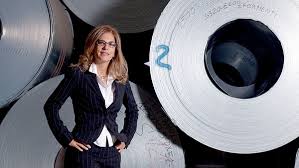
When Emma Marcegaglia was four or five years old, she recalls playing a game of dolls with her brother Antonio, her fellow heir to Italy’s Marcegaglia steel multinational. “We’d say this doll is head of the commercial office, this is the head of production. I had all of these dolls working instead of making a party with cakes,” she says with a burst of laughter. It is telling that Ms Marcegaglia’s passion for business was present well before she became co-chief executive of the Marcegaglia group, making her Italy’s most high-profile businesswoman and earning her the moniker “Italy’s iron lady”. Later, as the head of Confindustria, Italy’s influential employers’ body, Ms Marcegaglia was the first woman to take on the role and became almost a daily media presence representing furious business owners in the last years of Silvio Berlusconi’s paralysed government. Read more of this post

The Quiet Force Behind DreamWorks; Bill Damaschke, the chief creative officer of the film studio, is increasingly calling the artistic shots as the head of DreamWorks, Jeffrey Katzenberg, focuses on other areas

July 15, 2013

The Quiet Force Behind DreamWorks

By BROOKS BARNES

16dreamworks-damashke-popup

Chief executive of DreamWorks Animation Jeffrey Katzenberg, left, and Dreamworks chief creative officer Bill Damaschke.

GLENDALE, Calif. — Inside a modest upstairs office at DreamWorks Animation here — the one next to a framed poster reading “You’ve Got the Goods, Step Out and Show ‘Em!” — sits one of the film industry’s most important executives. His name is Bill Damaschke. Never heard of him? Neither has most of Hollywood. Mr. Damaschke, 49, is chief creative officer at DreamWorks Animation, which means that he runs the factory floor, working with directors, writers and artists to deliver hits like “Kung Fu Panda,” “How to Train Your Dragon” and the “Madagascar” movies. On Wednesday, the studio’s latest computer-animated film, “Turbo,” about a speedy garden snail, arrives in theaters. “I trust Bill’s taste more than anybody else’s, including my own,” said Jeffrey Katzenberg, DreamWorks Animation’s chief executive. Read more of this post

Oregon Tuition Plan Punishes Graduates’ Success

Oregon Tuition Plan Punishes Graduates’ Success

Oregon is winning praise for a proposal to make college more affordable. It would allow students to attend in-state public universities at no immediate cost in exchange for 3 percent of their annual earnings for 25 years after they graduate.

The “pay it forward” plan has many details to be worked out, as Inside Higher Ed reported. The Oregon Legislature has unanimously approved a bill, which is awaiting the approval of Governor John Kitzhaber. It directs the state to create a pilot program by 2015 — at which time the idea would be formally considered. Read more of this post

The monk dubbed Myanmar’s Osama

The monk dubbed Myanmar’s Osama

15645682_0

MANDALAY — Radical Buddhist nationalism is sweeping Myanmar and at the forefront of the movement is a group more commonly associated with peace and tolerance: Monks.

6 HOURS 57 MIN AGO

MANDALAY — Radical Buddhist nationalism is sweeping Myanmar and at the forefront of the movement is a group more commonly associated with peace and tolerance: Monks. The most prominent among them is controversial cleric U Wirathu, who gives passionate sermons from his Mandalay base, calling on Buddhists to stand up against the “Muslim threat”. “I believe Islam is a threat not just to Buddhism, but to the (Burmese) people and the country,” says the monk, whose boyish face and toothy grin belie the name his critics have given him: The Buddhist Osama bin Laden. Myanmar was formerly known as Burma. Read more of this post

Slapping, shoving tied to kids’ future health problems

Slapping, shoving tied to kids’ future health problems

12:17am EDT

By Genevra Pittman

NEW YORK (Reuters Health) – Children who are punished through pushing, shoving and slapping are more likely to be obese and have other health problems when they grow up, a new study suggests. “This is one study that adds to a growing area of research that all has consistent findings that physical punishment is associated with negative mental and now physical (health) outcomes,” said Tracie Afifi, who led the study at the University of Manitoba in Winnipeg, Canada. Read more of this post

Under the management of Yoji Sato and his younger brother, Kohei, Dynam Japan (6889) has grown from two Pachinko halls to become Japan’s second largest Pachinko operator with a network of 362 halls in 46 years

Game winners
Grace Cao
Monday, July 15, 2013

6_2013071419305402001Leader

The relationship between brothers is as close as hand and foot – so says an ancient Chinese proverb. And the Sato brothers – Yoji and Kohei – are an embodiment of this philosophy.

Under the management of Yoji Sato and his younger brother, Kohei, Dynam Japan Holdings (6889) has grown from two Pachinko halls to become Japan’s second largest Pachinko operator with a network of 362 halls in 46 years. Last year, Dynam Japan listed on the local main board – the first Japanese company to have its primary listing on the Hong Kong Exchanges and Clearing. The genesis of Dynam Japan can be traced back to their father, Yohei Sato, who founded Sawa Shoji in Tokyo in 1967. Read more of this post

In Battle Over Dell, a Founder Hopes to Reclaim His Legacy

July 14, 2013

In Battle Over Dell, a Founder Hopes to Reclaim His Legacy

By QUENTIN HARDY

15Dell1-popup

Michael Dell next to a conveyor belt in 1989 at a Dell plant in Austin, Tex. He was 2

Michael S. Dell is fighting a battle over a company that many say is doomed.

Though his namesake company revolutionized the PC business, it missed the consumer shift to smartphones and tablets, and also missed the move of corporate computing to data centers and cloud-based networks. By trying to take the business private, Mr. Dell, in a sense, is trying to turn back the clock.

“Information technology moves faster than anything — even the worlds of fashion and retail don’t change as much,” said Jeffrey Sonnenfeld, a professor of management at Yale University who said he had a Dell investment. “How do you keep the revolution forever young?” Read more of this post

Big data can help us make sense of absence; Managers should develop ways to predict when, why and ideally where staff are most engaged

July 15, 2013 4:19 pm

Big data can help us make sense of absence

By Andrew Hill

Managers should develop ways to predict when, why and ideally where staff are most engaged

It’s hard to hide from big data. After submitting its staff records for independent analysis, one retailer discovered it was paying more than 150 employees who had called in sick years earlier – and simply disappeared from the workplace. The human resources managers responsible were so terrified of the potential backlash if they revealed the figures to their chief executive, they decided to keep the job of handling absences in-house. Read more of this post

‘Humans aren’t broken. They’re never broken,’ says Hugh Herr, the man on the frontier of prosthetic invention, including his own legs.

July 12, 2013, 6:31 p.m. ET

The Weekend Interview With Hugh Herr: The Liberating Age of Bionics

‘Humans aren’t broken. They’re never broken,’ says Hugh Herr, the man on the frontier of prosthetic invention, including his own legs.

JOSEPH RAGO

ED-AQ989A_winte_G_20130712182910

‘It’s extraordinary that we live in this day and age with all our wonderful modern technology, and still we have shoes that give us blisters,” says Hugh Herr, with more than a little incredulity and perhaps even fresh anger at this lack of progress. “Shoes are one of the oldest devices that exist across the human timeline and it is juststaggering that we haven’t figured out that problem.” It’s a remarkable observation, on reflection, in more ways than one. Footwear and its discontents are more or less inevitabilities most of us take for granted. Also, Dr. Herr lacks biological legs below the knee. He is fitted with bionic prosthetics of his own invention, known as BiOMs, with his trousers rolled to display what he calls their “machine beauty.” Dr. Herr (pictured nearby) is the director of the Biomechatronics Research Group at the Massachusetts Institute of Technology Media Lab and a world leader at the frontiers of limb replacement and rehabilitation. Read more of this post

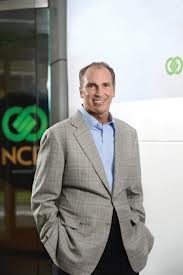
Restoring NCR’s Ka-ching! Under William Nuti, 129-year-old NCR has become the leading seller of ATMs and other digital point-of-sale devices. From the Bronx to the boardroom

SATURDAY, JULY 13, 2013

Restoring NCR’s Ka-ching!

By DYAN MACHAN | MORE ARTICLES BY AUTHOR

Under William Nuti, 129-year-old NCR has become the leading seller of ATMs and other digital point-of-sale devices. From the Bronx to the boardroom.

images (20)ON-BB524_SPOTLI_G_20130713003915

Even by the rough-and-tumble standards of the Bronx, William Nuti was a clever and resourceful kid. As a nine-year-old newspaper boy in New York City’s northernmost borough, Nuti would work his way up an apartment building until he got to the roof. Then he would leap to the roof of the adjacent building, and work his way down again. Nuti’s Batman-like days might be over, but the same problem-solving instincts have served him well in the corporate world. As chief executive since 2005 of NCR (ticker: NCR), he has helped reinvent the company once known as National Cash Register, or “The Cash,” for the digital-commerce age.  Read more of this post

Rooting for Mother Teresa

July 12, 2013

Rooting for Mother Teresa

By ADA CALHOUN

POPE FRANCIS last week approved two of his predecessors for sainthood — John Paul II and John XXIII — fast-tracking the latter in spite of his having only one miracle to his credit rather than the usual two. Mother Teresa, who died in 1997, has not been given the same exemption (she also has just one miracle) and remains merely beatified.

Having volunteered for a time with Mother Teresa, I find myself rooting for her cause as if for the home team. And on principle I’m disappointed by the message sent when two men with complex legacies outpace a woman who devoted herself completely to serving others. Read more of this post

The Courts CEO who’s a little bit of a maverick

The Courts CEO who’s a little bit of a maverick

At 17, he dropped out of school to work. At 20, he got married and became a father four years later. And by 32, he was Managing Director of electronics and furniture retailer Courts Singapore.

BY NEO CHAI CHIN –

15 HOURS 30 MIN AGO

11-courts-young-lions

At 17, he dropped out of school to work. At 20, he got married and became a father four years later. And by 32, he was Managing Director of electronics and furniture retailer Courts Singapore. Mr Terry O’Connor, the Chief Executive of Courts Asia today, has not achieved the milestones in his life in the most conventional timeline or order. So it is rather appropriate that the latest feather in his cap, a pacey and engaging book that chronicles his adventures and that of the company, is titled: Why Not? The Story of a Retail Maverick and Courts. Launched this month, the first print run of 2,500 has already sold out. Read more of this post