If staff are jaded they can bring a business down. But if they’re engaged your enterprise will fly

Are your staff bored stiff?

June 27, 2013

Kate Jones

If staff are jaded they can bring a business down. But if they’re engaged your enterprise will fly. What’s the difference between a company staffed by a motivated team and a company staffed by an unmotivated team? Success and failure, according to the owner of one of Australia’s most iconic brands. Mr Whippy owner Stan Gordon, chief executive of Franchised Food Company, which also owns Cold Rock Ice Creamery, Pretzel World and Nutshack, says having an enthusiastic staff is crucial to the viability of every business. “Having a motivated team actually helps your business grow and if they’re driven, they’ll also grow and embrace the business’ vision,” he says. “The first thing I’d do if I had unmotivated staff is look at what I, as a team leader, am doing wrong. “Am I not creating enough challenges? Is the work too repetitive? Am I not recognising the work done? Maybe I’m not motivated?” Gordon says it should be obvious to any boss that their staff is lacking motivation. “You can see them skulking around the office, dragging their feet around, everything’s a hassle, they make mistakes but always have excuses,” he says. A high turnover of staff is the best indicator and the most costly result of a directionless team, Gordon says. “Like anyone, I would much rather hire people to grow the business than replace outgoing staff,” he says. Gordon oversees 22 staff at the company’s Melbourne head office, plus more than 3000 employees in franchises all over Australia. Drawing on his 20 years of experience in marketing, franchising and people-management, here and in his native South Africa, Gordon has listed the top 10 ways to keep employees motivated. Read more of this post

Your Brand Is the Exhaust Fume of the Engine of Your Life; The truth is this: The brand follows the work. In a world of “personal brand” and “leadership brand” and “personal reinvention” and so forth, we should not forget: the real signal is the work itself, and the social signaling is just its echo

Your Brand Is the Exhaust Fume of the Engine of Your Life

by Nilofer Merchant  |   8:00 AM July 1, 2013

“How do you manage your brand?” I get asked that question really often, especially at public-venue speaking events. Typically, I sigh. It is not that the question is silly, or the questioner shallow, but because this question itself represents so much of what is stopping all of us from doing work that matters.

We talk about “reinventing your brand” when in reality the goal is to reinvent what you work on. We talk about the “brand called you” when we talk about being able to do more of the work you love to do. We talk about ways to “deliver on the impact equation” without asking first, “what is it you want to impact?” We are told by marketing gurus that “everyone now owns a media company!” — as if somehow this is, itself, the goal — rather than a means to an end. Marketing has become the default language — the lingua franca of the day — that we use to describe work, and it is distorting how we evaluate what matters. Read more of this post

The Petty Source of Lincoln’s Greatness

This year’s celebration of the Fourth of July is amplified by the sesquicentennial of the Union victory at Gettysburg on July 3, 1863. The holiday will no doubt serve up the requisite dose of patriotic feeling, sentimentality and togetherness to convince us that we have exercised some civic virtue. But the vacation time spent with family and friends will mostly serve to remind us that we are exhausted.

Exhaustion is the national refrain. When everyone from a basketball coach to a Cabinet member retires from view, we are told how exhausted each is and discover a public echo of our own private feeling. Read more of this post

Cindy Crawford’s ‘Sleep Quotient’ Guides Move to Stocks; Accounting-Trained Saxophonist Kenny G makes his own picks and checks them daily, while relying on an investment pro to stay out of trouble

Cindy Crawford’s ‘Sleep Quotient’ Guides Move to Stocks

Supermodel Cindy Crawford likes stocks, so long as she can sleep at night.

Saxophonist Kenny G makes his own picks and checks them daily, while relying on an investment pro to stay out of trouble.

Gossip columns play up stars’ foibles, but most celebrities take a conservative approach to investing, knowing their income is unpredictable, said Todd Morgan of Bel Air Investment Advisors, who oversees $6.5 billion. About a fifth of that comes from people in the entertainment industry. Read more of this post

Successful Change: The Challenge for Leaders

Successful Change: The Challenge for Leaders

Published : July 01, 2013 in Knowledge@Wharton

Studies put the failure rate of organizational change at 70% or higher. Yet, managers face increasing pressure to implement change to meet short- and long-term goals. Gregory P. Shea and Cassie A. Solomon share their approach to dealing with this challenge in Leading Successful Change: 8 Keys to Making Change Work. Jeff Klein, director of the Wharton Graduate Leadership Program, recently spoke with the authors about why we are not as good at change as we need to be, and how we can get better at it. An edited transcript of the conversation follows.

Jeff Klein: We are here today with Greg Shea and Cassie Solomon to discuss their new book, Leading Successful Change. Greg and Cassie, thanks for being with us today. You start off with a paradox. You say, “We live in a world of permanent change. Our main jobs are change.” Yet, most organizational efforts to succeed with change fail. Can you talk about that? Read more of this post

‘Global Brand Power’: Barbara Kahn on How Branding Has Changed

‘Global Brand Power’: Barbara Kahn on How Branding Has Changed

Published : July 01, 2013 in Knowledge@Wharton

According to Barbara Kahn, director of the Jay H. Baker Retailing Center at Wharton, the increasing popularity of social media has two implications for marketers: First, customers now control the message and second, companies must make sure that key elements of their brand can translate throughout the world. In a recent interview with Wharton MBA candidate Alexandra Idol, Kahn discusses her new book, Global Brand Power: Leveraging Branding for Long-Term Growth, the brand “as a mechanism for growth” and how companies can become more customer focused. An edited transcript of the conversation follows.

Alexandra Idol: I’m here today to speak with Wharton marketing professor Barbara Kahn, regarding her new book Global Brand Power. I’m curious as to what inspired you to write a book about global brand power?

Barbara Kahn: Although there are plenty of books on branding out there, I think that there are a few advantages this one [offers]. First of all, it’s short, which I think is a big advantage for busy business people. But second of all, things have changed, in that it is much more important to understand the global implications of your brand. Many people today started with a brand that was in their local market or for a particular product and didn’t consider the implications of the global marketplace. Also, in this world of social media and the Internet, what it means to be a brand is different because of those different mediums and types of communication. Read more of this post

‘Innovation Prowess’: George S. Day on What Distinguishes Growth Leaders

‘Innovation Prowess’: George S. Day on What Distinguishes Growth Leaders

Published : July 01, 2013 in Knowledge@Wharton

How did IBM, General Electric and other companies become growth leaders? Why is it that some companies lag behind — and stay behind? Those are the questions that Wharton marketing professor George S. Day explores in his book, Innovation Prowess: A Leadership Strategy to Accelerate Growth. Recently, Day spoke with David Heckman, practice leader, senior management at the Wharton School’s Aresty Institute of Executive Education, about why innovation prowess is the key to growth leadership. An edited transcript of the conversation follows.

David Heckman: I’m here with professor George Day to interview him about his new book, Innovation Prowess. George, welcome to Knowledge@Wharton.

George S. Day: Thank you, Dave. I’m very excited about sharing my thinking on my new book,Innovation Prowess. I’ve been working for over 25 years to understand what distinguishes consistent growth leaders — that is, companies that grow organically with their own resources — from growth laggards. I’m looking at growth leaders like IBM, Samsung, LEGO and companies of that caliber to try to discern over many, many years, what sets them apart. The answer comes in two parts. Firstly, they have what I call growth-seeking discipline. This resonates with Peter Drucker’s notion that innovation is a skill, just like learning the piano, that you build when you practice and invest a lot of time. It’s a replicable and disciplined skill. Read more of this post

How Emotions Make the Sale

How Emotions Make the Sale

Posted on June 21, 2013

How do you sell perfume without giving the customer a whiff?

How do you sell high-end athletic wear capable of withstanding the toughest outdoor conditions to people who are not likely to do anything more dangerous than hop a subway?

And what about the magic of dolls for little girls these days? Are sales dead in a world driven by digital gaming and other cyber adventures?

Four retailers who spoke at a conference in May at Wharton’s Jay H. Baker Retailing Center came up with same answer: Connect with the consumer on an emotional level, and the sales will follow. Read more of this post

How past failures helped make ZocDoc into a roaring success; Founder Cyrus Massoumi’s first company didn’t fare so well

Cyrus Massoumi, Founder and CEO of ZocDoc

July 1, 2013: 11:50 AM ET

How past failures helped make ZocDoc into a roaring success.

130701114910-cyrus-massoumi-620xa

FORTUNE — Fortune’s Brainstorm Tech Conference (July 22-24 in Aspen, Colo.) regularly brings together the best and brightest minds in tech innovation. Each week, Fortune turns the spotlight on a different conference attendee to offer his or her own personal insight into business, tech, and entrepreneurship. This week, we asked ZocDoc Founder and CEO Cyrus Massoumi to answer 10 questions about life outside of work, the company he admires most, and industry advice for young entrepreneurs. His responses follow. Read more of this post

A Quantum of Solace: Timeless Questions About the Universe

July 1, 2013

A Quantum of Solace

By DENNIS OVERBYE

02OVERclr-articleLarge

Niels Bohr, the Danish physicist and philosopher-king of quantum theory, once said that great truth is a statement whose opposite is also a great truth. This pretty much captured the spirit of those elusive rules that govern the subatomic world, where light can be a wave — no, a particle — well, actually, whatever you need it to be for your particular experiment.

It also seems to me to sum up much of the history of science and philosophy, in which the learned consensus keeps swinging between the yin-and-yang theories of existence: free will and fate, change and eternity, atomicity and continuity. Read more of this post

When Italians Chat, Hands and Fingers Do the Talking

June 30, 2013

When Italians Chat, Hands and Fingers Do the Talking

By RACHEL DONADIO

http://nyti.ms/159rRRb

ROME — In the great open-air theater that is Rome, the characters talk with their hands as much as their mouths. While talking animatedly on their cellphones or smoking cigarettes or even while downshifting their tiny cars through rush-hour traffic, they gesticulate with enviably elegant coordination.

From the classic fingers pinched against the thumb that can mean “Whaddya want from me?” or “I wasn’t born yesterday” to a hand circled slowly, indicating “Whatever” or “That’ll be the day,” there is an eloquence to the Italian hand gesture. In a culture that prizes oratory, nothing deflates airy rhetoric more swiftly. Read more of this post

Hitler’s food taster feared death with every morsel

Hitler’s food taster feared death with every morsel

Mon, Jul 1 2013

By Michelle Martin

BERLIN (Reuters) – Margot Woelk spent the last few years of World War Two eating lavish meals and fearing that every mouthful could mean death.

The former food taster for Adolf Hitler was served a plate of food and forced to eat it between 11 and 12 every morning for most of the last 2-1/2 years of the Nazi German leader’s life. Read more of this post

Obama and the crumbling of a liberal fantasy hero

ast updated: July 1, 2013 7:36 pm

Obama and the crumbling of a liberal fantasy hero

By Gideon Rachman

The most vociferous critics expected far more than a mere mortal could deliver

It has taken a long time, but the world’s fantasies about Barack Obama are finally crumbling. In Europe, once the headquarters of the global cult of Obama, the disillusionment is particularly bitter. Monday’s newspapers were full of savage quotes about the perfidy of the Obama-led US. Read more of this post

Do Singaporean workers deserve the salaries they are paid? Is he/she really more analytical, creative, articulate and productive than our Asian counterparts let alone those in the developed countries of Switzerland and Germany?

Do S’porean workers deserve their wages?

Monday, Jul 01, 2013

Han Fook Kwang

The Straits Times

Do Singaporeans deserve the salaries they are paid?

That was the pointed question posed by a reader responding to a piece I wrote on how median wages had stagnated in recent years despite a growing economy (The Sunday Times, June 16). He didn’t think it was surprising because, to put it bluntly, that’s what they deserve. This was how he put it, which I’m quoting extensively because his perspective is worth airing even if it’s painful to hear: “Singapore’s median income of $3,000 per month is fairly high if converted to local currencies of neighbouring countries such as Malaysia, the Philippines, India and China. Does the average Singaporean worker deserve this premium? “Is he/she really more analytical, creative, articulate and productive than our Asian counterparts let alone those in the developed countries of Switzerland and Germany? Read more of this post

John Mackey, the ‘father’ of the natural food retailer Whole Foods Market explains why he is a visionary pragmatist

une 30, 2013 1:08 pm

John Mackey, Whole Foods Market

By Andrew Hill

jwj_John_Mackey_040

Consciousness-raising: John Mackey believes Whole Foods Market proves business can help solve global problems

John Mackey blames Jean-Paul Sartre. As a philosophy student at the University of Texas in the 1970s, the co-founder of Whole Foods Market was obliged to read the French sage’s existentialist work Being and Nothingness: “It’s this massive tome, this great work and it is boring, boring, boring … One night I just threw the book down and said I’m never going to read another book in my life I don’t want to read.”

He decided he would not take another class he did not want to take (he signed up for 120 hours of elective courses instead, finishing with no degree) and ultimately concluded: “I’m not going to ever do anything in my life again … that isn’t speaking to my own sense of purpose.” Read more of this post

This weekend celebrates Jakarta’s 486th anniversary: Fatahillah, a Javanese general, conquered the port of Sunda Kelapa, driving out the Portuguese and naming the area Jayakarta, meaning “great victory.”

Ondel-Ondel Take to the Streets for Jakarta’s Anniversary

By Lenny Tristia Tambun on 11:10 am June 29, 2013.

jakarnaval-1024x640

Workers decorate the car ornament for carnival at Monas park on June 26, 2013. The creations are designed to enliven Jakarta’s anniversary ‘Jakarnaval’ celebrations, scheduled for June 30.

This weekend’s Jakarnaval, part of celebrations for Jakarta’s 486th anniversary, will feature around 1,500 participants presenting colorful artistic and cultural creations. Read more of this post

The Fascinating Rise Of Reese’s Peanut Butter Cups

The Fascinating Rise Of Reese’s Peanut Butter Cups

EMILY UPTON, TODAY I FOUND OUT JUN. 30, 2013, 11:13 AM 2,222

images (16)

A popular chocolate cup filled with delicious peanut butter, Reese’s Peanut Butter Cups were created by a man named Harry Burnett (H.B.) Reese.

Reese was born May 24, 1879 in Pennsylvania to a farming family. He married in 1900 and went on to have sixteen children. (Yes, 16!) By 1903, not surprisingly, he was struggling to support his growing family, so took on all manner of jobs from butcher to factory worker.

In 1917, Reese found an advertisement to work on a dairy farm owned by Milton S. Hershey, owner of the Hershey Chocolate Company, in Hershey, Pennsylvania. Read more of this post

4 Must-Read Books on Storytelling

4 Must-Read Books on Storytelling

by SHANE PARRISH

Stories are the way in which we teach moral lessons, keep an audience engaged in what we’re saying, and convince others to pursue a course of action. In the business world, where time is short, and you need to make a point quickly the favorite device is the anecdote. These short stories help others see your point of view. I can’t count the number of times I’ve been in a meeting where all of the evidence is pointing towards a clear path when someone, usually someone in a senior position, offers up and anecdotal counter-example. You want to quit smoking? Why? My grandfather smoked a pack a day and he lived till 92. And that’s all it takes. The meeting is over. All the evidence in the world doesn’t matter anymore. This simple anecdote now has everyone ignoring the evidence and statistical distribution and focusing on the grandfather. The problem is stories don’t really encourage us to think. They make it easy to overlook evidence, fall prey to cognitive biases, and generally encourage bad decisions. Stories are an important weapon to have in our arsenal. As someone trying to persuade others, you can have all the facts you want but if you can’t tell a story people won’t listen. In response to a question recently, Demian Farnworth, a writer at copyblogger, offered up four books copywriters should read to improve their ability to tell a good story. He spends his day writing stories and highly recommends you read these four books if you want to learn how to tell better stories.

The First Five Pages: A Writer’s Guide To Staying Out of the Rejection Pile, by Noah Lukeman.

Made to Stick: Why Some Ideas Survive and Others Die, by Chip and Dan Heath.

How to Write a Damn Good Novel: A Step-by-Step No Nonsense Guide to Dramatic Storytelling, by James N. Frey.

Writing the Breakout Novel, by Donald Maas.

“As you’ll notice,” he writes, “these have nothing to do with copywriting. That’s okay. The discipline of storytelling translates exceptionally well over industries. What you learn in these books you can use in your sales copy.” And sales copy is just a fancy way of persuading people to come around to your point of view. Just make sure you’ve done the work.

Life is Too Short to Work with Assholes; Non assholes care. They want people around them to succeed. They are obsessed with the joy customers experience with their work. But above all else, when they finally trust you, they will make themselves vulnerable to you. Something assholes will never do

JUNE 25, 2013

Life is Too Short to Work with Assholes

MARC BARROS, Entrepreneur. Creator. Builder. Co-Founded Contour Cameras.

Just thinking about the last one you worked with makes your stomach turn. The negative energy you felt in their presence is enough to make you want to throw up and remembering the damage they caused is something you shove so far back into your subconscious, you just hope it goes away. Unfortunately there are assholes all around you. Enough of them that they find their way into companies, marriages, families, and friendships. A trait everyone can recognize that often goes unchecked for a long time until someone is willing to stand up and say enough, no more assholes. Dealing with them in the start-up world sucks. They can tear a team apart and if they happen to invest, an entire company. Their quest for power is a zero sum game where their winning means someone else is losing. A game that works in the short term, but never in the long term. Asshole is a subject so popular there are 154 million results on Google and in the business world interesting enough that Robert Sutton’s book, “The No Asshole Rule” became a best seller, everywhere. Read more of this post

Senior Vatican cleric arrested in money smuggling case; Trio accused of trying to bring 20 million euros from Switzerland

Senior Vatican cleric arrested in money smuggling case

Fri, Jun 28 2013

* Trio accused of trying to bring 20 million euros from Switzerland

* Vatican prelate was already subject of another investigation

* Arrests come after Pope set up commission to look into bank

* Private plane was to have collected cash; cell phones burned (Adds more quotes, Scarano’s background)

By Philip Pullella

ROME, June 28 (Reuters) – A senior Catholic cleric with connections to the Vatican bank was arrested on Friday for plotting to help rich friends smuggle tens of millions of euros in cash into Italy from Switzerland, in the latest blow to the Vatican’s image. Read more of this post

Bob Mankoff picks his 11 favorite New Yorker cartoons ever

Bob Mankoff picks his 11 favorite New Yorker cartoons ever

Posted by: Helen Walters
June 26, 2013 at 12:14 pm EDT
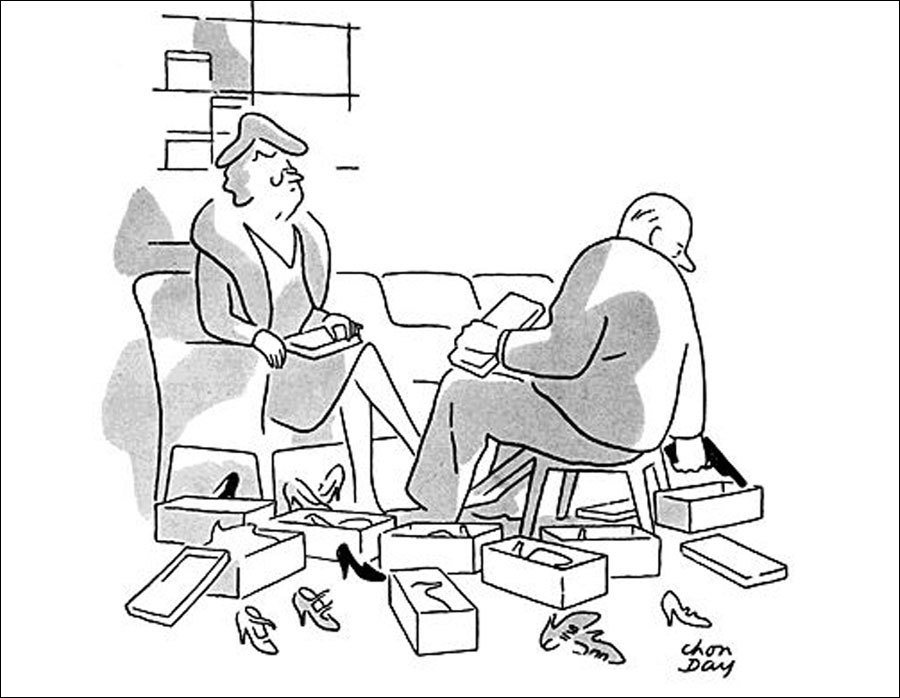
Bob Mankoff: Anatomy of a New Yorker cartoonBob Mankoff lives and breathes cartoons. He’s drawn many himself — he’s had a contract with The New Yorker for more than 30 years and, in 1997, he became the magazine’s cartoon editor. It’s now his job to sift through the 1,000 or so “idea drawings” (as they’re called within The New Yorker‘s walls) that are submitted each week — and decide upon the 17 or so that will make it into print. As Mankoff explains in great detail in today’s TED Talk, he has a keen idea of what works within the context of the cerebral pages of his magazine. And he’s built up a stable of his own favorite drawings over the years. We asked Mankoff to do the unthinkable and reveal in public some of the cartoons he finds perennially delightful. With typical good humor, he not only did so, but added his own wry commentary on why exactly he deems these cartoons perfectly New Yorker-worthy. Here, in chronological order, his top eleven. Enjoy.

shoe-salesman1

“This is a simply perfect cartoon; it’s perfectly constructed,” says Mankoff. “We have no empathy or sympathy for the pain-in-the-ass old biddy. Then there’s this guy, this shoe salesman, bringing out hundreds of shoes. We think he’s reaching for another black shoe and it turns out he’s reaching for a gun. But this is important: we know he’s not going to kill her. If he shot her, it’d be horrible. This is fantasy, not reality.”Chon Day, December 14, 1946.

Read more of this post

World’s Most Respected Companies: And the winner is … Berkshire Hathaway, knocking the crown off three-time winner Apple. Market history is rife with costly examples, from Enron and WorldCom back to John Law’s Mississippi Bubble in France 300 years ago. For both companies and investors, it pays to remember that the ways to fall down the ranking are myriad, but the ways up, few.

SATURDAY, JUNE 29, 2013

Most Respected

By VITO J. RACANELLI | MORE ARTICLES BY AUTHOR

And the winner is … Berkshire Hathaway, knocking the crown off three-time winner Apple. Who’s up, who’s down, who’s on, and who’s off.

Apple‘s reign is over.

Its remarkable three-year hold on the throne of Barron’s annual ranking of the world’s most respected companies is history. No longer the apple of the market’s eye, the immensely successful maker of iPads, iPhones, and Mac computers slipped to third place in the 2013 survey (ticker: AAPL). And proving that comebacks are possible even for an 82-year-old CEO, Warren Buffett’sBerkshire Hathaway (ticker: BRK/A) came out on top this year, up from a No. 15 finish in 2012 — the only time in this ranking’s nine-year history that it finished out of the top five.

Read more of this post

Reframe failure as intention; Better Place and Tesla prove there’s an art out to turning sub-optimal outcomes into success

Reframe failure as intention

June 28, 2013: 11:21 AM ET

Better Place and Tesla prove there’s an art out to turning sub-optimal outcomes into success.

By Saul Kaplan

FORTUNE — The key to unlocking the next wave of economic growth may be as simple as enabling more people to try more stuff. The industrial era was all about scale and squeezing out the possibility of mistakes. As a result we are too afraid to fail. Companies only take on projects with highly predictable results. Employees fall in line for fear of making career-limiting moves. How will we get better if the fear of failure prevents us from trying anything new? How will we make progress on the big system challenges of our time, if every time someone tries something transformational and fails, we vilify them? What if we reframed failure as intentional iteration? Read more of this post

The Sharing Economy

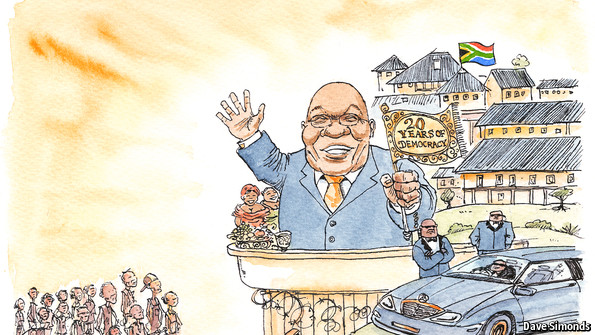
The African National Congress: A sad and sorry decline; The ruling party that triumphed under Nelson Mandela is in desperate need of cleansing—or it will deserve eventually to be defeated

The African National Congress: A sad and sorry decline; The ruling party that triumphed under Nelson Mandela is in desperate need of cleansing—or it will deserve eventually to be defeated

Jun 29th 2013 | JOHANNESBURG |From the print edition

20130629_MAD001_0

THE ruling African National Congress (ANC), like many old revolutionary outfits, is fond of anniversaries. Reminding voters of past struggles and victories, with images of heroic Nelson Mandela prominent in its publicity, still helps win elections in a landslide. Last time round, in 2009, it won two-thirds of the vote against a mere 17% for the runner-up, the white-led Democratic Alliance (DA). After orchestrating a grand fanfare to celebrate its centenary last year, the ANC is preparing for another big party in 2014 to mark two decades of rule under democracy. Read more of this post

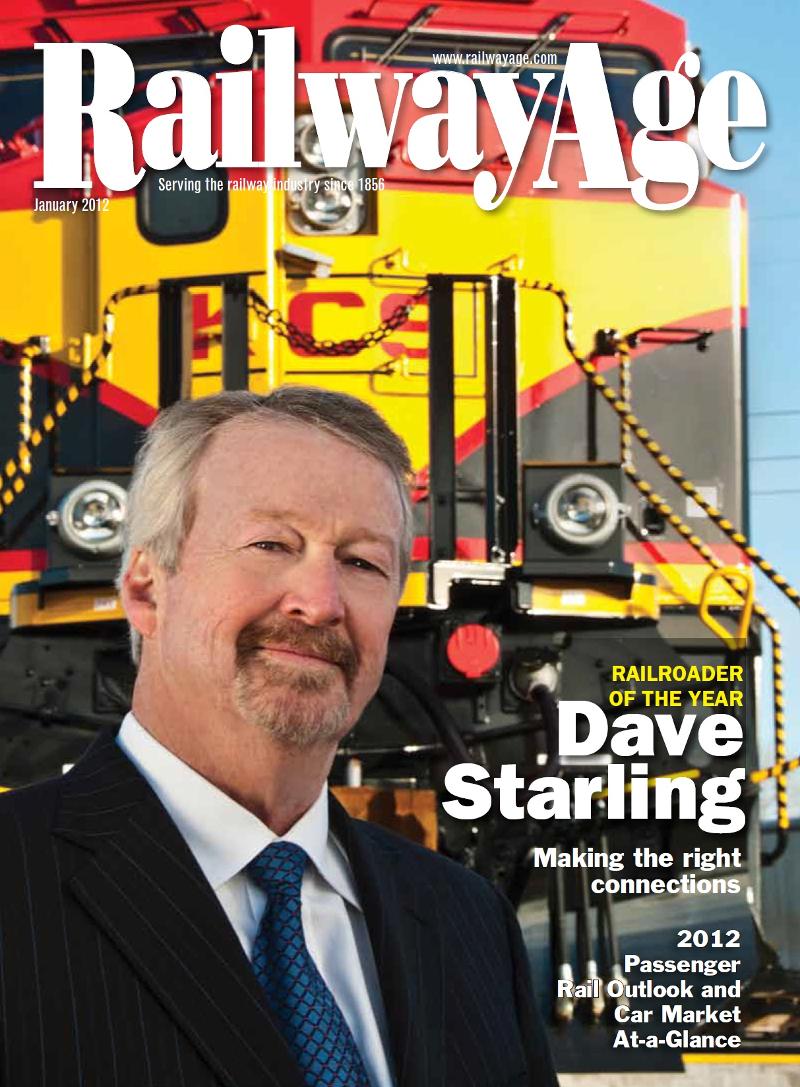
The Not-So-Little Railroad That Could: Increased manufacturing in Mexico, rising demand for internodal transport, and the use of railcars to carry oil are boosting Kansas City Southern

SATURDAY, JUNE 29, 2013

The Not-So-Little Railroad That Could

By CHRISTOPHER C. WILLIAMS | MORE ARTICLES BY AUTHOR

Increased manufacturing in Mexico, rising demand for internodal transport, and the use of railcars to carry oil are boosting Kansas City Southern. Takeover target down the line?

The railroad, which has cut overhead and downtime, reaches deep into Mexico, where more companies are building products that must be shipped to the U.S.

1120031-30435

Oh, what a sweet roll railroads have been on since Warren Buffett jumped aboard Burlington Northern Santa Fe in 2009. Kansas City Southern (ticker: KSU), the group’s best performer, is up 344% since the Oracle took to the rails. KCS remains the smallest of the seven major railroads, at $12 billion in stock-market value and with 6,300 miles of track. But location is everything. Unlike its big rivals, KCS reaches deep into Mexico, where manufacturing has surged, particularly for automobiles.

At the same time, KCS has become a more efficient operator. Its trains are moving faster and spending less time stuck at terminals. Since 2007, annual earnings have soared 145%, to $377 million, or $3.34 a share. Industry profits are up just 30% over the same period. This year, earnings per share could jump 23%, to $4.10, and continue to climb at a spiffy double-digit clip over the next several years. Read more of this post

The Last Trace of a Great Newspaper; James Gordon Bennett Sr. founded the New York Herald in 1835 and made it the first modern newspaper. The New York Times’ renaming the International Herald Tribune in the fall marks the disappearance of the name of the New York Herald from American journalism after 178 years.

SATURDAY, JUNE 29, 2013

The Last Trace of a Great Newspaper

By JOHN STEELE GORDON | MORE ARTICLES BY AUTHOR

James Gordon Bennett Sr. founded the New York Herald in 1835 and made it the first modern newspaper. The New York Times’ renaming the International Herald Tribune in the fall marks the disappearance of the name of the New York Herald from American journalism after 178 years.

BA-BC306_LongVi_DV_20130629014131

James Gordon Bennett Sr. founded the New York Herald in 1835 and made it the first modern newspaper.

Since 2003, the New York Times has been the sole owner of the International Herald Tribune, which was founded in 1887 by James Gordon Bennett Jr., with headquarters in Paris. The Times has announced that it will be renaming the paper as the International New York Times this fall.

While that will mean the loss of a masthead familiar to Americans traveling abroad for more than four generations, it also means the final disappearance of the name of the New York Herald from American journalism after 178 years. That is a pity, for the New York Herald was the greatest newspaper of its day and has a claim to have been the greatest newspaper ever. Its founder, James Gordon Bennett Sr., created modern journalism. Read more of this post

Tupperware Brands has a storied past in America. But its future is overseas. CEO Rick Goings sees himself as a global ambassador of capitalism

SATURDAY, JUNE 29, 2013

The New Party Line

By ROBIN GOLDWYN BLUMENTHAL | MORE ARTICLES BY AUTHOR

BA-BC286A_CEO_p_DV_20130629013133 ON-BB392_SPOTLI_G_20130629020634

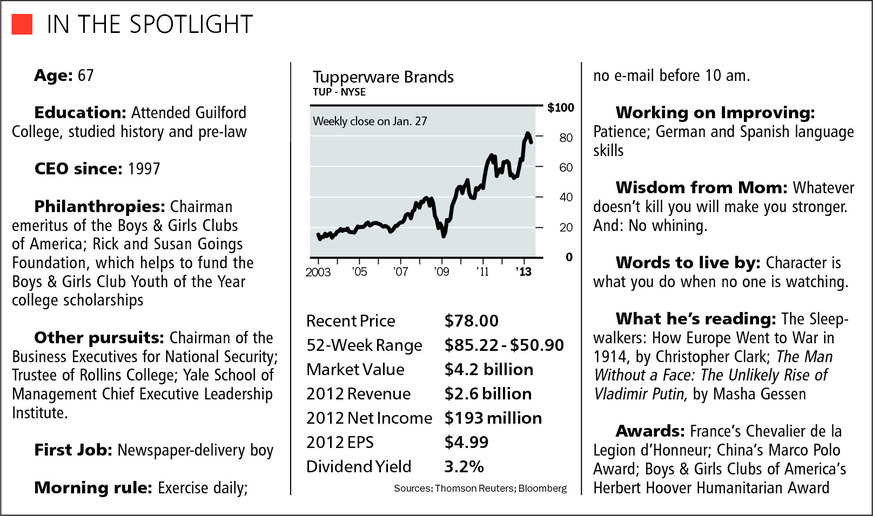
Tupperware Brands has a storied past in America. But its future is overseas. CEO Rick Goings sees himself as a global ambassador of capitalism.

The technology sector may have some of the most vocal (and controversial) women in business today, but a truer bastion of female empowerment in the workforce is much more old school—and led by a man. Tupperware pioneered the direct-marketing strategy in 1948 that allowed women in the post-World War II U.S. to maintain some of the financial independence to which they had grown accustomed. Current CEO Rick Goings has spent the past two decades steering the company—and its opportunities for women—overseas, creating a robust business and a multi-unit company, Tupperware Brands (ticker: TUP), with a $4.2 billion market value.

Read more of this post

Infographic: The Literal Meaning Of Every State Name In The U.S.

Infographic: The Literal Meaning Of Every State Name In The U.S.

1672882-inline-1300usa-map

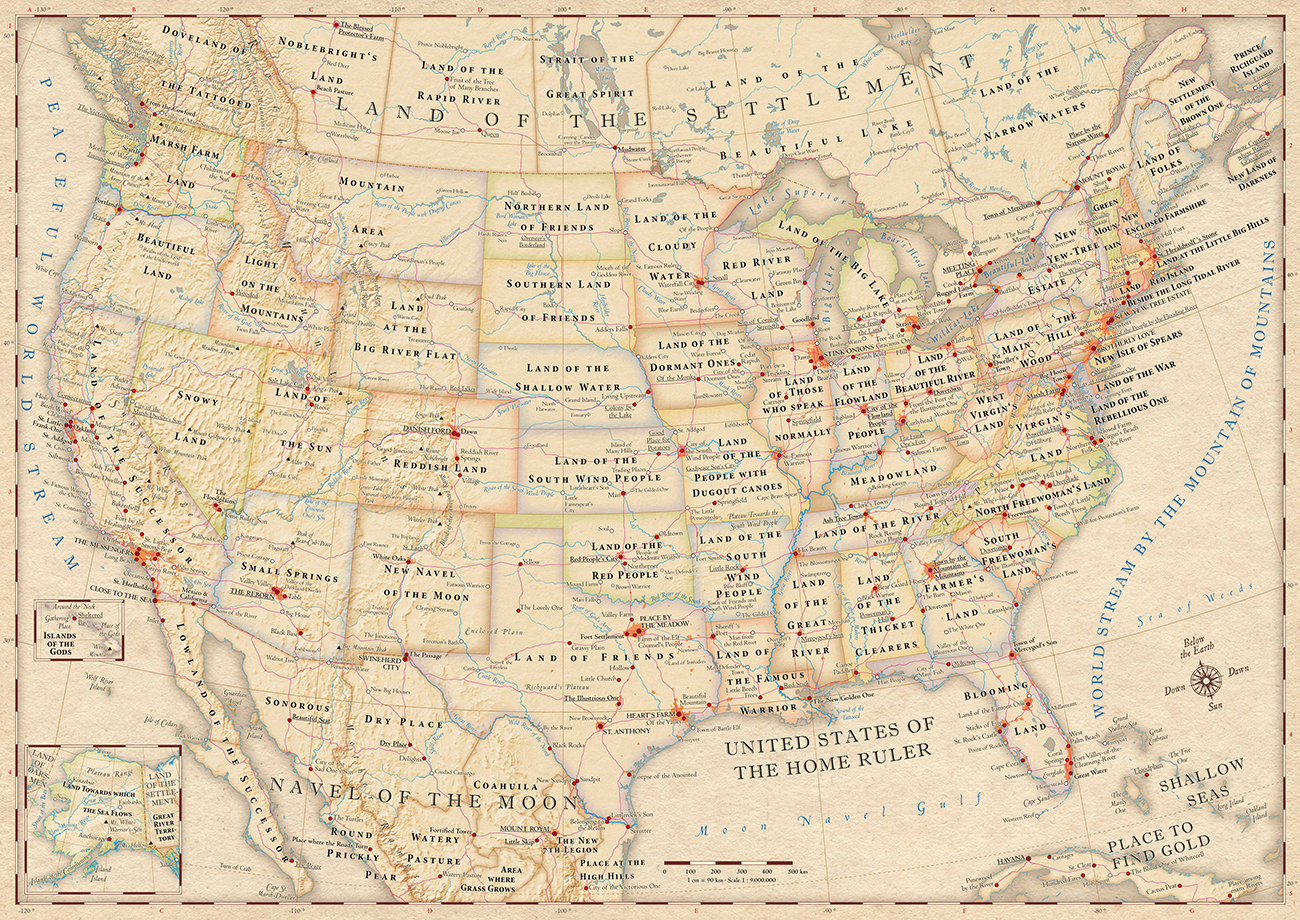
WASHINGTON TRANSLATES TO “MARSH FARM LAND, MISSOURI TO “LAND OF THE PEOPLE WITH DUGOUT CANOES.” WHAT DOES YOUR STATE OR CITY NAME MEAN? YOU MAY NOT WANT TO KNOW.

The New Navel of the Moon. It’s so poetic, isn’t it? (And sure, maybe a bit anatomically confusing.) That’s the real meaning behind the state name New Mexico, and it’s one of many etymological gems uncovered by cartographers Stephan Hormes and Silke Peust while they were creating this U.S. map depicting the original, literal meanings behind the states and cities we know today. “The inspiration was my interest in etymology and my profession as a cartographer,” Hormes tells Co.Design. “I started to exchange real names for rue names and the world became a strange romantic continent. It’s obvious to me that after five years of changing names on maps, I must do it. No map is safe.” Of course, most state names aren’t nearly as gorgeous as New Mexico’s moon navel. For every Idaho “Light on the Mountains,” there is a Missouri “Land of the People with Dugout Canoes.” Many states, of course, simply describe geography, which works out well for Mississippi “Land of the Great River” but a bit less elegantly for Washington “Marsh Farm Land.” I ask Hormes if there was a single discovery that was most shocking. “I found some funny stuff like ‘Astrakhan’ in the Wolga delta which means ‘Tax haven for pilgrims,’” he explains. “Once we made a funny map of peculiar place names in German. Place names like ‘Fucking’ or ‘Cats Brain’ changed even my selective perception.” At the U.S. city level, it’s fascinating to see just how many names have gone unchanged. Green Bay. Cedar Rapids. Oakland. Little Rock. They’re all modern names that, when you take a second look, have an old-world appeal. I just wish I could say the same for my hometown of Chicago, which didn’t age so gracefully. It translates to “stink onions.”

America’s lost revolutionary; The question of what – or who – is left out of historical accounts is often as interesting as what is included; “conservatives” elite were determined to protect their privileges against others

June 28, 2013 7:27 pm

America’s lost revolutionary

By Gillian Tett

The question of what – or who – is left out of historical accounts is often as interesting as what is included

Afew years ago David Lefer, a high school and college history teacher in Brooklyn, was asked by a student for a good book on John Dickinson, an 18th-century American Revolutionary political figure who hailed from Philadelphia.

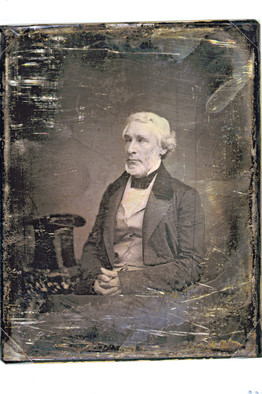
Lefer duly scoured the libraries and discovered a striking fact: although America’s academic world is brimming with accounts of the Founding Fathers, there was almost nothing at all written on Dickinson. That struck Lefer as odd. Dickinson was important in that 18th-century independence movement, since he (in)famously penned the tracts known as Letters from a Farmer in Pennsylvania, which eloquently defended the idea of liberty and freedom. Read more of this post