Big companies don’t have to lose their souls; How to grow your business without crushing creativity

Big companies don’t have to lose their souls

June 28, 2013: 9:24 AM ET

How to grow your business without crushing creativity.

By Joris Luijke

(TheMIX) — Remember working for that start-up? Things were good. You responded quickly to change. You could, and often did, roll out new programs within weeks or days. Your boss approved quick changes with a simple nod. And you got results — fast. Then you moved to an important role at a big enterprise. Things were different — slower, costlier, stuck in red tape, less tangible, less experimental. That’s because big organizations are complex. And when we are accosted by complexity, we get anxious. We need certainty and coordination — in the form of structures, policies, responsibilities, and rules — to push that fear away. We can’t change our fear of complexity, nor our desire for control. So, what can we do to keep our organizations agile — even as they grow? How can we ensure that innovation doesn’t get crushed? Read more of this post

What Makes Some Children More Resilient?

June 28, 2013, 6:10 p.m. ET

What Makes Some Children More Resilient?

ALISON GOPNIK

RV-AK937_MINDMA_DV_20130628180532

The facts are grimly familiar: 20% of American children grow up in poverty, a number that has increased over the past decade. Many of those children also grow up in social isolation or chaos. This has predictably terrible effects on their development.

There is a moral mystery about why we allow this to happen in one of the richest societies in history. But there is also a scientific mystery. It’s obvious why deprivation hurts development. The mystery is why some deprived children seem to do so much better than others. Is it something about their individual temperament or their particular environment? Read more of this post

Melatonin: A ‘Magic’ Sleeping Pill for Children? Pediatricians worry as parents increasingly use melatonin to deal with nighttime restlessness

June 28, 2013, 6:23 p.m. ET

Melatonin: A ‘Magic’ Sleeping Pill for Children?

Pediatricians worry as parents increasingly use melatonin to deal with nighttime restlessness

JENNIFER BREHENY WALLACE

My son, who had always been a champion sleeper, was hit with insomnia the fall of his kindergarten year. A new school, a more rigorous academic schedule and the challenge of making new friends kept him up long after I had fallen asleep. He woke up exhausted and arrived home from school sullen and withdrawn. Over the next few months we tried everything to get him to sleep—no TV, warm baths, massage, warm milk.

Our pediatrician finally suggested that I give my son a melatonin supplement to help reset his sleep cycle. Try it for seven days, he said, but it may take longer. That night, with just 1 milligram of melatonin, my son fell asleep within 20 minutes—and woke up the next morning well rested, at last. It worked just as well the second night. Read more of this post

T. Scott Case: Corner Bakery or the Next Facebook?

June 26, 2013, 8:00 AM

T. Scott Case: Corner Bakery or the Next Facebook?

GUEST MENTOR T. Scott Case, founding CEO of Startup America Partnership and founding CTO of Priceline.com: The difference between launching a scalable startup verses a sustainable small business comes down to objectives. Small businesses – Main Street businesses, professional services, trades – are typically run by their owners. The goal is to start, achieve profitability and generate enough income to support an owner and his or her family. A coffee shop with a dependable customer base that turns a profit is part of the lifeblood of our economy. The owner will often run the shop for years with no intention of turning the business into the next Starbucks. Startups – think Facebook or LinkedIn– are run by their founders. They set out to seek top-line growth and maximize the long-term wealth creation of the enterprise. Depending on the industry, the plan of attack may be to acquire customers, drive revenues, and then start worrying about profits. Facebook launched in 2004 and reportedly first turned a profit in late 2009. At a startup, the founders will sometimes stay on, or hire a seasoned-veteran to run the day-to-day operations, then transition to the next venture. Of course, plans do change. Many startups aspire to become scalable, but instead end up as small businesses or fail. And some small businesses aspire to remain small, but become a Lolly Wolly Doodle – the online children’s apparel company founded by a first-time entrepreneur, that was supposed to be a local business but now earns $10 million in annual revenue. Both startups and small businesses are key drivers of innovation, job creation and wealth across the country. Small businesses employ about half of the private sector workforce, add two out of every three jobs and contribute around $14 billion in profits for banks every year. They also contribute to the cultural vitality of communities across the country. While startups are net-new drivers of job creation – according to the Kauffman Foundation startups have created roughly all of the net-new jobs since 1980, with fast-growing “gazelles” contributing the vast majority. Startups are also more likely to disrupt existing industries or pave new ones. More than anything, individual preferences and objectives determine the course: Entrepreneurs self-select from day one whether they hope to be a founder who takes the considerable risk of attempting to build the next billion-dollar marketplace, or an owner who takes the course of building the next corner bakery that serves local customers for decades. So, what will it be — are you launching a startup or small business?

Story of the day by legendary investor Jim Rogers

As I said, on Wall Street, I worked all the time. I loved it that much. One Independence Day weekend – it was July the third, around seven o’clock – I received a phone call from a friend, Burton MacLean, who had been one of my classmates at Yale. Mackie worked at Brown Brothers Harriman & Co, the oldest private bank in the United States. We were the best of friends, but we had followed different paths in life. Having settled down to raise a family, he and his wife, Charlotte, had four children – unlike me, Mackie had priorities other than work.

“Why don’t you come to the beach with us for the long weekend?” he said.

I said, “Oh, no, I’m working, I have some things to do.”

He said, “Tomorrow’s the Fourth of July, what are you talking about?”

I said, “Well, there are things to do, and they have to be done so we don’t lose money.”

I know he felt bad for me.

I remember, when I left Quantum, one of the first calls was from Mackie.

He said, “I heard that you retired or got fired or something.”

“I retired,” I said. “I don’t ever have to work again for as long as I live, unless I do something wrong.”

Time has a way of outrunning even the closest of friendships – all of a sudden ten years have gone by, then three times ten years – and Mackie and I have lost touch. But I still remember that call. In my mind’s eye, I could see him, looking out the window of his home, at his four children and his car, all of which he was still paying for, and wondering where, and at what cost, he could possibly have found the time to out in the hours that would have enabled him to retire at the age of 37. And I realized that how lucky I was to have found something about which I was so passionate that I was able to pursue it to the exclusion of everything else.

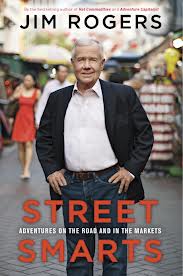
–         Jim Rogers in “Street Smarts: Adventures on the Road and in the Markets”
images

The Intelligent Investor: Saving Investors From Themselves

Jun 28, 2013

The Intelligent Investor: Saving Investors From Themselves

By Jason Zweig

Editor’s note: Jason Zweig recently wrote his 250th “Intelligent Investor” column for The Wall Street Journal and shortly thereafter won a Gerald Loeb Award, considered the most prestigious in business journalism, in the Personal Finance category.

I was once asked, at a journalism conference, how I defined my job. I said: My job is to write the exact same thing between 50 and 100 times a year in such a way that neither my editors nor my readers will ever think I am repeating myself. That’s because good advice rarely changes, while markets change constantly. The temptation to pander is almost irresistible. And while people need good advice, what they want is advice that sounds good. Read more of this post

Steve Case: When we started AOL in 1985, our focus was on building a new medium that would transform people’s lives. We weren’t thinking about a quick exit. Rather, we were passionate about the potential of the Internet to connect people and democratize access to information

June 26, 2013, 3:32 PM

Steve Case: Take the Long View

GUEST MENTOR Steve Case, chairman and CEO of Revolution and former CEO of AOL: When we started AOL in 1985, our focus was on building a new medium that would transform people’s lives. We weren’t thinking about a quick exit. Rather, we were passionate about the potential of the Internet to connect people and democratize access to information. We knew it wouldn’t happen overnight, and we knew it wouldn’t be easy. Indeed, when we started, only 3% of people were online, and they were only online on average an hour a week – so we knew it would be a long slog to get America online. Read more of this post

The World According to Woody Allen

Updated June 28, 2013, 4:43 a.m. ET

How Woody Allen Sees It

Even as he approaches 80, Woody Allen remains one of the most prolific filmmakers working today. With the release of his 48th feature, “Blue Jasmine,” the celebrated director opens up about playing the romantic lead, the hit-flop trap and why he just can’t quit the business.

CHARLES MCGRATH

IN REAL LIFE, WOODY ALLEN isn’t much different from the character he plays in his movies. He has the same reedy Brooklyn accent he uses on-screen and wears the same dorky, black-framed glasses he’s worn since he was 17. He’s shy, meek, insecure, a little phobic. When he showers, he makes a point of standing away from the drain, and he’s not crazy about tunnels. Too much like the womb. Read more of this post

Entrepreneurs need not apply: Companies shun the self employed; That’s only ironic because company executives and human resources say they want self starters, innovative hires, a certain entrepreneurial spirit

Entrepreneurs need not apply: Companies shun the self employed

By Vickie Elmer 8 hours ago

Recession prompted millions of laid off workers and new graduates to jump into self-employment—some with enthusiasm and others with reluctance because they couldn’t find anything better. Now, according to new research, it seems they aren’t wanted back.

That’s only ironic because company executives and human resources say they want self starters, innovative hires, a certain entrepreneurial spirit. Read more of this post

A 15 Year-Old Girl From Canada Has Built A Flashlight Powered By The Heat Of A Hand

A 15 Year-Old Girl From Canada Has Built A Flashlight Powered By The Heat Of A Hand

JAY YAROW 16 MINUTES AGO 241

There’s almost no real reason to own a flashlight now that all smartphones have bright flashes that work as flashlights. However! If, for some reason, you do want a dedicated flashlight in your life, a 15 year-old genius, Ann Makosinski from Victoria, B.C. has developed a new innovative version of the flashlight.  Instead of using batteries, the flashlight converts the heat from your palm into energy that powers LED lightbulbs. Incredible! The best part of this invention is not the flashlight, which, as we already noted is obsolete. The best part is knowing that a 15 year-old is already playing around with this energy technology. Hopefully in the next ten years she can do the same sort of thing for smartphones. Imagine just having to hold your smartphone for it to have enough energy to run?

Singapore elderly parents dumped like a dog in Malaysia, Indonesia by their children

S’pore dad, 82, dumped like a dog in JB

Johor police found the wandering man dirty, hungry and weak after he was said to be dumped by his family. -TNP
Rennie Whang
Thu, Jun 27, 2013
The New Paper

SINGAPORE – The 82-year-old Singaporean was found on the streets of Johor Baru – dirty, hungry, weak.

He was picked up by the Malaysian police, repatriated and sent to a home for the destitute here two months ago.

The man is one of a number of elderly Singaporeans who have been abandoned overseas.

Social workers say his case is not unique, as Singaporeans have also been allegedly abandoned in Indonesia and China. Read more of this post

India’s Last Maharaja: The 38th successive ruler of an ancient Indian clan, Gaj Singh II harbors deep connections to the past, but his innovative approach to protecting his family’s historical treasures is providing his country with a model for the future

June 27, 2013, 12:54 p.m. ET

India’s Last Maharaja

The 38th successive ruler of an ancient Indian clan, Gaj Singh II harbors deep connections to the past, but his innovative approach to protecting his family’s historical treasures is providing his country with a model for the future.

KELLY CROW

OB-XX293_WEBRAJ_P_20130619145837 OB-XV239_mag071_JV_20130612182902 OB-XV243_mag071_P_20130612184823

BLUE HEAVEN | Built in the 15th century by Rao Jodha, the walls of the fortress of Mehrangarh are 70 feet thick. Many of the houses of Jodhpur are painted blue to deflect the sunlight, and, according to folklore to repel insects.

FIT FOR A KING | The steps of Umaid Bhawan Palace, from which Mehrangarh is visible. Now partly a Taj hotel, revenues are up 80 percent thanks to a boost in domestic tourism.

FAMILY AFFAIR | Gaj Singh II, known to some of his staff as the ‘Jazz Age maharaja’ for his love of jazz, in front of a portrait of his ancestor, Takhat Singh

EACH SPRING, Maharaja Gaj Singh II hosts a Sufi music festival inside his family’s vast desert fort in the Indian city of Jodhpur. From a distance, this monumental sandstone fortress, called Mehrangarh, looms over the city’s chalky blue buildings, evoking the country’s ancient and otherworldly history. And yet people fly in from across the globe because the festival—and the maharaja who hosts it—blends old India so deftly with new. Read more of this post

When Managing Emotions can Make or Break a Company

When Managing Emotions can Make or Break a Company

by Nikos Bozionelos | Jun 28, 2013

Displaying particular emotions does require conscious effort. Emotional labour has therefore been linked to a number of negative outcomes

In today’s workplace many people have to display certain emotions as part of their daily jobs, regardless of how they actually feel. This phenomenon of ‘emotional labour’ occurs often, for example, in the work of flight attendants, call centre operators, sales staff and front-line bank employees. It can even extend at times to teachers or administrators.  This phenomenon is more common today because of the key role the service sector plays in the economy.

Read more of this post

CGMA Research: CFOs Must Take Hands-On Approach to Innovation

CGMA Research: CFOs Must Take Hands-On Approach to Innovation

New report from AICPA and CIMA reveals how finance professionals at Coca-Cola, Royal Dutch Shell and other global innovation leaders help to drive new advancements

May 22, 2013 07:00 AM Eastern Daylight Time

NEW YORK & LONDON–(BUSINESS WIRE)–Add another duty to the expanding role of CFOs: Innovation catalyst. New research from the American Institute of CPAs (AICPA) and the Chartered Institute of Management Accountants (CIMA) finds that management accountants, led by the CFO, play a vital and growing role in driving advancements at some of the world’s most innovative companies.

“Managing Innovation: Harnessing the power of finance”

In those businesses, the CFO and finance team are deeply embedded in the process of innovation and have a clear framework to let new ideas take shape. They partner early with other departments to identify concepts with market potential, replace rigid financial metrics with staged measurements to avoid eliminating ideas too soon, and accept that failure is a tolerable outcome for projects along the path to commercialization. Read more of this post

Is Oslo the Next Art Capital? A combination of unrivaled government funding and wholesome creative energy has transformed this formerly hardscrabble Norwegian city into one of the most electrifying places to see new art

June 27, 2013, 12:31 p.m. ET

Is Oslo the Next Art Capital?

A combination of unrivaled government funding and wholesome creative energy has transformed this formerly hardscrabble Norwegian city into one of the most electrifying places to see new art.

OB-XV482_mag071_P_20130613115520

An Ólafur Elíasson sculpture outside the Statoil headquarters in Fornebu.

EVERY NORWEGIAN CHILD has stood in cross-country skis at the bottom of a snowy slope and looked up at his or her father. “So your dad is there at the top of the hill holding a treat and he says, ‘Just make it up here, and we’ll take a break,’ ” says Eivind Furnesvik, the owner and director of Standard (Oslo), the most successful art gallery in the country’s up-and-coming scene. “That is Norway.” Read more of this post

Chinese Tourist Finds And Returns A Bag Of Diamonds Worth $32 Million

Chinese Tourist Finds And Returns A Bag Of Diamonds Worth $32 Million

FAINE GREENWOODGLOBALPOST JUN. 27, 2013, 2:30 PM 5,052 10

diamondss

Chinese tourist and jewelry enthusiast Fu Zhuli made a surprising find during her visit to Hong Kong‘s Jewelry & Gem Fair: a forgotten bag of diamonds worth a cool $32 million (HK$250 million).

“I went to the cafe to take a rest and have some chocolate ice-cream. I saw two foreigners chatting…after a while, they left – empty-handed. After a while, when the cleaners came to take the rubbish out, I realized there was a black bag at the foot of their table,” she said of finding the bag, according to the South China Morning Post.  Read more of this post

Apple’s Co-Founder Steve Wozniak Thought The First Macintosh Was A ‘Lousy Computer’ That ‘Failed’

Steve Wozniak Thought The First Macintosh Was A ‘Lousy Computer’ That ‘Failed’

JULIE BORT JUN. 27, 2013, 9:54 PM 567 3

steve-wozniak-7

Steve Wozniak with the Apple II he helped develop

Apple cofounder Steve Wozniak wasn’t a fan of the first Macintosh computer. He thought it was a “a lousy product.”

In an interview with The Verge’s Chris Ziegler, Woz reminisced about the early days at Apple, and cofounder Steve Jobs. He discussed how the Mac compared to its predecessor, the Lisa, the first PC to have a graphical user interface.

The story goes that back in 1982, the CEO of Apple at the time, John Sculley, was starting to butt heads with Steve Jobs. Sculley forced Jobs off the Lisa project, and Jobs joined the Macintosh project instead, where Woz was working. Read more of this post

Why Executive Teams Shouldn’t Write “Culture Decks”; Genuine culture is organic, not imposed

Why Executive Teams Shouldn’t Write “Culture Decks”

by Cheryl Morris  |   8:00 AM June 27, 2013

Boston is teeming with entrepreneurship. The “startup renaissance” that followed the financial crisis of 2009 has led to as many acquisitions as it has public companies.

For the founders and CEOs of many startups, the recent influx of additional tech giants to Boston like AmazoneBay, and Twitter means that hiring—especially when it comes to engineers—will become even more challenging. With far deeper pockets than early- and mid-stage startups, these tech giants will be vying for the same talent our startup ecosystem has been fostering. How can young startups continue to attract and retain great talent? One of the keys may lie in culture. Read more of this post

Behind the Krispy Kreme turnaround; The doughnut chain has slowly repaired its business and built a foundation that it hopes will protect it against future blow-ups

Behind the Krispy Kreme turnaround

June 27, 2013: 12:23 PM ET

The doughnut chain has slowly repaired its business and built a foundation that it hopes will protect it against future blow-ups.

By Beth Kowitt, writer

post-krispy-kreme-Jim Morgan-304

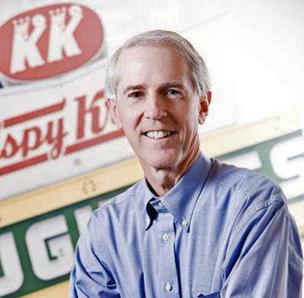
FORTUNE — It was only after three years of year-over-year revenue and gross profit growth, 18 consecutive quarters of same-store sales increases, and an eight-year high on the stock that Krispy Kreme Doughnut’s (KKD) executives finally turned to one another and acknowledged that they had turned the company around. The hesitant optimism at the doughnut enterprise, best known for its Original Glazed doughnut, is understandable. Krispy Kreme had been a growth company before — until it imploded in the mid-2000s. Profits tumbled after the company grew too quickly, and an SEC investigation of its accounting practices led to high-level departures. A previous unsuccessful turnaround attempt led to talk of having to sell the chain. “It was just a constant turmoil of, ‘is the company going to make it?'” says CFO Doug Muir. Read more of this post

The Books That Inspired Tech’s Most Influential People

The Books That Inspired Tech’s Most Influential People

ALYSON SHONTELL JUN. 26, 2013, 11:28 AM 35,472 2

What are the books that influenced Steve Jobs, Jeff Bezos, Elon Musk and Bill Gates? The following books shaped tech’s most influential people and helped them become the CEOs and global leaders they are today.

Amazon CEO Jeff Bezos enjoys business book “Built to Last” and a fictional novel, “The Remains of the Day.”

Given that Jeff Bezos founded Amazon as a marketplace for books, it’s not surprising he reads a lot. He once told told Fast Company he buys 10 books per month. His favorites? Built to Last: Successful Habits of Visionary Companies by Jim Collins and Jerry Porras and  The Remains of the Day by Kazuo Ishiguro. He told Newsweek: “If you read The Remains of the Day, which is one of my favorite books, you can’t help but come away and think, I just spent 10 hours living an alternate life and I learned something about life and about regret.”

Read more of this post

Secrets of the Little Blue Box, the 1971 article that inspired Steve Jobs to collaborate with Steve Wozniak

Secrets of the Little Blue Box

by Ron Rosenbaum

A story so incredible it may even make you feel sorry for the phone company


The Blue Box Is Introduced: Its Qualities Are Remarked


I am in the expensively furnished living room of Al Gilbertson*, the creator of the “blue box.” Gilbertson is holding one of his shiny black-and-silver “blue boxes” comfortably in the palm of his hand, pointing out the thirteen little red push buttons sticking up from the console. He is dancing his fingers over the buttons, tapping out discordant beeping electronic jingles. He is trying to explain to me how his little blue box does nothing less than place the entire telephone system of the world, satellites, cables and all, at the service of the blue-box operator, free of charge.

“That’s what it does. Essentially it gives you the power of a super operator. You seize a tandem with this top button,” he presses the top button with his index finger and the blue box emits a high-pitched cheep,  Read more of this post

How the Web and an Attitude of Sharing Helped a Law Firm Take Off; Clients are banging down the door. The feeling is, “If they give this much away for free, what must it be like if you pay them?”; murthy.com is the world’s most visited law firm site

June 26, 2013

How the Web and an Attitude of Sharing Helped a Law Firm Take Off

By ADRIANA GARDELLA

When it comes to making use of the Web, law firms generally have not been pioneers. The Murthy Law Firm, which handles immigration matters, is an exception.

Founded in 1994 by Sheela Murthy, an Indian immigrant, the firm introduced a site that provided legal information that same year. “So few law firms were even on the Internet, it was considered weird,” Ms. Murthy said. Read more of this post

Inside Google’s culture of relentless self-surveying

Inside Google’s culture of relentless self-surveying

By Tim Fernholz @timfernholz June 26, 2013

When Google recently admitted that the baffling brainteasers it posed to interviewees were utterly useless at predicting which ones would make good employees, it was another example of the power of what Google calls “people analytics”—the mixing of Big Data with management science to come up with smarter ways to work.

The company’s obsession with human data is perhaps best known for producing the rule that no employee should sit more than 150 feet (46 meters) away from a micro-kitchen, and that in those kitchens the chocolate M&Ms be kept in opaque jarswhile healthier food is in clear containers, to encourage healthy eating habits. Google’s often controversial culture of omniscience about its users is mirrored, inside its posh campuses, by a team of industrial-organizational psychologists, behavioral economists, consultants and statisticians who survey and experiment with Google’s staff. Read more of this post

Institutional Imperative and Differentiating Between the Tech Innovators, the Imitators and the Swarming Incompetents in Asia. Bamboo Innovator is featured in BeyondProxy.com, where value investing lives

Bamboo Innovator is featured in BeyondProxy.com, where value investing lives:

  • Institutional Imperative and Differentiating Between the Tech Innovators, the Imitators and the Swarming Incompetents in Asia, June 27, 2013 (BeyondProxy)

Institutional Imperative

Humor of the day: Bonds

20130626_humor

How Meeker’s ‘Internet Trends 2013′ Became the Most-Viral Deck on SlideShare

How Meeker’s ‘Internet Trends 2013 Became the Most-Viral Deck on SlideShare

By Ross Mayfield on June 17, 2013 | 3 Comments

Mary Meeker’s Internet Trends 2013 report became the most viral presentation on SlideShare: It got 1 million views in just four days. How and why did it spread so fast? And how can others replicate such success? We decided to take an in-depth look at the waves of traffic Meeker’s deck brought — when it got spikes, who picked it up, where it got shared. And we compared it to the waves of traffic we’ve seen with other viral hits on SlideShare. What we found: Meeker’s deck has more virality to come. Top presentations on SlideShare often have a second life, where a delayed wave of people find the deck via search and embed and share, making it viral once again.Viral Waves on SlideShare from Ross Mayfield

The above presentation looks at three examples of viral distribution. First is the Mary Meeker deck, which is unique in how much blog and press attention it gained from the moment it was delivered at the D11 Conference last month. Meeker’s slides have become an annual bellwether for the internet industry. This year it got 11 times the views her report last year fetched, with most technology press reporting on it and embedding the presentation. Second, is Netflix CEO Reed Hasting’s presentation on the company’s corporate Culture. Released in 2009, most of its views came from people searching and browsing on SlideShare. It is the 5th most popular presentation on SlideShare, with 4.5M views. Three years after its publication, Culture experienced a second wave of virality. It continued to gain search visits, but also was repeatedly embedded in blogs, and Netflix promoted the deck on its own site for recruiting purposes. With the second viral wave, its embed views are now twice that of views on the SlideShare site. The deck has been embedded in over 1755 sites on the web. Third, we have an example of a influential conference presentation. Sam Ramji originally presented on Darwin’s Finches, 20th Century Business, and APIs at the Web 2.0 Expo in 2010. It gained its initial views from SlideShare, a post by Sam, and a post that embedded the deck in ReadWriteWeb and some smaller blogs. Over time it prompted blog posts like this one in 2012. The second wave of virality for Sam’s deck came when the API startup space heated up two years later. Three acquisitions happened in eight days for over $450M, and the deck was referenced in posts like this one on TechCrunch. This second wave made it so embed views of the presentation are almost twice that of on-site views. Not everyone can post content as influential as these examples. But here are some tips for how you can make your SlideShare content a hit:

-Publish content that is cutting-edge, informative and insightful, or news-breaking

-Present it at a conference

-Embed it in your blog or company blog

-Promote it through your social networks or through your company’s social channels

-Email a link to it if the content could prompt the media to write about it and embed it. Also consider if your content could add something to a story that has already been posted

-Use good descriptive and unique language in your presentation, title, description and tags to aid search engines

-Use SlideShare Pro analytics to monitor the traffic you get and take advantage of a second wave of virality if it happens.

Now, go make your own viral waves!

Want to be more creative? Start keeping more boring hours

WANT TO BE MORE CREATIVE? START KEEPING MORE BORING HOURS

BY: JENNIFER MILLER

Stop burning the midnight oil, rock star. You’re better off and maybe more creative keeping unglamorous, 8-hours-of-sleep hours.

Edna St. Vincent Millay, who wrote that her “candle burns at both ends,” epitomized the image of the insomniac artist: a person so consumed with the creative act that she couldn’t be bothered to sleep. No wonder Millay’s friend Dorothy Thompson called her “a whimsical genius, sometimes…petulant and imperious…sometimes stormy, turbulent, and as unreckonable as the sea.” The more overtired we are, the more irritable. Read more of this post

A Visit to Lantau’s Giant Buddha Restores Peace in Hong Kong

A Visit to Lantau’s Giant Buddha Restores Peace in Hong Kong

By Simon Marcus Gower on 3:19 pm June 24, 2013.

6.-Prayer-flags.JPG_0001

A visit to Hong Kong generally involves experiencing intense activity. But Hong Kong is made up of dozens of islands. The largest of these, Lantau Island, is a rather more restful place and is home to a giant Buddha.

Lantau is a big island — it is nearly twice the size of Hong Kong Island. Yet with a population of fewer than 50,000 people Lantau feels practically deserted in comparison.

Hong Kong’s excellent network of trains has a connection from Central Hong Kong to Lantau’s Tung Chung Station. Nearby this station is a new shopping mall and a bus station, from which visitors can catch a bus to Po Lin monastery. Read more of this post

To Overcome Your Company’s Limits, Look to Symbiosis

To Overcome Your Company’s Limits, Look to Symbiosis

by Rafe Sagarin  |  12:00 PM June 25, 2013

No matter how nimble, innovative, or globally networked your organization or business is, it will run smack into the limits of its capabilities just by virtue of operating in today’s dynamic world. To push through these limits, you need to tap into a nearly bottomless force of adaptability known as symbiosis.

Symbiosis is a biological concept — roughly defined as a partnership between organisms — that has helped living creatures innovate and expand into new niches for billions of years. Symbiosis has allowed organisms to defend themselves from predators, to lure prey into their mouths, to produce energy from the sun, and to produce energy in places where the sun never shines, among other things. Every organism on Earth is engaged in many symbioses with other organisms. Read more of this post

Stanley Ross Eluded Nazi Bombs to Transform World Bond Markets

Stanley Ross Eluded Nazi Bombs to Transform World Bond Markets

As 11-year-old Stanley Ross huddled in a shelter on a North London public housing estate in the summer of 1942, a German bomb landed just feet away. It was a dud.

“There was a stick of eight bombs and ours was the fifth, and it landed just there,” he said, pointing to the adjacent table during a June 6 interview at London’s Savoy Grill. “Had it gone off I wouldn’t be here now. I’d have been vaporized.” Read more of this post